The International Monetary Fund has issued a warning on global economic growth in the coming year. It revised its prediction for economic growth to 3.2% from its earlier estimate of 3.4%. That may not sound like a significant drop, but the lower prediction comes on the heels of earlier downgrades as well. If growth continues to shrink, the global economy becomes increasingly vulnerable to unanticipated disruptions such as national disasters, currency depreciations, and political surprises. The ice keeps getting thinner.
The 8th Annual ASDA’A Burson-Marsteller Arab Youth Survey 2016 was recently published. It is a poll of young people in the following countries: Bahrain, Kuwait, Oman, Qatar, Saudi Arabia, the UAE, Algeria, Egypt, Iraq, Jordan, Lebanon, Libya, Morocco, Palestine, Tunisia and Yemen. The results are quite striking. By a very wide margin, Arab youth have no affection for Daesh (the Islamic State) and in fact regard it as the most serious issue facing the Middle East. The charts in the Washington Post are quite dramatic.
The United States and India are inching closer to greater military cooperation. India has long been leery of closer military ties with the US, a fear conditioned by its experience as a colony of Great Britain. But it appears as if the fear of growing Chinese maritime power is affecting the Modi government in much the same way that Vietnam and the Philippines have been pushed toward the US. For right now, the agreement between India and the US is quite limited–it only refers to the possible opening up of “each other’s land, air and naval bases for resupplies, repair and rest.” That agreement is a far cry from the possible creation of military bases.
Income inequality is not simply a matter of economics and politics. It is also a matter of life and death. Recent studies have indicated that life expectancy for men at mid-life is much lower for poorer individuals than for richer individuals. The data are actually quite dramatic and show that where one lives is also an important determinant of life expectancy. The correlation between income and life expectancy is very strong, but can be mitigated with strong action to help low income individuals.
We should all be very careful when we read articles in newspapers and other media. We almost automatically assume that the articles and op-eds reflect the considered views of the authors. But, in many cases, the materials we read are in fact written by paid lobbyists who are deliberately trying to influence the political decision-making process. For example, lobbyists in favor of the Trans-Pacific Partnership (TPP) trade agreement that is being pushed by the Obama Administration have written materials that have been directly quoted without attribution by politicians who have written in favor of the trade deal. Everyone has the right to argue for policies they support. They should, however, have the decency to use their own words and not those of a paid shill.
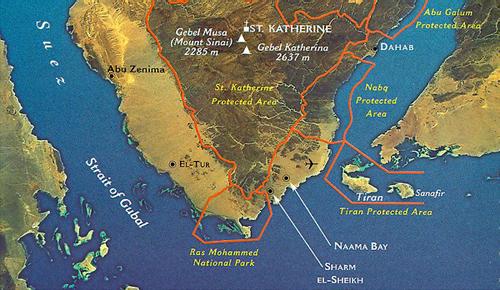
Something very unusual happened recently. Egypt handed over two islands in the Gulf of Aqaba to Saudi Arabia. The peaceful transfer of territory is incredibly rare in world politics, and many Egyptians are outraged that General Sisi made the gesture. Saudi Arabia has bankrolled the Egyptian economy since the overthrow of President Morsi who the Saudis regarded as a dangerous politician because of his relationship to the Muslim Brotherhood. The Egyptian economy, however, remains incredibly weak and the transfer of the islands is viewed as a gesture of appreciation. It was probably not the right move to make for many Egyptians since it surrenders something permanent for the transitory good will of another state.
Measuring global income and wealth inequality has always been a problematic issue: the data are not reliable and often measure different things in different countries. Despite the problems with the metrics, virtually all of them suggest that global inequality has gotten significantly worse in recent years. According to Jason Hickel:
Using data from the Maddison Project, we see that in 1960, at the end of colonialism, people living in the world’s richest country were 33 times richer than people living in the poorest country. That’s quite a substantial gap. But then by 2000, after neoliberal globalisation had run its course, they were a shocking 134 times richer. And that’s not counting extreme outliers, like small oil-rich kingdoms in the Middle East or tiny offshore tax havens. This isn’t convergence. To quote Lant Pritchett, it’s divergence, big time.
It is very difficult to imagine any market-based process that would reverse this trend. Only active political action can offer any hope of change.
For the first time in 25 years, the US has deployed B-52s to the Middle East. The B-52 is a strategic bomber that the US has used in the past to conduct massive bombing raids in Vietnam and in Iraq in 1991. The bombers will be based in Qatar and be used against Daesh (the Islamic State). Although the B-52 is associated with carpet bombing (which would be essentially useless against a diffuse force such as Daesh), it is also capable of dropping precision-guided bombs. Nonetheless, the deployment is an index of the intention to use massive force.
The B-52 and Its Maximum Payload
The Ukranian Prime Minister, Arseniy Yatsenyuk, has announced that he will resign. His tenure has not been marked by much success, particularly on the economic front. Ukraine continues to suffer from corruption, the Russian-led rebellion in the eastern part of the country, and the lack of effective support from the European Union, the IMF, and the US. The continued deterioration in Ukraine will pose serious problems for Europe if people begin to leave the state to enter the EU.
I apologize for obsessing about the Panama Papers, but the episode points out one of the essential truths of world politics: the international global economy, particularly capital in that economy, pays no attention to territory; the international political system is hopelessly rooted in territoriality. Gabriel Zucman, an economist and the author of The Hidden Wealth Of Nations: The Scourge Of Tax Havens, has estimated that about $7 trillion worth of wealth is hidden in states that allow capital to be completely disguised from any political authority (other authors estimate that the number is likely 2 or 3 times that amount). His breakdown is as follows:
Offshore Wealth and Resulting Tax-Revenue Loss (in Billions), 2014
Region OffshoreWealth Share of Wealth Held Offshore Revenue Loss
A significant fraction of global private financial wealth–by our estimates, at least $21 to $32 trillion as of 2010–has been invested virtually tax-free through the world’s still expanding black hole of more than 80 offshore secrecy jurisdictions. We believe this range to be conservative, for reasons discussed below. Remember: this is just financial wealth. A big share of the real estate, yachts, racehorses, goldbricks–and many other things that count as non-financial wealth–are also owned via offshore structures where it is impossible to identify the owners.
He goes on to argue:
[P]rivate banking has long since become virtual. So the term “offshore” refers not so much to the actual physical location of private assets or liabilities, but to nominal, hyper-portable, multi-jurisdictional, often quite temporary locations of networks of legal and quasi-legal entities and arrangements that manage and control private wealth—always in the interests of those who manage it, supposedly in the interests of its beneficial owners, and often in indifference or outright defiance of the interests and laws of multiple nation states. A painting or a bank account may be located inside Switzerland’s borders, but the all-important legal structure that owns it—typically that asset would be owned by an anonymous offshore company in one jurisdiction, which is in turn owned by a trust in another jurisdiction, whose trustees are in yet another jurisdiction (and that is one of the simplest offshore structures)—is likely to be fragmented in many pieces around the globe.
In short, one of the key assumptions of world politics–that states control what goes on within their borders–no longer appears to be valid for a major source of power in the world.
I have received some questions about how rich someone has to be to enjoy the benefits of offshore banking. In truth, the states that host shell companies do not charge a great deal. But the legal costs of setting up those shell companies are formidable. Joe Pinkser gives an estimate of what it typically costs:
“So how big would your garden have to be for it to make sense to buy a backhoe? ….individuals start being able to afford Mossack Fonseca-level wealth defense once their annual earnings (from both work and assets combined) cross a threshold of about $3 million to $5 million.”
It doesn’t make sense for ordinary wage earners to contemplate setting up a shell company.
Even though violence has flared up between Armenia and Azerbaijan over the contested region of Nagorno-Karabakh, Russia plans to keep selling military equipment to both sides. Russia clearly intends to maintain its influence in these two states which were once part of the former Soviet Union. Unfortunately, violence between the two states only serves to consolidate Russian influence over them.
One of the most worrisome trends in the world today is the decline of center-left politics. The right-wing and the center-right seem to be in ascendancy, and there are signs that the left is slowly coming alive (Bernie Sanders, Syriza in Greece, Podemos in Spain). But, at least in European politics, the center-left has been the guardian of income protections for the middle and lower middle classes. Its share of the votes in recent elections seems to be declining precipitously.
I am constantly looking for articles that shed light on how international politics pervades our daily lives and I sometimes find quirky angles that bemuse me. One such article popped up in The Washington Post that contained this fascinating factoid: “there are more Chinese restaurants in the United States than McDonald’s, Burger King, Kentucky Fried Chicken, and Wendy’s—combined.” It appears as if the quintessential American food–the hamburger–is a second cousin to Chinese cuisine. Unfortunately, there are some places in the US that lack a Chinese restaurant: the poor, benighted souls in North Dakota.
Syrian refugees have become the latest pawn in the power struggle between Turkey and the European Union. Turkish President Erdogan has bluntly threatened to disregard the plight of the refugees if the EU does not honor its side of the bargain which includes visa-free travel to the EU for all Turkish citizens. There is little question that Turkey should demand monetary relief for the extraordinary burden of caring for the refugees and the EU should be generous in providing such aid. But visa-free travel has nothing to do with the refugees and ignores the difficult circumstances in Europe regarding open borders given the recent terrorist attacks. The refugees should not be held hostage to this peripheral demand which ought to be pursued in in another venue.
Boko Haram continues to wreak havoc in Nigeria and the best efforts of the Nigerian government to respond effectively to its attacks have not been effective. It is unlikely that a purely military response to the extremists would ever be effective. Ikechukwu Odigbo suggests an alternative course of action that might be more effective, but it is a difficult and long-term solution that requires patience and dedication. Commitment in the face of atrocities is difficult to maintain.
Dutch voters, by an almost 2-1 margin, voted not to approve a relationship between the European Union and Ukraine. Only 32% of the electorate participated in the referendum, just barely above the 30% required to consider the outcome valid. But the vote will certainly delay any economic relationship for the hard-pressed Ukraine. The vote seemed to be primarily motivated by a dislike of Ukranian President Poroshenko rather than a repudiation of Ukraine as a whole. The Dutch government seems to favor the relationship, so we should expect some negotiations between the Netherlands and the EU to try to make the arrangement more palatable to Dutch voters.
There are times when it is very difficult to determine how citizens make political decisions. But there is extensive evidence that most people are capable of believing some rather extraordinary things. For example, 4% of the American people (12.5 million people) believe that lizard people control American politics. And 13% of voters think that President Obama is the Anti-Christ.
Conspiracy
Percent believing
Number of Americans believing
JFK was killed by conspiracy
51 percent
160,096,160
Bush intentionally misled on Iraq WMDs
44 percent
138,122,178
Global warming is a hoax
37 percent
116,148,195
Aliens exist
29 percent
91,035,072
New World Order
28 percent
87,895,931
Hussein was involved in 9/11
28 percent
87,895,931
A UFO crashed at Roswell
21 percent
65,921,948
Vaccines are linked to autism
20 percent
62,782,808
The government controls minds with TV
15 percent
47,087,106
Medical industry invents diseases
15 percent
47,087,106
CIA developed crack
14 percent
43,947,966
Bigfoot exists
14 percent
43,947,966
Obama is the Antichrist
13 percent
40,808,825
The government allowed 9/11
11 percent
34,530,544
Fluoride is dangerous
9 percent
28,252,264
The moon landing was faked
7 percent
21,973,983
Bin Laden is alive
6 percent
18,834,842
Airplane contrails are sinister chemicals
5 percent
15,695,702
McCartney died in 1966
5 percent
15,695,702
Lizard people control politics
4 percent
12,556,562
They are controlling your lives!!
The Washington Post has a heart-breaking article on the devastation of the city of Homs in Syria. There are photographs and a video that illustrate the destruction of a once vibrant and vital city. Whenever we discuss matters of war and peace, it is imperative that we do not allow the abstractions of theory or strategy to divert us from the central reality of war: the innocents invariably pay the highest price of any conflict.
Most of the attention on the Panama Papers has been focused on the effects of offshore banking on developed countries. In fact, the countries that suffer the most from this form of tax avoidance are the developing countries. The group, Global Financial Integrity, has estimated that developing countries “lost US$7.8 trillion in illicit financial flows from 2004 through 2013”. That money dwarfs the amount of money those countries receive in development assistance. It is money that these countries can ill-afford.
South African President Jacob Zuma was not impeached on corruption charges by the South African Parliament. The Parliament, dominated by Zuma’s party, the African National Congress, held that the decision of the Constitutional Court that Zuma had in fact violated the constitution was not a “serious” violation of the constitution. The decision not to impeach Zuma is a serious setback for the rule of law in South Africa, and various groups, including many churches, have vowed to lead a campaign to force Zuma’s resignation.
Anti-Semitic incidents in Austria increased by more than 80 percent between 2014 and 2015. The data confirm what has appeared to many observers as a very worrying trend in Europe. Many of these incidents occurred on the internet so it is difficult to identify the perpetrators. But such activity needs to be vigorously addressed by the authorities.
A Mount Holyoke student has written a deeply moving and highly intelligent reflection on what it means to be a minority in societies where tolerance seems to be in short supply. Saltanat Ansari is a junior from Pakistan and her insights into the recent violence in Lahore are those of a mature scholar. The essay was published in Dawn one of Pakistan’s most influential newspapers. We should applaud Saltanat for her commitment to clear analysis in desperate times.
Iceland’s Prime Minister, Sigmundur Davíð Gunnlaugsson, has resigned because of pressure from citizens angry that he apparently disguised his investments in offshore banks to avoid disclosure. He becomes the first public casualty in the Panama Papers scandal. But China has taken steps to prevent any public discussion of the papers by censoring all mention of them in any media source. The censorship has been extensive even though the Papers “show that relatives of at least eight current or former members of China’s top ruling body, the politburo standing committee, possess offshore companies.” Many, however, are wondering out loud about why virtually no Americans have so far been named in the leaks.
The Panama Papers raise the question of what can be done to prevent these legal, but smarmy, activities. The first point we should keep in mind is that there is no necessary reason why the tax code has to allow individuals to disguise their income and wealth. Presumably, the tax code should be written so that every tax payer has the same options as every other tax payer. But offshore banking is only available to individuals with a lot of money (the offshore banks charge huge fees for the privilege of depositing money). Second, we have to keep in mind that tax policies are exclusively reserved for sovereign states–there are no international organizations that have any role in setting tax policies in any state. Thus, states find themselves in competition with other states for individuals to hold their money within their legal authority. The fear is that if a state banned offshore banking, individuals would simply move to states that allowed offshore banking. This competition limits the degree of cooperation whereby states could limit the activity–the only international regulation possible is the regulation allowed by the most lenient state.



 World Politics News