Archive for the ‘World Politics’ Category
Today is International Women’s Day. The number of women who have actually led countries over the last half century is relatively small but has been growing steadily. According to the Pew Research Center:
“Fifty-six of the 146 nations (38%) studied by the World Economic Forum in 2014 and 2016 have had a female head of government or state for at least one year in the past half-century. In 31 of these countries, women have led for five years or less; in 10 nations, they have led for only a year. The Marshall Islands, which is not included on the WEF list of countries, has also had a female leader for one year.
At least 13 additional countries have had women leaders who held office for less than a year, according to a separate analysis by Pew Research Center. Of these countries, Ecuador and Madagascar had women leaders for a total of just two days. In South Africa, a woman was president for a 14-hour stretch, but she had briefly served as acting president before; in all three countries, women leaders were replaced by men.”
There are currently 15 female leaders in the world today.

Periodically, a debate flares up in international relations about the relative “merits” of imperialism. It is hard to figure out why these debates occur; obviously, some feel compelled to defend the indefensible. We are going through another phase of defending Empire–this time the British Empire–but Shashi Tharoor devastates those who would defend British rule in India. A representative part of the article in The Guardian is as follows:
“In 1600, when the East India Company was established, Britain was producing just 1.8% of the world’s GDP, while India was generating some 23% (27% by 1700). By 1940, after nearly two centuries of the Raj, Britain accounted for nearly 10% of world GDP, while India had been reduced to a poor “third-world” country, destitute and starving, a global poster child of poverty and famine. The British left a society with 16% literacy, a life expectancy of 27, practically no domestic industry and over 90% living below what today we would call the poverty line.”

Many Americans are concerned that Russia interfered in the 2016 presidential campaign, although the degree of interference remains uncertain. Russia is also accused of interfering in several upcoming European elections: the Netherlands, France, and Germany. But Americans are also involved in those elections. Right-wing activists from the US are accused of funneling considerable sums of money into the campaign of Geert Wilders, the right wing Party for Freedom candidate in the Netherlands. The amounts of money are small by US standards, but constitute huge sums in European campaigns.
The media is reporting a dramatic spike in anti-Jewish and anti-Muslim incidents in the US in recent months. These acts of hate undermine the civic polity necessary to sustain a democratic republic and it has been disappointing to witness a less than emphatic response by elected officials. Researchers have done some interesting work on how humans tend to dehumanize others depending on political ideology. Nour Kteily is a psychologist at Northwestern University whose work resonates quite strongly with the research that has already been done on the topic by other researchers such as Stanley Milgram. His study asks individuals to rate the “humanness” of others and the results among Americans are staggering.
/cdn0.vox-cdn.com/uploads/chorus_asset/file/8109805/dehumanization_chart2.jpg)
The recent ballistic missile tests by North Korea led South Korea to decide to deploy The Terminal High Altitude Area Defense system (THAAD), an anti-missile system strongly opposed by China. Anti-missile systems are highly problematic–we do not have extensive combat experience to assess how well they work (the Israeli Iron Dome system seems to work well, but the rockets used by Hamas are quite primitive). Bloomberg has a great article that explains the issues surrounding THAAD very well.

The New Yorker has a fascinating article on President Trump’s financial interests in Azerbaijan and how those interests have intersected with Azerbaijani oligarchs. The investment, Trump Tower Baku, remains unfinished but the financial interests involved in the building include elements of Iran’s Revolutionary Guards. There is a strong possibility that the investment violates the Foreign Corrupt Practices Act but given that we have no basis for understanding President Trump’s financial interests, it is hard to tell. Fortunately, the US press is willing to take the initiative to discover the confluence of Mr. Trump’s private interests and his public affairs.
There is little question that the world is facing a serious crisis because of environmental degradation. Many people resist responding to this crisis because of a belief that addressing environmental degradation damages economic growth and reduces jobs. Jenna Ruddock analyzes this proposition and her review of the literature clearly indicates that the link between environmental protection and reduced economic growth is very weak and that there is considerable evidence that suggests that environmental protection actually increases the number of jobs and boosts economic growth.

There is considerable dissent over the Trump Administration’s temporary ban (now enjoined by court order) on immigrants, visitors, and refugees from seven countries in the Middle East. The debate has been very messy because there was no attempt by the administration to discriminate among the various constituencies within the pool of people who come to the US from those seven countries. Those who support the ban tend to believe that the flow of people is fairly monolithic since the only concession within the ban was to try to accommodate those suffering religious persecution. Lyman Stone has written an essay for Vox which outlines the extraordinary diversity of those wishing to enter the US. There is no way for humane policy to evolve without an appreciation for this diversity.
On 11 January, the Pakistani newspaper, Dawn, ran an editorial worrying about the disappearances of several progressive bloggers and writers, suggesting that the government was somehow involved in the abductions. It argued that “The recent disappearances are also sure to contribute to a worsening climate of fear and intimidation in the country among activists working for a tolerant, progressive and inclusive Pakistan.” A free-lance journalist, Umer Ali, has followed up on the issue and has written an essay for The Diplomat on the growing fears within Pakistan that the government’s censorship is far deeper and more extensive than many believe.
The protests in Romania have succeeded in forcing the government not to lessen the penalties for criminal misconduct. The change would have reduced the penalties for “bribery, fraud and other crimes by officials if the amount involved was less than about $48,500”. There were six days of street protests and the Romanian Orthodox Church was adamantly opposed to the change. However, the government does not appear to be giving up on the measure and intends to introduce another version of the law to the Parliament.
Marine Le Pen of the National Front Party in France has officially opened her presidential campaign with a promise to free France from the “tyrannies of globalization, Islamic fundamentalism and the European Union.” The election promises to be quite heated and unpredictable. The previous favorite, François Fillon, of the center-right has been rocked by charges of corruption, and may be forced to leave the race. The hard left has a candidate, Jean-Luc Mélenchon, is running as an independent and the centrist candidate, Emmanuel Macron, is currently drawing very large crowds. The Socialist candidate, Benoît Hamon, is tarnished by his association with the very unpopular current president, Francois Hollande. Le Pen is running on a platform very similar to that or US President Donald Trump. The first round of the election will be held in April and the final election is scheduled for 7 May.
On 2 February, the US Government issued the following statement on the building of settlements by Israel in the Occupied West Bank:
“The American desire for peace between the Israelis and the Palestinians has remained unchanged for 50 years. While we don’t believe the existence of settlements is an impediment to peace, the construction of new settlements or the expansion of existing settlements beyond their current borders may not be helpful in achieving that goal. As the President has expressed many times, he hopes to achieve peace throughout the Middle East region. The Trump administration has not taken an official position on settlement activity and looks forward to continuing discussions, including with Prime Minister Netanyahu when he visits with President Trump later this month.”
The statement is very confusing because all previous Administrations since 1967 have considered the settlements to be an obstacle to peace–indeed, at various points, the US has deemed the settlements to be illegal. But the additional statement that the settlements are “not helpful” is difficult to square with the idea that they are also not an “impediment” to peace. Finally, the statement that the Trump administration “has not taken an official position” is inconsistent with the issuance of an official statement. What exactly is this statement supposed to be? Unofficial? How does one interpret an “unofficial” statement? The carelessness of the new administration is apparent in the “Fact Sheet” issued by the White House on 4 February:
/cdn0.vox-cdn.com/uploads/chorus_asset/file/7930381/Screen_Shot_2017_02_04_at_1.33.11_PM.png)
According to this fact sheet, the US has two Secretaries of Defense. And there is no way for The President to have spoken with the Australian “President”. Turnbull is the Prime Minister of Australia.
There is a tendency to think that income inequality is a natural part of economic growth. That tendency stems from the assumption made by many that the free market chooses the winners and losers in a completely neutral and anonymous fashion based upon the productivity of individuals. Two researchers, Max Roser and Stefan Thewissen, have compiled data which strongly suggests that inequality is not simply a byproduct of economic growth and globalization, but rather a consequence of distinct political choices. By comparing economic growth and inequality in four countries over the same time period, the researchers produce data which suggests that inequality grows in different ways at at different rates, regardless of the macroeconomic conditions. THeir conclusion:
“The differences we have identified across countries and time imply that increased globalization and technological change cannot be blamed as sole causes for rising inequality. Those forces work across borders and should affect all countries. The fact that other developed countries have been able to share the benefits of these market forces suggests that policy choices on the national level play a central role for boosting living standards. Policies can make a difference not just in growth levels, but also in who gets the benefits of that growth.”
So we should not expect the market to produce desirable outcomes unless economic activity is tempered by political decisions designed to produce those outcomes as well.
/cdn0.vox-cdn.com/uploads/chorus_asset/file/7925407/5_Bottom_10__vs_Top_10_.png)
One fear of medical professionals is that the overuse of antibiotics in the world will lead to the development of antibiotic-resistant bacteria that could lead to serious health consequences. we already have anecdotal evidence of the emergence of such bacteria, but there are currently about 2 million people in the US who are infected by them. Researchers have found that the agricultural use of antibiotics in China has led to a dramatic increase of such resistant bacteria in Chinese estuaries. According to those researchers:
“….antibiotic resistance genes have now become a major pollutant in estuaries, where rivers join the sea. Some estuaries in China have up to 100 million antibiotic resistance genes per gram of mud. That’s a million resistance genes in a fragment of mud that’s the size of a match head. None of these genes were there 100 years ago.”
The consequence of the cultivation of these bacteria may be quite dangerous: “…..by 2050, a total of 10 million people will die every year from antibiotic resistant infections. This is more than deaths from cancer.”
There are reports that the new US Administration has ruffled the feathers of many close allies: Australia, Germany, and Mexico, to name just a few. The Associated Press reported that in his telephone conversation with Mexican President Peña Nieto, President Trump said: “You have a bunch of bad hombres down there….You aren’t doing enough to stop them. I think your military is scared. Our military isn’t, so I just might send them down to take care of it.” The threat to use military force is never something to be taken lightly, and President Trump should brush up on the lessons that should have been learned the last time the US invaded Mexico. In 1913 President Wilson was outraged at a military coup and sent troops demanding that the military government be removed. After initially taking the city of Veracruz, the military expedition quickly became a futile effort. Even though the military government was replaced, the opposition to the new government was based on its illegitimacy due to the US intervention and rebel forces, led by Pancho Villa in the north and Emiliano Zapata in the south, created chaos. US President Wilson then sent General Pershing into Mexico with 10,000 to track down and capture Villa. Villa continued his campaign, humiliating the US forces which were ultimately withdrawn because the US entered the war in Europe in 1917.

Pancho Villa

Jan Fichtner of the University of Amsterdam has published an essay in the Review of International Studies that raises some questions about the argument that US power in the international system is declining. Fichtner looks specifically at what he terms “Anglo-American” dominance in the international political economy. It is a scholarly article and not a light read, but the essay documents the strength of liberal institutions in global finance and the conclusion is that the idea that non-liberal states are eroding American hegemony is not substantiated. The conclusion is that “….this article evaluates data for nine central segments of global finance from around the year 2000 to 2014. Contrary to the assertions of many declinists, these data show that Anglo-America’s dominant structural power has been persistent during this period. Moreover, four novel visualisations show that the US-UK axis is the fulcrum of the international financial system.”
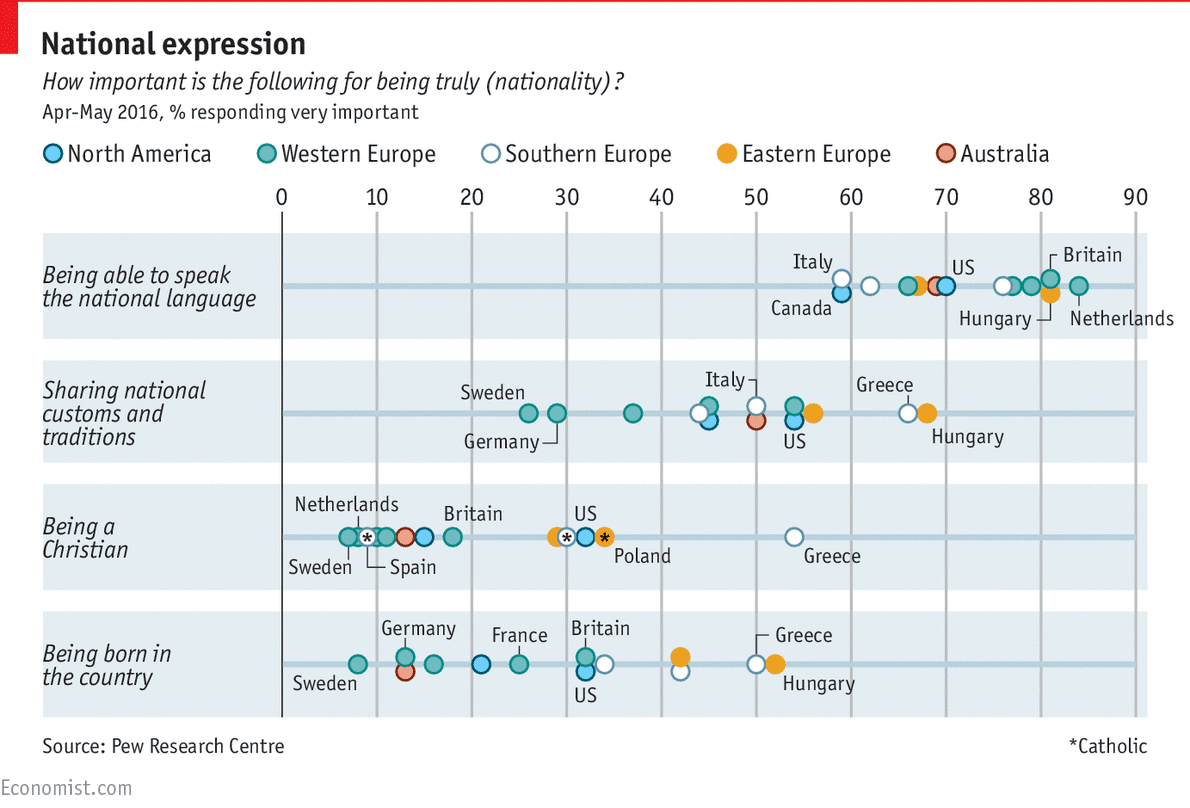
The Pew Research Center has released a study about how citizens in different countries define what it means to be a member of a distinct “nation”. The Center interviewed people from a variety of nations and found some interesting differences in terms of what constitutes a “birth right”. Language, religion, customs, and place of birth were some of the criteria used in the poll but there are some interesting variations among nations. The study is quite extensive and deserves a close read.
Romania has been rocked by very large protests over the last four days in response to an emergency decree by the government that decriminalizes governmental corruption if the amount of money involved is less than $48,000. The protests are the largest the country has seen since the downfall of the communist government in 1989. The European Union (EU) has voiced concern over the rule change and what it signals about the government’s commitment to democracy. The constitutional court will rule on the decree on Tuesday, but if it is not overturned, it will become effective on 9 February.
Romanian Protests

Public Radio International has a tremendous resource for those scholars who wish to place the current immigration debates in the US in historical contest. A number of historians have annotated President Trump’s Executive Order with references to similar policies in the past. The Executive Order without the annotations can be accessed here. The annotated version is an extraordinary window of how the immigration debate has waxed and waned throughout American history. The Immigration History Research Center at the University of Minnesota and the Immigration and Ethnic History Society have also produced an immigration syllabus which one can download and access readings.
As a matter of historical interest, Frédéric-Auguste Bartholdi, the designer of The Statue of Liberty, originally modeled the statue after an Arab woman. The statue was originally designed to celebrate the opening of the Suez Canal. But the ruler of Egypt went bankrupt and Bartholdi shelved the project. He then changed the garb of the statue to Greco-Roman and we now know the statue as Lady Liberty.

The US Department of the Treasury has very slightly eased some of the sanctions on Russia that were imposed because of Russia’s intervention in Ukraine. The change relates to the sale of “Requesting, receiving, utilizing, paying for, or dealing in licenses, permits, certifications, or notifications issued or registered by the Federal Security Service (a.k.a. Federalnaya Sluzhba Bezopasnosti) (a.k.a. FSB) [the FSB is the successor to the agency once called the KGB] for the importation, distribution, or use of information technology products in the Russian Federation.” The amounts are limited to $5,000 per year. In some sense the change is trivial, but it is a curious act given that the fighting in eastern Ukraine between Russian-speaking separatists and the Ukrainian government has spiked recently. First, the easing of information technology access to a country that has been implicated in cyber activities with the intent of influencing an election is hard to explain. Second, diplomacy is often the sending of very subtle signals (the breakthrough for US-Chinese relations was the sending of a ping-pong team in 1971) and it is difficult to figure out what this signal to Russia may be. The former director of the Federal Security Service (FSB) Nikolai Kovalyov was quoted in TASS as saying: ”
“This shows that actual joint work on establishing an anti-terrorism coalition is about to begin,” Kovalyov said. “This is the first step on the way leading to cooperation in the war on terror.”
“Without easing these sanctions it would have been impossible to take the next step,” the lawmaker said. “These practical actions indicate that US President Donald Trump has been consistent,” he stressed.
Apparently, Russia thinks the easing is significant.
We are getting more information about the US Special Operations attack on Yemen on 29 January. The attack had been developed in the Obama Administration but President Obama did not authorize the attack because he wanted additional intelligence before he committed to the use of force. The attack was described as successful by the Trump Administration even though a US Navy SEAL, chief petty officer William Owens, was killed and three other US soldiers were injured.
“White House spokesman Sean Spicer, who is also a US Navy Reserve public affairs officer, told Reuters: ‘Knowing that we killed an estimated 14 AQAP members and that we gathered an unbelievable amount of intelligence that will prevent the potential deaths or attacks on American soil — is something that I think most service members understand, that that’s why they joined the service.'”
According to medics at the scene of the strike, 30 civilians, including 10 women and children, were killed. According to The Guardian:
“The special forces, apparently lacking full intelligence, were confronted by heavily-fortified positions, including landmines, and faced heavy gunfire from buildings all around during the 50-minute firefight. One of the US planes sent in to help had to be left behind and was deliberately destroyed.
“US military officials told Reuters that Trump approved his first covert counterterrorism operation without sufficient intelligence, ground support or adequate backup preparations.”

The British House of Commons have voted, 498 votes to 114, to back Prime Minister Theresa May’s European Union Bill. The overwhelming vote in favor of negotiating an exit from the European Union does not match the closer referendum vote, 51.9% to 48.1% in favor of Brexit. But the vote reflects the decision of both the Labour and the Conservative Parties to honor the outcome of the election. The Scottish National Party and the Liberal Democrat leadership voted against the bill, suggesting that Scottish independence may be back into play.
US General David H. Petraeus gave testimony to the House Armed Services Committee during its Hearings on “The State of the World”. Petraeus is generally regarded as a very astute analyst and his testimony raised serious flags about the current trends in world affairs. I recommend the testimony to all who want a clear statement of the US vision of the liberal world order, not necessarily as an endorsement, but as a framework to understand previous US values and motives. Petraeus makes his position very clear:
“Americans should not take the current international order for granted. It did not will itself into existence. We created it. Likewise, it is not naturally self-sustaining. We have sustained it. If we stop doing so, it will fray and, eventually, collapse.”
President Trump’s National Security Adviser Michael Flynn gave a press briefing today in which he said: “As of today, we are officially putting Iran on notice.” The statement refers to the decision apparently made by the Trump Administration that the ballistic missile test two days ago violated UN Security Council Resolution 2231. Flynn also referred to the attacks by Houthi rebels in Yemen, believed by some to be backed by Iran, on Saudi Arabian naval vessels. Iranian Foreign Minister Mohammad Javad Zarif said that the “missiles are conventional and not capable of carrying warheads.” The European Union Representative to the UN Security Council indicated that it was up to the Security Council to determine whether Resolution 2231 had been violated. According to Bloomberg:
“Nabila Massrali, spokeswoman for EU foreign-policy chief Federica Mogherini, told reporters in Brussels that ‘the Iranian ballistic-missile program was not part’ of the 2015 nuclear pact with world powers and ‘hence the tests are not a violation of it.’ She said it was up to the top UN body to determine if they contravened its resolution 2231 on ballistic technology.”
It remains to be seen how the Trump Administration will respond to the missile test.
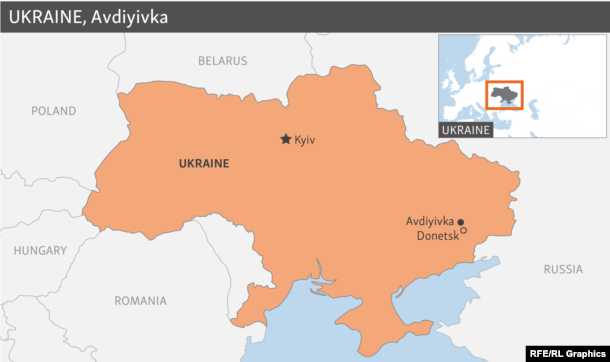
Heavy fighting has broken out for the third day around the city of Avdiyivka in eastern Ukraine. The city was government controlled, but rebels sympathetic to Russia have cut off electricity and water supplies to the city’s residents. The Ukrainian government is trying to evacuate those civilians to safer and more comfortable areas in the face of sub-freezing temperatures. Both sides accuse the other of violating the cease-fire that was signed in Minsk in February 2015. I suspect that the outbreak in fighting is a test by Russia of the new US Administration to gauge its commitment to the government in Kyiv. So far, the US has not issued a statement about the fighting.
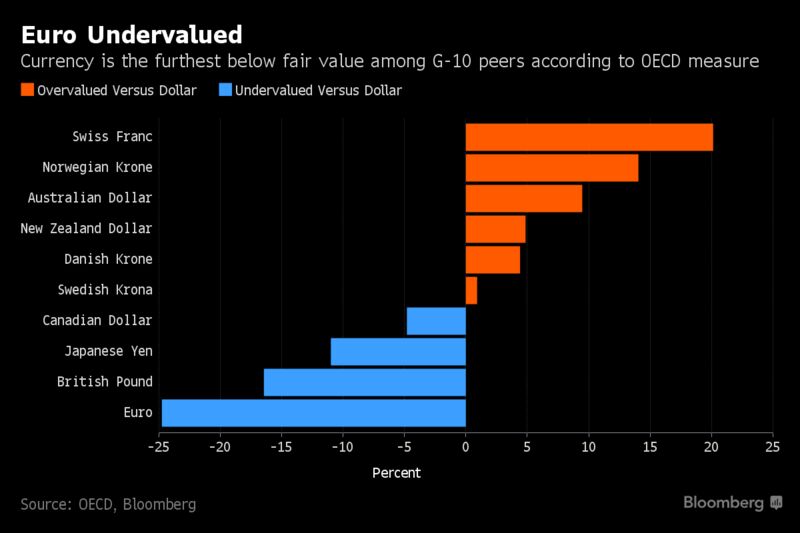
Peter Navarro, who heads the US President’s new National Trade Council, has accused Germany of undervaluing the euro in an attempt to boost German exports at the expense of its trading partners. In his statement, Navarro indicated that the US intends to move sharply away from its historical policy of free trade and will be seeking bilateral, as opposed to multilateral, trade deals. German Chancellor Merkel rejected the accusation, indicating that the euro’s value is a composite of trade balances and that the European Central Bank is independent of German control. The data, however, indicate that the euro is, in fact, undervalued.
President Trump and his press secretary Sean Spicer have adamantly denied that the Executive order regarding travel between the US and seven primarily Muslim majority population countries amounts to a ban. David A. Martin is a former Department of Homeland Security attorney and he has annotated the Executive Order issued by the Trump Administration. His annotations describe the background to each section of the order and provides important information about the intent of each section. For those readers who wish to understand the ban order in great detail, I highly recommend this piece.
In his press conference today, Sean Spicer argued that the shooting in Quebec of people in a mosque was “a terrible reminder of why we must remain vigilant and why the president is taking steps to be proactive rather than reactive when it comes to our nation’s safety and security.” The comment was made in defense of the new policy banning Syrian refugees and halting the immigration of Muslims from 6 other countries for 120 days. The shooter in Quebec, however, was a white nationalist opposed to Canadian immigration policies and all the victims were Muslim. Perhaps Mr. Spicer wants to ban Muslims from coming into the US in order to protect them from being murdered by similar white nationalists in America.
Russia is building up its military presence in the Arctic. Much of its territory lies within the Arctic Circle but most that territory was militarily inaccessible for a good part of the year. Climate change has changed that situation and the Russian expansion is clearly designed to make sure that, if a permanent naval route through the Arctic becomes possible because of ice melt, Russia will be able to control the rules of transit. The US Geological Service also estimates that 22% of undiscovered oil and natural gas reserves lie within the Arctic Circle and Russia wants to assure its control over those resources. Only a small part of US territory lies within the Arctic Circle (Alaska), but Canada has significant territorial claims as well. The country that stands to lose the most is China as maritime traffic through the Arctic Ocean would save China a tremendous amount of money on transportation costs to the European market.

Iran has reportedly tested a medium-range ballistic missile. If true, the test may have violated United Nations Security Council Resolution 1929, adopted on 9 June 2010, which reads, in part: “Iran is prohibited from undertaking any activity related to ballistic missiles capable of carrying nuclear weapons”. The test will become an issue for many states, but, if a controversy does emerge, it will be necessary to understand two important conditions.
- First, the simple test of a missile does not necessarily signal that it is capable of “carrying nuclear weapons”. Missiles can carry conventional weapons or can be used for space exploration. The key concern is whether Iran has succeeded in miniaturizing a nuclear bomb so that it can fit onto the missile, and that is the issue that needs to be verified.
- Second, the UN Resolution is not the Joint Comprehensive Plan of Action Regarding the Islamic Republic of Iran’s Nuclear Program (commonly known as the Iranian nuclear deal) which was signed in 2015. The written plan does not include any language concerning missile technology. The US did publish a fact sheet after the agreement was signed that claimed that missile development was covered by the agreement, but Iran rejected that interpretation. The US does have sanctions against missile development by Iran but those sanctions are based on the UN Security Council Resolution 1929 and not by the Joint Comprehensive Plan.
The reason why these distinctions are important is that the Iranian missile test may violate the Security Council Resolution which means that the Security Council must reconvene and decide what measures to take in retaliation; the missile test does not violate the Iranian nuclear deal which could be dealt with unilaterally by any of the six signatories to the agreement (the US, Great Britain, France, Russia, China, and Germany). So listen carefully to how the missile test is characterized.

