That aspect of the modern crisis which is bemoaned as a “wave of materialism” is related to what is called the “crisis of authority”. If the ruling class has lost its consensus, i.e. is no longer “leading” but only “dominant”, exercising coercive force alone, this means precisely that the great masses have become detached from their traditional ideologies, and no longer believe what they used to believe previously, etc. The crisis consists precisely in the fact that the old is dying and the new cannot be born; in this interregnum a great variety of morbid symptoms appear. –Antonio Gramsci, Selections from the Prison Notebooks
The deterioration of the market value of labor in richer parts of the world has been steady over the last forty years. Some poorer states, such as India and China, have enjoyed dramatic increases in the market value of labor during that same period. However, even those countries are beginning to experience a weakening of labor markets. Globalization has been the driving force of this trend, but the logic of globalization, and its more recent ancillary, robotization, will ultimately create a world, not of rich and poor nations, but of a unified rich elite and an undifferentiated mass of disenfranchised citizens. For self-protection, that elite will divert the anger and despair of those citizens away from policies designed to enhance the market value of labor into the destructive forces of nationalism, xenophobia, and authoritarianism.
That outcome was hardly predicted in 1991 when the last ideological competitor to the liberal world order, socialism, collapsed (an earlier competitor, fascism, had been vanquished by war in 1945). Economic activity conducted along classical liberal lines—market values determined by supply and demand, limited government intervention in that market, and reasonably stable currencies—was supposed to usher in an increasingly more comfortable and efficient world. Indeed, the idea of progress is central to the political attractiveness of market capitalism. There was, in the years following the collapse of the Berlin Wall in 1989, a sense that liberalism had “triumphed”. Indeed, Francis Fukuyama wrote that “liberal democracy may constitute the ‘end point of man’s ideological evolution’ and the ‘final form of human government,’ and as such constituted ‘the end of history.’”(Fukuyama 1992)
That outcome had also been predicted earlier. The world had witnessed a similar wave of globalization in the late 19th century. In both periods, globalization had been marked by dramatic changes in transportation and communications technologies which had the effect of creating global, and not local, supply chains. In both periods, a new economic power had arisen—the US in the 19th century and China in the 20th century—which upset previously well-established supply chains. And both periods experienced dramatic surges in income inequalities within certain socio-economic groups. The 19th century wave of globalization ended with World War I.
The 19th century collapse of globalization has been well documented and articulated by Kevin H. O’Rourke and Jeffrey G. Williamson in their book, Globalization and History: The Evolution of a Nineteenth Century Atlantic Economy. They argue:
The Impact of the railroad and the steamship was reinforced by political developments after 1860 as European economies moved rapidly toward free trade. The world was becoming a much smaller place, and to an observer in 1875, it must have seemed as if it was going to get a lot smaller. Yet nothing is inevitable. History shows that globalization can plant the seeds of its own destruction. Those seeds were planted in the 1870s, sprouted in the 1880s, grew vigorously around the turn of the century, and came to full flower in the dark years between the two world wars. (O’Rourke and Williamson 1993, 93)
This essay argues that in many respects, the current global economy mimics the O’Rourke and Williamson pattern.
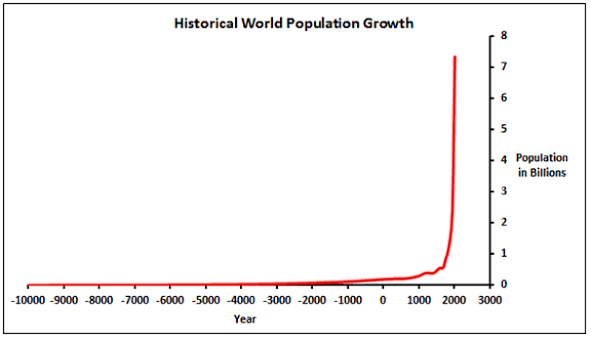
The pattern, however, is just a heuristic device. As compelling as some of the similarities between the two periods may seem, there are some very important differences as well. The 19th century contended with 2 billion people; the 21st century, 9 billion. No one in the 19th century regarded human activity as a decisive element in the global climate; the 21st century must address the urgent perils of climate change. The blood and soil nationalism of the late 19th century ushered in a devastating world war, a calamity thus far avoided in the 21st century. Finally, in the earlier time, the human intellect was regarded as singular. Humans in the future must wrestle with artificial intelligences of considerable powers.
Moreover, the pattern places too much emphasis on the process or globalization as the motor force of the backlash implied by O’Rourke and Williamson. The backlash against the liberal system of market capitalism has existed since it emerged: the desire to resist the commodification of social life so brilliantly explained by Karl Polanyi in The Great Transformation and described by him as the “countermovement” to market capitalism. (Polanyi 1944) That resistance is a parallel structure to globalization and it exists not only as a response to global economic intrusions on social life, but also in response to purely domestic consequences of market forces. Market capitalism has always had winners and losers—that outcome is not unique to globalization. The critical difference between the earlier period and now is that globalization has accelerated the process of losing and deepened it to include the former winners.
Finally, the pattern reflects a fundamental contradiction in the modern world system. The liberal systems of market capitalism and representative democracy operate in completely different realms. Market capitalism is truly universal and for it to operate most efficiently, the factors of land, labor, and capital should have no national identities. Representative democracy requires an emotional identity which has evolved in a profoundly parochial manner in the agency of the nation-state. The contradiction between global and local interests exists for all systems which purport to be universal. Marx might have believed that the proletariat had no homeland, but World War I and Stalin belied that claim. The nation-state has a hold on the minds of people that in times of distress can easily override the clinical self-interest assumed by the market. Dani Rodrik accurately described these tensions in his analysis of what he called the “trilemma”: that democracy, sovereignty and globalization cannot interact simultaneously. (Rodrik 2011)
The Rise in Income and Wealth Inequality in the World
There are wide variations in liberal practices in the world. The social democracies of Europe are at one end of the spectrum. At the other end are societies that adhere to stricter market rules. The United States is an example of the latter. The differences are important, but they also are narrowing. This essay focuses on the practices of the United States since its policies better illuminate how a state can be managed to serve the self-interest of a small group of people. Since 1971 the market has worked to benefit an increasingly shrinking share of the population. According to the Pew Research Center:
….”middle-income” Americans are defined as adults whose annual household income is two-thirds to double the national median, about $42,000 to $126,000 annually in 2014 dollars for a household of three. Under this definition, the middle class made up 50% of the U.S. adult population in 2015, down from 61% in 1971. (Pew Research Center, December 2015)
Middle-class income has “trickled-up.” After the Great Recession of 2008-09, the shift of income to higher-income groups was astonishing: “For the United States overall, the top 1 percent captured 85.1 percent of total income growth between 2009 and 2013. In 2013 the top 1 percent of families nationally made 25.3 times as much as the bottom 99 percent.” (Sommeiller et al. 2016)
Inequality was not a contentious political issue in post-1945 America until the Great Recession exposed the political foundations of inequality. The bail-outs of institutions that had induced the crisis by their exorbitantly risky behavior highlighted inequality by linking it directly to a political process. Gradually, greater attention has been paid to the question of income inequality, and the scholarly commitment to addressing that question was significantly boosted by the publication of Thomas Piketty’s book, Capital in the Twenty-First Century.
The earlier economic debates on inequality had centered on whether the traditional description of inequality—the Kuznets curve—was accurate. Named after the economist Simon Kuznets, the curve represented the rise of inequality as farmers moved into cities in the early period of industrialization, and its steady decline as industrialization matured and the forces of democratization created an economic safety net. Questions have arisen because the safety net has recently proven to be inadequate. (Acemoglu and Robinson 2002)
Why has the safety net failed to address inequality? Democracy has been derailed by rich elites who have used their economic power in the political process to further concentrate their wealth. The political response assumed by Kuznets is not self-executing. Over time, the accumulation of wealth creates the means to prevent the state from taxing it. The public good of a robust economy becomes the private good of a small number of people. Elites rarely, if ever, interact with the less fortunate in substantive ways. Rather, they develop rationalizations to explain the failures of the poor. Similarly, the poor have only a rough idea of how “rich” the rich have become over the last forty years. The scale of the discrepancy between the very rich and the not rich today defies imagination.
The ability of elites to redefine the public good in terms of their private interest is not historically unusual. It is very difficult to measure how this redefinition occurs but there are many studies that suggest that the influence of elites on legislative outcomes is decisive. Two Princeton scholars, Martin Gilens and Benjamin I. Page argue that:
When the preferences of economic elites and the stands of organized interest groups are controlled for, the preferences of the average American appear to have only a minuscule, near-zero, statistically non-significant impact upon public policy. (Gilens and Page 2014, 575)
The historical record suggests that when wealth becomes highly concentrated, public policy is determined more by the interests of the elites than by the interests of the majority.
Even those who do not believe that income inequality is in and of itself a problem were flummoxed by the consequences of liberalizing the American economy since the 1970s. In October 2008, Alan Greenspan, the former chairman of the U.S. Federal Reserve, testified to the House Committee on Oversight and Government Reform. When asked to explain how the behavior of several financial institutions led to the financial collapse of 2008, Mr. Greenspan told the Committee: “Those of us who have looked to the self-interest of lending institutions to protect shareholders’ equity, myself included, are in a state of shocked disbelief”. Self-interest is the bedrock of liberalism, but liberal theorists used the term in a social, not a personal, context. Self-interest is not selfishness. Self-interest includes a concern for the long-run, a regard for those with whom one will interact over time, and actions that will create a well-functioning economy that will be shared by all. In other words, the public good is the ultimate objective of liberalism; individual freedom is simply a means to that end.
Mr. Greenspan should not have been surprised that lending institutions involved in the subprime mortgage crisis did not care about the public good—they did not even care about the interests of their shareholders. The chief executives of those institutions had carefully insulated themselves from the consequences of their actions. Mr. Greenspan was remembering a time when investment banks were privately owned, and profits and losses were borne almost exclusively by the partners in the firm. That circumstance assured that the self-interest of the partners was closely identified with the viability of the firm over the long term. That world ended when the investment banks went public. Once the link between private and public loss was severed, the executives of those firms could assure themselves of generous compensation, even if the firm itself suffered a loss or went into bankruptcy. The loss was shifted to the shareholders, or, in the most extreme case, to a central bank or sovereign government. Selfishness no longer required self-interest, if compensation committees and shareholders were passive or co-opted. The executives had eliminated all personal risk to their behavior.
This circumstance was never envisioned by the classical liberal theorists: the public good was never something that should be privatized. For them, it was inextricably tied to the social universe in which capitalists and democrats were born, had children, lived out their lives, and died. Current day pseudo-liberals are fond of quoting Adam Smith’s Wealth of Nations. They would be better advised to read Smith’s Theory of Moral Sentiments which warns of the dangers of accumulating wealth without due regard for the society that collectively creates the condition for that wealth:
“This disposition to admire, and almost to worship, the rich and the powerful, and to despise, or, at least, to neglect persons of poor and mean condition….is…. the great and most universal cause of the corruption of our moral sentiments.” (Smith 1790. I.III.28)
The present age is one that has deliberately chosen to disregard his advice, and in so doing has compromised the economic progress once promised by the original liberal theorists.
The ideology of neoliberalism is not self-executing. The Kuznets Curve suggests an inherent internal dynamic in the political economy of the market which can correct the tendency toward greater inequality. That suggestion is misleading. Democratization can lead to greater measures to protect the poor, but it can also lead to measures that heighten inequality. The US passed through a similar period in the late 19th and early 20th centuries in which incomes and wealth were concentrated among a very few. The Great Depression was a consequence of that concentration and the US took several steps in the New Deal to avoid a repeat of the Great Depression. Those steps were not automatic nor were they part of an endogenous economic dynamic: they required concerted political effort. But the New Deal validated the link between inequality and political action predicted by Kuznets.
The path to the Great Recession of 2008-09 was also laid down by a series of political decisions, such as the repeal of the Glass-Steagall Act, to undo the protections of the Great Deal. In this process of de-regulation, democracy was not used to benefit the greater good. The impact of these decisions was significantly amplified by the accelerating process of globalization which opened even greater opportunities for capital while weakening the power of labor by essentially doubling the available workforce from about 1.5 billion to 3 billion.
This freeing up of capital was not restricted to the US. Relaxing government regulation, reducing taxation, fostering the free movement of capital, and emphasizing economic growth instead of economic development were the mainstays of the liberal economic order designed by the US in 1944 in the Bretton Woods institutions: the World Bank, the International Monetary Fund, and what we now call the World Trade Organization. The collapse of the Soviet Union and the decisions in the 1990s by both China and India to adhere to the rules of these organizations created, for the first time in human history, a truly universal market for capital.
These institutions have fostered the liberal ideology and have been marketed under different rubrics: structural adjustment programs, the Washington Consensus, austerity, and neoliberalism. This ideology is externally imposed at a moment of weakness in the economy of a nation-state, whether that weakness is a debt crisis, a sustained payments imbalance, or a sharp uptick in poverty. In most cases, those policies have been imposed on poor states. But neoliberalism can also be self-imposed. The deep unwillingness of the US to consider tax increases to support the less well off in the United States is a political choice. The objective of those choices is to disarm the power of the state to restrict the freedom of those who own capital.
The American experience was mirrored globally. Poorer countries had had austerity programs enforced on them by the International Monetary Fund and the World Bank for many years and their effects have been, at best, mixed. (Easterly 2005) More recently, richer countries have had austerity programs imposed on them as well as conditions for sovereign debt relief. For example, since 2008 Greece has received three rounds of assistance from international organizations. In return for this assistance, Greece cut its government budget, raised taxes, reduced pensions, and reduced services. The quality of life in Greece has deteriorated. Austerity programs in Greece were imposed so that wealth could be transferred from the ordinary Greek citizen to the banks that hold Greek debt. The programs are designed to protect the interests of the rich at the expense of the poor.
Overall, the global economy has grown prodigiously over the last 40 years. In many countries, such as China, economic growth has lifted millions out of poverty. Dieter Ernst has a more detailed analysis of China and the process of technological change in Chapter 9 of this volume. However, globalization has also punished labor by facilitating the use of the lowest-cost labor linked into a global supply chain which knows no boundaries of time and space. Those who rely on the market value of labor to survive are being economically disenfranchised, and robotization is likely to aggravate that trend.
From 1990 to 2009 the share of labor compensation in national income in 26 of the 30 OECD countries declined from 66.1 percent to 61.7 percent. (International Labour Organization 2013) This decline occurred despite rising productivity in most of these economies, a shift from traditional patterns where labor’s share increased as productivity increased. This shift has been noted by MIT professors Erik Brynjolfsson and Andrew McAfee in their book, Race Against the Machine, and they attribute this shift to increasing automation in the work place. (Brynjolfsson and McAfee 2012) Oxford researchers, Carl Benedikt Frey & Michael A. Osborne, estimate that 45 percent of US employment is susceptible to computerization. (Frey and Osborne 2013) More recent research suggests that the impact of robotization might be more even significant than expected. (Acemoglu and Restrepo 2017) The chapters by Martin Ford and Irmgard Nübler in this volume give more detail on the issue of how robotization will affect employment.
The current wave of technology is different from previous waves. Technology has often had the effect of reducing the need for human labor and, by and large, these reductions have allowed humans to pursue more productive and less dangerous activities. Usually there is a period of transition as the new technology displaces workers, but, over time, the increase in economic activity has created new opportunities for more creative work. Historically, more jobs have been created by technological innovation.
This time, however, the changes will be different.
First, the changes will affect more people. When the Luddites protested the introduction of technology, their numbers were quite small and the textile factories were not very large in contrast to today. For example, in 1980 the Parkdale Mills in South Carolina produced 2.5 million pounds of yarn every week with 2,000 workers; it now employs 140 workers. (Clifford 2013) Similar job displacements will occur in countries like China. Because robotization expands productivity as much as 20 times per worker, the phenomenon will have a dramatic effect on Chinese industry. (Middlehurst 2015) Even low wages cannot compete with no wages.
Second, the jobs created by this technological revolution will likely be for highly skilled workers. It is hard to imagine what kind of jobs for unskilled workers will be created by the robotization revolution, although that possibility cannot be discounted. It is harder to imagine societies comprised only of individuals with the aptitude or the inclination to develop higher skills. It is also difficult to imagine the sustained societal commitment necessary to raise skill levels for all. There are very few reasons to believe that the declining share of labor in national income will do anything but continue.
Finally, earlier periods of technological change occurred when there were existing social and economic alternatives for the technologically dispossessed. Think of the differences in the United States between the technological wave of the late 19th century and the current technological wave. Families were more tightly integrated and social groups were deeper and more willing to cushion the blow of unemployment. There were also more ways to keep oneself alive without an industrial job. Farming and other means of subsistence were still viable for many and housing was less expensive. At other times of technological change, unions were strong enough to cushion the impact of dislocation. Today, only the state and private charity offer shelter from hard times.
There is no need to answer the question of whether robotization will bring about the end of jobs. That question is impossible to answer and the wrong question to ask (The Economist 25 June 2016). As Mignon Duffy and Robert Pollin persuasively argue in this book, there are very large number of potential jobs serving infrastructure, the environment, and social needs. The correct question to ask is “how do we pay for these services?” The neoliberal response has always been that only jobs associated with private profit should command an income. That response has assured us all that we can have an unlimited supply of Pet Rocks, but does nothing to assure that we can all drink clean water. David Rueda and Stefan Thewissen address the issue of compensation in Chapter 7 of this volume.
It also matters little to the unemployed that the future might be brighter for employment. Robotization may in fact create more jobs in the long run, but future economic payoffs do nothing to diminish the political effects of lost jobs. Workers must pay a mortgage this month, or a tuition bill this semester, or a doctor’s bill this week. Only relatively few individuals can afford the luxury of a long-run perspective.
President Trump has changed many of the foreign policies of the United States, consistent with his desire to emphasize US national interests. This change is not one of kind since all states place a high priority on concrete interests. But the change away from trying to accommodate global interests has led to a sharp decline in American commitments to international actions and cooperation. What are the long-term consequences of this change in emphasis?
Overview
Donald Trump’s foreign policy centers on an “America First” approach, emphasizing tariffs, reduced multilateral commitments, assertive military actions, and recalibrated alliances, as seen in his Iran diplomacy, tariff regimes, NATO pressure, and interventions such as the Caracas raid.
Core Principles
America First Doctrine: Prioritizes U.S. sovereignty, economic security, and reduced foreign intervention.
Skepticism of Multilateralism: Hostility toward the EU, WTO, and multilateral treaties; preference for bilateral deals.
Economic Nationalism: Heavy use of tariffs to reshape global trade and pressure partners.
Key Areas of Action
1. Middle East & Iran
Trump’s meetings with Netanyahu focused on Iran’s nuclear program and regional influence.
Asserted Iran was taking negotiations more seriously amid heightened tensions.
Proposed a 20% fee on cargo through the Strait of Hormuz, revealing impulsive decision-making and rapid policy reversals.
2. Trade Policy
Imposed sweeping tariffs (10–12.5%) on imports from 60 partners under Section 301, replacing earlier reciprocal tariffs struck down by the Supreme Court. India received a lower 10% rate after policy changes.
Tariffs strained relations with allies and triggered retaliatory measures from China, the EU, and Canada.
3. Alliances & Global Institutions
Criticized NATO as “obsolete,” demanding increased defense spending from allies.
Threatened withdrawal from agreements like NAFTA and the Trans-Pacific Partnership.
4. Military Interventions & Security Strategy
Despite isolationist rhetoric, Trump engaged in assertive military actions, including the Caracas raid removing Nicolás Maduro.
Mixed signals on intervention: withdrew troops from Syria and Afghanistan but also authorized strikes and escalated pressure on adversaries.
5. Ukraine & Russia
Meetings with Zelensky highlighted tensions over U.S. support and internal chaos in diplomatic engagements. Foreign policy under Trump 2.0 remained highly active despite expectations of isolationism.
Strategic Vision
Trump’s National Security Strategy (2025) rejects post–Cold War global hegemony, emphasizing realism, sovereignty, and hemispheric dominance while focusing on China containment.
Trump’s foreign policy consistently blends nationalism, unpredictability, and unilateralism, reshaping U.S. global engagement across trade, security, and diplomacy.
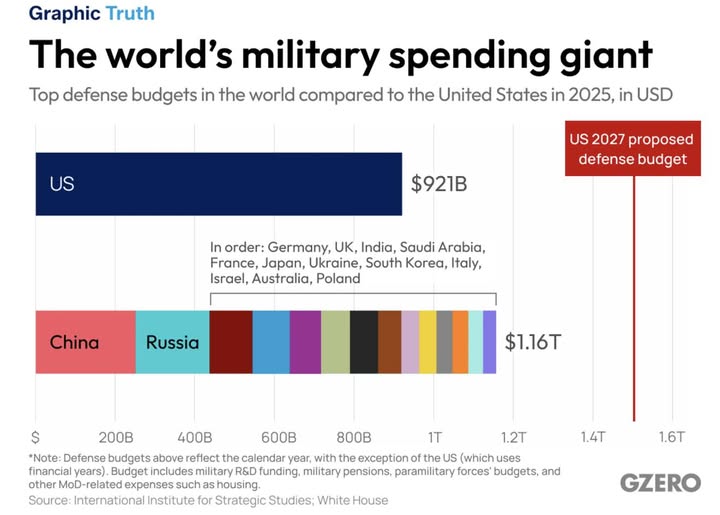
The wars in Ukraine and In the Middle East have demonstrated new military technologies such as drones which have changed power dynamics to favor weaker states. Their effectiveness calls into question the effectiveness of large, massed armies and navies. Do the new military technologies undermine great powers in their interactions with poorer and weaker adversaries? How might these new technologies change the nature of world politics?
The recent rise of nationalist parties in the world raises questions about how citizens of the world regard each other. Intense nationalism, emphasizing blood and soil, excludes many people and has roiled the arenas of immigration, culture, and citizenship. The most insidious form of this attitude is antisemitism, which has once again become more prominent in political discourse. Intense nationalism is also an underlying cause of many wars, most notably World War I. Are we headed in the same direction today?
The rise of antisemitism has reached alarming levels, with a documented increase of 107.7% in antisemitic incidents globally in 2024, driven by a mix of ideological extremism and geopolitical tensions.
Recent Statistics and Trends
In 2024, the Antisemitism Research Center reported 6,326 incidents of antisemitism, marking a staggering increase from previous years. This surge is attributed to a combination of far-left, far-right, and Islamist extremism, with 68.4% of incidents linked to far-left ideology. This represents a significant shift from 2023, where incidents from both far-left and far-right sources were roughly equal. The far-right incidents dropped by 54.8%, indicating a change in the landscape of antisemitic activity
Geopolitical Context
The rise in antisemitism is closely tied to the ongoing Israeli-Palestinian conflict, particularly following the events of October 7, 2023. The conflict has intensified existing tensions, leading to increased hostility towards Jewish communities worldwide. Reports of vandalism, threats, and violence against Jewish institutions have surged, particularly in countries like Australia, where incidents have included graffiti and arson targeting synagogues and Jewish schools
Historical and Ideological Factors
Antisemitism has deep historical roots, evolving from religious persecution to modern political scapegoating. The current rise is fueled by a mix of conspiracy theories, social media disinformation, and radicalized movements that exploit the Israeli-Palestinian conflict to justify antisemitic sentiments. The perception of Jews as responsible for various societal issues has been perpetuated by extremist ideologies, leading to a resurgence of hate onlineopinion.com.au.
Conclusion
The alarming rise of antisemitism in recent years underscores the urgent need for global awareness and action. As antisemitic incidents continue to escalate, it is crucial for communities, governments, and organizations to address the underlying causes and work towards fostering understanding and tolerance. Without decisive action, the world risks entering a new era where antisemitism is not only tolerated but institutionalized, threatening the safety and stability of Jewish life globally.
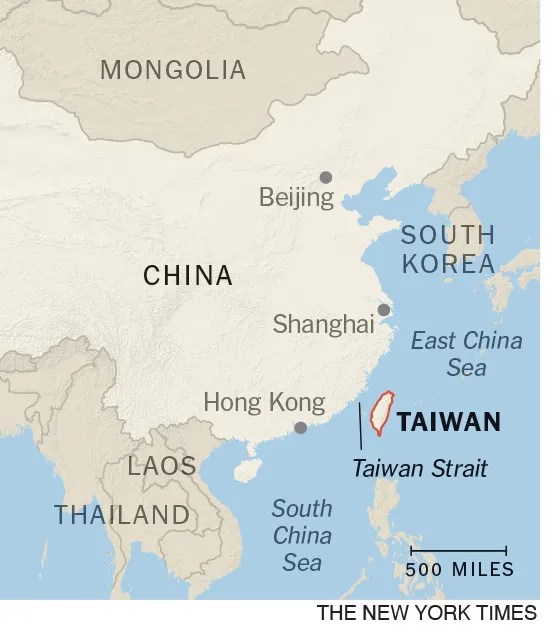
In the Shanghai Communique of 1972, the US agreed that Taiwan is part of China but nonetheless insisted that the eventual integration of Taiwan into the People’s Republic of China should not be a violent transition. Since that time, the US and China have been unable to agree on a strategy to implement that decision, and Chinese President Xi has announced that he wants the question resolved by 2027. Can the dispute over the status of Taiwan be settled peacefully or is a violent conflict on the question inevitable?
CNBC, “Xi warns Trump: Mishandling Taiwan will put U.S.-China relationship in ‘great jeopardy’”, 13 May, 2026
Nov. 5
Artificial Intelligence and the Global Economy
The swift rise of Artificial intelligence (AI) may prove to be as transformative as the Industrial revolution. As was the case with the Industrial Revolution there will be winners and losers in the transformation. The big fear of AI is that it will lead to a diminished power for labor and enhanced power to the owners of capital. Can the burgeoning economic inequality that accompanies AI be managed effectively so that the benefits of Ai can be enjoyed by all. Or will those benefits be concentrated among a small minority of rich people?
Climate change is unquestionably happening although its effects are not yet universal or as systemic as some fear. Nonetheless, some local effects, such as wildfires, flooding, and heat waves have impacted the lives of millions already. Climate change threatens to upend traditional notions of sovereignty since the more global manifestations of climate change, such as sea level increases and water shortages are becoming more pronounced and are issues that can only be settled by international cooperation. But progress at that level has been sporadic and ineffective. Can the world learn how to manage the process of climate change by cooperating in ways that threaten traditional notions of sovereignty?
Trump has made clear what issue he thinks the Republican Party should emphasize in the upcoming mid-term elections. With the election of Democratic Socialists in several local and national elections, Trump believes that a campaign against “communism” will protect Republican office-seekers. Unfortunately, Trump has no idea what the word communism actually means.
The Democratic Socialists elected, such as Mamdani in New York City, have argued that stronger redistributive measures should be pursued in order to protect the interests of non-wealthy people. For example, Mamdani argues for the state to provide child-care assistance, a necessity for working families but one which has become prohibitively expensive. There is little question that such a policy would require higher tax revenues, and that us the basis for charging the Democrats as being communists.
That is a ridiculous accusation. The state provides a great deal of economic assistance to private enterprises, such as subsidies for farmers or tax incentives for fossil fuel companies. All those policies require higher taxes, but few Republicans in Iowa or Texas cry “communism” when they get the money. Market capitalism can handle such deviations in times of stress, as Keynes argued in the early part of the 20th century. The difference between paying for day care or paying farmers not to grow food is merely one of selecting which parts of the economy one wishes to support–not that the subsidies themselves are evidence of communism.
The key distinction between capitalism and communism is whether the decisions to invest in various economic enterprises is private or public. In capitalism, private individuals or corporations make investment decisions; in communism, the state, usually under the rubric of a Central Planning Committee, make investment decisions.
By this measure, Trump himself has become a communist. He has inserted the US government into investment decisions by securing shares in various corporations or by setting policies that directly affect those decisions. The list of state investments in private corporations is stunning:
Critical minerals & rare earths
MP Materials — rare earth mining in California
USA Rare Earth — critical minerals
Lithium Americas — lithium mining
Trilogy Metals — Arctic-region mining
Vulcan Elements — critical minerals
ReElement Technologies — rare earth processing
Semiconductors & advanced tech
Intel — semiconductor manufacturing
Nvidia — AI chips (structured deal, not necessarily a direct stake yet)
xLight — semiconductor/tech sector
Industrial & energy
U.S. Steel — domestic steel production
Westinghouse — nuclear energy
Moreover, Trump has become heavily involved in decisions being made by Artificial Intelligence companies. The New York Times reports:
“On A.I., the White House has effectively created and put into effect its own mini-regulatory administration. The Trump administration’s directions to Anthropic and OpenAI follow its release last month of an executive order creating, by fiat, a regulatory framework for identifying “covered frontier models” and steering their release. The order contains some good ideas for Congress to consider, but it does not execute a law passed by Congress; it creates its own.”
Now that the US Government has made these types of decisions for specific corporation, one should assess how those decisions affect competitors in each field. The playing field for competition has been altered, and who knows if the government’s decisions are consistent or not with the supply and demand dynamics of the market. But the possibility of government largesse is difficult to resist.
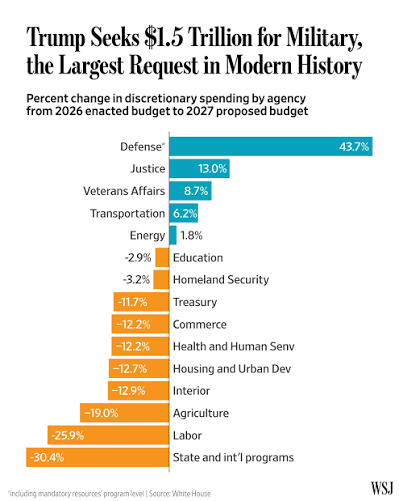
Finally, Trump is making all sorts of economic decisions with tariffs with no input whatsoever from the Congress (although the courts have retained their voice). All those tariffs have a significant effect on investment decisions, but it is not at all clear that the tariffs have any economic logic or whether they are solely based upon political concerns. Government intervention in the second Trump Administration has been incredibly heavy-handed. Trump has become the sole repository of such decisions in much the same way a Central Planning Committee would make decisions.
The Trump Administration is currently engaged in diplomatic talks with Iran, ostensibly over Iran’s nuclear program. If the issue is simply halting the Uranium enrichment program in Iran, there are some reasons to be optimistic. Iran seems willing to return to the agreement forged by the US, Germany, Russia, China, France and Great Britain during the Obama Administration. That agreement limited the level of enrichment to those levels necessary to build a nuclear bomb in return for the lifting of economic sanctions on Iran. But the US and Israel are demanding other limitations, including restrictions on Iran’s missile program (which was never part of the original deal).
In order to buttress his demands, Trump has ordered a significant expansion of the US military presence near Iran, including the dispatch of another aircraft carrier to the region. Axios describes the scale of the buildup:
“Trump’s armada has grown to include two aircraft carriers, a dozen warships, hundreds of fighter jets and multiple air defense systems. Some of that firepower is still on its way.
More than 150 U.S. military cargo flights have moved weapons systems and ammunition to the Middle East.
In the past 24 hours, another 50 fighter jets — F-35s, F-22s and F-16s — headed to the region.
“Between the lines: Trump’s military and rhetorical buildups make it hard for him to back down without major concessions from Iran on its nuclear program.
It’s not in Trump’s nature, and his advisers don’t view the deployment of all that hardware as a bluff.
:With Trump, anything can happen. But all signs point to him pulling the trigger if talks fail.”
It is doubtful that Iran will agree to those additional demands. Robert Reich believes that Trump wants “regime change” in Iran which essentially means the removal of the Supreme leader, Ayatollah Ali Khamenei:
“The United States is being represented in the talks by “Special Envoy” Steve Witkoff (whose son is the chief executive of World Liberty Financial, the Trump family’s cryptocurrency company, nearly half of which was purchased last year for $500 million by an investment firm tied to the United Arab Emirates). And by Trump son-in-law Jared Kushner (who’s been making private deals with the Saudis and who raised several billion dollars before Trump’s second term from overseas investors including sovereign wealth funds of Saudi Arabia, Qatar, and the United Arab Emirates).
“No one from the State Department. Nobody from the National Security Council. No one who knows much of anything about Iran.
“So what’s the real goal?
“On Friday, in a little-noticed remark, Trump said “the best thing that could happen” in Iran would be regime change, noting “there are people” who could take over from Iran’s Islamic ruler Ayatollah Ali Khamenei.”
That objective is significantly more complicated than the removal of Venezuelan leader, Maduro. I have given up on trying to predict what Trump will actually do (largely because I believe that often he has no real plan for the consequences of his actions). But it seems to be clear that Israel is pushing hard for a more sustained attack: According to the New York Times:
“In Israel, the two defense officials said that significant preparations were underway for the possibility of a joint strike with the United States, even though no decision has been made about whether to carry out such an attack. They said the planning envisions delivering a severe blow over a number of days with the goal of forcing Iran into concessions at the negotiating table that it has so far been unwilling to make.
“The U.S. buildup suggests an array of possible Iranian targets, including short and medium range missiles, missile storage depots, nuclear sites and other military targets, such as headquarters of Iran’s Islamic Revolutionary Guard Corps.”
There are currently negotiations between the US and Iran in Geneva on the nuclear issue. But it does not appear that any progress has been made on the ballistic missile issue. Moreover, the Trump Administration may think that the recent protests in Iran make the possibility of a regime collapse more likely, and that a sustained attack on Iran would usher in regime change. There does not seem to be much discussion on the implications of an overthrow of the regime. Iran is different from the intervention in Venezuela which does not seem to have changed the character of the Venezuelan government much. There are many more fragmenting concerns in Iran: ethnic issues, distributional issues, and the threat of a sustained drought.
“Prime Minister Donald Tusk called on Thursday for all Polish citizens to leave Iran, after US President Donald Trump again hinted at military action against the Islamic Republic.
“’Everyone who is still in Iran must leave immediately, and under no circumstances should anyone plan to travel to that country,’ he said at a press conference.
He added that ‘the possibility of heated conflict is very real, and in a few, a dozen or several dozen hours, evacuation may no longer be an option.'”
If the attack occurs, it will mark the seventh time Trump has bombed a foreign power since January. I have not checked, but it seems to me that this is probably a record number of bombed states for any President in the first year of a presidential term.
The Munich Security Conference is an annual event held in Germany every year. It is an assemblage of experts in security matters, and generally it focuses on military matters. It issues a security report after each meeting and this year’s report is quite stunning in its bluntness. This is an excerpt from its Executive Summary:
“The world has entered a period of wrecking-ball politics. Sweeping destruction – rather than careful reforms and policy corrections – is the order of the day. The most prominent of those who promise to free their country from the existing order’s constraints and rebuild a stronger, more prosperous nation is the current US administration. As a result, more than 80 years after construction began, the US-led post-1945 international order is now under destruction.
“In many Western societies, political forces favoring destruction over reform are gaining momentum. Driven by resentment and regret over the liberal trajectory their societies have embarked on, they seek to tear down structures that they believe will prevent the emergence of stronger, more prosperous nations. Their disruptive agendas build on widespread disenchantment with the performance of democratic institutions and a pervasive loss of trust in meaningful reforms and political course corrections. In all G7 countries surveyed for the Munich Security Index 2026, only a tiny proportion of respondents say that their current government’s policies will make future generations better off. And both domestically and internationally, political structures are now perceived as overly bureaucratized and judicialized, impossible to reform and adapt to better serve the people’s needs. The result is a new climate in which those who employ bulldozers, wrecking balls, and chainsaws are often cautiously admired if not openly celebrated.
“The most powerful of those who take the axe to existing rules and institutions is US President Donald Trump.”
The report is, no doubt, a response to the National Security Strategy white paper issued by the Trump Administration in November 2025. But the perspective of the US paper is radically different:
“Over the past nine months, we have brought our nation–and the world–back from the brink of catastrophe and disaster. After four years of weakness, my administration has moved with urgency and historic speed to restore American strength at home and abroad, and bring peace and security to our world.
“No administration in history has achieved so dramatic a turnaround in so short a time.”
This juxtaposition of perspectives defies an easy explanation–both cannot be true at the same time. One is clearly wrong. There is no doubt in my mind that the Munich group is much closer to the mark. That raises a serious question: Who is writing this delusional nonsense for Trump? And why are Americans and the world not doing more to stop this ignorant fool?
The New York Times conducted an extensive interview with President Trump which is definitely worth reading with a very critical eye. Much of the interview was simple gibberish, but the Times highlighted an astonishing excerpt:
“President Trump declared on Wednesday evening that his power as commander in chief is constrained only by his ‘own morality,’ brushing aside international law and other checks on his ability to use military might to strike, invade or coerce nations around the world.
“Asked in a wide-ranging interview with The New York Times if there were any limits on his global powers, Mr. Trump said: ‘Yeah, there is one thing. My own morality. My own mind. It’s the only thing that can stop me.’
“’I don’t need international law,’ he added. ‘I’m not looking to hurt people.’
When pressed further about whether his administration needed to abide by international law, Mr. Trump said, ‘I do.’ But he made clear he would be the arbiter when such constraints applied to the United States.
“’It depends what your definition of international law is,’ he said.
“Mr. Trump’s assessment of his own freedom to use any instrument of military, economic or political power to cement American supremacy was the most blunt acknowledgment yet of his worldview. At its core is the concept that national strength, rather than laws, treaties and conventions, should be the deciding factor as powers collide.”
The quotes reveal a mentality toward governance that harks back to Louis XIV: “L’État, c’est moi“. It is a perspective that generated abject misery among the poorer classes during Louis’s reign and ultimately led to the French Revolution. It is a perspective that has no place in a democratic republic. And it epitomizes an arrogance that is truly sinister and frightening.
This is clearly a day that will live in infamy for the US, even as many in the US regard the insurrection as a patriotic act. I remain dumbfounded how the lie of a “stolen” election persists. It is a mark of how willing some are to be deluded in the thrall of an execrable and selfish person who manages to make promises that he can never keep. More bewildering, however, is how easily Trump has discarded the world order promised by the creation of the United Nations and the International Court of Justice. My hope was that some countries who benefited from that world order (think China and Europe) would have tried harder to maintain the system.
But, as argued in a previous post, Trump has led the world into the 19th Century system of the balance of power.
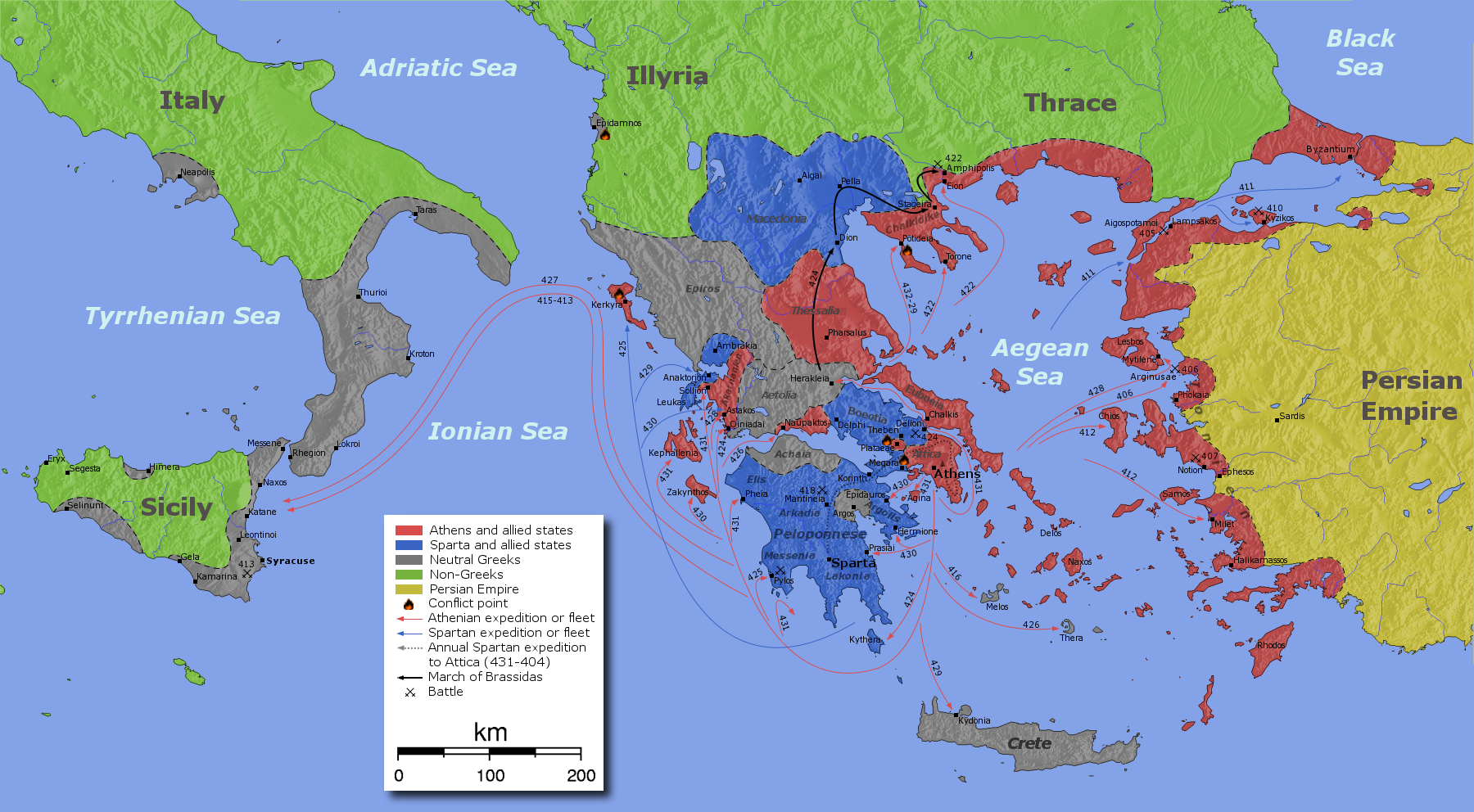
The balance of power is perhaps the most enduring pattern in world politics, and we can trace its applications in many historical situations. The first record of powers explicitly talking about the balance of power was during the Peloponnesian War between Athens and Sparta (431–404 BCE) written by Thucydides. The part of that war which most clearly expresses the logic of the balance of power occurs when the Athenians try to conquer the island of Melos, which was a colony of Sparta. In debating with the people of Melos, the Athenians are explicit about the importance of the balance of power: “Of the gods we believe, and of men we know, that by a necessary law of their nature they rule wherever they can. And it is not as if we were the first to make this law, or to act upon it when made: we found it existing before us, and shall leave it to exist forever after us; all we do is to make use of it, knowing that you and everybody else, having the same power we have, would do the same as we do.”
As one can see from this map, Melos was quite far from Athens, and it posed no security threat at all to Athens. The Melians tried to persuade the Athenians that they would remain completely neutral in Athens’ war with Sparta. When that gambit failed, they resorted to a moral argument: that it was morally wrong for a stronger power to exert its will on a weaker power if there was no security threat to manage. Ultimately, the Athenians simply said that their power gave them the right to subjugate Melos–the first fully articulated defense of the argument that “might makes right”.
In the end, the Athenians conquered Melos, and Thucydides, writing of this tragedy, simply stated “Reinforcements afterwards arriving from Athens in consequence….the siege was now pressed vigorously…the Melians surrendered at discretion to the Athenians who put to death all the grown men whom they took and sold the women and children for slaves…and settled the place themselves.”
With this in mind, it was startling to hear Stephen Miller, an advisor to Trump, in an interview with Jake Tapper of CNN, sounding exactly like the Athenians. For those who cannot bear to listen to Miller, the important part of the interview begins at around the 5:30 minute-mark.
The phrase “plus ça change, plus c’est la même chose” only hints at the melancholy I felt when I heard this interview. Indeed, Miller is correct that “might makes right” operates in many situations. But that adage brought about World War I and World War II, and the effort after 1945 was to try to create a different world order. I guarantee that Miller’s worldview will only lead to similar catastrophes to the world wars because the Great Powers today agree on very little about the world they prefer. Eventually, the balance of power system fails after there are no longer any weaker states to conquer and the Great Powers turn on each other.
Imperialism never dies, but it changes its clothes every so often. After World War II ended, the colonial empires created by European states slowly disintegrated, a process that is still ongoing. But at the end of the war, there was a sense that the idea of self-determination should override the impulse to dominate. That end never materialized, but the more ostentatious trappings of imperialism became difficult to maintain and the right to dominate was articulated in the language of democracy and liberation.
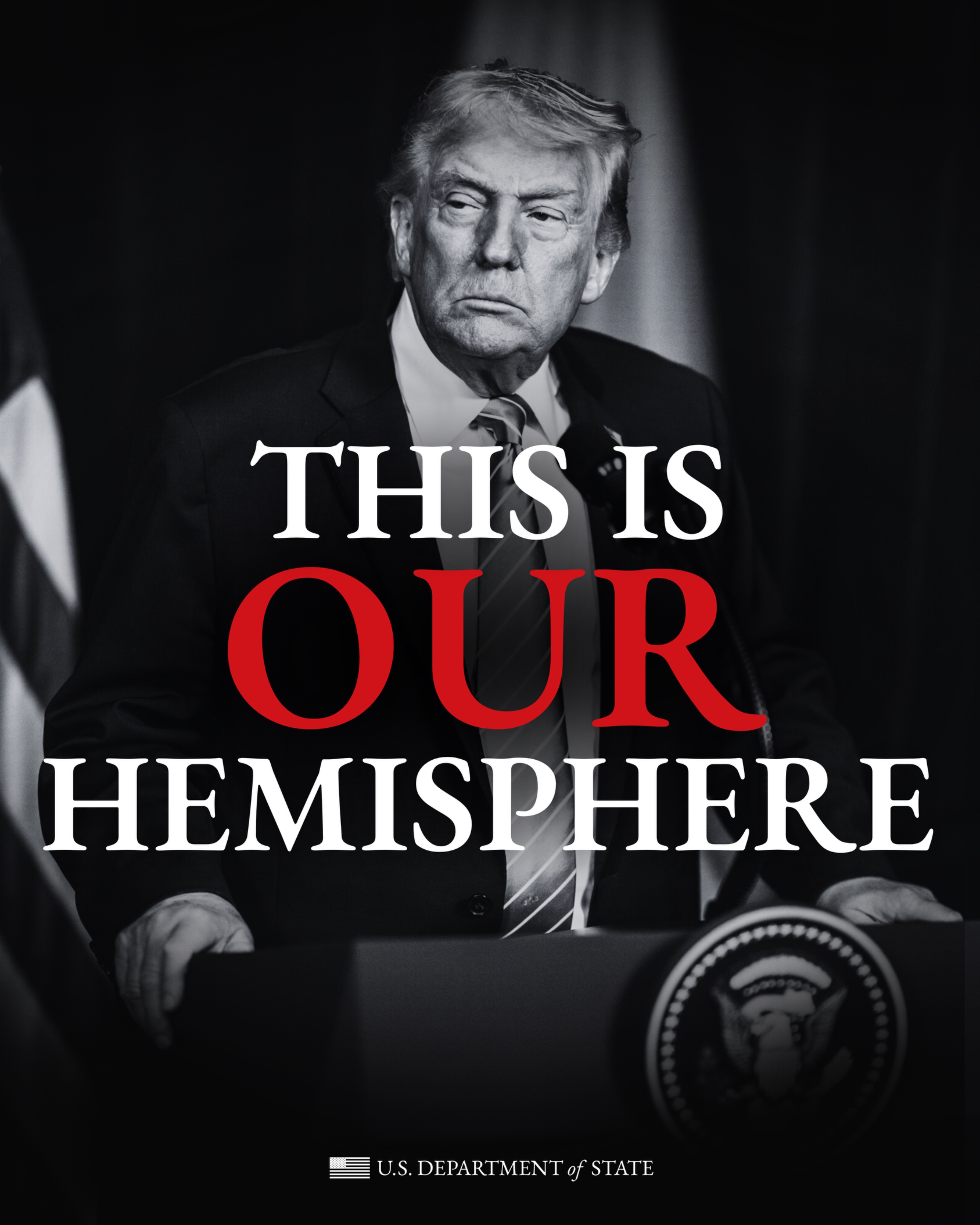
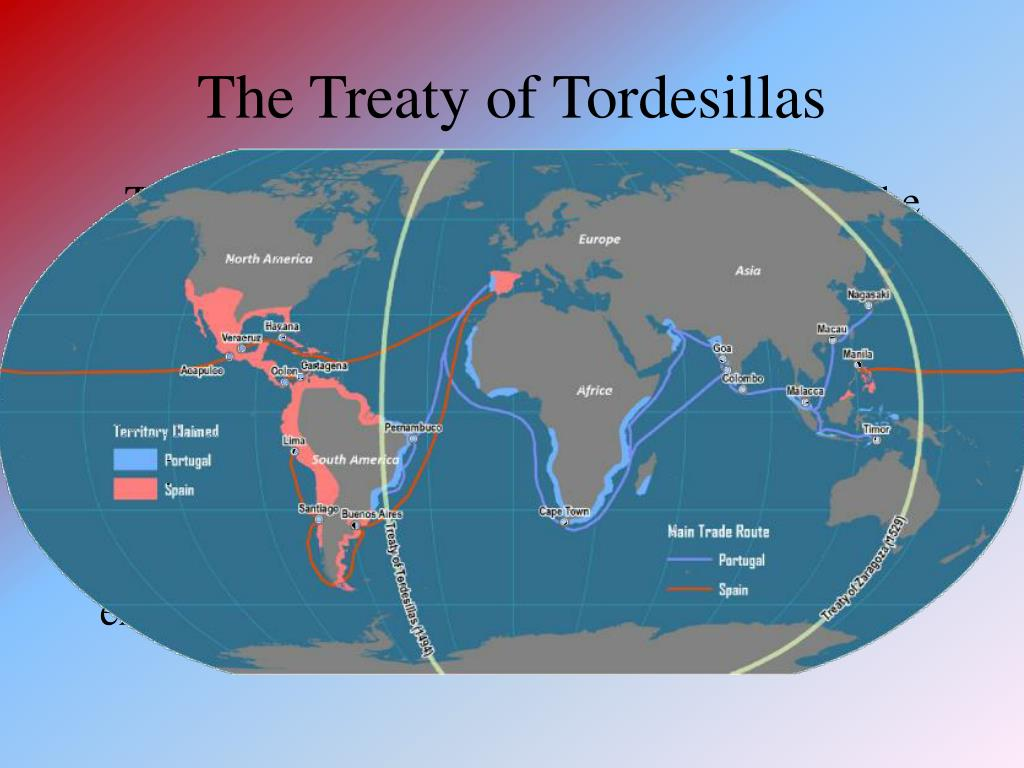
This particular perspective on mimics one of the founding acts of European imperialism, the Treaty of Tordesilla which divided up the entire world into two parts in 1494, one owned by Spain and the other by Portugal. It was a plan crafted by Pope Julius II, which was subsequently modified by the Treaty of Zaragoza, signed in 1529, to include the eastern hemisphere (by tracing out the antemeridian), which included the Spice Islands.
The settlement did not last long, as other European states (the Dutch, the French, the Belgians, and the British) did not want to miss out on the benefits (to them) of imperialism.
We will see how the Venezuelans feel about the US being in charge of domestic affairs once the dust settles. Undoubtedly, many of them are relieved that Maduro is no longer in power, and the Venezuelan economy is in a deep contraction. Right now, there is tremendous uncertainty about how the US will “run” the country. There is, however, not much the Venezuelans can do as long as US forces remain offshore. But there are countries that depend on Venezuelan oil (Cuba and China, in particular) which will probably contest US “ownership” of the oil fields. Moreover, the US will find that it is impossible to “run” a country at arms-length, and as US personnel begin to filter into Venezuela, they will unquestionably be targets of armed opposition.
Regime change is easy for a country as powerful as the US. What happens after the change, however, is extraordinarily difficult for an outside power. The US learned that lesson in Vietnam, Libya, and Iraq. It’s incredible how the US has forgotten those lessons wo quickly and emphatically.
There are a number of questions about this action which need to be answered. But I think that the Post did a great job of raising those questions. Many of those questions revolve around the status of the military action against these alleged drug running vessels: are these actions “acts of war”? President Trump defends these actions under his authority as Commander-in-Chief of the US military and that he is using forces against actors which threaten US national security. Most of those defenses are bogus and have been addressed in many other media sources.
But, for purposes of argument, let’s pretend that the US military action is justified by the principles of self-defense. Those arguments are used to justify the first use of force against these vessels.
But the second attack on the survivors clinging to wreckage is unquestionably a violation of the laws of war. The Geneva Convention is explicit:
GENEVA CONVENTION for the Amelioration of the Condition of Wounded, Sick and Shipwrecked Members of Armed Forces at Sea of 12 August 1949
CHAPTER II Wounded, Sick and Shipwrecked
Article 12
Members of the armed forces and other persons mentioned in the following Article, who are at sea and who are wounded, sick or shipwrecked, shall be respected and protected in all circumstances, it being understood that the term “shipwreck” means shipwreck from any cause and includes forced landings at sea by or from aircraft.
Such persons shall be treated humanely and cared for by the Parties to the conflict in whose power they may be, without any adverse distinction founded on sex, race, nationality, religion, political opinions, or any other similar criteria. Any attempts upon their lives, or violence to their persons, shall be strictly prohibited; in particular, they shall not be murdered or exterminated, subjected to torture or to biological experiments; they shall not wilfully be left without medical assistance and care, nor shall conditions exposing them to contagion or infection be created.
Only urgent medical reasons will authorize priority in the order of treatment to be administered.
Women shall be treated with all consideration due to their sex.
We should remember that the Laws of War are generally unenforceable since the international organizations tasked with the enforcement (the UN Security Council, the International Court of Justice, and the International Criminal Court) are powerless to enforce the laws against powerful states. But the Laws of War rest upon the self-interest of states to protect their own people against unlawful acts. The United States would never want its wounded soldiers to be ruthlessly murdered, so it must adhere to a code of conduct that respects the similar status of its enemy’s soldiers. This code of conduct is frequently violated, but far less than one would expect. This self-interest is most potent with respect to civilians, but again, we have lots of evidence to suggest that it is far less than perfect.
Killing two wounded individuals in open seas is a blatant violation of this norm and it invites reciprocal actions by other states. We have already witnesse massive loss of civilian lives in the conflicts in Congo, Myanmar, Ukraine, and the Gaza Strip, and these actions should be soundly condemned. The report of Israeli Defense Forces killing two individuals in the West Bank who had their hands raised in surrender is further evidence of the erosion of this critical aspect of the Laws of War.
Nov. 27, 2025 incident in which two Palestinian men were killed during an operation in Jenin, in the occupied West Bank
There is a second important issue raised by the second missile attack. According to the Post, the military unit that carried out the attack was one of the US’s most elite troops. Whoever received the order to kill the wounded survivors should have refused the order. That the order was carried out suggests a stunning lack of discipline by very well-trained troops. The protections for wounded soldiers and civilians must be enforced. If not, then no war is being fought; it is murder and barbarous.
US President Trump fired the chief statistician, Erika McEntarfer, from the Bureau of Labor Statistics because he thought that the recent jobs report was distorted by political bias.
There are many examples of “killing the messenger” in history. When a messenger informed King Tigranes of Armenia that Roman general Lucullus was approaching, Tigranes had him executed. Plutarch recounts the result: “The first messenger, that gave notice of Lucullus‘ coming was so far from pleasing Tigranes that, he had his head cut off for his pains; and no man dared to bring further information. Without any intelligence at all, Tigranes sat while war was already blazing around him, giving ear only to those who flattered him”.
Another example is Ivan Adamovich Kraval who was the lead statistician for the 1937 census report in the Soviet Union. That report indicated that the Soviet Union’s population growth had been stunted because of famine induced by Stalin’s agricultural policies:
“The problem was that calculations of natural population growth had projected a population of 186.4 million, an increase of 37.6 million since the 1926 census; the actual increase turned out to be only 7.2 million. The population gap spoke so graphically of unnatural death, and so belied the image of a healthy happy society, that the census was squelched. On September 26, Pravda published a communiqué of the Sovnarkom claiming ‘crude violations of the principles of statistical science.’”
Stalin had Kraval executed for the bad news. as well as others who were involved in the production of the census. But the shortfall in population were the direct result of destructive policies pursued by Stalin;
“Whatever explanations were offered by the statisticians and demographers whose lives were at risk, they were unable to conceal the extent to which population growth had lagged behind the fantastic growth projections of the leadership, to say nothing of the actual decline in population. The child mortality figures were particularly alarming, as was the greater mortality among men, who constituted the greater proportion of the deportees, special settlers and camp inmates, and also the lower birth rate resulting from this catastrophic situation. Over 40 million people were struck down by famine.
“In total, for the year 1933, there were circa 6 million more deaths than usual. As the immense majority of those deaths can be attributed directly to hunger, the death toll for the whole tragedy must therefore be nearly 6 million. The peasants of the Ukraine suffered worst of all, with 4 million lives lost. There were a million deaths in Kazakhstan, most of them among nomadic tribes who had been deprived of their cattle by collectivization and forced to settle in one place. The Northern Caucasus and the Black Earth region accounted for a million more.
“Even if the census of 1937 does not speak of deportations, executions and victims of famine, the data it compiled exposed the true dimensions of the catastrophe. The missing millions correspond fairly precisely to the losses that had arisen through the increased mortality caused by collectivization and the resulting famine.”
The lower employment numbers for the US in 2025 still need to be fully explained, but the most likely explanations involve the uncertainties created by the ever-changing tariff policies of the Trump Administration and the significant cuts to Federal Government employment caused by the efforts of DOGE. President Trump does not care for this explanation, and the statistical manifestations of his moronic economic policies can be fudged by a good statistician. But the human harms created will occur and one hopes that we have a media that is committed enough to publicize these harms. If not, then many millions of people will suffer and die in silence. And the US will cease to be a Republic.