“For centuries, Russia fought Turkey, England, and France for access to the Mediterranean, to protect fellow Christians under the Ottoman rule, and to secure a foothold in the Holy Land. For most of the post–World War II era, the Soviet Union was a major force in the Middle East. Moscow supported the Palestine Liberation Organization in its struggle against the “Zionist entity.” Egypt and Syria waged wars against Israel with Soviet weapons, help from Soviet military advisers, and occasionally even Soviet pilots. Soviet engineers and money helped build Egypt’s Aswan Dam. Then, in the late 1980s, the Soviet Union fell on hard times and rapidly withdrew. For the two decades that followed, Russia barely registered a presence in the Middle East. The United States grew accustomed to acting as the region’s hegemon—waging wars, dictating its political vision, and punishing governments that defied its will.
“Such was the new normal until 2015. In the fall of that year, Russia sent its military to Syria. A coalition of U.S.-supported opposition groups was widely expected to win the civil war in that country and overthrow the regime of Bashar al-Assad. But Putin’s bold move and his military’s unexpected prowess quickly changed the course of events, demonstrating that the Middle East without Russia was actually a departure, not the norm. The norm used to be a Middle East with Russia in it as a major power broker. By winning the war in Syria, Russia seeks to make the old normal the new one.”
What remains to be seen is how well Russia can manage its relations with the competing states in the region. It has worked hard to establish good relations with Israel and has found a willing partner in Israeli Prime Minister Netanyahu. But Netanyahu is now a much weaker Prime Minister and it is unlikely that he will regain his former stature, even if he manages to form a new government if Benny Gantz fails. And Russia needs to balance off its relations with Iran with Israeli hostility towards Iran–it is unlikely that Russia can maintain its position in Syria without at least the tacit consent of Iran which is strongly entrenched in Syria:
“Russian-Iranian relations have undergone an unusual transformation as a result of the Russian intervention in the Syrian civil war. Their joint victory is likely to lead to a divergence of their interests. Russia is interested in returning Syria to the status quo ante and reaping the benefits of peace and reconstruction. Iran is interested in exploiting Syria as a platform in its campaign against Israel. Russia lacks the military muscle and the diplomatic leverage to influence Iran. That poses a big obstacle to Moscow’s ambitions in the Middle East.
Second, Russia’s relations with Turkey are always difficult, even though at the present time it appears as if the two states are cooperating well. They are conducting joint patrols in the “safe zone” thanks to the US withdrawal from that area of Syria. But Syria cannot be happy about Turkish troops occupying part of its territory and at some point that tension will have to be resolved. Will Russia’s need for Assad to stay in power outweigh Turkey’s interest in suppressing the Kurds? Over time that tension will only increase, not decrease.
Third, Russia has tried very hard not to overcommit its resources in the Middle East, largely because it lacks the necessary resources to sustain a large presence in the region. But now that it is viewed by some states as a “substitute” for US power, demands on Russian resources will inevitably increase. The demands for the reconstruction of Syria will be huge, and it is unlikely that any Arab state other than Qatar might be willing to pour money into the Assad regime. Russian President is already facing unusual protests within Russia for increased spending and it will be difficult for him to spend the money necessary to rehabilitate the Syrian economy without alienating his domestic base.
It is also unlikely that Russia and Saudi Arabia can work together effectively over a long period of time. Russia has a strong interest in a high price for petroleum as well as high production since it relies very heavily on income from oil exports. Saudi Arabia, on the other hand, prefers a stable price that will not encourage alternative fuels and wants to conserve its oil resources for the long haul. There have been times when Russia and Saudi Arabia have been able to work together for short periods of time, but their long term interests diverge.
It may be the case that Russia has emerged as a dominant power in the Middle East right now, but it has a difficult task in balancing off its competing interests. It may find itself as tangled up as the US finds itself in the region. We shall see if has the discipline to prioritize its interests in a manageable manner.
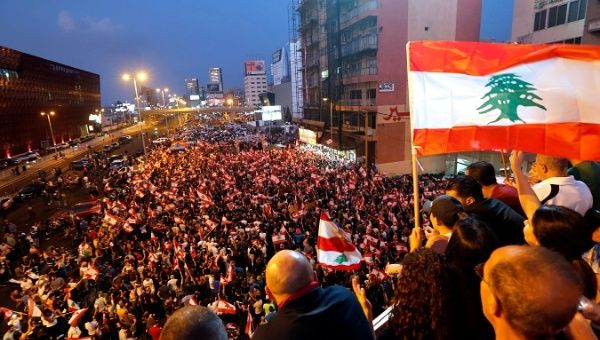
Among the many protests going on in the world today is a protest in Lebanon that has been going on for some time. The protesters are demanding the resignation of Prime Minister Saad Hariri who has been leading what was once considered a unity government. The Lebanese political system is unique in that it has tried to structure the government in a manner that reflects the religious affiliations of the population.
“Under the Lebanese model, political representation is split proportionally between Christian and Muslim denominations, with certain top jobs reserved for specific sects. Dating back to the end of the French colonial mandate in the 1940s, Lebanon has always had a Maronite Christian president, a Sunni Muslim prime minister, and a Shia Muslim speaker of Parliament.”
It appears, however, that many in the country think that the traditional system made the government unresponsive to the needs of the people and that the allocation of specific posts to various sects has led to a rigid and dysfunctional system. The BBC notes:
“Last week, Mr Hariri unveiled a package of reforms that he had hoped would assuage some of the protesters’ anger. He promised to slash politicians’ pay, invest in power plants and also tax banks to help reduce public debt.
“Lebanon’s debt is equivalent to more than 150% of gross domestic product (GDP), its economy has stagnated, and its currency recently lost value against the US dollar for the first time in two decades.
“The country’s public infrastructure, which was already stretched before more than one million refugees arrived from neighbouring Syria, is also ailing. Electricity and water supplies are disrupted frequently and rubbish often piles up on the streets.”
But within this broader context, there is an immediate political conflict that is paralyzing the government. Prime Minister Hariri is a Sunni Muslim who had international backing–which included Saudi Arabia until last year–and who had been able to work out a degree of accommodation with Hezbollah, a Shia-based movement backed by Iran. But that accommodation has been frayed as both Iran and Hezbollah have become more powerful. Hariri resigned his position in order to break the political deadlock, but the leader of Hezbollah, Sayyed Hassan Nasrallah, had urged Hariri to not resign. The economy is close to collapse and the Lebanese people are saying that they do not wish the traditional system to continue. But Hezbollah is the most organized of all the groups in the country–and has its own well-armed militia–and will not stand idly by to see the political system collapse. Nor is it likely that Iran will allow Lebanon to move beyond its orbit of control.
There are reports that Turkish and Syrian forces have fired on each other in Syria. The reports are credible since Turkey is occupying Syrian territory and the Kurds have requested the Syrian government protection as they have been forced out of the Turkish-occupied territory. Turkey had also taken the position that Syrian President Assad should be forced from office. So the differences between the Turks and the Syrians are quite deep and sharp. Russia has been trying to mediate the differences and it remains to be seen how effective those efforts might be. Reuters reports:
“Joint Russian-Turkish patrols had been set to begin on Tuesday at a depth of 10 km (6 miles) inside Syria, but Erdogan said they would begin on Friday and at a depth of just 7 km (4 miles), after a Russian delegation held three days of talks in Ankara seeking agreement on cooperation.
“’Getting the United States out of Syria was the one big interest Turkey, Russia and Iran had in common,’ said Nicholas Danforth, senior visiting fellow at the German Marshall Fund.
“’But now Russia’s longstanding support for restoring the Syrian regime’s sovereignty will come into direct conflict with Turkey’s desire to project its interests and territory in northern Syria,’ he said.
“Russia has been Syrian President Bashar al-Assad’s most powerful international backer, while Turkey has supported rebels who fought for years to overthrow him.”
If Russia cannot mediate successfully, Syria will likely continue to experience violence for an extended period of time.
One of the more bizarre elements of President Trump’s Syrian policy is his decision to station troops to protect Syrian oil fields. Ostensibly, the policy is designed to prevent ISIS from controlling the oil and gaining revenues from its sale. But President Trump’s earlier statement that the US should have taken control of Iraq’s oil fields in the 2003 US invasion of Iraq raises questions about his intentions. The Guardian has several quotes on the matter:
“At a forum hosted by NBC on 7 September, Trump suggested oil seizure would have been a way to pay for the Iraq war, saying: ‘We go in, we spend $3tn, we lose thousands and thousands of lives, and then … what happens is we get nothing. You know, it used to be to the victor belong the spoils.’
He added: ‘One of the benefits we would have had if we took the oil is Isis would not have been able to take oil and use that oil to fuel themselves.’
The idea predates Trump’s presidential campaign. As far back as 2011, he was telling the Wall Street Journal that this was his policy for Iraq. ‘You heard me, I would take the oil,’ he said. ‘I would not leave Iraq and let Iran take the oil.’ And he insisted to ABC News that this did not amount to national theft.
“’You’re not stealing anything,’ Trump said. ‘We’re reimbursing ourselves … at a minimum, and I say more. We’re taking back $1.5tn to reimburse ourselves.’”
Trump’s assertions are pure nonsense. The right of conquest was nullified by the UN Charter and such imperial adventures are politically unpalatable today. But in his speech yesterday announcing the death of Baghdadi, Mr. Trump made this comment:
“We’re out. But we are leaving soldiers to secure the oil. And we may have to fight for the oil. It’s okay. Maybe somebody else wants the oil, in which case they have a hell of a fight. But there’s massive amounts of oil.
“And we’re securing it for a couple of reasons. Number one, it stops ISIS, because ISIS got tremendous wealth from that oil. We have taken it. It’s secured.
“Number two — and again, somebody else may claim it, but either we’ll negotiate a deal with whoever is claiming it, if we think it’s fair, or we will militarily stop them very quickly. We have tremendous power in that part of the world. We have — you know, the airport is right nearby. A very big, very monstrous, very powerful airport, and very expensive airport that was built years ago. We were in there — we’re in that Middle East now for $8 trillion.”
Mr. Trump went on to say “We should be able to take some also, and what I intend to do, perhaps, is make a deal with an ExxonMobil or one of our great companies to go in there and do it properly.”
What Mr. Trump is talking about is called “pillaging” and it is prohibited in both international and US domestic law. According to ABC News:
“Pillaging is illegal under international law, explicitly prohibited by the Fourth Geneva Convention, which the U.S. ratified as a treaty in 1955. The U.S. War Crimes Act of 1996 also made it punishable under U.S. law to commit a ‘grave breach’ of any of the Geneva conventions ‘whether inside or outside the United States.’
“These codifications were built on many previous legal prohibitions and military practices, from the charter of the Nuremberg trials that prosecuted the Nazis after World War II, to the Hague Convention of 1907 which was first proposed by President Theodore Roosevelt, all the way back to the 1863 Lieber Code. Commissioned and signed by President Abraham Lincoln, it governed the conduct of the Union Army in the field during the American Civil War and prohibited ‘all pillage or sacking, even after taking a place by main force,’ punishable by death.
One should also remember that the oil belongs to the Syrian state. Syria may wish to strike a deal with ExxonMobil, but it is difficult to imagine that the company would jump at the idea of managing tiny oil fields in the middle of a war zone. Mr. Trump may wish to negotiate a deal with ExxonMobil itself (I suspect that Rex Tillerson, the Secretary of State that Mr. Trump fired who was also the CEO of ExxonMobil, would not make such a deal), but that amounts to stealing from Syria. And 500 US troops would not be nearly enough to defend the oil fields from Syrian troops backed up by the Russian military. The Guardian quotes Chris Harmer, a former navy officer and naval aviator, who is now a military analyst:
“‘It would take close to 100,000 troops plus the equipment, the airborne patrols, to secure the oilfields and extract the oil,’ Harmer said. ‘Theoretically it would suck up all the deployable assets we have. Forget about the Pacific, forget about Africa. They would just have one purpose – sucking up oil assets in the Middle East.’
“The military footprint would have to be even larger to actually get the oil out.
“’You’d have to occupy most of Syria to get the oil out of the country, since the Syrian export pipelines travel from the oilfields in eastern Syria all the way to the Mediterranean coast, right across the central breadth of the country,’ Krane [Jim Krane, an energy studies fellow at Rice University’s Baker Institute for Public Policy in Houston] said.
“’It wouldn’t do you much good to just capture the oilfields. If you wanted to steal the oil, it would take a full military occupation of Syria to control the full length of the pipelines, so you could move the oil to market. At a minimum, that would mean occupying the city of Homs in central Syria, as well as the main Syrian oil terminals at Banias and Tartus. All that is in addition to occupying rebel-held areas such as Deir ez-Zour where the oilfields lie.’
“…..The costs of the military operations would far exceed any revenue that could be extracted.”
The reality of the battlefield will overtake this fantasy. Let’s hope that it occurs before a major confrontation.
“Despite its reputation as a relatively wealthy Latin American country, Chilean society is deeply divided between the rich and poor. Income inequality is worse in Chile than in any other OECD nation. Meanwhile, public services ranging from the pension system to water remain privatized — as much a legacy of the Pinochet years as the 1980 constitution and the state of emergency.
“’Economically, Chile continues to do the same thing it’s been doing for twenty years, namely following an extractivist model, which relies heavily on copper but also has to do with forestry, fisheries, etc.,’ explains Emilia Ríos Saavedra, a Revolución Democrática (a member party of Frente Amplio) militant and city councilor in Ñuñoa, a suburb of Santiago. ‘This creates a tension and a feeling of helplessness where the political system cannot respond. There is no capacity on the one hand, and on the other hand, the political and economic elites, above all, are not capable of thinking about the larger needs of the country.’”
“At first glance, the politics of each of these movements seems quite distinct. But they are all occurring against a worrisome backdrop: a collapse of economic growth. Over the past year, the International Monetary Fund has sharply cut its estimate for 2019, warning that ‘the global economy is in a synchronized slowdown,’ growing at ‘its slowest pace since the global financial crisis.’
“When growth collapses, anxieties rise, especially among the middle class who feel squeezed, get enraged by corruption and inequality, and have the capacity to voice their anger. Consider Chile, where a subway fare hike has led to the worst street violence in decades. The unrest is happening, however, in an atmosphere of diminished expectations. Not long ago, Chile was the star economy of Latin America, growing at 6 percent in the 1990s and 4 percent in the 2000s. Over the past five years, growth has averaged 2 percent . The IMF cut its estimate for Latin America as a whole from 2 percent to 0.2 percent in the past year.”
Protests in Iraq are continuing and in the most recent demonstrations, about 40 Iraqis were killed. Al Jazeera describes the discontent fueling the demonstrations:
“Renewed anti-government demonstrations in Iraq have gripped the capital, Baghdad, and swept through several other cities in the country’s south, leaving at least 30 people dead, according to the country’s human rights commission and a monitor.
“The protests on Friday came three weeks after an earlier bout of rallies erupted as a result of widespread anger at official corruption, mass unemployment and failing public services. More than 150 people were killed during those demonstrations amid a crackdown by security forces.”
Iraqi Prime Minister Adel Abdul Mahdi took office about a year ago and he has yet to establish a well-functioning government. Increased instability in Iraq will rattle many states in the region. The demonstrators are using an very unusual image to press their case against the government–the Joker as portrayed by Joaquin Phoenix.
The US has asserted that the troops being removed from Syria will be stationed in Iraq in order to make sure that ISIS does not resurface. But the Iraqis have said that the US does not have its permission to station the troops in their country for longer than a month. Al Jazeera provides the background to this situation:
“The Iraqi military said on Tuesday that the US forces do not have permission to stay in Iraq, in a response to Esper’s previous comments that the approximately 700 troops leaving Syria would continue operations against the Islamic State of Iraq and the Levant (ISIL or ISIS) armed group from Iraq to prevent its resurgence in the region.
“The US already has more than 5,000 troops in Iraq under an agreement between Washington and Baghdad forged when ISIL began taking large portions of the country in 2014.
“Al Jazeera’s Imran Khan, reporting from Baghdad, said Baghdad’s reaction appeared to have stemmed from ‘the language that the US used’.
“‘The US said that the forces will come back to Ain al-Assad in western Iraq and mount operations against ISIL from there – and that seems to have angered the Iraqis,’ Khan said.”
We are still trying to determine how social media affects politics and there is a dearth of hard information about its effects. One media outlet is, of course, Twitter, an outlet that US President Trump uses quite frequently. But the Pew Research Center has released a poll which raises serious questions about the outsized influence of Twitter. According to the study:
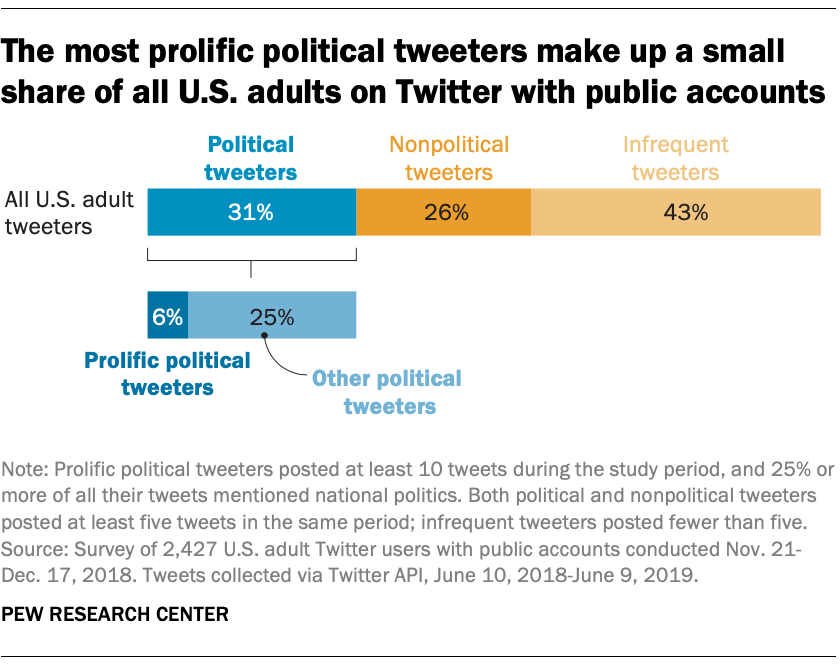
“For years now, Twitter has been an important platform for disseminating news and sharing opinions about U.S. politics, and 22% of U.S. adults say they use the platform. But the Twitter conversation about national politics among U.S. adult users is driven by a small number of prolific political tweeters. These users make up just 6% of all U.S. adults with public accounts on the site, but they account for 73% of tweets from American adults that mention national politics.
” Most U.S. adults on Twitter largely avoid the topic: The median user never tweeted about national politics, while 69% only tweeted about it once or not at all. Across all tweets from U.S. adults, just 13% focused on national politics, according to a new Pew Research Center analysis based on public tweets that were posted between June 2018 and June 2019.
Pew does a very good job of identifying the attributes of what it calls political twitters. I have never used the outlet and cannot really assess how accurate the assessment actually is.
“A new study released Tuesday found that the amount of pollutants in U.S. air rose between 2016 and 2018 after seven straight years of improvement. Two economists who conducted a study of Environmental Protection Agency data found that particulate matter air pollution dropped 24 percent in the U.S. from 2009 to 2016 but increased 5.5 percent the next two years, which correlated with thousands of premature deaths.
“’That increase was associated with 9,700 premature deaths in 2018,’ Karen Clay and Nicholas Muller, economists with Carnegie Mellon, wrote in a paper published by the National Bureau of Economic Research.
“The researchers concluded that the deaths represent $89 billion worth in damages.”
“The study linked declining air quality to three factors, all tied to the climate crisis and the U.S. government’s refusal to reduce fossil fuel emissions that are warming the planet.
“Since taking office in 2017, President Donald Trump has completed 10 regulatory rollbacks involving efforts to improve air quality and has slashed nine regulations on fossil fuel extraction industries.
“Trump’s repeal of a rule requiring state authorities to track vehicle emissions on highways, his decision to change how oil and gas refineries monitor pollution, and his rollback of a rule limiting industrial pollution are among the decisions that have led to worsened air quality, according to the report written by Karen Clay and Nicholas Muller and published by the National Bureau of Economic Research.
“‘This is happening at a time when the EPA has disbanded its scientific panel reviewing fine particle air pollution,’ tweeted Washington Post reporter Christopher Ingraham.”
Given these causes, it seems unlikely that there will be any decrease in air pollution in the near term. Apparently more deaths and substantial economic losses are not enough to get a change in policy.
President Trump announced today that he was lifting the sanctions against Turkey because he believes that the “cease-fire” brokered by Vice-President Trump and Turkish President Erdogan was “permanent”. In his remarks he thanked Turkey and Syria for taking control over the swathe of territory once held by the US and its allies, the Kurds. Interestingly, he did not mention Russia once in his remarks, although the Russians are clearly the most important guarantor of the “cease-fire” because the Turks and the Syrians would be at each other’s throats without the mediating influence of the Russians. I have placed the phrase “cease-fire” in quotations marks because it is not a cease-fire, but actually a surrender. The US has given up strategic territory and betrayed its allies without getting anything in return from Russia, Turkey, Iran, and Syria–all of whom have benefited tremendously from the US withdrawal. President Trump did admit that some US troops would stay in Syria to protect the oil fields, but his statement was curiously ominous: “We’ve secured the oil, and, therefore, a small number of U.S. troops will remain in the area where they have the oil. And we’re going to be protecting it, and we’ll be deciding what we’re going to do with it in the future.” I suspect that the Syrians will insist that the oil in their territory is theirs and will not allow the US to appropriate the oil for any reason.
The British Parliament has approved the Withdrawal Agreement Bill agreed upon by Prime Minister Boris Johnson and the European Union. But the Parliament decided not to implement the agreement before the official deadline of 31 October. The delay means that Britain will need an extension from the EU but it also means that Members of Parliament and the British public will have time to study the agreement carefully which means that opposition to the agreement will have time to organize. The leaders of all 27 EU countries will have to approve the extension, but the EU Council President, Donald Tusk, indicated that approval was “likely”. Johnson will probably push for a final vote before the 31st, but it does not seem as if that will happen. The BBC summarizes its understanding of the Withdrawal Agreement:
It sets out exactly how the UK will make “divorce bill” payments to the EU for years to come
It repeals the European Communities Act, which took the UK into the EU, but then reinstates it immediately for as long as a post-Brexit transition period lasts
It contains language on how the new protocol on Ireland – setting up a customs and regulatory border between Northern Ireland and Great Britain – will work in practice. An accompanying impact assessment lays out some of the costs and bureaucracy that companies doing business in Northern Ireland will face
It sets out areas in which the European Court of Justice still plays a role in the UK, and makes the withdrawal agreement in some respects “supreme” over other areas of UK law
Its language on workers’ rights – an important issue for many MPs – is pretty vague, because Mr Johnson’s deal moves obligations in this area from the withdrawal agreement to the non-binding political declaration on future relations
It suggests that if the government doesn’t ask for an extension of the transition period beyond the end of 2020, parliament won’t have a say in changing that, even if a free trade deal isn’t ready in time
In the section on citizens’ rights it sets up an independent monitoring authority (IMA) with which EU nationals in the UK can lodge any complaints about the way the government treats them
In several policy areas, particularly in Northern Ireland, the bill gives ministers a lot of power to change the law (through secondary legislation) without MPs getting to vote
Prime Minister Johnson may decide to call for a new election if Parliament does not approve the agreement before 31 October. Perhaps a new election will give him a Parliament more willing to accept the terms of the agreement. In any event, Brexit remains uncertain.
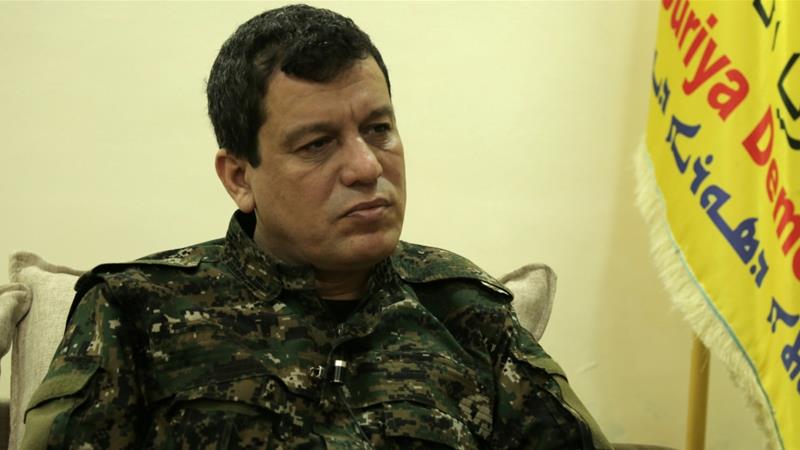
Turkish President Erdogan and Russian President Putin met in Sochi, Russia, to discuss the future of the northeast region of Syria. The press is reporting that the two states will conduct joint security operations in the region, replacing the US troops that had conducted similar operations. We now have the bizarre situation of Russia patrolling the southern border of NATO, the very state for which NATO was created to contain. Russia and Turkey will oversee the removal of all Kurdish YPG forces, the Kurdish militia that fought alongside the US to remove ISIS from Syria and Iraq. Reuters reports:
“Under the deal with Moscow, the length of border which the YPG would be required to pull back from is more than three times the size of the territory covered by the U.S.-Turkish accord, covering most of the area Turkey had wanted to include.
“’The outcome of the Putin-Erdogan meeting in Sochi today indicates that Erdogan has become a master of leveraging the U.S. and Russia against each other to maximize Ankara’s gains,’ Soner Cagaptay, director of the Turkish program at the Washington Institute said in a tweet.”
Russia obviously negotiated the presence of Turkish troops in Syrian territory, even though Turkey had long sought the removal of Syrian President Assad throughout the Syrian civil war which began in 2011. It is hard to believe that Assad has forgotten the Turkish opposition. I am certain that Assad is wondering whether the Turkish troops will leave, or whether Syria has just been chopped up for the interests of the Great Power game being conducted on its territory.
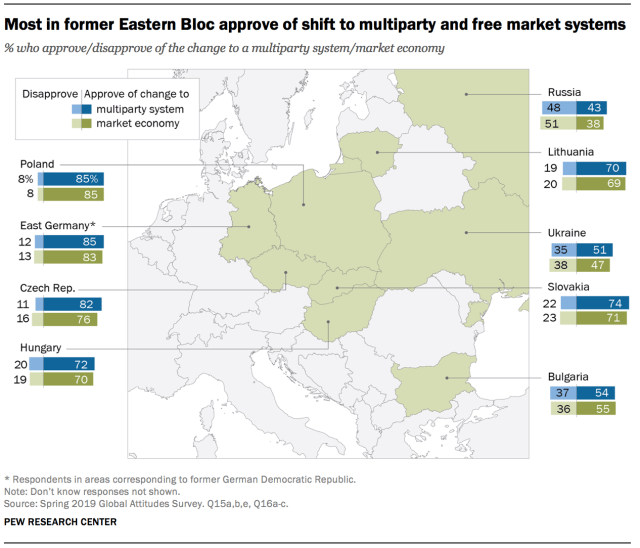
It has been 3 decades since most of the communist countries in East and Central Europe underwent a dramatic change in their systems. Many of those states have embraced liberal values and institutions and most sought membership in pre-communist institutions such as NATO and the European Union. The Pew Research Center conducted a poll in those states to see how the citizenry now regards those changes. In most cases, it appears as if citizens believe that the change was beneficial. The Center found that:
“Thirty years ago, a wave of optimism swept across Europe as walls and regimes fell, and long-oppressed publics embraced open societies, open markets and a more united Europe. Three decades later, a new Pew Research Center survey finds that few people in the former Eastern Bloc regret the monumental changes of 1989-1991. Yet, neither are they entirely content with their current political or economic circumstances. Indeed, like their Western European counterparts, substantial shares of Central and Eastern European citizens worry about the future on issues like inequality and the functioning of their political systems.”
Perhaps the most pervasive reservation the European publics have in the transition is the sense that elected officials are not really responsive to the interests of the broader public. In many respects, that belief underlies the growth of the nationalist/populist regimes in some states.
“Netanyahu had been given 28 days to secure the 61 seats necessary to achieve a functioning majority by building support from other, smaller parties in the 120-member Knesset. After the most recent election — the country’s second inconclusive vote in less than six months — Likud won 32 seats, but the scandal-plagued prime minister could not make up the gap necessary to obtain a majority and secure his fifth straight term in office.
“Now, on Netanyahu’s 70th birthday, Rivlin has turned to the prime minister’s principal rival, Benny Gantz, a former army chief of staff and leader of the centrist Blue and White party. In a tweet Monday, Gantz responded to the new mandate quite simply: ‘It is time for blue and white.'”
Gantz now has 28 days to form a government. The Jerusalem Post gives a nice timeline of what Gantz will have to do and what happend if he cannot organize a coalition. The Israeli political system is incredibly complex, but it is also fairly robust. The current situation, however, is highly unusual.

 World Politics News