Landing a jet on an aircraft carrier is incredibly difficult, and the Chinese have achieved this small, but symbolic, step. The feat is a signal to all of Asia that the Chinese are moving toward a regional military capability. In the light of all the territorial disputes in the region, the message is sure to cause great unease.
The United Nations Framework Convention on Climate Change is meeting in Qatar for its 18th meeting. Last year’s meeting was a total dud: few commitments were made and only tentative, ad hoc agreements were secured. This year’s meeting does not promise any major breakthroughs either, but the increasing evidence of serious, more immediate problems in the global climate may change that dynamic. The US has made no noises about this meeting, but the lack of attention may be a result of the election. And, given the recent power transition in China, it may also be the case that the Chinese will bring nothing new to the table.
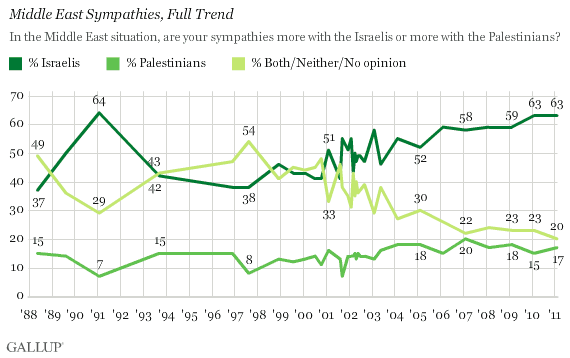
Drones (or, Unmanned Aerial Vehicles, as the Pentagon wishes to term them) have transformed warfare, but their use was never anticipated by the laws of war. Many people have serious moral problems with drones, largely fueled by the secrecy surrounding their use. The Obama Administration is trying to write rules governing drones, but it is not clear that the rules can be meaningful as long as we lack the ability to assess whether they are being followed.
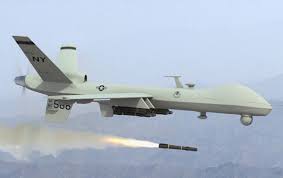
The situation in the Democratic Republic of Congo has been unstable for many years, and more people have died in that conflict than in any other since the end of World War II. The conflict is fueled by many factors, among them the riches of central Africa, ethnic cleavages among the peoples of the region, and the grinding poverty of the area. The most recent outbreak of violence has seen a rebel group–called M23 and supported primarily by the Rwandan leader, Paul Kagame–made inroads into the territory of the Congo. There are urgent efforts to try to bring about a cease-fire, but it doesn’t appear that these efforts will bear fruit.
Climate change was completely ignored in the US Presidential debate, and the consumption of hydrocarbons (the chief greenhouse gas source) continues to grow at unprecedented rates. The world may choose to act as if nothing is happening, but the evidence is overwhelming that the climate is clearly beginning to change.
Perhaps the worst legacy of the recent war in Gaza is the sense that the Palestinians have developed that peaceful change is completely unlikely. There aren’t many historical examples of peoples giving up a pursuit of justice by simply giving in. So it is highly likely that a more violent approach will be adopted in the future.
Violence has broken out in Egypt as secularists in Egypt protested new powers asserted by President Morsi seemed to fly in the face of the constitutional processes of reform. The violence comes just a few days after Morsi successfully brokered a cease-fire between Hamas and Israel, indicating that while the majority of Egyptians favor his peace-keeping role, they care more about domestic politics and the state of the Egyptian economy. Just as in the US, domestic policy trumps foreign policy. The protests, however, will certainly give the US pause in embracing Morsi fully as an ally, something that seemed almost assured a few days ago.
The European Union discussion on its new 7-year budget has broken down. The contentious issues included the British demand for greater austerity and the French demand for maintaining the very expensive (and trade-violating) agricultural subsidies. Acrimony is not usual in these discussions, but the EU has an informal rule that the budget should never be more than 1% of the total Gross Domestic Product of the Union itself. The proposed budget was within this tradition, but the fissures within the Union–essentially along the same lines as the debt crises within the Union–appear to be quite serious. Since the EU as a whole seems headed for a recession, the budget discussions could be quite protracted.
As we near our discussion on globalization, it is perhaps instructive to think a little about how wages abroad affect domestic wages. US wages have remained stagnant for about 40 years and most Americans complain about jobs going overseas and how low wages abroad are responsible for the lack of wage growth in America. Walmart, however, is an example where that explanation is not completely accurate. Here’s a guide to thinking about the union controversy at Walmart.
We’re still assessing the fallout from the Gaza war, and the universal sentiment is that Mahmoud Abbas, the leader of Fatah in the West bank, is the biggest loser of the conflict. Perversely, that outcome is the worst one for Israel, since Abbas represents the only player in the game that still accepts the two-state solution. If Abbas loses all credibility, then the only solution will be that offered by Hamas. Interestingly, Israel may decide to re-open serious negotiations with Fatah in order to avoid this outcome. Obviously, the US would leap at this option, and may be willing to exert pressure on Israel to push it in this direction.
A cease-fire has been announced in the Gaza conflict, and we are all waiting to see if it takes hold. The cease-fire was announced by the Egyptians and the Americans, a signal that the US has fully embraced the new Egyptian government (a very good sign). The details of the case-fire are somewhat obscure right now, so I won’t comment on the terms until I have better information. Both the Israelis and Hamas are claiming victory, and, in truth, both sides can assert some advantages from the fight. But the most important issue is whether the cease-fire has a direction toward a more lasting peace.
As we learn more about the terms of the cease-fire, one of the most important items to watch for is how the current blockade surrounding Gaza will be lifted. In international law, a blockade is usually considered an act of war, but Israel has maintained tight control over all imports and exports from the Gaza, including items that really have no connection to a military capability. The blockade is also largely responsible for the stunning poverty of the people living within the Gaza.
The World Meteorological Organization has just issued its annual report on the emission of greenhouse gases, and it is a sobering report. We’ve made very little progress in reducing the rate at which greenhouse gases are being emitted, and the time left for effective action is virtually gone. Adjusting to the new world will be a very difficult and expensive process.
Some information about the Israeli-Palestinian conflict from The Economist.
We’re still hearing about a possible cease-fire in Gaza. The Gallup Poll over time shows how solidly the American people support Israel. What is particularly interesting, however, about this graph is the large number of people who either blame both sides or have no opinion.
The public support translates into economic assistance to Israel from the United States. According to the Congressional Research Service:
- “Israel is the largest cumulative recipient of U.S. foreign assistance since World War II. To date, the United States has provided Israel $115 billion in bilateral assistance.”
Source: Jeremy M. Sharp, “U.S. Foreign Aid to Israel,” Congressional Research Service, Washington, DC, 12 March 2012
It may be useful to put the current crisis in Gaza in the context of the previous conflict in Gaza in 2008-09. The war lasted three weeks, and the stated goal of the Israeli forces was to prevent rocket attacks on Israel emanating from the Gaza and to prevent weapons smuggling into the Gaza. In those three weeks, which included a ground invasion by Israeli forces, there were between 1,166 and 1,417 Palestinian deaths and 13 Israeli killed (4 of those were from friendly fire, i.e. Israelis shooting other Israelis accidentally). In September 2009, a UN panel, headed by the South African jurist, Richard Goldstone, found that both Hamas and Israel committed war crimes and possibly crimes against humanity, a conclusion subsequently rejected by Goldstone himself but not by the other members of the panel. As we wait to find out whether a cease fire is going to be accepted at this time, it is useful to note that the same issues seem to underlie the current conflict.
A significant difference from 2008-09 is that Hamas now has support of many other Arab states due to the changes brought about by the Arab Spring. Correspondingly, Israel has lost two major allies, Turkey and Egypt, since the last Gaza War. Whether this outside support will make a difference remains to be seen.
The New York Times ran an op-ed piece today entitled “Europe’s New Fascists.” The essay runs through some of the reasons why the right-wing in Europe is on the rise. It’s an important piece on an issue that deserves greater attention.
One of the principles of the Just War Doctrine is proportionality of violence. The Israelis claim that rocket attacks against Israel justifies their actions in the Gaza as consistent with the right of self-defense, an argument that is no doubt true. But it is difficult to determine how much the rocket attacks have affected Israel, and whether the current actions in Gaza are consistent with that level of violence. Mondoweiss is a blog with clear Palestinian sympathies, but it has run an analysis of the rocket attacks that seems to be very rigorous and validated by outside sources. I recommend that everyone read the posting carefully and with a skeptical eye. But, if accurate, the analysis suggests that the current attacks by Israel are clearly disproportionate to the violence inflicted by Hamas on Israel.
It’s difficult to appreciate the violence in Gaza because the circumstances are quite different from ordinary experience. The Gaza Strip has about twice the land area of the US District of Columbia (Washington, DC); Israel is about the size of the US state, New Jersey. The Gaza has a population of 1.7 million; Israel has a population of about 7.5 million. The Gross Domestic Product per capita in the Gaza is $1,100; Israel has a per capita GDP of $25,800. But perhaps the most important characteristic of the conflict is that there is quite literally no place for the people of Gaza to go for safety. All exit routes from Gaza are tightly controlled and, unless the Egyptian open up their border, the people of Gaza are trapped.
President Obama will soon be the first American President to ever visit the country of Burma. The changes that have occurred in Burma are truly historic and reflect the changing balance of power in the world: Burma is clearly worried about the growing power of China and is looking to the US as a counterweight to Chinese power. The price of US support? Moving toward a more democratic system. We are witnessing the exercise of hegemonic power–very subtle, but inexorable.
Analysts continue to puzzle over Israel’s use of social media to describe the current violence in the Gaza Strip. There are no clear answers to the question and, most likely, we’ll never know the truthful answer. But the Israeli Defense Force has a Facebook account on the Gaza operation, labelled “Pillar of Defense” as well as a Twitter account. The is also a Twitter account for those sympathetic to the Palestinian cause, https://twitter.com/search?q=%23gazaunderattack. Additionally, the hacker group, Anonymous, has joined the battle on the Palestinian side. I will concede that I doubt that Clausewitz ever conceived of such activities as part of war, but it convincingly proves that there cannot be a separation between domestic and foreign policy.
Stephen Walt, a noted critic of Israeli policy, proposes a very interesting thought experiment to help think about the current violence in the Gaza. Thought experiments (or counterfactuals as they are called in the social sciences) are intriguing ways to think about problems that seem to be intractable.
Israel also faces a new crisis to its east–the very serious public protests against King Abdullah in Jordan. If the Muslim Brotherhood were to come to power in Jordan, Israel would have lost three close allies in the space of three years: Turkey, Egypt, and Jordan. If Syria were to come under control of the Brotherhood, its encirclement would be complete. One can be certain that the Israelis are desperately worried about this contingency.
The looming, but longer-term, crisis of climate change continues to get little media attention, but our lack of interest will not delay the crisis. Jeremy Grantham, a noted financial whiz, puts the question of resource consumption and climate change into the context of world politics. The long term trends are quite dispiriting.