There have been a lot of questions in class about the change is Saudi Arabian foreign policy. I will not ask any questions about this essay on the quiz because it is quite specific and long, but for those of you who are interested in the issue, you can check out this essay published by the Middle East Media Research Institute. I hope you all do read it because the shift in policy (and the corresponding shift by the US) is incredibly important but very difficult to assess–it is a venture into a whole new Middle East order.
Egyptian Defense Minister, General Abdel Fattah el-Sisi, was recorded in a leaked audio saying that the Egyptian military should have immunity for all crimes in the new constitution being written. There is a 50-person committee writing the new constitution, but there is no representation from the Muslim Brotherhood. It is difficult to imagine how the constitution can have broad legitimacy given the exclusion of the group that had elected the previous President, Morsi. Nor is it clear that a blanket immunity for the military is justifiable given the fact that the military launched a coup d’etat to displace Morsi. We will have to see how the new constitution is received after it is written.
Spying by the NSA has ignited very strong criticism of the US, but The Guardian reports that European governments coordinated their own spying activities to a large degree. Unfortunately, there is no one like Edward Snowden to leak the details of the spying so it is difficult to assess the degree to which European spying infringes on civil liberties. One can imagine, however, that the Europeans are not likely to be far behind the US in capabilities to spy; the real issue is to what extent European spying conforms to adequate protections of privacy.
The leader of the Pakistan Taliban (Tehreek-e-Taliban Pakistan), Hakimullah Mehsud was killed in a US drone strike. His second in command has already been appointed as the new leader in the group. It remains to be seen how the killing will affect the violence in Pakistan. The US likely believes the death to be a setback for the militant group. But Pakistan has been trying to initiate peace talks with the Taliban, and the killing might set back those efforts considerably. It is hard to tell which consideration has the greater likelihood.
Two members of the Golden Dawn in Greece have been assassinated in a drive-by shooting and a third member of the far-right party is in the hospital. The attacks follow a government crackdown on the party, and it has raised fears that the violence may be the prelude to a civil war in Greece. The cycle of violence and counter-violence when a population becomes radicalized is very difficult to stop once it starts. The critical question right now is how the government will respond, and whether that response will reassure the population that the situation is under control.
German-US relations are unusually sour. The revelations about NSA snooping on Angela Merkel have hit a raw nerve for a country that long suffered under totalitarian governments that did not respect civil liberties. But an additional dispute has surfaced after the US criticized German economic policies for relying too much on exports for economic growth at the expense of the other countries in the European Union–the US would prefer that Germany stimulate domestic demand so that economic growth could spread to other countries as well. The Germans have not taken the criticism too well, and their response has been to reject flatly the US charges.
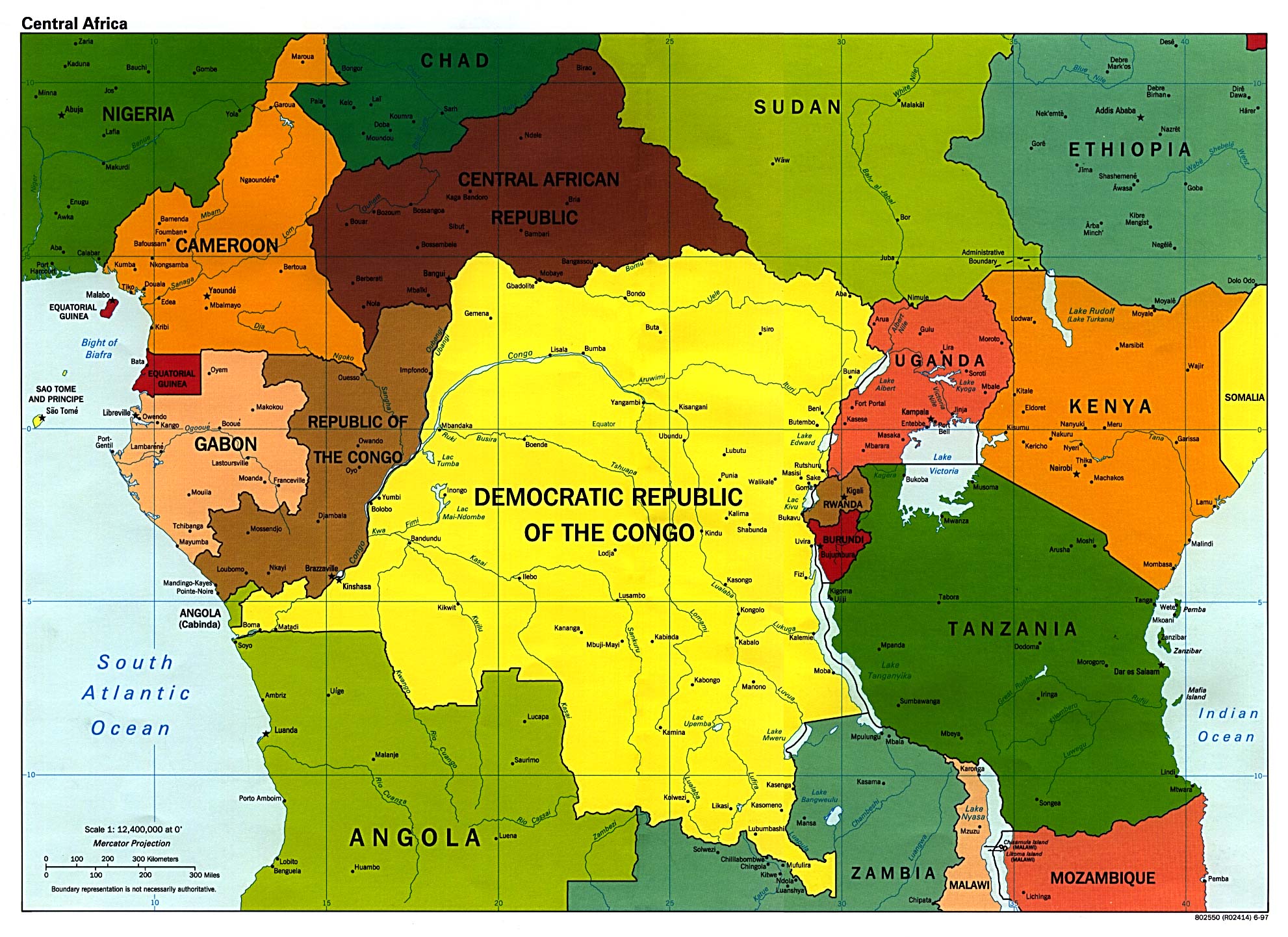
The Central African Republic has not had a fully functional government for several months after a coup overthrew the government. The country has descended into chaos and armed groups are inciting violence between the Christian and Muslim parts of the population. The UN Security Council has issued a report which raises the specter of genocide in the country, but it does not appear as if the Security Council has any substantive plan to intervene to prevent that crime. Unfortunately, there has been little world attention to this problem, and it is unlikely that outside governments will be motivated to offer genuine assistance to the people of the C.A.R.
Syria has met the second major deadline imposed by the Russian-US agreement to disarm Syria’s chemical weapons. The Organisation for the Prohibition of Chemical Weapons (OPCW) has examined 21 out of the 23 chemical weapons facilities it had identified, and declared that Syria has destroyed its capability to produce or use chemical weapons. This is a remarkable achievement given the circumstances even though the agreement does nothing to stop the ongoing conventional violence in the country. If the Russians and Americans could show similar commitment to stopping the humanitarian crisis in Syria, then we might have a better chance of saving lives.
There is controversy over the number of civilian deaths associated with the American use of drones in Pakistan. As reported earlier, two human rights groups estimated that about 400 civilians had dies in the strikes. However, the Pakistani government itself published numbers closer to the American estimate: 67 civilian deaths since 2008. There is speculation that the Pakistani government has low-balled its estimates in an attempt to dampen concerns over reports that the Pakistani government has in fact approved the strikes despite its earlier denials.
The International Criminal Court has decided to delay its prosecution of the President of Kenya, Uhuru Kenyatta, for a third time. The charges against Kenyatta are that he fomented ethnic violence in Kenya after the election in 2007. An estimated 1,300 people died in that violence. The Kenyan government has appealed to the UN Security Council to delay any prosecution of Kenyatta while he holds the presidency. Many also suspect that the charges are taking a back seat to the exigencies of the anti-terrorist movement after the violence in the Kenyan shopping mall earlier in the year. It will be interesting to see how the world addresses these issues.
Chinese police have arrested five individuals for the car crash in Tiananmen Square. The five were identified as supporters of the Uighur movement in Northwest China. The Uighurs are Muslims of Turkish descent and many in the region resent rule from Beijing. The attack represents an escalation of the protests by the Uighurs, and we will have to see how the central government responds to the threat.
An Italian magazine is claiming that the US NSA spied on the Vatican. The US government is vigorously denying the report, but after the previous reports that proved to be accurate, the denials lack power. The taps might have been part of a more general sweep of the Italian population, or they may have been targeted to find out information about the financial dealings of the Vatican Bank. The revelation, however, makes a mockery of the idea that the surveillance is essential to national security.
I sometimes read articles that seem to be wildly off-track but, nonetheless, genuinely thought-provoking. This op-ed by Mohammad Pervez Bilgrami suggests that the US is shifting away from its Sunni allies in the Middle East (Saudi Arabia, Kuwait, and Jordan) in order to prepare for the ascent of Shia power and Iranian influence. The scenario seems implausible right now, but there is a long history of US-Iranian cooperation prior to the 1979 Iranian revolution, and, in many respects, Iranian power complements US interests in the region quite nicely. One need only to think about two emerging issues that might make this change more likely: first, the dramatic increase in US domestic oil production freeing the US from the need to support Saudi Arabia; second, the sense that the hold that al-Qaeda adherents have over parts of the Sunni population is a greater threat to the US than the radicals associated with Shia Islam. I still think the scenario is poppycock, but I will keep my mind open. And watch carefully how the US proceeds in the current negotiations with Iran over the nuclear program.
I do not often cite purely opinion pieces–I prefer to refer to news articles and try to draw my own conclusions from the evidence.. But The Guardian has published an essay by Seumas Milne that is genuinely thought-provoking. It is a leftist critique of the policies pursued by the US since 11 September 2001 and it is blunt and direct. The essay is certainly worthy of discussion and thought.
The decision by Saudi Arabia not to take a seat in the UN Security Council perplexed many people. Fred Kaplan has published an essay which sheds light on Saudi reasoning. The essay is also testimony to how quickly and profoundly the politics of the Middle East are changing. Once again, the linchpin of all this change seems to be the removal of Sunni power in Iraq, a shift in the balance of power that favored Iran and its Shia allies. I suspect we will all look back at the American invasion of Iraq in 2003 as one of the most consequential moves of the 21st century, perhaps reminiscent of the Balkan Wars that preceded World War I in the 20th Century.
A very strange event occurred in Tiananmen Square in China: an SUV plowed into the crowded square killing five people and wounding many more. The most likely explanation for the crash is the obvious one: a deranged driver losing control of a car. But Tiananment Square is a highly symbolic place in China–it was the site of the famous protests that were suppressed in 1989. While we know very little about the event right now, it may be the case that something more significant is going on than the obvious explanation. We will keep an eye on this.
A bomb explosion occurred at a rally by the opposition Bharatiya Janata Party (BJP) in India. The BJP is a nationalist party with a very strong Hindu identity. It seeks to unseat the Congress Party in the elections scheduled for mid-2014. The BJP has a long history of animosity toward the Muslim population in India, and its current leader, Narendra Modi, was scheduled to speak at the rally. Modi is a controversial figure, and the current economic situation in India is fragile. He is sure to make the economic difficulties a major campaign issue.
Violence in Iraq continues. Since last April, more than 5,000 have died in sectarian violence. Sunnis in the country chafe under the Shia rule of the central government under al-Maliki. The government asserts that the violence is fostered by al-Qaeda elements who have slipped in from Syria. In truth, the violence began a very long time ago when the British gave power to the minority Sunni population, a role which continued under the rule of Saddam Hussein. The overthrow of Hussein by the US in 2003 provided an opportunity for the majority Shia population to take control, and the Sunnis resent the loss of power. In many respects, the violence also represents the power struggle between Sunni Saudi Arabia and Shia Iran.
The economic situation in the Occupied Territories has deteriorated steadily after years of fairly robust growth. Palestinians in the Gaza Strip have suffered as Egypt has closed the tunnels which have served as economic lifelines to the territory. Israeli controls within the West Bank have made economic investments for difficult and less productive. Right now, the Palestinian people depend largely on the foreign aid offered by the European Union and other countries.
There was a protest in Saudi Arabia by women who are demanding the right to drive their own cars. There is no Saudi law that prohibits women from driving, but the Saudi government refuses to give them licenses. Those women who drove today were driving with licenses from other countries. Last month “Sheikh Salah al-Luhaydan claimed on a popular Saudi website that it has been scientifically proved that driving ‘affects the ovaries’ and leads to clinical disorders in the children of women who are foolish enough to drive.” Fortunately, there appear to be those in Saudi Arabia who support the women.
There are reports that the US bugged Angela Merkel from 2002-13. The fury in Europe over these reports is simply incredible. Needless to say, spying on one’s allies is a clear confession of mistrust. Meanwhile, the American public seems to waking up to the scale of NSA surveillance and there was a protest in Washington, DC against the practice. It seems as if Edward Snowden performed a valuable service to the people by exposing the scale of the spying by the NSA–there appears to be little justification for such broad-based and untargeted surveillance.
Japanese Prime Minister Shinzo Abe asserted that Japan was prepared to defend its interests more vigorously against China. China’s rapid rise to power has mirrored Japan’s two decade slump from power, and Abe intends to reverse that trend. Relations between the two countries have steadily worsened, and Japan likely believes that if it doesn’t act soon, then its role in East Asia will be severely diminished.
The US National Oceanic and Atmospheric Administration (NOAA) has released a photograph of the recent smog over the city of Harbin, China. Harbin is a city of about 11 million people and the smog was so bad that much of the city was shut down. In some areas of the city, small particulate matter was measured at more than 1,000, on a scale where 300 is considered hazardous. The Chinese government is accelerating its efforts to stop smog, but those efforts have not yet stopped the problem from becoming worse year over year. The grey areas on the photograph is smog.
On the day that Pakistani Prime Minister Nawaz Sharif met US President Barack Obama and said he emphasized the need to end drone strikes on Pakistani territory, the Washington Post published documents that prove that the drone strikes had in fact been approved by the Pakistani government. One can understand why the government of Pakistan would want to keep its approval secret from its citizens. The hypocrisy of openly condemning the US, however, is standard operating procedure in the world.
Imperialism invariably involved the humiliation of the subject peoples, but often the imperial powers sought to deliberately destroy the sense of dignity of the people they dominated. Nowhere was this more true than in China, where the British wanted to smash the hold of the Emperor over his people. The Atlantic recounts such an episode in the 19th century.
A new scientific study has found that “average summer temperatures in the Canadian Arctic over the last century are the highest in the last 44,000 years, and perhaps the highest in 120,000 years.” The study suggests that the temperatures are far outside the range of natural variability and can only be explained by human-induced change. The warming began in the 1970s, but has sped up considerably in the last 20 years.
The Guardian has released an NSA memo which indicates that the US spied on 35 world leaders. It got the contact numbers of these leaders by requesting the information for other US agencies. The US has also admitted that it did in fact spy on Angela Merkel, saying only that it “is not monitoring and will not monitor” Merkel’s calls. Germany correctly pointed out that this stated does not deny that the spying did occur in the past. The memo is dated from 2006, and it also concedes that the spying had resulted in “little reportable intelligence”. One wonders how many times it was likely that Angela Merkel would call up Osama bin Laden.
Immigration is a volatile political issue in many countries, but nowhere is it so politically potent as in Europe right now. Der Spiegel has published a very thoughtful article on the immigrant issue in the city of Hamburg, Germany. It raises most of the very difficult moral, political, and legal issues surrounding the status of illegal immigrants. The issue is likely to become even more visible and problematic in the next few months.
The Russian government has reduced the charges against the 30 Greenpeace protesters from piracy to hooliganism, which drops the potential penalties from 15 years to 8 years in jail. We obviously don’t know why the charges were reduced, but one possibility is that the public attention to the case proved somewhat embarrassing. Eight years in a Russian jail, however, still does seem excessive given that no damage was done to the oil rig–freedom of expression is a dangerous activity in Russia.
One of the poorest countries in the world has made incredible strides in reducing child mortality rates by almost two-thirds. Niger has made progress by carefully and systematically targeting the problem, and it did not require substantial additional resources. This result should encourage all governments to take similar steps. It proves that we can end one of the most serious (and common) tragedies in the world simply by paying attention. Reducing child mortality does not reflect a lack of resources; it reflects a lack of will.
The German government has received information that the US government tapped the mobile phone of Chncellor Merkel. The US quickly denied the charge. The foolishness of the NSA continues to boggle the imagination. Tapping the cell phone of one of one’s closest allies is an extraordinary breach of trust.