A crack in the Larsen C ice shelf has been growing at an accelerating rate. The crack has grown to almost 50 miles since 2011 and now only about 12 miles of ice remains connected to the rest of the shelf. If the shelf calves off, the glaciers behind it will be closer to melting directly into the ocean. We once thought that Antarctica was more resilient to climate change than the Arctic, but we seem to have been mistaken.
In 1565 the first voyage from Asia to Mexico occurred, for the time truly globalizing trade and integrating China into the global economy without the centralizing effect of Spain and Portugal. The voyage led to an independent trade between Mexico and China and for the first time economic interactions flowed in a truly global manner.
Five days ago the Mexican government raised the price of gasoline 20% and the price hike has led to demonstrations and protests all over the country. The protests occurred in 28 of the 32 Mexican states and reflect anger at gasoline shortages, price levels, and general dissatisfaction with the government of President Enrique Peña Nieto. The protests come at a time when the Mexican economy is undergoing great stresses given the pressures exerted by US President-elect Trump.
The European Union’s Copernicus Climate Change Service has released its report on global temperatures in 2016 and confirmed predictions that the year was the warmest on record by a very wide margin. According to Reuters: “Global surface temperatures in 2016 averaged 14.8 degrees Celsius (58.64°F), or 1.3C (2.3F) higher than estimated before the Industrial Revolution ushered in wide use of fossil fuels”.
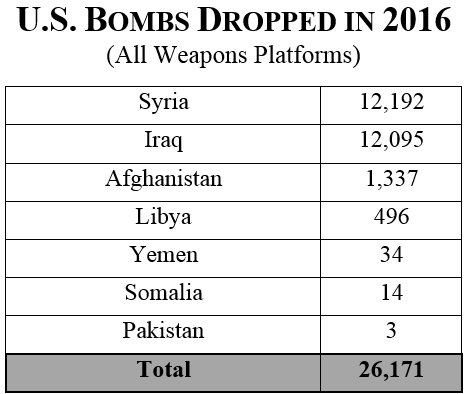
According to researchers at the Council of Foreign Relations, “the U.S. dropped some 26,171 bombs across all its weapons platforms, on targets in seven different countries” in 2016. Syria and Iraq were the countries that were bombed the most.
Beijing has a difficult time controlling air pollution (it is not the worst major city with that problem–that title goes to New Delhi) for a variety of topographical reasons. But air pollution has become significantly worse as the country has grown economically and as automobiles have become more pervasive in Chinese society. A video of smog overtaking the city in a period of 20 minutes shows dramatically how bad the problem has become.
In market capitalism, income and wealth inequality is considered a positive condition: the inequalities create incentives to work hard and therefore contribute to economic growth. There is probably little question that a certain degree of inequality creates incentives, but there is also the possibility that, above a certain level, inequalities can create a drag on economic growth by limiting the possibilities for the levels of consumption necessary for production to be profitable. We don’t know exactly what the line is between good and bad inequality, but Michael Schneider makes the case that we probably crossed that line in the late 20th century.
Sovereignty is usually considered inviolable. But there are occasions when the cost of sovereignty is higher than the benefits of not claiming it. A unique situation exists between France and Spain concerning the ownership of a small island in the Bidasoa River named Pheasant Island. The Treaty of the Pyrenees signed in 1659 finally ended the Thirty Years War between the two states (the major fighting had actually ended in the Treaty of Westphalia in 1648). In order to sign the Treaty Spain and France wanted to choose a neutral territory and they mutually decided to sign it on Pheasant Island. Since that time, the two powers have sent diplomats to the island every six months to transfer sovereignty over the island to each other. So for six months of the year, France has sovereignty over Pheasant Island and Spain controls it the other six months of the year.
One of the more problematic aspects of the new technologies is the stuff of science fiction: the fear that machines and robots will eventually be able to perform many of the jobs currently done by humans. Self-driving cars are the stuff of nightmares if you are a taxi driver or a truck driver. We have no idea how difficult the transitions might be in the future, but the fear of technological replacement has accompanied every major economic transformation. At the beginning of the Industrial Revolution, textile workers feared machine driven mills and a protest movement against mechanization was led by a group called the Luddites. It turns out that the Luddites were ultimately wrong in their fears (although the workers at that specific time did, in fact, lose their jobs). It remains to be seen if this time is different.
Ned Ludd
US President-elect Trump continues to make appointments that signal a tougher line against China in trade matters. He has appointed Robert Lighthizer, an economist who has argued in the past to increase tariffs, to be the US Trade Representative. According to Vox: “Today he’s a partner at the law firm of Skadden, Arps, Slate, Meagher & Flom, where he represents industries like steel that advocate for tariffs to keep their sectors competitive in the American market.” Lighthizer will couple with Peter Navarro, a long-time opponent of trade deals with China. We will have to see how China responds to these appointments.
The role of religion in politics is inevitably a contentious issue. In many societies, religion is an integral part of the political system. But in liberal societies, there is supposed to be a sharp separation between religion and politics. Virtually all politicians profess religious faith–very few atheists hold public office in most countries–and even in those countries, like Russia, where once atheism was expected, Orthodox Christianity has made a big comeback under Vladimir Putin. In the US, about 71% of the population describe themselves as Christian but the US COngress is about 91% Christian.
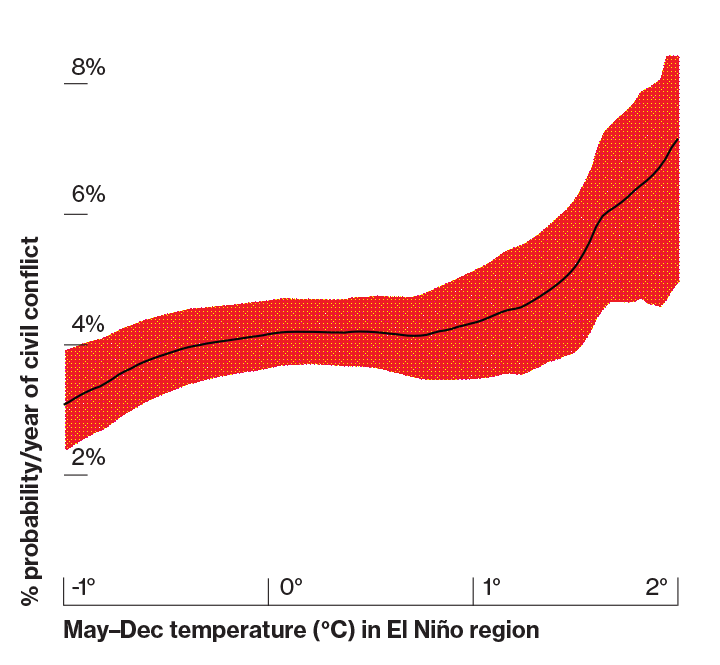
Predicting the effects of climate change is very difficult since the effects will not be uniform. There very well may be winners in terms of economic activity, but we suspect that the costs of adaptation will produce more losers. The fear is that climate change will generate greater economic inequality since richer individuals and countries will be able to bear the costs of adaptation more easily than poor countries and individuals. MIT’s Technology Review has an article that suggests that inequality will be seriously aggravated by climate change.
As the US begins another debate on health care insurance, we should all be wary of those who argue that the US has the best health care system in the world, a position often taken by those who support greater privatization in health care and less government support. The evidence does not support this proposition, although it is probably true that the US health care system works magnificently for those who can afford superb care. For the country as a whole, however, the US lags pretty far behind other rich and not-so-rich countries.
One word which pops up frequently in political discussions is “populism”, a word that is used too casually and by people who don’t really know what the word means. The word became popular in the late 19th century America to refer to a rural movement against urbanized elites, led ultimately by William Jennings Bryant. The Economist offers a different perspective on the word, using it more to describe an attitude that attaches itself to other ideologies. The populist attitude is that the urbanized elite is always corrupt, but the appropriate solution depends on how the phenomenon of poverty came to be. Thus, if one is a socialist with a populist attitude, the solution is to redistribute wealth from the rich to the poor. If one is a capitalist with a populist attitude, then the solution is to eliminate government interference in the economy. This way of understanding populism divests the term of substantive meaning, liberating it to be used more as a rhetorical device than an analytic framework.
We are often confronted with people who are reluctant to change their minds even when given information that contradicts their conclusions. It is a difficult situation, made more difficult because such recalcitrance suggests that discussion is a futile activity. Researchers have studied this phenomenon and have documented its persistence over a very wide variety of topics. They have a list of responses when confronted with people who refuse to change their minds that I believe are very appropriate and effective:
“If corrective facts only make matters worse, what can we do to convince people of the error of their beliefs? From my experience, 1. keep emotions out of the exchange, 2. discuss, don’t attack (no ad hominem and no ad Hitlerum), 3. listen carefully and try to articulate the other position accurately, 4. show respect, 5. acknowledge that you understand why someone might hold that opinion, and 6. try to show how changing facts does not necessarily mean changing worldviews. These strategies may not always work to change people’s minds, but now that the nation has just been put through a political fact-check wringer, they may help reduce unnecessary divisiveness.”
I think the key point is always to depersonalize disagreements.
A systematic problem in measuring the validity of the “trickle-down” assumptions of wealth redistributions in market capitalism is that we very rarely have access to multi-generational studies of the process. Generally, we have access to two generations (parents and their children) which is really too short to determine whether over time society as a whole benefits from the trickle-down process: inheritance is so common that it cannot be legitimately be used as a criticism of trickle-down (although there are often measures taken through estate taxes to redistribute such wealth). Guglielmo Barone and Sauro Mocetti wrote an article last year entitled “Intergenerational mobility in the very long run: Florence 1427-2011” to test the process over a very long period of time. They are quite sensitive to the variables that make such an exercise highly problematic and try to compensate for those difficulties, and it is appropriate to regard their findings as speculative. But, within those severe constraints, their analysis came to some startling conclusions:
“Almost all of the theoretical and empirical studies on intergenerational mobility have focused on the correlation in socioeconomic status between two successive generations – parents and their children – and have shared a common view that the economic advantages and disadvantages of ancestors vanish in a few generations. In this paper, we question this view and empirically document the persistence of socioeconomic status across generations that are six centuries apart. This result is even more surprising: the huge political, demographic and economic upheavals that have occurred in the city across the centuries were not able to untie the Gordian knot of socioeconomic inheritance.”
Whether these conclusions can be extrapolated in a more general way remains to be seen, but the findings are inconsistent with the prevalent defenses of the trickle-down model.
The economic crisis in Greece has been intense for over six years. The austerity programs imposed on Greece by the European Commission, the European Central Bank, and the IMF to address the debt crisis have diverted much of the resources of Greece away from human services in order to pay down the debt. The costs on the Greek people have been significant, and no where is this more apparent than in the Greek health system which has lost almost a third of its funding over the years. According to The Guardian:
“Since 2009, per capita spending on public health has been cut by nearly a third – more than €5bn (£4.3bn) – according to the Organisation for Economic Co-operation and Development. By 2014, public expenditure had fallen to 4.7% of GDP, from a pre-crisis high of 9.9%. More than 25,000 staff have been laid off, with supplies so scarce that hospitals often run out of medicines, gloves, gauze and sheets.”
Most of this money has been siphoned off in order to pay debts to other European banks.
China is ramping up its rhetoric concerning the US relationship with Taiwan. US President-elect Trump’s comments about the “one China” policy is, for the Chinese government, a red line. The US is obligated to defend Taiwan if attacked, but the nature of that defense has traditionally been defined as providing weapons and not waging war. But the Chinese do not believe that they need to wage a military war against Taiwan. According to a report from Reuters:
“A retired senior officer who maintains contacts with the PLA told Reuters that China probably wouldn’t need to fire any missiles to bring Taiwan to its knees. China is Taiwan’s largest trading partner, and Taiwan runs a huge trade surplus with China, worth $27 billion in 2015.
“‘We can just cut them off economically. No more direct flights, no more trade. Nothing. Taiwan would not last long,'” the officer said. “‘There would be no need for war.'”
Given the economic dependence of Taiwan on the Chinese economy, it does seem to be the case that, if push came to shove, the Chinese hold stronger levers than the US.
One of the more disturbing aspects of the US presidential election was how social media was used to disseminate information, some of which was accurate and some of which was untrue. The pervasiveness of social media makes it difficult to interpret information–the course are not always clear and there seems to be an unfortunate willingness on the part of some to be untruthful. This apparent disregard for truth has also infected our source of information and the search engines we rely upon for information now offer up distorted results. A well-informed electorate is necessary for democracy; a misinformed electorate will produce nothing but chaos and tyranny.
It is the last day of a wretched year. Good-bye to 2016!!! But let’s leave on a good note. Taj Mahal will always make the day brighter.
Take a Giant Step
Though you failed at love and lost
And sorrow’s turned your heart to frost
I will mend your heart again
Remember the feeling as a child
When you woke up and morning smiled
It’s time, it’s time, it’s time you felt like that again
There is just no percentage in remembering the past
It’s time you learned to live again and love at last
Come with me leave your yesterday, your yesterday behind
And take a giant step outside your mind
You stare at me with disbelief
You say for you there’s no relief
But girl, I swear, it won’t do you no harm
Don’t sit there, in your lonely room
Just looking back inside that gloom
Mama, that’s not where you belong
Come with me, I’ll take you where the taste of life is green
And everyday, everyday, hold on woman, just got to be seen
Come with me, leave your yesterday, your yesterday behind
And take a giant step outside your mind
Though you’ve played the love and lost
And sorrows have turned your heart to frost
I will mend your heart again
Remember the feeling as a child
When you woke up and morning smiled
It’s time, it’s time, it’s time you felt like that again
There is just no percentage in remembering the past
It’s time you learned to live again and love at last
Come with me, leave your yesterday, your yesterday behind
And take a giant step outside your mind
For those who read US Secretary of State John Kerry’s speech defending the US abstention on the UN Security Council resolution on Israeli settlements, it is clear that Kerry’s position on the two-state solution pivoted on the question of whether Israel could remain a Jewish homeland and a democratic state if it annexed the Occupied West Bank (because non-Jews in the West Bank significantly outnumber Jews). Not surprisingly, this dichotomy nettles Israeli society as well. The Pew Research Center conducted an exhaustive survey of Israelis on this and many other questions last March and the results of that poll clearly indicate the divisions within Israeli society. The analysis is definitely worth close study, but it is complex: like the Israeli political system, Israeli society is unbelievably intricate and nuanced. But it is clear that there are some elements in Israeli society that hold positions that make democracy difficult if not impossible. It is important to remember, however, that such elements exist in virtually every society right now. The Pew Research Center divided religious positions in Israel along these lines: “Nearly all Israeli Jews identify with one of four categories: Haredi (commonly translated as “ultra-Orthodox”), Dati (“religious”), Masorti (“traditional”) or Hiloni (“secular”).” Halakha refers to Jewish law.
US President Obama slapped new sanctions on Russia for its interference with the US Presidential election. Russian President Putin, however, has decided not to reciprocate with Russian sanctions on the US even though his Foreign Minister had indicated that such sanctions would be forthcoming. There is an interesting debate as to why Putin made this choice and whether it reflects a deliberate decision to curry favor with President-elect Trump. For his part, Mr. Trump considered the move “very smart.” The US-Russian relationship is going to be very interesting in the very near future if Mr. Trump decides to “expand” the US nuclear arsenal. I doubt that Russia will decide not to reciprocate that move.
The truly disquieting aspect of the recent US election is the extent to which horrific ideas about race and religion have surfaced. These ideas have never gone away in American culture, but the rhetoric surrounding the election seems to have emboldened certain groups to emerge from the shadows. Much of the rhetoric was legitimated through economic and security concerns: jobs are being taken by undocumented workers or terrorists are infiltrating as refugees. But there is one treacherous theme that cannot be disguised that goes very deep in American culture: anti-Semitism. The nationalism espoused by some of these extremist groups has an explicit anti-Jewish thread and our leaders need to state loudly, unambiguously, and with the greatest force possible that these views have no place in the United States.
The Economist is a news magazine committed to the tenets of classical liberalism and makes no excuses or apologies for that commitment. It is a journal I trust even though it holds many positions with which I disagree. In its most recent edition, it assesses the state of liberalism in the world at the end of 2016 and concludes that it was a pretty bad year for the ideology. But it also offers a ringing endorsement of how liberalism can respond to many of the problems currently weighing down the global economy and political systems.
One of the more interesting aspects of politics is how difficult it is to get people to have open minds about political statements. Even in the face of concrete and specific evidence, people are more likely to deny the “facts” than to change their political beliefs. Scientists are probing this issue and tentative studies indicate that political beliefs are hardwired in our brains in the same places that personal identity is located. We therefore tend to take contradictory political beliefs as personal insults as opposed to simple factual disagreements. Perhaps the most important aspect of being a good political analyst is the ability to depersonalize political issues.
The International Criminal Court (ICC) was established in 1998 by the Rome Statute and began functioning in 2002 after 60 states ratified the Treaty. There are now 124 states which have signed the treaty. However, the ICC was hobbled from the beginning by the refusal of important states to ratify the treaty: China, Iraq, Israel, Libya, Qatar, the United States, and Yemen. Moreover, to date the ICC has indicted 39 individuals, but all of them have been African which has led to three states announcing their intention to leave the treaty–Burundi, South Africa, and the Gambia–and three states very likely to leave the treaty–Kenya, Namibia and Uganda. This dissatisfaction has now been coupled with rising nationalism in the world which threatens to undermine the legitimacy of the ICC even more. If the ICC ceases to be regarded as legitimate, its downfall will be considered another bit of evidence in the declining power of liberal institutions.
US Secretary of State Kerry delivered a speech today on US-Israeli relations. The speech was designed to explain the US decision not to veto the UN Security Council Resolution condemning the settlements in the Occupied West Bank, and he had three audiences: the Israeli government which has condemned the decision, US Congresspeople who have also roundly condemned the decision, and the larger international audience which has a powerful interest in Middle East peace. For those who lack a strong background in the US position in the Israeli-Palestinian duspute, Kerry does a very good job of placing the US decision in a larger historical context. Israeli Prime Minister Netanyahu issued a statement condemning the decision. When the Israeli Ministry of Foreign Affairs issues a rebuttal to Kerry’s speech, I will provide a link to that analysis. Vox has an essay entitled “9 questions about the UN vote on Israeli settlements you were too embarrassed to ask” which also offers good background to the resolution.
US President Obama has indicated that he is prepared to retaliate against Russia for its interference in the US Presidential elections. Some of the retaliatory measures will include additional sanctions to those already levied against Russia for its intervention in Ukraine and some sanctions will likely include specific individuals in the Russian government and economy. But there will likely be cyberattacks that will not be announced. How President-elect Trump will navigate these sanctions is unclear. Many Republicans support a strong policy against Russia.
The discussions among Russia, Iran, and Turkey on the future of Syria appear to have come up with an agreement that is pure realpolitik. The Turks wish Syrian President Assad to leave, while the Russians and the Iranians wish him to stay in office. In order to assure that all parties are satisfied, the parties are contemplating dividing Syria into various spheres of influence with Assad ruling only one of those zones and only for a limited period of time. It is difficult to imagine such a arrangement working without the very active participation of all three powers, nor is it an arrangement that could last for very long. But it may be a face-saving short-term measure that allows Russia to exit as a victorious power, leaving Iran and Turkey holding the bag.