US President Trump has made the question of immigration into the US a national security matter. He has done so by referring to the flow of immigrants as an invasion and by sending US troops to the US-Mexican border. But the Pew Research Center has investigated the issue and found that the number of unauthorized immigrants in the US is at the lowest level in over a decade. Moreover, most of those unauthorized immigrants have been living in the US for more than ten years. According to National Public Radio: “The study, by the Pew Research Center, is based on 2016 government data. It estimates that there were 10.7 million unauthorized immigrants living in the U.S. that year. That’s down from a high point of 12.2 million in 2007.” The evidence suggests that unauthorized immigration has not gotten worse; only that the attention of the US government–for whatever reason–has become more intense.
The Senate Foreign Relations Committee is going to conduct a hearing tomorrow on the civil war in Yemen and US support for the Saudi Arabian-led coalition fighting in Yemen. US Secretary of State Pompeo and US Defense Secretary Mattis are scheduled to testify before the committee. But apparently CIA Director Gina Haspel will not testify. There is no solid information why the most important intelligence officer will not appear, but there are suspicions that the Trump Administration does not wish Haspel to contradict President Trump’s assertion that the CIA did not “conclude” that Saudi Crown Prince Salman authorized the murder of Khashoggi. Several Senators wanted Haspel to testify but “[o]fficials said that the decision for Haspel not to appear in front of the committee came from the White House, but the national security adviser, John Bolton, denied it.” I am not sure why Congress would defer to the Executive Branch on who should testify.
Reporters for The Washington Postheld a 20-minute interview with US President Trump and one of the topics discussed was the Climate Change Report issued by 13 Federal agencies last week. President Trump said that he did not believe the report and in the interview said: “One of the problems that a lot of people like myself, we have very high levels of intelligence but we’re not necessarily such believers….As to whether or not it’s man-made and whether or not the effects that you’re talking about are there, I don’t see it.” Unfortunately, the global environment is indifferent to what humans believe to be true or not true; what it cares about is whether humans respect the earth as an organism. And the most recent UN report suggests that human activity has not changed at all despite the warning signs about the imminence of climate change.
Russia has seized three Ukrainian naval vessels and opened fire on others in the Kerch Strait. Ukraine is considering declaring martial law in order to reinforce its control over territory, but eastern Ukraine remains in the hands of separatists that favor Russia. The Kerch Strait is an important access route for Ukraine to its eastern territories, and shutting down the Strait will diminish Ukraine’s ability to regain control from the rebels. The UN Security Council is scheduled to meet on the crisis today. Other European states are very concerned about the possibility of this crisis escalating, but the US has yet to make an official statement on the matter. The Russians accuse Ukraine of provoking the attack, and there is little question that the government of Ukrainian President Petro Poroshenko has been quite adamant about Ukrainian rights. It seems unlikely that Ukraine would choose to provoke a crisis in the Black Sea where it is seriously outgunned. International law clearly favors the Ukrainian position on the right of free passage through the Strait:
“Ukrainian Navy ships were using their freedom of navigation guaranteed under articles 17, 38 of the UN Convention on the Law of the Sea (UNCLOS) and article 2 of the agreement between Russia and Ukraine on cooperation on use of the Sea of Azov and the Kerch Strait. Under the quoted articles, they are allowed to pass the Kerch Strait at any time taking into account safety of navigation is secured. Russia blatantly violated all mentioned articles.
President Trump has dismissed his own Administration’s climate report that was issued last Friday. According to The Hill: “‘Yeah, I don’t believe it,’ Trump told reporters as he left the White House for a campaign rally for Sen. Cindy Hyde Smith (R) in Mississippi, when asked about the predictions of economic devastation.” His comment raises an interesting question. The report was mandated by the Congress and released according to that law. But Trump has now issued a report that he considers to be not true. Science Alert has an excellent article that summarizes the report in good detail, although it is hard to summarize a 1600 page study.
ABC News has a very well-documented article on the arms deal with Saudi Arabia which conflicts with the assertions made by US President Trump on its monetary value. President Trump has stated that the arms deal amounted to about $450 billion. According to documents seen by ABC, the number is much smaller:
“Since the deal was signed by Mattis and bin Salman in Riyadh, there has been minimal activity toward purchasing the defense equipment and arms laid out in the arms agreements and signed. According to the Department of Defense, of the original $110 billion, Saudi Arabia has signed Letters of Offer and Acceptance valued at around $14.5 billion for equipment, including helicopters, tanks, ships, weapons and training.
“The memo of intent, seen by ABC News in a photograph and verified by a former White House official and first reported by the Washington Post last year, shows billion dollar price tags for what appear to be at vague deals far from being inked. Many of the details about the quantity and types of defense weapons to be purchased are not listed and are slated to be delivered after 2022 or have a ‘to be determined’ delivery dates and quantities.”
“In short, 500,000 jobs Trump keeps bringing up is at least three to five times higher than what one could expect from the Saudi deal, given the estimates from the companies themselves, plus the most generous use of the indirect multiplier.
“By its own math, the U.S. State Department said in May 2017 that the Saudi deal could support ‘tens of thousands of new jobs in the United States.'”
The Saudi arms deal yields far fewer benefits to the US than President Trump assumes.
The poles are the areas of the planet most seriously affected by global warming. We do not have good data on Antarctica, but we have good records of the Arctic. NASA has produced a video of how sea ice in the Arctic has been affected by global warming. Pay particular attention to what happens after 2007 when sea ice thinned out quite dramatically and has continued to thin out since. The video is narrated so be sure to turn on your sound. The New York Times has a very well-documented article on coal in the global economy and why it persists as the main source of energy for many countries in the world. As long as coal remains in the energy cycle, it is hard to see progress against climate change.
We still have no clear idea of the CIA assessment of the role of Saudi Crown Prince Salman in the murder of Jamal Khashoggi. President Trump continues to insist that Prince Salman did not know about the murder. According to The Guardian:
“Trump has been sharply criticised for his passive response. The president said repeatedly on Thursday that, contrary to media reporting that cited senior intelligence officials, the CIA had not found Prince Mohammed responsible.
“’They didn’t conclude,’ Trump told reporters in Florida. ‘No, no, they didn’t conclude. I’m sorry. No, they didn’t conclude. They did not come to a conclusion. They have feelings certain ways. I have the report … they have not concluded, I don’t know if anyone’s going to be able to conclude the crown prince did it.’”
On the other hand, Congressman Adam Schiff, the top Democrat on the House intelligence committee, Senator Jack Reed of Rhode Island, and Senator Mike Lee all stated in press interviews that the CIA had concluded that the Crown Prince had authorized the assassination. I suspect that we will have to wait for Congressional hearings next year before we hear from the CIA directly.
Ukraine and Russia have escalated their confrontation in the Black Sea. Russia has closed the Kerch Strait, a narrow waterway that connects the Azov Sea with the Black Sea. The two states have a bilateral treaty that gives both countries the right of passage through the straits. But both sides have accused each other with aggressive military actions in the strait. Russia connected Crimea with Russia earlier this year by building a bridge that goes over the strait, and since the bridge opened in May, Russia has been aggressively asserting its control over the area. Ukraine has the weaker hand in this confrontation, but it remains to be seen whether the US will back up the Ukrainians in the Black Sea.
Elliott Prasse-Freeman is a professor at the National University of Singapore and he was interviewed at the Carnegie Council for Ethic in International Affairs about the plight of the Royingha in Myanmar. The interview sheds a lot of light on the history of the population in the Rakhine province of Myanmar and gives a very detailed history of how the Royingha came to be viewed as the “other” in Myanmar. The interview fleshes out the dynamics of nationalism in Myanmar and what it means to be part of the “nation”.
The world will be watching the OPEC meeting in early December to see if the cartel members agree to cut production in order to raise the price of oil which is now hovering close to $50 a barrel. That price is far lower than what most of the members need for their economic development, but a higher price may be beyond their control. The US is poised to become the world’s largest prodcuer of petroleum, largely because of the success of fracking in Texas. According to Bloomberg:
“By the end of 2019, total U.S. oil production — including so-called natural gas liquids used in the petrochemical industry — is expected to rise to 17.4 million barrels a day, according to the U.S. Energy Information Administration. At that level, American net imports of petroleum will fall in December 2019 to 320,000 barrels a day, the lowest since 1949, when Harry Truman was in the White House. In the oil-trading community, the expectation is that, perhaps for just a single week, the U.S. will become a net oil exporter, something that hasn’t happened for nearly 75 years.”
The idea that the US needs Saudi Arabian oil is nonsense. US imports of oil have been going down steadily for many years.
As economic growth begins to slow in Europe and China, we are beginning to worry about the accumulation of both private and public debt. Slowing economic growth, particularly if accompanied by rising interest rates, will make it more difficult for debtors to repay their debts. The size of the debt is usually measured as a ratio to Dross Domestic Product (GDP), but that figure is often misleading. The real issue is whether the economy is growing at a faster rate than debt obligations. By this measure, there are several countries which are worrisome debtors: Greece, Italy, Turkey, and many of the poorer countries in the world. The most recent debt crises in the world–1998 and 2008– created serious difficulties for many countries, and some of the patterns of those crises seem to be replicating.
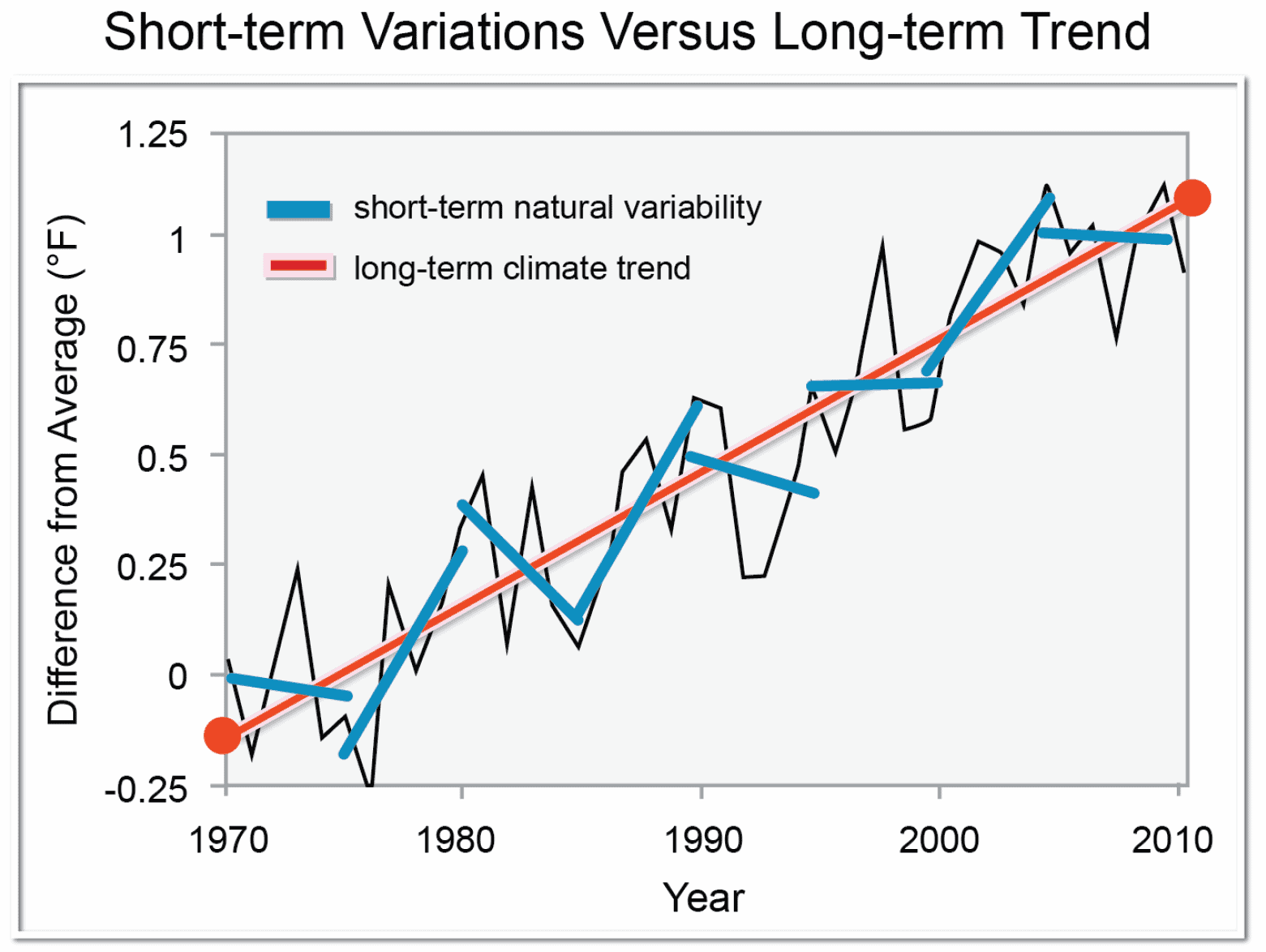
“Last year, the U.S. Global Change Research Program released a special report―the first volume of the Fourth National Climate Assessment―that found Earth has entered the warmest period “in the history of modern civilization,” with global average air temperatures having increased by 1.8 degrees Fahrenheit over the last 115 years. And in October, the Intergovernmental Panel on Climate Change, the leading United Nations consortium of researchers studying human-caused climate change, issued a report warning world governments must cut global emissions in half over the next 12 years to avoid warming of 2.3 degrees Fahrenheit, beyond which climate change is forecast to cause a cataclysmic $54 trillion in damages.”
The report is a significant rebuff to US President Trump who tweeted just a few days ago, “Brutal and Extended Cold Blast could shatter ALL RECORDS – Whatever happened to Global Warming?” It is therefore no accident that the report, which was scheduled to be released in December, was released today, perhaps the slowest news day of any year. The Guardian summarizes some of the main points of the report:
The summary states the “earth’s climate is now changing faster than at any point in the history of modern civilization, primarily as a result of human activities. The impacts of global climate change are already being felt in the United States and are projected to intensify in the future.”
Average sea levels along the US coast have increased by around 9in since the early 20th century as the oceans have warmed and land ice has melted. If emissions are not constrained, “many coastal communities will be transformed by the latter part of this century”.
Fisheries, tourism, human health and public safety are being “transformed, degraded or lost due in part to climate change impacts, particularly sea level rise and higher numbers of extreme weather events”.
Wildfires have burned at least 3.7m acres in the US in all but three years from 2000 to 2016. “More frequent and larger wildfires, combined with increasing development at the wildland-urban interface portend increasing risks to property and human life,” the report states.
More than 100m people in the US live in places with poor air quality and climate change will “worsen existing air pollution levels”. Increased wildfire smoke risks heightening respiratory and cardiovascular problems, while the prevalence of asthma and hay fever is also likely to rise.
Major groundwater supplies have declined over the last century, with this decrease accelerating since 2001. “Significant changes in water quantity and quality are evident across the country,” the report finds.
Climate change will “disrupt many areas of life” by hurting the US economy, affecting trade and exacerbating overseas conflicts. Low-income and marginalized communities will be worst hit.
It will be very interesting to gauge the response of the public to the report and to listen carefully whether the Trump Administration makes any comment on a major report by its own scientists.
The Turkish Press is reporting that there is a recording of Saudi Arabian Crown Prince Salman speaking to his brother, the Saudi Ambassador to the US, with instructions to “silence Jamal Khashoggi as soon as possible.” The report indicates that the US CIA recorded this call, but there is, as of yet, no independent verification of that claim. If true, then the recording belies the claim made by US President Trump that the Crown Prince had no knowledge of the murder of Khashoggi. The claim raises an extraordinary issue. A US intelligence agency has evidence that directly contradicts the claim of the President: should that evidence be made public? The President has made an issue of how dependent the US is on arms sales to Saudi Arabia. A more precise statement would be that US defense industries are dependent on Saudi Arabia. The Washington Postthe reaction of the defense industry has a very detailed article on to Khashoggi’s murder. President Trump also credits Saudi Arabia for lower oil prices. Saudi Arabia is the third largest producer of oil in the world following Russia and the US and the Saudis have a budget that depends upon $80 a barrel, which is considerably higher than the price today. The Saudis restricted production in order to force higher prices, but they have been stymied by Russia which wants $40 a barrel oil to prevent the US from taking its market away in Europe. So Trump should be thanking Russia for low oil prices. We will see what the December OPEC meeting yields. Saudi Arabia is a member of OPEC, Russia is not. If OPEC cuts production, then oil prices will go up in line with Saudi interests.
Greenhouse gases are now concentrated in the atmosphere at levels similar to those 3-5 millions years ago. The Guardian reports:
“Levels of CO2 rose to a global average of 405.5 parts per million in the atmosphere in 2017 – almost 50% higher than before the industrial revolution.
“Levels of methane, a potent greenhouse gas responsible for about 17% of global warming are now 2.5 times higher than pre-industrial times owing to emissions from cattle, rice paddies and leaks from oil and gas wells.
“Nitrous oxide, which also warms the planet and destroys the Earth’s protective ozone layer, is now over 20% higher than pre-industrial levels. About 40% of N2O comes from human activities including soil degradation, fertiliser use and industry.”
The British charity, Save the Children, estimates that 85,000 children under the age of five may have died from malnutrition in the war in Yemen. The Saudi Arabian-led coalition continues to strike targets in Yemen even though the US has stopped refueling Saudi jets and Saudi Arabia clearly intends to strangle humanitarian assistance flowing to civilians through the port of Hudaydah. In his statement yesterday, US President Trump blamed Iran for the catastrophe: “On the other hand, Saudi Arabia would gladly withdraw from Yemen if the Iranians would agree to leave. They would immediately provide desperately needed humanitarian assistance.” That point of view overestimates the support that the Houthi rebels in Yemen have received from Iran. The war began as an internal struggle in Yemen as part of the Arab Spring–it has escalated largely because of the Saudi fears of losing control over Yemen.
Matthew Yglesias has written a very informative essay interpreting US President Trump’s policy toward Saudi Arabia. He takes on Mr. Trump’s argument that the murder of Jamal Khashoggi is not as important as the strategic interest of the US in cultivating a friendly policy toward the Saudis: “It’s true that at times, foreign policy pits American values against concrete American interests. But in this particular case, it’s hard to think of a more concrete American interest than deterring foreign governments from murdering Americans.” Yglesias does a very good job of analyzing the arguments made the Trump Administration and refuting the assertions made simply by looking at the evidence. The essay is a very good example of good journalism. Robin Wright also has a very good essay in the New Yorker which effectively demolishes the position of the Administration.
The New YorkTimes has an article on the situation in the former Yugoslavia whose break-up in 1991 led to bloody conflicts between Serbs, Croats, and Bosnians. Those conflicts were a harbinger of the nationalist sentiments that seem to be sweeping other states in the world. The bloodletting has fortunately subsided to a certain degree, but the tensions among the three ethnic groups–who are virtually indistinguishable by most markers of identity–remain. The article focuses on the situation in Bosnia where the divisions resonate with other areas of the world:
“The problem now, he said, is not just that Bosnia is still so divided but that Europe and the United States are themselves so polarized and have diminishing interest in Bosnia’s troubles. The emerging vacuum is being filled by Russia and Turkey, each keen to reassert itself in the Balkans — Russia as a protector of the Serbs and Turkey on behalf of Muslims.
“’These times remind me of the 1930s. Everything is falling apart. The center cannot hold,’ Mr. Ashdown added.”
One should not forget that divisions in this region led to World War I. These memories do not die easily.
“The country of Iran, as an example, is responsible for a bloody proxy war against Saudi Arabia in Yemen, trying to destabilize Iraq’s fragile attempt at democracy, supporting the terror group Hezbollah in Lebanon, propping up dictator Bashar Assad in Syria (who has killed millions of his own citizens), and much more. Likewise, the Iranians have killed many Americans and other innocent people throughout the Middle East. Iran states openly, and with great force, ‘Death to America!’ and ‘Death to Israel!’ Iran is considered ‘the world’s leading sponsor of terror.’
“On the other hand, Saudi Arabia would gladly withdraw from Yemen if the Iranians would agree to leave. They would immediately provide desperately needed humanitarian assistance. Additionally, Saudi Arabia has agreed to spend billions of dollars in leading the fight against Radical Islamic Terrorism.
“After my heavily negotiated trip to Saudi Arabia last year, the Kingdom agreed to spend and invest $450 billion in the United States. This is a record amount of money. It will create hundreds of thousands of jobs, tremendous economic development, and much additional wealth for the United States. Of the $450 billion, $110 billion will be spent on the purchase of military equipment from Boeing, Lockheed Martin, Raytheon and many other great U.S. defense contractors. If we foolishly cancel these contracts, Russia and China would be the enormous beneficiaries – and very happy to acquire all of this newfound business. It would be a wonderful gift to them directly from the United States!
“The crime against Jamal Khashoggi was a terrible one, and one that our country does not condone. Indeed, we have taken strong action against those already known to have participated in the murder. After great independent research, we now know many details of this horrible crime. We have already sanctioned 17 Saudis known to have been involved in the murder of Mr. Khashoggi, and the disposal of his body.
“Representatives of Saudi Arabia say that Jamal Khashoggi was an ‘enemy of the state’ and a member of the Muslim Brotherhood, but my decision is in no way based on that — this is an unacceptable and horrible crime. King Salman and Crown Prince Mohammad bin Salman vigorously deny any knowledge of the planning or execution of the murder of Mr. Khashoggi. Our intelligence agencies continue to assess all information, but it could very well be that the Crown Prince had knowledge of this tragic event — maybe he did and maybe he didn’t!
“That being said, we may never know all of the facts surrounding the murder of Mr. Jamal Khashoggi. In any case, our relationship is with the Kingdom of Saudi Arabia. They have been a great ally in our very important fight against Iran. The United States intends to remain a steadfast partner of Saudi Arabia to ensure the interests of our country, Israel and all other partners in the region. It is our paramount goal to fully eliminate the threat of terrorism throughout the world!
“I understand there are members of Congress who, for political or other reasons, would like to go in a different direction – and they are free to do so. I will consider whatever ideas are presented to me, but only if they are consistent with the absolute security and safety of America. After the United States, Saudi Arabia is the largest oil producing nation in the world. They have worked closely with us and have been very responsive to my requests to keeping oil prices at reasonable levels — so important for the world. As President of the United States I intend to ensure that, in a very dangerous world, America is pursuing its national interests and vigorously contesting countries that wish to do us harm. Very simply it is called America First!”
The sophistry of this statement defies belief. Apparently cold-blooded assassinations matter little when weighed in the balance of defense contracts. When assessing the value of Saudi Arabia as an ally, one should always keep in mind that Saudi Arabia has funded schools (madrassas) throughout the world that teach hatred against liberal values; that most of the attackers in the 11 September 2001 horror were Saudi Arabian; that Saudi Arabia continues to wage a brutal war in Yemen that violates virtually every law of warfare; and that Saudi Arabia has led a boycott against Qatar, the host of one of the largest US military bases in the world.
The idea that the President believes the Crown Prince’s denials and not the assessment of the US CIA would be incomprehensible except that the President also believed Vladimir Putin rather than the unanimous conclusion of all the US intelligence agencies on the issue of Russian interference in the 2016 US national election. “maybe he did and maybe he didn’t!” is hardly the brilliant analysis of an informed policy-maker–what does that phrase actually mean?
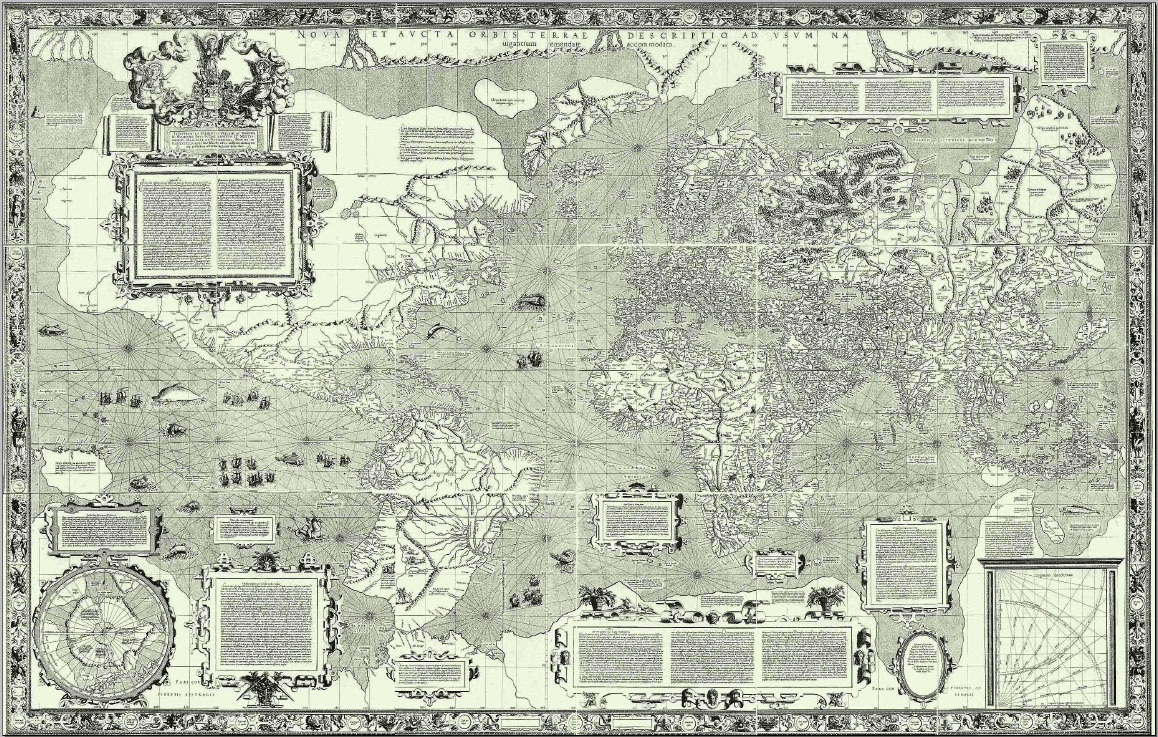
We are all familiar with the Mercator map of the world, designed by Gerardus Mercator in 1569. At the time, it was a significant cartographic breakthrough: a representation of the spherical earth on a plane. But we are all equally familiar with the fact that the Mercator map seriously distorts the actual size of various land masses (notably Greenland). Visual Capitalist offers an interesting graphic which shows how significant this distortion actually is and diminishes the land masses in the north and more accurately shows the size of the continent of Africa.
The Original Mercator Map
The Visual Capitalist Correction
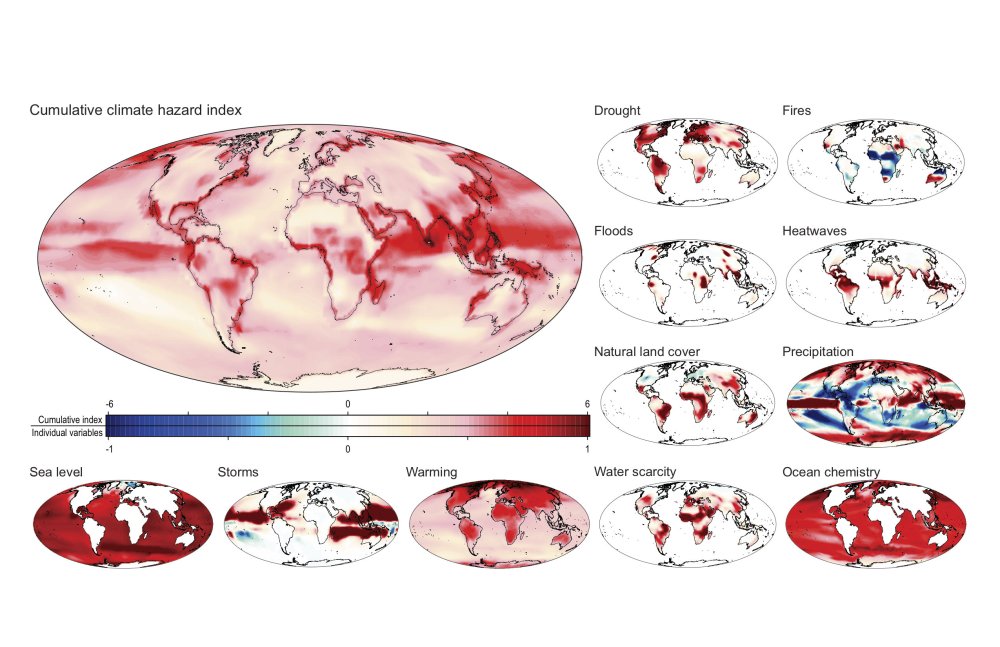
A new study from the University of Hawaii has reviewed thousands of peer-reviewed climate studies and analyzed the different ways climate change poses threats to humanity. The study came up with “467 ways in which human health, food, water, economy, infrastructure, and security have been impacted by multiple climatic changes including: warming, drought, heatwaves, wildfires, precipitation, floods, storms, sea level rise and changes in land cover and ocean chemistry.” Different regions of the world will experience different threats, but the study is the first to examine all possible impacts. The map below shows some of the impacts and how they will have differential effects.
“Xi received applause Saturday when he told the Asia-Pacific Economic Cooperation summit in Papua New Guinea that implementing tariffs and breaking up supply chains was ‘short-sighted’ and ‘doomed to failure.’ He called for a stronger World Trade Organization and defended his signature Belt-and-Road Initiative, saying it’s ‘not a trap as some people have labeled it.’”
“Speaking moments later, Pence told delegates the U.S. offers countries in the region ‘a better option’ for economic and diplomatic relations than Beijing’s heavy-handed approach. He warned against taking Chinese loans, saying the U.S. ‘doesn’t drown our partners in a sea of debt’ nor offer ‘a constricting belt or a one-way road.’”
Pence also was quite explicit about the US position on the South China Sea: “The South China Sea doesn’t belong to any one nation, and you can be sure: The United States will continue to sail and fly wherever international law allows and our national interests demand.”
US Presidents have attended these meetings since they began in 2013, but President Trump chose not to go. His absence was conspicuous given that all other heads of state were at the meeting.
There were large protests at over 2,000 locations in France over the hike in diesel fuel prices caused by higher taxes designed to reduce the consumption of fossil fuels. People wearing yellow vests blocked roundabouts and on-and-off ramps to motorways and hundreds were injured, including one person killed. The popularity of French President Macron has taken a real hit because of the taxes: “Anger over the high fuel prices has resulted in Macron’s popularity taking a hit over the recent months – from 39 percent in July to 21 percent in October.” But the anger toward Macron runs deeper than simply the hike in taxes. According to France24:
“But analysts say the movement now represents more widespread frustration over stagnant spending power under Macron, a former investment banker who promised economic revival and to restore people’s trust in government.
“The protests also reflect longstanding anger among many in rural and small-town France who say the government in Paris doesn’t understand the challenges facing the vast majority of the French.
“‘Macron is the president of the rich and not the poor. He needs to think about the poor as well,’ said Andre, a 38-year-old with no driver’s license who nonetheless joined a blockade in Dole, eastern France.”
The European Union has now three wounded leaders: Macron, May, and Merkel.
Yellow Vest Protest
A new research study has analyzed how adherence to the voluntary commitments made by various countries to reduce greenhouse gas emissions (known as Nationally Determined Contributions) would affect the climate. Unfortunately, it found that the voluntary commitments would fall far short of the goal of limiting temperature increases to 2°C: “When taken as benchmark by other countries, the NDCs of India, the EU, the USA and China lead to 2.6 °C, 3.2 °C, 4 °C and over 5.1 °C warmings, respectively.” There is a very revealing map which shows how far each country in the world has gone toward meeting the goal. The study could be a sharp impetus for countries to ratchet up their contributions, but that outcome remains to be seen.