Today is the 100th anniversary of the massacre of perhaps as many as 1,000 Indians by British soldiers at Jallianwala Bagh park in Amritsar. The slaughter occurred as Indians gathered at the park to celebrate Baisakhi, the Sikh new year. The celebration was also affected by the expectation of many Indians that the British would ease their colonial rule to reward the participation of Indian soldiers in World War I. Instead, British troops, led by British General Reginald Dyer who had been called in to respond to outbreaks of violence in Amritsar. Dyer was ruthless in his rule as described by The Guardian:
“He also had Indians whipped for not saluting him. But his most novel punishment was reserved for the street where a female British missionary had been assaulted. Any Indian crossing the street between 6am and 8pm had, he said, to ‘go through on all fours’. The order, enforced by British solders, meant Indians could only proceed ‘lying flat on their bellies and crawling exactly like reptiles’”.
Dyer was held in high regard by many Britons, but he is regarded by Indians as the “butcher of Amritsar.” The massacre was a turning point in the history of British rule in India and Indian leaders observe the anniversary and pay tribute to the martyrs,
The Center for Public Integrity along with NBC News has produced a table on how much tax specific companies have paid to the Federal government. When analyzing Federal tax rates it is crucially important to ignore the nominal tax rates. The tax code is so ridden with loopholes that the tax rate is meaningless. Instead we need to focus on exactly how much money companies actually pay to the government. From this perspective, it is painful to realize how much I have been subsidizing these companies by paying much more than them in taxes.
“The identified companies were “able to zero out their federal income taxes on $79 billion in U.S. pretax income,” according to the ITEP report, which was released today. “Instead of paying $16.4 billion in taxes, as the new 21 percent corporate tax rate requires, these companies enjoyed a net corporate tax rebate of $4.3 billion, blowing a $20.7 billion hole in the federal budget last year.” To compile the list, ITEP analyzed the 2018 financial filings of the country’s largest 560 publicly-held companies.
“The following is a list of the country’s largest publicly-held profitable corporations that paid no federal income taxes in 2018 on billions in U.S. income, according to ITEP analysis of 560 companies. ITEP reports U.S. income before federal taxes, and takes into consideration paid state and local taxes, which could reduce or increase U.S. income. The report does not look at total tax provision, a number that could include foreign taxes and deferred taxes. All figures, except for tax rate, are in millions.”
There was an interesting exchange in today’s State Department briefing. Elan S. Carr was introduced as the new United States Special Envoy to Monitor and Combat Anti-Semitism. I am personally delighted that the Administration is taking the rise of anti-semitism seriously–the rise of that noxious ideology is frightening. But Carr chose to focus on the Boycott, Divestment, and Sanctions (BDS) movement in his remarks:
QUESTION: Given what Robert said and what you just said about BDS, I’m wondering – and I’ll have a specific question to Robert about this in the briefing afterwards because I realize that consular affairs is not your area, but you will have seen that the – one of the founders of the BDS movement has said that he was denied entry into the United States. He was supposed to arrive.
I presume, but I want to ask you, is this something that you support? Do you equate the BDS movement with anti-Semitism, not just as – and regard it as something more than criticism or an attempt to change the policies of the Government of Israel?
MR CARR: So an individual has a right to buy or not buy what they please. However, if there is an organized movement to economically strangle the state of Israel, that is anti-Semitic, and the administration has gone on the record for – as being opposed unequivocally to the BDS movement and the idea that somehow there can be movements organized to deny Israel its legitimacy and not to allow Israel to participate in economic commerce in the world – sure, that is. Hatred of the Jewish state is hatred of the Jewish people, and that’s something that’s very clear and that is our policy.
QUESTION: Well, but – so you’re convinced that BDS is actually hatred of the Jewish state and not just opposition to the government of the Jewish state’s policies?
MR CARR: So like I said, a person can decide what they want to buy, but if there is a movement that is dedicated to strangling the Jewish state out of existence, that is anti-Semitism.
QUESTION: Okay. Last one, just – so it’s okay for one person to decide that he doesn’t – he or she doesn’t want to buy, but if two people talk about it together, that’s a – or more, that’s a conspiracy and that’s bad and that —
MR CARR: Well, look —
QUESTION: — and then it’s no – then it becomes anti-Semitic?
MR CARR: Well, the BDS movement is well known. This isn’t a ragtag group. I mean, there are international organizations, there are websites, it’s organized, and the stated goals are clear, and the stated goals on the website of the BDS movement is to deny the state of Israel economic prosperity and to deny legitimacy. And that is anti-Semitism.
I am not sure why Mr. Carr identifies the BDS movement as one that want to “economically strangle the state of Israel”. My own understanding of the BDS movement is that it is an attempt to pressure the state of Israel to negotiate in good faith with the Palestinians: “The Boycott, Divestment, Sanctions (BDS) movement works to end international support for Israel’s oppression of Palestinians and pressure Israel to comply with international law.”
Boycotts are very rarely attempts to destroy a party; they are attempts to force a party to reassess its best interests. The classic example is the boycott by African-Americans in Montgomery, Alabama after the arrest of Rosa Parks in 1955. The intent was not to destroy the bus company (after all, African-Americans needed the service for their own transportation) but to force the bus company to decide whether discriminating against African-Americans was worth the lost business. Mr. Carr’s loose language on this matter does a disservice to the State Department. Wanting to change Israel’s policies toward the Palestinians is not anti-semitic. The US government denied entry to Palestinian activist Omar Barghouti, co-founder of the BDS movement, who was scheduled to give lectures at a number of US universities and to attend the wedding of his daughter. No explanation was given for the US refusal
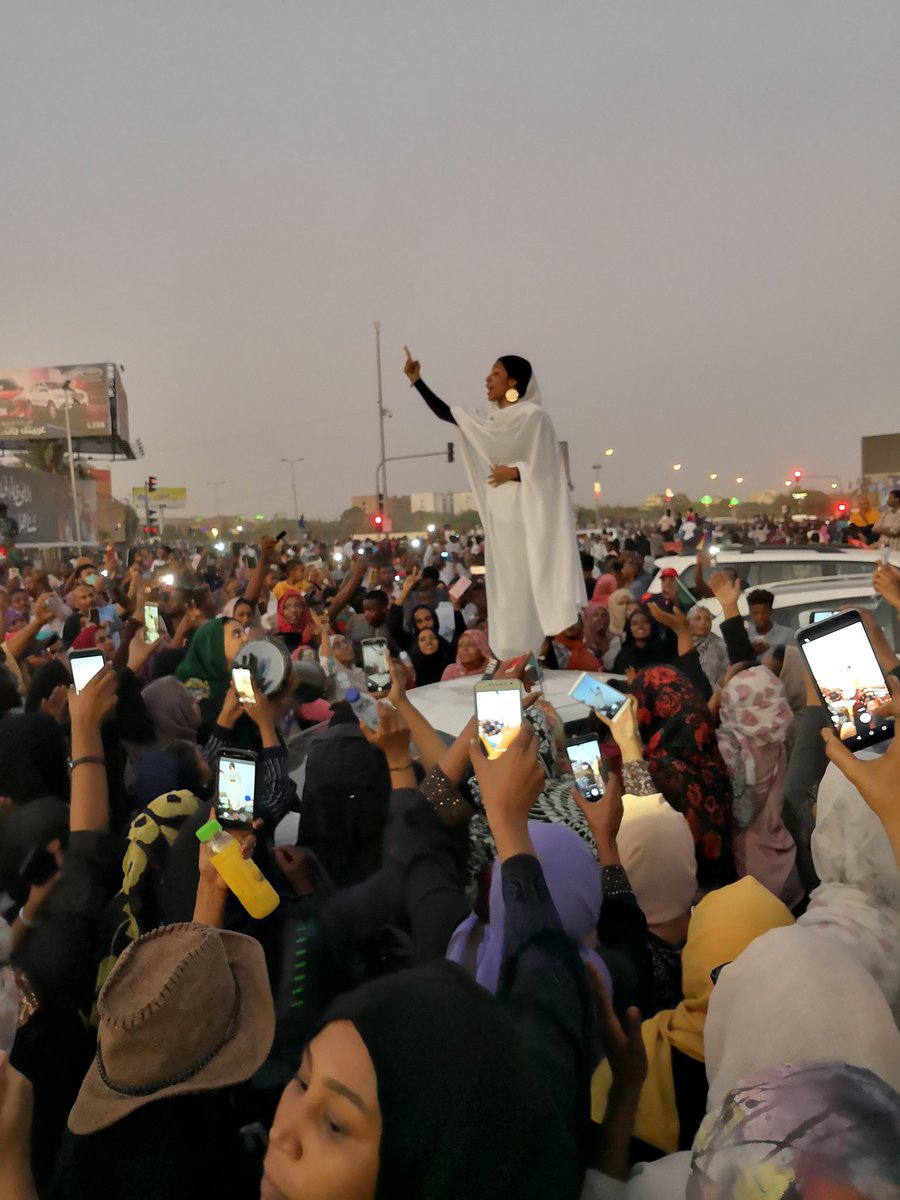
Omar al-Bashir has ruled Sudan since he seized power in 1989 but he has been ousted by a military coup. There have been anti-Bashir demonstrations in the country since December, stimulated by rising living costs and charges of corruption. Bashir was indicted by the International Criminal Court in 2009 for war crimes in the Darfur area of Sudan, but has never been tried. Very few countries came to Bashir’s defense after the coup, but all countries were apprehensive about whether Sudan would be ruled democratically any time soon.
The US Bureau of Labor Statistics has released its March 2019 update on wages in the US and the results are quite striking. According to Statista:
“Denominated in constant 1982-1984 dollars, average hourly wages dropped from $9.40 in February to $9.38 in March, with average weekly earnings amounting to $315.98.
“Since it’s hard to grasp the value of $9.38 in 1982 from today’s point of view, we took the liberty of calculating real wages in today’s prices and taking a look at what wages from 1964 onwards would be worth today. As the following chart shows, today’s wages in the United States are at a historically high level with average hourly earnings in March 2019 amounting to $23.24 in 2019 dollars. Coincidentally that matches the longtime peak of March 1974, when hourly wages adjusted to 2019 dollars amounted to exactly the same sum.”
The chart below puts real wages (nominalized in terms of inflation) in context. Wages have essentially stagnated since 1974. It is hard to believe that workers have not seen a real increase in wages for over 4- years.
The European Union (EU) has granted an extension to Great Britain on the terms of its exit. The new date for an agreement is 31 October. The extension means that Great Britain will participate in the elections for the European Parliament in May, although, if Great Britain leaves the EU on 31 October, its Parliament representatives will have to resign on that date. The EU had little choice but to grant the extension–France was most reluctant to grant a delay. It remains to be seen whether the additional time makes any difference given that Prime Minister May has not been able to persuade Parliament to agree to any terms of departure so far. In her weakened political position, it is hard to imagine her becoming more effective without persuading the Labor Party to participate.
It appears as if Israeli Prime Minister Netanyahu will be able to organize a majority coalition in the Knesset even though his Likud Party only won the same number of seats as his opposition, the Blue and White Party led by Gantz. A variety of splinter parties have promised to support Netanyahu, giving him the majority. Those parties are described by Bernard Avishai in the New Yorker:
“In the end, Netanyahu’s Likud gained about thirteen thousand more votes than Blue and White, tying it at thirty-five seats, five more than it won in 2015. Two ultra-Orthodox, or Haredi, parties—United Torah Judaism and Shas—improved their standing, winning eight seats each, and pledged their allegiance to Netanyahu. The national-Orthodox Union of Right-Wing Parties won five seats and had already pledged the same; their settler-zealot leader, Bezalel Smotrich, the new leader of the Jewish Home party’s National Union faction and an ally of the acolytes of the late extreme-right Rabbi Meir Kahane, is claiming to have been promised both the Education and Justice ministries, which are currently held by Naftali Bennett’s ultra-right New Right Party.
Meehan Crist has written an essay for The New Republic that addresses the issue of how we should talk about climate change without submitting to despair. She analyzes Nathaniel Rich’s essay for the New York Times entitled “Losing Earth” and David Wallace-Wells’s essay for New York magazine entitled “The Uninhabitable Earth.” Both essays were decidedly grim and unfortunately Crist does not deliver the goods: after finishing the essay I was still depressed about climate change. But she makes a very important contribution to the discussion by identifying how we should think about why climate change is occurring.
“Both books also tend to whitewash difference in an attempt to talk about a problem whose burden is not equally shared. Rich whitewashes difference to put all humans in the same doomed boat; Wallace-Wells whitewashes difference to curry hope. ‘Personally,’ he writes, ‘I think that climate change … flatters our sense of power, and in so doing calls the world, as one, to action.’ But power is an unevenly distributed resource, and not everyone is so easily flattered. Given vast disparities in wealth and risk, ‘we’ are not all facing the same threat, and yet people need ways to talk to each other about climate change.
“The real gift these books offer, then, is the dialogue they’ve prompted. Together, they serve as a reminder that we need to recognize what’s at stake in the stories we’re reading; what one perspective values, what another overlooks. Maybe, the truth can only appear in aggregate, arising out of an ecosystem of different kinds of stories that rub up against one another in surprising ways.
Identifying exactly who is at greatest risk from climate change–the weak and the poor are most vulnerable–requires us to think beyond our immediate circumstances and to confront our responsibilities to them.
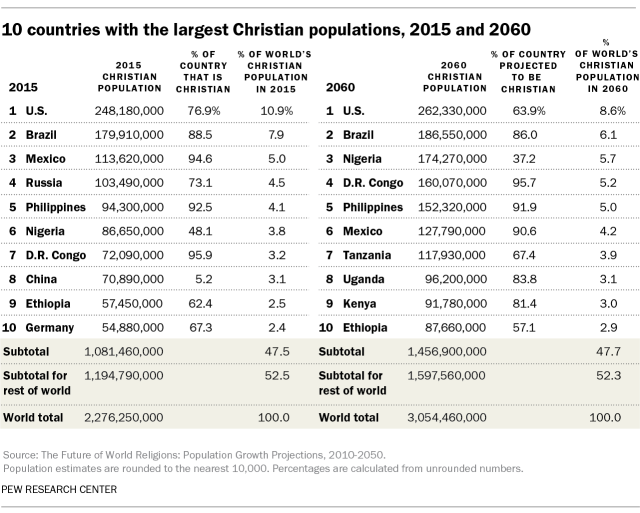
The Pew Research Center has compiled data on the distribution of Christians and Muslims in the world and the information is highly illuminating. The bottom line is counterintuitive: “To put it another way, more than half (52%) of the world’s Christians live in countries other than those with the 10 largest Christian populations, while this is true for just over a third (35%) of the world’s Muslims. In absolute terms, there are twice as many Christians (1.2 billion) as there are Muslims (609 million) living in countries that are not on their religion’s top 10 list.”
The interesting implication of this data is that both Christians and Muslims will become increasingly dependent upon political ideologies emphasizing tolerance–a condition which does not closely mirror current trends.
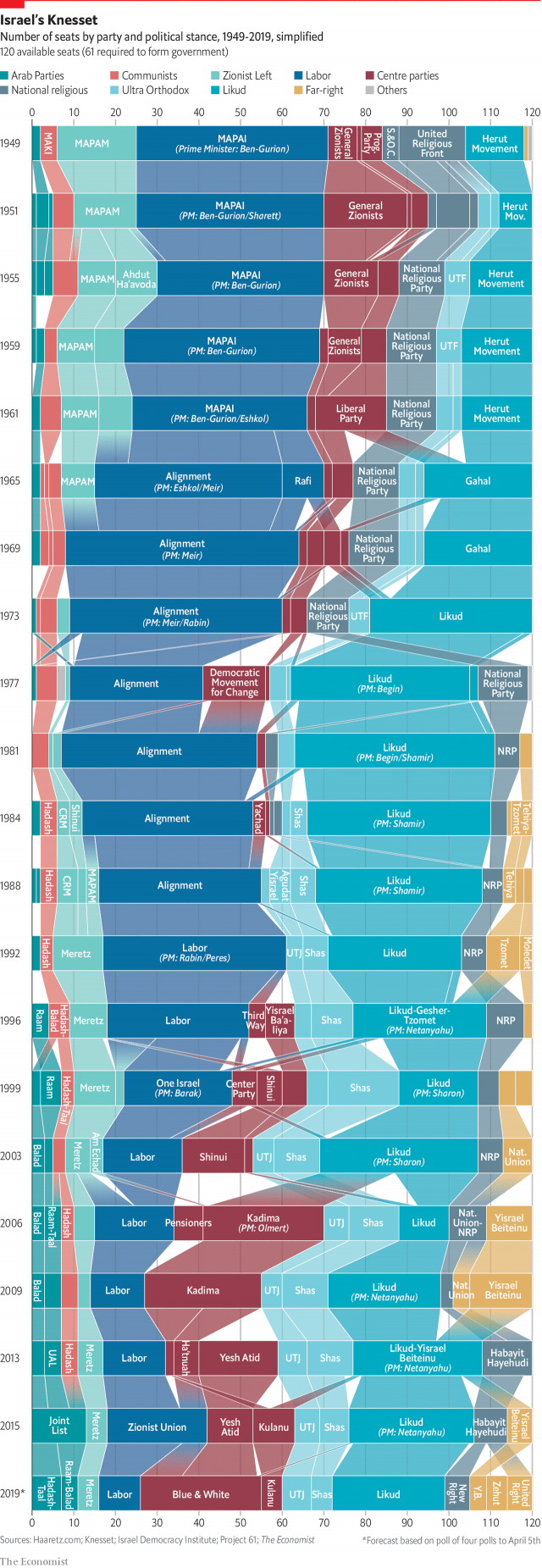
Exit polls in Israel suggest that the election is too close to call with Netanyahu and Gantz’s parties neck and neck. We may not know the final results for many days since either one will have to organize a coalition. Israeli politics are the most complex on earth as the chart below from The Economist illustrates.
“1. It is unlawful for a person in the United States or subject to the jurisdiction of the United States to knowingly provide “material support or resources” to a designated FTO. (The term “material support or resources” is defined in 18 U.S.C. § 2339A(b)(1) as ” any property, tangible or intangible, or service, including currency or monetary instruments or financial securities, financial services, lodging, training, expert advice or assistance, safehouses, false documentation or identification, communications equipment, facilities, weapons, lethal substances, explosives, personnel (1 or more individuals who maybe or include oneself), and transportation, except medicine or religious materials.” 18 U.S.C. § 2339A(b)(2) provides that for these purposes “the term ‘training’ means instruction or teaching designed to impart a specific skill, as opposed to general knowledge.” 18 U.S.C. § 2339A(b)(3) further provides that for these purposes the term ‘expert advice or assistance’ means advice or assistance derived from scientific, technical or other specialized knowledge.’’
“2. Representatives and members of a designated FTO, if they are aliens, are inadmissible to and, in certain circumstances, removable from the United States (see 8 U.S.C. §§ 1182 (a)(3)(B)(i)(IV)-(V), 1227 (a)(1)(A)).
“3. Any U.S. financial institution that becomes aware that it has possession of or control over funds in which a designated FTO or its agent has an interest must retain possession of or control over the funds and report the funds to the Office of Foreign Assets Control of the U.S. Department of the Treasury.”
The designation of the Revolutionary Guard as a terrorist organization is unprecedented since the Guard is officially part of the Iranian government and not a group without sovereign sanction. Iran responded forcefully. According to the Washington Post:
“Iran’s foreign minister, Mohammed Javad Zarif, responded on Twitter. ‘A(nother) misguided election-eve gift to Netanyahu. A(nother) dangerous U.S. misadventure in the region,’ Zarif wrote in English.
“IRGC commander Mohammad Ali Jafari issued an implied threat against U.S. forces in the Middle East.
“’With this stupidity, the American army and security forces will no longer have today’s calm in the west Asia region,’ the IRGC-affiliated Fars news agency quoted him as saying.
“The Supreme National Security Council of Iran responded Monday by branding ‘the government of the United States as a supporter of terrorism and Central Command, also known as Centcom, and all of its affiliated forces, as terrorist groups,’ state news agency IRNA reported.”
The strategic or tactical advantage for the US of the designation is not evident to me. The US already maintains sanctions on the government of Iran. The designation may make it more difficult for the US to deal with other countries in the Middle East, such as Iraq, who are aligned with Iran.
Turkey is nearing completion of an arms sale with Russia for the purchase of its S-400 missile defense system. The deal complicates Turkey’s relationship with NATO since the system is not compatible with other NATO weapons systems. The S-400 system is highly regarded and it could pose a serious threat to the F-35 fighter jet which is the most advanced jet in the US/NATO arsenal. The Turkish decision complicates the US-Turkish relationship which is already strained because of disagreements over the civil war in Syria. It is remarkable that US influence seems to be waning in many parts of the world, but none of those relationships are as important as the US-NATO alliance.
The U.N. Human Rights Council has issued a report on the state of poverty in the United States. The report “concluded 40 million people in the United States live in poverty — and more than half of those live in ‘extreme’ or ‘absolute’ poverty.” The US ranks last among all the developed countries in its rate of poverty.
Bill McKibben is one of the most thoughtful analysts of climate change and he has written a book review for the New York Review of Books entitled “A Future Without Fossil Fuels?” The essay starts optimistically, reviewing all the progress that has been made in developing renewable energies. But then McKibben frankly assesses the political and economic power of the fossil fuel industries and acknowledges their extraordinary ability to delay any transition away from fossil fuels. The third part of the essay identifies the forces that will accelerate the transition:
“The bottom line is clear: to the degree that the fossil fuel industry is weakened by some combination of technological change and furious activism, the chances for serious change increase. If energy barons like the Koch Brothers and Exxon remain flush with cash, they can probably delay or undermine initiatives like the Green New Deal. But if their businesses are under strong pressure from a rapidly changing energy economy, polities around the world would be freer to take the steps that scientists insist are necessary with the speed required to prevent global catastrophe. Should these changes happen quickly, they could do more than save us from planetary peril.
McKibben may be more optimistic than warranted, but he does a very good job at outlining the war forward.
The reliably lefty journal Jacobin has published an interview with Niklas Olsen entitled “How Neoliberalism Reinvented Democracy“. It is an interesting take on the relationship between capitalism and democracy, a relationship that remains enigmatic in liberal ideology. Liberals argue that both systems enhance the freedom of the individual and are therefore compatible. But that framework completely disregards how capitalism tries to transform individuals, and their labor, into commodities. The transformation ultimately leads to the destruction of what we consider to be human freedom:
“This belief is strongly rooted in the idea, prevalent not only in neoliberalism, but also in the discipline of economics more generally, that self-interest is a driving force of human activity. According to this idea, people only enter government institutions to maximize their own utility, not because they are dedicated to ideals of the common good. Against this background, economists and politicians want to push political decisions onto the market, which they portray as a site of social interaction that will bring us what the state cannot deliver — efficiency, freedom, entrepreneurship, and democracy.”
It is a dense interview but well worth the effort. It builds upon many of the insights in what I regard as one of the most important books of the 20th century: The Great Transformation by Karl Polanyi.
“In an interview to Israeli Channel 12 News three days ahead of the April 9 poll, Netanyahu was asked why he had not extended sovereignty to large West Bank settlements, as Israel did without international recognition in east Jerusalem and the Golan Heights, both captured in the 1967 Middle East war.
“’Who says that we won’t do it? We are on the way and we are discussing it,’ Netanyahu said.
“’You are asking whether we are moving on to the next stage – the answer is yes, we will move to the next stage. I am going to extend (Israeli) sovereignty and I don’t distinguish between settlement blocs and the isolated settlements.’”
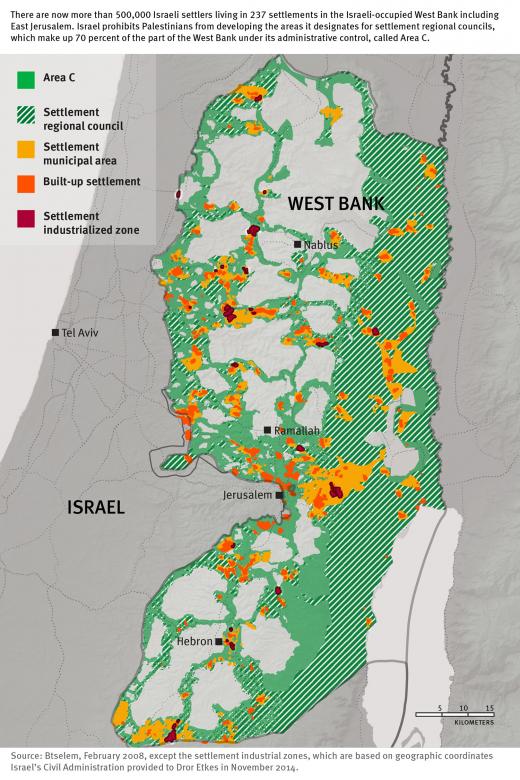
About 400,000 Israelis live in settlements in the West Bank and they have been lobbying for Israeli annexation. Netanyahu has told US President Trump that Israel would not remove “even one” settler to achieve a US-sponsored peace plan between Israel and the Palestinians. President Trump has been promising a peace plan for over two years, but we have yet to see any specific details. But it is highly unlikely that the Palestinians would agree to any plan that allowed all the Israeli settlers to remain under Israeli control.
Israeli Settlements in the West Bank
Visual Capitalist has a fascinating map which traces the words which accompany the goods that are traded internationally. The Germans have a word–Wanderwörter–for the words that travel and morph along trade routes.
Saudi Arabia has detained 10 human rights activists who have been pushing for greater rights for women in the Kingdom. The activists join a dozen others who have been previously imprisoned for their activities. According to CBS News: “The women — some of whom have been held in solitary confinement for months — have told the court they were abused during interrogations, including being waterboarded, caned, electrocuted, sexually assaulted and threatened with rape and death.” Among those detained are two dual US-Saudi citizens: “journalist Salah al-Haidar, whose mother Aziza al-Yousef is among those on trial, and Bader al-Ibrahim, a doctor and author of a book about Shia Muslim politics, London-based Saudi rights group ALQST said.” The international community has been adamant on pressuring Saudi Arabia to honor the rights of these activists:
“On January 2, a panel of British parliament members and international lawyers sent an official request to Saudi authorities for access to the country and to detained women’s rights advocates, but the Saudi authorities have not responded. The panel issued a comprehensive report detailing the torture allegations in February. On February 14, the European Parliament adopted a resolution calling on Saudi Arabia to immediately and unconditionally release ‘women’s rights defenders and all human rights defenders, lawyers, journalists and other prisoners of conscience detained and sentenced merely for exercising their right to freedom of expression and for their peaceful human rights work.’ The resolution also called for an EU-wide ban on export of surveillance systems, reiterated that arms sales to Saudi Arabia contravene the EU’s common position on arms exports, and called for ‘restricted measures against Saudi Arabia in response to breaches of human rights, including asset freezes and visa bans.’
“On March 7, 2019, 36 countries at the UN Human Rights Council issued a joint statement calling on Saudi Arabia ‘to release all individuals, including Loujain al-Hathloul, Eman al-Nafjan, Aziza al Yousef, Nassima al-Sadah, Samar Badawi, Nouf Abdelaziz, Hatoon al-Fassi, Mohammed AlBajadi, Amal Al-Harbi and Shadan al-Anezi, detained for exercising their fundamental freedoms.’
“In February, a bipartisan group of US Congressional representatives led by Congresswoman Lois Frankel issued a resolution calling on Saudi Arabia to immediately and unconditionally release jailed Saudi women’s rights activists and hold those responsible for abuses accountable. A bipartisan group of US Senators led by Senator Marco Rubio introduced a similar resolution in the US Senate.”
Unfortunately, US President Trump has yet to even mention the serious violations of human rights by Saudi Arabia.
Emma Lazarus wrote the poem “The New Colossus” which are the words held high by the Statue of Liberty. The poem is deeply moving:
The New Colossus
Not like the brazen giant of Greek fame,
With conquering limbs astride from land to land;
Here at our sea-washed, sunset gates shall stand
A mighty woman with a torch, whose flame
Is the imprisoned lightning, and her name
Mother of Exiles. From her beacon-hand
Glows world-wide welcome; her mild eyes command
The air-bridged harbor that twin cities frame.
“Keep ancient lands, your storied pomp!” cries
she
With silent lips. “Give me your tired, your poor,
Your huddled masses yearning to breathe free,
The wretched refuse of your teeming shore.
Send these, the homeless, tempest-tost to me,
I lift my lamp beside the golden door!”
These words have inspired millions and have served the interests of the United States since its inception. Today President Trump said: “Can’t take you anymore. Can’t take you. Our country is full. Our area is full, the sector is full. Can’t take you anymore. I’m sorry. So turn around. That’s the way it is.” A sad day for a country populated by only four categories of people: Native Americans, immigrants, slaves, or refugees.
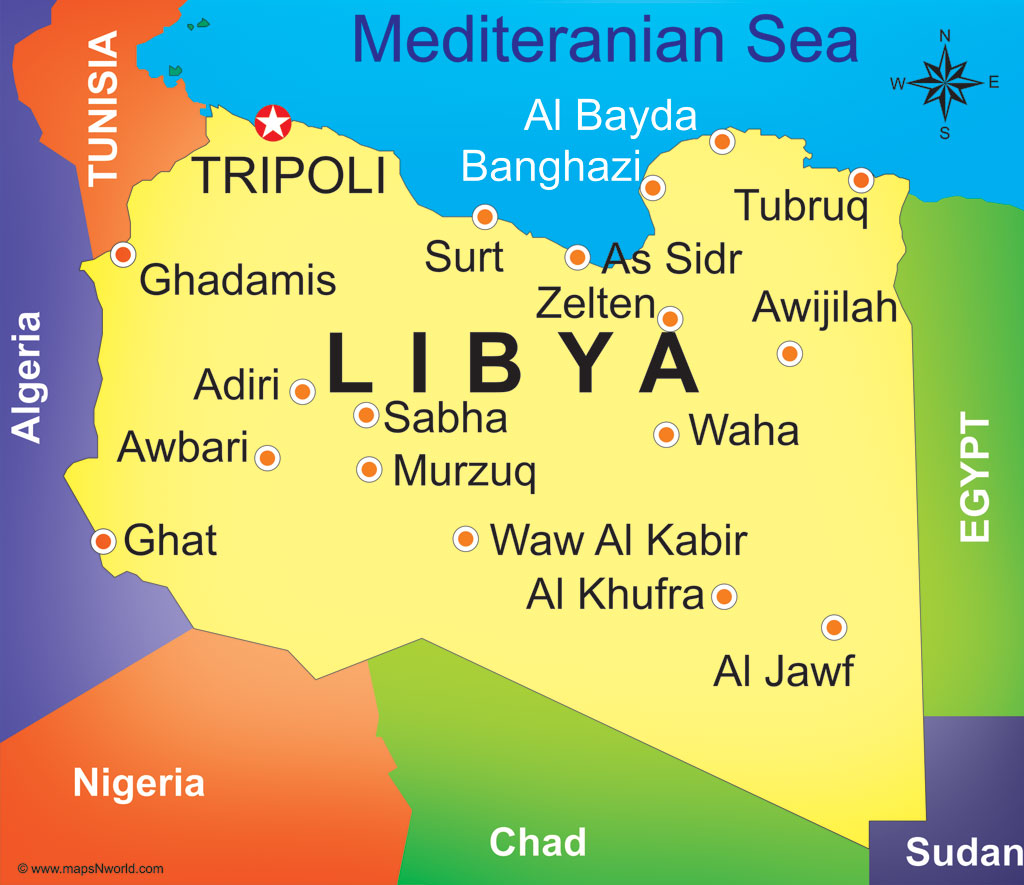
Since the overthrow of Muammar Gaddaffi in Libya in 2011, the country has been run by a number of local strongmen. The two most prominent centers of power have been the United Nations-backed government in Tripoli, led by Prime Minister Fayez al-Serraj, and a rump government based in the eastern city of Tobruk, led by a Libyan army commander named Khalifa Haftar. Haftar has now ordered his forces to move on the city of Tripoli to take complete control over the country. The states backing Serraj–the United States, Britain, Italy–have called upon Haftar to stop his aggression, but it is unlikely that words alone will prevent the outbreak of violence. Haftar had lived in the US since 1987 and opposed Gaddaffi while he was in exile and many suspect that he was supported in that effort by the US so the US support for Serraj reflects a change in the US position. Libya is an important supplier of oil to Europe and is also a staging area for many refugees seeking asylum in Europe. The stability of Libya is critical for Europe.
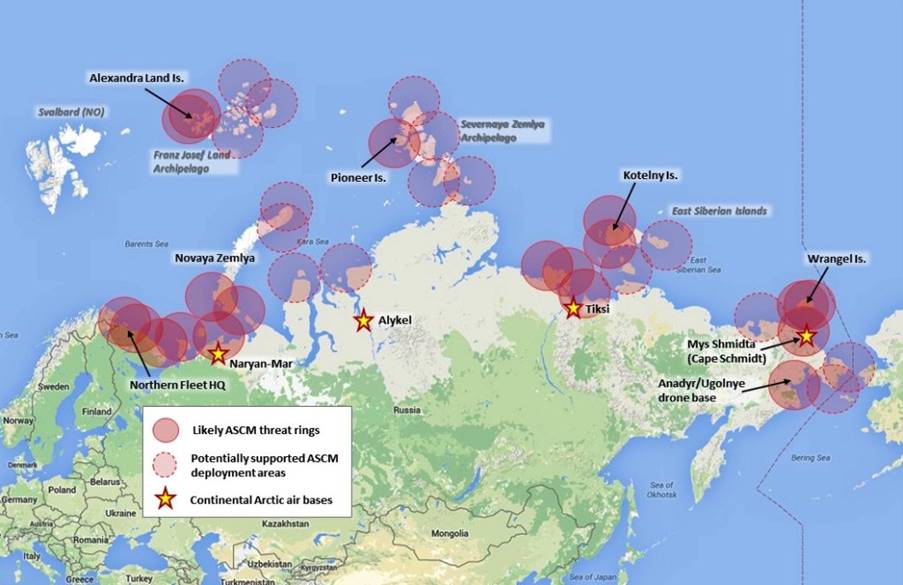
As the Arctic warms, many states are looking north to explore national security options. The principal concern is the protection of new shipping lanes that may open up as the sea ice retreats. Russia has a very large stake in the Arctic since it and Canada have the longest boundaries affected by the opening up of the Arctic. The Russians have been especially ambitious in developing military bases in the region, equipping them with air defense systems and missile launchers. Needless to say, the difficulties in maintaining such bases in such harsh conditions are legion. But the Russians are strongly committed to a sustained military presence.





 World Politics News