The US went to the World Trade Organization some time ago and argued that the subsidies offered to the European airplane manufacturer, Airbus, constituted an unfair trade subsidy. The US won that case and the WTO offered its standard remedy for such violations: it gave the US the right to impose countervailing tariffs on European products. Needless to say, the Europeans denied the subsidy and contested the ruling. The US Trade Representative just released a list of products that will be hit with new tariffs of up to 100% and that list includes some distinctively European products such as Scotch Whisky and French Cognac. (Parenthetically, it should be noted that such rulings favoring the US will not occur in the near future because the US refuses to appoint judges to the WTO tribunal).
In the recent climate talks in Madrid, there was much discussion of imposing carbon taxes in order to reduce greenhouse gas emissions. Some European state have already moved in that direction and the Europeans are now contemplating imposing carbon taxes on products produced in other countries, such as the US, in order to force other states to enact similar measures. According to Politico:
“The European Union charges a fee of 25 euros — nearly $28 — per metric ton of carbon dioxide emitted by EU companies such as oil refineries, steelmakers and paper producers. Because other major economies such as the U.S. refuse to set a carbon price for their own industries, the EU’s approach risks making many European companies uncompetitive, and it has prompted calls for a ‘border adjustment’ tariff based on imports’ climate impact in their home countries.
“Spanish Economics Minister Nadia Calviño Santamaría told reporters at the U.N. conference that she wants a carbon tariff ‘as soon as possible’ that would target any country that doesn’t abide by its commitments under the 2015 Paris climate agreement. Trump has said he intends to pull the U.S. out of the pact next year.
“’We need to ensure that climate policy does not create an unlevel playing field between those players which operate in jurisdictions which have higher standards and those that maybe do not,’ Calviño said.”
The possibility of linking climate change matters to trade matters makes negotiations on both issues very complex. This European tactic of linking the two is likely to infuriate US policy makers. I doubt that this tactic will take place quickly, but it is a possibility that we should monitor closely.
One of the most curious aspects of the current domestic political situation in the US is the extent to which Some politicians and journalists seem to be sympathetic to Russia. In many respects they have been forced into that position because they seek to downplay the significance of Russian interference in the 2016 presidential election in the US because of a concern that the evidence undermines the legitimacy of the Trump presidency. Indeed, on his Fox news program, Tucker Carlson said:
“‘Why do I care what is going on in the conflict between Ukraine and Russia?!’ Carlson shouted without a hint of irony. ‘And I’m serious. Why do I care? Why shouldn’t I root for Russia? Which I am.'”
“We’ve got a president of the United States who praises Russian President Vladimir Putin every chance he gets, yet spent the NATO summit last week looking like his mommy was making him eat his peas and carrots. He’s pressuring the other members of the Group of Seven to let Russia back in the club. At a recent meeting with Volodymyr Zelensky, he told the president of Ukraine he hoped Zelensky could “make a deal” with Putin, clearly indicating whose side Trump was on in the dispute over Crimea and eastern Ukraine. Trump and his Republican puppets have spent the last three months spreading Russian propaganda that it was Ukraine, not Russia, who hacked our 2016 election. When Trump pulled U.S. troops out of northern Syria, he turned over abandoned American bases to the Russians.
“Trump’s allies in the Republican Party have parroted his pro-Russia line. ‘Moscow Mitch’ McConnell pushed for lifting sanctions on Russian aluminum company Rusal, which was largely owned by the oligarch Oleg Deripaska, a buddy of Vladimir Putin’s who has been under sanctions since he was named in the Russian hacking of the 2016 presidential election.”
I doubt very much that we will find out much about why some in the US have decided to defend Russia against all available evidence in the immediate future. But I have no doubts that at some point, analysts in the future will investigate this question thoroughly. At this point, we should all be concerned about the extent to which Russian interests have penetrated US decision-making.
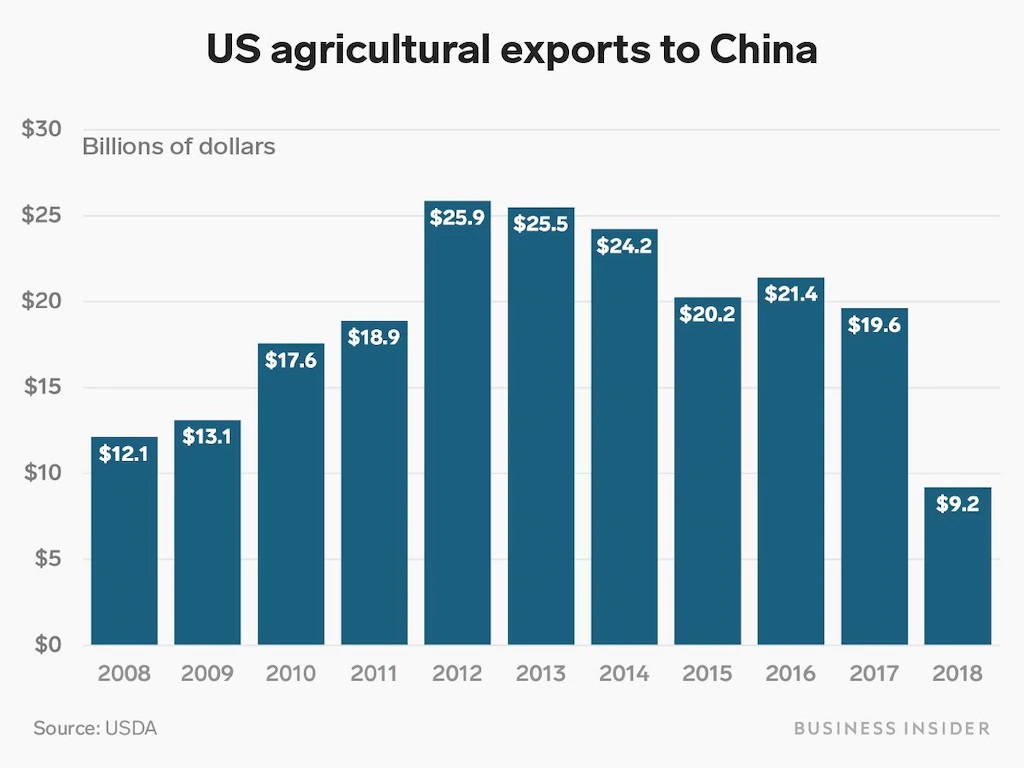
The US is claiming that it has reached a “Phase 1” trade agreement with China. It is not, however, clear what the agreement actually covers. The US will not implement the tariff increases President Trump had threatened to impose on 15 December. Additionally, the 15% tariffs will be reduced to 7.5% but the 25% tariffs will remain in place. Finally, there are promises that China will increase its agricultural imports to $50 billion a year, a level never before attained in any year in the past. According to Al Jazeera:
“The United States Trade Representative’s (USTR) office said in a statement that Washington will maintain 25 percent tariffs on about $250bn worth of Chinese imports and reduce tariffs imposed on $120bn worth Chinese goods to 7.5 percent.
“The USTR added that the deal requires structural reforms to China’s economic and trade regime and covers contentious areas including intellectual property and Beijing’s practice of forcing US firms to transfer technological know-how to Chinese partners. Agriculture, financial services, currency and foreign exchange are also covered.”
But the news reports do not specify any particular actions the Chinese are actually obliged to take in Phase 1. According to Global Times, a media outlet that is regarded as close to the Chinese government:
“In response to the US tariff rollback, China will consider not imposing tariffs on more than 3,300 types of US goods, including auto parts and chemicals due on December 15, Chinese officials disclosed.
“China will also expand agricultural imports from the US, including soybeans, poultry and pork to fill up vacancies in China’s domestic market.
“The text of the phase one deal includes nine chapters ranging from intellectual property rights, technology transfers to the exchange rate and agriculture. More detailed terms and data will be released later.”
I suspect that the Phase 1 agreement was designed to give the US a graceful way to not impose the 15 December tariffs and is not really a concrete proposal. We will have to wait for more details, but at this point I suspect that the US has been played by the Chinese.
Algeria has experienced protests against the government for over a year. A seeming breakthrough was achieved last April with the ouster of President Abdelaziz Bouteflika who was seeking a fifth term despite being seriously ill. Since April there have been protests by those who did not wish anyone associated with the Bouteflika regime to be installed in his place. But an election held on Thursday gave a Bouteflika associate, Abdelmadjid Tebboune, the position with 58% of the vote. The protesters believe that army chief Gen Ahmed Gaid Salah is the real power broker in the country and that Tebboune is simply Salah’s puppet. The underlying concern is the degree of corruption in Algerian politics and the absence of any meaningful changes since Bouteflika stepped down. According to Reuters:
“Aside from the months-long political crisis, he will also face Algeria’s most difficult economic situation in decades, with declining energy revenues and bitter cuts to state spending.
“Energy exports, the source of 95% of state revenue, fell 12.5% this year. The government has burnt through more than half its foreign reserves since energy prices began dropping in 2014, and has approved a 9% cut in public spending next year, while keeping politically sensitive subsidies untouched.”
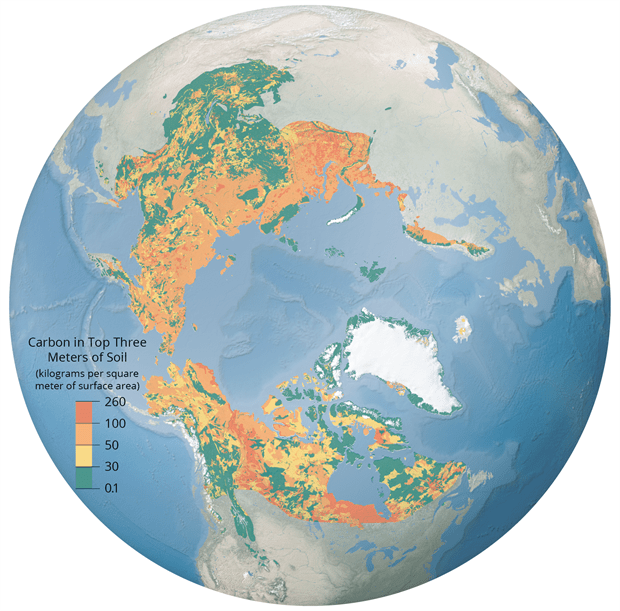
The US National Oceanic and Atmospheric Agency (NOAA) has released is annual Arctic Report. Up to this point the Arctic has been a place where climate change has been documented by things such as melting sea ice or disappearing glaciers. But now we have evidence that the Arctic may be contributing to climate change by releasing methane from melting permafrost. According to the report:
Northern permafrost region soils contain 1,460-1,600 billion metric tons of organic carbon, about twice as much as currently contained in the atmosphere.
This pool of organic carbon is climate-sensitive. Warming conditions promote microbial conversion of permafrost carbon into the greenhouse gases carbon dioxide and methane that are released to the atmosphere in an accelerating feedback to climate warming.
New regional and winter season measurements of ecosystem carbon dioxide flux independently indicate that permafrost region ecosystems are releasing net carbon (potentially 0.3 to 0.6 Pg C per year) [petagram (Pg) of Carbon – one Pg =1015 grams=one billion metric tonnes] to the atmosphere. These observations signify that the feedback to accelerating climate change may already be underway.
If that amount of permafrost is melting, it would greatly increase the rate of global warming:
“A 2014 study in Environmental Research Letters estimated that thawing permafrost could release around 120 gigatons of carbon into the atmosphere by 2100, resulting in 0.29°C of additional warming (give or take 0.21°C). By 2300, another study in Nature Geoscienceconcluded, the melting permafrost and its resulting carbon feedback loops could contribute to 1.69°C of warming. (That’s on the high end. It could be as low as 0.13°C.)
“The logic here is simple: The more warming, the greater the risk of kickstarting this feedback loop. A study published in Nature Climate Change in 2017 predicted that 1.5 million square miles of permafrost would disappear with every additional 1°C of warming.
In addition, there are other problems associated with melting permafrost, including the release of once frozen pathogens or toxic materials such as mercury. This train may be unstoppable.
“According to the exit poll, the Conservatives are projected to win 368 seats in the House of Commons, versus 191 for the Labour Party. That would give the Conservatives an 86-seat majority, enough to empower Mr. Johnson to pull Britain out of the bloc at the end of January, as he had promised.”
The election will no doubt assure that Johnson will pursue Brexit with great vigor. He will have to negotiate an agreement with the European Union, but the election assures that the EU will have to take his decision as a done deal. Johnson’s opponent in the election, Jeremy Corbyn and the Labour Party, ran on a platform of a second referendum on Brexit. Johnson will undoubtedly consider the outcome as a firm endorsement of Brexit. But we should also consider the possibility that the British people were more concerned with assuring that Labour could not form a government. We will know final results of the election tomorrow and will be better able to assess the significance of the election then.
The World Trade Organization’s appellate court has ceased to function because the US has refused to nominate judges. The court is supposed to have 7 judges, but is now down to one. There are currently 14 trade disputes before the court which cannot be resolved because a minimum of three judges are required to decide cases. According to the Nikkei Asian Review:
“Appointments of new judges to replace those whose terms have expired generally require unanimous approval from WTO members. But the U.S. has vetoed nominations since 2017, in keeping with the protectionism embraced by President Donald Trump, claiming that the WTO’s appellate body oversteps its authority by interpreting American laws.
The World Trade Organization was created in 1995, replacing the General Agreements on Tariffs and Trade (GATT) which lacked the ability to arbitrate effectively trade disputes. The WTO was created in order to establish a set of rules by which trade disputes could be settled according to principles that are shared by all members. US President Trump has claimed that the US has lost most of the cases brought before the WTO:
“Trump, Oct. 25: The WTO, World Trade Organization, was set up for the benefit for everybody but us. They have taken advantage of this country like you wouldn’t believe.
“And I say to my people, you tell them, like as an example, we lose the lawsuits, almost all of the lawsuits in the WTO — within the WTO. Because we have fewer judges than other countries. It’s set up as you can’t win. In other words, the panels are set up so that we don’t have majorities. It was set up for the benefit of taking advantage of the United States.”
In fact, when the US has brought cases against other states before the WTO, it has won 91% of the cases. But it has lost most of the cases brought against the US by other states. Dan Ikenson of the Cato Institute makes an important point:
“The WTO doesn’t target any member’s policies, laws, regulations, or actions. The “WTO” doesn’t file complaints at the WTO. WTO members do. And they do so when they are aggrieved and when they are as close as possible to 100% certain that they will prevail if the matter goes all the way through dispute settlement. As a result, complainants prevail almost all of the time — on 90% of adjudicated issues. When the United States has been a complainant (as it has in 114 of 522 WTO disputes over 22 years — more than any other WTO member) it has prevailed on 91% of adjudicated issues. When the United States is a respondent (as it has been in 129 cases — more than any other WTO member), it has lost on 89% of adjudicated issues.
If an agreement about the judges cannot be formed, then the WTO cannot fulfill its primary responsibility. Trade disputes will therefore be settled by power and not the rule of law. The US has effectively dismantled an important part of the liberal world order. Perhaps the WTO should fade away, but the rule of the jungle is hardly a good substitute.
“The bill brings sweeping changes to India’s 64-year-old citizenship law by giving citizenship to ‘persecuted’ minorities – Hindus, Sikhs, Buddhists, Jains, Parsis and Christians – from Bangladesh, Afghanistan and Pakistan.
“But critics say the legislation put forward by the Hindu nationalist ruling Bharatiya Janata Party (BJP) undermines the country’s secular constitution, with opposition parties, minority groups, academics and a US federal panel calling it discriminatory against Muslims.”
The bill also does not apply to Tamils from Sri Lanka, Rohingya from Myanmar and Tibetans and Uighurs from China. But it is the Muslims living in India who are most concerned. There have been a series of anti-Muslim measures in India since the election of Modi and the BJP:
“Many Muslims in India say they have been made to feel like second-class citizens since Modi came to power in 2014.
“Several cities perceived to have Islamic-sounding names have been renamed, while some school textbooks have been altered to downplay Muslims’ contributions to India.
“In August, Modi’s administration rescinded the partial autonomy of Jammu and Kashmir, India’s only Muslim-majority state, and split it into two union territories.
“A citizens’ register in Assam finalised earlier this year left 1.9 million people, many of them Muslims, facing possible statelessness, detention camps and even deportation.
The Washington Post has published an extraordinary article on the information passed on by the US government on the war in Afghanistan which began in October 2001 and which still continues. The article is based upon 2,000 pages based upon interviews with 400 officials connected to the war. These interviews were conducted by the Office of the Special Inspector General for Afghanistan Reconstruction, a US government office established in 2008. The documents chronicle the clear sense by most government officials that the war in Afghanistan was not attaining any of the stated goals of the US justifying the war. Despite this clear understanding, the war continued with “more than 775,000 U.S. troops deployed to Afghanistan, many repeatedly. Of those, 2,300 died there and 20,589 were wounded in action, according to Defense Department figures.” In addition, more than 43,000 Afghan citizens were killed, more than 64,000 Afghan security forces were killed, more than 42,000 insurgents were killed, more than 1100 NATO forces were killed, and US contractors, humanitarian aid workers, and journalists were killed. And the killing goes on, despite the evidence that the war is accomplishing little.
These documents resonate strongly with an earlier release of documents–known as the Pentagon Papers–on the conduct of the Vietnam War. Those documents also testified to false and misleading statements by by US government officials on the successes in attaining the objectives of the war in Vietnam. Unfortunately, the war in Afghanistan has not generated an antiwar movement as strong as that which grew up in the Vietnam War. But in terms of the honesty of those officials sending men and women to kill in the name of the American people it appears as if nothing has changed. The Washington Post article is long but well worth the effort to read.
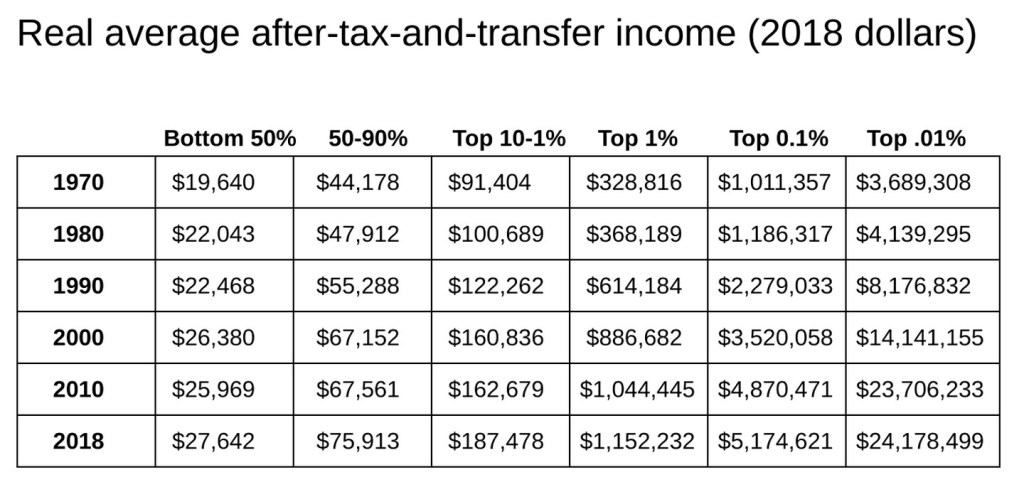
Greg Sargent has written an op-ed for the Washington Post on the growing income inequality in the US. Many have criticized early studies of income inequality because those studies did not include transfers of income–subsidies toward food costs, health insurance, and other government benefits–to the poorer members of US society. To those critics, these transfers redistribute money in a way that mitigates the inequality. Sargent indicates that the transfers do not in fact reduce the growing inequality in any substantial way:
“As they demonstrate, the effective tax rate (federal, state, local and other taxes) paid by top earners has steadily declined since the 1950s and 1960s, when the tax code really was quite progressive, to a point where the highest income groups pay barely more, percentage wise, than the bottom.
“Indeed, in 2018, the top 400 earners for the first time paid a lower effective overall tax rate than working-class Americans. There are many reasons for this radical decline in progressivity, including domestic and international tax avoidance, the whittling away of the estate and corporate taxes, and the repeated downsizing of top marginal rates.”
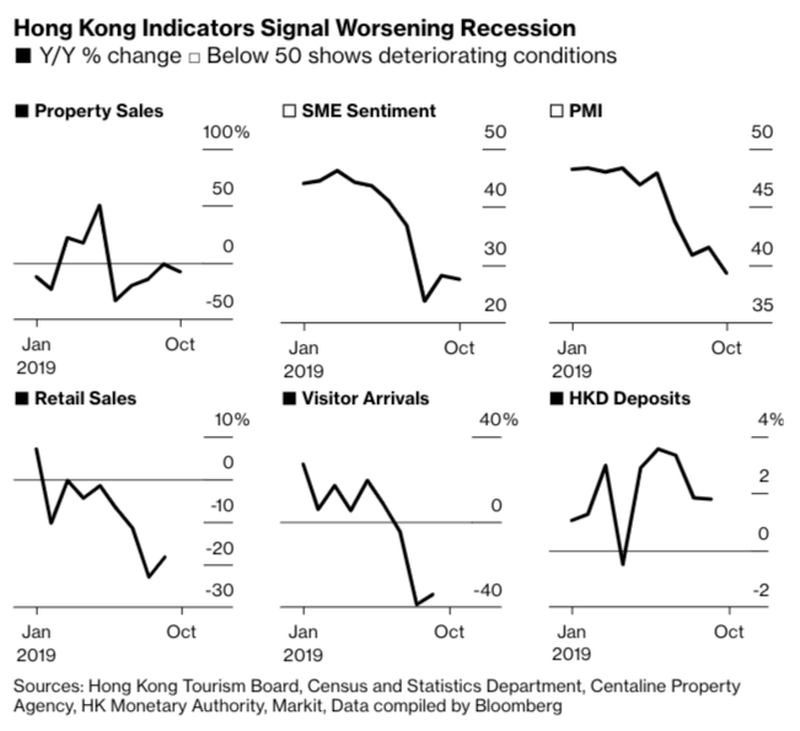
After the election on 24 November in which pro-democracy candidates for the city council won overwhelmingly, there was an expectation that support for the protests in Hong Kong would somewhat abate. That does not seem to be the case as about 800,000 people gathered in Hong Kong to demonstrate against the control of Beijing over political affairs. The protests were also surprising given that the Hong Kong economy seems to be suffering greatly from the protests. The government describes the downturn:
“‘The Hong Kong economy saw an abrupt deterioration in the third quarter of 2019, as the local social incidents dealt a very severe blow to an economy already weakened by a synchronized global economic slowdown and US-Mainland trade tensions,’ the government said in a statement. ‘As the impacts of the local social incidents have yet to show signs of abating, consumption and investment demand will likely remain in the doldrums for the rest of the year.’”
There was a sense that economic concerns would erode support for the protests, which are largely supported by young people in the city. Apparently, that has yet to be the case.
The turmoil in Hong Kong has elicited strong support from the US Congress which has passed several laws in defense of human rights in the city. These laws will make a trade deal with China much more difficult.
I try not to comment on the partisan comments about the impeachment proceedings, but the recent statements by Sen. Kennedy (R-LA) and Sen. Cruz (R-TX) asserting that Ukraine meddled in the 2016 US national election raises serious concerns about how effective Russian propaganda has become. The argument has been completely refuted by US intelligence agencies, but persists among the most ardent defenders of President Trump. Former National Security Council official Fiona Hill made this clear in her testimony to the House Committee on Intelligence:
“Based on questions and statements I have heard, some of you on this committee appear to believe that Russia and its Security Services did not conduct a campaign against our country and that perhaps, somehow for some reason, Ukraine did. This is a fictional narrative that has been perpetrated and propagated by the Russian Security Services themselves. The unfortunate truth is that Russia was the foreign power that systematically attacked our democratic institutions in 2016. This is the public conclusion of our intelligence agencies confirmed in bipartisan congressional reports. It is beyond dispute, even if some of the underlying details must remain classified.”
That US Senators would be so willing to do the work of the Russian intelligence services defies belief. Even though there is no evidence that Vladimir Lenin ever used the phrase “useful idiots”, I have no hesitation whatsoever in labeling those who suggest that Ukraine intervened in the 2016 national election “useful idiots”.
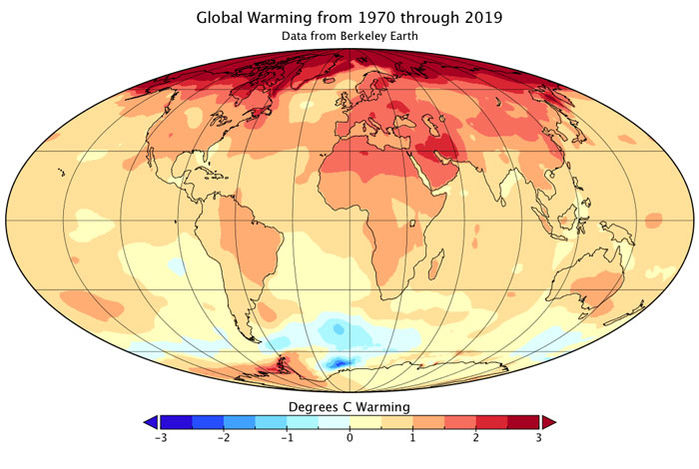
One of the criticisms of the science behind the debate about climate change is that computer models cannot accurately predict the extraordinary complexity of the earth’s climate. But a new study which examined the computer models over the last 50 years indicates that the computer simulations have been on target. According to a report in Science:
“The researchers compared annual average surface temperatures across the globe to the surface temperatures predicted in 17 forecasts. Those predictions were drawn from 14 separate computer models released between 1970 and 2001. In some cases, the studies and their computer codes were so old that the team had to extract data published in papers, using special software to gauge the exact numbers represented by points on a printed graph.
“U.S. President Donald Trump sought to play down a recent surge in tensions with North Korea, stressing what he said was his good relationship with its leader Kim Jong Un and saying he thought Kim wanted a deal, not to interfere in next year’s U.S. presidential election.
“’We’ll see about North Korea. I’d be surprised if North Korea acted hostilely,’ Trump told reporters at the White House before leaving for Florida.
“’He knows I have an election coming up. I don’t think he wants to interfere with that, but we’ll have to see … I think he’d like to see something happen. The relationship is very good, but you know, there is certain hostility, there’s no question about it.’”
It is interesting that President Trump places the North Korean decision within the context of the Presidential election in the US. I strongly suspect that worrying about Mr. Trump’s chances in the next election is on the minds of the North Koreans. The North Koreans have raised the level of personal rhetoric in recent weeks:
“But the bonhomie has been tested this week, with Mr Trump reviving his derisive “Rocket Man” nickname for Mr Kim and again threatening to use military force against North Korea.
“One of Pyongyang’s top nuclear envoys, who once praised the ‘mysteriously wonderful’ chemistry between the leaders, slammed Mr Trump for using words that had prompted ‘waves of hatred’ among the North Korean people.
“She also dusted off an old insult the state has used for Mr Trump.
“‘If any language and expressions stoking the atmosphere of confrontation are used once again on purpose at a crucial moment as now, that must really be diagnosed as the relapse of the dotage of a dotard,’ said Ms Choe Son Hui, first vice-minister of foreign affairs, as quoted by the state’s official Korean Central News Agency on Thursday.”
It is difficult to find a more seriously flawed negotiating process than the one we have witnessed between the two states over the last three years. There is precious little to show by way of progress–indeed, the situation has clearly deteriorated while the two sides have been talking.
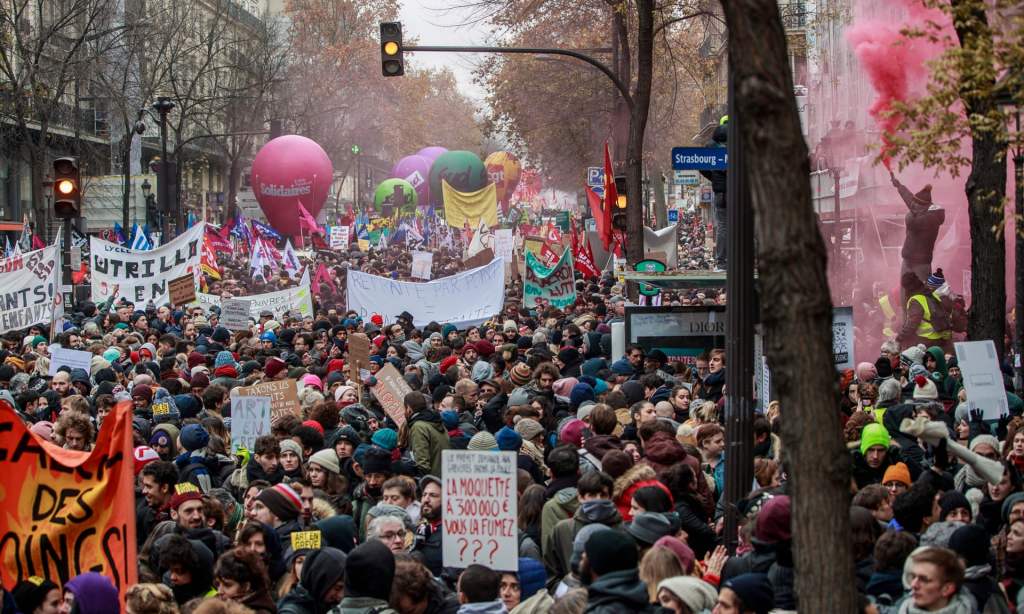
A coalition of 30 labor unions in France have launched a nation-wide strike to protest the government’s plans to reduce pension benefits. National Public Radio suggests that the strike also reflects dissatisfaction with the overall policies of President Macron:
“France’s official retirement age is 62, having risen from 60 in the past decade. But the government hopes to install a new universal points-based pension system, which would change how pensions are calculated and effectively give full pension benefits only to workers who retire at age 64.
“But beyond the push to preserve current pension terms, the protests also reflect ‘an anger and a dislike of Macron in society,’ Beardsley [NPR’s Eleanor Beardsley] says, noting the criticisms the president has faced in the wake of the Yellow Vest cost-of-living protests of last autumn.”
The Guardian estimates that about 800,000 people are participating in the strike which is scheduled to last until Monday. The newspaper quotes a protester’s views of the situation:
“Isabelle Jarrivet, 52, who had worked as an administrator in a town hall north of Paris for 20 years, said: ‘It’s a question of life or death for the French social system, which Macron is dismantling. We’re being taken back to a time before 1945, where we risk losing the social safety net. Private pension funds are waiting in the wings to benefit.’
She added: ‘The gilets jaunes protests got people thinking and talking more about politics and people determined not to let things pass. You can feel a defiant mood in the air.’”
The strike has affected train, bus, and airline travel, and hospital workers, firefighters, and teachers are also participating in the strike.
The US is accusing Iran of sending short-range ballistic missiles into Iraq. The charge, if true, suggests that Iran is taking advantage of the political turmoil in Iraq, despite the fact that much of the discontent comes from those opposed to Iranian influence in Iraqi politics. The missiles could pose a threat to both Israel and Saudi Arabia, as well as to US troops stationed in the Middle East. According to the New York Times: ” Intelligence officials would not discuss the precise model of ballistic missile Iran has sneaked into Iraq. But short-range missiles have a range of just over 600 miles, meaning that one fired from the outskirts of Baghdad could strike Jerusalem.” The missiles could pose a threat to global oil supplies as the attack by two cruise missiles–allegedly by Houthi rebels in Yemen–last summer proved. Those attacks reduced oil supplies by 5% globally for a brief period of time. Iran is clearly trying to leverage its position in the region in order to increase pressure on US allies to reduce the US sanctions on Iran. But we should view this report with caution. There are many reasons why the US wants to portray Iran as an aggressive power in the region. And we should remember that it was the US that broke the Iranian nuclear agreement and that US sanctions on Iran are not sanctioned by any international agreement or organization.
Iran has been experiencing violent protests since the government announced fuel price increases on 15 November. For the first time, the Iranian government has admitted that protesters have been killed although it has been obvious for some time now that the government efforts have been violent. According to the AP:
“The demonstrations began Nov. 15 after the government raised minimum gasoline prices by 50% to 15,000 Iranian rials per liter. That’s 12 cents a liter, or about 50 cents a gallon. After a monthly 60-liter quota, it costs 30,000 rials a liter. That’s nearly 24 cents a liter or 90 cents a gallon. An average gallon of regular gas in the U.S. costs $2.58 by comparison, according to AAA.
“Cheap gasoline is practically considered a birthright in Iran, home to the world’s fourth-largest crude oil reserves despite decades of economic woes. That disparity, especially given its oil wealth, fueled the anger felt by demonstrators.
“Iranians have seen their savings chewed away by the rial’s collapse from 32,000 to $1 at the time of the 2015 nuclear accord to 127,000 to $1 today under the renewed U.S. sanctions. The cost of daily staples also has risen.
Iran has been under severe economic pressure from sanctions imposed on it after US President Trump pulled the US out of the Iranian nuclear agreement (the JCPOA). The protests may signal the success of the sanctions by undermining the Iranian government. But the protests may also harden the position of the Iranian government to ratchet up the pressure on the former buyers of Iranian oil. The Middle East Institute published an essay on what a hardline strategy could entail:
“Under these circumstances, the outcome of the protests could be twofold: on the one hand, Tehran will definitely be concerned about an escalation in the uprising and try to speed up the launch of negotiations with the U.S. to ease the economic pressure. On the other hand, however, the Iranian leadership likely still believes it has time to prepare by raising the stakes to secure a stronger starting position in the talks and enable it to demand an immediate lifting of secondary sanctions.
“To achieve these twin goals, Iran can intensify the tactics it has used for the past 10 months, alternately destabilizing regional security and using the gradual buildup of its nuclear program to raise the value of a possible deal and also warn the Americans about the potential consequences of further increasing economic pressure. In between of the use of these levers, the international community has usually been given time to reconsider its support for U.S. sanctions before Iran repeats the actions.”
The critical actors in this standoff is not either Iran or the US–they are more or less obliged to maintain their current policies since backing down will be seen by the polities as a capitulation. Indeed, there are reports that the Trump Administration is considering sending 14,000 additional troops to the Middle East to counter Iran. The actors we should watch closely are the European states, Russia, and China since they have powerful interests in stabilizing the situation.
The North Atlantic Treaty Organization (NATO) celebrated its 70th anniversary, and there was a great deal of controversy at the event. There was a videotape of several leaders of NATO states mocking US President Trump. Mr. Trump had a very contentious press meeting with French President Macron in which the two leaders disagreed openly about a variety of issues. Mr. Trump also answered questions for 40 minutes while Canadian Prime Minister sat next to him without being questioned. But the most contentious matter was President Trump’s decision to meet with Turkish President Erdogan who has violated NATO’s unwritten rule that members should not purchase sophisticated weaponry from Russia. President Trump cancelled his scheduled press conference at the end of the meeting and left abruptly. NATO has been adrift since the dissolution of the USSR in 1991 but it continues to serve as a focal point for strategic planning and coordination among an important group of states.
In world politics we often talk about rich and poor countries and use economic data to sort out the two. I am not sure why we fell into that trap, but economic data actually tells us very little about the quality of life in different countries. One of the features of living in a “rich” country is longer life. A long life expectancy has been one of the lodestars of the idea of progress. And it is true that as a general rule, greater wealth allows better living conditions, greater access to improvements in medical care, and more control over threats from the environment.
But the US has now joined some other countries, such as Russia, that are experiencing a decline in life expectancy.National Public Radio conducted an interview with Dr. Steven Woolf who was the lead author of the study conducted by the American Medical Association. Excerpts from the interview are disturbing.
WOOLF: Well, what we found is that since 2010, all-cause mortality – that means the chances of dying before age 65 – have been increasing in the United States. And for the past three years, life expectancy has been decreasing. It’s a quite alarming recent trend. But our study shows that it’s been decades in the making, starting back in the 1980s.
GREENE: Is this happening in other wealthy countries, or is this a distinctly U.S. thing?
WOOLF: That’s the thing. This does appear to be a distinctly American phenomenon. There is some element of this happening a little bit in the U.K. and Canada but nothing on the scale of the United States. Life expectancy continues to climb in other wealthy nations.
GREENE: So what are the factors here? What do you think is happening?
WOOLF: Well, we did a pretty detailed analysis to peel back the onion and try to understand this. The trend in life expectancy is being caused, as you said, by increased mortality in working-age Americans from age 25 to 64. And the leading contributors to that is the drug addiction problem. Drug overdoses are a major factor in explaining this trend. However, we also found increases in deaths from alcoholism, from suicides and from dozens of organ diseases – all told, 35 causes of death where mortality rates had increased in this age group.
“In regard to regional impact, the largest relative increases in midlife mortality rates were observed in New England (New Hampshire, 23.3%; Maine, 20.7%; Vermont, 19.9%) and the Ohio Valley (West Virginia, 23.0%; Ohio, 21.6%; Indiana, 14.8%; Kentucky, 14.7%). Additionally, analyses revealed the increase in midlife mortality from 2010 through 2017 was associated with an estimated 33,307 excess deaths and 32.8% of these were attributable to the Ohio Valley.
“When examining cause, analyses revealed the midlife mortality from drug overdoses increased by 386.5% from 1999 to 2017 from 6.7 deaths per 100,000 to 32.5 deaths per 100,000. While age-specific increases were significant among those aged between 25 and 34 years (531.4% increase) the largest relative increase occurred in those aged 55 to 64 years (909.2%).
We need to rethink what we mean by “rich”. The data indicates that US society is in real trouble and indices such as the GDP should not leave us sanguine about the quality of life.
“However, not all FDI brings capital in service of productivity gains. In practice, FDI is defined as cross-border financial investments between firms belonging to the same multinational group, and much of it is phantom in nature—investments that pass through empty corporate shells. These shells, also called special purpose entities, have no real business activities. Rather, they carry out holding activities, conduct intrafirm financing, or manage intangible assets—often to minimize multinationals’ global tax bill. Such financial and tax engineering blurs traditional FDI statistics and makes it difficult to understand genuine economic integration.”
The study indicates that about $15 trillion is hidden in these shell companies, effectively reducing the tax revenues for every state in the world. That $15 trillion represents about 40% of all the money identified as Foreign Direct Investment. Economic orthodoxy would have us believe that investments stimulate job creation. The money hidden in shell companies does not stimulate any additional economic activity–it just sits in bank accounts in any number of tax havens such as Luxembourg or the Cayman Islands. To get an idea of how distorting this practice is the IMF uses Luxembourg as an example: ” According to official statistics, Luxembourg, a country of 600,000 people, hosts as much foreign direct investment (FDI) as the United States and much more than China. Luxembourg’s $4 trillion in FDI comes out to $6.6 million a person. FDI of this size hardly reflects brick-and-mortar investments in the minuscule Luxembourg economy.” One would think that governments would seize the opportunity to tax all these revenues. That they do not is testimony to the power of great wealth in political decisions.
 World Politics News