US President Trump issued an Executive Order on 22 September entitled “Executive Order on Combating Race and Sex Stereotyping“. The order has not received any attention in the media–not surprising given the other news that we are processing. The misrepresentations in the order are breathtaking and, in many respects, terrifying. For example:
“Today, however, many people are pushing a different vision of America that is grounded in hierarchies based on collective social and political identities rather than in the inherent and equal dignity of every person as an individual. This ideology is rooted in the pernicious and false belief that America is an irredeemably racist and sexist country; that some people, simply on account of their race or sex, are oppressors; and that racial and sexual identities are more important than our common status as human beings and Americans.
“This destructive ideology is grounded in misrepresentations of our country’s history and its role in the world. Although presented as new and revolutionary, they resurrect the discredited notions of the nineteenth century’s apologists for slavery who, like President Lincoln’s rival Stephen A. Douglas, maintained that our government “was made on the white basis” “by white men, for the benefit of white men.” Our Founding documents rejected these racialized views of America, which were soundly defeated on the blood-stained battlefields of the Civil War. Yet they are now being repackaged and sold as cutting-edge insights. They are designed to divide us and to prevent us from uniting as one people in pursuit of one common destiny for our great country.”
I do not know how to process this tangle of straw men, flawed historical record, or the complete lack of awareness of the depth of debate about these issues among people who care deeply about the possible meanings of what living in a liberal society could imply.
I would recommend that we should read this document carefully to understand where the current Administration means to take us.
On Monday, the Trump Administration imposed what it called “snapback sanctions” on Iran for what it termed were violations of the 2015 nuclear program agreement signed between Iran and the 5 Permanent Members of the Security Council plus Germany (technically known as the Joint Comprehensive Plan of Action [JCPOA]). The decision was based on the original terms of the Agreement in the event of Iranian non-compliance, but the US pulled out of the agreement in 2018. The US insists that it is named as a participant to the Agreement and therefore it retains the right to insist upon the terms of the agreement even though it is no longer bound by the Agreement.
Most countries, including all the signatories to the JCPOA, reject the US interpretation. The US demand–that all countries refrain from trading with Iran–would be meaningless except for the fact that the US also asserts the right to sanction other states, individuals, or entities that do engage in trade with Iran. So far, there has been little of substance from the US action. CNN reports:
“A total of 27 entities and individuals that the administration say are “connected to Iran’s proliferation networks” were hit with sanctions or export control restrictions on Monday.
“Eric Brewer, deputy director and senior fellow with the Project on Nuclear Issues at the Center for Strategic and International Studies, told CNN that ‘so far, this is really all for show.’
“‘It looks like a lot of the new designations are individuals, sub-organizations, etc. of previously sanctioned entities. Also, these sanctions could have been done under existing executive orders without snapback,’ he said.
As Barbara Slavin, the director of the Future of Iran Initiative at the Atlantic Council, told CNN last week, ‘it is still illegal under US law for American companies to sell arms to Iran. There is a European arms embargo, which will continue until 2023.’
“”The rest of the world will wait for US presidential elections and then make its decision about whether or not to sell weapons to Iran,’ Slavin said.
The isolation of the US on the matter is profound (only the Dominican Republic voted in the Security Council in favor of the US resolution to enforce the sanctions). Iran has certainly made changes to its nuclear program that are ostensibly forbidden, but it has assiduously avoided making any changes that would dramatically alter its ability to make a bomb within a period of a year. The New York Times published an editorial which emphasized the shortsightedness of the US position:
“The tragedy of the Trump administration’s approach is that it has alienated European allies who share the common goal of curbing Iran’s most worrisome behavior. The United States once stood shoulder to shoulder with not only France, Germany and Britain, but also with Russia and China — to isolate Iran. Now, it is the United States that is isolated.
“The bigger question is whether the American efforts to invoke snapback will kill the nuclear deal, which the other parties have been trying desperately to keep alive. Iran had been widely seen as keeping its commitments under the deal until the U.S. exit. Afterward, it increased its production of fissile material, as a calibrated response to the American withdrawal.
“Now, the agreement is in tatters. If Mr. Trump is re-elected, the chances of reviving the accord are slim to none. Iran could walk away from the nuclear deal altogether and resume its previous levels of production of fissile material, which it claims will be used as fuel for a peaceful nuclear reactor. This will set Iran back on a collision course with the United States and Israel.”
“Trump’s maximal use of sanctions has become a policy overreach that has alarmed both U.S. allies and adversaries, prompting not just concerted diplomatic resistance, but investments in economic countermeasures aimed at circumventing the U.S. dollar’s supremacy in the global financial order. For instance, last month Beijing encouraged Chinese banks to reduce their reliance on the SWIFT network commonly used to conduct transactions, and which is susceptible to U.S. pressure. China is clearly looking to diminish the United States’ ability to pressure adversaries by denying them access to international financial networks. Mounting resistance to U.S. sanctions will make it more difficult for Washington to rally international support to pressure Iran. That would require fewer U.S. sanctions, not more.”
It may be the case that the US strategy has nothing at all to do with the Iranian nuclear program. The US may be building a case for attacking Iranian facilities although no other states, other than Israel, would be likely to support military action. But the Trump Administration may be paying attention to only US domestic political opinion.
The International Consortium of Investigative Journalists (ICIJ) has published a report on how major international banks have potentially laundered $2 trillion worth of transactions by a number of individuals and organizations over the period from 1999 to 2017. The report is based upon about 2,100 leaked Suspicious Activities Reports (SARS) to the US Treasury’s Financial Crimes Enforcement Network (FinCen). The list of suspected individuals is a vertiable rogue’s gallery which also includes Paul Manafort, one of President Trump’s campaign managers in 2016 who was flagged as early as 2012. The ICIJ reports:
“Secret U.S. government documents reveal that JPMorgan Chase, HSBC and other big banks have defied money laundering crackdowns by moving staggering sums of illicit cash for shadowy characters and criminal networks that have spread chaos and undermined democracy around the world.
“The records show that five global banks — JPMorgan, HSBC, Standard Chartered Bank, Deutsche Bank and Bank of New York Mellon — kept profiting from powerful and dangerous players even after U.S. authorities fined these financial institutions for earlier failures to stem flows of dirty money.
“U.S. agencies responsible for enforcing money laundering laws rarely prosecute megabanks that break the law, and the actions authorities do take barely ripple the flood of plundered money that washes through the international financial system.
“In some cases the banks kept moving illicit funds even after U.S. officials warned them they’d face criminal prosecutions if they didn’t stop doing business with mobsters, fraudsters or corrupt regimes.”
The report, however, goes on to indicate that these records are merely a drop in the bucket of possibly illegal activity:
“Though a vast amount, the $2 trillion in suspicious transactions identified within this set of documents is just a drop in a far larger flood of dirty money gushing through banks around the world. The FinCEN Files represent less than 0.02% of the more than 12 million suspicious activity reports that financial institutions filed with FinCEN between 2011 and 2017.
“FinCEN and its parent, the Treasury Department, did not answer a series of questions sent last month by ICIJ and its partners. FinCEN told BuzzFeed News that it does not comment on the ‘existence or non-existence’ of specific suspicious activity reports, sometimes known as SARs. Days before the release of the investigation by ICIJ and its partners, FinCEN announced that it was seeking public comments on ways to improve the U.S.’s anti-money laundering system.
“The cache of suspicious activity reports — along with hundreds of spreadsheets filled with names, dates and figures — flag bank clients in more than 170 countries who were identified as being involved in potentially illicit transactions.”
It is staggering to think of how people have been incarcerated for victimless and petty crimes. According to the American Civil Liberties Union:
“Despite making up close to 5% of the global population, the U.S. has nearly 25% of the world’s prison population. Since 1970, our incarcerated population has increased by 700% – 2.3 million people in jail and prison today, far outpacing population growth and crime.
“One out of every three Black boys born today can expect to go to prison in his lifetime, as can one of every six Latino boys—compared to one of every 17 white boys. At the same time, women are the fastest growing incarcerated population in the United States.
“There are twice as many people sitting in local jails awaiting trial and presumed innocent than in the entire federal prison system. And each year, 650,000 men and women nationwide return from prison to their communities. They face nearly 50,000 federal, state, and local legal restrictions that make it difficult to reintegrate back into society.”
But it appears as if you can move around millions of dollars, it is unlikely that you will ever be prosecuted. The term “double-standard” does not even come close to describing the inequities in the system.
Carter C. Price and Kathryn A. Edwards of the RAND Corporation have published a paper entitled “Trends in Income from 1975 to 2018” which tries to quantify how much income the bottom 90% of the US population lost due to departures from the income distributions that existed in the US from 1945 through 1974. It was a counterfactual exercise so its conclusions can only be assessed as speculative. Nonetheless, its conclusions are disturbing:
“This work seeks to quantify the scale of income gap created by rising inequality compared to a counterfactual in which growth was shared more broadly…. We document the cumulative effect of four decades of income growth below the growth of per capita gross national income and estimate that aggregate income for the population below the 90th percentile over this time period would have been $2.5 trillion (67 percent) higher in 2018 had income growth since 1975 remained as equitable as it was in the first two post-War decades. From 1975 to 2018, the difference between the aggregate taxable income for those below the 90th percentile and the equitable growth counterfactual totals $47 trillion.”
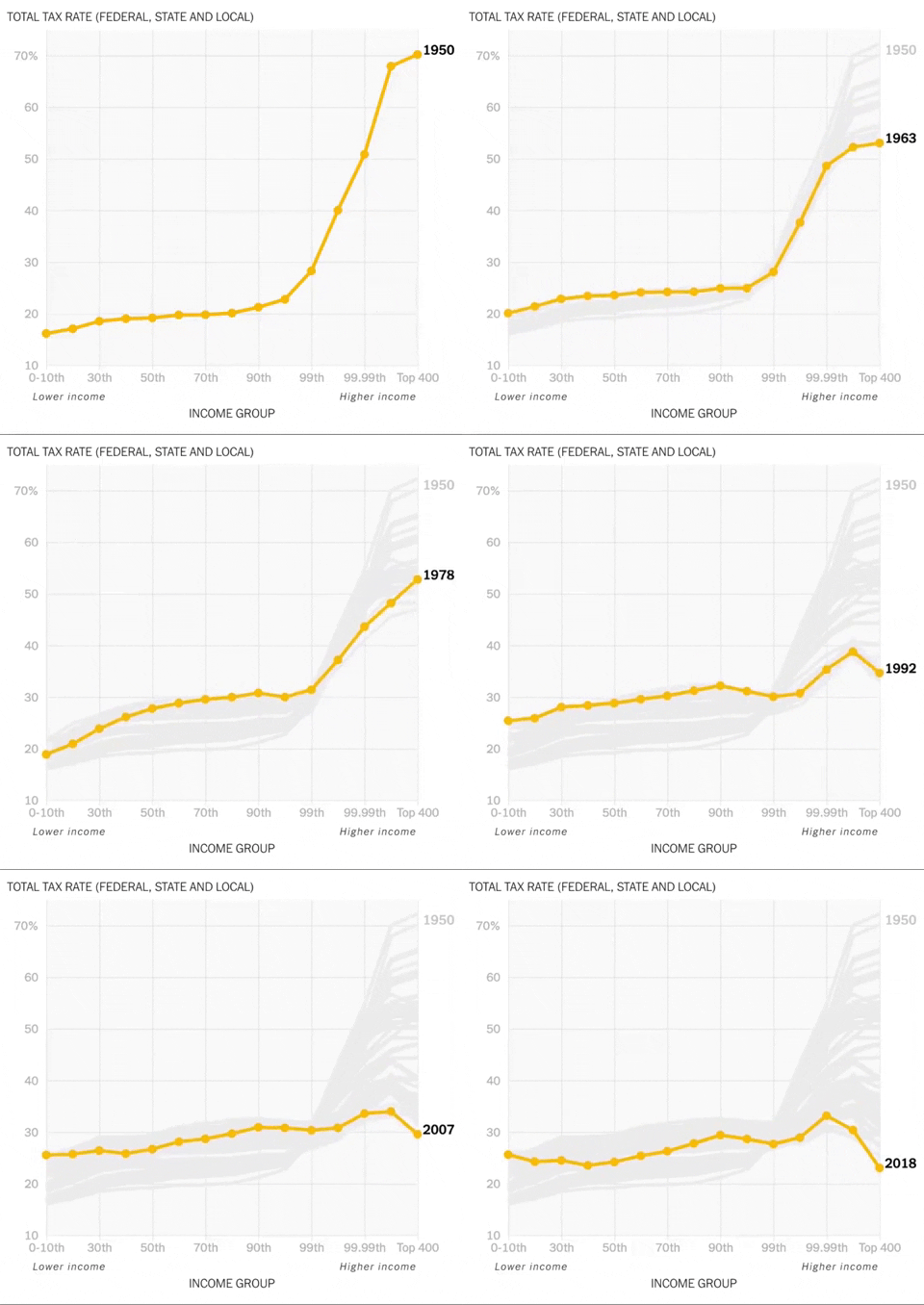
The period from 1945 to 1974 was unique in US and global history. The growth the US experienced was extraordinary because of the recovery from the devastation of World War II. But the marginal tax rates on American citizens were quite high, in some cases reaching 90% for the highest income categories. Those high tax rates did not seem to inhibit economic growth and most Americans experiences a rapidly rising standard of living.
That situation changed in the late 1970s and 1980s as taxes were lowered on the higher income groups, and from that period tax rates were continually lowered. The reduction of taxes continued with the tax cuts of 2017 which lowered the taxes on the rich to very low levels. These cuts were justified as a method of stimulating economic activity which would purportedly create new jobs. The ideology behind this action is known as supply-side economics–a souped-up term for “trickle-down” economics.
What has actually happened is that the ideology has created “trickle-up” economics where the money flows from the poor to the rich, and if the calculations of the RAND paper are correct, the upflow was indeed prodigious. And the rich have consolidated their political power to assure that their privileged status is protected.
There was a signing ceremony at the White House yesterday with the United Arab Emirates (UAE) and Bahrain establishing diplomatic relations with Israel. As I indicated in my post on 11 September, the normalizing of relations is always a good thing and all involved should be congratulated for these small steps for peace. The fanfare at the ceremony, however, was disproportionate to the actual change the steps imply. Israel and the UAE have been secretly cooperating for many years. President Trump made the following assertion:
“And they want to see peace. You know, they’ve been fighting for a long time. They’re tired. They’re warring countries, but they’re tired. They’re tired of fighting. And so you’re going to be seeing further announcements.”
“Just whose blood might be involved was glossed over. The other signatories of the ‘accords’, the United Arab Emirates (UAE) and Bahrain, had never been at war with Israel. They are Gulf monarchies from the high-end enclaves of the Arab world, who have exchanged intelligence and technology with Israel as wall as a mutual fear of Iran, for several years already. The ‘peace agreements’ involved three Middle Eastern governments putting an official seal on once furtive friendships, in a brash ceremony honed to benefit Trump, part of a broader diplomatic flurry that is part of his reelection campaign.
Most of the fighting in the Middle East has been more closely related to US moves since the invasion of Iraq in 2003. In real terms, the normalization of relations among these states is roughly equivalent to a damp squib.
The UAE and Bahrain both insisted that Israel stop the process of annexing the West Bank. We shall wait to see how long this pause lasts. Israel Prime Minister Netanyahu is currently under indictment and Israel is suffering from a significant spike in COVID-19 infections so the political pressures on him are particularly intense at this point in time. The UAE has also asked for the top-of-the-line US fighter jet, the F-35, and Israel is opposed to that step since it would make the UAE a more formidable power in the Persian Gulf. The Bahrain decision is interesting since the regime is closely tied to Saudi Arabia and it implies that the Saudis are also thinking about normalizing relations as well. Such a move is unlikely as long as King Salman is alive, but he is an ailing ruler and his son, the Crown Peace, appears to be more willing to make the move.
The US-Israeli strategy toward the Palestinians is becoming clearer. Essentially, the plan is to isolate completely the Palestinians from other Arab states and wait for the Palestinians to capitulate from exhaustion and lack of money. In the short run, the strategy might work. But Israel has yet to decide what to do with the Palestinians who may ultimately be forced to live in Israel.
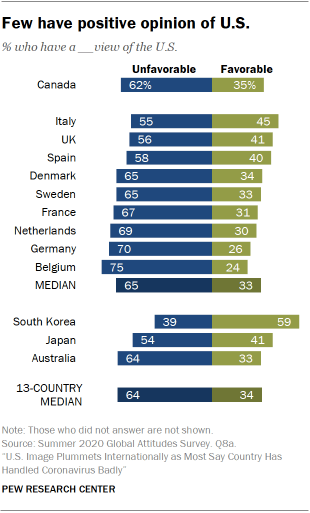
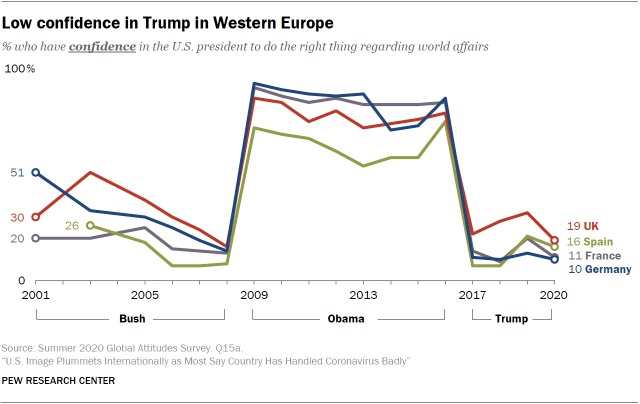
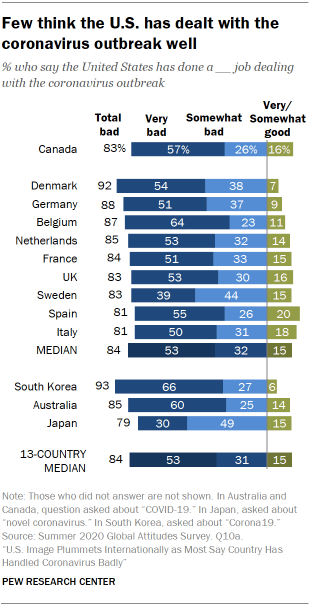
The Pew Research Center has published a poll of citizens within 13 different states, all of which have been long-standing allies to the US, on their views of the US. The poll indicates quite vividly that most US allies believe that the US has done a terrible job of handling the COVID-19 pandemic. The poll also indicates that US President Trump is not well-regarded by its allies. According to Pew:
“Pew Research Center surveys have found mixed or relatively negative views of the U.S. in Canada and Western Europe since 2017 and the beginning of the Trump administration. In the current survey, views of the U.S. have deteriorated further, with a median of only 34% across the 13 countries surveyed expressing a positive view.
“Roughly one-third of Canadians (35%) view their neighbor to the south positively. A similar share across Europe holds this view (median of 33%), though favorable opinions range from a low of roughly a quarter in Belgium (24%) and Germany (26%) to a high of about four-in-ten or more in the UK (41%) and Italy (45%).
“Many in Australia and Japan have an unfavorable opinion of the U.S., while South Korea stands out as the only country surveyed where a majority (59%) views the U.S. positively.
“The current survey shows a substantial dip in ratings of the U.S. since 2019. Japan saw the largest drop, with only 41% expressing a positive view in 2020, compared with 68% in 2019. Every other country surveyed in both years saw a decrease of between 12 and 18 percentage points since the previous year.”
The poll indicates that there are divergences within these populations on the basis of gender and ideology, but none of those differences have a substantial effect on the unfavorable ratings. But there is little question that US allies found greater respect for President Obama than for either Presidents Bush or Trump.
The handling of the pandemic appears to be overwhelmingly important to the image of the US in world affairs.
“Overall, few assess the American response to the coronavirus outbreak positively. In no country surveyed do more than a fifth think the U.S. has done at least a somewhat good job dealing with the virus, and a median of only 15% across the 13 countries polled consider the country’s handling of the virus to be effective.
“While positive assessments of the U.S. response to the coronavirus outbreak are scarce overall, in some countries, they are in the single digits: Only 6% in South Korea, 7% in Denmark and 9% in Germany think the U.S. has dealt well with the virus. Spaniards hold the most positive assessments of the American response, but even there, only one-in-five think the U.S. has handled the outbreak well.
“On the flip side, in every country surveyed, roughly eight-in-ten or more say the U.S. has handled the virus badly. And, in 11 of the 13 countries surveyed, half or more say the U.S. has done a very bad job dealing with the coronavirus outbreak.”
Such weakness suggests that the US is no longer regarded as a leader worth following. I suspect that the economic and military power of the US is still regarded as formidable, but few allies consider the US under a Trump presidency as a reliable or credible partner.
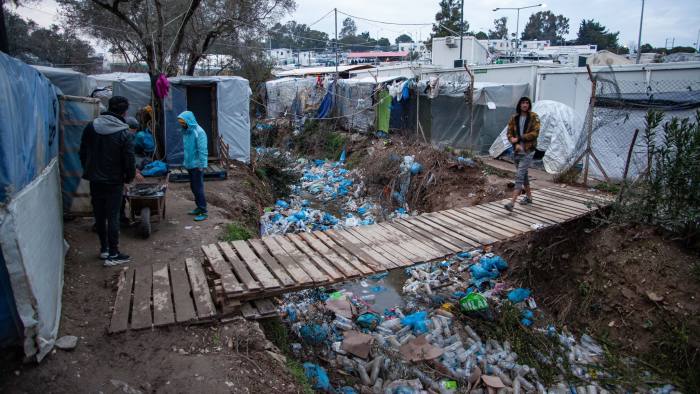
The COVID-19 pandemic has crowded out news in world politics, and in the US the election and the wildfires on the West Coast has further limited coverage of other events. One of the more tragic events over the last few weeks is the collapse of a refugee camps on the Greek island of Lesbos. The camp was overfull with about 12,500 people (four times the capacity of the camp), mostly from Syria, who had hoped to find refuge in the European Union. After an outbreak of COVID-19 in the camp, there were protests over the quarantine measures imposed by the Greek government and these protests led to the burning of the camp. The resulting chaos has drained the resources of the Greek residents of the island and many of the refugees are refusing to move to a new temporary tent city.
In many respects, the situation is amplified by the current tension between Greece and Turkey over maritime rights in the Eastern Mediterranean. The Turks essentially control the inflow of refugees into Greece and the possible threat of Turkey releasing a greater flood of refugees into Greece complicates any possible resolution. And the reluctance of the EU to take in more refugees from Greece has damaged Greek relations with its partners in the EU. Unfortunately, the situation in Lesbos was probably designed to fail as a way of discouraging additional refugees from arriving. The Guardian explains:
“The former mayor of Lesbos Spyros Galinos agrees. The chaos and degradation of Moria, he observed three years ago, seemed to have been deliberately engineered by officials in Athens and Brussels to send a message to potential new migrants that “the path across the Aegean isn’t worth it”. If the Moria camp were to bear a message, the journalist Rachel Donadio observed, it would be: “Welcome to Europe. Now go home.”
“’Deterrence’ has become the watchword of immigration policy around the world. From Australia to South Africa to America to Europe, the aim is to make conditions for undocumented migrants so unbearable that no more will want to come. It’s why the EU has spent millions recruiting armies, militias and criminal gangs across North Africa and the Middle East to capture and incarcerate would-be migrants in the most degrading of conditions. It’s why Greece has apparently taken to expelling them by abandoning them at sea. It’s why camps such as Moria exist.”
The sad truth is that the refugee crisis has been shunted aside by the rich countries and there is no reason to think that there will be any initiatives to address the inflow of people who are simply trying to escape from civil war and poverty. The inability of the world to address the crisis augurs ill for the future as the number of refugees will likely increase in the future due to the climate crisis. There are now more than 80 million displaced people in the world and all of them lack the protections of a state.
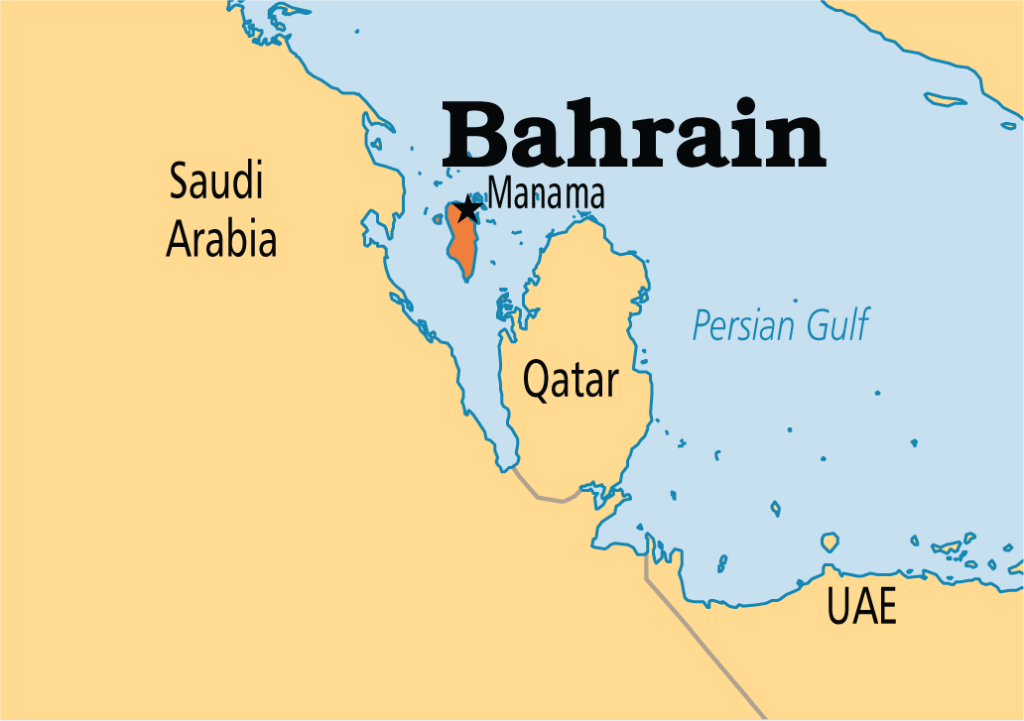
Bahrain has announced that it will normalize relations with Israel, joining the United Arab Emirates (UAE) in recognizing Israel. The Arab states that recognize Israel now includes Egypt, Jordan, the UAE, and Bahrain. Normalizing relations with other states is always a good move since it opens up lines of communication that may prove useful in tense or awkward situations. But this move, while welcome, does not really change the dynamics within the Middle East. Indeed, it may prove to be somewhat troubling. The Economist notes:
“Even if it was expected, Bahrain’s announcement may prove more intriguing. The UAE did not have to worry about whether its decision would be popular: there is little space for dissent in the Emirates. Bahrain, on the other hand, has a history of protest. The Shia majority has long complained of discrimination at the hands of the Sunni royal family. Unrest peaked in 2011 during weeks of protests inspired by the Arab spring, which were crushed with the help of troops from other Gulf countries. Critics of normalisation with Israel have more room to express dissent in Bahrain—though they still face a ruthless state if they do.
“Another question is whether Bahrain serves as a trial balloon for its larger neighbour, Saudi Arabia. Bahrain relies heavily on Saudi Arabia for political and economic support. Saudi tourists are a mainstay of the Bahraini economy; most of Bahrain’s oil revenue comes from a joint offshore field operated by Saudi Aramco. Bahrain would not have made such a big move without Saudi Arabia’s blessing. The Saudis are unlikely to follow suit, at least so long as King Salman is alive. But he is 84 and in ill health. Muhammad bin Salman, the crown prince, is far less attached to the old Arab orthodoxy about Israel.”
We should watch three things. First, we should monitor the domestic reaction within Bahrain to the move. The government of Bahrain is Sunni but the population is majority Shia. Many of the Shia will take their cues from Iran which is hostile to Israel. There may be protests in Bahrain against the decision. Second, we should watch the reaction of Saudi Arabia which has yet to tip its hand. It is a powerful force on Bahrain, so we can safely assume that Saudi Arabia favored the move. But there may be domestic groups which are opposed to the move. The current King most likely does not favor recognizing Israel, but he is 84 and not in good health. His son, Crown Prince Salman, may be more flexible and is reportedly close to President Trump’s son-in-law, Jared Kushner. Third, the reaction from Iran will be negative, but is probably not in strong enough shape to react forcefully to the move. But its allies, Hamas and Hezbollah, may take actions.
“The agreement was ‘a stab in the back of the Palestinian cause and the Palestinian people’, Ahmad Majdalani, social affairs minister in the Palestinian Authority (PA), told AFP news agency.
“In the besieged Gaza Strip, Hamas spokesman Hazem Qassem said Bahrain’s decision to normalise relations with Israel ‘represents a grave harm to the Palestinian cause, and it supports the occupation’.
“The Palestine Liberation Organization (PLO), based in Ramallah, occupied West Bank, called the normalisation ‘another treacherous stab to the Palestinian cause’.
“Palestinians fear the moves by the UAE and Bahrain will weaken a long-standing pan-Arab position that calls for Israeli withdrawal from occupied territory and acceptance of Palestinian statehood in return for normal relations with Arab countries.”
The Palestinians, however, have virtually no voice in any of these decisions as they have been shunted aside by the US and Israel. The decision by Bahrain limits further the attempts to create a two-state solution to the Israeli-Palestinian dispute.
Too much news today. The photographs from the West Coast of the US suggest that we are living in the End Times. And the venality of the Trump Administration suggests that perhaps that is a good thing.