Heavy rains have pummeled China and the death count continues to rise as more bodies are found. The rains have been exceptionally heavy, but many in China believe that the flooding is more centrally related to construction projects the government has undertaken to move water from the southern parts of the country to the more arid north. Billions of dollars of crops have been destroyed as well.

Daesh (the Islamic State) has claimed responsibility for a massive bombs blast that killed at least 80 Hazara protesters in Kabul, Afghanistan. The Hazara are Shia Muslims originally from the province of Hazaristan in Afghanistan. Unfortunately, they have been persecuted for centuries by Sunni Muslims in both Afghanistan and Pakistan. The BBC identifies the following key characteristics of the Hazara people:
Who are the Hazaras?
- Of Mongolian and Central Asian descent
- Mainly practise Shia Islam, in predominantly Sunni Afghanistan and Pakistan
- Thought to be the third largest ethnic group in Afghanistan
- Estimates suggest they make up 15-20% of Afghanistan’s population, which is thought to be about 30 million
- At least 600,000 Hazaras live in Pakistan, most of them in Quetta
- Legend has it they are descendants of Genghis Khan and his soldiers, who invaded Afghanistan in the 13th Century
Turkish President Erdogan continues to seize control of Turkish civil society. Following the passage of a declaration of a state of emergency, Erdogan has taken over many additional schools and charities. He has also ordered the arrest of a key aide of Fethullah Gulen and is pressing the US very hard to extradite Gulen. It appears as if the purge of the Turkish military will leave the military under his personal control.
There are conspiracy theories floating around the attempted coup in Turkey: these theories suggest that the coup attempt was a “false flag” event–meaning that it was a staged event to give President Erdogan an excuse to punish all his suspected opponents. There are three “facts” which are used to support this theory. First, the coup itself was amateurish and the Turkish military is hardly amateurish. Second, two F-16s flown by coup supporters had their radar locked on President Erdogan’s plane but did not fire. And third, there was a helicopter attack on the resort where Erdogan was staying an hour after President Erdogan issued a video on social media from Istanbul. According to the Finanical Times:
“Even the central issue of who was behind the coup is now contested reality, according to a snap poll: it showed that a third of Turks believe Mr Erdogan himself, who says his own life was threatened, was behind the coup. (The poll, by London-based Streetbees, queried about 2,800 Turks, two-thirds via mobile apps, and a third in person.)”
I suspect that we will never know the truth, but, as a rule, I always discount conspiracy theories. But the perception of a conspiracy is always an important political fact. Today, President Erdogan declared a state of emergency, suspending normal civil liberties.
As the richer countries begin to pull back economically due to sovereign debt concerns, the British exit from the EU, and rising discontent against free trade policies, the question is whether anyone else will take up the mantle of leadership in the global economy. We do know that the global economy is not self-regulating: economic flows between and among states are not always equal in velocity and imbalances in current accounts always have to be adjusted. Since many Asian countries are becoming much stronger economically, they are possible candidates for economic leadership. But there are doubts as to their willingness and ability to do so.
The US Department of Justice is suing an unnamed Malaysian official, widely believed to be Prime Minister Najib Razak, for fraud. The suit alleges that the official took money raised ostensibly for a Malaysian sovereign wealth fund called 1MDB and used the funds to subsidize a Hollywood film, to buy works of art by Monet and van Gogh, and a hotel in New York City. The transfer of money was disguised by a variety of shell companies. Despite the allegations, which have swirled around for months, Najib remains quite popular in Malaysia.
The Pew Research Center has published the results of fascinating polls conducted in a variety of European states about attitudes toward refugees. The issue has become quite contentious since the recent influx of Syrian refugees and the terrorist attacks in different European countries. But the range of suspicion is quite dramatic, with the most hostility identified in eastern and southern Europe. Interestingly, some of those countries with great suspicion were under the control of Muslims at different points in their history. Spain was part of the initial spread of Islam with the Umayyad conquest of Hispania in 711 until 1492. Sicily was under Muslim control from the establishment of the Emirate of Sicily in 965 until the Norman conquest in 1072. And the territory of present-day present-day Greece, Bulgaria, Romania, Albania, Serbia, Macedonia, Montenegro, Bosnia, and Hungary were under Ottoman control until the the Treaty of Karlowitz in 1699. It would be interesting to be able to determine how much those histories influence contemporary attitudes, but I have no idea how something like that would be measured.

The Turkish government is purging military officers, police, soldiers, and teachers and university deans, claiming that they are accomplices of Fethullah Gulen, a Turkish cleric in exile in the United States. The total number of people who have been arrested or removed from office is simply staggering. The numbers indicate that President Erdogan is moving fast and hard to consolidate his control over the state after the attempted coup. It appears as if Turkish democracy is going to be severely tested in the upcoming weeks and months.
2016 is on course to shatter the record for the warmest year since ….. 2015. Last year was a record and the first six months of 2016 have been the hottest months since records started being kept in 1880. According to National Public Radio: “this year has been almost two degrees warmer than what people experienced in the 20th Century.” Scientists believe that the temperatures are due to human activity and not to the very dramatic el Niño of 2016. In fact, since el Niño is disappearing, 2017 might actually be a little cooler.
The UN Food and Agriculture Organization (FAO) is warning of a serious food shortage in South Sudan. Violence in the young country has led to a ransacking of food supplies stored by the FAO and has also disrupted the harvesting of crops. Although there are peacekeeping forces in South Sudan, they have been ineffective in stemming the conflict between the Dinka and the Nuer. Uganda’s President Museveni has also come out against a UN proposal for an arms embargo on the country, making it even less likely that the violence can be contained.
The Sundarbans mangrove forest in Bangladesh, the largest mangrove forest in the world, is threatened by the building of coal-fired power plants nearby. Mangrove forests are incredible habitats for a very large number of plant and animal species. But mangroves are very sensitive trees, living in the borderland between fresh and sea water. The world has already lost about 35% of its mangrove forests and as a consequence it has lost an very effective barrier against tropical storms. The projected protection of the forest demonstrates the tension between economic growth and environmental concerns.
Sundarbans Mangrove Forest

There is evidence that there is a growing nationalist response in China to the decision of the International Arbitration Court in the Hague against Chinese claims in the South China Sea. Nationalism is a dangerous emotion, but it differs from culture to culture and system to system. In China, nationalism can be a tool for the Communist Party, but it can also be used to refer to a time when the Communist Party did not rule in China. We will have to see if the government is held hostage to this movement or whether it uses nationalism to assert its claims in the South China Sea.
Turkey’s President Recep Tayyip Erdogan has demanded that the US extradite Fethullah Gulen, a Turkish cleric who is currently living in rural Pennsylvania. Erdogan has accused Gulen of being centrally involved in the recent coup attempt against his government and temporarily closed operations at the Incirlik air base, a crucial air base in US operations against Daesh (the Islamic State) in Syria and Iraq. The fear is that Erdogan will lever the use of the airbase to force Gulen’s extradition. There is little question that Gulen has actively opposed the Erdogan government, but unless Tirukey can come up with substantive evidence of activities that led to the coup, it is unlikely that the US will extradite Gulen.
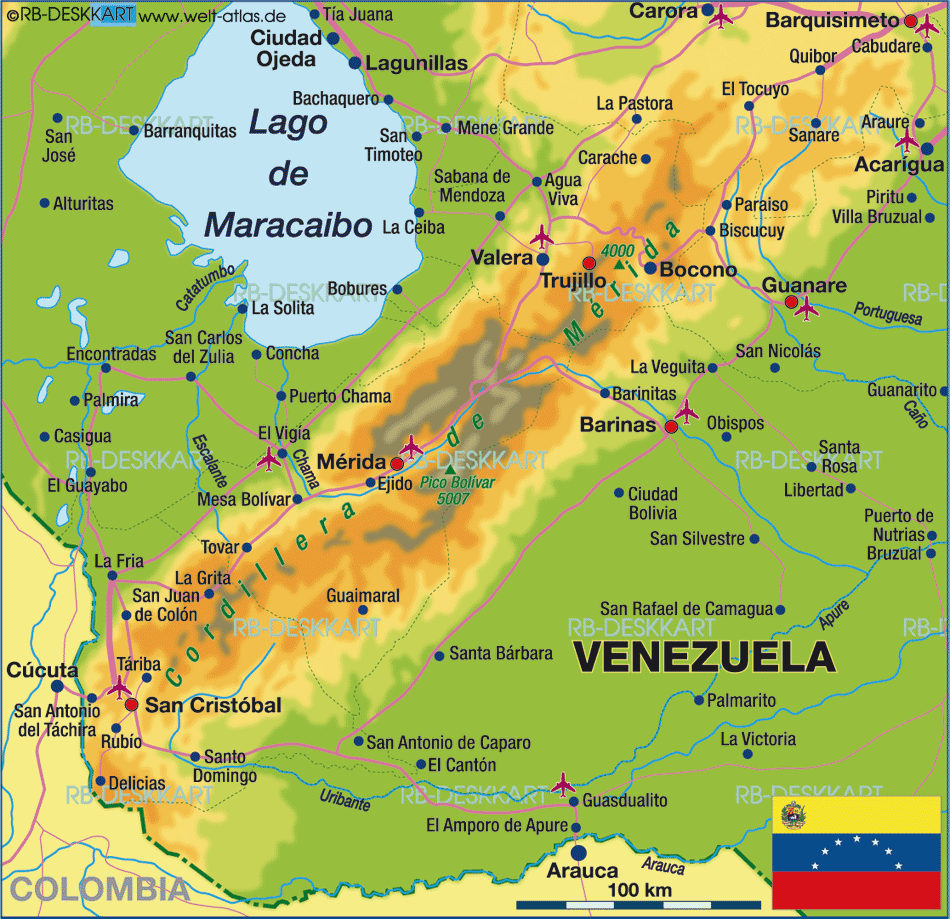
Thousands of Venezuelans crossed the border to Colombia at the city of San Antonio to the Colombian city of Cucuta. The border was temporarily opened by Venezuelan President Maduro and the people took advantage of the opportunity to buy food and medicine which is simply unavailable in Venezuela. The mass movement is a clear index of how desperate the situation in Venezuela has become.

The McKinsey Global Institute has just published an important study on income inequality in many rich countries. Some of the findings include:
“Between 65 and 70 percent of households in 25 advanced economies, the equivalent of 540 million to 580 million people, were in segments of the income distribution whose real market incomes—their wages and income from capital—were flat or had fallen in 2014 compared with 2005. This compared with less than 2 percent, or fewer than ten million people, who experienced this phenomenon between 1993 and 2005.”
“Today’s younger generation is at risk of ending up poorer than their parents. Most population segments experienced flat or falling incomes in the 2002–12 decade but young, less-educated workers were hardest hit, according to our second analysis, which segmented income from France, Italy, and the United States by age and educational attainment. Today’s younger generation is at risk of ending up poorer than their parents.”
The political implications of this shift are extraordinary. There is a genuine risk that the legitimacy of the economic and political systems of the developed world will be eroded and we have no idea what alternatives exist to take their place.
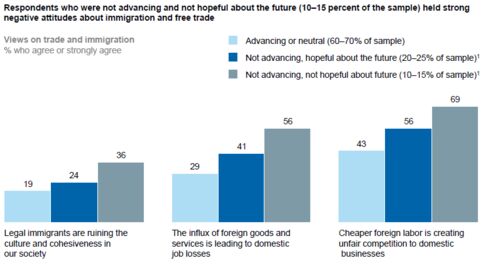
As we witness horrific acts of violence, perpetrated by both private individuals and the state itself, we should remember that there is always an economic context for violence–political violence does not occur in a vacuum. One of the persistent patterns (I hesitate to call it a “cause”) of political violence is its association with economic inequality. Economic inequality is not in and of itself a cause for political violence; it becomes a factor when that inequality is perceived as unfair.
We continue to figure out what is happening in Turkey. It appears that the coup failed and that it was organized by a small cadre of junior officers in the military. If that information is correct, then we can assume that it was not well planned and that little was done to encourage a broad section of civil society to participate. The dramatic response to the coup could suggest strong support for Erdogan or it could simply be a strong statement by Turks that they do not wish the military to interfere in politics. I does seem clear, however, that Erdogan will use the coup attempt to consolidate his power more deeply. Erdogan has slowly been limiting freedoms in Turkey and we can now expect that process to accelerate. Here are some additional links:
For those readers who wish to pursue the matter of the invasion of Iraq in March 2003, I highly recommend Philippe Sands review of the Chilcote Report which appeared in the London Review of Books. It is a scathing indictment of the decision.
Theresa May is the new British Prime Minister and one of her first acts in office was to abolish the Department of Energy and Climate Change. The Department is to be merged into a larger bureaucracy, the Department for Business, Energy and Industrial Strategy. The move is puzzling since having a more focused department on climate change gave Britain a strong voice in climate change talks. We will have to assess how the change affects Britain’s policies toward climate change.
The horrific massacre in Nice, France, has unleashed all the crazies in the US who wish to identify the attack as an example of “radical Islamic terrorism”. Newt Gingrich wants to vet all Muslims on whether they support “sharia law” and deport those who do (what’s to keep them from lying? Should we now start calling Newt Torquemada?) In France, Marine Le Pen, in the Netherlands, Geert Wilders, and in Poland, Mariusz Blaszczak have all assumed that the attack was a terrorist attack. I am not sure on what basis these people have made this judgment. The attacker was a French national of Tunisian origin. Was Mohamed Lahouaiej Bouhlel a Muslim? Was he a practicing Muslim? Did he attend a mosque? Did he have any contact with Muslims who associated with extremist groups? He clearly was an anti-social person given his criminal record and the descriptions of his behaviors supplied by his parents. Right now, and I will wait for additional evidence with a completely open mind, I would say that Bouhlel was just a miserable wretch who rationalized his failures by wrapping himself in a religious justification.
At least some parts of the Turkish military are claiming that President Erdogan has been deposed in a coup. There clearly is something going on in Turkey, but as of this writing it is not obvious what has happened. Turkey is familiar with military coups:
Turkey’s military coups
- 1993 – Claims of a “covert coup” intended to prevent a peace settlement with the Kurdistan Workers’ Party (PKK)
- 1980 – Military coup following armed conflict between right-wing and left-wing groups in the 1970s
- 1971 – Military coup known as the “coup by memorandum”, which the military delivered instead of sending out tanks
- 1960 – Coup by group of young military officer outside chain of command, against the democratically-elected Democrat Party
The tension between the Erdogan government and the Turkish military began in earnest in 2010 when many top military commanders were arrested, and those tensions have only increased as Erdogan has asserted greater powers and moved Turkey toward a more religious direction. The military believes that it has always been entrusted with the obligation to honor Ataturk’s decision to make Turkey a secular state. At some point, the issues had to come to a head.
China has issued a white paper refuting the judgment of the International Arbitration Court at the Hague which repudiated China’s claims in the South China Sea. It is a very long paper which essentially rests upon the Chinese claim that it has exercised sovereignty over the islands in the South China Sea for over 2,000 years. The issue of contention is precisely the question of sovereignty. The Arbitration Court based its judgment on the UN Conference on the Law of the Sea (UNCLOS). China claims that the arbitration court has no jurisdiction on the question of sovereignty and that UNCLOS has no relevance to the issue of sovereignty. The distinction is quite fine: international law is not the same thing as sovereignty, but international law does have a lot to say on the issue of sovereignty.
How cynical can one be? Goldman Sachs has announced the appointment of José Manuel Barroso as non-executive chairman of Goldman Sachs International. Barroso is certainly qualified for the position since he served as president of the European Commission from 2004 to 2014. In 2011, when the European Union was facing a very serious sovereign debt crisis, a crisis that Goldman Sachs helped create, Barroso gave a speech in which he stated:
“In the last three years, Member States – I should say taxpayers – have granted aid and provided guarantees of € 4.6 trillion to the financial sector. It is time for the financial sector to make a contribution back to society. That is why I am very proud to say that today, the Commission adopted a proposal for the Financial Transaction Tax. Today I am putting before you a very important text that if implemented may generate a revenue of about € 55 billion per year. Some people will ask “Why?”. Why? It is a question of fairness. If our farmers, if our workers, if all the sectors of the economy from industry to agriculture to services, if they all pay a contribution to the society also the banking sector should make a contribution to the society.
The Financial Transaction Tax went nowhere. But perhaps by giving back, Barroso only meant a great-paying job for himself. It is difficult to imagine real change when the public and private sectors are so incestuous. And the relationships forged tend to cluster around the decision-making centers of every country. The ratio of incomes in the major political cities to the incomes of countries as a whole is quite striking, but in no country is it as bad as in Washington, DC.

Post-Brexit Europe is trying hard to hold itself together. But the “Leave” vote shattered many illusions about the strength of the European Union and gave impetus to all the eurosceptics. Much attention has been focused on the Naitonal Front in France which seems poised to take power given the unfavorable ratings currently being given to the government of Hollande. But the weakest link in the chain of the EU is more likely to be Italy which has a growing anti-EU movement in a party started by the comedian Beppe Grillo, the Five Star Movement. Italian banks are saddled with about $400 million of delinquent loans (17% of their portfolio) which means that some of them are bankrupt. The Italian government would like to bail them out with government money, but the EU has a rule that no government money can be used to bail out banks until creditors (the people that actually own the bonds) take losses first. This rule is a good one, but in the case of Italy it is political dynamite. Unlike other countries where bank creditors are usually institutions like insurance companies and pension funds, in Italy about 75% of bank creditors are Italian households. If Italy is forced to make these households take the losses, then the current government of Matteo Renzi and his plans for constitutional reform are dead meat and the Five Star Movement is likely to succeed it.
The Oldest (and currently most fragile) Bank in the World: Banca Monte Dei Paschi di Siena, established in 1472

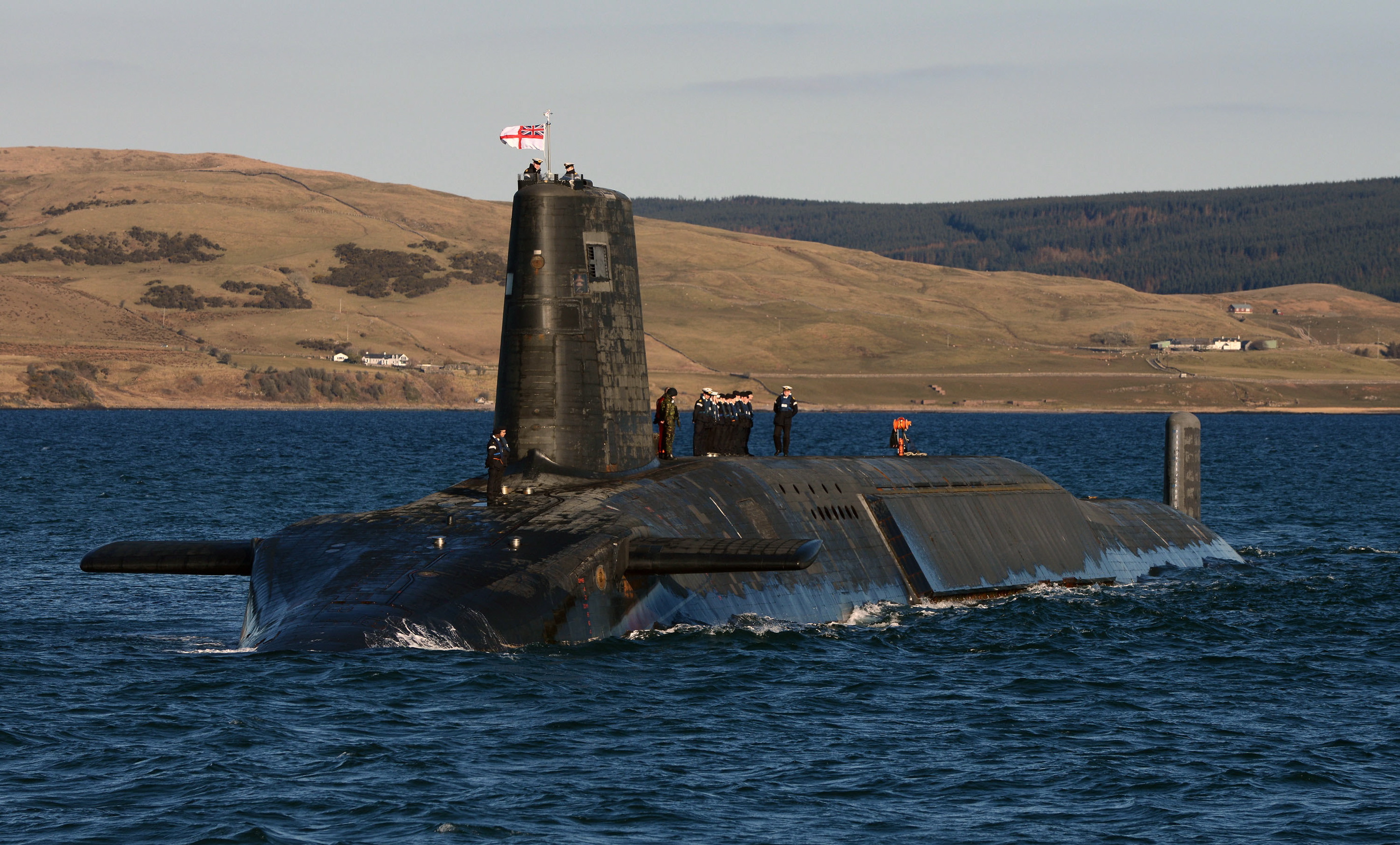
Nuclear weapons introduced a great deal of weirdness to world politics, but the strangest matters have to do with “doomsday” scenarios. A number of movies (“Fail Safe” or “Dr. Strangelove”) have been made about what happens in the US when the buttons are pushed. Great Britain has its own strange procedures. For a number of years, Great Britain has relied exclusively on missiles launched from its nuclear submarines, named Tridents, one of which is always on patrol in a secret location. The Prime Minister and an unidentified person designated by the Prime Minister are the only people in Great Britain with authority to launch those missiles. In case both are unable to do so, the designated submarine has a handwritten note by the Prime Minister with instructions as to what to do. Very few people know what is contained in that note. Let us hope that we never find out what it says.
HMS Victorious
Venezuela’s government has seized its major ports in an effort to combat shortages of food and other basic necessities. The Venezuelan military will now control the distribution of goods as the economy continues to deteriorate. Major companies are pulling out of Venezuela as it becomes clear that bills will not be paid. The economy is in crisis and it is not clear when the people will rise up to demand effective change.
The international court at the Hague has rejected China’s claims to sovereignty in the South China Sea (点击查看本文中文版). In fact, the court has rejected virtually every aspect of the Chinese claims. For its part, China refused to participate in the proceedings and openly announced that it would not be bound by the judgment. China’s Foreign Ministry said the following: “The award is invalid and has no binding force. China does not accept or recognize it.” We do not know what the Chinese government will do in response to the decision, but we should look to how the government decides to present the matter to the people of China. If it decides to provoke a nationalist response to the decision, it will likely mean that it will also contest the decision militarily.
Egypt has ruled that all Muslim preachers must deliver the same, pre-written weekly sermons. The decree is designed to control what the preachers say in order to avoid incendiary or anti-government sermons. The sermons will be written by scholars in the 1,000 year-old center of Islamic learning, Al-Azhar. It is not the first time that the Egyptian state has tried to control the preachers in order to solidify the power of the state. One should expect that there will be protests against the decree.
Al-Azhar

Zimbabweans are protesting the policies of President Mugabe by conducting a “stay away”, a stoppage of normal activities. The situation in Zimbabwe is nearly intolerable: the economy is at a standstill, inflation is rampant, and there are no freedoms for the opposition political parties. But social media is being rallied under three different movements: #ThisFlag, #tajamuka, and a new political party, Viva Zimbabwe. For the first time in decades, real change may come to Zimbabwe.

