There are a variety of perspectives on contemporary American foreign policy. Some, like Donald Trump, believe that the US should pursue its national interests aggressively. Others, like Hillary Clinton, believe that the US should continue to follow a policy of multilateral engagement. A third position is that of President Obama who is trying to rein in American commitments abroad in a subdued policy of realpolitik so that American commitments can be more carefully tailored to American capabilities. One perspective that is not often articulated in the traditional media is that the US should pare back its commitments to avoid the danger of “imperial” overstretch. Jeffrey Sachs has written an essay for the Boston Globe that outlines the logic of the leftist critique of the American Empire.

The battle for Mosul continues and it also appears as if the US is thinking seriously about targeting the Syrian city of Raqqa. Both cities are the main bases for Daesh (the Islamic State) so one of the central questions in this chess game is where will Daesh go if it loses its main bases? One should always think about the consequences of “success” when planning a long-term foreign policy. The problem is that there is no good evidence about how Daesh is thinking about its next move. Justin Salhani offers some ideas about how to anticipate its move.
More violence is occurring along the border between India and Pakistan in Kashmir. Even more troubling are reports that many young Pakistani men are leaving home to join the Pakistani militants committed to ending Indian control of parts of Kashmir. The anecdotal evidence is hardly conclusive, but it suggests that it is quite possible that a much larger offensive is being planned. The situation now is barely under control and the prospects of a major war between the two nuclear armed powers are becoming more real every day.
Americans are currently wrestling with the question of whether their elections are free and fair. Freedom House has long ranked electoral systems on a scale of zero to 12, with 12 being as free and fair as possible. The US currently earns an 11 on that scale. The Pew Research Center has examined the most recent results of the ranking and it found that:
“Of the 195 sovereign countries Freedom House ranked this year (using 2015 data), 61 scored 12 out of 12 on the group’s electoral process scale – among them Australia, Canada, Japan and the UK. Besides the U.S., 16 other countries received 11 points out of 12.”
The Center also gives information on other rankings, and the US ranks high, but not among the highest in the world.

There has been movement between the Philippines and China on control of the South China Sea. More specifically, the changes surround control of the Scarborough Shoal which is separate from the other disputed areas such as the Spratly or the Paracel Islands because only the Philippines has a competing claim to the Shoal. Since 2012 Chinese naval vessels have been chasing Filipino fishermen away from the shoal, but it now appears as if Filipino fisherman are being allowed back in. It is too soon to determine what the move means. The Chinese have not relinquished their territorial claim to the Shoal but neither has the Philippines.

In 2014 the Ukrainian people overthrew a government they believed was hopelessly corrupt. In the intervening two years, the campaign against governmental corruption has led to a rather remarkable innovation: a requirement that all Ukrainian officials must publicly declare their wealth and property. It is fair to say that the results of the declarations were stunning: Ukrainian public officials are incredibly wealthy. The requirement is something that all democracies should embrace. The US has reporting rules, but they are not nearly as stringent. The average net worth of a person in Congress is $1.03 million, twelve times the net worth of the average American household.
The evidence of global warming in the Arctic is fairly clear: the sea ice coverage seems to decline every year. But the situation in Antarctica is quite different since most of the ice there rests on land, not on the sea. With refined techniques, however, scientists have learned that much of the South Pole’s ice is melting from the bottom up as warming water intrudes between the land and the ice. Ice melting in Antarctica is potentially more troubling since virtually all the water from the melt would add to the water in the oceans unlike the Arctic melt which does not add to the total ocean volume. According to Bloomberg:
“There’s enough water locked up in West Antarctica’s Amundsen Sea region alone to raise the global average sea level by four feet, and it’s the fastest-melting spot on the continent.”
Unfortunately, we do not have enough data yet to assess the seriousness of the problem.
The US Senate has passed a bill, 85-13, that will require women to register for the military draft. This law, if passed by the House of Representatives, marks the first time women in the US would be subjected to conscription. The military draft for men was in force from 1948 to 1973 when it ended because of opposition to the Vietnam War. It was reinstated in 1980 after the Soviet invasion of Afghanistan. Right now, all men between the ages of 18-25 have to register for the military draft.
A scandal is engulfing President Park Geun-hye of South Korea and it is not a typical scandal. President Park sands accused of being influenced by a friend, Choi Soon-sil, who is involved in a sect called the Church of Eternal Life and a movement called the Movement for a New Mind. The activities of Choi are described by some as “shamanistic” and there is evidence that Choi has been heavily implicated in suspicious money-raising ventures. President Park has requested the resignations of many of her senior advisers and her approval rating has sunk to 14%. There have been large protests demanding Park’s resignation.
Bonus Link: No quiz questions for this link
For those who wish to learn more about the problems at Deutsche Bank, Spiegel has a very detailed article about how this once proud bank fell on hard times. It may yet survive, but globalization was not kind.
Virtually all the adults have been moved out of the refugee center in Calais and into small towns scattered all over France. It remains to be seen whether the move will be successful. If the French economy were booming, the chances for effective integration would be much higher. But it certainly does not sound like there are many jobs for the migrants. Nor does it seem like they are being welcomed by the residents of the smaller, agricultural areas. It also appears as if many of the migrants have decided to remain in the larger cities, and are coping in ways that will likely make it difficult for all.
Belgium has decided to approved the trade pact with Canada despite the recent referendum results in the province of Wallonia. The pact was therefore saved and the European Union will sign CETA. The reasons for the affirmative vote are opaque. Belgium declared that changes had been made to satisfy the agricultural interests in the country. Canadian officials said that no part of the pact had been changed. Obviously, there were some tense negotiations in Brussels and perhaps we will never know what happened. But it was likely impossible for Belgium to resist the pressure of its much more powerful neighbors. In this particular case, globalization has prevailed over nationalism.
The Teaching, Research, and International Policy (TRIP) Project is based at the College of William & Mary’s Institute for the Theory and Practice of International Relations (ITPIR). The project regularly polls IR scholars (they even ask me!!?!) about foreign policy issues. Their most recent poll asked questions about US involvement in the global economy–essentially a question about support for globalization. The discrepancy between IR scholars and the general public on this issue is stark, but it is clear that educational attainment is the critical variable.


Chinese President Xi Jinping has been named a “core” leader by the Communist Party, a term formerly reserved for Mao Zedong and Deng Xiaoping. Mr. Xi continues to consolidate power in China in ways that undermine that collective power of the Party leadership. The move was endorsed by the People’s Daily, the Party’s media mouthpiece (Google will translate the article for those who cannot read Chinese). The move also mimics the global shift toward stronger single-person leadership, a troubling trend for democracy.
In terms of protest votes, few countries do it as well as Iceland (although, for a while, the Five Star Movement in Italy was doing quite well). The people once voted the candidate of the Best Party to be mayor of their capital city. But now the Pirate Party is poised to become one of the dominant players in Icelandic politics. The Party formed in 2012 as a protest against corruption in the government. It crowdsourced a constitution and believes strongly in direct democracy. But it is a little thin on policy so far.

Russia lost its seat on the UN Human Rights Council after it failed to secure enough votes to retain its seat. There was organized opposition to Russia’s continued membership becuase of concerns over Russia’s conduct in the Syrian civil war. The Council membership is determined by a vote by the 193 countries comprising the UN General Assembly. There were also efforts to keep Saudi Arabia off the Council but that effort failed.
Steven Cook has written an essay for The Atlantic which discusses one of the fundamental assumptions of Liberalism: that there are universal human rights. He poses the issue in a very interesting way by asking the question “How Should Culture Affect Foreign Policy?” Some of Cook’s insights are genuinely controversial:
“Maybe Egyptians, for example, have not been able to carry out economic reforms hatched in Washington effectively because those reforms undermine a sense of communal solidarity and a large, patriarchal Arab state, which seem linked to an Egyptian cultural milieu that valorizes these things.”
Yet the question deserves an answer. Perhaps the failures of American foreign policy in various areas of the world are due to an unwillingness to modify or adapt central assumptions of liberal thought to local conditions. But how far should these principles be bent?
The Living Planet assessment, by the Zoological Society of London (ZSL) and the World Wildlife Federation, has found that global wildlife populations have declined by 58% over the last 40 years. According to the BBC:
“The researchers conclude that vertebrate populations are declining by an average of 2% each year, and warn that if nothing is done, wildlife populations could fall by 67% (below 1970 levels) by the end of the decade.”
One should not put too much stock in the numbers themselves. While there is broad agreement that wildlife populations are declining, the difficulties in collecting accurate information are formidable. The trend, however, is clear.
Pussy Riot is a Russian punk rock band that takes great delight in preforming in ways that challenges the powers that be. The members of the band performed “Punk Prayer – Mother of God, Chase Putin Away!” in the Cathedral of Christ the Savior in Moscow in 2012 and two members of the punk band spent 21 months in jail charged with “hooliganism motivated by religious hatred”. They have now released a music video entitled “Vagina” as a slap against Donald Trump. It is unquestionably intended to offend so I would not recommend the video to anyone with reasonable sensibilities. But art is a potent expression of many parts of society that are typically voiceless, so an offensive voice is sometimes better than silence.
For a number of years, many states have been pushing for a whale sanctuary in the South Atlantic. The International Whaling Commission was created in 1946 in order to protect whales and other cetaceans which were in danger of extinction due to hunting. The proposal was defeated–38 countries voted yes and 24 against–but the Commission requires a 75% affirmative vote to make the recommendation binding. The opposition to the sanctuary was led by Japan some of whose citizens regard whale meat as a delicacy. Hunting continues under the rubric of “scientific research” but that loophole is disingenuous.

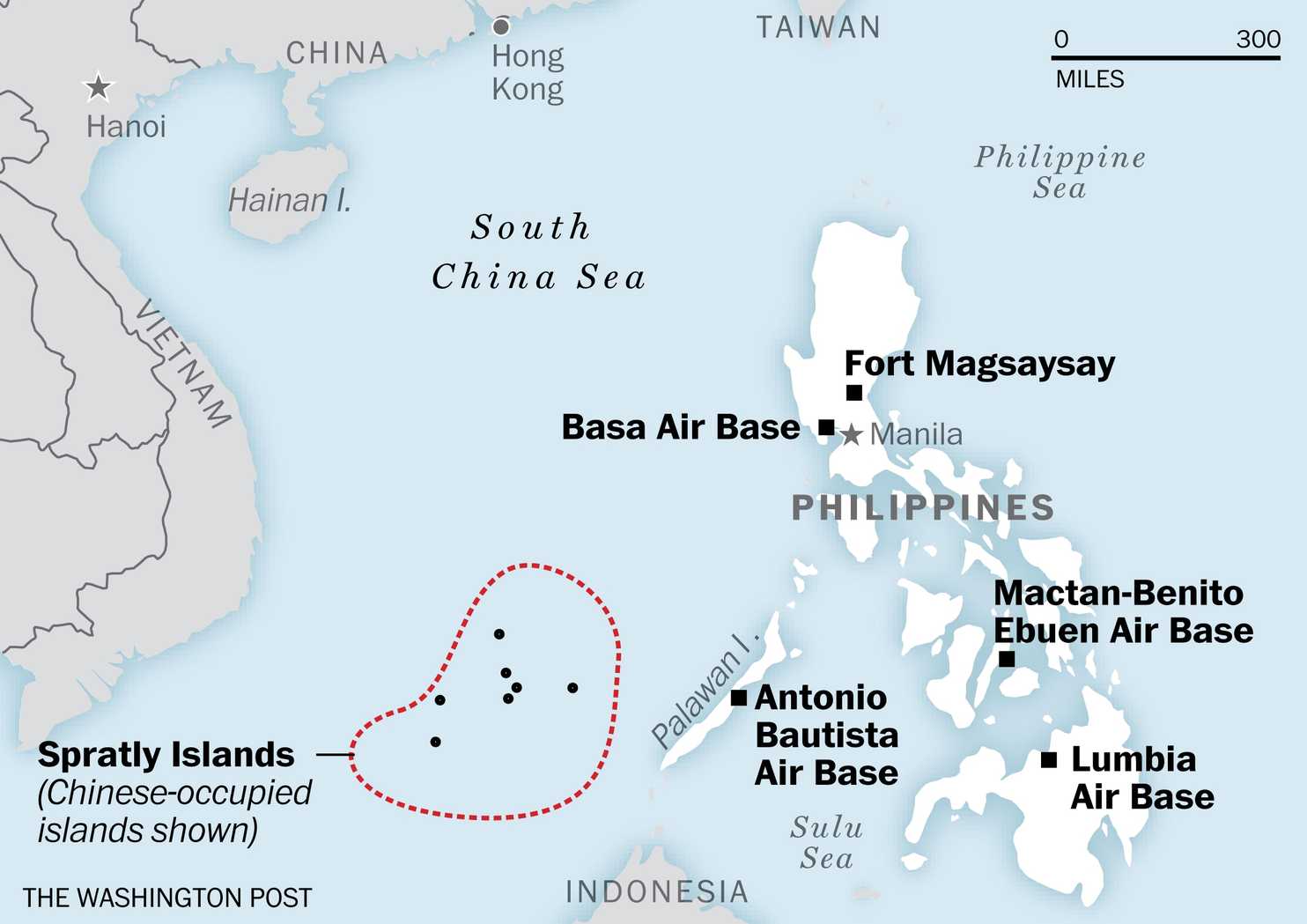
The Philippine president, Rodrigo Duterte, has announced that he wants all foreign troops out of the Philippines. The US currently has 5 military bases in the Philippines which are regarded as centrally important to maintain a US role in Pacific affairs. Duterte made the announcement during a stop in Japan from his meetings in China and the announcement undoubtedly rattled the Japanese who regard the US presence in the region as critically important.
The Russian naval fleet en route from Severomorsk, Russia to the coast of Syria has decided not to re-fuel at the Spanish facilities in Ceuta, off the Strait of Gilbraltar. The initial Russian request placed Spain, a NATO member, in an awkward position since NATO countries are uncomfortable with the Russian role in Syria, particularly the suspicion that the Russians are committing war crimes. Ordinarily a request to re-fuel is not considered a military act among states that have peaceful relations, but the pressure on Spain was probably quite intense.

For perhaps the first time in the last 3 million years, levels of Carbon Dioxide (CO2) “broke through 400 parts per million (ppm), meaning 400 molecules of CO2 for every one million molecules in the atmosphere.” The World Meteorological Organisation indicated that 2016 will be the first year in which the entire year witnessed these high levels. It also pointed out that CO2 is only one of the greenhouse gases that is increasing. Other gases, such as methane, are also increasing rapidly.
A NASA depiction of the global sources of CO2 which are dominated by the US, China and Europe

The lack of a coherent US policy toward Syria is deeply troubling. Not only have nearly 500,000 people died and 11 million people displaced, but the US has lost strategically to the Russian objective of keeping President Assad in power. It is not enough to point out (correctly) that Syria was a very difficult situation to manage. We do not maintain foreign policy for only easy situations–having an effective foreign policy is more necessary in the most difficult situations. The Atlantic has a very good essay pointing out how US policy vacillated at critical points, making it difficult to maintain a coherent policy.
The banana is the most popular fruit in the world. Virtually every banana sold in supermarkets is a clone of a single type of banana, the Cavendish. The most common type of banana, the Gros Michel, was wiped out in the early 1960s by a fungus called Fusarium wilt. Cavendish bananas are apparently less tasty than the Gros Michel (I would not know), but they were resistent to the fungus. But now a new disease, called Black Sigatoka–the fungus Pseudocercospora fijiensis–threatens the Cavendish, as well as other diseases. Fortunately, there are about a 1000 different kinds of bananas in the wild, but in the short term we may have to go without our bananas until scientists figure out how to grow tasty alternative bananas for a global diet. Botanically, bananas are actually berries.

France has begun the process of removing refugees who have cluster in Calais near the entrance to the Chunnel to Great Britain. These refugees are living in squalor (the refugee camp is pejoratively called “The Jungle”), hoping to somehow get to Great Britain to receive the higher welfare benefits offered by the UK. The refugees will be moved to processing centers all over France, but there are serious concerns about children who are traveling alone. The antipathy toward the refugees is fueling strong support for the National Front Party, a strongly nationalist political party.

Turkish President Erdogan has made territorial claims on the city of Mosul, noting that Mosul was once controlled by the Ottoman Empire and that Turkey is the heir to that empire. He also noted that Turkey has a “historic responsibility” to the Sunni Muslims and Turkmen who live in Mosul. It seems clear that Turkey has every intention to fight in the battle for Mosul even though not one of the other participants believes that Turkish participation would be helpful.
The 1920 Map Referenced by Prime Minister Erdogan Justifying Turkish Claims on Mosul

Belgium has indicated that recent provincial votes indicate that Belgium cannot approve the Comprehensive Economic and Trade Agreement (CETA) with Canada. The vote are not officially the death-knell of the agreement, but it suggests that the chances of it being approved by the European Union are remote. The EU Treaty requires that all trade treaties with non-EU states be approved unanimously. Nonetheless, Canadian Prime Minister Trudeau is still scheduled to arrive in Brussels to sign the Treaty. It could be a very awkward scene on Thursday.
The election commission of Venezuela has ruled that a recall referendum on President Maduro cannot be held a week before it was scheduled to begin. The decision leaves the opposition with no peaceful alternatives to continued socialist rule. The government has failed to stabilize a rapidly sinking economy and inflation is very high and there are widespread shortages of essential goods. The international community has soundly condemned the decision, but it has little influence over the Maduro government. I suspect that the opposition will step up its efforts to unseat Maduro before 2017 because after that date, if Maduro is removed, his Vice-President will take his place without a new election.
The Washington Post has a great article on the history of Mosul. It provides a good insight into the complexity of claims on the city, particularly when one keeps in mind that the ethnic groups that we identify today are not those of the past. Its centrality still revolves around the issue of pitch (oil).
Venezuela is not the only country experiencing deep economic problems. Egypt’s economy is also rapidly deteriorating and the economic discontent is spelling trouble for General Sisi, the President of Egypt. Inflation is running at 14% a year and prices for common goods are increasing on almost a daily basis. The country imports most necessities and it is running a serious balance of payments deficit. Under pressure from the International Monetary Fund, the government is cutting subsidies for the poor. The chances of political protests on a large scale are getting higher and the government only has repression for an answer.

