The Institute for Economics and Peace publishes an annual report called the Global Peace Index (GPI). The Institute takes a number of variables it believes are indices of violence or peace, and then ranks countries by how well they score on those attributes. Sadly, the GPI suggests that the world has become a more violent place over the last five years, something which jibes well with my own sense of world politics. The Index also measures the cost of containing violence and the Institute found that “…were the world to reduce its expenditure on violence by approximately 50 per cent it could repay the debt of the developing world ($4,076 bn), provide enough money for the European stability mechanism, ($900 bn) and fund the additional amount required to achieve the annual cost of the Millennium Development Goals.”
The failure of the world to intervene in the Syrian civil war has raised all sorts of questions about the “Responsibility to Protect”. The issue of humanitarian intervention has always been fraught with difficult decisions, most notably the difference between a genuine humanitarian intervention and an intervention for self-interested reasons. The conflation of these two goals was manifest in the Libyan intervention against Muammar Qaddafi and that experience has made an intervention in Syria more problematic. The Council on Foreign Relations has a good background essay on the issue of humanitarian intervention.
Turkish Prime Minister Erdogan has issued a chilling warning to the protesters, stating that “We have not responded to punches with punches. From now on security forces will respond differently.” It is not clear how the protesters will react to this threat, but Erdogan seems to be unmoved by the international criticism of his handling of the crisis thus far. In the mean time, Erdogan’s party, the AKP, has announced that it will hold rallies in support of Erdogan this weekend. Such rallies will likely attract many counter rallies with a subsequent risk of continued violence.
The protests in Turkey continue and the response of the government seems to be one of the iron fist. The footage on the cable news networks suggests that both the protesters and the police are pretty disorganized. But I have a colleague in Turkey right now and this is what she reports:
At the risk of presenting a very incomplete and superficial account, here are a few points to share with you from my own personal experiences:
An attitude of non-violence reigns among the protesters – they are very proactive in implementing this attitude – we can easily say that the resistance movement, as an entirety (at least in Istanbul, which is the only part I’ve seen) has a very peaceful character..
Humor and creativity have been huge elements in manifesting demands, dissent, discontent.. I wish I could translate the many creative slogans that I’d seen – you’d die laughing..
A large proportion of the protesters are very young (75% below the age of 30)
The last I checked protests had broken out in about 67 cities
These young people have made a point of building a new life in Gezi Park – they have shown that people can live peacefully side by side without the need for the state/govt and this crowd is truly diverse (in terms of religious beliefs, class, educational level, gender, demands, political views, experiences etc.). It is complete with tents, neighborhoods, kindergarten, infirmary, market, library, garden etc. and all services/commodities are provided for free. People take extra care to embody the kind of life/politics they want. They are careful and responsible.. their reactions are unique and unexpected – one of the first things that people did, for instance, was to clean up Taksim & Gezi Park right after one of the worst clashes with the police where countless numbers of teargas cans covered the streets.
People have regained their self-confidence in terms of mobilizing and being able to have a say in socio-political affairs. They seem to have overcome their fears in this respect
People have become immune to teargas:)
These young people are insisting on building a movement (which looks more like building a new way of living) that refuses the more conventional tactics, symbols, strategies, language of politics
It is not a secularist vs. Islamists movement at all. there are many individuals and groups who first identify themselves as devout muslims (e.g. ‘anti-capitalist muslims’ are an active part of these protests) – respect for each other is a primary concern. Several Leftist groups, for instance, guarded a group of muslims who were performing their ritual prayers the other night… The emphasis is on living together in harmony and respecting each others’ freedoms and right to be the way everyone wishes to be.
The reaction of the PM has been one that needs to be put under the microscope, I think – it is quite peculiar. But now it is time for less analysis and more immersion in this movement that has been unraveling (at least for me)!
It is, of course, not all rosy and pink and perfect. Many have been wounded, several people died, police is still intervening in a number of cities (and there’s absolutely no guarantees that they won’t start the teargas/watercannon/arrest practices again in Istanbul and elsewhere). But I’m not sure if it can get any better than this in practice in terms of what these young protesters have been trying to accomplish (which all unraveled spontaneously for the most part)
Her point about it not being a protest of Islamists vs. secularists is very important. The American media is portraying the schism as religious, but given the young age of the protesters, I find this hard to believe. We should all be on guard against the way the protests are used by the media–we should dig very deeply with open eyes into the unfolding events.
Iran will be holding its presidential elections next week. The Council on Foreign Relations has published a very nifty list of issues and media references to the election that should serve as a good guide once we know the election results. The bottom line is that the West should not expect any major changes no matter who wins.
The Russian Duma has passed a law making it illegal to equate straight and gay relationships as well as to distribute gay rights literature. The bill passed 436-0. The bill also contains special fines for foreigners within the country who break the law.
One of the nettling questions concerning the Syrian civil war is the role that Russia is playing. It is clearly backing President Assad and is not afraid to send some of its most advanced military technology to support him. That technology, sophisticated anti-aircraft weaponry place it squarely as an obstacle to the West’s (and Israel’s) main military advantage–airpower. Interpreting Russian objectives is very difficult: is it just a spoiler (something eminently believable about President Putin) or are there more strategic objectives? One of the more interesting foreign policy analysts for the Asian Times, Spengler (a pseudonym) gives an insightful analysis of Russian objectives: that it believes that the Iraq War spelled the beginning of the end of American predominance in the Middle East and that Russian influence should replace American power.
The revelation that the US National Security Agency’s spying program (PRISM) has been shocking for many Americans since it seems to violate the American presumption of privacy. That debate is an important one for the US, but the implications of the program are also quite serious for the rest of the world. Of particular interest to the NSA are messages sent abroad, which means that the NSA has records on virtually everyone with access to a phone or a computer. Needless to say, the rest of the world is quite upset, although there are very few options available to them aside from diplomatic protests.
According to the US Energy Information Agency, carbon dioxide emissions globally increased 1.4 in 2012. The news is grim–it suggests that the world is one step closer to climate changes that may be irreversible. The US and Europe actually decreased their emissions, but those losses were offset by increases in the emerging markets.
There were dueling protests in Turkey, as supporters of Prime Minister Erdogan held a rally in his support while anti-Erdogan protesters called for his resignation. The roots of the anti-government protests are somewhat opaque–there is a sense that Erdogan has become increasingly authoritarian, but it is difficult to separate that feeling from a larger fear of the increasingly religiosity of the regime. I would welcome comments from anyone who has a deeper insight into the causes of the protests since the mainstream media reports that the economic situation in Turkey is generally positive. Anti-government protests under good economic conditions is somewhat rare politically.
Wealth inequality keeps getting worse over time. The discrepancies between rich and poor are truly staggering in the world: “29 million individuals, or 0.6% of those with any actual assets under their name, own $87.4 trillion, or 39.3% of all global assets.” There have been, however, some changes in the geographic distribution of wealth, with Europe being the biggest loser. This graph is from Credit Suisse:
Much of the European losses stem from the sovereign debt crisis, but Germany and France’s decline are notable. The US and China continue to accumulate the largest number of ultra-high income earners.
Now for a little comic relief. One of the great conspiracy theories of our time involves what is known as the Bilderberg Group. To many, the Bilderberg Group is a secret shadow government that is, in effect, ruling the world One of the principal people propounding this theory is a journalist/radio personality by the name of Alex Jones who runs a website called Infowars.com (I recommend the site if one needs a good laugh). The BBC ran an interview with Jones which is pure gold, as only the BBC can do. Watch the video and then have a good stiff drink.
It seems as if there has been a radical reconsideration of the merits of austerity programs. The reconsideration is due to a number of factors: the seeming failure of the poloicies in restarting economic growth in EUrope as well as the realization that much of the intellectual justification for the policies (the Rogoff-Reinhardt hypothesis) was flawed. It doesn’t however, seem that support for the policies has really changed all that much. Thus, we are thinking about alternative explanations for the political attractiveness of the policies. Deborah Orr gives a chilling hypothesis in her op-ed piece in the Guardian: that the policies are actually designed to make the world much more comfortable for corporations who wish to reduce the size of government regardless of the social costs.
The US Bureau of Labor Statistics issued its compensation report for the first quarter of 2013 (January-March). It found that “Unit labor costs in nonfarm businesses fell 4.3 percent in the first quarter of 2013, the combined effect of a 3.8 percent decrease in hourly compensation and the 0.5 percent increase in productivity. The decline in hourly compensation is the largest in the series, which begins in 1947. ” Such a large reduction in real wages is exceptional, and suggests that, while corporations are indeed hiring, they are not offering high wage jobs. This deficiency will make economic growth more difficult. Ultimately, however, everyone pays for wages that are too low to cover the cost of living–those workers will receive government subsidies for food, education, and housing for which we all pay taxes.
Iran will hold its presidential election next week, and the leading candidates have very different positions on the question of Iran’s nuclear program. In some sense, the election will offer a small window on how Iranians think about the program. It is, however, a mistake to think that the nuclear program will be a high priority for most Iranians–like the US, elections in Iran are determined largely by local issues. Additionally, the nuclear enrichment issue is non-negotiable for Iran. The most the candidates can offer is a different degree of conciliation in the discussions with the West.
103 out of the 166 prisoners at Guantanamo are on a protracted hunger strike although one would never know if one were reading only the American media. Of these, 41 prisoners are being force-fed to keep them alive. The US does not use the phrase “force-fed”–rather, it describes the process as “enteral feeding.” Of course, the US does not describe these prisoners as “prisoners of war” either. Instead, to avoid invoking the Geneva Conventions on the humane treatment of prisoners, it calls them “unlawful enemy combatants.” The treatment of these human beings–who have no charges against them nor do they have any prescribed procedures to determine their guilt or innocence–is a profound national disgrace.
US President Obama has ordered the national security agencies to draw up a list of possible sites for cyber-attacks. The top secret document was leaked to The Guardian and it outlines the priorities of the US in a cyberwar and you can read the document here. The directive specifically contemplates offensive cyber-attacks and defines them as Offensive Cyber Effects Operations (OCEO). These types of operations are specifically designed to cause damage to another state’s infrastructure, ostensibly to alter that state’s calculations of harming US national interests. With this directive, the US formally integrates cyberwarfare into the total matrix of US military actions.
And now for something completely different. It’s time to make our heads explode and try to answer the question, “Is Mathematics Real?”
It appears that, with the help of Hezbollah, the Syrian government has been able to retake the city of Qusair. The victory, however, raises the issue of widening the war into Lebanon as the Sunni-based rebels now have a greater fear of the Shia-based Hezbollah and its key ally, Iran. The news is depressing for the forces aiming to overthrow President Assad, but it also raises the danger of more outside powers becoming involved in the civil war.
Of the 8 million people that live in Israel, about 1.8 million are Israeli Arabs. Although Israel is a democracy, the relationship between Israeli Jews and non-Jews has grown increasingly uneasy. Arab Israelis face discrimination in a number of areas, and the number of violent actions against Israeli Arabs seems to be rising. It seems as if Israeli Arabs are being viewed as a dangerous “fifth column” in Israel. The Israeli government needs to address this growing problem if it wishes to retain its identity as a democratic state.
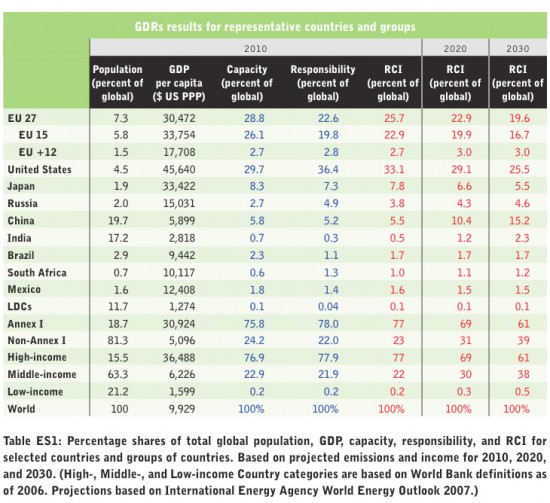
The US is far and away the largest emitter of carbon into the atmosphere. Although it has made some progress in reducing carbon emissions and although other countries, such as China, are catching up, the US is not in any danger of losing its crucial role in the process of climate change. The following chart gives clear evidence for this unfortunate ranking.
The IMF has determined that its austerity program for Greece was too harsh and has actually made it more difficult for Greece to repay its debts. Its internal deliberations confirm what many outsiders have long held to be true. Austerity programs force internal devaluations of wages and prices, and such movements are designed to make countries more competitive. But it is easy to overestimate the degree to which countries can more effectively compete in the global marketplace if their exported products are not really in great demand (in Greece’s case, its main exports are agricultural products). It is not clear how this might affect the Greek economy, or whether the IMF can offer some compensatory action. The Greeks have suffered greatly and have very little to show for it.
Chinese President Xi Jinping will be visiting the US later on this week, and President Obama has said little about specific topics to be discussed. The visit is more likely considered a chance for Presidents Xi and Obama to establish some sort of personal rapport. Stephen Walt offers an insightful analysis of what we can expect from the upcoming summit meeting.
One of the interesting question in world politics is the extent to which there are common values underpinning a global civic society. The Pew Foundation has issued a study on global attitudes toward homosexuality, asking questions to people in 39 countries. It is a fascinating study that indicates that there are wide divergences in global society on the question of the acceptability of homosexuality. There does not appear at this time to be a common view on the question of homosexuality.
The stakes in the Syrian conflict continue to escalate. France says it has proof that President Assad’s forces used Sarin gas, a clear violation of the laws of war. The US has sent the Patriot anti-missile system and F-15s to Jordan, countering the extension of anti-aircraft systems by Russia to President Assad. Meanwhile, the intense battle over the city of Qusair places thousands of civilians in serious jeopardy.
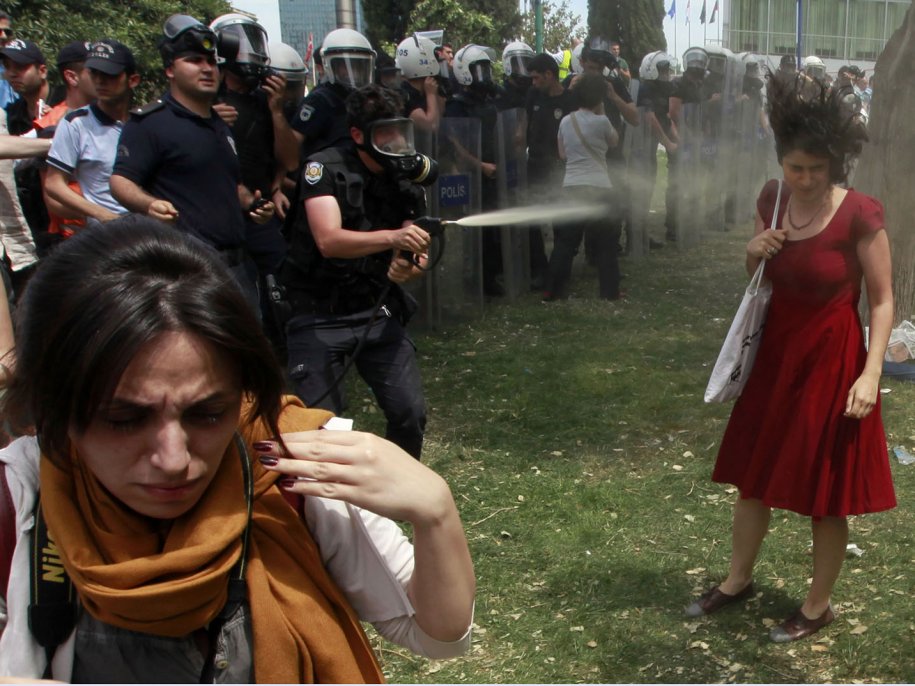
The protests in Turkey have been violent, and the violence has been captured in a photograph that the world knows as “the lady in red.” The protesters have adopted the photograph as a symbol of the violence of the state. Business Insider has the background story to the lady in red.
Today is the 24th anniversary of the violent crackdown by Chinese officials on demonstrators in Tiananmen Square in Beijing. Discussion of the event is heavily censored in China, something I found out first hand when a BBC report on the event on the TV I was watching in Shanghai two years ago was blacked out. But the Chinese are highly inventive in trying to evade the censors and the discussions of the demonstrations continue, albeit in a truncated form.
The continuing protests in Turkey have begun to raise questions about the future of Prime Minister Erdogan. Not too long ago, he seemed to be quite powerful, and Turkey’s role in world affairs was getting more attention. The protests, however, have revealed that Erdogan’s position was far from impregnable. The clear theme of the protests is that Erdogan was becoming increasingly autocratic and that the secular basis of Turkish democracy was offended by the mildly religious tenor of the regime. Erdogan’s days seem increasingly numbered.
I’ve mentioned in several recent posts my concerns over the Syrian civil war spreading to other countries in the region. There is no inevitable way such expansion might occur, but the temptation for other sides to become involved is becoming quite intense. Patrick Cockburn gives a great analysis of why this fear is genuine in an essay in the London Review of Books. It is an essay with exceptional insights.