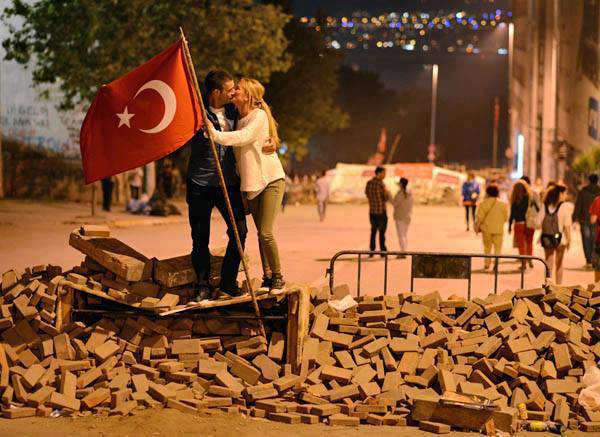
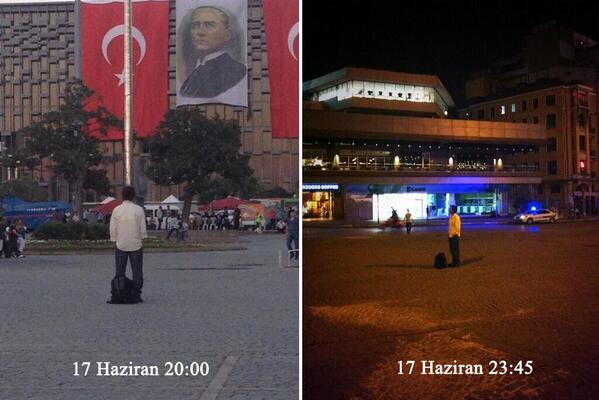
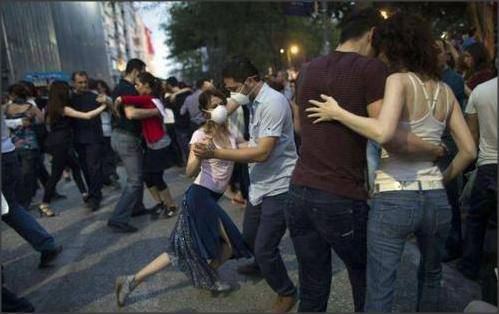
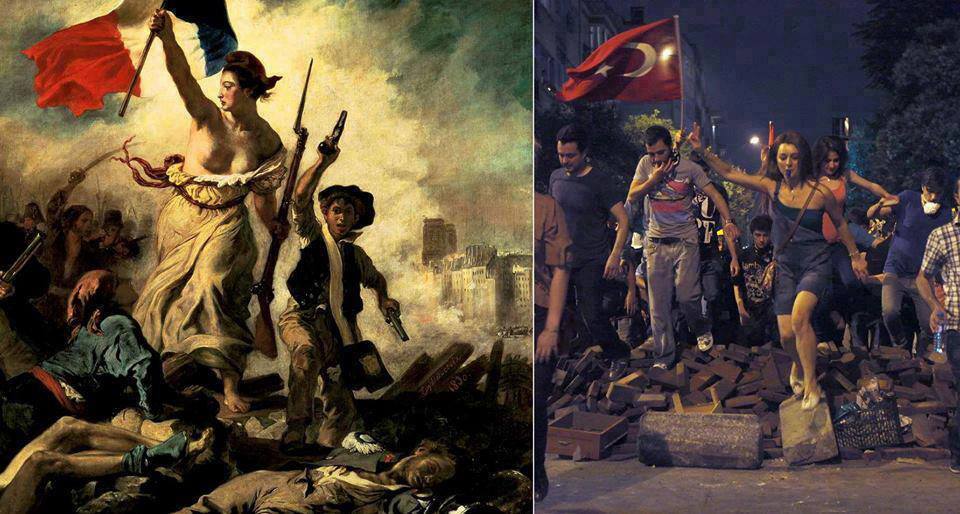
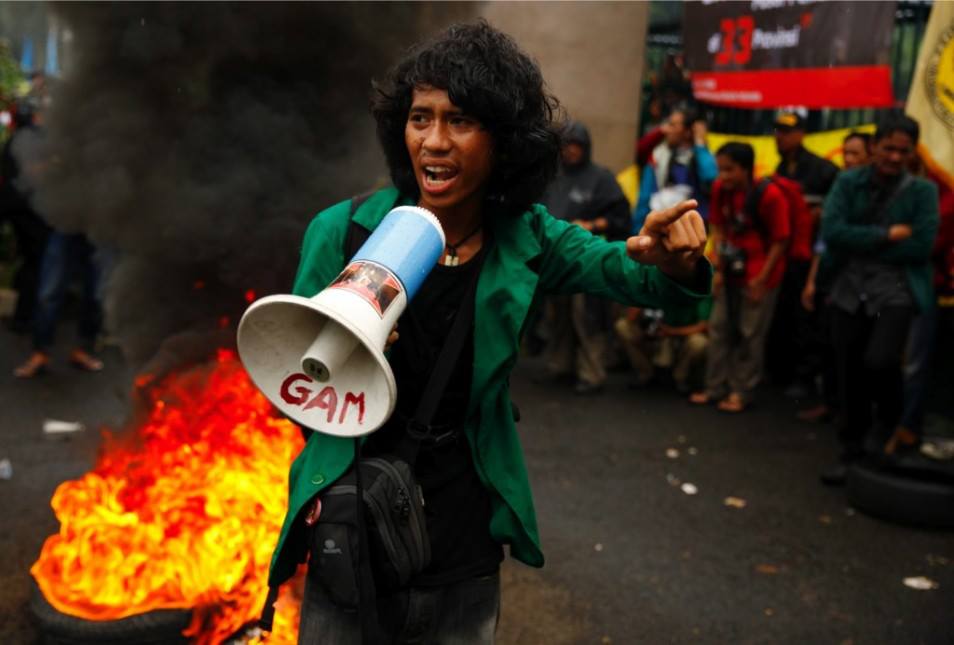
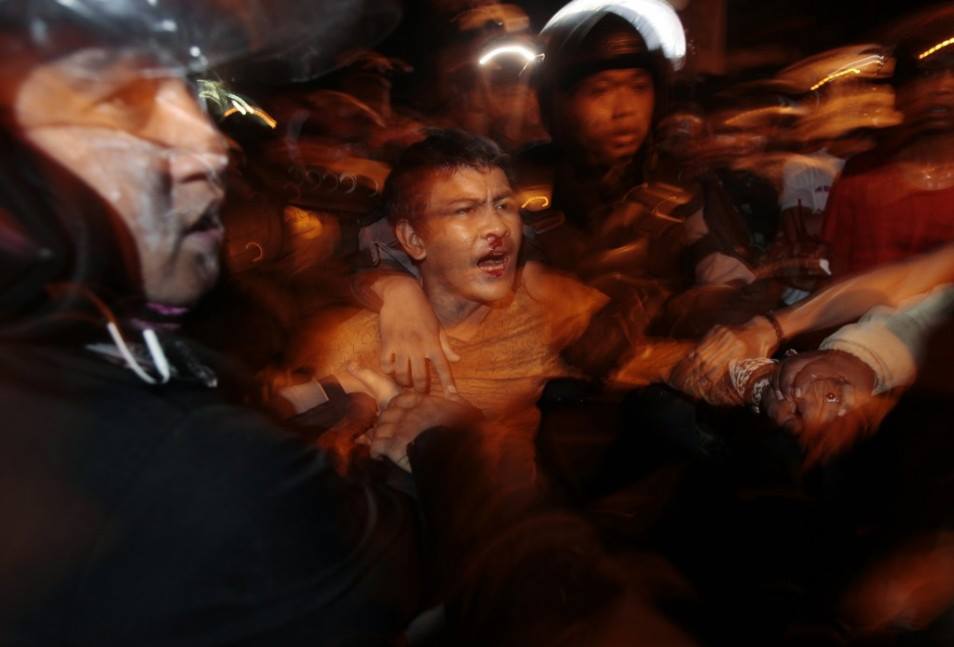
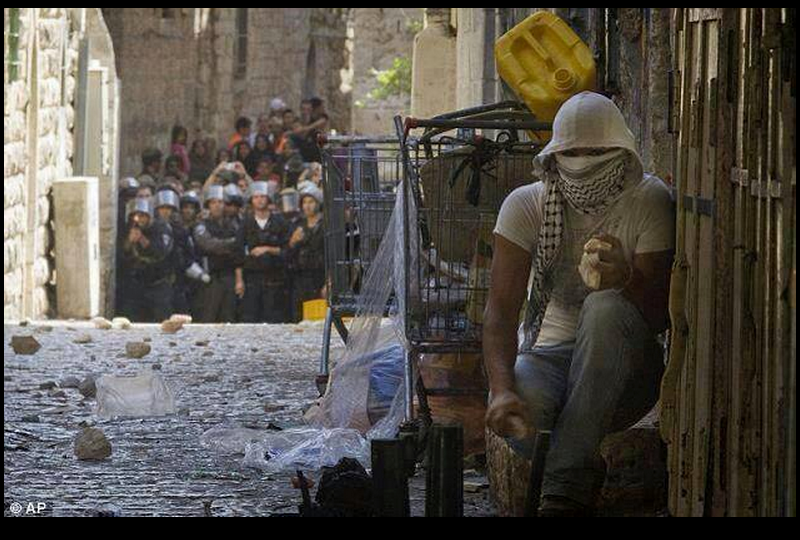
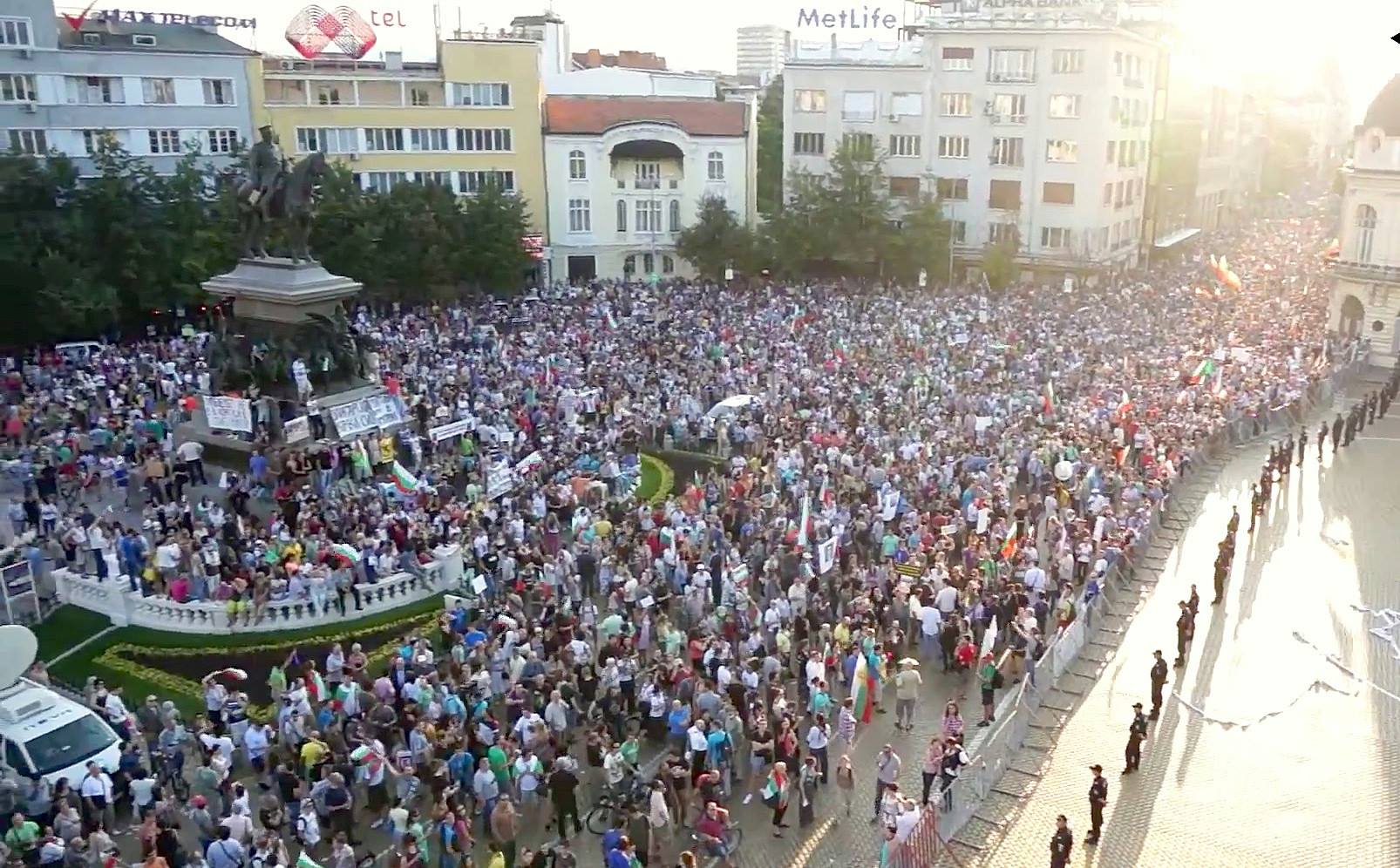
One of the curious things about learning about why certain things happen in the world is that we rarely know all the relevant facts surrounding the incidents. Such is the case with the Turkish protests. I’ve read perhaps hundreds of newspaper and journal articles on the protests, and the references to the changes in Taksim Square that precipitated the protests have usually been described as a “shopping mall.” In today’s New York Times, however, there is an article that outlines some other changes that Prime Minister Erdogan has proposed: a replica of an Ottoman Army barracks and a Grand Mosque. Both are viewed with great suspicion by the secularists in Turkey; indeed, the plans for the mosque led to the arm’s coup d’etat in 1997 (when Erdogan was mayor of Istanbul). The new information available to me makes me think that the religious question in the protests is significantly more complex than I had believed earlier. I now have to find out more information about how these proposed changes are interpreted by the protesters.
Speaking of getting new information, The Irish Independent has just published some audio recordings between two top executives of the Anglo-Irish Bank in 2008 as the financial crisis overwhelmed the international financial system. Anglo-Irish was a bank that was chartered in 1964 and was nationalized by the government of Ireland in 2009. The recordings are simply disgusting. The executives laugh about how they made up statistics to get $7 billion from the government in order to bail out the bank. The number had no basis in reality, the executives joke about the fact that they knew the money could never be repaid, and it is clear that they wanted to entrap the government into a situation in which further bailouts would be required. The corruption within the world financial institutions at that time is simply breathtaking.
Military spending is increasing dramatically in Asia, and by 2020 the region will have the largest military spending in the world. The US has been the dominant part of the global spending pattern for many years, but the budget deficits in the US and the drawdown of US efforts in Iraq and Afghanistan have reduced its role. China, India, and Indonesia will account for the largest part of this shift. US companies, however, will likely remain the dominant military sellers.
The spying by the NSA and other federal agencies has raised all sorts of questions about how the perception of security threats can erode personal liberties. We tend to think that such erosion only occurs in extreme cases and tend to give the authorities the benefit of the doubt. Such complacency is profoundly misplaced. As an example of how the threat of “terror” can be invoked in trivial cases, one need only to look at a public health matter in Tennessee where an official is recorded as saying “…you need to make sure that when you make water quality complaints you have a basis, because federally, if there’s no water quality issues, that can be considered under Homeland Security an act of terrorism.” Now even complaining about something can be considered “terrorism.”
The number of rich people in the world has increased by about a million people from 2011 to 2012. There were 12 million people with investible assets of more than $1 million. The breakdown of residency of those individuals is as follows:
The Guardian has published a fascinating essay on the politics of the global protest movements. The essay acknowledges the large number of protests in the world, and finds that they are correlated with a lack of trust in government. But beyond that, there does not seem to be a unifying message. My personal belief is that the lack of coherence in the movements reflects the absence of a viable left-wing to organize the discontent. In some sense, this absence is a good thing since it avoids the trap of a rigid ideology. On the other hand, the discontent will remain unorganized and the lack of organization will lead to ineffectiveness. We will have to see whether these protests link up in any meaningful way.
Readers of this blog know that I am no fan of the austerity policies currently being imposed on various countries in Europe with large budget deficits. These policies have actually been the standard medicine of international organizations such as the IMF for many years, although they were imposed on poor countries through what was known as “Structural Adjustment Programs.” People in the richer countries benefited tremendously from these programs (largely because the policies demanded lower wages and more reliance on foreign investment), and the pattern persists between the rich-rich countries (like Germany) and the poor-rich countries (like Greece). One of the pre-eminent financial journalists, Martin Wolf, offers a great critique of austerity in the current New York Review of Books.
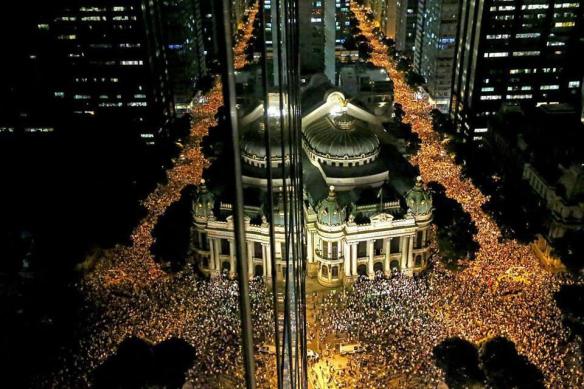
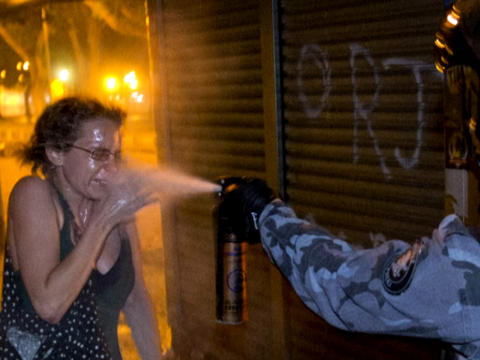
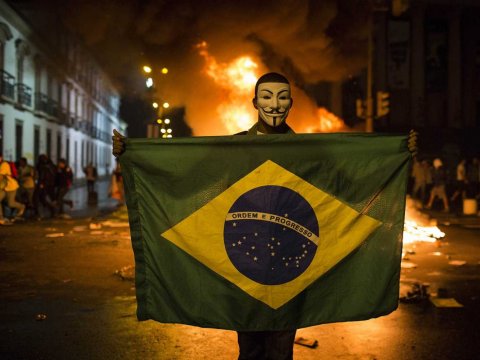
The Guardian ran an excellent article on the context of the Brazilian protests. Over a million citizens protested yesterday, and the protests remain, for the most part, non-violent. The authorities, however, are using increasingly more draconian techniques of crowd control. It is safe to say that the government of Dilma Rousseff has no idea how to address the issues raised by the protesters–the government seems to be clueless.
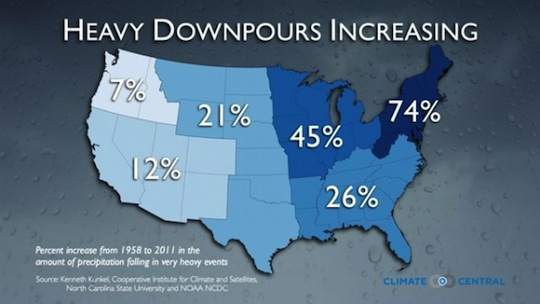
Three people have died and almost 100,000 people have been evacuated because of flooding near Calgary in Canada. Ordinarily, I would not report on floods except that this flooding seems to be associated with extremely heavy rain (six month’s worth of rain in two days). Some climate scientists believe that climate change is associated with extreme weather events. If so, New England could be in serious trouble.
The UN Committee on the Rights of the Child has issued a scathing report on the treatment of Palestinian children by Israeli authorities. Israel did not cooperate with the investigations that led to the report, asserting that it believed that the charges against it were politically motivated and not based upon a full understanding of the issues. The report asserts that Palestinian children are routinely denied birth registrations, and are denied access to health care, education, and clean water. Moreover, the report asserts that Israeli authorities detain Palestinian children, and that over a ten year period over 7,000 children ages 12-17 were held prisoner.
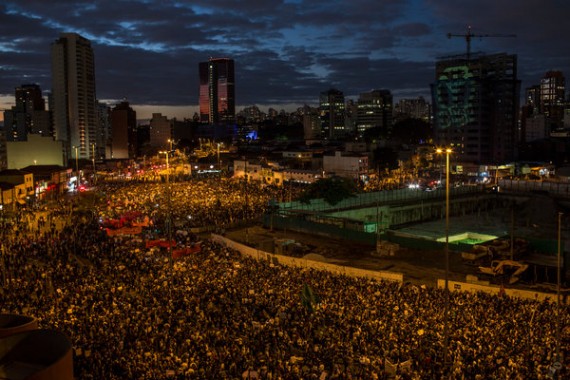
The protests in Brazil are continuing and are widespread and huge. The protests were not really affected by the government’s decision to reduce the bus and subway fare hikes, and the clear sentiment of the protesters is that the government does not represent their interests. In particular, the common theme of all the protests in 60 cities was that there is too much corruption in the Brazilian system, manifested most specifically in the preparations for the World Cup competition in 2014.
Almost as soon as they were announced, the scheduled talks between the US and the Taliban were cancelled. President Karzai made clear that he was opposed to the talks, and the US decided that it could not embarrass its ally in Afghanistan. The disarray surrounding these talks suggest that Secretary of State Kerry has yet to achieve the degree of coordination within the State Department necessary for effective diplomacy. The sequence of events is hardly encouraging.
UMass has announced that it will be offering a new course in the fall. The description is as follows:
The course is being taught by Mukul Sanwal, who will be here as a Five College visiting scholar. Sanwal’s bio is below, but needless to say that he has a wealth of practical and scholarly expertise, so this course should be terrific for students interested in global politics and/or climate change policy.
Course Title: Global Politics of Climate Change: North-South Relations TuTh 5:30PM – 6:45PM
Description: The course will seek to understand how countries at different stages of growth and well-being, in an interdependent and globalizing world, view the evolution of global climate change, the opportunities they explore for the transition to global sustainability, and the changing North-South politics in international cooperation.
Sanwal’s bio:
Appointed to the Indian Administrative Service in 1971 and served in various policy positions, including Managing Director of industrial concerns, Secretary Agriculture, was the first head of the Division of Pollution Control in the Government of India, and developed the Policy Statement on the Abatement of Pollution.
Represented the Government of India at the Rio Conference in 1992 and was a lead negotiator for the Climate Change treaty, Agenda 21 and co-chaired the negotiations leading to the Rio Declaration.Joined the United Nations in 1993 as policy adviser to the Executive Director of UNEP and later to the Executive Secretary of the UNFCCC, and was closely associated with the establishment of the Global Environment Facility and its Scientific and Technical Advisory Panel, establishment of monitoring and compliance arrangements in the climate regime, the World Summit on Sustainable Development and Inter-Agency Relations of the UN, and was a part of the group of scientists that contributed to the award of the Nobel Peace Prize for 2007 to the IPCC.
Closely associated with the drafting of the National Action Plan on Climate Change, and is a member of the Expert Committee on Strategic Research on Climate Change set up by the Ministry of Science and Technology. Currently also associated with the Fung Global Institute, Hong Kong, represented the South Centre, Geneva, at the Copenhagen climate talks and was invited to teach a course on International Relations at the University of Business and the Economy, Beijing, China.
Has a Master in Public Administration from Harvard University, USA, graduated from St Stephen’s College, Delhi University and studied at The Doon School, Dehra Dun.
He has contributed significant publications in peer reviewed journals on global strategic affairs, sustainable development, climate policy and governance, writes a monthly column for The Economic Times, has a blog on the India Environment Portal and is on the editorial board of the Chinese Journal of Urban and Environmental Studies.
The exceptionally strong support from Qatar to the Syrian rebels is an interesting dimension to the Syrian civil war. Qatar is committed to selling its huge reserves of natural gas to Europe and the most obvious method of transporting that gas is through a pipeline. There are many pipelines possible, but the most promising route is through Syria and President Assad has blocked that possibility. A new government in Syria may mean billions in new revenues for Qatar.
Officials in Rio de Janiero and Sao Paulo have rescinded the bus and subway fare increases that sparked nation-wide protests in Brazil. It seems unlikely that the protests will end since they seemed to draw strength from a broader sense of inequality and corruption in Brazil. We will have to see how the people respond to this concession, but some analysts suspect that the current government is not at risk just yet.
The number of refugees in the world has reached its highest level since 1994–45.2 million people. These numbers include internally displaced people–people who have been forced to leave their homes, but who are still living in the same country. The saddest part of this statistic is that half of the 45 million are children. And this figure is only for the end of 2012 which means that many Syrian refugees are not included. The primary cause of being forced to leave one’s home is war. And few countries are opening their doors to these new refugees.
I was fortunate to have a very good article about the use of chemical weapons in war brought to my attention. It is by MG Zimeta and it appeared in the New Internationalist entitled “Why are we so afraid of chemical weapons?” It asks some very important questions about the so-called “red line” that need to be answered before the word decides that a case for intervention has been sealed.
The internationalization of the Syrian civil war has been accompanied by an increased emphasis on the Sunni-Shia divide. The divide is not religious–it is an extension of power politics. The Syrian government is supported by Iran, Hezbollah from Lebanon, and Russia. The rebels are supported by Saudi Arabia, Qatar, Kuwait, and, to a limited degree, the US and some European states. The lineup of states is only partially religious, and the Muslim supporters of Assad are Shia, and the Muslim supporters of the rebels are Sunni. But religion is being used as a way to mobilize support for both sides–the cause of the violence is not religious.
The US and the Taliban are finally going to negotiate face to face. The Taliban have established an office in Qatar and have designated a delegation to conduct talks with the US. The negotiations are long overdue, and it is not clear what substantive issues can be discussed since the US has signaled its intention to leave Afghanistan at the end of 2014. But the discussions can minimize the potential misunderstandings associated with the US pullout. More importantly, the negotiations will begin even thought President Karzai has publicly opposed them in the past. The distance between the US and Karzai is an important precondition for forward movement in Afghanistan politics.
The protests in Brazil continue, but the reaction to them by President Dilma Rousseff is markedly different from Prime Minister Erdogan to the protests in Turkey. She is quoted as saying: “Brazil woke up stronger today. The size of yesterday’s demonstrations shows the energy of our democracy, the strength of the voice of the streets and the civility of our population.” Whether she can effectively respond to the demands of the protesters remains to be seen, but her acknowledgement of the legitimacy of the act of protesting is encouraging.
There is an incredibly large number of protests going on in the world today. My own view is that these protests are part of the backlash against globalization, a process which generally rewards capital more than labor. But all protests are fueled primarily by local concerns. Thanks to some former students, my attention has been drawn to the protests in Brazil which have occurred in most of the major cities in the country. Here is a video explaining some of the issues motivating the protesters.
Pay attention to these protests. Something very important is going on in the world. It is too easy to dismiss the protests as unconnected or as the actions of a few disgruntled people. Ask yourself: why are all these protests occurring at the same time with essentially the same issues.
Hassan Rouhani has been declared the victor in the Iranian presidential election. He won with 50.7% of the vote which means that a run-off election will not be necessary. Rouhani is regarded as the moderate candidate in the election and he had called for better relations with the West. Ahmadinejad’s anointed successor, Tehran Mayor Mohammad Baqer Qalibaf, and the former nuclear negotiator, Saeed Jalili, were regarded as the hardline conservative candidates and they were soundly defeated. It is hard to say what kind of changes Rouhani might attempt–I suspect the most the West can expect is a change in the tone of Iranian foreign policy. Major changes were unlikely given that all candidates had to be pre-approved by Supreme Leader Ayatollah Ali Khamenei and his associates.
Pakistan has been rocked by violence in which the home of the founder of Pakistan, Muhammad Ali Jinnah, and a bus filled with female students going to school were bombed. The Baluchistan Liberation Army claimed responsibility for the blasts, which also included a siege at the hospital where the students were being treated. The attacks were in retaliation for the killing of rebel associates in the city of Quetta. The violence is likely to continue and to worsen.
The Whitehouse has published a transcript of an On-the-Record Conference Call by Deputy National Security Advisor for Strategic Communications Ben Rhodes on Syria that was held on 13 June. The transcript deserves a close read because it suggests that the “change” in Syrian policy occasioned by the assertion that Syrian has used chemical weapons against the rebels (the “red line” drawn by President Obama). It actually suggests that there has been no major policy change other than to initiate contact with the Syrian Military Council, the military arm of the rebel forces. President Obama is going to wait until the G8 meeting before he makes any definitive decision–at this point I would suggest that the US is going to remain aloof from the conflict.