Archive for the ‘World Politics’ Category
Glenn Greenwald is one of the sharpest and most persistent critics of American foreign policy. Democracy Now held an interview with him about the rise of the Islamic State and the reluctance of the US media to question seriously US policy in the Middle East. Both sources are well-known critics from the left so readers should keep that bias in mind. The exchange is remarkable, particularly the part which deals with a secret, but now-leaked memo, which suggests that the US actually encouraged the rise of the Islamic State to overthrow Assad in Syria. The memo is quoted and it is particularly disturbing.
A luxury hotel in Mali has been attacked by extremists, although no group has as of now claimed responsibility for the attack. Mali has been wracked by a number of different extremist groups and it is not at all clear that this attack, which left 27 dead, is associated with the terror attacks in Paris. Suspicion has fallen on an Algerian radical, Mokhtar Belmokhtar, who was the leader of al Qaeda in the Islamic Maghreb. If that turns out to be the case, then the group has successfully revived itself after a period of relative quiescence.
Today is the 105th anniversary of the Mexican Revolution which began on 20 November 1910. The revolution raged for a decade and resulted in perhaps as many as 1.5 million deaths. Mexico became an independent state in 1821, but it was ruled by wealthy landowners who were largely of Spanish descent. The poor, called mestizos because of their roots in the indigenous peoples of Mexico, rose up in the revolution. The revolution was likely the bloodiest conflict on the North American continent to date.
Emiliano Zapata

We live in a period of extraordinary transition as we move from the industrial age to the digital age. Unfortunately, those who are living in the period of transformation are often unaware of what is actually happening as we try to live in a familiar world even as the topography of that world requires a new and completely perspective. The Economist has an article of how this transition is affecting German manufacturing. The Germans have distinguished themselves as one of the giants of the manufacturing world. But the challenges of digitization will require a complete rethinking of what it means to produce for consumers who think about objects in a completely different way.

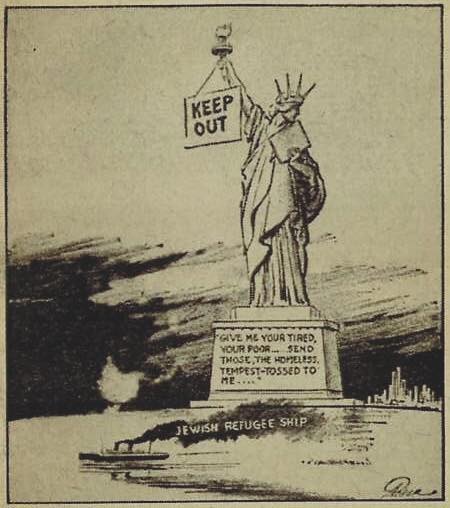
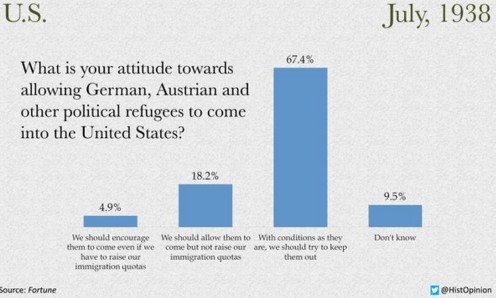
The tenor of political rhetoric surrounding the issue of Syrian refugees coming to the US has sunk to a reprehensible level, with one of the Republican candidates comparing the refugees to “rabid dogs”. I wish that I could say that such rhetoric is an aberration in American politics, but, unfortunately, it is closer to the norm. As I have indicated in an earlier blog post, Americans were strongly against admitting Jewish refugees in 1938. The Washington Post ran that article, and it has posted a follow-up article which relates reader responses to the first post. The fears of a helpless population are unworthy of a great nation. We should remember the ill-fated voyage of the SS St. Louis and how the Jewish refugees on board were turned away from the US in 1939.
The temperature of the Eastern Pacific Ocean off the coast of South America has increased by 3 degrees Centigrade–the highest level ever recorded since records started being kept in 1990. The reading suggests that this year’s el Niño might be the strongest we’ve ever seen. According to The Guardian, el Niño can “cause droughts, heatwaves and fires in south-east Asia and Australia, while on the eastern edge of the Pacific, it may trigger warmer, wetter weather and flooding.” It might be an interesting winter.
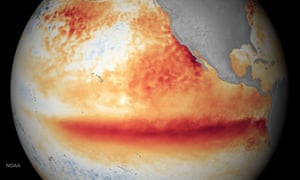
This image from NOAA shows the satellite sea surface temperature for the month of October 2015, where orange-red colors are above normal temperatures and are indicative of El Niño. Photograph: AFP/Getty Images
The New York Times has published an article on the rise of the Islamic State, tracing its roots back to the turmoil in Iraq after the fall of Saddam Hussein and the American occupation of Iraq. The background is useful in tracing the politics and ideology of the IS. The article makes clear that the group’s potential was never fully appreciated by the US, a condition that prevented the US from taking the initiative. As a consequence, the US is only reacting to events and has lost the ability to control those events. Scott Atran and Nafees Hamid have written an essay for the New York Review of Books which outlines how the Islamic State has been able to exploit this vulnerability.
The Institute for Economics & Peace has published its Global Terrorism Index, 2015. The research found that “Boko Haram, the Nigerian jihadist group, was responsible for 6,644 deaths in 2014, compared with 6,073 at the hands of ISIS”. Although Boko Haram is the deadlier organization, its profile in the West is much lower, an unfortunate manifestation of the relative disregard for events in Africa.
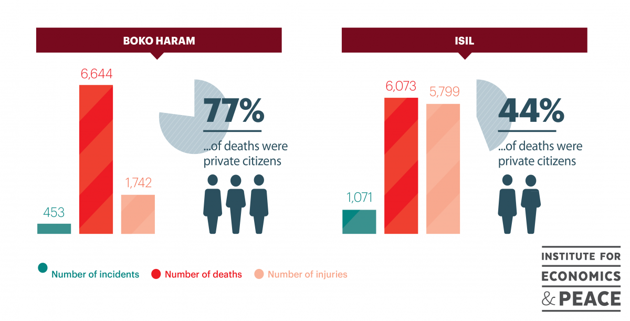
The overall effects of terrorism in the world have grown dramatically over the last few years. The Atlantic reports:
“More broadly, this year’s index reports that 2014 was the worst year yet for terrorism, with an 80-percent increase from 2013 in fatalities, to 32,658. Sixty-seven countries experienced at least one or more deaths from terrorism, as opposed to 59 countries in 2013. Some things stayed the same, though: Just as in 2013, the vast majority of deaths from terrorism occurred in one of five countries: Afghanistan, Iraq, Nigeria, Pakistan, and Syria.”
A growing number of state governors–including, to my dismay, Governor Baker of Massachusetts–have announced that they will not take in any Syrian refugees. That decision is based on fear and not on any clear understanding of the nature of refugees and the overwhelming moral imperative to take them in no matter what the risks may be. It may be instructive to remember how the US opposed the admission of Jewish refugees in 1938. We should never let our fears override our responsibilities as human beings.
A bomb blast killed 32 people in the Nigerian city of Yola. The bombing had all the hallmarks of an attack by Boko Haram, the radical group in the northern part of the country. President Muhammadu Buhari, who took office last May, has vowed to stop the group but has been unable thus far to limit the violence. Since he took office, Boko Haram has killed about 1,000 people. The group has also declared its allegiance to the Islamic State and considers itself to be part of the Caliphate established by the IS.
France has invoked Article 42.7 of the EU’s Lisbon Treaty which triggers off a mutual defense clause among all 27 members of the European Union. According to reports, all members of the EU have responded positively to the request, but it is not at all clear what commitments have been made. Interestingly, France has yet to invoke Article 5 of the NATO charter which has a much more binding mutual defense commitment:
Article 5
The Parties agree that an armed attack against one or more of them in Europe or North America shall be considered an attack against them all and consequently they agree that, if such an armed attack occurs, each of them, in exercise of the right of individual or collective self-defence recognised by Article 51 of the Charter of the United Nations, will assist the Party or Parties so attacked by taking forthwith, individually and in concert with the other Parties, such action as it deems necessary, including the use of armed force, to restore and maintain the security of the North Atlantic area.
Any such armed attack and all measures taken as a result thereof shall immediately be reported to the Security Council. Such measures shall be terminated when the Security Council has taken the measures necessary to restore and maintain international peace and security .
Article 5 has only been invoked once since 1949 after the attack on the US on 11 September 2001.
US President Obama gave a press conference in Turkey and was confronted with a number of questions concerning US strategy against the Islamic State. He defended his decision not to send ground troops into the Syrian civil war and offered a succinct statement of the problem of dealing with terrorism:
But understand that one of the challenges we have in this situation is, is that if you have a handful of people who don’t mind dying, they can kill a lot of people. That’s one of the challenges of terrorism. It’s not their sophistication or the particular weapon that they possess, but it is the ideology that they carry with them and their willingness to die. And in those circumstances, tracking each individual, making sure that we are disrupting and preventing these attacks is a constant effort at vigilance, and requires extraordinary coordination.
Indeed, such a task is impossible. The real question facing the world right now is whether it can accommodate the threat posed by this relatively small group of individuals without sacrificing liberties or humanity.
This year’s el Niño is proving to be one of the strongest ever recorded, and according to the World Meteorological Organization “its effects are already being seen in Ethiopia, Somalia, Kenya, Malawi, Indonesia and across Central America.” The most immediate problem is food shortages, but both an excess and a dearth of rainfall is having sharp effects throughout the planet. Many of the states affected are already precarious and the human tragedy we might be facing over the next few months could be overwhelming.
Pankaj Mishra has written a fascinating and insightful essay for The Guardian on how best to understand the rise of the Islamic State. The argument advanced is elegant and rooted in the forces of globalization and how it seems to be taking control of the choices we can make for the future. He rightly identifies the power of ideology for both the Islamic State and the great powers that are dedicated to maintaining control of the course of globalization. The most revealing sentence of the essay is:
Clashing in the night, the ignorant armies of ideologues endow each other’s cherished self-conceptions with the veracity they crave. But their self-flattering oppositions collapse once we recognise that much violence today arises out of a heightened and continuously thwarted desire for convergence and resemblance rather than religious, cultural and theological difference.
In other words, the Islamic State is simply one manifestation–out of many other contemporary movements–of the desire to retain a sense of uniqueness and solidarity in a world that seems to demand nothing less than total conformity and submission.
The negotiations in Vienna about how to end the civil war in Syria took an interesting turn today as the Russians indicated that they do not consider Hezbollah to be a terrorist organization. The US, Europe, and Israel consider Hezbollah a terrorist group because of its adamant opposition to Israel. But Hezbollah has elected representatives in the Lebanese Parliament and has worked with that government on a variety of projects. By its announcement, Russia moves closer to Iran which considers Hezbollah to be an important ally.
There really is no accurate count of how many Muslims live in Myanmar. Official statistics suggest that Muslims comprise 4% of the total population, but that figure is certainly too low. Nonetheless, no Muslims were elected to the new Parliament and no party in Myanmar fielded a Muslim candidate. The election was the first free election in many years and that one was held at all is cause for celebration. But the lack of effective representation in this Buddhist-majority state is something to regret and something that must change.
The horrific attacks in Paris yesterday has unfortunately unleashed some rather predictable backlashes: the strident calls for a more intense war against the Islamic State, foul characterizations of Islam, and self-serving promises of greater security by all governments. No one seems to be willing to ask the very simple question: what conditions make some individuals so willing to undertake such brutal actions? It seems to be a very obvious first step to solving the problem but I have yet to hear anyone in the media pose the issue. At the risk of stating the obvious, we should all remember that the issue is not “Islamic” extremism. The issue is extremism.
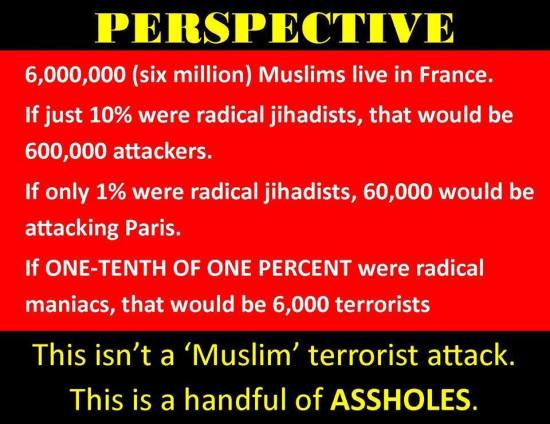
To reinforce the point, there was an attack by the Islamic State in Beirut the day before the Paris attacks. The bombings in Lebanon killed 43 people, but they were Shi’a Muslim (the Islamic State is comprised mainly by Sunni Muslims). Lebanon has been without a President for over a year and the government is virtually impotent. And Lebanon has been hosting about 1.5 million refugees from Syria. Lebanon is far more fragile than France at this time and the bombings have shaken the country tremendously, reminding many of the civil war that decimated the country from 1975 to 1990.
There is a lot of evidence that many economies around the planet are slowing down but we do not have a good idea of why the slowdown is happening. One prime factor for the slowing may be the downturn in trade which is predicted to fall to about 2% of last year’s rate this year. Trade is a prime generator of growth as it contributes to greater production at lower costs. Currency fluctuations, many of which have been deliberately engineered by governments, may be behind the trade decline. Governments are trying to stimulate their exports by letting their currencies devalue. But what works for one country is completely counterproductive if many countries follow suit. Right now there does not seem to be any concerted effort to stop these currency wars.

There is an on-going series of attacks and hostage-taking in Paris. At this time we have only scattered and incomplete information about the death toll or even the scale of the attack. There were at least three and perhaps four simultaneous attacks. Simultaneous attacks suggest a high level of coordination and capability which is particularly worrisome. More than likely, I will be providing additional posts in the future as more information becomes available. The Washington Post has a live blog that is posting new information every few minutes.
Chris Whipple has written a fascinating–and devastating–report in Politico on how much information the Bush Administration had prior to the attacks on the US on 11 September 2001. We knew about the 6 August memorandum before, but much of Whipple’s information was unknown to me. The conclusion seems to be inescapable: the US government was negligent in not taking stronger measures prior to a clearly obvious threat.
Opposition parties in Burundi have asked the UN to send peacekeeping troops as the situation there continues to deteriorate. The parties oppose President Pierre Nkurunziza, who ran for an unconstitutional third term, and they have been mobilizing against him. Burundi experienced a civil war from 1993 to 2005 in which 300,000 people died and the fissures that led to that crisis are still powerful in Burundi. They are the ethnic cleavages between Hutu and Tutsi, the same as that led to the 800,000 who died in Rwanda in 1994.
Kurdish forces have launched an offensive to retake Sinjar, a town taken over by the Islamic State last year. Sinjar has great symbolic significance to the control of the Syrian territory close to the Turkish border. Interestingly, the offensive is manned both by the Peshmerga which is the military arm of the Kurdish Autonomous Region in northern Iraq (supported by the US) and by the Kurdistan Workers Party (the PKK) which is considered a terrorist organization by the Turkish government and therefore not supported by the US. The US has been supporting the offensive with air power which means that the US is supporting an enemy of the Turkish state. The bewildering sets of alliances in this battle continue to nettle a systemic response by the US.

A general strike has paralyzed much public transportation in Greece. The protest is against further austerity measures proposed by the Greek government in order to comply with the bailout demands insisted upon by the troika (the EU, the European Central Bank, and the IMF). The dissent is long simmering as the Greek government has shuffled its composition several times in order to address the debt crisis. This time, however, the protest has erupted into violence as protesters battle the police and are using Molotov cocktails.

The currencies of emerging markets such as China, Brazil, India, and Indonesia are being buffeted by the prospect of a rise in interest rates in the US by the Federal Reserve. Investors, convinced that the US will raise its rates in December, are pulling their money out of emerging markets and depositing the money in the US in hopes of earning a higher return. Unfortunately, the emerging markets can ill-afford the outflow of capital right now and the weakness of their economies is aggravated by the loss of money. The weakness is being manifested by a decline in the currencies of those countries, and the devaluations will lead to an increase of inflation in the markets. If the outflow of capital increases dramatically, then many of these countries will suffer sharp downturns. This issue is something to keep an eye on for the next 6 weeks.
As we move nearer to the UN-sponsored climate change talks in Paris, we still have yet to figure out one of the most difficult issues concerning the curbing of greenhouse gases. Poorer countries such as China and India believe that there should be too schedules for the curbs: one for the already-rich countries who can more readily afford those curbs; and another for poorer countries who should be allowed a longer period of time to curb those emissions so that economic growth can continue in a manner that does not perpetuate the rich/poor divide. India, likely to have 1.5 billion people by mid-century, demonstrates that conundrum perfectly. Alternatives to fossil fuels cannot sustain economic growth as efficiently as fossil fuels do right now. Cutting back on the burning of hydrocarbons will likely slow economic growth, at least in the short run.
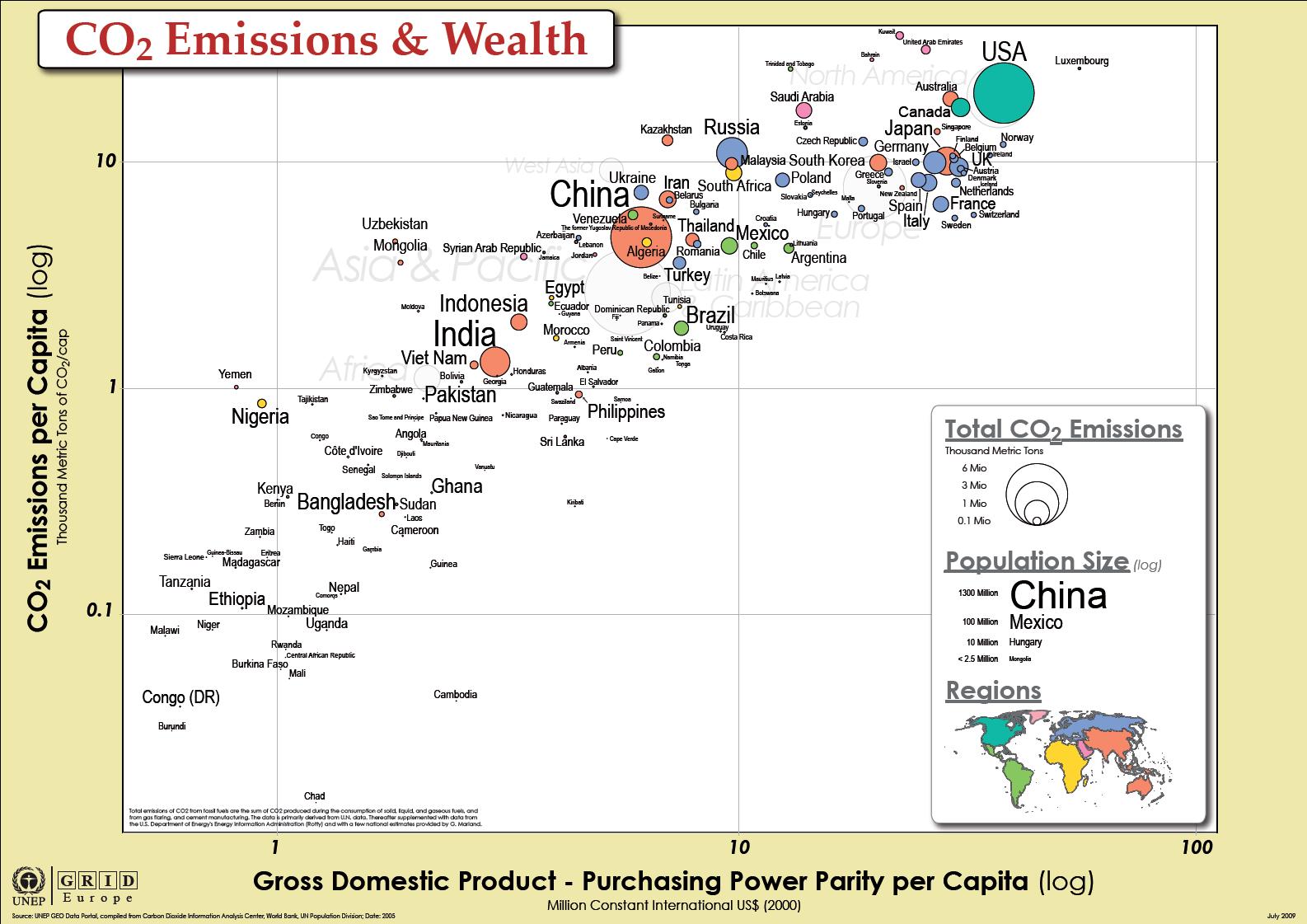
The Pew Research Center has done polling on global attitudes toward climate change and has come up with some interesting findings. Pew interviewed people in 40 countries and found that a global median of 54% consider climate change to be a very serious problem. But there were some interesting variations among countries, most notably among those who believe that climate change is harming the world right now.

Relations between the European Union and Israel took a turn for the worse as the EU announced that goods exported from Israeli controlled West Bank, Golan Heights, and East Jerusalem settlements will no longer be simply labeled as “Made in Israel.” Instead, the goods will be identified as being made in the Occupied Territories. Israel believes that the labeling amounts to a boycott; the EU believes that the labeling will simply allow EU consumers to decide whether they wish to purchase goods (primarily fruits and vegetables) from the Occupied Territories.

