Archive for the ‘World Politics’ Category

18 November 2016   Leave a comment

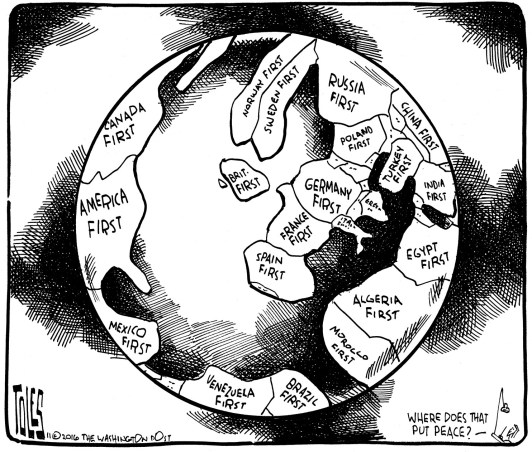
The Economist  has an excellent article on what it calls the “new nationalism.”  It outlines how different Donald Trump’s conception of nationalism is from previous American Administrations, and then it goes on to connect Trump’s understanding of nationalism with the other manifestations of nationalism in the world today.  The article is rich with examples and insights and makes a genuine step forward in understanding what is going on in the world.

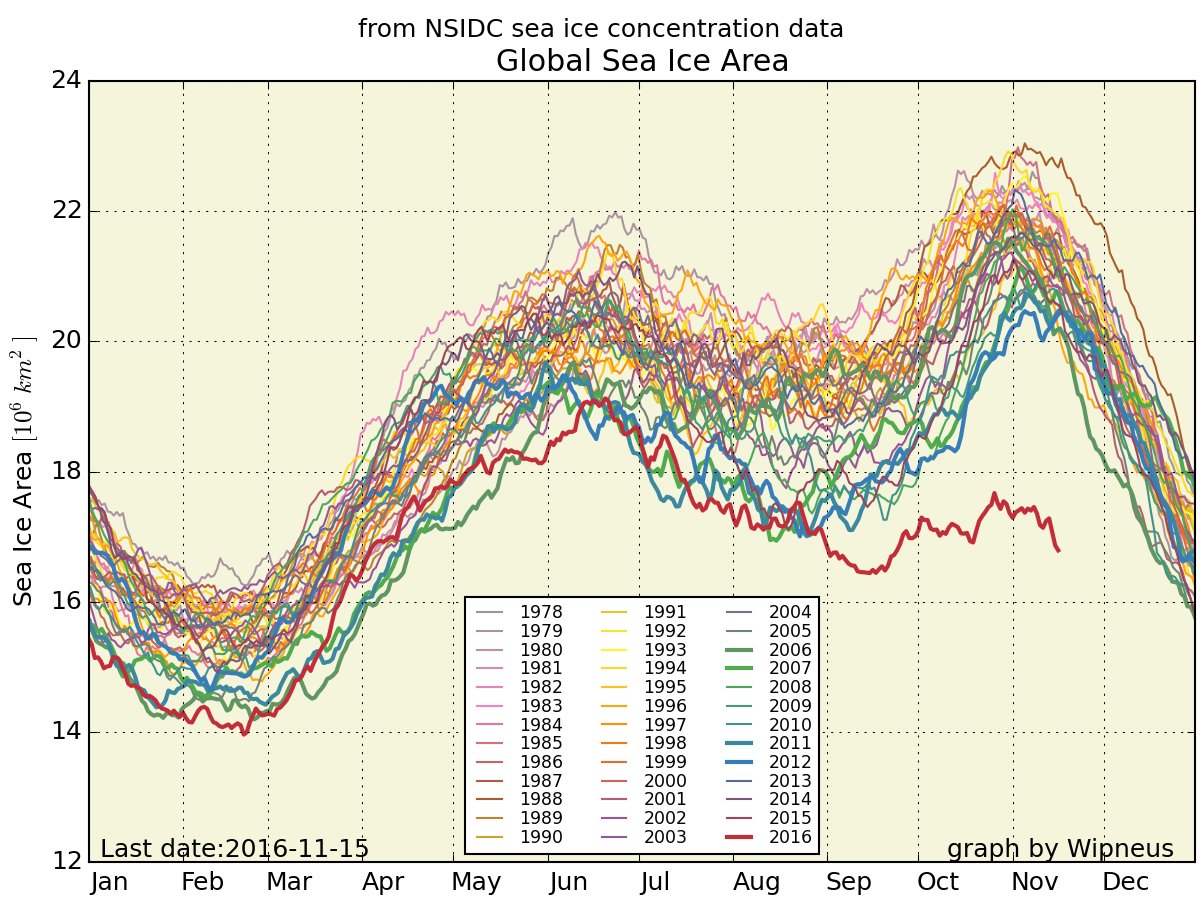
Something strange is going on in the Arctic.  Temperatures there are almost 36 degrees above average.  As a consequence, sea ice is not building up as quickly as it usually does.  The departures from average are clearly anomalies and it is impossible to extrapolate throughout the entire winter.  But for temperatures to be so high at a time when the sun barely shows during the day (if at all) is clearly something to be concerned about.

Forecast Image

Spiegel has another great article on the link between globalization and political anger in the world’s middle classes.  The article has a simple point:

“The belief that politics doesn’t serve the body politic and that the economy doesn’t serve the people has taken firm hold. That only corporations and the rich profit. And that globalization, with its open borders and freedom of movement for both goods and people, is to blame for it all. “Globalists” is the word Trump derogatorily uses for people who promote these values.”

It remains to be seen how firm this conviction has become.  It is a point of view that was almost inconceivable just 10 years ago before the Great Recession.

Posted November 19, 2016 by vferraro1971 in World Politics

17 November 2016   Leave a comment

The International Energy Agency has assessed the effects of the Paris Agreement on climate change.  Unfortunately, the assessment finds that the Agreement will fall short of its objective of limiting global temperature rise to 1.5° C:

“While this is a significant achievement, it is far from enough to avoid the worst impact of climate change as it would only limit the rise in average global temperatures to 2.7°C by 2100. The path to 2°C is tough, but it can be achieved if policies to accelerate further low carbon technologies and energy efficiency are put in place across all sectors.

“It would require that carbon emissions peak in the next few years and that the global economy becomes carbon neutral by the end of the century. For example, in the WEO-2016 2°C scenario, the number of electric cars would need to exceed 700 million by 2040, and displace more than 6 million barrels a day of oil demand. Ambitions to further limit temperature gains, beyond 2°C, would require even bigger efforts.”

It is unlikely that more aggressive efforts to limit climate change can be forged in the immediate future.

A French software company, AirVisual, has produced a remarkable visual representation of air pollution in the planet.  The representation is both stunning and scary–pollution hotspots are pervasive and often occur in unexpected places.  But the danger of air pollution is real.  According to the World Health Organization, “7 million people died in 2012 from breathing polluted air, either outdoors or inside their homes.”

Business Insider has a great article on the various aircraft carriers in the world.  Aircraft carriers are the best index of how “global” a state’s military power is.  They are incredibly expensive, difficult to build, and are unquestionably the most powerful single weapon in any weapon’s arsenal.  But the varieties of carriers is also rather astounding and can tell a great deal about how a state perceives it role in the global power structure.

The Chinese Aircraft Carrier, the Liaoning

This is China's only aircraft carrier, the Liaoning. Like much of China's military hardware, the Liaoning is a reworking of an older Russian-made model.

The USS Gerald Ford

Image result for uss gerald ford


Posted November 18, 2016 by vferraro1971 in World Politics

16 November 2016   Leave a comment

We are just now getting information which was actually available some time ago about the hacking of the Democratic National Committee files during the election.  For those readers who have the technical expertise (I certainly don’t), the security firm Crowdstrike has a detailed account of the hack and the evidence supporting its claim that the hacks were conducted by individuals associated with the Russian government.  In addition, the Department of Homeland Security released a statement on 7 October 2016 which stated:

“The U.S. Intelligence Community (USIC) is confident that the Russian Government directed the recent compromises of e-mails from US persons and institutions, including from US political organizations. The recent disclosures of alleged hacked e-mails on sites like DCLeaks.com and WikiLeaks and by the Guccifer 2.0 online persona are consistent with the methods and motivations of Russian-directed efforts. These thefts and disclosures are intended to interfere with the US election process. Such activity is not new to Moscow—the Russians have used similar tactics and techniques across Europe and Eurasia, for example, to influence public opinion there. We believe, based on the scope and sensitivity of these efforts, that only Russia’s senior-most officials could have authorized these activities.”

Interestingly, Senators McCain (R-AZ) and Graham (R-SC) want to investigate this intrusion.  But the Chairman of the Senate Foreign Relations Committee, Senator Corker (R-TN) does not think the intrusion warrants an investigation.

Posted November 17, 2016 by vferraro1971 in World Politics

16 November 2016   Leave a comment

Russia has apparently taken the election of Donald Trump as a sign that it has a freer hand in Syria.  Just hours after Trump and Putin talked on the telephone, Russia stepped up its air attacks on the city of Aleppo.  There are hints that the new US President will move back toward its traditional allies in the Middle East–Israel and Saudi Arabia.  But at this point it is very difficult to discern a clear plan or orientation.  In the meantime, the people of Syria will likely endure even greater horrors with no relief at all in sight.

Syrian Government Forces in the City of Aleppo

Spiegel has published an essay with the title, “America Has Abdicated Its Leadership of the West“.  The essay tracks American involvement in world affairs from the efforts of President Woodrow Wilson to establish an American presence in the League of Nations.  And it asserts that the American pivot away from the world started with the attacks on 11 September 2001 and that the election of Mr. Trump signals the abrupt turning away of the US from the world.

A day after the UN General Assembly voted to condemn Russia’s occupation of, and human rights violations in, Crimea, Russia announced that it was withdrawing from the International Criminal Court (ICC).  The vote in the UN was 73 votes for to 23 against  with 76 abstentions.  Russia slammed the vote, saying that it had “nothing to do with reality“.  The Russian departure from the ICC follows the departure of several African states.

Posted November 16, 2016 by vferraro1971 in World Politics

15 November 2016   Leave a comment

Doctors Without Borders, a non-governmental group that provides medical assistance in emergency situations all over the world, has conducted a survey of children in northeast Nigeria, the area of the country that has been ravaged by Boko Haram, an Islamist rebel group.  In their analysis, about a quarter of all the children in this region have died of starvation.   In the 7 year insurgency, about 2.6 million people have been displaced and an estimated 20,000 have died.  The Nigerian government has not been able as of yet to establish order in this region of the country.

The election of Donald Trump has emboldened certain hard-line members of the Israeli Cabinet to believe that the new Administration would not stand in the way of an Israeli annexation of most of the West Bank.  Naftali Bennett, leader of the Jewish Home Party and the country’s Education Minister, is quoted as saying:

“Trump’s victory is a tremendous opportunity for Israel to immediately announce its intention to renege on the idea of establishing Palestine in the heart of the country – a direct blow to our security and the justice of our cause. This is the president-elect’s outlook as it appears in his platform, and that definitely should be our way. Salient, simple and clear. The era of the Palestinian state is over.”

The Ministerial Council of the Israeli government has voted unilaterally to give the government the right to expropriate land privately held by Palestinians so that more settlements can be built.  The measure was opposed by Israeli Prime Minister Netanyahu, but it seems likely to pass in the Knesset, the Israeli Parliament.

The Oxford Dictionaries have declared “post-truth” to be its word of the year.   According to The Guardian:

“Defined by the dictionary as an adjective “relating to or denoting circumstances in which objective facts are less influential in shaping public opinion than appeals to emotion and personal belief”, editors said that use of the term “post-truth” had increased by around 2,000% in 2016 compared to last year. The spike in usage, it said, is “in the context of the EU referendum in the United Kingdom and the presidential election in the United States”.

I would have preferred Stephen Colbert’s word, “truthiness”, but I guess they mean the same thing.

question-everything

Posted November 16, 2016 by vferraro1971 in World Politics

14 November 2016   Leave a comment

There is a long standing conflict between ethnic Burmese and the Bengali-speaking Rohingya minority in the Rakhine area of Burma.  The Rohingya are primarily Muslims and are regarded by the Buddhist majority in Myanmar (Burma) as illegal immigrants.  Indeed, many Burmese object to the word “Rohingya“, insisting that those who claim the name are actually Bengalis and should not be regarded as part of the ethnic heritage of Burma.  The violence is increasing and Human Rights Watch has documented the human rights violations by the Burmese government.

Image result for rakhine state

US President-Elect Trump has made clear that he wishes to pull the US out of the nuclear agreement with Iran.  That agreement, now a year old, created a framework whereby Iran could maintain a peaceful nuclear energy program but set up serious obstacles to a nuclear weapons program.  Trump disagrees with the agreement, but it required the cooperation of the four other Permanent Members of the UN Security Council (Britain, France, Russia, and China) as well as Germany.  All of these countries have relationships with Iran that require the agreement to remain in force.  If the US wishes to renege on the deal, Trump will likely face strong opposition from all these countries.

The World Meteorological Organization (WMO) released a report which states that global temperatures in 2016 averaged 1.2° C above pre-industrial averages.  That is the hottest year on record and the third year in a row setting a record high temperature.  According to The Guardian:

“The record-smashing heat led to searing heatwaves across the year: a new high of 42.7C was recorded in Pretoria, South Africa in January; Mae Hong Son in Thailand saw 44.6C on 28 April; Phalodi in India reached 51.0C in May and Mitribah in Kuwait recorded 54.0C in July. Parts of Arctic Russia also saw extreme warming – 6C to 7C above average”

The target for the Paris Agreement was to stabilize temperature increases to 1.5°C.  It seems unlikely that the planet can avoid going well above that temperature increase.

Posted November 15, 2016 by vferraro1971 in World Politics

13 November 2016   Leave a comment

Just six weeks after it was narrowly defeated in a referendum, a peace accord has been reached between the Colombian government and FARC rebels.  The accord was revised to accommodate some of the objections leveled at the accord.  A key part of the revision was that the rebels would be required to turn over all their assets to the government for reparations to the victims of rebel violence and that rebels who admit their guilt will still avoid jail time but will instead be required to remove land mines and work to undo the damage unleashed by the civil war. Former President Alvaro Uribe, who led the opposition to the first referendum, indicated that he still was not pleased with the revisions but wanted time to study them more carefully.  Perhaps there will be a way forward.

My personal interpretation of Donald Trump’s election victory is that he framed the political and economic issues in a dichotomous framework:  globalization versus nationalism.  In many (but not all–the racial element in the election does not fit into this framework) respects both his campaign, as well as Bernie Sanders’s campaign, was a referendum against free trade.  But there is considerable evidence that globalization had already begun to retreat before the election.  If one looks specifically at trade flows, the decline in global trade was quite pronounced long before 2016.

Global trade peaked in 2008

Alexander Neill of the International Institute for Strategic Studies (IISS) has written a piece for the BBC on how relations in the Pacific region are likely to change in the near future.  The region is already undergoing dramatic transformations and the election of Mr. Trump will likely accelerate those changes.  In many respects, Neill suggests that acceptance of China as the dominant regional power is a foregone conclusion.  The real question is how the other powers in the region, including the US, adapt to that reality.

Posted November 13, 2016 by vferraro1971 in World Politics

12 November 2016   Leave a comment

It is always useful to establish a baseline at the beginning of a new administration to determine the views of the electorate at the time of the election.  That baseline gives a sense of how things change, for better or worse, over time.  The Pew Research Center conducted a poll over the two weeks just prior to the election and the results fit pretty well with what we think happened on election day.   The report has a number of questions asked and different issues posed.  The charts are graphs are definitely informative.

The IMF has approved a $12 billion loan to Egypt in an attempt to save the struggling economy. The IMF demanded a number of measures before the loan was approved including a devaluation of the currency and the cutting of fuel subsidies.  These measures will reduce the Egyptian budget deficit but the costs of the measures include higher inflation (14% a year) and higher unemployment (13%).  The loan became urgently necessary as Saudi Arabia has decided to cut its aid to Egypt as relations between the two countries have deteriorated over warming Egyptian relations with Russia.  Saudi Arabia opposes Russian support for President Assad in Syria.

Daesh (the Islamic State) has taken credit for a deadly bombing at a shrine in the Balochistan province of Pakistan.  The blast killed at least 43 people who were participating in a ceremony at the shrine of a Sufi saint, Shah Noorani.  Sufi is a Western term for the Islamic practice of taṣawwuf which stresses the inner or spiritual nature of Islam.  Daesh regards Sufism as heretical.

Image result for Shah Noorani                                             Image result for Shah Noorani

Posted November 12, 2016 by vferraro1971 in World Politics

11 November 2016   Leave a comment

Today is Armistice Day–the day Germany signed the Armistice Agreement with the allies to end the fighting in World War I.  US President Wilson signed a proclamation identifying today as Armistice Day in 1919 and the day officially became a national holiday in 1938.  In 1954 the holiday was renamed Veterans Day to honor US veterans of all wars.  In Europe, however, the day still resonates as a memorial to World War I. 

Various media are reporting that Myron Ebell is likely to be appointed the head of the Enviornmental Protection Agency.  If true, the appointment would place a prominent climate change denier in charge of US efforts to reduce greenhouse gas emissions. Many are concerned that the Paris Agreement on curbing emissions will be neutered by the Trump Administration.  Some scientists have labeled the Trump election as a “disaster” for the planet.

The election of Donald Trump likely signals the end of the Trans-Pacific Partnership (TPP), one of Obama’s two signal free trade deals with Europe and Asia.  One distinctive feature of the TPP was that it excluded China.  China has countered with its own trade proposal, the Regional Comprehensive Economic Partnership (RECAP), which includes 16 Asian countries, including 7 signatories to the TPP: Japan, Australia, New Zealand, Vietnam, Malaysia, Singapore and Brunei.  Significantly, RECAP does not include the US which would stand to lose billions of dollars of trade deals if it is finally approved as it currently stands.

Der Spiegel is one of the most influential news magazines in Germany (and in the world).  Here is the cover of its most recent issue.  I don’t think one needs to know German to understand the message.

Posted November 11, 2016 by vferraro1971 in World Politics

10 November 2016   Leave a comment

My take on the recent US election.

The Crisis of the Liberal International Order: Technological Change and the Rise of the Right Wing

That aspect of the modern crisis which is bemoaned as a “wave of materialism” is related to what is called the “crisis of authority”. If the ruling class has lost its consensus, i.e. is no longer “leading” but only “dominant”, exercising coercive force alone, this means precisely that the great masses have become detached from their traditional ideologies, and no longer believe what they used to believe previously, etc. The crisis consists precisely in the fact that the old is dying and the new cannot be born; in this interregnum a great variety of morbid symptoms appear.  –Antonio Gramsci, Selections from the Prison Notebooks

The deterioration of the market value of labor in the richer parts of the world has been steady over the last forty years. Some of the poorer states, such as India and China, have enjoyed dramatic increases in the market value of labor during that same period.  However, even those countries are beginning to experience a weakening of their own labor markets.  Globalization has been the driving force of these opposing trends, but the logic of globalization, and its more recent ancillary, robotization, will ultimately create a world, not of rich and poor nations, but of a unified rich elite and an undifferentiated mass of disenfranchised citizens.  For self-protection, that elite will divert the anger and despair of those citizens away from policies designed to enhance the market value of labor into the destructive forces of nationalism, xenophobia, and authoritarianism.

That outcome was hardly predicted in 1991 when the last ideological competitor to liberalism, socialism, collapsed of its own weight (an earlier competitor, fascism, had been vanquished by war in 1945).  Economic activity conducted along classical liberal lines—market values determined by supply and demand, limited government intervention in that market, and with reasonably stable currencies—was supposed to usher in an increasingly more comfortable and efficient world.  Indeed, the idea of progress is central to the political attractiveness of market capitalism.  There was, in the years following the collapse of the Berlin Wall in 1989, a sense that liberalism had “triumphed” and that the future was assured.  Indeed, Francis Fukuyama wrote that “liberal democracy may constitute the ‘end point of man’s ideological evolution’ and the ‘final form of human government,’ and as such constituted ‘the end of history.’” (Fukuyama 1992)

That outcome had also been assumed by the world in an earlier period.  Prior to the wave of globalization that triggered extraordinary economic activity in the late 20th century, the world had witnessed a similar wave of globalization in the late 19th century.  In both periods, globalization had been marked by dramatic changes in transportation and communications technologies which had the effect of creating global, and not local, supply chains.  In both periods, a new economic power had arisen—the US in the 19th century and China in the 20th century—which upset previously well-established supply chains.  And both periods experienced dramatic surges in income inequalities within certain socio-economic groups.  The 19th century wave of globalization ended with World War I.

The 19th century collapse of globalization has been well documented and articulated by Kevin H. O’Rourke and Jeffrey G. Williamson in their book, Globalization and History: The Evolution of a Nineteenth Century Atlantic Economy.  They argue:

“The Impact of the railroad and the steamship was reinforced by political developments after 1860 as European economies moved rapidly toward free trade.  The world was becoming a much smaller place, and to an observer in 1875, it must have seemed as if it was going to get a lot smaller.  Yet nothing is inevitable.  History shows that globalization can plant the seeds of its own destruction.  Those seeds were planted in the 1870s, sprouted in the 1880s, grew vigorously around the turn of the century, and came to full flower in the dark years between the two world wars.” (O’Rourke and Williamson 1993, 93)

This essay will argue that in many respects, the current global economy is mimicking the O’Rourke and Williamson pattern.

The pattern, however, is just a heuristic device.  As compelling as some of the similarities between the two time periods may seem, there are some very important differences as well.  The 19th century contended with 2 billion people; the 21st century will deal with 9 billion.  No one in the 19th century regarded human activity as a decisive element in the global climate; the 21st century must address the urgent perils of climate change.  Finally, in the earlier time, the human intellect was regarded as singular, even if it was as yet not fully realized.  Humans in the future will have to wrestle with artificial intelligences of considerable powers.

Moreover, the pattern places too much emphasis on the process or globalization as the motor force of the backlash implied by O’Rourke and Williamson.  In reality, the backlash against the liberal system of market capitalism has existed since the system emerged.  It is the desire to resist the commodification of social life so brilliantly explained by Karl Polanyi in The Great Transformation and described by him as the “countermovement” to market capitalism. (Polanyi 1944) That resistance is a parallel structure in the history of the modern global economy and it exists not only as a response to global economic intrusions on social life, but also in response to purely domestic consequences of market forces.  Market capitalism has always had winners and losers—that outcome is not unique to globalization.  The critical difference from the earlier period is that in the late 20th century and early 21st century many more citizens of rich countries began to believe that liberal economics no longer serves their interests or assures progress for their children.

Finally, the pattern reflects a fundamental contradiction in the modern world system that most likely can never be resolved without a dramatic change.  The liberal systems of market capitalism and representative democracy operate in completely different realms.  Market capitalism is truly universal and for it to operate most efficiently, the factors of land, labor, and capital should have no national identities whatsoever.  Representative democracy requires an emotional identity which has evolved in a profoundly parochial manner in the agency of the nation-state.  The contradiction between global and local interests exists for all systems which purport to be universal.  Marx might have believed that the proletariat had no homeland, but World War I and Stalin belied that claim.   The nation-state has a hold on the minds of people that in times of distress can easily override the clinical self-interest assumed by the market.  Dani Rodrik accurately described these tensions in his analysis of what he called the “trilemma”: that democracy, sovereignty and globalization cannot interact simultaneously. (Rodrik 2011)

The Rise in Income and Wealth Inequality in the World

There are wide variations in liberal practices in the world.  At one end of the spectrum, we have the social democracies of Europe.  At the other end of the spectrum we have liberal societies that adhere to a stricter market interpretation of liberalism. The United States is an example of the latter type of state.  The differences are important, but they also seem to be narrowing in 2016 as even the most socially aware states are under tremendous pressure to maintain budgetary and social discipline.  This essay will largely focus on the practices of the United States since its policies better illuminate how a state can be managed in a manner that seems to serve the self-interest of a small group of people at the expense of the society as a whole.  According to the Pew Research Center:

….”middle-income” Americans are defined as adults whose annual household income is two-thirds to double the national median, about $42,000 to $126,000 annually in 2014 dollars for a household of three. Under this definition, the middle class made up 50% of the U.S. adult population in 2015, down from 61% in 1971.”  (Pew Research Center, December 2015)

Virtually all the income that had previously gone to the middle-class had “trickled-up” to the higher income groups.  After the Great Recession of 2008-09, the shift of income to the higher-income groups was astonishing: “For the United States overall, the top 1 percent captured 85.1 percent of total income growth between 2009 and 2013. In 2013 the top 1 percent of families nationally made 25.3 times as much as the bottom 99 percent.”  (Sommeiller et al. 2016)

Inequality had not been a vibrant political issue for most citizens in the United States until the Great Recession exposed the long-term economic consequences of inequality. The subsequent bail-outs of the institutions that had in fact induced the crisis by their exorbitantly risky behavior amplified the focus on inequality by linking it directly to a political process.  Gradually, much greater attention was paid to the question of income and wealth inequality, and the scholarly commitment to that question was significantly boosted by the publication of Thomas Piketty’s book, Capital in the Twenty-First Century.

There is a fascinating debate among economists about the explanation for the rise of income and wealth inequality in the world.  The debate centers on whether the traditional explanation for inequality—the Kuznets curve—is fundamentally wrong or whether it simply needs to be refined.[i]  Named after the economist Simon Kuznets, the curve represents the rise of inequality as farmers move into cities in the early period of industrialization and its steady decline as industrialization matures and the forces of democratization create the safety net of the welfare state.  Questions about the efficacy of the argument have arisen because the Kuznet Curve did not anticipate the current rise of inequality in richer countries.  (Acemoglu and Robinson 2002) The welfare state did in fact emerge, but it has proven to be totally inadequate to handle the surge of citizens who have been left behind economically.

This essay is more explicit about the Kuznets Curve:  the expected outcome of democratization has been derailed by rich elites who have used their economic power to further concentrate their wealth and income at the expense of the welfare state predicted by Kuznets.  The argument is straightforward:  globalization has produced phenomenal wealth and those who profit from the system seek to preserve the conditions that created that wealth.  Over time, the accumulation of wealth creates the means to prevent the state from taxing it, a reaction the elites believe is necessary to perpetuate a highly successful system. Over time, the success of the elites becomes synonymous with the success of the system.  The public good of a robust economy becomes the private good of a small number of people. Those elites rarely, if ever, interact with the less fortunate in a way that might provide some cognitive dissonance and develop all sorts of rationalizations to explain the failures of the poor.  Similarly, the poor have only a rough idea of how “rich” the rich have actually become over the last forty years.  The scale of the discrepancy between the very rich and the not rich today defies imagination, precluding any appreciation of how destructive it has become.

The willingness of elites to redefine the public good of creating wealth in terms of their private interest is a persistent historical pattern.  It happened in the Qin dynasty and led to the revolt led by Liu Bang in 207 BCE, to Tiberius and Gaius Gracchus, assassinated when they tried to prevent the elites from seizing the land of peasants in 2nd century BCE Rome, to the Byzantine Empire after the death of Justinian (Brownworth 2010) to 14th century Venice after the publication of the Book of Gold (Freeland 2012) and in the US during the Gilded Age.  While it is very difficult to measure, there are many studies that suggest that in the United States the influence of elites on legislative outcomes is decisive.  Two Princeton scholars, Martin Gilens and Benjamin I. Page argue that:

When the preferences of economic elites and the stands of organized interest groups are controlled for, the preferences of the average American appear to have only a minuscule, near-zero, statistically non-significant impact upon public policy. (Gilens and Page 2014, 575)

The historical record suggests that when wealth becomes concentrated to a significant degree, then public policy is determined more by the interests of the elites than by the interests of the majority.

Even those who do not believe that income inequality is in and of itself a problem were flummoxed by the consequences of liberalizing the American economy since the 1970s.  In October 2008, Alan Greenspan, the former chairman of the U.S. Federal Reserve, testified to the House Committee on Oversight and Government Reform.  There was an exchange between Mr. Greenspan and Congressman Henry Waxman (D-CA) that suggested that the economic crisis of 2008 caught Mr. Greenspan by surprise:

Chairman WAXMAN. [Do] you feel that your ideology pushed you to make decisions that you wish you had not made?

Mr. GREENSPAN. ….yes, I found a flaw, I  don’t  know how significant or permanent it is, but I have been very distressed by that  fact. (Andrews, 2008)

We can actually be more precise about the flaw in Mr. Greenspan’s ideology.  He told the Committee that “Those of us who have looked to the self-interest of lending institutions to protect shareholders’ equity, myself included, are in a state of shocked disbelief.”  Self-interest is the bedrock of liberalism, but liberal theorists used the term in a social, not a personal, context.  Self-interest is not selfishness.  Self-interest includes a concern for the long-run, a regard for those with whom one will interact over time, and actions that will create a well-functioning economy that will be shared by all.  In other words, the public good is the ultimate objective of liberalism; individualism is simply a means to that end.

Mr. Greenspan should not have been surprised that the lending institutions involved in the subprime mortgage crisis did not care about the public good—they did not even care about the welfare of their shareholders.  The chief executives of those institutions had carefully insulated themselves from the consequences of their actions.  Mr. Greenspan was remembering a time when investment banks were privately owned, when profits and losses were borne almost exclusively by the partners in the firm.  That circumstance assured that the self-interest of the partners was closely identified with the viability of the firm over the long term.  That world ended when the investment banks went public.  Once the link between private and public loss was severed, the executives of those firms could assure themselves of generous compensation, even if the firm itself suffered a loss or went into bankruptcy.  The loss was shifted to the shareholders, or, in the most extreme case, to a central bank or sovereign government.  Selfishness no longer required self-interest, as long as compensation committees and shareholders decided to be passive or co-opted. The executives had eliminated all personal risk to their behavior.

This circumstance was never envisioned by the classical liberal theorists:  the public good was never something that could, or should, be completely privatized.  It was inextricably tied to the social universe in which capitalists and democrats were born, had children, lived out their lives, and died.  Current day pseudo-liberals are fond of quoting Adam Smith’s Wealth of Nations.  They would be better advised to read Smith’s Theory of Moral Sentiments which warns of the dangers of accumulating wealth without due regard for the society that collectively creates the condition for that wealth:

“This disposition to admire, and almost to worship, the rich and the powerful, and to despise, or, at least, to neglect persons of poor and mean condition….is….the great and most universal cause of the corruption of our moral sentiments. That wealth and greatness are often regarded with the respect and admiration which are due only to wisdom and virtue; and that the contempt, of which vice and folly are the only proper objects, is often most unjustly bestowed upon poverty and weakness, has been the complaint of moralists in all ages.” (Smith 1790. I.III.28)

Smith’s warning has been self-interestedly ignored.  The present age is one that has deliberately chosen to disregard his advice, and in so doing has compromised the economic progress once promised by the original liberal theorists.

The ideology of neoliberalism is not self-executing.  The Kuznets Curve suggests an inherent internal dynamic in the political economy of the market which can correct the tendency toward greater inequality.  That suggestion is misleading.  Democratization can lead to greater measures to protect the poor, but it can also lead to measures that heighten inequality. The US passed through a similar period in the late 19th and early 20th centuries in which incomes and wealth were concentrated among a very small number of people.  The Great Depression was in many respects a consequence of that concentration and the US took a number of steps in the New Deal in order to avoid a repeat of the Great Depression. Those steps were not automatic nor were they part of an endogenous economic dynamic:  they required concerted political effort.  Similarly, many of those policies were reversed beginning in the 1980s and the reversals were explicit decisions made by both the Republican and Democratic Parties.

The path to the Great Recession of 2008-09 was laid down by a series of political decisions made in order to allow the financial markets to operate with as little regulation as possible.  Among these decisions in the US were:

  • The decision to break the strike by the Professional Air Traffic Controllers by President Reagan in 1981
  • The passage of the Garn-St. Germain Depository Institutions Act which began the process of bank deregulation
  • The signing into law in 1999 by President Clinton of the Gramm-Leah-Bliley Act which repealed the Glass-Steagall Act of 1933
  • The passage of the Commodity Futures Modernization act of 2000 which allowed the self-regulation of over-the-counter derivatives market
  • The tax cuts of 2001 and 2003 which substantially reduced the revenues available to the Federal government
  • The relaxation of the net capital rule by the Security and Exchange Commission in 2004 which enabled investment banks to increase the level of debt they took on.

All these political decisions were made in the context of neoliberal ideology that celebrated personal freedom as a precondition for economic growth that would ostensibly benefit the entire society.

The implementation of the economic ideology was not restricted to just the US.  Relaxing government regulation, reducing taxation, fostering the free movement of capital, and emphasizing economic growth instead of economic development is the mainstay of the global economic order designed by the US and other countries in 1944 and institutionalized in what we call the Bretton Woods institutions:  the World Bank, the International Monetary Fund, and what we now call the World Trade Organization.

These institutions have fostered the liberal ideology in a variety of ways and have been marketed under a number of rubrics:  structural adjustment programs, the Washington Consensus, austerity, and neoliberalism.  Generally speaking, this ideology is externally imposed at a moment of weakness in the economy of a nation-state, whether that weakness is a debt crisis, a sustained payments imbalance, or a sharp uptick in poverty.  In the vast majority of cases, those policies have been imposed on poor states.  But neoliberalism can also be self-imposed.  The deep unwillingness of the US Congress to consider tax increases to support the less well off in the United States is an example of how neoliberalism can be self-imposed.  The Tea Party movement in the United States was populated with many people who were opposed to tax increases even though they were in some sense dependent on the distribution of tax revenues.  The contradiction was magnificently captured in a comment made to Representative Robert Inglis (R-SC) by a constituent to “keep the government’s hands off my Medicare.” (Rucker 2009) The logic of neoliberalism is that all impediments to private initiative should be eliminated if the problem is to be solved.  But the practical, and the real, objective is to disarm the power of the state to address these problems in any way that could restrict the freedom of individuals.

The American experience was mirrored globally.  Poorer countries have had austerity programs enforced on them by the International Monetary Fund and the World Bank for many years and their effects have been, at best, mixed. (Easterly 2005) More recently, richer countries have had austerity programs imposed on them as conditions for sovereign debt relief.  For example, since 2008 Greece has received three rounds of assistance from the European Commission, the European Union, and the International Monetary Fund.  In return for this assistance, Greece has cut its government budget, raised taxes, reduced pensions, and reduced services to its citizens.  The quality of life in Greece has deteriorated for the ordinary citizen, and much of that deterioration came under the government of Syriza, a party nominally dedicated to resisting the demands of neoliberalism.

Overall, the global economy has grown prodigiously over the last 40 years and one cannot, and should not, deny that the system has been incredibly effective at boosting economic growth rates.  In many countries, such as China, that economic growth has lifted millions out of poverty.  Dieter Ernst has a more detailed analysis of China and the process of technological change in Chapter 9 of this volume. Over time, however, globalization has punished labor by facilitating the use of the lowest-cost labor in the entire world linked into a global supply chain which knows no boundaries of time and space.  Those who relied on the market value of labor to survive have been economically disenfranchised, and robotization is likely to aggravate that trend prodigiously.

From 1990 to 2009 the share of labor compensation in national income in 26 of the 30 OECD countries declined from 66.1 percent to 61.7 percent. (International Labour Organization 2013)   This decline has occurred despite rising productivity in most of these economies, a dramatic shift from traditional patterns where labor’s share increased as productivity increased.  This shift has been noted by MIT professors Erik Brynjolfsson and Andrew McAfee in their book, Race Against the Machine, and they attribute this shift to increasing automation in the work place. (Brynjolfsson and McAfee 2012)  Oxford researchers, Carl Benedikt Frey & Michael A. Osborne, estimate that 45 percent of US employment is susceptible to computerization. (Frey and Osborne 2013) The chapters by Martin Ford and Irmgard Nübler in this volume give significantly more detail on the issue of how robotization will affect the future of work.

This wave of technology is different from previous waves.  All technology has had the effect of reducing the need for human labor and, by and large, these reductions have allowed humans to pursue more productive and less dangerous activities.   Usually there is a period of transition as the new technology displaces workers, but, over time, the increase in economic activity has created new opportunities for more creative work.  Most workers, however, do not have the luxury of thinking about the long term. Even though society as a whole has benefited from technological improvement, the workers in a transitional period have always suffered.

This time the changes will be more dramatic and more dangerous.

First, the changes will affect more people since virtually all workers now work in “large” shops.  When the Luddites protested against the introduction of stocking and spinning frames and power looms, their numbers were quite small and the textile factories were not very large.  Today, for example, the Parkdale Mills in South Carolina produces 2.5 million pounds of yarn every week.  Yet it only employs 140 workers for that number which would have required over 2,000 workers in 1980. (Clifford 2013) Similar job displacements are going to occur in countries like China which attracted textile industries because of their low wages.  But because robotization expands productivity as much as 20 times per worker the phenomenon will have a dramatic effect on the Chinese textile industry. (Middlehurst 2015) Even low wages cannot compete with no wages.

 Second, the jobs created by this technological revolution will likely be for highly skilled workers.  It is hard to imagine what kind of jobs for unskilled workers will be created by the robotization revolution, although that possibility cannot be discounted.  But it is also hard to imagine a society that can exist with only individuals with the aptitude or the inclination to develop higher skills.  And it is also difficult to imagine the societal commitment to make education available to everyone to raise skill levels sufficiently.  There are very few reasons to believe that the declining share of labor in national income will do anything but continue to go down in the immediate future.

Finally, earlier periods of technological change occurred when there were existing social and economic alternatives for the technologically dispossessed.  Think of the differences in the United States between the technological wave of the late 19th century and the current technological wave.  Families were more tightly integrated and social groups were deeper and more willing to cushion the blow of unemployment.  There were also more ways to keep oneself alive without an industrial job.  Farming and other means of subsistence were still viable for many and housing was more manageable.  At other times of technological change, unions were strong enough to cushion the impact of dislocation.  Today, only the state and private charity offer shelter from hard times.

There is no need to answer the question of whether robotization will bring about the end of jobs.  That question is impossible to answer. (The Economist 25 June 2016)   It is also the wrong question to ask.  As Mignon Duffy and Robert Pollin persuasively argue in this book, there are actually a very large number of jobs that need to be done.  The list of possible jobs is probably infinite as we examine infrastructural problems, environmental needs, and human and social activities that ought to be performed.  The correct question to ask is how do we pay for these services to be provided?  Historically, the neoliberal response has always been that the only jobs that should command an income are jobs associated with private profit.  That response has assured us all that we can have an unlimited supply of Pet Rocks, but does nothing to assure that we can all drink clean water. David Rueda and Stefan Thewissen address the issue of compensation in Chapter 7 of this volume.

What is clear is that the pace of technological change is much faster than it has ever been in the past.  And it matters little to the unemployed worker that the future might be brighter for employment.  That worker has to pay a mortgage this month, or a tuition bill this semester, or a doctor’s bill this week.  Only some individuals can afford the luxury of a long-run perspective.

The Political Consequences of the Declining Market Value of Labor

Returning to the O’Rourke and Williamson historical pattern, it is not surprising that the world is currently experiencing an anti-globalization backlash similar to the 19th century.  Globalization has created what Guy Standing calls the Precariat and its politics are ones of resentment and anger at its loss of a previously comfortable position in the socio-economic hierarchy.

At the end of the 19th century, that anger and resentment translated into an intense feeling of nationalism aggravated by a morbid fascination with the emerging “science” of eugenics.  These feelings were fueled by a need to establish a sense of identity, personal and collective, in the face of a new world that blurred and erased the rather deep identities forged in the very constricted environment of limited mobility.  Most people had relied heavily on the identities created by familial, occupational, and local ties in order to give themselves a sense of their place in society.  The process of globalization created a world quite separate from these traditional markers and it was very difficult for many people to find their place and a sense of meaning in the new world.  Nationalism and race were the surrogates offered up by the political elites at that time, surrogates that ultimately led to World War I and the brutal racial policies practiced against Jews, Roma, Chinese, and Ethiopians by the Axis allies in the interwar period and World War II.  These elites exploited the insecurity of ordinary citizens and defined “enemies” that were tangible, but remote from the actual roots of the alienation.

In his book, Escape from Freedom, Erich Fromm explained how the greater freedoms afforded by the new technologies of the 19th century—the telephone, the telegram, the railroad, etc.—increased the anxieties of many citizens.  The trauma of World War I and the consequent economic disruptions caused by hyperinflation and depression deepened these anxieties to the point where citizens offered up their freedom to authoritarian leaders who promised security and certainty rooted in power, racial identity, and order.  The growth of totalitarian regimes, both fascist and communist, crushed the liberal institutions painstakingly developed by Europe since the Enlightenment and plunged the world into a devastating war.

The conditions that led to the rise of totalitarian regimes in the 20th century are similar to the conditions in the world after the Great Recession of 2008-09.  In truth, that recession has never truly ended for many people in the world, and the slow economic and political deterioration of liberal institutions is palpable.  In the United States, the Pew Research Center has been polling American voters on their attitude toward the Federal Government since 2014 and the results of the polls have been consistent and sustained: “Currently, 22% of registered voters say they are ‘angry’ at the federal government, while 59% are ‘frustrated’ and 17% ‘basically content.’” (Pew Research Center 31 March 2016) The approval ratings for the US Congress hover at abysmally low levels.  More broadly, there seems to be a declining faith in the efficacy of democracy as a way of addressing the problem of that economic and political deterioration.

Voters in Europe and the US have moved away from traditional parties in an anxious hunt for alternative approaches.  New parties have sprung up which have explicitly derided traditional politics such as the Best, the Pirate, and the Dawn Parties in Iceland and the Five Star Movement in Italy.  New parties with nationalist agendas have emerged in Europe on the right and the left.  On the right, the United Kingdom Independence Party in Great Britain, Golden Dawn in Greece, the National Front in France, the Progress Party in Norway, the Freedom Party in the Netherlands, the Northern League in Italy, the Alternative for Germany Party, the Danish People’s Party, the True Finns in Finland, the Sweden Democrats, the Jobbik Party in Hungary whose prime Minister Viktor Orban talks explicitly about building an “illiberal” society, and the Freedom Party in Austria.  On the left, we have seen the emergence of Syriza in Greece and Podemos in Spain, joining ranks with the traditional socialist and communist parties which have lost a great deal of clout and clarity in the last thirty years.  Finally, in the United States, Donald Trump confounded all the traditional Republican candidates, marketing his position as a genuine outsider to traditional politics.  Bernie Sanders mounted a very robust campaign as a political outsider to what he regarded as a compromised system against Hillary Clinton who represented the mainstream Democratic Party.

This massive reshuffling of “politics as usual” indicates that some voters have given up on the traditional parties as unrepresentative and ineffective in addressing their grievances. There are two threads to the new politics that genuinely challenge the neoliberal hegemony over politics:  a deep-seated distrust of globalization and a profound aversion to what might loosely be called multiculturalism.   Both of these threads suggest that voters are defining their interests increasingly in national, racial, and ethnic terms. And both of these threads are profoundly inconsistent with liberal institutions.

The xenophobic response is not limited to the United States and Europe.  One can find elements of this mood in the success of the Bharatiya Janata Party (BJP) in India, the election of Rodrigo Duterte in the Philippines, and coalition-building efforts of the Likud Party in Israel.   Australia has gone through six Prime Ministers in nine years.  Russian President Vladimir Putin has tightened his personal control over the Russian state.  And Chinese President Xi Jinping is consolidating his political power in a manner reminiscent of Chairman Mao Zedong. The enthusiasm for the liberal international order we witnessed in 1991 after the dissolution of the Soviet Union has dissipated almost completely and has been replaced by a sense of despair.

The resentment and anger of these voters is diffuse.  The neoliberal explanation for the condition of the precariat is abstract:  there are always winners and losers, losses are explained by errors in judgment, and that losses are outweighed by the macroeconomic benefits of adherence to market discipline.  Furthermore, the neoliberal ideology holds that attempts to change the market outcomes by artificial intervention are not justified, nor are they sustainable since they require redistributive efforts that impede the ability of entrepreneurs to make profitable investments.  These are arcane responses to a disillusioned precariat.

The precariat understand that many corporations have moved their production facilities abroad to take advantage of low wages and that trade agreements, beginning with the NAFTA Agreement signed during President Clinton’s administration, facilitated the movement of their jobs overseas.  The blame for their situation rests on a vaguely articulated “system” that seems rigged against their interests.  That feeling deepened tremendously during the Financial Crisis of 2008 when hundreds of thousands lost their homes while the bankers and insurance companies responsible for that crisis were allowed to keep compensation packages that seemed massively unfair and disproportionate.  Moreover, the “system” paid out hundreds of billions to preserve those banks while virtually nothing was allocated for the ordinary citizens who lost their homes and their pensions.

The difficulty is that the “system” does not have a face or a name.   Moreover, the “system” is deeply ingrained.  Citizens in liberal economies grow up being told that alternatives to liberal economies, such as socialist economies, are antithetical to freedom and cannot deliver robust economic growth.  Faced with the prospect of rejecting neoliberalism, an act that in many respects is tantamount to treason, the precariat lacks a viable alternative to support.  The precariat nonetheless knows that the system has abandoned them.  And, in truth, it has.  According to Justin R. Pierce Peter K. Schott: “U.S. manufacturing employment fluctuated around 18 million workers between 1965 and 2000 before plunging 18 percent from March 2001 to March 2007.” (Pierce and Schott 2012, 2) They argue that the precipitous decline was “related to a discrete and easily identifiable change in policy—the conferring of PNTR [Permanent Normal Trade Relations] with China.” (Pierce and Schott, 2012, 4) Ultimately, many American corporations created many more jobs abroad than they did in the US.  According to J.D. Harrison in the Washington Post:

“During the 1990s, American multinational companies added 2.7 million jobs in foreign countries and 4.4 million in the United States. But over the following decade, those firms continued adding positions overseas (another 2.4 million) while cutting 2.9 million jobs in the United States.” (Harrison 25 April 2013)

Who should the workers blame for the loss of their jobs?  President Clinton?  President Bush? The companies that moved the factories?  The people who bought the cheaper goods manufactured in China?  Or the policy-makers who truly believed that freer trade is always the correct policy?

The Politics of Anger

The point at which a citizenry believes that the political and economic system lacks legitimacy is a moment of great danger to any polity.  It is the point described by the quotation from Gramsci at the beginning of this chapter when the elite rules by coercion and not by authority.   The long-term stability of any polity is determined by the extent to which the majority of citizens are governed by an ideology to which they largely conform voluntarily.

The evidence for this loss of faith lies in the seemingly “irrational” actions of the precariat, favoring policies that ostensibly damage their “real” interests: opposition to free trade, hostility toward immigrants, and blind anger toward minority ethnic, racial, and religious groups.  These stances violate many of the precepts of neoliberalism such as the free movement of capital, labor, and the prohibition against discrimination.  The betrayal of liberalism, however, should first be laid at the feet of the elites who implemented policies that corrupted the underlying principles of liberalism.  The precariat is hardly irrational; it is the elites who believed that people would calmly accept a declining standard of living who are irrational.

Corruption is a harsh word, but we should be guided by the framework articulated by David Cole who discounts the tawdry definition of corruption as being limited to the quid pro quo of the bribe and replaces it with a broader conceptualization as using public offices to pursue private interests. (Cole 2014)

“That sense of the public good is imperfectly, but concretely, captured by nationalism.  It need not be defined in economic terms.  Moreover, nationalism need not be “real”.  Romantic notions of the way things “used to be” disguise the sins committed as the nation struggled to define itself, and conjure up an identity that mirrors a preferred reality.  Many who believe that the “real” America only existed in 1776 become tongue-tied when reminded that that America institutionalized slavery, marginalized women, and treated Native Americans as an inferior race.  Citizenship in a romanticized nation offers a sense of equality among all the members of the nation that can override deeper inequalities that are profound but only dimly understood and almost invariably beyond the control of a single individual.”

The anger of the precariat is directed toward elites who hold themselves above the rules but insist that others follow them scrupulously.  To be more precise, the elites have managed to create a situation in which they write the rules governing their own behavior in a manner that maximizes their self-interest.  Jane Mayer’s book, Dark Money, is a window into the rather sordid fashion in which US politics have changed recently as wealthy individuals have made a decision to intervene directly into the writing of laws. (Mayer 2016)  One of the more extraordinary aspects of the Financial Crisis of 2008-09 was the extent to which activities which most people regard as clearly fraudulent, such as the marketing of collateralized debt obligations carefully constructed to fail being sold as legitimate investments, did not land anyone in jail.  But more revealing is the reality that such actions were not, in fact, illegal—public officials had made sure that such activities could not be punished by law.  Another example is the $4 billion in bonuses handed out by Merrill Lynch just before it was sold to Bank of America in ruins while the Teamsters at a later time were offered a 28% decrease in their pensions by the Central States Pension Fund in order to avoid its own bankruptcy.

These anecdotes are the fodder of resentment and disengagement.  It is no wonder that many citizens are rejecting traditional elites and are looking for an alternative. Some of the alternatives offered to the precariat, such as the campaign proposals of Bernie Sanders on trade in the US or the initial efforts of Syriza in Greece to address the debt crisis, are genuine efforts to redress their lack of political and economic power.  Other alternatives, however, are designed to advance the interests of another set of elites who see opportunities in mobilizing the precariat on the basis of prejudices and fears.  These possibilities suggest that much of the political rhetoric on neoliberalism is simply an intra-elite war where the interests of the precariat are simply means to the end of simple power.  Is there a real difference in the Republican and Democratic Party to an American member of the precariat?  When the Socialist President of France pushes through a revision of labor laws rejected by every major union in 2016, one wonders what the party labels stand for.  But even if the candidates and parties offer nothing different from unified support for neoliberalism, the personal rewards for winning office remain exorbitant.  The average net worth of a person in Congress is $1.03 million, twelve times the net worth of the average American household.  Counterintuitively, Democratic members of Congress are wealthier than Republican members. (Gerencer 2015)

Political elites understand the truth of Hobbes’s proposition that if one wishes to wield power over others, then make them know fear.  Mobilizing fear and hate is an old political tactic.  It is difficult to accomplish when the daily lives of citizens seem to be going as planned and when the future seems brighter.  It is remarkably simple when a population holds deep anxieties about the present and the future.  There is little question that much of the world’s population now exists in that latter state.  Ambitious leaders have used fear to mobilize specific political bases, and the three most common mobilizing refrains of such leaders have been terrorism, immigration, and globalization.

The most dramatic fear shared by many in the world is that of terrorism and the vivid memories of the most horrific and viewed act of terrorism in the US on 11 September 2001.  On an almost daily basis, that fear is mentioned on most media, and whenever terrorist attacks occur, the media spends a great deal of time covering the graphic details of those attacks.

We have seen acts of terror throughout the world and the right-wing has a dedicated mantra condemning what it calls “radical Islamic terrorism” which has stoked incredible anger and hostility toward Muslims.  Terror offers incredible opportunities for the expansion of state power and it is clear that many states have restricted civil liberties in the face of those attacks.  France and Belgium have declared states of emergencies which, as of this writing, have yet to expire; Russia has used the fear of Chechnyan terrorists to dramatically expand its police powers; and Egypt has vastly restricted various freedoms in its efforts to combat the Muslim Brotherhood.  China fears the Uighurs, citizens of Myanmar fear the Royhinga, the Dinka fear the Nuer.  The list could go on and on. The United States has departed from its traditional embrace of civil liberties even though its practices remain less draconian than those of other states.   The Patriot Act and the different laws expanding the ability and right of the Federal Government to surveille are reminiscent of earlier episodes in American history, such as the Alien and Sedition Acts or the witch hunts of the McCarthy era.

These changes make it much easier for citizens to accept other restraints on personal freedom.  In the 2016 presidential election cycle of the US, many commentators used the word Fascist to describe the appeal of Donald Trump.  Other words used to describe Mr. Trump were racist, xenophobic, and populist.  The use of such words to describe a single individual at a discrete point in time disguises more than it illuminates.  Whatever parallels to the 1930s in Germany to describe the US in 2016 may seem appropriate, one is well-advised to be more careful in such characterizations.  Donald Trump is not Adolf Hitler; the US is not Germany, and 2016 is not 1933.  As Umberto Eco said of Mussolini in his essay on fascism in 1995: “Mussolini did not have any philosophy: he had only rhetoric.” (Eco 1995) On the other hand, one should never think that the long liberal traditions of the US insulate it from the possibility of a descent into authoritarianism.  Sinclair Lewis explored that possibility in his 1935 novel, It Can’t Happen Here. Very few Germans ever believed that their country would ever be ruled by someone like Adolf Hitler.

Secondly, the anti-globalization sentiment was aggravated by a long-festering debate in the United States and Europe about immigration.  Despite considerable evidence to the contrary, there is a widespread belief that immigrants take away jobs from citizens, exploit the welfare system, and lower wages.  Outside of the major cities in the US and Europe, immigrants are easy to identify and recent immigrants are usually unconnected from the traditional indicators of power, political or economic.  They therefore constitute a vulnerable and easily targeted sector of the population, serving as a useful scapegoat for the economic malaise of the precariat.

Anti-immigration sentiment melds easily into the terror fear and the syncretic relationship between the two is a powerful political force.  It is not easy to identify “others” in the United States and in Europe, but frightened populations easily transform certain signals, such as the wearing of a turban or a hijab or an accent or differently colored skin, to concrete threats.  That transformation is made even easier when the knowledge base of the citizenry about those other cultures is limited or distorted.  Politicians who wish to exploit these fears deliberately speak in stereotypical terms which take on meanings that are far removed from reality.  When the Swiss People’s Party wanted to communicate an anti-immigrant message, it simply used a picture of a minaret to make the point.  In the United States, anti-immigrant sentiment is expressed with the fatuous phrase, “Sharia law” even though there is virtually no evidence that there is any significant group in the US pushing that agenda.  Or that the people who use that phrase have any idea about what it actually means.

Third, and finally, globalization itself becomes an enemy of the people.  Anti-globalization comes in two flavors:  a left critique which blames companies for sending jobs overseas and a right critique which blames trade pacts signed by the government.  For some, the difference is important.  For many others, however, the distinction is not at all important.  For that larger group, the world itself is a threatening place and the only place of safety is in the company of fellow citizens who share the same values and laws.  This sentiment exposes the profound contradiction mentioned earlier between the universal claims of market capitalism and the parochial claims of the nation-state.   Nationalism offers a more tangible alternative to neoliberal abstractions.  The neoliberal claim that everyone is better off with free trade rings hollow in the ears of the precariat.  When one has lost a job, it is difficult to accept that fate as a means to enrich others, particularly when those others are enriching themselves by eliminating jobs.  Nationalism creates a shared fate and that belief brings comfort to those who think that they are being besieged by strangers who do not share common values or principles.

Possible Futures

The liberal international order is now more threatened than it was in the struggle against fascism and communism in the 20th century.  Those contests were against external threats which were dramatically different and the contests were conducted in the unfortunately familiar terrain of normal nation-state competition.  The challenge today is internal and it is a crisis of faith and authority.  There are a variety of ways this crisis can be addressed.

First, we can revert back to the O’Rourke and Williamson pattern which led to a world war and a Great Depression.  The liberal international order established in 1945 is clearly fraying in much the same way the balance of power of the 19th century was shattered by World War I.  Nationalism is overriding some essential norms of the 1945 order.  The American decision to invade Iraq in 2003 without the sanction of the UN Security Council undermined the multilateral framework of that order. The surge in nationalism in Russia, evidenced by the Russian moves in Georgia and Ukraine, and in China, marked by the extravagant maritime claims made by China in the East and South China Sea, induce countervailing nationalist impulses in surrounding countries.  As many scholars have noted, not many in Europe foresaw the cataclysm that was to unfold in 1914.  In the early 21st century, there is not much discussion of a great war, but there are certainly many flash points in the Middle East, in the Baltics, in Eastern Europe, and in Southeast Asia that could trigger off an unanticipated war. (Kofman and Sushentsov 2016)

The economic pressures that led to the Great Depression are also paralleled in the contemporary period.  There has been a huge technological transformation that has increased productivity to an incredible degree; there has been a dynamic new economic power that has arisen—China in the late 20th century in many respects mimics the rise of the United States in the late 19th century—that has created new economic relationships that unsettles well-established relationships; and there is the specter of underconsumption brought about by the reduced purchasing power of previously well-employed citizens and the concentration of wealth at the very top of the income brackets.   Income distributions in the late 1920s look very much like income distributions in the 2010s.

That period of time also introduced the world to two new ideologies, both of which evolved into totalitarian regimes:  Communism under the Soviet Union after the October Revolution in 1917 and Fascism which emerged in Hungary in 1920 but came full blossom in Italy in 1926.  These ideologies were not spawned by the Great Depression but rather by the conditions that led to the Great Depression.  In other words, the economic implosion caused by underconsumption was not necessary for some to adopt totalitarian ideologies—the insecurity, loss of faith, and the failure of leadership to inspire confidence were sufficient for many to reject liberalism.  Once the Great Depression occurred, there were many, even in the US and Great Britain, the two bastions of liberal thought, who believed that both fascism and communism were attractive alternatives.

An economic collapse is the most likely endpoint of neoliberal policies.  Those policies have emphasized reducing the costs of production at the expense of enhancing demand for those products.  Consequently, the market now overproduces and the evidence of deflationary pressures, particularly in the commodities sector, is undeniable.  Stimulating demand would seem to be the correct policy, but the opposition of the elites to tax increases to pay for fiscal policies to increase demand in the market renders that strategy nugatory.   The opposition to tax increases is both ideological and structural.  Some elites foolishly believe that their wealth will insulate them from the negative effects, economic, political, and social, of an economic depression despite the overwhelming historical evidence to the contrary.  The structural basis for opposition to raising taxes to achieve a redistributive effect is that the redistributive effect is a collective good.  Raising overall demand in a market economy potentially raises the demand for a competitor’s product, and in a highly competitive market it is more rational to avoid that risk and hope that other competitors take the losses to their profits to stimulate demand.  As of 2016, there is virtually no reason to believe that any redistributive fiscal measures are possible in any of the major market economies and thus the most likely outcome is an economic implosion.

The second possible future is to reform liberalism in ways that inspire hope and confidence.  Again, there is an historical parallel to this course of action.  President Franklin Roosevelt was able to create new structures, inspired by Keynesian economics, which began to stimulate the economy by redistributing wealth through the tax mechanism.  The panoply of programs under the New Deal was remarkable, and the opposition to the new economic framework was formidable and fierce.  But the exigencies of the moment were also compelling, and slowly, and somewhat chaotically, incomes rose until the Federal Reserve raised interest rates in 1937 in an ideological reversion to neoliberalism.

Government intervention in the economy is far less heretical now than it was in the 1930s and most governments now accept a role in redistribution.  And there are a number of structural programs in place to facilitate government intervention.  In most countries, the government role in building infrastructure, providing health services, and providing educational services is accepted and expected, although the US remains a laggard in some key areas.  Nonetheless, the resistance to raising taxes is profound as incomes stagnate.  Even tax increases that are carefully crafted to include only the very wealthy are opposed by many ordinary citizens because they are led to believe that every tax increase is in some sense a Trojan Horse.

A reform of liberalism would presumably involve redistribution from present income patterns which vary widely among both rich and poor states.  The current system of welfare payments is viewed by many as too chaotic, too bureaucratic, and too subject to political whims.  It is also inadequate for the needs of many.  In its place, some countries, such as Switzerland and Finland, have raised the possibility of a guaranteed annual income, a policy that had many advocates.  As attractive as the proposals may seem, it is difficult to imagine their adoption.   When the Swiss held a referendum on a guaranteed income of 2,500 Swiss Francs per month, 77% of the voting population rejected the proposal.  As a whole, the poorer countries have more opportunity to think systematically about social policy as pointed out by Juliana Martinez Franzoni and Diego Sánchez-Anocochea in Chapter 10.

It is also difficult to imagine Roosevelt’s success in passing New Deal Programs being replicated in the current political environment in the world.  The opposition to higher taxes is significantly better organized than it was in the 1930s, the loopholes to avoid higher taxes have become ubiquitous in the unreadable tax codes, and the ability to shelter income and wealth from taxes has become more routine and institutionalized.  Moreover, with the ability of capital to move freely anyplace on the planet, raising taxes in one nation-state will require a close multilateral effort in order to be successful.  That level of cooperation is virtually impossible in a world of rising nationalism and xenophobia.

There is considerable evidence that some analysts are thinking seriously about the hazards of implementing neoliberal policies so reflexively.  Liberal theorists are having second thoughts about the most beneficial approaches to trade. (Prestowitz 2016) The Economist extended its own mea culpa on the issue of free trade after the vote in Great Britain to leave the European Union:  “Proponents of globalisation, including this newspaper, must acknowledge that technocrats have made mistakes and ordinary people paid the price.” (The Economist 2 July 2016)  The International Monetary Fund has also published a paper suggesting that neoliberalism has been “oversold”. (Ostry et al., 2016)   All this questioning, however, has yet to yield a new approach.  Even if the technocrats were to come up with a viable theoretical alternative to neoliberalism, it is not clear whether the political and economic elites who profit from the blind application of neoliberalism would be willing to make that change.

The third possible future is to re-conceptualize a dominant ideology—built perhaps on the best aspects of liberal thinking but with more emphasis on social responsibilities and less on personal freedom.   Liberalism evolved when there at most 750 million people on the planet, when virtually everyone was involved in agriculture, and when most human activity had minimal impact on the global environment.  As argued earlier, the social good was always present in the minds of the early liberal thinkers, but the social good was more obvious and palpable when people lived in small villages and everyone knew each other.  The social good is far more difficult to identify in a world of 7 billion people, where much interaction is anonymous, and when the means to privatize important goods such as fresh water, clean air, and security are becoming more effective.

In many respects, liberalism may eventually be seen as an important, but incomplete, phase in human history.  It required many new ways of thinking about the human condition such as private property, clear checks on the use and abuse of state (and religious) power, and a radical reconceptualization of nature and humanity’s place in nature.  Those changes were critically important to the progress humanity has made over the last five hundred years.  But discontent with liberal society, with its refusal to take the distribution of income and wealth as a serious problem as well as its willingness to tolerate the abuse of power in the name of freedom, has never gone away and those concerns are only becoming more acute.  Polyani’s countermovement has never disappeared.

For example, one of the principal pillars of liberal thought—private property—will be seriously questioned in the near future.  It is unlikely that private property will be abolished, but the untrammeled freedom of individuals to “own” valuable or dangerous resources will probably be restrained.  Climate change will be the leading wedge for this revision in thought.  There are trillions of dollars of hydrocarbon reserves currently owned by coal, oil, and gas companies.  At some point, the world will simply have to say that these resources cannot be extracted.  That declaration will expropriate the property of many, replicating the similar difficult decision that had to be made when slavery was abolished.  Other environmental concerns will also limit how resources such as fresh water can be allocated.  The public good will be the critical element of how property will be redefined.

The liberal international order is threatened from the inside, as is usually the case with empires of thought.  There are other orders being advanced by other societies:  China desires to enjoy the economic freedoms of the market without the concomitant political freedoms of democracy; other societies place significantly less emphasis on material progress; and some societies place a very high priority on order and stability.  But the liberal international order is not being eroded by those alternatives.  It is being eroded because its “center cannot hold”.  The words William Butler Yeats wrote to describe the sense of loss brought on by World War I are as prophetic in 2016 as they were in 1919: “the best lack all conviction, while the worst are full of passionate intensity.”

[i] For a trenchant statement of the debate, see Branko Milanovic, Global Inequality: A New Approach for the Age of Globalization, Cambridge, MA: Belknap Press, 2016, pp. 91-117.  For an explanation of the “curve” that emphasizes the “Engels Pause” see Robert C. Allen, “Engels’ pause: Technical change, capital accumulation, and inequality in the British industrial revolution,” Explorations in Economic History, 2009.  Accessed at: http://www.nuff.ox.ac.uk/Users/Allen/engelspause.pdf

Sources

Acemoglu, Daron and James A. Robinson. 2002. “The Political Economy of the Kuznets Curve.” Review of Development Economics, 6:183-203

Allen, Robert C. 2009. “Engels’ pause: Technical change, capital accumulation, and inequality in the British industrial revolution.” Explorations in Economic History.  doi:10.1016/j.eeh.2009.04.004

Andrews, Edmund L. 2008. “Greenspan Concedes Error on Regulation.” New York Times, 23 October.  p. B1.

“Automation and Anxiety.” The Economist. 25 June 2016.  Accessed at: http://www.economist.com/news/special-report/21700758-will-smarter-machines-cause-mass-unemployment-automation-and-anxiety.

Brownworth, Lars. 2010. Lost to the West: The Forgotten Byzantine Empire that Rescued Western Civilization. New York: Crown Publishers

Brynjolfsson, Erik and Andrew McAfee. 2012. Race Against the Machine: How the Digital Revolution is Accelerating Innovation, Driving Productivity, and Irreversibly Transforming Employment and the Economy.  Digital Frontier Press

Cole, David. 2014. “How Corrupt are Our Politics?” New York Review of Books. 25 September. 61. Accessed at: http://www.nybooks.com/articles/2014/09/25/how-corrupt-are-our-politics/.

Clifford, Stephanie. 2013. “U.S. Textile Plants Return, With Floors Largely Empty of People.” New York Times, 19 September.  Accessed at: http://www.nytimes.com/2013/09/20/business/us-textile-factories-return.html?pagewanted=all.

Easterly, William. 2005. “What did structural adjustment adjust?: The association of policies and growth with repeated IMF and World Bank adjustment loans.” Journal of Development Economics 76:1-22.

Eco,Umberto. 1995. “Ur-Fascism.” New York Review of Books, 22 June.  42.  Accessed at: http://www.nybooks.com/articles/1995/06/22/ur-fascism/.

Freeland, Chrysta. 2012. “The Self Destruction of the 1 Percent.” New York Times, 13 October.

Frey, Carl Benedikt and Michael A. Osborne. 2013. “The Future of Employment: How Susceptible are Jobs to Computerisation?”  Oxford Martin School, Programme on the Impacts of Future Technology, University of Oxford, Oxford, 17 September.  Accessed at: http://www.futuretech.ox.ac.uk/www.futuretech.ox.ac.uk/sites/futuretech.ox.ac.uk/files/The_Future_of_Employment_OMS_Working_Paper_0.pdf.

Fromm, Erich.  Escape From Freedom. (New York: Henry Holt, 1949).

Fukuyama, Francis. 1992. The End of History and the Last Man. New York, Avon Books.

Gerencer, Tom. 2015. “The Net Worth of Congress.” MoneyNation, 12 November.  Accessed at:  http://moneynation.com/the-net-worth-of-congress/.

Gilens, Martin and Benjamin I. Page. 2014. “Testing Theories of American Politics: Elites, Interest Groups, and Average Citizens.” American Political Science Review, 12:564-581.  doi:10.1017/S1537592714001595

Gramsci, Antonio. 1971. Selections from the Prison Notebooks of Antonio Gramsci. edited and translated by Quintin Hoare and Geoffrey Nowell Smith. International Publishers, New York. pp. 275-76.  Accessed at:  https://archive.org/stream/AntonioGramsciSelectionsFromThePrisonNotebooks/Antonio-Gramsci-Selections-from-the-Prison-Notebooks_djvu.txt.

Harrison, J.D. 2013. “Who actually creates jobs: Start-ups, small businesses or big corporations?” Washington Post, 25 April.

International Labour Organization. Global Wage Report, 2012/13. Geneva: International Labour Organization, 2013.

Kofman, Michael and Andrei Sushentsov. 2016. “What Makes a Great Power War Possible.” Russia in Global Affairs. 17 June.  Accessed at: http://eng.globalaffairs.ru/number/What-Makes-A-Great-Power-War-Possible-18241

Lewis, Sinclair. 1935. It Can’t Happen Here.  New York: New American Library.

Mayer, Jane. 2016. Dark Money: The Hidden History of the Billionaires Behind the Rise of the Radical Right. New York: Doubleday.

Middlehurst, Charlotte. 2015. “Robotics revolution rocks Chinese textile workers.” Al Jazeera America, 16 June.  Accessed at:  http://www.aljazeera.com/indepth/features/2015/06/robotics-revolution-rocks-chinese-textile-workers-150614073735531.html.

Milanovic, Branko. 2016. Global Inequality: A New Approach for the Age of Globalization. Cambridge, MA: Belknap Press.

O’Rourke, Kevin H. and Jeffrey G. Williamson. 1999. Globalization and History: The Evolution of a Nineteenth-Century Atlantic Economy. Cambridge, MA: the MIT Press.

Ostry, Jonathan D., Prakash Loungani, and Davide Furceri. 2016. “Liberalism: Oversold?” Finance & Development. June, 53.  Accessed at: http://www.imf.org/external/pubs/ft/fandd/2016/06/ostry.htm.

Pew Research Center. 2015. “The American Middle Class Is Losing Ground.” Washington, DC: Pew Research Center, 9 December.  Accessed at: http://www.pewsocialtrends.org/2015/12/09/the-American-middle-class-is-losing-ground/.

Pew Research Center. 2016. “Campaign Exposes Fissures Over Issues, Values and How Life Has Changed in the U.S.“  31 March.  Accessed at: http://www.people-press.org/2016/03/31/campaign-exposes-fissures-over-issues-values-and-how-life-has-changed-in-the-u-s/.

Pierce, Justin R. and Peter K. Schott. 2012. “The Surprisingly Swift Decline of U.S. Manufacturing Employment.”  NBER Working Paper No. 18655,  December 2012,  Revised January 2014, p. 2.  Accessed at: http://www.nber.org/papers/w18655.pdf.

Thomas Piketty. 2014. Capital in the Twenty-First Century. translated by Arthur Goldhammer. Cambridge, MA; Belknap Press.

Polanyi, Karl. 1944. The Great Transformation: The Political and Economic Origins of Our Time. Foreword by Robert M. MacIver, Boston, MA: Beacon Press.

“The politics of anger.” The Economist. 2 July 2016.  Accessed at:  http://www.economist.com/news/leaders/21701478-triumph-brexit-campaign-warning-liberal-international-order-politics

Prestowitz, Clyde. “Free Trade Is Dead.” 2016. Washington Monthly, June/July/August 2016.  Accessed at: http://washingtonmonthly.com/magazine/junejulyaug-2016/free-trade-is-dead/.

Rodrik, Dani. 2011. The Globalization Paradox: Democracy and the Future of the World Economy. New York and London: W.W. Norton.

Philip Rucker. 2009. “Sen. DeMint of S.C. Is Voice of Opposition to Health-Care Reform.” Washington Post, 28 July.

Sommeiller, Estelle, Mark Price, and Ellis Wazeter. 2016. “Income inequality in the U.S. by state, metropolitan area, and county.” Washington, DC: Economic Policy Institute, 16 June.   Accessed at: http://www.epi.org/files/pdf/107100.pdf

Smith, Adam. 1790. The Theory of Moral Sentiments. 6th edition, I.III.22.   London: A. Millar. Accessed at http://www.econlib.org/library/Smith/smMS1.html.


Posted November 11, 2016 by vferraro1971 in World Politics