The French election had a decisive outcome: Emmanuel Macron won the second round with 65% of the national vote. Marine Le Pen garnered 35% of the vote, slightly less than the polls had predicted. Macron chose the anthem of the European Union, Beethoven’s “Ode to Joy”, as the music prior to his victory speech in front of the Louvre. The selection was a clear statement of his commitment to the European Union, a sentiment that seems to be shared by most French. For her part, Marine Le Pen gave a concession speech that clearly indicated that she was committed to opposing Macron. It is likely that her National Front Party will go through a makeover to gain control of the Parliament in the upcoming elections. Le Pen’s defeat is consistent with the defeat of the right-wing parties in Austria and the Netherlands earlier this year. Now attention turns to the upcoming elections in Germany and Italy.
Emmanuel Macron
82 of the around 276 Chibok school girls who were kidnapped by Boko Haram in Nigeria in 2014 have been returned to Nigerian authorities. The release was the result of intense negotiations between the rebel group and the Red Cross. The group will likely join 21 girls previously released and who are in Ajuba receiving counseling. None of the freed children have been yet returned to their families. The fate of the other children is unknown, but some have been forced to carry out bombing missions for the rebels. The Chibok victims are only the most well-known of the people kidnapped by Boko Haram: there are thousands of others who are less well-publicized.
Tomorrow the second round of the French presidential election will be held. The two candidates are Marine Le Pen, the candidate of the far-right National Front Party, and Emmanuel Macron, a relative newcomer and the candidate of an independent party, En Marche. Macron is young (39), a former banker, and politically inexperienced, but he is also the leading candidate right now. Macron is the beneficiary of the collapse of the Socialist Party, led by Hamon, and the smell of scandal surrounding the center-right, led by Fillon. Those in Europe who support the European Union hope that the French follow the Austrians and the Dutch in repudiating the anti-EU, anti-globalization sentiment in Europe.
Syria’s Kurds have been instrumental in the battle against Daesh (the Islamic State) in the Syrian city of Raqqa. They announced that they intend to push on to take territory to the west until Kurdish control extends to the Mediterranean Sea as a reward for working so effectively against Daesh. Those aspirations conflict strongly with Turkish interests and place the US, which is allied with both Turkey and the Kurds, in a very difficult diplomatic position. Presumably the territory would be controlled by the Syria Democratic Forces (SDF), an amalgam of different groups opposed to Daesh and Syrian President Assad, and suggests that strong consideration is being given to a carve-up of Syria as a solution to the civil war. Whether the Arabs and Kurds can live together, and whether the US and Russia can agree on the terms by which Assad can remain in power of a truncated state, remains to be seen.
Areas with Kurdish Populations
It is the 135th anniversary of the passage of the Chinese Exclusion Act. The law “prohibited all immigration to the U.S. by Chinese laborers” and “was one of the first major U.S. policies that banned a group of people on the basis on race.” The act was passed in response to the number of Chinese immigrants who came to the US–some voluntarily, many not voluntarily–to work on the railroads. The law was not fully repealed until 1965, but the echoes of its roots in American culture resonate strongly today.
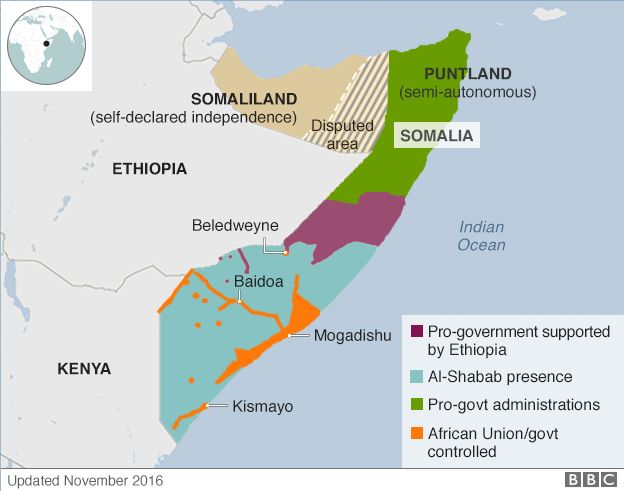
The US continues to expand its active military operations around the world. A US Navy SEAL was killed in a special operation in Somalia as the US supported the Somalian army in a firefight against al-Shabab militants. The death follows similar patterns in Yemen, Syria, and Iraq, to say nothing of the increased US activities in Iraq. It appears as if US military commanders in the field are being given considerable latitude to decide to deploy US soldiers in hostile engagements, a sharp departure from the more cautious approach of the Obama administration. Ever since the disastrous military operation in 1993 that led to the downing of a Blackhawk helicopter and the deaths of 18 soldiers, the US has been reluctant to get involved more deeply in the country. Given the challenges facing the Somalian government, which include a damaging drought and attendant starvation, it is not clear what such military operations hope to accomplish.
Venezuelan President Maduro has called for a constitutional convention to rewrite the country’s constitution. His opponents see the move as one designed to destroy permanently Venezuelan democracy. In the last month 35 people have died in the protests against Maduro and there is no sign that either side is willing to make any concessions to restore peace. The decision to change the constitution will undoubtedly fail to restore order. The outside world, including the US, is trying to establish ways to bring in humanitarian aid to the beleaguered Venezuelan people.
Cinco de Mayo is a very strange holiday. It marks the defeat of a French army by Mexican forces in Pueblo, Mexico in 1862. The French army had invaded Mexico to force Mexico to repay its debts to European investors (some things never change), but a badly outnumbered Mexico army defeated the invaders. That outcome is a legitimate reason for a holiday, but the date is not a big one in Mexico (its independence day–the equivalent of America’s 4th of July–is 16 September 1810). But the French actually continued on after the battle of Pueblo and occupied Mexico until 1867. Americans, for a variety of reasons, have appropriated the holiday for their own reasons, in much the same way they appropriated St. Patrick’s Day.
Today is the 47th anniversary of the shootings at the anti-Vietnam War protests at Kent State in Ohio and, 10 days later, at Jackson State in Mississippi. For those of us who lived through that experience, it was truly a defining moment. When the state brings military force to bear against its own citizens, there is a genuine question about the legitimacy of the state. The shootings brought the Vietnam War home. We knew the war had been lost in the Tet offensive; the shootings on 4 and 14 May showed us what else we had lost.
“The richest 1% now have more wealth than the rest of the world combined. Power and privilege is being used to skew the economic system to increase the gap between the richest and the rest. A global network of tax havens further enables the richest individuals to hide $7.6 trillion.”
“An Economy for the 1%, shows that the wealth of the poorest half of the world’s population – that’s 3.6 billion people – has fallen by a trillion dollars since 2010. This 38 per cent drop has occurred despite the global population increasing by around 400 million people during that period. Meanwhile the wealth of the richest 62 has increased by more than half a trillion dollars to $1.76tr. Just nine of the ’62’ are women.
This concentration of wealth affects poor people in all regions of the world. The situation in Africa, for example, is dire. According to The Guardian:
“The charity said as much as 30% of all African financial wealth was thought to be held offshore. The estimated loss of $14bn in tax revenues would be enough to pay for healthcare for mothers and children that could save 4 million children’s lives a year and employ enough teachers to get every African child into school.
As the US cuts the budget for the Environmental Protection Agency and ponders whether to leave the Paris Agreement on climate Change, the evidence continues to mount that environmental degradation is occurring at a rate which jeopardizes the future. The Global Footprint Network is a non-profit organization that analyzes the relationship between resource consumption and resource availability across the planet. Its most recent study concludes that “As of 2013, the world’s population would need 1.7 Earths to support its demands on renewable natural resources”. The countries with the largest ecological deficit are China, the US, India, Japan, and Germany.
Cartographer John Nelson has created composite maps of the earth at night-time. He took NASA’s night lights maps of 2012 and 2016 and compared areas where the light had increased and areas where the light had decreased. He colored the areas of increased lights blue and the areas of decreased lights pink. The changes are, in some cases, dramatic. For example, the composite map of the Middle East clearly shows the devastation in Syria as the war has destroyed many of the power plants which supplied electricity for the night lights. The same is true for Yemen. But Iraq shows signs of recovering from its war in the south, although Daesh (the Islamic State) continues to wreak havoc in the northern parts of the country. And clearly Israel is doing quite well. The maps of India are also quite dramatic. I recommend the site.
The Arctic Council has released its Snow, Water, Ice and Permafrost in the Arctic (SWIPA) assessment for 2017. The report has an urgent tone as recent data suggest that previous understandings of climate change in the Arctic significantly underestimate the rate of change in the region. The report singles out three key findings:
• The Arctic Ocean could be largely free of sea ice in summer as early as the late 2030s, only two decades from now.
• The recent recognition of additional melt processes affecting Arctic and Antarctic glaciers, ice caps, and ice sheets suggests that low-end projections of global sea-level rise made by the Intergovernmental Panel on Climate Change (IPCC) are underestimated.
• Changes in the Arctic may be affecting weather in mid-latitudes, even influencing the Southeast Asian monsoon.
A summary of the report in Scientific American details how seriously the issue has been underestimated:
“The report increases projections for global sea-level rise, which takes into account all sources of melting including the Arctic. Their new minimum estimates are now almost double those issued by the Intergovernmental Panel on Climate Change (IPCC) in 2013 for some emissions scenarios. In fact, the latest calculations suggest that the IPCC’s middle estimates for sea-level rise should now be considered minimum estimates.”
Great Britain and the European Union are tussling over the terms of Britain’s exit. Since the Union has a common budget and maintains a huge bureaucracy of which Britain was a part, there are sunk costs that the EU would like to recover. But calculating those costs is incredibly difficult. Initially, the estimates were that Britain would have to pay about €60 billion, but there are now estimates of about €100 billion. The escalating costs suggest that the negotiations over Brexit will likely be nasty and difficult. It is not a good sign for the future of the Union.
“What merits a serious attention is that such military game is underway when Trump and other U.S. warmongers are crying out for making a preemptive nuclear strike at the DPRK day after day.
“The reckless military provocation is pushing the situation on the Korean peninsula closer to the brink of nuclear war.
“The army of the DPRK is keenly watching the military movement of the U.S. imperialists, fully ready to react to all forms of war they will opt for with a powerful nuclear treasured sword for self-defence.
The situation became a little muddier after US President Trump said that he would be “honored” to meet with North Korean leader, Kim Jong-un, “under the right circumstances”. The US has never recognized the country and what circumstances would justify such a meeting are difficult to imagine. The growing war drumbeat is disconcerting, and we should be using our imagination to figure out a way out of this impasse. One possibility, not discussed by many in the US at all, is for the US to pull entirely out of South Korea. Such a move would be difficult given the history of the US-South Korean alliance, but it is a policy that might be the solution to the crisis.
“The public overall is about evenly divided over which has more to do with why a person is rich: 45% say it is because he or she worked harder than most people, while 43% say it is because they had more advantages in life than others, according to a survey conducted April 5-11 among 1,501 U.S. adults. Opinion has shifted modestly on this question: In both 2015 and 2014, more attributed a person’s wealth to greater advantages than to a stronger work ethic.”
Interestingly, there is a sharp division on the answer to this question between Republicans and Democrats.
There are also some very interesting differences because of income and gender.
After 6 months of haggling, Greece and elements of the European Union have reached an agreement for the release of funds to allow Greece to repay 7.5 billion euros of debt that comes due in July. In return for this money, Greece has promised to reduce pensions even more and to lower the threshold for not paying taxes in Greece. The terms are onerous, but in the absence of the 7.5 billion euro, Greece would be forced to default on its debt. A default would likely bring several international banks to their knees. The Greeks are hoping that by agreeing to these terms a certain percentage of their debt will be “forgiven”, a concession that the IMF believes is necessary since Greece currently owes 179% of its GDP, an amount impossible to repay. I fear that the Greeks will be sorely disappointed.
Jonathan Luther “Casey” Jones was killed on 30 April 1900 when he died in a train wreck. He was the engineer on a train that left Memphis, Tennessee, 75 minutes behind schedule and arrived at its destination, Vaughn, Mississippi, only 2 minutes late. Unfortunately, when he arrived at his destination he was told to go on a track upon which there was an idled (and empty) train. Because of a curve and fog, Jones only saw the train too late. He told his fireman to jump off the train, but he stayed on the train, reversed his throttle and slammed on his airbrakes, thereby saving all the passengers on his train. Legend has that when his body was pulled from the wreckage (he was the only fatality) his hands were still clutching the whistle and the brakes.
For much of the world, 1 May is the day to celebrate Labor, and is known as International Workers’ Day. The Second International (an organization uniting 20 socialist and communist parties in Europe) selected the day to honor those workers killed in the Haymarket Massacre which occurred in Chicago on 4 May 1886. The initial goal of a work stoppage on the first of May was to support an 8-hour working day. The day was institutionalized because there were a host of other issues of great importance to labor that needed to be resolved. The US celebrates Labor Day in September in order to avoid being associated with a holiday espoused by socialists and communists.
South Korean newspapers are articulating great concern over US policy toward North Korea. Trump initially said that South Korea should pay for the anti-missile system (the Terminal High Altitude Area Defense [THAAD]) deployed to protect it from North Korean missiles, only to be later overruled by his National Security Adviser, General McMaster. Several newspapers have accused Mr. Trump of “confusing and contradictory messages” and that “We hope that Trump will be more careful with his words”. South Korea has been an ally of the US since the end of World War II and it is rare for allies to use such negative language about a defense relationship. For its part, North Korea remains intransigent. According to a Reuters report which quotes from a press release by the North Korean Press Agency:
“‘Now that the U.S. is kicking up the overall racket for sanctions and pressure against the DPRK, pursuant to its new DPRK policy called ‘maximum pressure and engagement’, the DPRK will speed up at the maximum pace the measure for bolstering its nuclear deterrence,'” a spokesman for North Korea’s foreign ministry said in a statement carried by its official KCNA news agency.
“‘North Korea’s “measures for bolstering the nuclear force to the maximum will be taken in a consecutive and successive way at any moment and any place decided by its supreme leadership,'” the spokesman said.”
Japanese Izumo Maritime Self-Defense Force helicopter carrier
The US Congress will be debating tax reform during its current session and President Trump has made lowering the corporate income tax one of his highest priorities. The corporate tax rate is 35% which is high among the advanced industrialized countries. But very few companies actually pay that rate because there are so many loopholes and deductions.
It is difficult to determine how corporations as a whole fare under the current tax system since the loopholes and deductions are very idiosyncratic. But there is a widening discrepancy between corporate profits and the overall revenues from the corporate tax which suggests that the tax burden on corporations is not very significant:
The New York Times has a depressing article on how globalization has affected fishing . Many of the advanced industrialized countries in Europe, as well as Japan and China, have developed industrialized deep-sea fishing which involves trawling nets that are literally miles long and scoop up essentially everything that swims. These techniques have depleted the stocks of fish available for everyone else, and the people that suffer the most are local fisherman who cannot compete with the trawlers. There are international laws that allegedly govern overfishing, but they are impossible to enforce and most poor governments lack the means to enforce their legal rights. The effects on poor societies, many in West Africa, have been devastating.
Two years ago, the US pulled most of its soldiers out of Helmand Province in Afghanistan. The pull-out was consistent with President Obama’s desire to limit the US role in what has become its longest war ever (the US invaded Afghanistan in October 2001). Now, however, American troops are returning to Helmand Province as Taliban forces have re-established control over the region. The US troops are expected to support the Afghan army in its fight against the Taliban, but it is hard to imagine what objectives can be realized at this point. Several years ago there were tens of thousands of American troops in Afghanistan and the situation was never stabilized.
On 30 April 1975, the capital of what was then South Vietnam, Saigon, fell under control of North Vietnam, leading to the unification of the once-divided country. Most of the American forces had left the country after the Paris Peace Accords were signed in 1973. The collapse of the South Vietnamese regime in 1975 was complete and very quick, and the country went through a very difficult and painful unification. Many Vietnamese left the country and came to the US.
Evacuees Leave from the Roof of a Building Used by the CIA, Saigon
As the US continues the process of global disengagement, a process gently initiated by President Obama and coarsely accelerated by President Trump, the world economic system has slowly slipped from its moorings within a liberal system. Many states have benefited from that system: in 1950, the world GDP was about $5 trillion; in 2017 it is about $90 trillion. Perhaps the greatest beneficiary of that system has been China which has been restored to its normal status as a great power. Edward Luce, however, raises questions about whether the Chinese are willing to maintain the global economy in a manner which assures continues economic growth.
The harsh rhetoric of both the US and North Korea in recent days has rattled many countries in the region. President Duterte of the Philippines urged “restraint” and China urged “caution”. The rhetoric, however, is less unsettling than the sense that neither the US or North Korea has a sense of how the dispute will unfold. Unfortunately, much of American policy seems predicated on the assumption that Kim Jong-un is irrational. Nothing could be further from the truth. His values may be reprehensible, but it seems clear that it is only the threat of a nuclear attack that is preventing an American invasion right now.
Turkish President Erdogan has clamped down even harder against those he believes are associated with Fethullah Gulen, a former associate and now adamant opponent living in the the US. More police have been fired and more soldiers and government workers have also been let go. Erdogan has also restricted several social media sites including Wikipedia as national security threats. A popular TV dating program has also been banned. Erdogan has apparently decided that there is no possibility of allowing any threats to his absolute control.