It appears as if no British party will win a majority of seats in Parliament. So if a government is to be formed, it will have to be a coalition government, most likely one with Labor pairing with either the Liberal Democrats or the Scottish National Party (there are actually other possibilities as well, but they seem remote right now, but we shall see). This result would not have been predicted two months ago when Prime Minister May called for a general election. The Conservatives seemed to be poised for a stunning victory. But Labor’s Jeremy Corbyn, who seemed to be a relic of a long-past left-wing fantasy, has pulled off a rather dramatic election. It is hard to square this election with the Brexit vote and it augurs ill for the negotiations with the EU.
There is an interesting trade war going on between the US and Mexico. Cane sugar and beet sugar farmers in the US want to restrict the importation of Mexican refined sugar. That action would raise of the price of refined sugar in the US since Mexico is a more efficient producer of sugar than the US. Mexico, however, has threatened to retaliate by limiting the importation of high fructose corn syrup from the US, a move that would damage corn farmers in the US. The battle between two agricultural giants in the US–cane sugar vs. corn–will likely lead to increased lobbying by both and an increase in campaign contributions. In the end, however, the losers will be American and Mexican consumers who will pay higher prices for one of those two (or, in the worst case, both) products. We will have to monitor the outcome of the current talks between the US and Mexico.
Tracking refugees is very difficult. Many of them move in a manner specifically designed to avoid being identified. But many refugees use smartphones to communicate with loved ones left behind, and smartphone usage can identify the movement of refugees anonymously. The Pew Research CenterGoogle searches in Arabic and Turkic languages has examined to determine how and when refugees move and the circumstances that determine their movement. It is an intriguing example of how “big data” can offer an insight into social activities that are difficult to measure otherwise.
Arwa Damon is a war correspondent for CNN and she has done an extraordinary job over the years reporting on some of the more dangerous and horrific circumstances of the wars in Syria and Iraq. She has posted a video of the recent fighting in Mosul, Iraq. The video is brutal and one should forewarned about the graphic images of violence in the battle. But there is little question that Daesh (the Islamic State) is deliberately targeting civilians in particularly ruthless ways. In recent days I have been reminded many times that the world is ignoring the growing violence in Iraq, Syria, and Afghanistan and is being diverted by stories which are, by comparison, silly and gratuitously fatuous.
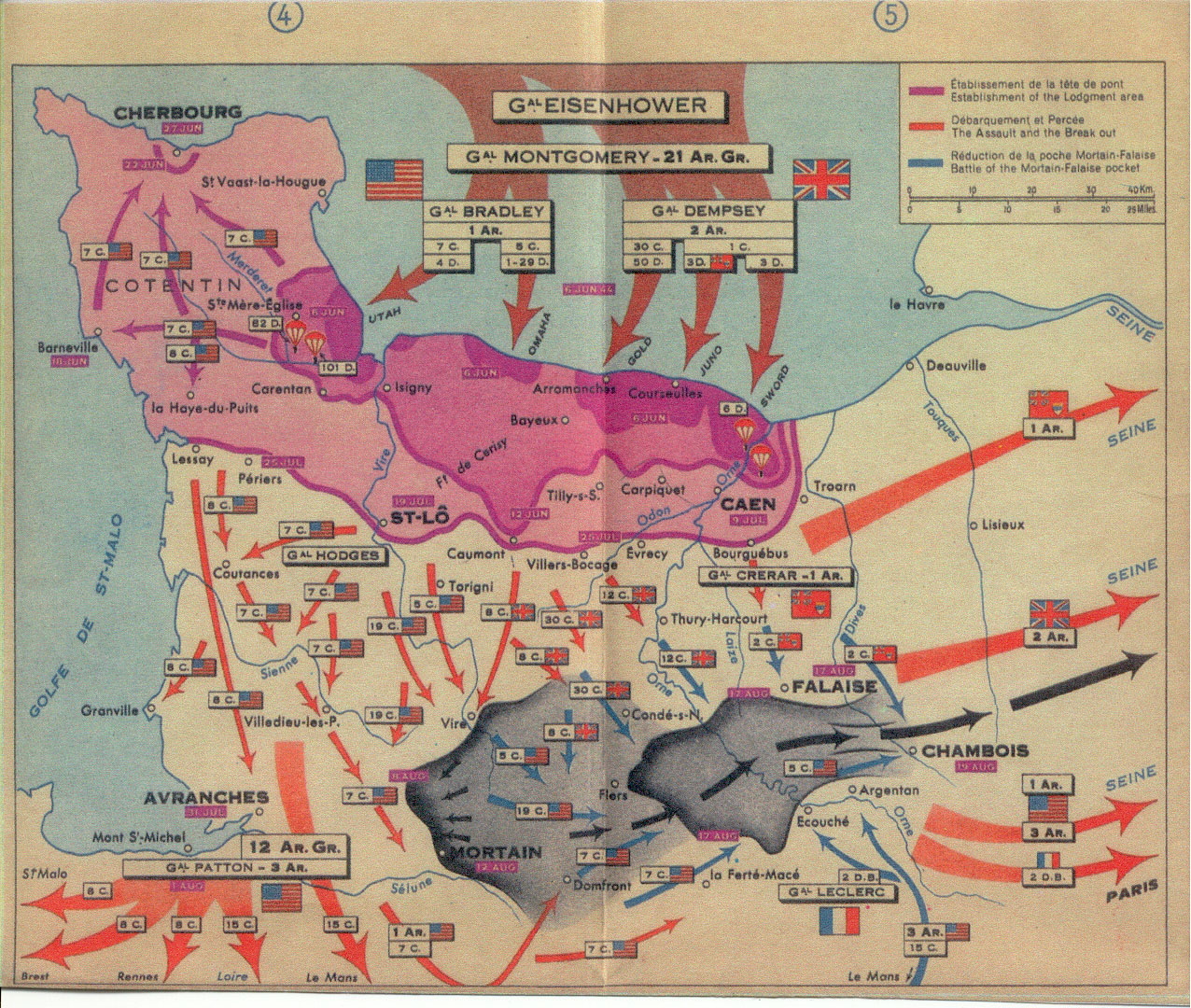
Today is the anniversary of the invasion of France by British and American forces in 1944, commonly known as D-Day. The invasion was the first time the allied forces had opened up a second front in the war against Germany (the first front was in the east in deep Russia, a front that had been stuck in Stalingrad since 1942). By the time of D-Day, the Russians had suffered tremendous casualties, but had also pushed the Germans back out of the country. The invasion of France was the beginning of the end of the German Reich.
The Pew Research Center has released its survey of global public opinion about the economic future. By and large, the survey of publics in 18 different countries indicated that a slim majority believe that their economies are improving. However, in some countries the Center found that a majority believe that the economic future for their children will not be better than it has been in the past. There is a clear difference between rich and poor countries about how to view the future for their children:
“While publics in emerging markets and developing countries are not that happy about their current economic condition, a median of 56% nevertheless believe that when those who are children today in their countries grow up they will be better off financially than their parents. Just 38% voice the view that they will be worse off. Indians (76%), Nigerians (72%) and Chileans (69%) are particularly optimistic about economic prospects for the next generation.
“Publics in advanced economies are quite pessimistic about young people’s financial prospects, just 34% believe they will be better off than the current generation. Such despair is particularly strong in Greece, Japan, France, Australia, Canada, Spain and the UK, where roughly seven-in-ten people say today’s children will be worse off.”
Saudi Arabia, Egypt, United Arab Emirates and Bahrain all cut ties with Qatar, and were followed later by Yemen, Libya and the Maldives. The move signals discontent with Qatar’s relations with terrorists (specifically, the Muslim Brotherhood) and its contacts with Iran. The rupture is a major split among the Sunni governments, but it is not the first time the countries have broken contacts with Qatar. This most recent move is likely the result of pressure from the US on US President Trump’s recent trip to the region, as he wishes to make a strong campaign against jihadist groups a central feature of US foreign policy. At the same time, however, the rhetoric threatens the US military presence at the Al Udeid Air Base in Qatar–the largest US military base in the Middle East.
The US is sending a third aircraft carrier group, led by the USS Nimitz, to waters near North Korea. The Nimitz joins the USS Carl Vinson and the USS Ronald Reagan in the western Pacific. So three of the 11 US carrier groups are focused on North Korea, a concentration of supercarriers that is unusual. On Saturday, US Defense Secretary Mattis called North Korea, a “clear and present danger”, a strong characterization of an imminent issue.
Economics professor Richard Reeves has written a book, Dream Hoarders, which puts a different twist on the issue of income inequality in the US. Instead of focusing on the top 1% or 0.1%, Reeves focuses on the upper middle class, the top 20%, those families with incomes greater than $120,000 a year. His argument is that this class concentrates on dominating the options available to its children to the detriment of the bottom 80%. His data suggests that the composition of this top 20% does not change greatly over time. According to The Guardian:
“‘The upper middle class families have become greenhouses for the cultivation of human capital. Children raised in them are on a different track to ordinary Americans, right from the very beginning,” he writes.
“The upper middle class are ‘opportunity hoarding’ – making it harder for others less economically privileged to rise to the top; a situation that Reeves says places stress on the efficiency of the US economic system and creates dynastic wealth and privilege of the kind the nation’s fathers sought to avoid.
“’The US labor market is mostly meritocratic and not some kind of medieval cartel,’” Reeves told the Guardian, “’but it’s what happens before that that is unfair.’” The problem, he says, is that people enter the race with very different levels of preparation.
“’Kids from more affluent backgrounds are entering the contest massively well prepared, while kids from less affluent backgrounds are not. The well-prepared kids win, and everybody pretends to themselves it’s a meritocracy,’” he says.”
The study is consistent with others that have identified the lack of social and economic mobility in the US over the last 40 years.
Today is the anniversary of the brutal repression of the Tiananmen Square protests in China in 1989. The event was observed in Hong Kong, but only sporadically in the rest of China. We actually do not know how many people were killed in the military action against the protesters, who were primarily young activists calling for greater freedoms. That event marked the point at which an implicit contract was make between the Chinese Communist Party and the people of China: that political freedoms could be circumscribed as long as economic development continued to lift the Chinese people out of poverty. That contract underlies most of the Chinese government economic policies and why it regards economic growth as a necessary condition for all its policies. The event also signaled one of the most iconic expressions of the human desire for freedom as “Tank Man” confronted military tanks sent to put down the protests.
“Three-fourths of Venezuelans reported involuntarily losing an average of 19 pounds in 2016 because of rampant food shortages and runaway inflation, which is making basic goods unaffordable. A third of Venezuelans reported eating two or fewer meals a day last year—triple the number recorded a year earlier. Child malnutrition has reached crisis levels.
Part of the explanation for the economic collapse in Venezuela has to do with the collapse in oil prices in 2014. But the most compelling explanation rests on miserable governance. Both Hugo Chavez, the former President, and Nicolas Maduro, the current President, have completely disregarded key constituencies in Venezuela and trampled on democratic rules of procedure. They did so in the name of the poor in Venezuela, and there is little question that the lives of the poor improved temporarily under their rule–the continued support of the poor for Maduro makes the current situation so intractable. A young man, identified as a supporter of Maduro, was burned by an angry mob and has died.
Tomorrow marks the 50th anniversary of the Six-Day war between Israel and Syria, Egypt, and Jordan. In that time there have been countless hours spent negotiating on the disposition of the territories occupied by Israel during that war and there is little to show for those negotiations. Both the Israeli and the Palestinian side obviously see advantages in the stalemate, but the dispute continues to roil the region. There is no resolution in sight, nor does there appear to be any desire to resolve the conflict by any side.
Last Tuesday, the US conducted a test of an anti-missile defense system which was sent as a message to North Korea that there were defenses against a North Korean intercontinental ballistic missile (ICBM). The test was billed as “successful” but it was the 10th successful attempt out of 17 tries. There are significant reasons to doubt the ultimate effectiveness of an anti-ballistic missile (ABM) system since the objective is extraordinarily complex: the effort is viewed as firing a bullet to hit a bullet. Nonetheless, an ABM system cannot be used as a message to a single state. Both China and Russia view the American efforts as an attempt to destabilize the nuclear balance of power. An truly effective ABM system would allow the use of nuclear weapons without any fear of reciprocal nuclear damage. The US needs to be far more circumspect in describing its effort to build an ABM system.
The US decision to withdraw from the Paris Climate Agreement is not the first time the US has recently abdicated its position as a leader in the international liberal system. The first step in that abdication was its decision to drop the trade agreement among Pacific countries. In both cases, however, China has indicated its willingness to become a decisive player in both arenas. On trade, Chinese President Xi made it clear at the World Economic Summit in Davos, Switzerland, that China was willing to emerge as a more reliabel trade partner than the US. Similarly, China’s position as a leader in developing renewable energy sources is clear. While US President Trump wishes to “bring coal back”, China as cut back substantially on its reliance on the worst of all the carbon-emitting energies. Willingness, however, is not the same as capability. We should wait to see whether China’s formidable domestic constraints allows it to become a dominant leader in the international system.
Floating Solar Farm in China
Even though the US and Great Britain have a “special relationship”, the bond between the US and Germany since 1945 has been the strongest of all the American alliances. It was a shock to me, therefore, to see this headline in Spiegel, one of Germany’s pre-eminent news magazines: “Donald Trump’s Triumph of Stupidity“. If one wishes to plumb the depths of European disillusionment with American policy, then I would highly recommend this article. It was written by the staff of Speigel, so it is not simply the screed of a lone reporter.
For those who listened to US President Trump’s speech on withdrawing from the Paris Climate Agreement, he used a lot of evidence to back up his claims that the agreement would damage the US economy and give other countries an advantage over the US. Many of those claims should be contested, and PolitiFact has done a good job of checking Mr. Trump’s data. PolitiFact has an excellent reputation (it won the Pulitzer Prize) and I regard it as essentially non-partisan. It is disappointing that a policy would be based upon such loose interpretations of information. It is also unusual for a policy on a climate change agreement to be based entirely on economic interpretations. Nowhere in the speech did Mr. Trump address the costs of climate change on the economy–he simply assumed that climate change will not occur.
Visual Capitalist produced this graph which shows what countries are growing economically as a percentage of total global economic growth. China and the US still contribute more than 50% of economic growth in the world, but India is now growing faster than the European Union. Growth patterns change quite rapidly, so one should treat this graph as simply a snapshot in time. But it reveals a great deal about global economic growth. For example, there are no African countries in the list of growing economies.
One of the largest ice shelves in the world, Larsen C in Antarctica, is close to shedding an iceberg the size of the US state of Delaware. A massive crack has been growing on the shelf for some time, but the crack has grown 11 miles between 25 and 31 May indicating that it is close to breaking off. Since it is a shelf and floats on the water, the melting of the expected chunk of ice will not raise sea levels at all. But the loss of that ice means that the glaciers on the Antarctica continent will likely starting retreating faster as warmer ocean water penetrates under the glacier itself.
It is very difficult to place US President Trump’s decision to pull out of the Paris Agreement on climate change in the context of American foreign policy since 1945. The only real analogue is the US Senate’s decision to repudiate the League of Nations after World War I. Henry Cabot Lodge was the Senator from Massachusetts and he gave a speech in August 1919 in which he said:
“The independence of the United States is not only more precious to ourselves but to the world… Look at the United States today. We have made mistakes in the past. We have had shortcomings. We shall make mistakes in the future and fall short of our own best hopes. But is there any country today on the face of the earth which can compare with this in ordered liberty, in peace, and in the largest freedom?…
“I have always loved one flag and I cannot share that devotion [with] a mongrel banner created for a League.
“You may call me selfish if you will, conservative or reactionary, or use any other harsh adjective you see fit to apply. But an American I was born, an American I have remained all my life. I can never be anything else but an American, and I must think of the United States first, and when I think of the United States first in an arrangement like this, I am thinking of what is best for the world – for if the United States fails, the best hopes of mankind fail with it.”
That decision was fateful. The US in 1918 was the only country capable of maintaining world order. Britain and France were exhausted; Germany was in exile; and Russia left the international system to establish an alternative world order but was too weak to make much progress on that front. The consequences of a “leaderless” world were horrific. Without a world order with a power willing to support that order, the world devolved into economic chaos, the hell of fascism, and massive human rights violations in Ethiopia, China, and the horror of the Holocaust. The US under President Roosevelt made a decision in 1944 not to repeat that mistake, and it constructed what we now know as the liberal world order based upon the UN, the Bretton Woods institutions, and an explicit commitment to international law.
Despite its imperfections and the refusal of the US in many cases to uphold that liberal world order itself, the post-war period has been marked by the absence of a war among the major powers and by extraordinary economic growth (In 1950, the world GDP was about $5 trillion; in 2017 it is about $90 trillion). The systematic (as opposed to episodic) movement away from that liberal world order started in 2003 when the US invaded Iraq without a UN Security Council sanction and engaged in significant human rights violations by the use of torture, extraordinary rendition, and the creation of the prison in Guantanamo. President Obama tried a softer approach to disengagement, but nonetheless remained committed to the liberal order.
President Trump’s policy of “America First” is consistent with the sentiments expressed by Senator Lodge in 1919, and I believe that the outcomes of that policy will be as catastrophic as those in the 1930s. The world system is not self-regulating and the US, as one of the strongest powers in the world, has a responsibility to uphold the world order. “America First” (and we should not forget that that slogan was used by those opposed to the US entry into World War II, among which were many American Nazis) is not consistent with US interests in a stable world order.
America First? More likely, America Alone.
In an earlier post, I lamented the position US President Trump took at the recent NATO meeting. In my mind, NATO represents the infrastructure of the liberal international order and Mr. Trump’s criticisms of European conduct was off the mark. Stephen Walt is one of the US’s premier realists and, although he is no fan of Mr. Trump, he has a different take on the matter. He believes that NATO has outlived its usefulness. His opening argument, that the counterfactual position Chancellor Merkel could have taken was absurd, is a red-herring. Of course, Europe needs to have control over its foreign policy, but an alliance does not necessarily forfeit sovereignty: States choose to make alliances. His argument, however, still deserves careful attention.
“According to the EIA, renewable energy sources like wind, solar, and geothermal power accounted for 10.68 percent of total electricity generation in the first quarter of 2017. If you include electricity from conventional hydroelectric plants, renewables made up nearly a fifth of total electricity generation—as much as 19.35 percent.”
Previous estimates of the shares of renewables were in the range of 18% by 2040.
The opposition to Venezuelan President Maduro are furious that the US investment firm, Goldman Sachs, purchased nearly $3 billion of Venezuelan bonds. The opposition charges that the purchase provides money to the beleaguered regime that has been the target of intense protests over the last few years. Venezuela is essentially bankrupt after years of economic mismanagement and the sale of assets such as bonds are the only source of money for the government. In economic terms the purchase makes a great deal of sense. Goldman Sachs bought the bonds for 31 cents on the dollar and Venezuela has never defaulted on a foreign bond. But the political implications of the purchase are that Maduro is being enabled to stay in power and continue to erode Venezuelan democracy.
The Taliban exploded a water truck filled with explosives near the presidential residence in Kabul, an attack that resulted in at least 80 dead. It was one of the deadliest attacks in the war in Afghanistan which has been going on since 2001. The explosion, in an allegedly secure area, is a profound testament to the futility of the war. The Taliban is proving to be far more resilient than American policymakers have ever imagined. But one should keep in mind that the Afghans also forced the Soviet Union to leave the country after its attempt to control the country. Foreign troops have no legitimacy in such a war and we should keep that note in mind as US President Trump contemplates re-sending American troops to the country.
The information that presidential advisor Jared Kushner tried to open a “back channel” to Russia before Mr. Trump was inaugurated as president has elicited a wide range of responses. General Kelley of Homeland Security and General McMaster of the National Security Council have defended the overture as “normal”. There have been times when back channels have served useful purposes, but there are a number of questions about what Kushner was trying to do. I do not wish to assess these questions, but there is an historical back channel which has not yet been mentioned in the press which provides an example of how a back channel can be abused. In 1968 US President Lyndon Johnson ordered a halt to aerial bombardment in Vietnam and tried to initiate peace negotiations with North Vietnam. Johnson had also declared that he would not run for re-election in 1968 which meant that the presidential election in November 1968 was wide open. The Republican candidate, Richard Nixon, ordered one of his aides, H.R. Haldeman, to throw a “monkey wrench” into the process for initiating the negotiations.
“Three days before the election, the bureau sent the White House this wiretap report: ‘Mrs. Anna Chennault contacted Vietnamese Ambassador Bui Diem and advised him that she had received a message from her boss (not further identified) which her boss wanted her to give personally to the ambassador. She said the message was that the ambassador is to ‘hold on, we are gonna win’ and that her boss also said, ‘Hold on, he understands all of it.’ That day, President Thieu had announced that the South would not send a delegation to Paris, rendering any settlement of the war impossible for the time being and stalling Humphrey’s surge in the polls.
“A furious president telephoned the highest elected Republican in the land, Senate Minority Leader Everett Dirksen of Illinois, and declared, ‘This is treason.’ He wasn’t exaggerating. The Logan Act of 1799 prohibits private citizens (including presidential candidates) from interfering with negotiations between the U.S. and foreign governments.”
US President Trump has raised questions about his commitment to NATO. The Pew Research Center has conducted a poll on how Europeans regard NATO and the evidence indicates that support for NATO is getting stronger as Europeans have concerns about Russian behavior. President Trump believes that many NATO countries, most particularly Germany, have not met the alliance target of military spending at levels corresponding to 2% of GDP. NATO released data about military spending that confirms the shortfall from the target for all NATO countries except for the US, Greece, Estonia, Great Britain, and Poland (the NATO press release has a great deal of information–I recommend the site). The US spends about 5.3% of its GDP on the military while Germany spends 1.2%. In absolute terms, the ranking of countries in constant US dollars (2016) is as follows:
The US: $664,058,000
Great Britain: $56,790,000
France: $44,222,000
Germany: $41,676,000
In thinking about this information, one should take into account that the US has considerable commitments outside of Europe. Americans tend to have a very favorable view of NATO, although there have been some shifts between Republicans and Democrats in recent years:
“Today, there are no partisan differences on living up to America’s Article 5 commitment. But in 2015, the last time Pew Research Center asked this question, Republicans (69%) were far more likely than Democrats (47%) to back aiding allies in a confrontation with Russia. Since then, such Republican sentiment, now at 65%, has not changed much. Democrats’ willingness to offer military support (63%) has increased 26 points. A separate Pew Research Center survey in January 2017 also found that for the first time since 2005, more Democrats than Republicans saw Russia’s power and influence as a major threat to the U.S. And Democrats’ concern about Russia rose 30 points from 2016 to 2017.”
There are also differences among the European polities:
President Trump has also singled out Germany for its trade policies, accusing it of trade practices that contribute to the US Balance of Payments deficits. Germany does account for about 14% of the US payments deficit, but one would be hard-pressed to accuse it of unfair policies. German wages are considerably higher than American wages and its environmental regulations are stricter than those in the US. The US trade deficit with Germany ($67.8 billion) is roughly comparable with its deficits with Mexico ($61.7 billion) and Japan ($56.3 billion). But none of these countries compare with China with which the US runs a $310 billion deficit.
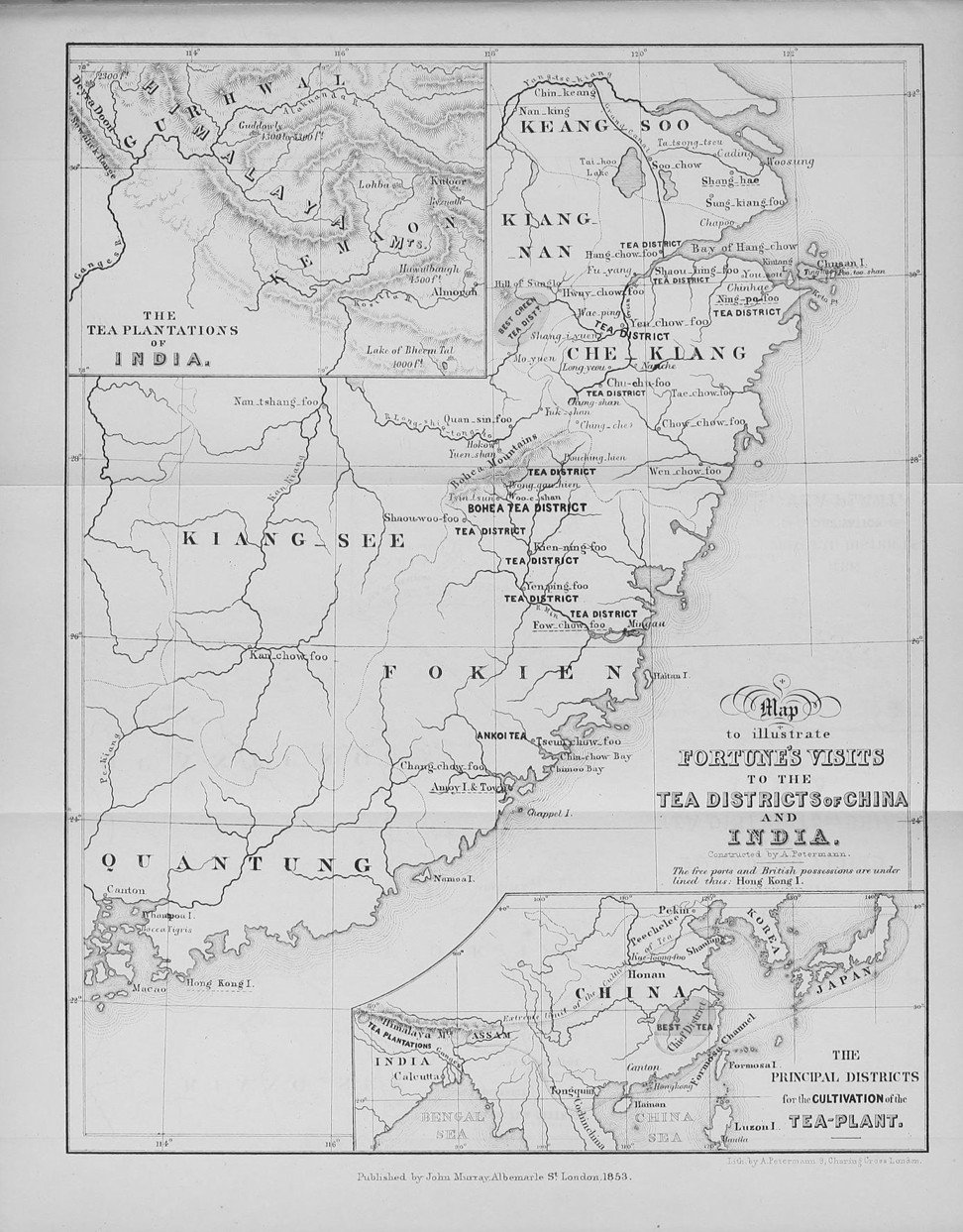
Tea is the second most popular drink in the world (after water) and its origins were exclusively in China. But the British developed an extraordinary taste for tea even though it lacked the means to buy it in sufficient quantities to satisfy its population. One response was to force the Chinese to buy opium which was produced in the British colonies of Burma and India so that Britain would raise sufficient funds to pay for the tea (the First and Second Opium Wars). The other response was to steal tea plants and seeds and to develop tea plantations in the British colony of India. The South China Morning Posthas a fascinating article on how the British managed to create their own supply of tea independent of Chinese control. A lesson for the modern day disputes concerning intellectual property rights.
The war in Syria and Iraq against Daesh (the Islamic State) has its own dynamics, many of which are confounding and contradictory. But there is also another competition going on between the US and Iran over influence in Iraq. The US has concentrated its efforts against Daesh in the cities, particularly Mosul at the present time. Iranian paramilitary groups, however, have been concentrating on transportation infrastructure and have positioned their forces to control key areas of Iraq in order to be able to divide the Sunni population. At some point the US is going to need to address its future relations with Iraq in an attempt to create an ally out of a country under the control of an opposed country.
Iranian Aspirations in the Region
There are news reports that US President Trump is considering sending more US troops into Afghanistan. That war is the longest war in American history and it will likely be the most expensive as well. An estimate by a researcher at Brown University set the total price of the wars in Iraq and Afghanistan at about $4.79 trillion as of September 2016. These costs include the cost of caring for US veterans injured in the wars for the rest of their lives. These costs will only increase if the US maintains its war footing in Afghanistan. As the American people begin to debate the upcoming government budget, it would be appropriate to make sure that these figures are prominently discussed.