Beppe Grillo is the leader of the Five Star Movement in Italy. Grillo is a one-time comedian who organized the political party to protest against the corrupt and staid politics that have characterized Italian politics for many years (in 2007 he proposed the idea of Vaffanculo Day [Fuck you Day]). No one gave him a chance, but the Five Star Movement is the second largest party in the Italian Parliament right now. He is now proposing that Italy drop the euro and he has declared that the European Central Bank is the most serious enemy of Europe. The BBC has a video of his comments. Listening to him will give one an idea of how deeply the eurosceptic movement has penetrated European politics.
Forbes magazine is hardly a bastion of progressive thought, and it has recently run an article on how the US military is taking the issue of climate change very seriously. The quotations from very high-ranking US military officials clearly indicates that the military is way ahead of the US Congress on the issue of climate change. Whether the military can persuade the Congress to take the issue more seriously remains to be seen.
Protests in Mexico are spreading rapidly as more information comes to light about the murder of the 43 student teachers. Protests are sensitive matters in Mexico because of the bloody repression of student protests in 1968. The year 1968 saw student protests all over the world, but the way the Mexican government killed many students on 2 October 1968 in Tlatelolco was exceptionally violent and changed the character of Mexican politics in dramatic ways, particularly in terms of the role of women in politics. The Mexican government will likely try very hard to avoid a repeat of that disaster.
The leader of the Islamic State, Abu Bakr al-Baghdadi, purportedly called for attacks on Saudi Arabia in a speech given today. The audio recording could not be verified as authentic, but some analysts believed the speaker was Baghdadi. The Islamic State also called on other groups in the Middle East to join the jihad, and groups in Egypt and Libya declared their affiliation with the IS. The threat against Saudi Arabia is new, and is an attempt to delegitimize the Saudi regime and to lay down a claim by the IS to the holy sites of Mecca and Medina.
The domestic pressures on Russian President Putin may be so intense that he may find himself forced to take more dramatic actions in support of the Russian-speaking separatists in the eastern part of Ukraine. The falling oil price has hurt Russian revenues, and investors are running away from the Russian economy as the value of the Ruble has plummeted. Putin will need some sort of “victory” in Ukraine to justify to the Russian people the necessity to endure such economic difficulties.
The New Republic has a fascinating essay on the effects of wealth on the very rich in the US. The essay is a book review of a book that identifies several psychological experiments on how great wealth affects behavior. Many of the results conform to some stereotypes, but some provide some counter-intuitive conclusions. Needless to say, money does not buy happiness.
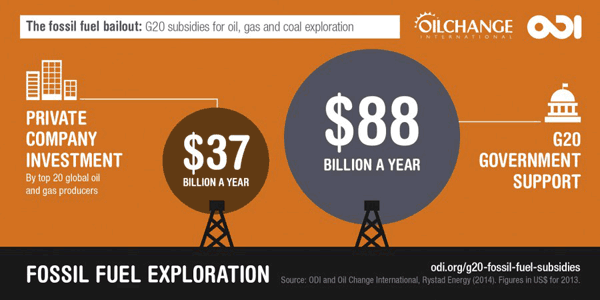
The US and China announced an agreement to reduce the emissions of greenhouse gases by the years 2025 and 2030. The rhetoric of the agreement is ambitious, but there are no concrete details of the agreement and no binding enforcement either. Perhaps a good place for the US to start addressing the issue of carbon burning would be to end official subsidies for the oil and gas industries. Recent data indicate that the US gave $5.2 billion in subsidies for the oil industry to explore for new sources of oil and natural gas. It does not really make any sense to write agreements to reduce the burning of carbon fuels while at the same time encouraging the discovery of new reserves of carbon fuels to burn.
The agreement is a breakthrough. At the Climate Conference in Copenhagen in 2009, China adamantly refused to set emission limits for itself, arguing that such limits would compromise its ability to develop economically. The change of heart represents an important opening for the world, since China is the largest emitter of greenhouse gases. Without its participation, any agreement would fail to arrest the process of climate change. Perversely, China’s refusal also gave opponents of emission controls in the US leverage: they argued that the US did not need limits since China would not agree anyway. Now, the argument is no longer valid, but it does not appear as if US opposition is going to change its position. The incoming Senate Majority Leader, Mitch McConnell just stated that he was “distressed” at the US-China deal. He is quoted as saying:
“The agreement requires the Chinese to do nothing at all for 16 years while these carbon emissions regulations are creating havoc on my state and other states around the country.”
It appears as if the US Congress may prevent the US-China agreement from being implemented.
The Economist has a devastating article on the rising wealth inequality in the US. The fortunes of the richest 0.01% of the population are fast outstripping the wealth of the rest of the population:
On the other side of the spectrum, the fortunes of the wealthy have grown, especially at the very top. The 16,000 families making up the richest 0.01%, with an average net worth of $371m, now control 11.2% of total wealth—back to the 1916 share, which is the highest on record. Those down the distribution have not done quite so well: the top 0.1% (consisting of 160,000 families worth $73m on average) hold 22% of America’s wealth, just shy of the 1929 peak—and exactly the same share as the bottom 90% of the population. Meanwhile the share of wealth held by families from the 90th to the 99th percentile has actually fallen over the last decade, though not by as much as the net worth of the bottom 90%.
The graphic says it all:
Russian President Vladimir Putin stole the show at the Asia-Pacific Economic Conference (APEC) in Beijing, by placing a shawl around the shoulders of Chinese First Lady, Peng Liyuan. Apparently it was cold at the conference. Needless to say, many pundits felt obliged to comment on the act. But what is most interesting is that Chinese censors blocked the images of Putin’s gesture. I’m not sure what the state issue was, but the Chinese government took the matter quite seriously.
The Asia-Pacific Economic Cooperation (APEC) Summit is currently being held in Beijing. Chinese President Xi is using the summit to demonstrate China’s growing power in world affairs, and US President Obama is using the summit to prove that the US is still a major player in world affairs–a claim that grew more urgent as other powers believe that the outcome of the recent US elections has weakened Obama tremendously. Obama is also using the forum to urge China to shoulder greater responsibilities in managing world affairs. By and large, however, the interactions between the US and China have been cordial and respectful, a very encouraging sign.
There have been new acts of violence committed in East Jerusalem as Israelis have been stabbed and run over by cars. The renewed violence stems from a perceived threat by Muslims to access to the Noble Sanctuary. What is most interesting about this wave of violence is that it does not appear to be coordinated in any way by the Palestinian Authority, unlike the first and second Intifadas. Most likely, the violence represents an increased level of frustration and desperation on the individual level. As such, it does not represent “political” violence of a normal sort: there is no tangible objective to the violence. The danger of such unorganized violence is that it is very difficult to control, and responses to it will likely be random and chaotic as well. At some point, some group will organize the frustration and anger, but it is difficult to assess how focused the activity will be.
Protests in Mexico have continued as further questions have arisen over the government’s role in the murder of 43 student teachers. In addition, the government of President Pena Nieto has been rocked by accusations of financial corruption as well. Questions of corruption have been a pervasive element of virtually all protests against governments across the globe since the Arab Spring in 2011. The loss of faith in government is a deeply troubling development in world politics. Legitimacy, once lost, is very difficult to regain.
Voters in the Catalonia area of Spain are voting today to declare whether they wish Catalonia to become an independent nation-state. The referendum is not binding since Spain’s constitution–unlike the United Kingdom–does not permit secession. But the vote will have symbolic significance and a strong pro-independence vote would undoubtedly precipitate a political crisis in Spain.
Armistice Day is 11 November. It is the day that most of the world celebrates the end of World War I (in the US, the holiday is called Veterans Day). In England, a monumental exhibition entitled “Blood Swept Lands And Seas of Red” has become a very moving tribute to the 888,246 Commonwealth soldiers that died in the war. A ceramic poppy has been planted for everyone of those soldiers around the Tower of London. The exhibition was designed by Paul Cummins, a 37-year-old ceramic artist, and more than 18,000 people have volunteered to plant the poppies.
The case of the missing 43 student teachers in Mexico has seen more twists and turns. The most recent revelations include the assertion that the students, who were on their way to support striking teachers in the city of Iguala, were killed by members of a drug cartel. In addition, the government has determined that Municipal Police in Iguala had arrested the students and handed them over to the cartel. After the students were murdered, their bodies were incinerated in the town rubbish dump. Large protests have broken out in Mexico, condemning the behavior of the government in the whole sordid affair.
US President Obama has doubled the number of American troops in Iraq. Ostensibly, those troops are merely “advisers”. But the line between combat troops and advisers is very unclear, and there is little question that the US troops will be in combat situations. The belief that more US troops are necessary to counter the threat from ISIS has no strategic limit, only a political limit, and there will inevitably be a tendency toward “mission creep” in which local commanders will try to amplify the effectiveness of the US presence in Iraq. The US is positioning itself to get involved more deeply in the fighting in Iraq.
Richard Haas has written a fascinating article for Foreign Affairs which is summarized by him in a shorter commentary entitled “The Era of Disorder.” The essay is definitely worth a read: he discusses the various forces in contemporary world politics which seem to be beyond the traditional mechanisms of control Needless to say, the conclusion is grim, but the logic of the essay is clear and compelling.
Iran is one of the most important countries in the word, but very few in the West know much about it. Relations between Iran and the West have been miserable since 1979 when the country was transformed by an Islamic Revolution. The Economist has published an essay suggesting that it is past time for the West to reconsider its relations with Iran. Admittedly, there are risks to a change in policy, but many of the assumptions underlying policy toward Iran are no longer valid.
The situation in Ukraine appears to have deteriorated rather precipitously. The Ukrainian government has accused the Russians of sending in an armored column into the eastern part of the country. If true, the action represents a significant escalation of Russian support for the separatists and a sharp break from the uneasy cease-fire that had been observed for the last few weeks. The Russians have denied that they have sent tanks into the country. More than 4,000 people have died in the conflict so far.
China and Japan have agreed to begin negotiations over the status of the disputed islands known as the Diaoyu by the Chinese and the Senkaku by the Japanese. Both sides claim ownership over the islands and have made serious military moves to buttress their claims, raising the danger of some form of military action. The decision to negotiate is a big step forward, and one hopes that the talks can be fruitful.
In a very strange admission, Russian President Vladimir Putin defended the Molotov-Ribbentrop Treaty of 1939, a pact between Nazi Germany and Communist Soviet Union. The secret treaty is widely regarded by most as a treacherous act of betrayal in which Stalin broke his defense commitments to France in exchange for control of the Baltic States and huge chunks of Poland. The Treaty exemplifies the egregious cynicism of realpolitik, but also shares the title of a huge diplomatic blunder by Stalin since the Treaty only slightly delayed Hitler from ultimately attacking the Soviet Union. If Putin’s endorsement of the Treaty is a window into his diplomatic mind, then there is nothing we should not expect from Russian foreign policy.
There are reports that US President Obama wrote a secret letter to the Supreme Leader of Iran, the Ayatollah Khameni, stressing the shared interests of the US and Iran in the Middle East. The White House did not deny that the letter had been sent. The revelation only confirms the obvious: in the fight against ISIS and in propping up the government of Iraq, the US and Iran ought to be friends. However, the letter should also be viewed in light of the very difficult nuclear negotiations currently being held. Even if the leadership of both countries see a mutual interest, it is clear that there are domestic forces in both countries that are strongly opposed to any rapprochement between the two.
About 100,000 Belgians protested in Brussels against planned government cuts to pensions, wages, and public services. The cuts are part of an austerity program designed to reduce the government’s public debt. The protests were led by labor unions opposed to the plans of the center-right government of Belgium. About a month of strikes are planned, culminating in a nation-wide strike planned for 15 December.
On Sunday, Germany will celebrate the 25th anniversary of the fall of the Berlin Wall. The Wall had been constructed in 1961 at the height of the Cold War by East German authorities to stop East Berliners from leaving the East Zone of the city to the relative freedom of the West Zone controlled by the US, France, and Great Britain. Throughout its 28 year history, the Wall stood as testimony to the inability of East Germany to satisfy the interests of its citizens. The collapse of the Wall took everyone by surprise: no one had anticipated that the change would come so quickly or so bloodlessly. It marked the beginning of the end of the Cold War, culminating in the dissolution of the Soviet Union in 1991.
Happy Guy Fawkes Day!!! Guy Fawkes was part of a plot (it is alleged) to kill the English King James I for his intolerance toward Catholics. Actually, the plot was to blow up the entire House of Lords in the Parliament building when James opened the Parliament for its first session of 1605. The religious schism between Catholics and Protestants was incredibly violent throughout Europe in the early 17th Century (the period of the 30 Years War). Religious extremism and bombing plots are hardly unique to the 21st Century. You all may know Guy Fawkes through his most recent incarnation: