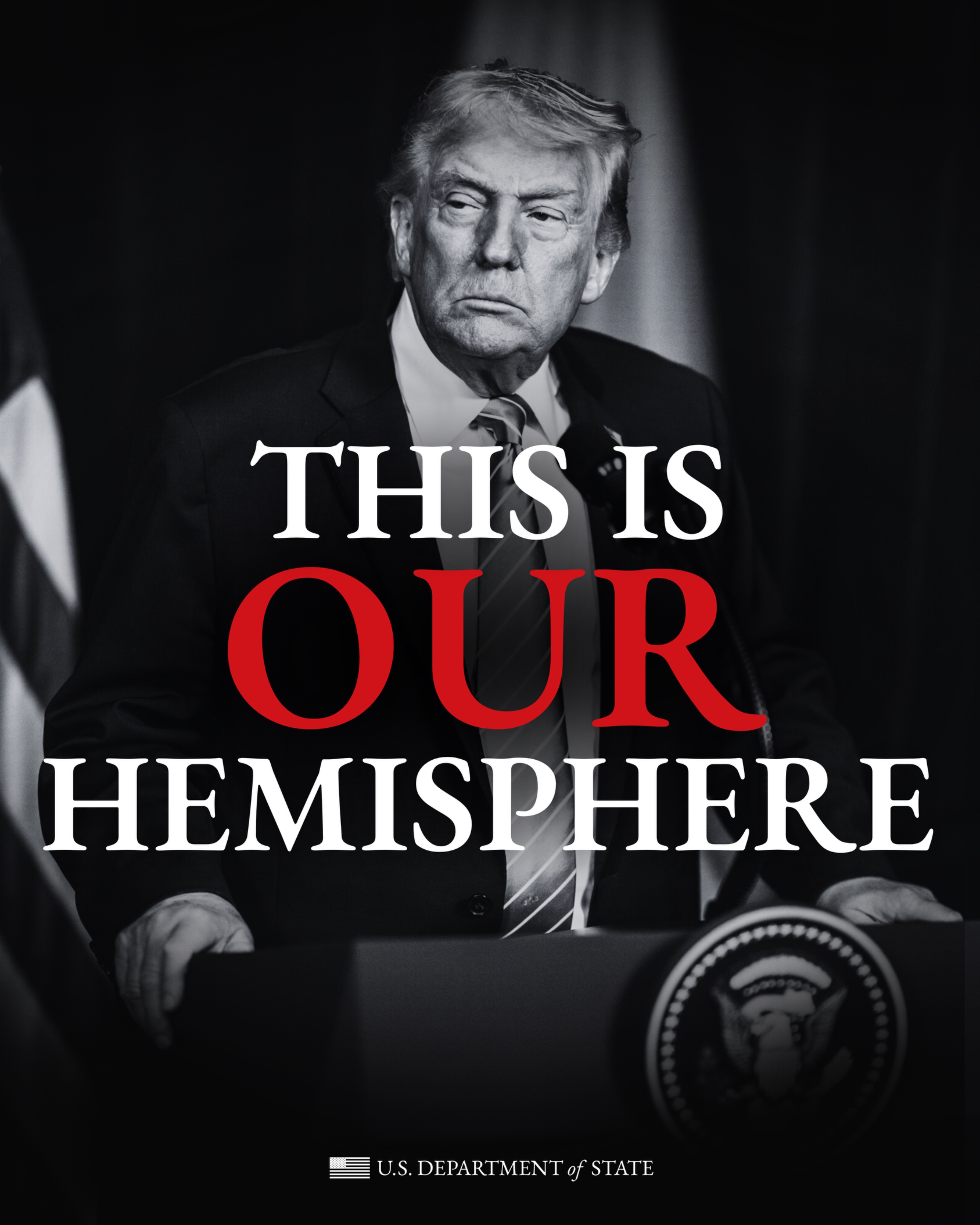
As I have argued before, Trump is reviving the balance of power (or, at least, being explicit about his intentions) which also suggests that he is a practitioner of Realpolitik. There was little question in my mind that his adviser, Stephen Miller, is a hardline realist (sovereignty seems to be his favorite word which is the holy mantra of all realists). The New York Times has published a good overview of the lineage of realism, and all its varied meanings. The rubric, realist, gives too much credit to Trump since I doubt he is aware of any of the possible implications or significance of what it means to be a realist: a realist wants to enhance the power of the state while Trump seems to be interested in enhancing personal benefit. The Times article points out the crucial difference:
“For Walt and other realist thinkers, Trump’s aggressive and chaotic actions on the world stage — his antagonism of U.S. allies, threats of territorial conquest and assertions that the U.S. is not afraid of putting ‘boots on the ground’ — undermine any claim he could make to practicing a realist foreign policy. Realists largely opposed the U.S. wars in Vietnam, Iraq and Afghanistan, preferring policies of restraint. The failures of those episodes vindicated the realist worldview.”
I was reminded of this difference by a conversation with a colleague about the Venezuelan attack who reminded me of earlier episodes of US balance of power moves. One earlier intervention in hemispheric affairs was the US intervention of Haiti which lasted from 1915 to 1934. It was a brutal occupation:
“In 1910 an American investor acquired Haiti’s National Railroad with rights to establish banana plantations on either side of the track between Port-au-Prince and Cap Haitien. This land had sustained rural farmers and their families for generations. The Haitian Constitution did not even permit foreigners to own land – a safeguard against restoring slavery. The abrupt eviction of peasants from their land to make way for banana plantations prompted fierce resistance. Four years of insurrection followed, involving peasant armies – the Cacos – along with urban elites and members of Parliament who were opposed to foreign domination.
“This period of government instability became the pretext for the US occupation. By August 1915, there were 3000 US Marines in Haiti. They seized the customs houses, imposed martial law, instituted press censorship, and outlawed dissent. The US installed a compliant president, imposed a “treaty” that was ratified only by the US Senate, disbanded the legislature, and rewrote the Constitution eliminating the ban against foreign land ownership.
“Haiti’s indigenous religion, Vodou – so central to the war for independence – was banned. US Marines – all white, many Southern, replaced local heads of every town and rural district throughout the country. By 1922, the US completely controlled Haitian finances – including the treasury, collected taxes and forced Haiti to repay American loans.”
Butler was a highly decorated Marine: “Butler had received 16 medals, five for heroism. He is one of 19 men to receive the Medal of Honor twice, one of three to be awarded both the Marine Corps Brevet Medal and the Medal of Honor, and the only Marine to be awarded the Brevet Medal and two Medals of Honor, all for separate actions.” Butler wrote a pamphlet entitled “War is a Racket” in which he argued that there was no national interest involved in the occupation of Haiti, but that it served corporate interests (Parenthetically, it is interesting to note that this pamphlet does not rest with the other writings by Butler: “at the Library of the Marine Corps at Quantico, Butler’s anti-war writings are isolated from his memoirs and other texts about him—in a separate bookshelf for radical thought that includes the works of Marx.”)
When he retired from the Marine Corps, Butler assessed his role in the military:
“I spent 33 years and 4 months in active service as a member of our country’s most agile military force—the Marine Corps.… And during that period I spent most of my time being a high-class muscle man for Big Business, for Wall Street and for the bankers. In short, I was a racketeer for capitalism.”
It is always dangerous to compare events in different historical periods, but the US attack on Venezuela resonates with Butler’s final analysis. The Trump Administration offered a number of explanations for its acts of war against Venezuela. First it was to interdict Fentanyl (very little of which comes from Venezuela). The intervention was also justified as a means of countering Chinese influence in Venezuela. The US has also claimed that its attack on Venezuela was not an intervention but rather a “law enforcement operation” since the US had indicted Venezuelan President Maduro on drug trafficking charges. This last explanation ignores the fact that attacking the capital city of a state and kidnapping its President are both acts of war, even if the US claims it does not intend war (just think what the US response would be if a country attacked Washington, DC and kidnapped President Trump).
The real explanation is somewhat tortured, but it revolves around oil. The claim is that Venezuela has the largest reserves of oil in the world. Technically, this assertion may be true, but it is highly misleading. Venezuelan oil reserves are considered “heavy” which means that it has a high sulfur content and high viscosity. These characteristics make the refining of the oil a very expensive process, one that would not be profitable with today’s oil prices of around $59 a barrel. According to World Energy News:
“…estimates that breakeven costs for the Orinoco belt’s key grades are already above $80 per barrel. This puts Venezuelan oil on the high end of the “global cost scale” for new production. The average cost to break even for heavy oil produced in Canada is around $55 per barrel. Exxon has set a breakeven price of $30 per barrel for its global oil production in 2030, largely due to low-cost fields located in Guyana and U.S. Permian Shale Basin. Chevron also has a similar goal, and Conoco is working on a plan that will generate cash flow for the company even if oil drops to $35 per barrel.”
Nonetheless, Trump invited oil company executives to a meeting at the White House to persuade them to make the necessary investments to produce Venezuelan oil. The executives seemed unenthusiastic and an Exxon executive all Venezuela “uninvestable” (which I do not believe is a real word). I also find it hard to believe that Trump would prefer oil to be priced at $80 a barrel.
As far as I can tell, the real reason for attacking Venezuela was to gain control of its oil reserves but no oil company really wants to drill in Venezuela. Ordinarily, I would be flummoxed by this contradiction, but rationality does not seem to be an important consideration for Trump’s foreign policy. Smedley Butler would probably not be surprised at all.
 World Politics News