Imperialism never dies, but it changes its clothes every so often. After World War II ended, the colonial empires created by European states slowly disintegrated, a process that is still ongoing. But at the end of the war, there was a sense that the idea of self-determination should override the impulse to dominate. That end never materialized, but the more ostentatious trappings of imperialism became difficult to maintain and the right to dominate was articulated in the language of democracy and liberation.
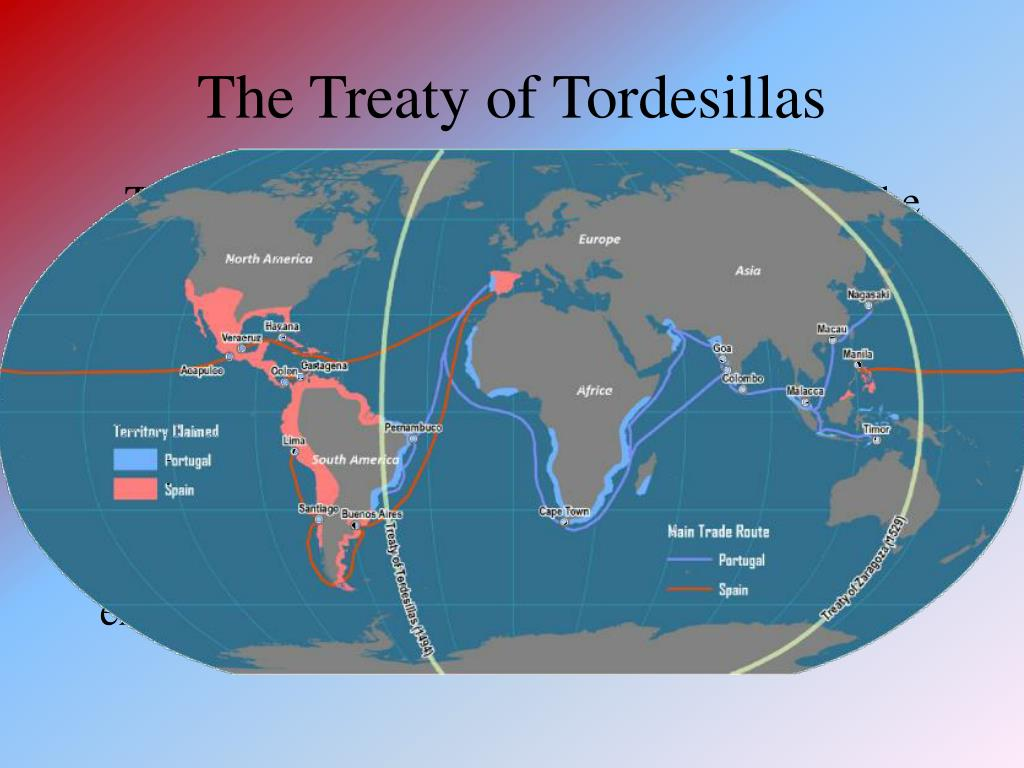
This particular perspective on mimics one of the founding acts of European imperialism, the Treaty of Tordesilla which divided up the entire world into two parts in 1494, one owned by Spain and the other by Portugal. It was a plan crafted by Pope Julius II, which was subsequently modified by the Treaty of Zaragoza, signed in 1529, to include the eastern hemisphere (by tracing out the antemeridian), which included the Spice Islands.
The settlement did not last long, as other European states (the Dutch, the French, the Belgians, and the British) did not want to miss out on the benefits (to them) of imperialism.
We will see how the Venezuelans feel about the US being in charge of domestic affairs once the dust settles. Undoubtedly, many of them are relieved that Maduro is no longer in power, and the Venezuelan economy is in a deep contraction. Right now, there is tremendous uncertainty about how the US will “run” the country. There is, however, not much the Venezuelans can do as long as US forces remain offshore. But there are countries that depend on Venezuelan oil (Cuba and China, in particular) which will probably contest US “ownership” of the oil fields. Moreover, the US will find that it is impossible to “run” a country at arms-length, and as US personnel begin to filter into Venezuela, they will unquestionably be targets of armed opposition.
Regime change is easy for a country as powerful as the US. What happens after the change, however, is extraordinarily difficult for an outside power. The US learned that lesson in Vietnam, Libya, and Iraq. It’s incredible how the US has forgotten those lessons wo quickly and emphatically.
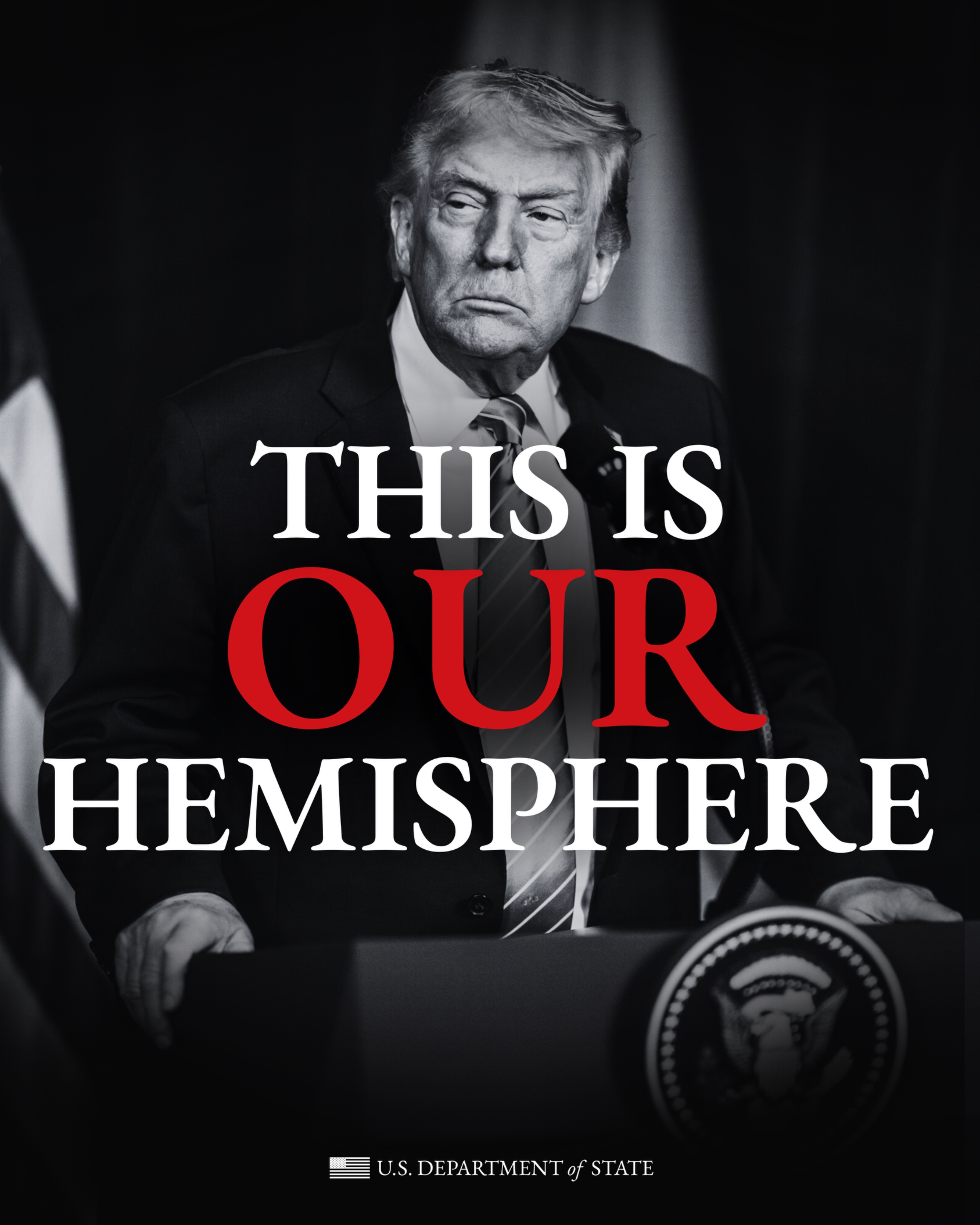
We all woke up to the news that the US had attacked Venezuela and kidnapped its President and his wife. This outcome was not on my bingo card. I fully expected Trump to overthrow Maduro, but I honestly did not think that Trump would be so blatant in violating US obligations under the United Nations Charter (which outlaws wars of aggression). I am still digesting the few scraps of real information that we have and will probably write more as additional information becomes available. Right now, however, I can make some general observations.
First, the act is the literal end of the world order under which we have lived since 1945. This world order was based upon a repudiation of balance of power politics which was the norm since 1648. Under the balance of power system, states are free to use any and all means available to increase their power and an important part of the system was an implicit recognition that powerful states can take actions to preserve their spheres of influence. Thus, for example, Russia simply asserted that Ukraine was an integral part of the Russian sphere of influence and justified its aggression in those terms. China makes similar claims to the South China Sea and to Taiwan. The US now is firmly entrenched in that 19th century doctrine and we now live in a world where, as the Athenians said to the Melians in the Peloponnesian War: “The strong do as they will, and the weak suffer what they must”.
Second, Trump apparently made the decision to attack Venezuela without consulting any members of Congress and without informing its allies of what was going to happen. In other words, he made a unilateral decision: it was neither democratic nor multilateral. It was an imperial order and that apparently means that Trump is prepared to do whatever he thinks necessary to secure what he believes are US interests. Unless the decision is restrained in some way by Congress, the Supreme Court, or by widespread protests, we now effectively live in a dictatorship.
Third, I suspect that the US will relearn the same lessons it ignored in its earlier attempts at regime change: Guatemala, Iran, Libya, Iraq, the Dominican Republic, Grenada, and Vietnam. It’s easy to overthrow a government, but very difficult to establish a viable, legitimate government to replace it. That task will be even more difficult in the case of Venezuela since Maduro was the only authority removed. All his henchmen are still there, and it is very likely that there will be political instability as the different groups compete for power. In this press conference Trump said that the US would “run” Venezuela for the immediate future. The profound irony of that assertion is that Trump has yet to learn who to “run” the US. And with Pete Hegseth and Marco Rubio in charge, I expect that the Keystone Kops will meet their match in incompetence.
Fourth, Trump asserts that Venezuela “stole” US oil when it nationalized some US companies holdings. TO be clear, Venezuela never gave up its sovereign rights to its own oil. It simply gave the US oil companies the right to lift a certain number of barrels of oil and set a price for that sale. The companies never “owned” the oil; they simply agreed to pay Venezuela for its oil. So nothing was “stolen”. It is true that Venezuela refused to renew those contracts, but for Trump to argue that contracts are sacrosanct is absurd after he’s fired so many Federal employees who had their contracts simply annulled.
I suspect that I will have more to say about this matter as more information is available. But I can assert confidently that this decision to invade Venezuela will go down as one of the most egregious diplomatic failures in American diplomatic history.
The US has asserted that it will blockade all oil tankers from Venezuela on a sanction list. This action follows the seizure of the oil tanker Skipper that was carrying 2 million barrels of crude oil destined for Cuba. Generally speaking, a blockade is considered an act of war but the Trump Administration has not asked the Congress for a declaration of war, nor has it met the requirements of the War Powers Act. Nonetheless, Trump has deployed a massive military buildup off the coast of Venezuela acting on his asserted authority as Commander-in-Chief. The Washington Post listed all the military assets deployed as of today.
AC-130J Ghostrider
Heavily armed gunship
Special Operations Forces
U.S. Air Force (Special Ops Command)
AV-8B Harrier II
Fighter and attack aircraft
Air
U.S. Marine Corps
B-1B Lancer
Supersonic bomber
Air
U.S. Air Force
B-52 Stratofortress
Strategic bomber
Air
U.S. Air Force
EA-18G Growler
Electronic attack jet
Air
U.S. Navy
F-35 Lightning II
Supersonic fighter jet
Air
U.S. Marine Corps
MH-6 Little Bird
Light observation helicopter
Special Operations Forces
U.S. Army (160th SOAR)
MH-60M Black Hawk
Medium-lift military utility helicopter
Special Operations Forces
U.S. Army (160th SOAR)
MH-60T Jayhawk
Medium-range recovery helicopter
Air
U.S. Coast Guard
MQ-9 Reaper
Unmanned combat aerial vehicle (drone)
Air
U.S. Air Force
MV Ocean Trader
Floating special operations base
Special Operations Forces
Operated for U.S. Special Operations Command (SOCOM)
MV-22 Osprey
Transport and cargo aircraft
Air
U.S. Marine Corps
P-8 Poseidon
Maritime patrol aircraft
Air
U.S. Navy
Sikorsky UH-60L Black Hawk
Medium-lift military utility helicopter
Air
U.S. Army
USS Bainbridge
Guided missile destroyer
Naval
U.S. Navy
USS Fort Lauderdale
Amphibious transport dock
Naval
U.S. Navy
USS Gerald R. Ford
Aircraft carrier
Naval
U.S. Navy
USS Gettysburg (CG-64)
Guided missile cruiser
Naval
U.S. Navy
USS Iwo Jima (LHD-7)
Amphibious assault ship
Naval
U.S. Navy
USS Jason Dunham
Guided missile destroyer
Naval
U.S. Navy
USS Lake Erie
Guided missile cruiser
Naval
U.S. Navy
USS Mahan
Guided missile destroyer
Naval
U.S. Navy
USS San Antonio
Amphibious transport dock
Naval
U.S. Navy
USS Stockdale
Guided missile destroyer
Naval
U.S. Navy
USS Thomas Hudner
Guided missile destroyer
Naval
U.S. Navy
USS Wichita
Littoral combat ship
Naval
U.S. Navy
USS Winston S. Churchill
Guided missile destroyer
Naval
U.S. Navy
I doubt that the US is contemplating an invasion of Venezuela (but I also doubt that Trump has thought that far). His intention is to create economic chaos in Venezuela that will lead to the overthrow of President Maduro. This particular playbook was actually used by the Anglo-Iranian Oil Company (now known as BP) in 1951 against Iran after Iran nationalized its holdings. The company effectively blockaded Iran from selling its oil to others by following oil tankers leaving Iran and using the courts to prevent the sale of what it called “stolen” oil. Eventually, the Iranian economy collapsed and with a shove from the US CIA led to the overthrow of the president of the country and leading to the rule of the Shah of Iran.
The Iranian example is instructive since the Iranian regime that toppled the Shah in 1979 led to the creation of the Islamic Republic of Iran and the longstanding bitterness between Iran and the US today. The US has a poor track record of regime change. It did not work in Vietnam in 1963 when South Vietnamese President Diem was assassinated or when the US overthrew Iraqi President Hussein in 2003. Other examples include the overthrow of Guatemalan President in 1954 and the toppling President Allende of Chile in 1973. Regime change is a policy adopted by states that pay little attention to the long-term consequences of meddling in the internal affair of other states.
But there is another thread in the Venezuela situation that has not received sufficient attention. Venezuela has the largest oil deposits in the world although its oil is heavy with sulfur and thus requires significant refining in order to be useful. The main seller of Venezuelan oil in the US is a company called Citgo, and it has three refineries in the US. But the US took control of Citgo properties in 2018 using the Foreign Sovereign Immunities Act (FISA). In December 2025 Citgo shares were sold to a US company called Amber Energy with a $5.9 billion bid.
What’s interesting about Amber Energy is that one of its primary backers is Elliott Investment Management, a hedge fund based in West Palm Beach, Florida and whose primary sponsor is Paul Singer. Singer is often termed a venture capitalist (some call him a “vulture” capitalist) and an example of his activities was in profiting from Argentina’s debt problem in the early 2000s:
“Perhaps the most infamous chapter of Singer’s career is his prolonged battle with the government of Argentina over defaulted sovereign bonds. In the early 2000s, Argentina experienced a financial crisis that led to the country defaulting on its debt. While many creditors agreed to restructure their bonds at a fraction of their original value, Elliott Management refused, demanding full repayment. What followed was a 15-year legal and financial battle that saw Singer’s firm seize Argentine naval vessels and block international payments. In 2016, the dispute culminated in a $2.4 billion payout to Elliott Management, a victory that underscored Singer’s tenacity and strategic prowess.”
Regime change might result in a US company controlling all of Venezuela’s oil (if Maduro does leave, his most likely successor would be María Corina Machado who would likely have Trump’s blessing, although her political power will be sorely tested if she does not protest the US actions). In short, a US company would have control over Venezuela’s massive reserves.
Trump’s actions against Venezuela are reprehensible and short-sighted. The long-term consequences of Trump’s “gunboat” diplomacy will weaken US credibility and prestige, all in the name of preserving the viability of fossil fuel hegemony in the US. It is a fool’s errand and completely out of touch with the world as it currently operates.
There are a number of questions about this action which need to be answered. But I think that the Post did a great job of raising those questions. Many of those questions revolve around the status of the military action against these alleged drug running vessels: are these actions “acts of war”? President Trump defends these actions under his authority as Commander-in-Chief of the US military and that he is using forces against actors which threaten US national security. Most of those defenses are bogus and have been addressed in many other media sources.
But, for purposes of argument, let’s pretend that the US military action is justified by the principles of self-defense. Those arguments are used to justify the first use of force against these vessels.
But the second attack on the survivors clinging to wreckage is unquestionably a violation of the laws of war. The Geneva Convention is explicit:
GENEVA CONVENTION for the Amelioration of the Condition of Wounded, Sick and Shipwrecked Members of Armed Forces at Sea of 12 August 1949
CHAPTER II Wounded, Sick and Shipwrecked
Article 12
Members of the armed forces and other persons mentioned in the following Article, who are at sea and who are wounded, sick or shipwrecked, shall be respected and protected in all circumstances, it being understood that the term “shipwreck” means shipwreck from any cause and includes forced landings at sea by or from aircraft.
Such persons shall be treated humanely and cared for by the Parties to the conflict in whose power they may be, without any adverse distinction founded on sex, race, nationality, religion, political opinions, or any other similar criteria. Any attempts upon their lives, or violence to their persons, shall be strictly prohibited; in particular, they shall not be murdered or exterminated, subjected to torture or to biological experiments; they shall not wilfully be left without medical assistance and care, nor shall conditions exposing them to contagion or infection be created.
Only urgent medical reasons will authorize priority in the order of treatment to be administered.
Women shall be treated with all consideration due to their sex.
We should remember that the Laws of War are generally unenforceable since the international organizations tasked with the enforcement (the UN Security Council, the International Court of Justice, and the International Criminal Court) are powerless to enforce the laws against powerful states. But the Laws of War rest upon the self-interest of states to protect their own people against unlawful acts. The United States would never want its wounded soldiers to be ruthlessly murdered, so it must adhere to a code of conduct that respects the similar status of its enemy’s soldiers. This code of conduct is frequently violated, but far less than one would expect. This self-interest is most potent with respect to civilians, but again, we have lots of evidence to suggest that it is far less than perfect.
Killing two wounded individuals in open seas is a blatant violation of this norm and it invites reciprocal actions by other states. We have already witnesse massive loss of civilian lives in the conflicts in Congo, Myanmar, Ukraine, and the Gaza Strip, and these actions should be soundly condemned. The report of Israeli Defense Forces killing two individuals in the West Bank who had their hands raised in surrender is further evidence of the erosion of this critical aspect of the Laws of War.
Nov. 27, 2025 incident in which two Palestinian men were killed during an operation in Jenin, in the occupied West Bank
There is a second important issue raised by the second missile attack. According to the Post, the military unit that carried out the attack was one of the US’s most elite troops. Whoever received the order to kill the wounded survivors should have refused the order. That the order was carried out suggests a stunning lack of discipline by very well-trained troops. The protections for wounded soldiers and civilians must be enforced. If not, then no war is being fought; it is murder and barbarous.
US President Trump and Israeli Prime Minister Netanyahu announced yesterday that they had agreed upon a plan to end the war in Gaza. The New York Times published the full text of the agreement:
Here is the full text of the proposal provided by the White House.
Gaza will be a de-radicalized terror-free zone that does not pose a threat to its neighbors.
Gaza will be redeveloped for the benefit of the people of Gaza, who have suffered more than enough.
If both sides agree to this proposal, the war will immediately end. Israeli forces will withdraw to the agreed upon line to prepare for a hostage release. During this time, all military operations, including aerial and artillery bombardment, will be suspended, and battle lines will remain frozen until conditions are met for the complete staged withdrawal.
Within 72 hours of Israel publicly accepting this agreement, all hostages, alive and deceased, will be returned.
Once all hostages are released, Israel will release 250 life sentence prisoners plus 1,700 Gazans who were detained after Oct. 7, 2023, including all women and children detained in that context. For every Israeli hostage whose remains are released, Israel will release the remains of 15 deceased Gazans.
Once all hostages are returned, Hamas members who commit to peaceful coexistence and to decommission their weapons will be given amnesty. Members of Hamas who wish to leave Gaza will be provided safe passage to receiving countries.
Upon acceptance of this agreement, full aid will be immediately sent into the Gaza Strip. At a minimum, aid quantities will be consistent with what was included in the Jan. 19, 2025, agreement regarding humanitarian aid, including rehabilitation of infrastructure (water, electricity, sewage), rehabilitation of hospitals and bakeries, and entry of necessary equipment to remove rubble and open roads.
Entry of distribution and aid in the Gaza Strip will proceed without interference from the two parties through the United Nations and its agencies, and the Red Crescent, in addition to other international institutions not associated in any manner with either party. Opening the Rafah crossing in both directions will be subject to the same mechanism implemented under the Jan. 19, 2025, agreement.
Gaza will be governed under the temporary transitional governance of a technocratic, apolitical Palestinian committee, responsible for delivering the day-to-day running of public services and municipalities for the people in Gaza.
This committee will be made up of qualified Palestinians and international experts, with oversight and supervision by a new international transitional body, the “Board of Peace,” which will be headed and chaired by President Donald J. Trump, with other members and heads of State to be announced, including Former Prime Minister Tony Blair.
This body will set the framework and handle the funding for the redevelopment of Gaza until such time as the Palestinian Authority has completed its reform program, as outlined in various proposals, including President Trump’s peace plan in 2020 and the Saudi-French proposal, and can securely and effectively take back control of Gaza. This body will call on best international standards to create modern and efficient governance that serves the people of Gaza and is conducive to attracting investment.
A Trump economic development plan to rebuild and energize Gaza will be created by convening a panel of experts who have helped birth some of the thriving modern miracle cities in the Middle East. Many thoughtful investment proposals and exciting development ideas have been crafted by well-meaning international groups, and will be considered to synthesize the security and governance frameworks to attract and facilitate these investments that will create jobs, opportunity, and hope for future Gaza.
A special economic zone will be established with preferred tariff and access rates to be negotiated with participating countries.
No one will be forced to leave Gaza, and those who wish to leave will be free to do so and free to return. We will encourage people to stay and offer them the opportunity to build a better Gaza.
Hamas and other factions agree to not have any role in the governance of Gaza, directly, indirectly, or in any form. All military, terror, and offensive infrastructure, including tunnels and weapon production facilities, will be destroyed and not rebuilt. There will be a process of demilitarization of Gaza under the supervision of independent monitors, which will include placing weapons permanently beyond use through an agreed process of decommissioning, and supported by an internationally funded buy back and reintegration program all verified by the independent monitors. New Gaza will be fully committed to building a prosperous economy and to peaceful coexistence with their neighbors.
A guarantee will be provided by regional partners to ensure that Hamas, and the factions, comply with their obligations and that New Gaza poses no threat to its neighbors or its people.
The United States will work with Arab and international partners to develop a temporary International Stabilization Force (I.S.F.) to immediately deploy in Gaza. The I.S.F. will train and provide support to vetted Palestinian police forces in Gaza, and will consult with Jordan and Egypt who have extensive experience in this field. This force will be the long-term internal security solution. The I.S.F. will work with Israel and Egypt to help secure border areas, along with newly trained Palestinian police forces. It is critical to prevent munitions from entering Gaza and to facilitate the rapid and secure flow of goods to rebuild and revitalize Gaza. A de-confliction mechanism will be agreed upon by the parties.
Israel will not occupy or annex Gaza. As the I.S.F. establishes control and stability, the Israel Defense Forces (I.D.F.) will withdraw based on standards, milestones, and time frames linked to demilitarization that will be agreed upon between the I.D.F., I.S.F., the guarantors, and the United States, with the objective of a secure Gaza that no longer poses a threat to Israel, Egypt, or its citizens. Practically, the I.D.F. will progressively hand over the Gaza territory it occupies to the ISF according to an agreement they will make with the transitional authority until they are withdrawn completely from Gaza, save for a security perimeter presence that will remain until Gaza is properly secure from any resurgent terror threat.
In the event Hamas delays or rejects this proposal, the above, including the scaled-up aid operation, will proceed in the terror-free areas handed over from the I.D.F. to the I.S.F.
An interfaith dialogue process will be established based on the values of tolerance and peaceful coexistence to try and change mind-sets and narratives of Palestinians and Israelis by emphasizing the benefits that can be derived from peace.
While Gaza redevelopment advances and when the P.A. reform program is faithfully carried out, the conditions may finally be in place for a credible pathway to Palestinian self-determination and statehood, which we recognize as the aspiration of the Palestinian people.
The United States will establish a dialogue between Israel and the Palestinians to agree on a political horizon for peaceful and prosperous coexistence.
This proposal is not a peace proposal–it is a land development proposal. Note that Hamas (or any other agent representing the interests of the Palestinian people) participated in forging this proposal. It was conceived by Trump and Netanyahu and it reflects the narrow interests of both men. Creating a transitional government with considerable power before the Palestinians have any effective control:
“This committee will be made up of qualified Palestinians and international experts, with oversight and supervision by a new international transitional body, the “Board of Peace,” which will be headed and chaired by President Donald J. Trump, with other members and heads of State to be announced, including Former Prime Minister Tony Blair.”
Note that the conposition of the “Board of Peace” that has oversight and supervises the transitional committee does has no reference to the Palestinians. And the appointment of Trump as the Chair of this Board of Peace is simply a way to insure that Trump’s vision of a “Middle East Riviera” will indeed serve to give control to Trump over what is built and for whom it is built. In addition, the proposal offers “preferred tariff and access rates” for those who invest in what the proposal calls “New Gaza”. This tactic was no doubt a ploy by Netanyahu to guarantee Trump’s personal support for the proposal by playing to Trump’s ego and self-interest. And I have serious doubts that most Americans would approve of Trump spending a good part of his time as President serving the interests of Israel. Fareed Zakaria explains:
“Netanyahu looked on in the White House on Tuesday as President Donald Trump delivered the most stunning US intervention in the long history of the Israeli-Palestinian conflict.
“The president repeatedly doubled down on his suggestion that nearly 2 million Palestinians should be relocated from battle-leveled Gaza to new homes elsewhere so that the US could send troops to the Strip, take ownership and build the ‘Riviera of the Middle East.’
“’You build really good quality housing, like a beautiful town, like some place where they can live and not die, because Gaza is a guarantee that they’re going to end up dying,’ Trump told reporters.
“In a few words, Trump conjured up a mind-boggling geopolitical transformation of the Middle East and a political lifeline for Netanyahu – showing why the prime minister, despite their past tensions, was rooting for his host’s return to power in the 2024 election.
“Netanyahu can now bill himself to right-wing factions in his coalition, which incessantly threaten his grip on power, as the unique and vital conduit to Trump. The American president’s views now parallel Israeli hardliners’ desire to see Palestinians ousted from part of what they view as the sacred land of Israel.”
No doubt Trump’s son-in-law, Jared Kushner, and his good friend Crown Prince Salman, will be able to secure the funds for a development project that will cater to the interests of people who wish to live in penthouses overlooking the Mediterranean. I doubt that they will be interested in building affordable housing for the 2 million Palestinians who once lived in the Gaza Strip.
The proposal does state that “Israel will not occupy or annex Gaza”, but Israel does not need to do either. The Council of Peace will decide where the hospitals, the schools, and the police forces are located. It will decide what dwellings are allowed and where they can be built. Moreover, we have seen this movie before. When the Oslo Accords were signed in 1993, both Israel and the Palestinians agreed: “It was anticipated that this arrangement would last for a five-year interim period during which a permanent agreement would be negotiated (beginning no later than May 1996). The assassination of Prime Minister Rabin by a right-wing settler scuttled that hope, but the Israelis broke their word, not the Palestinians.
Finally, there is no mention of the West Bank, which is also occupied territory, but is under siege by Israeli settlers. According to the United Nations:
“The report covers the period from 18 June to 19 September. During this time, Israeli authorities advanced or approved some 20,810 housing units in the occupied West Bank, including East Jerusalem.
“On 2 July, 15 Israeli ministers and the speaker of the Knesset, or parliament, signed a petition calling for Israel to annex the occupied West Bank. Three weeks later, the Knesset adopted a non-binding motion calling for the ‘application of Israeli sovereignty’ across all settlements there.
“Demolitions and seizures of Palestinian-owned structures also increased while evictions continued.
“’Citing the lack of Israeli-issued building permits, which are almost impossible for Palestinians to obtain, Israeli authorities demolished, seized or forced people to demolish 455 structures‘, he said.
The Gaza proposal raises a genuine question: If the Gaza Strip is taken away from Israeli occupation and ultimately from Israeli sovereignty, will the West Bank be annexed to appease the settlers who believe that the two pieces of land are part of “Greater Israel”?
“Judaism defines the land as where Jewish religious law prevailed and excludes territory where it was not applied.[3] It holds that the area is a God-given inheritance of the Jewish people based on the Torah, particularly the books of Genesis, Exodus, Numbers and Deuteronomy, as well as Joshua and the later Prophets.[4] According to the Book of Genesis, the land was first promised by God to Abram’s descendants; the text is explicit that this is a covenant between God and Abram for his descendants.[5] Abram’s name was later changed to Abraham, with the promise refined to pass through his son Isaac and to the Israelites, descendants of Jacob, Abraham’s grandson.”
Is the plan to trade the West Bank for Gaza, if friends of Trump and Netanyahu control the Gaza?
Hamas will ignore the 72-hour time limit for releasing the hostages, thereby assuring that Netanyahu will be given the green light to “finish the job”? Trump’s position after the proposal was clearly one of take-it-or-leave-it, offering a threat if Hamas rejects the proposal:
“Trump gives Hamas ‘three or four days’ to respond to Gaza plan
“Donald Trump has said Hamas has ‘three or four days’ to respond to his Gaza plan or face the consequences.
“Speaking to reporters as he left the White House on Tuesday, Trump said Israeli and Arab leadershad accepted the proposal and “we’re just waiting for Hamas”.
“Hamas is either going to be doing it or not, and if it’s not, it’s going to be a very sad end.
“Asked if there was room for negotiations, Trump replied: ‘Not much.’”
The assassination of Charlie Kirk was a tragedy, and the act should be condemned in the strongest possible terms. Such condemnation is appropriate, but it should also be directed against the exceptionally large of people who die every year from gun violence.
Guns kill 128 people a day in the US, or about one death every 11 minutes, and is the leading cause of death for children aged 1-19.
It is disturbing that the discussion about Kirk’s assassination has not included consideration of these facts. Instead, the discussion has focused on the political polarization in the US. For example, US President Trump made these comments about the assassination:
“It’s long past time for all Americans and the media to confront the fact that violence and murder are the tragic consequence of demonizing those with whom you disagree. For years, those on the radical left have compared wonderful Americans like Charlie to Nazis and the world’s worst mass murderers and criminals. This kind of rhetoric is directly responsible for the terrorism that we’re seeing in our country today, and it must stop right now.”
It may be the case that the alleged shooter was indeed a radical leftist. He has been apprehended and we will know more about his motives soon. But to attribute the atrocity to leftists ignores the acts of violence against individuals who were allied with the political left. The list is long, as cataloged by The Huffington Post:
I will not attempt to explain why Trump did not mention these other acts of violence against political figures, but neglecting to mention these facts is in itself reflective of political polarization. Refusing to acknowledge that gun violence seems to be explainable for reasons other than, or in addition to, political ideology leads to a sterile and vapid conversation.
“The Second Amendment is not about hunting. I love hunting. The Second Amendment is not even about personal defense. That is important. The Second Amendment is there, God forbid, so that you can defend yourself against a tyrannical government. And if that talk scares you — “wow, that’s radical, Charlie, I don’t know about that” — well then, you have not really read any of the literature of our Founding Fathers. Number two, you’ve not read any 20th-century history. You’re just living in Narnia. By the way, if you’re actually living in Narnia, you would be wiser than wherever you’re living, because C.S. Lewis was really smart. So I don’t know what alternative universe you’re living in. You just don’t want to face reality that governments tend to get tyrannical and that if people need an ability to protect themselves and their communities and their families.”
I have posted about the 2nd Amendment previously, and Kirk’s defense of the 2nd Amendment is fundamentally flawed. I argued on 27 March 2023 that the Militia Act of 1792 required all young men to join the various militias, and that they were required to provide their own weapons:
“That every citizen so enrolled and notified, shall, within six months thereafter, provide himself with a good musket or firelock, a sufficient bayonet and belt, two spare flints, and a knapsack, a pouch with a box therein to contain not less than twenty four cartridges, suited to the bore of his musket or firelock, each cartridge to contain a proper quantity of powder and ball: or with a good rifle, knapsack, shot-pouch and powder-horn, twenty balls suited to the bore of his rifle, and a quarter of a pound of powder…”
The intent of the 2nd Amendment was to ensure that the militias were armed, not to make sure that citizens could overthrow the central government. For those who support an “originalist” interpretation of the Constitution, the correct strategy would be to get rid of the newly named “Department of War” and to require universal military service to all National Guard units in the fifty states and the US territories. We should also remember that there was an armed insurrection against the Federal Government in 1861 and that it was suppressed in a very bloody war. The lethality of the Federal Government’s arsenal today far exceeds the alleged strength of armed civilians.
“You will never live in a society when you have an armed citizenry and you won’t have a single gun death. That is nonsense. It’s drivel. But I am, I, I — I think it’s worth it. I think it’s worth to have a cost of, unfortunately, some gun deaths every single year so that we can have the Second Amendment to protect our other God-given rights. That is a prudent deal. It is rational. Nobody talks like this. They live in a complete alternate universe.”
I suspect that Kirk’s wife and children might have some questions about his assessment of the risks. We all must acknowledge that the individual right to bear arms, as codified in the Supreme Court decision, District of Columbia v. Heller (2008) was wrongly decided and completely inconsistent with an originalist interpretation of the Constitution.
US President Trump fired the chief statistician, Erika McEntarfer, from the Bureau of Labor Statistics because he thought that the recent jobs report was distorted by political bias.
There are many examples of “killing the messenger” in history. When a messenger informed King Tigranes of Armenia that Roman general Lucullus was approaching, Tigranes had him executed. Plutarch recounts the result: “The first messenger, that gave notice of Lucullus‘ coming was so far from pleasing Tigranes that, he had his head cut off for his pains; and no man dared to bring further information. Without any intelligence at all, Tigranes sat while war was already blazing around him, giving ear only to those who flattered him”.
Another example is Ivan Adamovich Kraval who was the lead statistician for the 1937 census report in the Soviet Union. That report indicated that the Soviet Union’s population growth had been stunted because of famine induced by Stalin’s agricultural policies:
“The problem was that calculations of natural population growth had projected a population of 186.4 million, an increase of 37.6 million since the 1926 census; the actual increase turned out to be only 7.2 million. The population gap spoke so graphically of unnatural death, and so belied the image of a healthy happy society, that the census was squelched. On September 26, Pravda published a communiqué of the Sovnarkom claiming ‘crude violations of the principles of statistical science.’”
Stalin had Kraval executed for the bad news. as well as others who were involved in the production of the census. But the shortfall in population were the direct result of destructive policies pursued by Stalin;
“Whatever explanations were offered by the statisticians and demographers whose lives were at risk, they were unable to conceal the extent to which population growth had lagged behind the fantastic growth projections of the leadership, to say nothing of the actual decline in population. The child mortality figures were particularly alarming, as was the greater mortality among men, who constituted the greater proportion of the deportees, special settlers and camp inmates, and also the lower birth rate resulting from this catastrophic situation. Over 40 million people were struck down by famine.
“In total, for the year 1933, there were circa 6 million more deaths than usual. As the immense majority of those deaths can be attributed directly to hunger, the death toll for the whole tragedy must therefore be nearly 6 million. The peasants of the Ukraine suffered worst of all, with 4 million lives lost. There were a million deaths in Kazakhstan, most of them among nomadic tribes who had been deprived of their cattle by collectivization and forced to settle in one place. The Northern Caucasus and the Black Earth region accounted for a million more.
“Even if the census of 1937 does not speak of deportations, executions and victims of famine, the data it compiled exposed the true dimensions of the catastrophe. The missing millions correspond fairly precisely to the losses that had arisen through the increased mortality caused by collectivization and the resulting famine.”
The lower employment numbers for the US in 2025 still need to be fully explained, but the most likely explanations involve the uncertainties created by the ever-changing tariff policies of the Trump Administration and the significant cuts to Federal Government employment caused by the efforts of DOGE. President Trump does not care for this explanation, and the statistical manifestations of his moronic economic policies can be fudged by a good statistician. But the human harms created will occur and one hopes that we have a media that is committed enough to publicize these harms. If not, then many millions of people will suffer and die in silence. And the US will cease to be a Republic.
Two prominent Israeli human rights organizations, B’Tselem and Physicians for Human Rights, have made an explosive charge against the Israeli government, accusing it of committing genocide. Needless to say, the accusation affects the world profoundly given the historical experience of Jews. National Public Radio puts the charge in context:
“The rights groups, while prominent and respected internationally, are considered in Israel to be on the political fringe, and their views are not representative of the vast majority of Israelis. But having the allegation of genocide come from Israeli voices shatters a taboo in a society that has been reticent to criticize Israel’s conduct in Gaza.”
The Genocide Convention was adopted in 1948 after the horrors of the Holocaust became undeniable (there was considerable evidence of genocide during World War II, but these reports were not acted upon for a variety of reasons, including prejudice against Jews). Article 2 of the Convention defines genocide as:
“In the present Convention, genocide means any of the following acts committed with intent to destroy, in whole or in part, a national, ethnical, racial or religious group, as such:
(a) Killing members of the group; (b) Causing serious bodily or mental harm to members of the group; (c) Deliberately inflicting on the group conditions of life calculated to bring about its physical destruction in whole or in part; (d) Imposing measures intended to prevent births within the group; (e) Forcibly transferring children of the group to another group.
Physicians for Human Rights–Israel has issued a paper justifying its charge of genocide and it is thorough and comprehensive. Its conclusion is straightforward:
“Each day, dozens die of malnutrition. Ninety-two percent of infants aged six months to two years don’t get enough to eat. At least 85 children have already starved to death. Israel has displaced 9 in 10 Gazans, destroyed or damaged 92% of homes, and left over half a million children without schools or stability. It has wiped out essential health services – including dialysis, maternal care, cancer treatment, and diabetes management.
“This is not a temporary crisis. It is a strategy to eliminate the conditions needed for life. Even if Israel stops the offensive today, the destruction it has inflicted guarantees that preventable deaths – from starvation, infection, and chronic illness – will continue for years. This is not collateral damage. This is not a side effect of war. It is the systematic creation of unlivable conditions. It is the denial of survivability. It is a genocide.”
The charge of genocide is supported by several leading scholars. The Washington Post ran an article citing many of those scholars:
“The governments that have accused Israel at the International Court of Justice of carrying out genocide believe sufficient evidence exists to show that Israel intends to make Palestinian life impossible in Gaza. In this view, they are backed by an emerging number of genocide scholars. As early as December 2023, the institute on genocide prevention that bears Lemkin’s name put out a statement warning about “the clearly genocidal language being used at virtually all levels of Israeli society,” while also condemning Hamas’s actions on Oct. 7.
“Martin Shaw — the leading sociological expert on genocide and author of the 2007 book, “What Is Genocide?” — wrote last week that many Western leaders and journalists have been determined “to avoid, at all costs, the ‘G-word’ in evaluating Israel’s actions,” partially given the sensitivities around the word, but also because they accepted Israel’s argument of self-defense against Hamas and the insistence of Israeli officials that they were trying to alleviate civilian harm.”
The Netanyahu government strongly disagrees with the characterization of genocide, arguing that Israel had the right of self-defense after the vicious attack led by Hamas in October of 2023. No one contests that Israel did have the right of self-defense, but the continued battering of the Gaza Strip and the willful withholding of food, fuel, water, and medicine has gone far beyond acts of self-defense. The death toll of recovered bodies now numbers over 60,000 and there are undoubtedly many more bodies still buried underneath the rubble.
France has announced that it will recognize a Palestinian state in September, and the United Kingdom has threatened to recognize a Palestinian state if Israel does not agree to a cease-fire. Recognition is now being considered by several states. According to The Guardian:
“France and 14 other countries have co-signed a declaration that suggests a wave of future recognitions of an independent Palestinian state, including by Canada, New Zealand and Australia, could take place in the coming months.
“The New York Call, which was published by the French foreign minister, Jean-Noël Barrot, on Wednesday, said that signatories “have already recognised, have expressed or express the willingness or the positive consideration of our countries to recognise the State of Palestine”.
“The signatories include Andorra, Australia, Canada, Finland, Luxembourg, New Zealand, Portugal and San Marino, each of which has not yet recognised an independent Palestinian state. They also include Iceland, Ireland, Malta, Norway, Slovenia and Spain, which have. Emmanuel Macron last week said that France would recognise Palestinian statehood in the near future.”
It is not clear what effect recognition will have since the Palestinians cannot claim to have control over a clearly defined territory nor does it have any of the normal powers over that territory to claim sovereignty. But the act will grant the Palestinians a more credible voice in international organizations such as the International Court of Justice and the International Criminal Court.
The most important actor is the United States, without whose support the Netanyahu government would not be able to continue the slaughter. Despite some signs of movement from the Trump Administration in disagreeing with Netanyahu that mass starvation is occurring in the Gaza, it is extremely unlikely that the Trump Administration will withdraw its financial and diplomatic support for the genocide. But public opinion in the US is decidedly turning against unqualified support for Israel as indicated by the Gallup poll:
Israel has launched a ground assault, including tanks, into the Gaza city of Deir al-Balah, the last remaining city in the Strip that has largely avoided devastation. The Associated Press puts the incursion in context:
“Tens of thousands of people have sought refuge in Deir al-Balah during repeated waves of mass displacement in Gaza.
“The U.N. humanitarian coordinator says 87.8% of Gaza is now under evacuation orders or inside Israeli military zones, “leaving 2.1 million civilians squeezed into a fragmented 12 per cent of the Strip, where essential services have collapsed.”
“Israel has taken over large areas of Gaza and split the territory with corridors stretching from the border to the sea as it seeks to pressure Hamas to release more hostages.”
The move comes after Israeli Prime Minister Netanyahu and Mossad Director, David Barnea, visited Washington for discussions with President Trump. According to Axios, the topic of discussion was the evacuation of the Palestinians in Gaza. The report indicated that the Netanyahu government was talking with Ethiopia, Indonesia and Libya as possible evacuation sites. According to Axios:
Israel has been developing a plan for moving all two million residents of the enclave to a small “humanitarian zone” near the border with Egypt.
That plan has sparked concerns in Egypt and many Western countries that Israel is preparing for the mass displacement of Palestinians out of Gaza, something Netanyahu’s ultranationalist coalition partners and many inside his own party have been pushing for years.
A senior Israeli official claimed that, as part of the understandings with the three countries, the transfer of Palestinians would be “voluntary and not forced,” and that Israel would commit to allowing any Palestinian who leaves to return to Gaza at any time.
There is no question that the forced removal of civilians from the Gaze Strip is a war crime. But what is more unsettling is that the Netanyahu government either believes that the evacuation could be voluntary or that, after at least 59,000 people dying, that any person could believe that the Palestinians have many choices.
The other part of the Netanyahu strategy to encourage “voluntary” evacuation is to starve the Palestinians to death. Israel refuses to allow humanitarian groups to distribute any food, water, or fuel to the Palestinians. Instead, Israel relies upon a corrupt organization, the Gaza Humanitarian Foundation, to distribute aid in places where the civilian population can be better controlled. There have been a substantial number of Palestinians killed at these distribution centers as Israeli troops have fired upon them because starving people started looting the supplies. I am not sure what the Netanyahu government considers appropriate behavior under the circumstances. Soumaya Ghannoushi describes the situation:
“She died on the floor of a collapsing hospital, her tiny ribs rising and falling like wings too fragile to lift. Her body had no fat left to burn. Her eyes had sunken. Her voice – once a whisper of laughter – had long since vanished.
“She did not die quickly. She died slowly.
“She died watched by her mother, who begged her to hold on. Watched by a doctor who had no more syringes, no more saline, no more words, and by a world that tuned in – then turned away.
“Her death was not a tragedy. It was a sentence, written not in haste, but in policy.
“Razan is not alone. She is one of thousands.
“Between March and June – well into the total blockade – the UN agency for Palestine refugees, UNRWA, screened over 74,000 children in Gaza. More than 5,500 were diagnosed with severe acute malnutrition. Over 800 were already critical.
“That was months after food was declared a threat. After flour became contraband and milk became memory, now children die in their parents’ arms.
This atrocity is not an accident nor is it merely a sad attribute of what often happens in war. Starvation is a deliberate policy to encourage “voluntary” emigration. Peter Beinart explains the policy well:
“Right. This freedom — phrase “freedom to choose” is so Orwellian. First of all, what kind of freedom is it when you have a territory where most of the buildings and the hospitals and the schools and the bakeries and the agriculture have all been destroyed, where you have more child amputees than any other place on Earth? And now you’re talking about people’s freedom to choose?
“The deeper irony is that Palestinians have actually been — in Gaza and beyond, have been asking for the freedom to choose, the real freedom to choose, since 1948, because the vast majority of Palestinians in Gaza are not from Gaza. They were expelled from their homes in what’s now Israel. Many of them can see the lands from which they were — their families were expelled in 1948. So, they do want the freedom to choose. They want the freedom to return to the places from which their families were expelled.”
Israel could not be conducting this slaughter without the active support of the United States. Israelis and Americans both have the blood of innocents on their hands for allowing their governments to commit the slaughter. Netanyahu has consistently prevented the implementation of a ceasefire and the return of the hostages so that he can continue the process of ethnic cleansing. Once the hostages are released, the Israeli people will be able to turn their total attention to the atrocity being committed in the name of self-defense. This war stopped being a war of self defense many months ago. It is now another chapter in the brutal and sordid history of imperialism.
Israel has continued to bomb Gaza and to restrict the flow of vital supplies into the Strip even though there is little evidence to suggest that there is any organized threat to Israel after two years of incessant bombardment. The unwillingness to reach a ceasefire in the Gaza stems from the desire of the Netanyahu government to expel the Palestinian population from Gaza to annex the territory. Arwa Mahdawi, writing for The Guardian explains:
“Omer Bartov is an Israeli-American historian and one of the foremost scholars on genocide in the world. He has spent over 25 years teaching a class on the subject. He deals with atrocities for a living, analyzing some of the very worst things that human beings are capable of. And yet even Bartov has said he can’t bear looking at some of the excruciating images coming out of Gaza any more.
What’s happening, Bartov says, is unprecedented in the 21st century. ‘I don’t know of any comparable situation. Recent estimates show that about 70% of the structures in Gaza are either completely destroyed or severely damaged,’ Bartov says. ‘The argument that the IDF [Israel Defense Forces] is conducting a war in Gaza is simply cynical, there is no war in Gaza. What the IDF is doing in Gaza is demolishing it. Hundreds of buildings are being bulldozed every week. This is not a secret, but mainstream media coverage has been insufficient.'”
“The consequences of the conditions of life created by Israeli state organs in Gaza are so predictable they are almost banal, in Hanna Arendt’s sense of the term. Israel’s blockade restricts access to fuel required to pump and clean water, equipment to restore damaged systems, and even bottled water. Bombing water infrastructure contaminates drinking water with raw sewage. This causes diarrheal disease like dysentery, which leads to malnutrition and increased vulnerability to further illness. Forced crowding into displacement camps and the spread of antimicrobial resistance worsen the cycle. As a result, many Palestinians have resorted to drinking salty water, damaging their kidneys. This past week alone, over 10,000 new cases of acute watery diarrhea (more than half in children under 5) were added to nearly one million cases, along with 90 new cases of Acute Jaundice Syndrome.”
We have virtually no first-hand reports on conditions in the Gaza Strip. Israel does not allow journalists into the Gaza, notwithstanding its reputation as the only “democracy” in the Middle East. There is no reason to deny access to those who would report on the conditions facing the civilian population other than to limit criticism of Israeli policy. Israel claims that it is permitting supplies into Gaza through the Gaza Humanitarian Foundation (GHF), an institution created by Israel and the US (although the funding of the foundation is totally opaque). There are serious criticisms of the GHF, but the most important aspect of the foundation is that it is clearly structured in a way to concentrate the Gaza population in the southern part of the Strip. +972, a website devoted to providing information about Palestine, argues that the GHF is a step toward the ultimate expulsion of the Palestinians from Gaza:
“The location of the four centers is no less important. One is in the central part of the Strip along the Netzarim Corridor, and three in the south, west of Rafah. A quick look at the map is enough to understand: there is no connection between the locations of the “distribution centers” and the needs of the people.
“Instead, the goal is to promote “moving the population” southward, ideally into the “concentration zones.” Since this constitutes a crime against humanity, Israel employed concealment tactics: first expelling established aid groups that could provide aid efficiently, then outsourcing distribution to opaque entities like the U.S.-backed Gaza Humanitarian Foundation (GHF).
“As early as May 11, Benjamin Netanyahu reportedly stated in a secret session of the Foreign Affairs and Defense Committee that ‘receiving aid would be conditional on Gazans not returning to the places from which they came to the aid distribution sites.’ This policy’s underlying logic was confirmed by Dr. Tammy Caner, a lawyer and director of the Law and National Security Program at the Institute for National Security Studies (INSS), a think tank with close ties with the Israeli military.”
I had a hard time accepting the possibility that Israelis would support the expulsion of Palestinians from the Gaza Strip, but a poll conducted by the Israeli Newspaper, Ha’aretz, was shocking:
“The survey, conducted in March and published by Haaretz newspaper on Thursday, found that 82 percent of Israeli Jews support the forced expulsion of Palestinians from the Gaza Strip.
“Meanwhile, 47 percent of Israeli Jews answered yes to the question: ‘Do you support the claim that the [Israeli army] in conquering an enemy city, should act in a manner similar to the way the Israelites did when they conquered Jericho under the leadership of Joshua, ie to kill all its inhabitants?’ The reference is to the biblical account of the conquest of Jericho.”
If Israel does take over the Gaza, then I expect that it will then take further steps to expel Palestinians from the West Bank. Even if that does not happen, Israel will forever bear the shame of committing a crime against humanity. And it will not enhance its security in any meaningful way. The US should stop supporting Israel, militarily and financially. It should also take active steps to organize harsh sanctions against Israel.



 World Politics News