Michael Klare is my colleague at Hampshire College and an astute critic of American foreign policy. He has written an essay entitled “Delusionary Thinking in Washington, The Desperate Plight of a Declining Superpower”. The essence of his argument can be found in this sentence: “Anyone who believes that the clock can now be turned back to 2002, when U.S. strength was at its zenith and the Iraq invasion had not yet depleted American wealth and vigor, is undoubtedly suffering from delusional thinking.” The essay is definitely worth reading.
The most popular sport in the world, football to most, but soccer to American fans, has been roiled for many years by charges of corruption against its governing body, Fédération Internationale de Football Association (FIFA). The US and Swiss authorities have arrested several high officials in the organization for taking bribes after years of non-action by other countries. Many believe that the US is simply retaliating for losing out on the World Cup to Qatar, and it would be hard to deny the charge. But it would also be hard to deny that the charges against FIFA are quite compelling. Nonetheless, Russian President Putin believes that the US has gone too far in exercising its legal authority to bring these charges against non-Americans.
The US is not the only country to extend its laws abroad. Spain is a country that claims universal jurisdiction over crimes against humanity. Accordingly, it has charged Abubakar Shekau, the leader of Boko Haram, with crimes against humanity in the case of an attack committed in 2013 in which a Spanish nun was assaulted. Spain’s universal jurisdiction only operates when a Spanish national is affected by the crime.
A few days ago I posted about five large banks being found guilty of manipulating foreign exchange rates on a massive scale, essentially defrauding customers of millions of dollars. No banker was found guilty, but the banks had to pay large fines. Presumably the fines were intended to deter such behavior in the future. Apparently, the fines did nothing. One of those banks, JP Morgan Chase, sent a letter to its foreign exchange customers that reads in part:
“As a market maker that manages a portfolio of positions for multiple counterparties’ competing interests, as well as JPMorgan’s own interests, JPMorgan acts as principal and may trade prior to or alongside a counterparty’s transaction to execute transactions for JPMorgan…”
“JPMorgan is not required to disclose to a counterparty when the counterparty attempts to leave an order that JPMorgan is handling other counterparties’ orders or JPMorgan orders ahead of, or at the same time as, or on an aggregated basis with, the counterparty’s order. JPMorgan is under no obligation to disclose to a counterparty why JPMorgan is unable to execute the counterparty’s order in whole or in part, provided that JPMorgan will be truthful if we agree to disclose such information.”
Essentially, the letter means that JP Morgan does not feel obliged to disclose to its foreign exchange customers when its own interests are in direct conflict with the interests of its customers, and JP Morgan does not need to disclose when it executes foreign exchange trades that undermine the financial interests of their customers. As described by Pam and Russ Martens:
“According to the Bank for International Settlements, foreign-exchange trading reached an average $5.3 trillion a day in April 2013, making it the largest market in the world by far on a daily trading basis. It operates 24 hours a day across all time zones. Reuters reports that this past January 15, when Switzerland shocked markets by removing its cap on the Swiss Franc, $9.2 trillion in transactions occurred on that day alone. How could the largest trading market in the world not be regulated? The short answer is that five of the biggest banks control more than half of that trading…”
To make matters worse, evidence has surfaced that the central bank of England was aware of the exchange rate rigging scheme as early as 2007 and took no action to stop the illegal behavior.
One of the most contentious issues when the US goes to war is whether it should use a military draft. In most wars, the US employed conscription but it always was associated with protests. The draft ended in the US during the Vietnam war (although all male citizens are expected to register for the draft when they turn 18) and the US has relied on a volunteer army and private contractors to wage its wars since then. Virtually no one wishes the draft to return (the military is especially averse to the draft), but hostility to the draft is perhaps the most compelling reason to use it. The draft almost automatically ensures that citizens will ask serious questions about going to war.
China released its first public Chinese Military Strategy white paper outlining a new policy of “active defense”. The document outlines a more active (some would use the word “aggressive”) use of naval power to protect Chinese national maritime interests. Global Times, a newspaper representing the official Chinese government point of view, described the situation in these terms:
“….it warned of China’s maritime rights and interests. ‘Some of its offshore neighbors take provocative actions and reinforce their military presence on China’s reefs and islands that they have illegally occupied.’ It also warned that ‘some external countries are also busy meddling in South China Sea affairs [and] a tiny few maintain constant, close-in air and sea surveillance and reconnaissance against China.'”
The paper is a blunt warning to the countries of East and Southeast Asia that China intends to back up its territorial claims in the South china Sea with military power. These countries are looking to the US to protect freedom of navigation in the Sea.
The IMF has issued a new paper which attempts to assess how much the world subsidizes the consumption of fossil fuels. The IMF estimates are mind-boggling even for those of us who believed the subsidies were large. The key findings of the paper are as follows:
Post-tax energy subsidies are dramatically higher than previously estimated—$4.9 trillion (6.5 percent of global GDP) in 2013, and projected to reach $5.3 trillion (6.5 percent of global GDP) in 2015.
Post-tax subsidies are large and pervasive in both advanced and developing economies and among oil-producing and non-oil-producing countries alike. But these subsidies are especially large (about 13–18 percent) relative to GDP in Emerging and Developing Asia, the Middle East, North Africa, and Pakistan (MENAP), and the Commonwealth of Independent States (CIS)
Among different energy products, coal accounts for the biggest subsidies, given its high environmental damage and because (unlike for road fuels) no country imposes meaningful excises on its consumption.
Most energy subsidies arise from the failure to adequately charge for the cost of domestic environmental damage—only about one-quarter of the total is from climate change—so unilateral reform of energy subsidies is mostly in countries’ own interests, although global coordination could strengthen such efforts.
The fiscal, environmental, and welfare impacts of energy subsidy reform are potentially enormous. Eliminating post-tax subsidies in 2015 could raise government revenue by $2.9 trillion (3.6 percent of global GDP), cut global CO2 emissions by more than 20 percent, and cut pre-mature air pollution deaths by more than half. After allowing for the higher energy costs faced by consumers, this action would raise global economic welfare by $1.8 trillion (2.2 percent of global GDP).
Global Post published this graphic from the paper.

The Greek Finance Minister, Yanis Varoufakis, was sidelined after the dust-up with the troika in Riga. But that has not prevented him from articulating his point of view. He has written a very straightforward op-ed criticizing the austerity programs being forced upon Greece. His most salient argument is that the austerity policies will do absolutely nothing to improve Greece’s ability to repay its debts.
Andrzej Duda won a 52-48 percent victory over incumbent Bronislaw Komorowski in the Polish Presidential elections. His Law and Justice Party is socially conservative and less business-friendly than the former government and the outcome rattled Polish financial markets. In many respects the outcome mimics much of what is going on in Europe: a distrust of traditional parties, a move toward a nationalist right-wing, and a protest vote against perceived corruption and growing economic inequality in the country.
Local elections in Spain indicate that anti-austerity parties are getting a big boost, complicating the outcome of national elections scheduled for later on. Much of the support for these parties comes from people who are dissatisfied with the mainstream parties which opposed Greek calls for austerity relief. The mainstream parties did so largely because they did not wish Greece to get a “special” deal from the troika. Apparently, these voters think that Spain should ask for a special deal for itself. We will have to see if this electoral outcome affects the way the IMF treats the Greeks when the debt payments are scheduled to be paid–the IMF may not wish to provoke an even greater backlash.
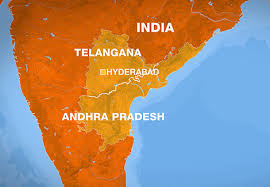
India has been hit by a severe heat wave that has killed about 500 people. The majority of deaths have occurred in the south states of Telangana and Andhra Pradesh. Temperatures have hit about 48 degrees Celsius (118 Fahrenheit). The heat wave in these states has actually been going on since mid-April, but most of the deaths have occurred in the last week. The heat wave is expected to persist for at least a few more days.
US Defense Secretary Ashton Carter blamed Iraqi military forces for the fall of the city of Ramadi. Carter noted that the Iraqi forces were not outnumbered by the forces of the Islamic State, but that they lacked the will to fight. The admission is a striking confession that the current US strategy of simply arming and training Iraqi forces was not working, but he offered no alternative. The city is about 100 kilometers from the capital city of Baghdad. But Shi’ite militias, backed by Iran, are mobilizing to retake the city. Once again, the US is dependent upon its erstwhile enemy to defend its interests. It’s not clear how long the US will continue this willful game of denying reality.

After four months of negotiations, the Greek Finance Minister indicated that there is not enough money to satisfy the IMF when its debt comes due next month. The statement is the most explicit one so far indicating that Greece is likely to experience a credit “event.” A credit event is actually a formal designation of the inability to pay which is made by a completely private organization called the International Swaps and Derivatives Association. The power to declare a credit event is extraordinary and it is made by a committee as described by the ISDA:
The ISDA Credit Derivatives Determinations Committees (DCs) each comprise 10 sell-side and five buy-side voting firms, alongside three consultative firms and central counterparty observer members. Their role is to apply the terms of market-standard credit derivatives contracts to specific cases, and make factual determinations on Credit Events, Successor Reference Entities and other issues, based on information provided to the DCs by credit default swap (CDS) market participants.
Note that there is no representative from any government or international organization that could be held accountable by any transparent mechanism such as an election. The fate of millions of people is determined by a small committee comprised of entities whose names we never know.
An international group of women activists completed a peace march across the Demilitarized Zone separating North and South Korea. The group of 30 wmoen were led by Gloria Steinem, the Irish Nobel Peace Prize-winner Mairead Maguire, and the Liberian activist Leymah Gbowee. They were met by angry protesters from South Korea who were angry that the women had cooperated with the North Korean regime which the protesters regard as an illegitimate regime.

The US conducted overflights over the areas in the South China Sea that China has claimed as its national territory. The Chinese ordered the US planes to leave immediately (eight times!). The fear is that China is trying to enforce a military exclusion zone in what the US and other countries regard as international waters. The risk of an overt confrontation is high, but the costs of allowing a country to unilaterally declare part of the high seas as sovereign territory are also quite high. For example, every eight hours an oil tanker sails those waters to deliver oil to Japan, and the possibility that those deliveries could be jeopardized during a time of crisis is likely something the Japanese would not be willing to tolerate. We will see how the game of chicken progresses.
The Islamic State has claimed responsibility for the bombing of a Shiite mosque in Saudi Arabia. If true, the act represents a direct challenge to Saudi control and will likely cause a firm response. Saudi Arabia has to take some responsibility for the success of the Islamic State since the IS espouses a policy quite similar to the Wahhabism practiced in Saudi Arabia. But the caliphate declared by the IS represents a direct challenge to the monarchy established in Saudi Arabia.
For several years we have worried more about ice melt in the Arctic than in the Antarctic since the ice in Antarctica did not seem to be melting nearly as quickly. But recent evidence suggests that since 2009 the rate of ice melt in Antarctica has increased far more than predicted. Ice melt in Antarctica is a more serious issue for the world as a whole since more of the ice in Antarctica rests on bedrock and would therefore contribute more to a rise in sea levels. Once again, what we didn’t know proves to be especially important.
One of the most interesting undercurrents of contemporary world politics is the growing belief that “Western” values are not universal. These values grew out of the Enlightenment and underpinned the period of European domination of world politics. Whether it be the debate on Asian values, the Chinese government’s explicit rejection of the idea of democracy, Hungary’s President Viktor Orban’s desire to build an illiberal state, or the Islamic State’s repudiation of the separation of church and state, many Enlightenment values are challenged. Jacob Soll has an excellent review of the idea of the Enlightenment that places these challenges in context.
Tzipi Hotovely, Israel’s deputy foreign minister, gave a speech on Thursday in which she asserted that Israel has a right to all of the territory in the Biblical land of Israel. Hotovely does not support the two-state solution and believes that Israel has the right to annex all of Palestine. She used Biblical references to that right leading one diplomat present at the speech to remark that “..it’s the first time anyone has asked us to use verses from the Torah for public diplomacy abroad.” As of now, the speech has yet to be reported in the US media.
The Islamic State took control of the Syrian city of Palmyra, further tightening its grip on central Syria and Iraq. The city is renowned for its ancient Roman ruins, but the takeover is rattling those who believe that the Islamic State is much stronger than has been believed. The advance comes after the takeover of the Iraqi city of Ramadi, which is not far from the capital of Baghdad. It does not appear as if the strategy of using just airpower to contain the Islamic State and President Obama has come under harsh criticism from hawks in the US.

The Anglo-Persian Oil Company was created in 1903. It was a British company that forged a tempestuous relationship with Iran that ultimately led to the Iranian nationalization of it oil resources in 1951. When the oil company was reborn, it became British Petroleum and is now known as BP. The relationship between the British government and BP is long-standing–for a long time, there were always two representatives of the British government on the Board of Directors, and the British government had a veto over all company operations that affected British foreign relations. That formal cozy relationship over time became more “Americanized” as the institutional links between government and oil companies became a matter of personal relationships and unstated assumptions for both government and companies. The legacy of that relationship is quite pronounced in the current operations of BP. The issue is quite delicate when it comes to the public concerns over carbon emissions.
Malaysia and Indonesia have stated that they are willing to offer “temporary” assistance to Rohingya refugees, but that they would not take any more refugees other than the 3,000 already rescued. The move is a partial victory for the refugees who have been sailing around in search of any country to take them in. Thailand has refused to offer even temporary shelter. The rich countries, such as the US, are willing to grant financial assistance, but have not indicated any willingness to offer sanctuary to any of the refugees. The tragedy continues.
Seven years after the onset of the Great Recession, some have begun to ask the question of whether any lessons were learned from the near-collapse of the financial industry. There have been some efforts, most notably in the Dodd-Frank legislation that attempt to regulate the worst behavior of the financial firms that cost the global economy close to $7 trillion in 2008-09. Unfortunately, the answer seems to be no. A report by the University of Notre Dame, commissioned by the law firm Labaton Sucharow “surveyed more than 1,200 people in the financial-services industry—account executives, wealth advisors, financial analysts, investment bankers, operations managers, and portfolio managers—in both the U.S. and the U.K. to look at whether increased regulations, along with calls for a cultural change, have had any demonstrable effects.” According to Bourree Lam:
“So how does the financial-services industry view its own behavior, legally and ethically? Not so great, it turns out. Nearly half of the respondents felt that it was likely that a competitor has engaged in unethical or illegal activity in order to gain an edge. Perhaps more shocking are those who say they’ve witnessed such wrongdoing: 23 percent reported personally observing or having firsthand knowledge of misdeeds. That number jumps to 34 percent when looking only at those earning more than $500,000, suggesting that enhanced status and earnings bring a higher likelihood of witnessing wrongdoing.”
I suspect we should prepare to get ready for the Great Recession, Part 2.
Russia has banned “undesirable” international organizations which are defined as any “foreign or international organisation that presents a threat to the defensive capabilities or security of the state, to the public order, or to the health of the population”. The move is designed to prevent those organizations from having an effect on the upcoming national elections in 2016. It is viewed by many as an attempt to prevent the further infiltration of Western ideas into Russian civil society. The legislation will further the isolation of Russia from international civil society. The move is also troubling because it appears as if Russian society is suffering from willful inattention to serious domestic problems such as the spread of the HIV/AIDS virus throughout the country.
Farmers always have a difficult life, and non-farmers really have a hard time understanding those difficulties. The natural rhythm of agricultural life is to become deeply indebted at the beginning of planting season and then hope for a good harvest to repay those debts. When the harvests are bad, farmers really have no place to turn. In India, the rate of farmer suicides is extraordinarily high and the society as a whole has not come to grips with the problem. Forty-one farmers commit suicide every day in India.
Robert Kaplan has written an interesting essay on the art of war. His historical analysis is well-informed, and his argument is straightforward, but very difficult for great powers to understand fully. The key to the survival of power is to learn how to not fight.
Empires were once the pre-eminent political structures in the world, and there was a wide variety of forms of governance within them. There are supreme difficulties in comparing them, but analysts always try. Balaji Viswanathan gives the argument for ranking the Mongols as the greatest empire ever. It is a highly persuasive case. In fact, it is hard to imagine how the world would have evolved without the unification of Europe and Asia forged the the Khanates.

Speaking of empires, Cossacks in St. Petersburg dedicated a new statue of Russian President Putin. It portrays a bare-chested Putin dressed in the toga of a Roman Emperor. The statue was the brainchild of Andrey Polyakov, the Ataman of the Cossacks in St. Petersburg. Mr. Polyakov has also issued Russian passports to “Alaskan Cossacks” in an effort to reclaim Alaska for Russia. The US purchased Alaska from Russia on March 30, 1867, for 7.2 million U.S. dollars (about two cents per acre). Mr. Putin celebrated by scoring 8 goals in an exhibition hockey game (I wonder how the goalkeeper calculated the benefits of blocking Mr. Putin’s shots).

There was a protest march in Accra, Ghana, against electricity shortages in the country which have devastated the economic growth of the country. Reliable power is one of the most debilitating characteristics of many African economies. Energy infrastructures are expensive and difficult to maintain, but it is virtually impossible to have sustained economic growth if electrical supplies are irregular and sporadic. People in the richer countries take power supplies for granted, but there is a great deal of evidence that even in the rich countries, the energy grid is becoming somewhat fragile.

