Stock markets all over the world are having a really rough time. It’s been almost 5 years of growth in the markets, so it is not a great surprise. But the global economy is in for a rough ride.
The recent disaster in Tianjin has raised serious questions about environmental safety in China. There have been unsubstantiated reports of high levels of cyanide lingering around the site of the explosion and evidence of massive fish kills in surrounding waters. But there is little question that China must face its environmental protection issues more openly: according to Berkeley Earth, an NGO that has done extensive monitoring of China’s air pollution, breathing Beijing’s air is equivalent to smoking 40 cigarettes a day.
North and South Korea have exchanged artillery fire across the Demilitarized Zone. The North initiated the attacks to protest the joint military maneuvers between South Korea and the US. But both sides have been waging an intense propaganda war that have aggravated tensions. These exchanges are not unusual on the Koran peninsula. Typically, they do not lead to wider conflicts, but every time they happen there is always a danger of one side or the other making a miscalculation or a mistake.
According to the US National Oceanic and Atmospheric Administration (NOAA), July was the warmest month recorded since records started being kept in 1880. According to the Los Angeles Times:
“The new record was fueled by the oceans. Across the globe, the average sea surface temperature in July was 62.85 degrees F, 0.13 degrees higher than the previous monthly record (set in July 2014) and 1.35 degrees higher than the average for the 20th century. All 10 of the hottest months for sea surface temperatures have occurred since April 2014, the NOAA report noted.”
Land temperatures were also very high. The situation is likely to get worse as the el Niño strengthens in the winter.
Greek Prime Minister Alexis Tsipras has resigned in an attempt to form a new government which might give him more support that his bitterly divided party, Syriza. Tsipras has been forced to back down from his earlier hard-line positions vis-a-vis the troika, and many members of his party consider him a traitor. Without solid party support, Tsipras will be unable to govern effectively. He is hoping that new elections will give him a more effective political base. The risk is quite high, but Tsipras likely does not have much of a choice. In a month we will have the decision of the Greek voters.
Emerging markets are one of the most vulnerable of all in the process of globalization. Over the last few years, emerging markets have borrowed much money in dollars, driven by the fact that interest rates in the US are so incredibly low (essentially zero). Now, however, as the Federal Reserve Bank has begun to make noises about “normalizing” interest rates, raising them slightly in order to prevent an outbreak of inflation that could be a result of the easy money policy of the recent past. The threat of higher interest rates, however, has led to a flood of money leaving the emerging markets–a situation that would threaten their stability. The Financial Times has estimated that the outflow of money from the emerging markets into the US has reached $1 trillion–a very dangerous outcome if it persists. Many of these countries will be forced to devalue their currency, a process that has started with China, Vietnam, and Turkey.
The developing el Niño could be the strongest ever recorded (although, to be fair, records only go back to 1950). The temperature of the eastern Pacific along the South American coast rises during an el Niño event with consequences for many other areas of the world. If California is lucky, it will get heavier rains (although those rains will bring the probability of mudslides). Australia and Indonesia will likely experience drought. In the US east, wind shears from the event will most likely minimize the frequency of hurricanes in the Atlantic.
The refugee crisis in Europe affects all states. Bulgaria is trying to cope with a large influx of refugees, but its resources are stretched quite thin. Bulgaria is building a fence (as is Turkey and Hungary) but such efforts merely make the transit of refugees more dangerous, not less likely. Such barriers also increase the ability of traffickers to take advantage of these vulnerable people: a lucrative activity for the traffickers, but a tragedy for the refugees and migrants. Europe has to come up with a more systematic response to this crisis.
Glaciers in the Tian Shan (in Chinese, “Celestial Mountains”) mountain range in Central Asia are melting at a faster rate than glaciers in other parts of the world, and by 2050 these glaciers could be gone. The glaciers currently supply many countries in the region with their only supply of fresh water, and the demise of the glaciers will likely trigger off competition among the states (Kazakhstan, Kyrgyzstan and northwest China) for water. By the middle of the century, access to water will likely be the major cause of conflict in the world.
Tian Shan Mountain Range from Space
Earlier estimates of how many refugees are seeking asylum in Germany appear to have been far too low. New information suggests that Germany is likely to receive nearly 750,000 refugees this year, primarily from Syria, Eritrea and Sudan. The number is shocking for a country of 80 million. But in percentage terms, Sweden is likely to receive a far higher number. Other European countries take in far lower percentages but the more important point is the extent to which people are fleeing desperate conditions in their home countries. Unfortunately, there are many in Germany who resent the refugees and are burning down the facilities made available to house them.
Bernie Sanders has made an impression on American electoral politics, but there is another left-wing politician who is making a mark. Jeremy Corbyn represents a left-wing tradition in British politics that essentially ended during the government of Margaret Thatcher (much as left wing politics in the US died during the coterminous government of Ronald Reagan) and he is making a bid for leadership of the Labour Party. Those who oppose Corbyn fear that he may reintroduce Clause IV of the Labour Party Constitution which reads:
To secure for the workers by hand or by brain the full fruits of their industry and the most equitable distribution thereof that may be possible upon the basis of the common ownership of the means of production, distribution, and exchange, and the best obtainable system of popular administration and control of each industry or service.
Perhaps left-wing politics are making a comeback in the US and Europe.
The Erawan Shrine in Bangkok, Thailand was destroyed by an improvised explosive device. At this time, no one has taken responsibility for the blast which killed 19 and wounded 123. The shrine houses a statue of Phra Phrom, the Thai representation of the Hindu creation god Brahma. The bombing was calculated to cause the maximum number of casualties and will undoubtedly affect Thailand’s reputation as a tourist destination.
Phra Phrom
Russian President Putin is on a three day visit to Crimea, the part of Ukraine annexed by Russia in April 2014, an annexation still not recognized by many countries in the world His visit was accompanied by a resurgence of violence as Russian-speaking separatists try to tighten their control over eastern Ukraine. Poland’s new President Andrzej Duda will visit Estonia next week and he is expected to push hard for NATO troops to be stationed in what he terms “front-line” states (the Baltic states and Poland) to contain Russian aggressive moves. The situation in eastern and central Europe is definitely getting more tense.
South Sudan’s President Salva Kiir has refused to sign a peace agreement that was forged in Ethiopia. The agreement was designed to end a civil war in the young country (South Sudan was created four years ago after a secession movement from Sudan). Apparently, Kiir believes that the agreement gives too much authority to the rebel leader, Riek Machar. The civil war has been going on since 2013 and has displaced about 1.6 million people. South Sudan is plagued by food insecurity affecting nearly 5 million people and outbreaks of disease such as malaria which has decimated the country.
The alliances among the states and non-states actors in the region of the world we call the Middle East are extraordinarily complex and susceptible to minor (and sometimes major) shifts. There is a remarkable website called “Information is Beautiful” which dedicates itself to the graphic display of information. One of their graphics conveys the alliances in the Middle East (including major non-Middle East countries) and shows how these alliances cross all sorts of regional and ideological divides. You can access the graphic here.
An organization called Trucost is dedicated to assessing the costs of environmental damage as part of the normal economic process. Unfortunately, mainstream economics does not factor environmental damage into the costs of a product, instead referring to these costs as “externalities” since those costs are generally not included in the price of a product (and therefore affecting the profitability of a product). Turcost treats environmental damage as an “unpriced natural capital costs” and categorizes them in terms of six categories: water use, greenhouse gas (GHG) emissions, waste, air pollution, land and water pollution, and land use. In its most recent study Trucost estimates that the unpriced natural capital costs of some key industrial products is about US$7.3 trillion or almost 8% of the value of the total gross global product. Needless to say, if companies were forced to include the price of environmental damage in their prices, many companies would not be profitable. The important thing to remember, however, is that ultimately these costs have got to be paid, either in terms of tax monies used to clean up the mess or in terms of lives lost due to degradation in the ability of the planet to support life.
For a good example of how this plays out, one need only to look at the recent toxic waste spill in the Animas River in Colorado. The US Environmental Protection Agency caused the spill because it was trying to clean up a mess made earlier by a mining company that not longer works the mine. The mine was governed by the General Mining Law of 1872 which permits companies to avoid paying market value for the minerals they intend to mine and which does not include environmental protection as an obligation to work the mine. Public land being used for private profit without adequate protection for the public interest is clearly a bad idea.
Israeli Prime Minister Netanyahu has appointed Danny Danon as Israel’s Ambassador to the United Nations. Danon has long opposed the two-state solution and does not support the creation of a Palestinian state. Further, according to the New York Times, he:
“has called for Israel to annex all West Bank settlements, annul the Oslo Peace Accords and allow Jews to pray on the Temple Mount. He has described the Obama administration’s criticism of Israeli construction in East Jerusalem as racist and said the United States is not an honest broker between Israel and the Palestinians.”
In short, Ambassador Danon rejects the US bargaining position on the Israeli-Palestinian conflict and the official position of the UN and the European Union on the terms of an ultimate settlement to the conflict.
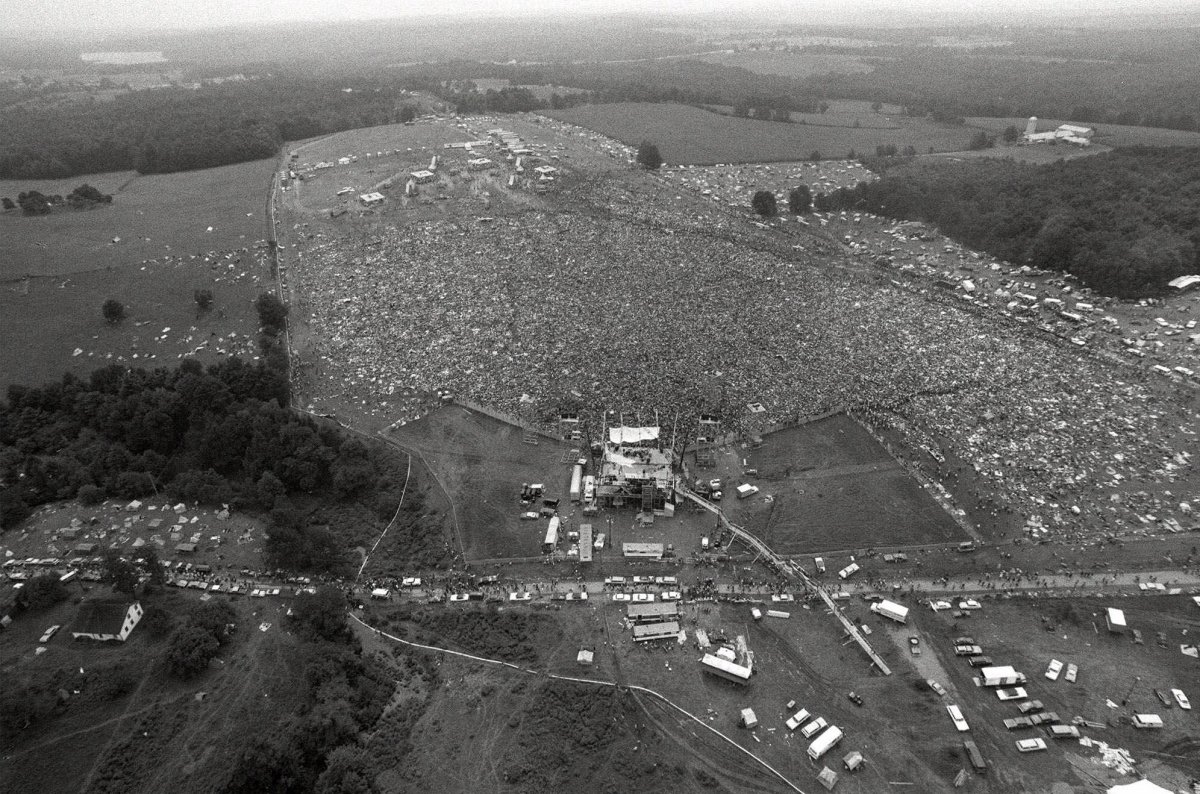
46 years ago, a defining moment in the history of the world (please pardon my hyperbole) occurred: The Woodstock Music and Art Festival. Perhaps as many as 400,000 people attended the festival (unfortunately, I did not). Many artists made breakthrough performances and became forever identified with the movements of the 1960s (Peace, Civil Rights, LGBT, and Women’s). It all occurred on Max Yasgur’s Farm in Bethel, New York.
The Guitar God, Jimi Hendrix (who served as a paratrooper in the US Army before he became a star)
Jefferson Airplane with lead singer, Grace Slick (who named her first child, God) and who had the bluest eyes in the universe.
Country Joe and the Fish
Richie Havens
And, they were there although they did not perform the iconic song, “Woodstock”, which was written by Joni Mitchell who also performed at Woodstock, Crosby, Stills, and Nash.
US officials are reporting that an American hostage was raped and killed by the leader of the Islamic State, Abu Bakr al-Baghdadi. Kayla Mueller went to Turkey as a humanitarian aid worker to aid Syrian refugees before she was abducted by the Islamic State. The report follows information concerning the systematic use of rape by ISIS, particularly against Yazidi women. Indeed, the information suggests that ISIS has a “theology” justifying rape of those ISIS considers to be infidels. The report will undoubtedly inflame US sentiments against the Islamic State–I suspect the “war on terror” will ratchet up soon: release of such information always serves a political purpose.
The US opened its Embassy in Cuba today, ending years and years of diplomatic isolation. US Secretary of State was at the opening, and his speech was refreshingly honest: he acknowledged the US role in fostering the hostility between the two countries, as in the Bay of Pigs invasion in 1961. Relations between the US and Cuba are still fraught with disagreements, such as the US naval base in Guatanamo which the US still maintains despite Cuba requests that it be closed. But the opening of relations is a necessary first step.
Berkeley Earth, a research organization based in Berkeley, California, released a report that estimated that about 4,400 Chinese people die every day because of the effects of air pollution. According to The Times of India: “about three-eighths of the Chinese population breathe air that would be rated ‘unhealthy’ by United States standards.” The Chinese government has tried very hard to reduce air pollution in the country, but there are economic interests in the country that rely heavily on production techniques that are oblivious to environmental quality.
The Islamic State continues to wreak havoc against Shia communities in Iraq. It took responsibility for a bomb blast in a market that killed at least 60 people. The terror war represents the Islamic State’s desire to reestablish Sunni control in Iraq, control which disappeared after the US overthrow of Saddam Hussein in its 2003 invasion. Unfortunately, the tragedy in Iraq is obscured by political posturing in the US about the threat ISIS poses to American national security. The real focus of US foreign policy should be on how to protect the innocent civilians in Iraq who are being slaughtered.
China allowed its currency to decline in value for the third straight day, leading to a 4.4% devaluation of the yuan. The inability of the Chinese government to gain control over the currency mirrors its inability to stabilize the Shanghai stock market without extensive intervention. The market failures are not necessarily dangerous in and of themselves–we witness similar failures in the US and Europe at various points. But the governments in the US and Europe only intervene when catastrophe looms (as in the bank bailouts in 2008). We do not know how the Chinese people will regard the inability of their government to control these problems. Trying and failing may raise questions of legitimacy.
An 11-year old girl has given birth in Paraguay to a child conceived after her rape by her stepfather. Paraguayan law does not permit abortion (which was requested by the girl’s mother) except to save the life of the mother, so the baby was born by a Caesarean section. There were protests from several international organizations who regarded the inability of the girl to receive an abortion to be a violation of her human rights. The conflict between those who support liberal conceptions of freedom and those who support a more culturally determined definition of freedom continues.
Photograph of the Perseid Meteor Shower from Finland
Greece has signed a 29-page document with the troika concerning the terms of the release of money being offered in order to allow Greece to repay its debts on time. The document is breathtaking in its scope–it involves an almost complete abdication of national sovereignty. The agreement reads, in part:
“No unilateral fiscal or other policy actions will be taken by the [Greek] authorities. All measures, legislative or otherwise, taken during the programme period, which may have an impact on banks’ operations, solvency, liquidity or asset quality should be taken in close consultation [with the troika].”
The Greek parliament has to approve the deal, and Germany has indicated that it still has some reservations. Furthermore, it is not clear that the deal meets the IMF’s insistence on a degree of debt reduction. So there is still more drama to come.
The outgoing Army chief of staff, General Ray Odierno, testified that US troops on the ground will be necessary to defeat the Islamic State. Odierno has a great deal of experience directing US troops in Iraq over the last years of the US war in Iraq, and he does not believe that an air campaign will be sufficient to eliminate the ISIS threat. His position has a great deal of support among some members of Congress, and his statement is worrisome in that it provides cover for those who want a more robust response to ISIS. Unfortunately, it remains unclear how a large number of American troops could accomplish the mission. Large numbers of American troops did not achieve the objectives of the Iraq War from 2003-2011.
Heat waves continue to be a global problem. After extreme heat in India, Pakistan, and Iran (where a heat index–temperature and humidity–reached an astonishing 163 degrees F), now Egypt is in the grip of a heat wave that has killed 61 people. As is usually the case, the dead are the most vulnerable: the elderly and those who are required to work outside. Air conditioning is a unreliable alternative as electrical generating services are sporadic.