Venezuela continues to disintegrate. Protests against the President, Maduro, have failed to remove him from office and the delay likely means that a referendum on his presidency cannot be held until 2017. The practical consequence of the delay means that if he is removed in 2017, his Vice-President will replace him. If he were removed in 2016, then a new election would have to be held. It now appears as if the Socialist Party will remain in control of the government until 2018 and it is not clear that the Venezuelan economy and people can endure two more years of misrule.
The Washington Post has a fascinating article on the profiles of individuals who have committed mass murders in the US, including those acts associated with religion and those not associated with religion. Interestingly, the common traits of these individuals seem to overwhelm the issue of religiosity. The issue is important as society wrestles with the phenomenon of “lone wolf” terrorists. According to the article:
“According to the New America Foundation, jihadist-linked attacks in the United States since 9/11 have killed 94 people — and more than half of those were slain by Mateen [the murderer in the Orlando killings]. Such incidents, though more frequent in recent years, still account for a tiny fraction of the more than 200,000 homicides in the United States since 2001. Meanwhile, this year alone, non-jihadist incidents of mass shootings have killed nearly 100 people.”
If we are to anticipate such attacks in the future, we need to look far beyond the issue of religious affiliation or motivation.
President Obama has vetoed the Justice Against Sponsors of Terrorism Act which was passed by both houses of the US Congress by large margins. The legislation would allow American families to sue the Saudi Arabian government for damages incurred in the attacks of 11 September 2001. In more theoretical terms, the law would remove the immunity of sovereign governments in US courts. It is highly likely that if the US were to make this possible, then other governments would pass similar laws allowing their citizens to sue the US government. Needless to say, national courts are not unbiased venues for international disputes.
New calculations indicate that the world already has access to reserves of oil, natural gas, and coal that are sufficient, if burned, to raise global temperatures by 2 °C, a level believed by many scientists to unleash significant, and possibly unmangaeable, changes to the climate. According to the study:
“Scientists say that to have even a two-thirds chance of staying below a global increase of two degrees Celsius, we can release 800 gigatons more CO2 into the atmosphere. But the Rystad data shows coal mines and oil and gas wells currently in operation worldwide contain 942 gigatons worth of CO2.”
The research is significant because it suggests that additional exploration for hydrocarbon reserves is counterproductive and dangerous. But significant parts of the global economy are absolutely dedicated to additional explorations. There is a clear disconnect between economic and environmental rational behavior.
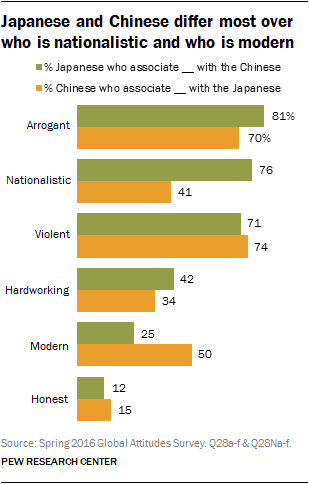
Many countries have bad feelings about their neighbors, but there are not many that can match the hostility of Japan and China. The hostility is built upon centuries of ill-fated relations, capped off by a particularly brutal period from 1931-45. The Pew Research Center has conducted a poll among citizens of both countries and the mistrust is profound:
“Today, only 11% of the Japanese express a favorable opinion of China, while 14% of the Chinese say they have a positive view of Japan. In both countries positive views of the other nation have decreased since 2006.”
One remarkable feature of the poll is the degree to which both countries hold degrading stereotypes of each other.
There is a fascinating struggle going on in Switzerland. Many Swiss schools have a tradition of students shaking the hand of their teachers but two male Muslim students have refused to shake the hand of their female teacher because their interpretation of Islam forbids people of opposite sexes touching each other. The dispute revolves around the degree to specific cultural norms can override personal beliefs, and the degree to which a dominant culture can demand conformity from minority groups.
Yesterday, US President Obama gave his last speech as President to the UN General Assembly. For the purposes of the current course on World Politics, there is perhaps no better summary of the US vision of its preferred wold order. The most relevant part reads as follows:
I recognize not every country in this hall is going to follow the same model of governance. I do not think that America can — or should — impose our system of government on other countries. But there appears to be growing contest between authoritarianism and liberalism right now. And I want everybody to understand, I am not neutral in that contest. I believe in a liberal political order — an order built not just through elections and representative government, but also through respect for human rights and civil society, and independent judiciaries and the rule of law.
We will be discussing the liberal world order in the coming weeks and it would be useful for everyone to keep these words in mind.
Refugees have never been treated well, so we should not be surprised at how politically controversial they are in the contemporary scene. In the 14th-16th centuries England was flooded with refugees. The political backlash against them reached a high point on 1 May 1517 when a mob attacked the refugees living in London, a day that would come to known as “Evil May Day.” Thomas More, the then deputy sheriff, confronted the mob and William Shakespeare recounted More’s speech. Ian McKellan does a brilliant job of interpreting Shakespeare’s words.
The Book of Sir Thomas More, Act 2, Scene 4
Grant them removed, and grant that this your noise
Hath chid down all the majesty of England;
Imagine that you see the wretched strangers,
Their babies at their backs and their poor luggage,
Plodding to the ports and coasts for transportation,
And that you sit as kings in your desires,
Authority quite silent by your brawl,
And you in ruff of your opinions clothed;
What had you got? I’ll tell you: you had taught
How insolence and strong hand should prevail,
How order should be quelled; and by this pattern
Not one of you should live an aged man,
For other ruffians, as their fancies wrought,
With self same hand, self reasons, and self right,
Would shark on you, and men like ravenous fishes
Would feed on one another…. Say now the king Should so much come too short of your great trespass As but to banish you, whither would you go? What country, by the nature of your error, Should give you harbour? go you to France or Flanders, To any German province, to Spain or Portugal, Nay, any where that not adheres to England, Why, you must needs be strangers: would you be pleased To find a nation of such barbarous temper, That, breaking out in hideous violence, Would not afford you an abode on earth, Whet their detested knives against your throats, Spurn you like dogs, and like as if that God Owed not nor made not you, nor that the claimants Were not all appropriate to your comforts, But chartered unto them, what would you think To be thus used? this is the strangers case; And this your mountainish inhumanity.
The US is considering arming Syrian Kurds directly to aid them in their fight to push Daesh (the Islamic State) out of the Syrian city of Raqqa. Such a move would be considered an unfriendly act by Turkey which has moved its own troops into Syria specifically to prevent the Kurds from succeeding. But the Kurds are a more effective fighting force than the Turks and the US considers them more reliable. This decision will reveal a great deal about how the Obama Administration views the best outcome for the US in the Middle East.
Air strikes destroyed a convoy of 31 trucks carrying humanitarian supplies to besieged civilians in Syria. The trucks were clearly identified as part of a Red Crescent operation and officials in Syria had been notified earlier about the convoy in hopes of offering a degree of immunity that is obligatory to any humanitarian mission. There were no details about which side conducted the attack, but there is little question that the attack was a horrific war crime. At some point we have to hope that the international community will take strong action to punish the perpetrators of this atrocity.
North Korea has successfully tested a high-powered rocket engine for the expressed purpose of launching a geo-stationary orbit. A problem arises because this capability also gives North Korea to launch an intercontinental ballistic missile which could threaten any country in the world. Given the increased capabilities of North Korea, there is a high likelihood that some states will think more systematically about ways to prevent North Korea from becoming a serious threat to international peace. Some of those alternatives may include actions to forcibly disarm North Korea.
Russian President Vladimir Putin’s United Russia Party won convincingly in the round of parliamentary elections for the lower house of the Russian Duma. The outcome augurs well for Putin if he decides to run for re-election in 2018. United Russia won about 51% of the preliminary vote although the number of voters dropped to about 40%, down from the 60% of the previous Duma election. The decline may indicate a softening of support for Putin given the economic weakness in the country right now.
United Russia Logo
The cease-fire in Syria has ended and it was a miserable failure. Fighting was stopped sporadically but little humanitarian aid was funneled into the country. No state took any initiative to strengthen the cease-fire and the Russian/Assad coalition is firmly in control. At some point, the fighting will end due to sheer exhaustion, but Assad will never be able to rule the country. The Syrian people have been totally betrayed by the international community.
Interactions between Christian and Muslim rulers are long-standing and should not be viewed exclusively from the lens of the 20th century. The rift between Catholics and Protestants in Christianity was a leverage point for many who sought non-Christian allies, and an important determinant of trading patterns in early Modern Europe. Protestant England was the first to exploit the rift, but, ultimately, could not outflank the Catholic Spanish who could offer Muslims the gold and silver stolen from their colonies in the world.
Hungary, Poland, the Czech Republic and Slovakia (known collectively as the Visegard Group or V4) have made it clear that they will not allow Great Britain to retain access to the free market of the European Union unless it simultaneously grants the right of free movement of EU citizens into Great Britain even if it leaves the Union. Restricting the inflow of workers from other Union countries was a key objective of the leaders of the Brexit movement in Great Britain. The hard-line stance of the V4 suggests that the negotiations between the Union and Great Britain are going to be very difficult.
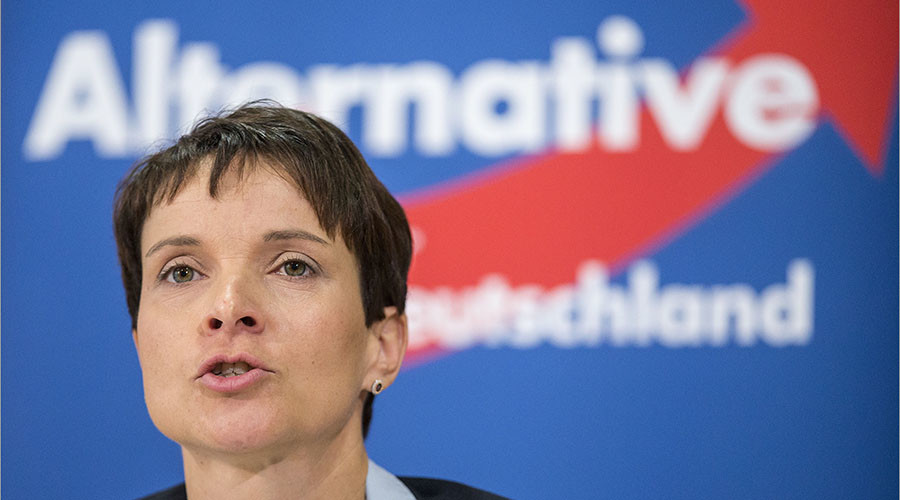
Angela Merkel’s Christian Democrats suffered yet another electoral blow as the anti-immigrant Alternative for Germany (AfD) did surprisingly well in elections in Berlin. Both the Social Democrats and the Christian Democrats lost ground while the right wing AfD took 12.2 percent of the vote. That percentage will allow the AfD to crack the 10% vote barrier for representation in regional assemblies. Merkel is slowly but surely losing mainstream support and it is difficult to see who will take her place and what country could take Germany’s place in the European Union.
Japan’s National Institute of Population and Social Security has conducted a survey of unmarried individuals in Japan and has found that 42 per cent of single men and 44.2 per cent of single women have never had sex. The results suggest a high degree of economic insecurity among Japan’s young and is very troubling to a society that has significantly more people on pensions than it has working people paying into those pensions. Gross public debt in Japan currently stands at 250% of Gross Domestic Product.
A US bombing attack in Syria has accidentally killed 62 Syrian government troops. The US believed it was bombing a Daesh (Islamic State position) but it actually struck Syrian troops fighting Daesh. Both US and Russian forces have failed to target properly in Syria, and the Russians blamed the Americans for not coordinating its attacks with the Russian military. The error has rattled the already unsteady cease-fire in Syria.
Protests were held in a number of European cities against the Transatlantic Trade and Investment Partnership (TTIP) with the US and the Comprehensive Economic Trade Agreement (CETA) with Canada. Sentiment against the trading pacts has been steadily growing as more people become convinced that free trade does not benefit everyone in society fairly. Support in the US for the TTIP has virtually collapsed as both presidential candidates have voiced opposition to various parts of the deals.
Michael Klare, our colleague at Hampshire College, has written a provocative essay for Le Monde Diplomatique. It is entitled “Sleepwalking into a big war” and Michael assesses the likelihood that the world is paying insufficient attention to the forces that the major powers are cultivating that could culminate in an unexpected great power war. I don’t think the situation is as serious as Michael apparently does, but there is no question that we are moving in that direction.
Scientists believe that the sea ice in the Arctic reached its minimum extent on 10 September and it appears to have tied 2007 as the second lowest level recorded. 2012 remains the smallest sea ice ever recorded by far. The sea ice is far below the median levels recorded between 1981-2010. The Arctic continues to be the area of the world most affected by climate change.
The International Monetary Fund has done an analysis of the conflicts in the Middle East and North Africa (there will not be any questions on the quiz about the report specifically) and, not surprisingly, found that the costs are devastating, not only for the countries directly involved, but also for surrounding countries. The proposition might seems obvious, but it is very important to quantify the costs so that we can speak more intelligently about what happens when the world decides to resort to violence to solve problems.
The Northwest Passage through the Arctic Ocean has been the dream of many explorers since it would avoid the lengthy transit through Tierra del Fuego or (much later) through the Panama Canal. Ice pack has restricted the use of the Northwest Passage through much of modern history, but that seems about to change with global warming. China intends to use the Northwest Passage extensively since it cuts off many days of ocean traffic to European markets. But the crucial question for the world is whether the Northwest Passage will be considered an international strait or a passage through Canadian territory.
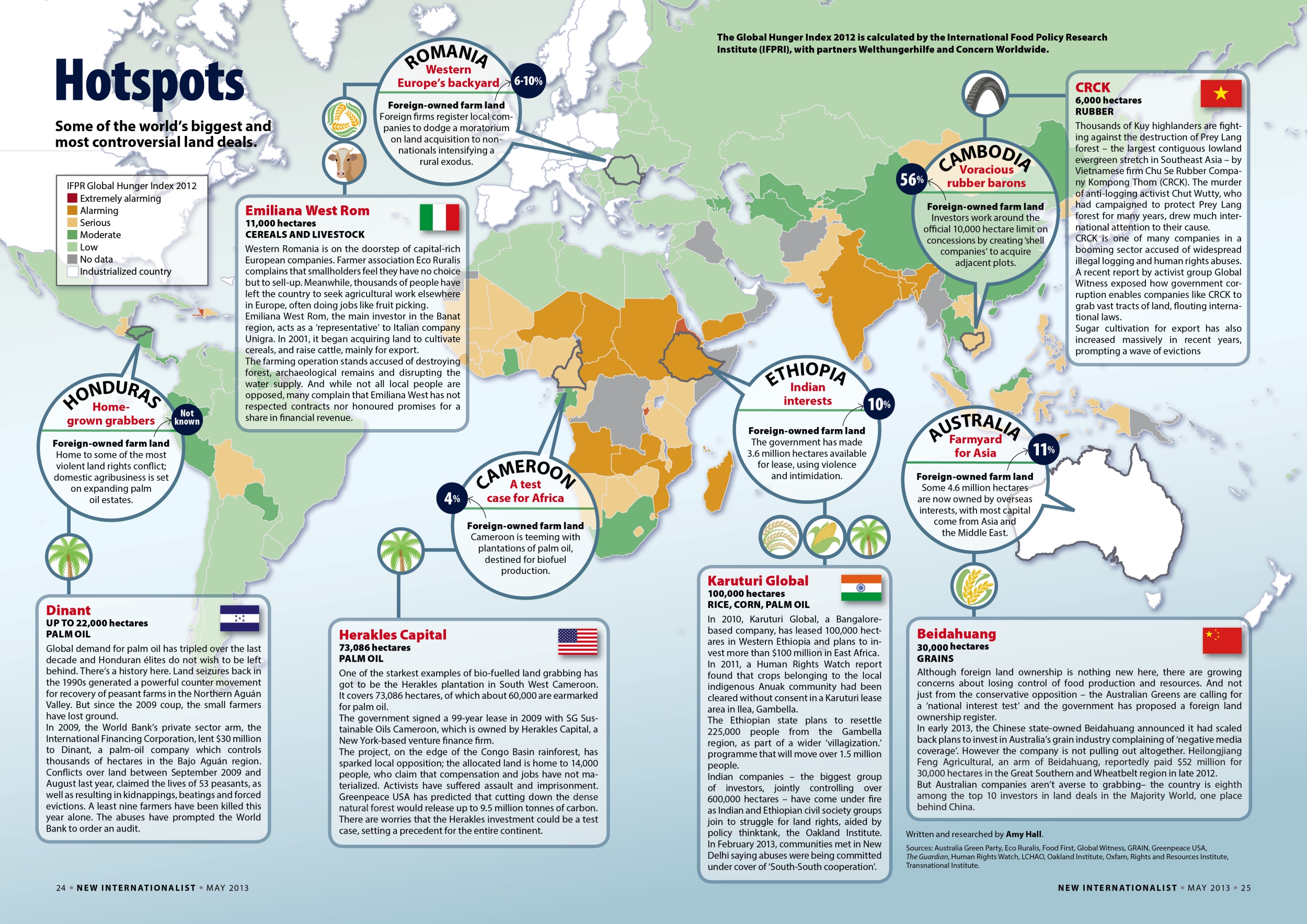
The International Criminal Court was established in 2002 and it was hailed as an important step forward in the prosecution of war crimes and crimes against humanity. In truth, the record of the ICC has been mixed in terms of its effectiveness, but its failures have been due to the lack of support from many nation-states–including the US which refuses to sign the ICC treaty. Nonetheless, the ICC has announced that it is enlarging its mandate to include environmental crimes as a subset of crimes against humanity. The expansion could offer tremendous protections against what are known as landgrabs, where states award private corporations certain land rights that intrude upon traditional uses of land by indigenous peoples.
In response to the joint Russian-Chinese naval exercises in the South China Sea, Japan and the US have announced that they will be holding joint naval exercises in the Sea as well. There will be many armed vessels in the South China Sea–let us hope that the rules of engagement are well understood by all sides so that there are no misunderstandings.
Violence has erupted in the Indian city of Bengaluru over a dispute over water rights from a river. India’s Supreme Court ordered Karnataka state, in which Bengaluru is situated, to release water from the Cauvery River to Tamil Nadu state. The dispute is over a century old and is emblematic of the likelihood of an increased number of such conflicts in the future. Water is going to be the most fought over resource of the future.
The US has agreed to give Israel $3.8 billion a year over the next ten years. It is the largest foreign aid package ever approved and represents an increase from the $3.1 billion the US has been giving Israel over the last ten years. There are some changes to the aid program, however. Israel will be required to spend the money on weapons program produced by American manufacturers. The deal was approved even though the relationship between US President Obama and Israeli Prime Minister Netanyahu is remarkably unfriendly. The deal relieves the next President from having to negotiate from a position of relative weakness. Needless to say, pro-Palestinian groups oppose the deal since there has been no progress toward a two-state solution which is the US preferred policy position on the Israeli-Palestinian conflict.
The European Union is under tremendous strain with the British vote to exit and the rise of several right-wing, anti-immigrant parties on the continent. Some of its members have taken strong measures to keep refugees out and, in the process, have violated EU rules and international law. In an unusual move, Luxembourg’s foreign minister has suggested that Hungary should be kicked out of the EU for its treatment of refugees.




 World Politics News