The Australian Broadcasting Corporation is reporting that “senior figures in the Turnbull Government have told the ABC they believe the United States is prepared to bomb Iran’s nuclear capability, perhaps as early as next month.” It is hard to assess this rather dramatic claim. It is true that the rhetoric between the US and Iran has been quite inflammatory since the US pulled out of the nuclear agreement. Not only was US President Trump’s all-capitalized tweet highly unusual, but Iranian Major General Qassem Soleimani is quoted by the BBC that he warned President Trump that “if the US attacks Iran it ‘will destroy all that you possess’.” But the US has been “preparing” to bomb Iran for many years and it is no secret that Israel has been encouraging such a move. Nonetheless, the Wall Street Journal is reporting that “National security adviser John Bolton convened a meeting Thursday of Pentagon and other top officials as the Trump administration considers how to flesh out its strategy on Iran.” The meeting is only the third that Bolton has called in his tenure as National Security Adviser and he had argued prior to his appointment that the US should attack and overthrow the Iranian government.Iran has threatened to shut down the Strait of Hormuz and Saudi Arabia has halted oil shipments through the Red Sea and the Strait of Bab el-Mandeb after it claimed that Iranian-backed Houthi rebels in Yemen attacked two oil tankers in the Red Sea.
To Iranian President Rouhani: NEVER, EVER THREATEN THE UNITED STATES AGAIN OR YOU WILL SUFFER CONSEQUENCES THE LIKES OF WHICH FEW THROUGHOUT HISTORY HAVE EVER SUFFERED BEFORE. WE ARE NO LONGER A COUNTRY THAT WILL STAND FOR YOUR DEMENTED WORDS OF VIOLENCE & DEATH. BE CAUTIOUS!
The situation is getting quite serious and no one seems to be willing to stop this train. But it is clear that both Russia and China will support Iran in any confrontation, and it seems highly unlikely that many European states would support an attack on Iran.
Mona Yacoubian of the US Institute of Peace has written a well-informed essay on the interests of Israel and Iran in Syria. Since February of this year, Israel has launched a number of armed attacks against Iranian positions in Syria, trying to prevent Iranian influence from growing stronger so close to Israel. Prior to the Syrian civil war, Iranian influence was most pronounced in Lebanon and was exercised through Hezbollah, an Iranian ally well-positioned in the Lebanese government. The rise of ISIS in Syria and Iraq, however, posed a serious problem for Iran, Israel, and Saudi Arabia. A confrontation between Israel and Iran in Syria seems almost inevitable as the Syrian government tries to eradicate the rebels in the southern part of Syria–as the Assad forces get closer to Israel, the Israelis have to figure out who controls Assad in that region which borders the Golan Heights–Russia, which the Israelis would prefer, or Iran, which Israel would consider a serious strategic threat.
“At about $1 apiece, even suppliers to the Trump campaign, who, Yao says, are located both in China and abroad, can’t resist the low price. Yao’s factory has been making Trump banners since the time his tag line as a candidate was ‘Make America Great Again’.
“’Sales have been great ever since 2015,’” she said.”
But Trump’s threats of tariffs against Chinese products may increase the price of those banners and deter Chinese manufacturers from supporting his campaign.
“Trump’s effort to wrest better trading conditions from China threatens that price advantage, and his hardline stance could eventually repel suppliers like Yao.
“’If he continues to demand tariff increases as he has been, or if he continues to agree with those who are against China, I definitely would not be able to accept (more orders),’ she said.”
“’Everyone can have a patriotic heart, but this won’t improve his economy, and instead it could make us Chinese just shoot ourselves in the foot.’”
We will have to see how this unfolds.
The Economist has a fascinating article on the differences among European nations in attitudes toward immigrants. The issue is important because of the recent sharp rise in animosity toward refugees in some European countries. Some believe that the influx of refugees is responsible for this rise in xenophobia, but a more careful analysis suggests a different explanation: the underlying racial and ethnic diversity of the nation. The article points out that:
“….the general pattern is clear: barely 1% of respondents in eastern Europe and Scandinavia had some non-Western ancestry, compared to 6% in the south and west of the continent. Overall, these measures of ethnic diversity can explain nearly a quarter of the differences between how countries have changed their sentiment to immigrants since 2014.”
The results of the study are very interesting, but they fail to explain the rise of xenophobia in the US, which is a significantly more diverse than most European nations. But perhaps, the rise in xenophobia in the US is concentrated in populations that are demographically homogeneous. I lack the data to explore that proposition.
The International Monetary Fund (IMF) is predicting that inflation in Venezuela will reach one million per cent by December of this year. The inflation rate is among the highest ever recorded and comparable to the hyperinflation in Germany in the 1930s. It is the result of extended deficit spending by the government of Nicolas Maduro and the declining rate of oil production in the country. There are widespread shortages of necessary goods such as food and medicine, the people have resorted to barter, and those people with the means have left the country, pouring into Colombia, Ecuador, and Brazil. There is rampant corruption in the country, and the crime rate has soared. Even the botanical garden in Caracas, a UNESCO World Heritage site, has fallen into disrepair. The country has collapsed, but it is impossible to see how it will recover.
Pakistan will hold a national election tomorrow and the polls suggest that the race will be very close between the Pakistan Muslim League-Nawaz (PML-N) and the Pakistan Tehreek-e-Insaf (PTI), led by Imran Khan. The leader of the PML-N, Nawaz Sharif, who has been Prime Minister three times, was convicted of corruption charges earlier this month and had been forced to resign as Prime Minister last July because of concerns over his family’s holdings of overseas properties. He had been in Great Britain but returned to Pakistan in order to bolster his party’s chances in the elections. Prior to his conviction, many thought that the PML-N would win the election, but the race has tightened and many suspect that the Pakistani army has been interfering in the process in hopes of an election that would result in a weak coalition government. Imran Khan is a former cricket star with little political experience who has been running on an anti-corruption platform. No matter what happens in the election, it is unlikely to resolve the tensions within the country.
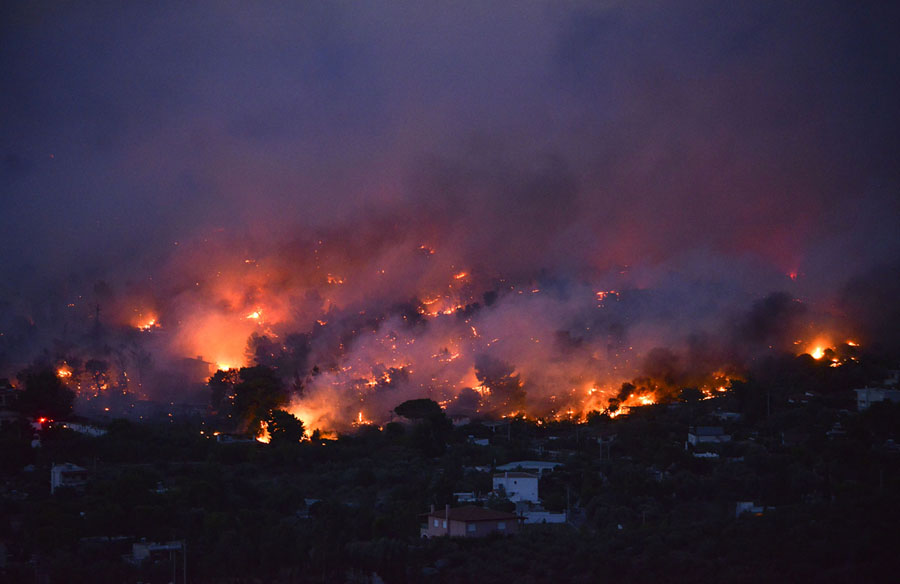
Japan has declared a national emergency as an unusual heat wave has led to 65 deaths in the last week. According to the BBC: “On Monday, the city of Kumagaya reported a temperature of 41.1C (106F), the highest ever recorded in Japan.” In Greece, 74 people have died in wildfires that caught many people off guard and are the result of a dry winter and a very hot summer. Heavy rains caused the collapse of a dam under construction in southern Laos, leading to the deaths of hundreds and leading almost 7,000 people homeless. High temperature records have been set in Sweden, Norway, and Finland and Sweden has experienced serious wildfire outbreaks. There have been 70 heat-rlated deaths in Montreal Canada, and in the US, Dallas has experienced “four consecutive days with record highs, hitting 108 or 109 F each day (42 to 43 C).” And Great Britain is going through an extended and serious heatwave, The World Meteorological Organization is blaming climate change for these heat anomalies. But Natalie Meade points out in the New Yorker: “In its 2019 budget plan, the Trump White House cut U.S.A.I.D. spending on initiatives related to the environment to roughly two hundred million dollars, a reduction of about seventy per cent from typical Obama-era spending.”
“To Iranian President Rouhani: NEVER, EVER THREATEN THE UNITED STATES AGAIN OR YOU WILL SUFFER CONSEQUENCES THE LIKES OF WHICH FEW THROUGHOUT HISTORY HAVE EVER SUFFERED BEFORE. WE ARE NO LONGER A COUNTRY THAT WILL STAND FOR YOUR DEMENTED WORDS OF VIOLENCE & DEATH. BE CAUTIOUS!”
The tweet caught a number of people by surprise because of its aggressive tone and content, and I would think that the message is probably unique in the history of diplomatic exchanges. The back story to the tweet, however, is interesting. US Secretary of State, Mike Pompeo, gave at the Reagan Library in California yesterday. It was also a very hostile speech, reflecting the Administration’s concern over Iranian power in the Middle East. One part of the speech was revealing:
“Economically, we see how the regime’s decision to prioritize an ideological agenda over the welfare of the Iranian people has put Iran into a long-term economic tailspin. During the time of the nuclear deal, Iran’s increased oil revenues could have gone to improving the lives of the Iranian people. Instead they went to terrorists, dictators, and proxy militias. Today, thanks to regime subsidies, the average Hizballah combatant makes two to three times what an Iranian firefighter makes on the streets of Iran. Regime mismanagement has led to the rial plummeting in value.A third of Iranian youth are unemployed, and a third of Iranians now live below the poverty line.
“The bitter irony of the economic situation in Iran is that the regime uses this same time to line its own pockets while its people cry out for jobs and reform and for opportunity. The Iranian economy is going great – but only if you’re a politically-connected member of the elite. Two years ago, Iranians rightfully erupted in anger when leaked paystubs showed massive amounts of money inexplicably flowing into the bank accounts of senior government officials.”
“Addressing a gathering of Iranian diplomats, Rouhani said: ‘Mr Trump, don’t play with the lion’s tail, this would only lead to regret,’ the state new agency IRNA reported.
“’America should know that peace with Iran is the mother of all peace, and war with Iran is the mother of all wars,’ Rouhani said, leaving open the possibility of peace between the two countries, at odds since the 1979 Islamic Revolution.
“’You are not in a position to incite the Iranian nation against Iran’s security and interests,’ Rouhani said, in an apparent reference to reported efforts by Washington to destabilise Iran’s Islamic government.
“In Washington, U.S. officials familiar with the matter told Reuters that the Trump administration had launched an offensive of speeches and online communications meant to foment unrest and help pressure Iran to end its nuclear programme and its support of militant groups.”
The tension between Iran and its opponents in the Middle East–Israel, Saudi Arabia, and the US–has risen sharply in recent weeks as rumors have surfaced that President Trump and Russian President Putin agreed in their Helsinki summit that the Syrian government could take control of the southwest parts of Syria currently held by anti-Syrian rebels. Israel fears Iranian troops in that area so close to the Golan Heights and it is fascinating that Israel now looks to Russia–not the US–as the guarantor of its safety in the region and will therefore likely support Russia’s continued presence in Syria.
But the leader of Syria, Bashar al-Assad, looks to both Iran and Russia for his continued rule and it is unlikely that he would support any move to restrict Iranian activity. So the question is what kind of compromise will Assad, Putin, and Netanyahu accept that will also be acceptable to the Iranians. The US has no voice in this compromise, an extraordinary result given how many billions of dollars the US has funneled into both Israel and Saudi Arabia. Apparently, Netanyahu has decided that President Trump will accept any outcome that Israel supports.
The Economic Policy Institute has released a new report on income inequality in the US. The conclusions of the report are distressing:
“The rise of top incomes relative to the bottom 99 percent represents a sharp reversal of the trend that prevailed in the mid-20th century. From 1928 to 1973, the share of income held by the top 1 percent declined in every state for which we have data. This earlier era was characterized by a rising minimum wage, low levels of unemployment after the 1930s, widespread collective bargaining in private industries (manufacturing, transportation, telecommunications, and construction), and a cultural, political, and legal environment that kept a lid on executive compensation in all sectors of the economy….
“So far during the recovery from the Great Recession, the top 1 percent of families have captured 41.8 percent of all income growth. The distribution of income growth has improved since our last report, when we found that the top 1 percent had captured 85.1 percent of income growth between 2009 and 2013.
“From our 2016 report to this one, cumulative income growth during the recovery for the top 1 percent increased from 17.4 percent (looking at changes from 2009 to 2013) to 33.9 percent (2009 to 2015)—almost doubling.
“In the 1970s a series of crises presented an opportunity for pro-capitalist conservatives to reassert themselves in the political sphere. Over the next two decades, with the assent of both major political parties, capitalists won favorable neoliberal reforms dedicated to deregulating business, lowering top-marginal taxes, weakening unions, imposing economic austerity on state budgets, and then — when social services inevitably faltered as a result — privatizing public functions to create new market opportunities for corporations.”
The concentration of income is close to the levels in 1928 when the concentration of income led to a dramatic fall in consumption because of insufficient demand–a condition known as underconsumption. That circumstance led to the Great Depression and the US may be close to a similar collapse in demand.
Public focus on nuclear weapons has waned in recent years, even as the major nuclear powers–the US, Russia, and China–have been modernizing their arsenals. The nuclear states are developing weapons that are explicitly designed to make the threat of their actual use more credible. For example, bombs with lower explosive force are designed to make the opportunities for “limited” nuclear attacks; missiles are developed that fly many times faster than the speed of sound are thought to limit the possibilities for anti-missile systems; and precision-guided nuclear bombs are touted as limiting the number of civilian casualties in a nuclear war. These new weapons are also highly expensive and will likely lead to ever higher military spending as counter-tactics are developed to address the new threats. Behind all this activity is the underlying reality that strategists are making assumptions that are increasingly divorced from the underlying political realities that underpin decision-making. Andrew Cockburn has written a long essay for Harper’s on these new weapons in the light of our actual historical experience of living with nuclear weapons. It is a detailed and disturbing essay, but well worth the read.
The US House of Representatives has stripped out a provision in a “must-pass” defense appropriation bill that would have prohibited the Chinese telecom firm, ZTE, from buying US technology for its products. The company was punished by the US Commerce Department in 2016 because it was selling telecommunications equipment with US technology to countries that were being sanctioned by the US: Iran, Sudan, North Korea, Syria and Cuba. That decision was overturned by US President Trump because the punishment threatened the dissolution of the company and the punishment was changed to a hefty financial fine. But many in Congress believed that the sanctions punishment needed to be reinstated in order to maintain US credibility as it tries to encourage other states to keep the economic pressure on North Korea and Iran, specifically. The legislative change represents a significant concession to the Chinese government as well as a huge hole in the US sanctions strategy. And today Russia and China both blocked a US effort to tighten oil sanctions on North Korea and the oil sanctions regime is falling apart even as President Trump continues to talk about “”maximum pressure” on North Korea. Recent studies indicate that North Korea has already imported about a million barrels of oil in 2018.
We are still trying to find out what happened during the two-hour meeting between US President Trump and Russian President Putin at their summit in Helsinki. Apparently, there has been no significant debriefing of any US officials about any agreements that were made. But the Russians are clearly delighted with the results and are treating the summit as a victory for President Putin. One needs to remember that, after the invasion of Ukraine in 2014, US President Obama characterized Russia as a “regional”, not a global, power, a slight that President Putin intends to erase. Eduard Lozansky, writing in the Russian newspaper, Izvestia, called Trump’s behavior at the summit a “small miracle” and that “the summit did take place, and the results exceeded all expectations.” Matthew Bodner, writing in The New Republic, points out the significance of Putin’s success in Helsinki as a source of domestic legitimacy for a Russian economy that is clearly on the ropes:
“Putin’s domestic legitimacy is increasingly rooted in a sense that he has restored Russia as a great and respected international power. So long as he delivers perceived victories, even if those victories come in the form of righteous handshakes, he will be popular. In that sense, Trump’s obsequious performance on Monday may have as much of an effect on Russian domestic politics as on American domestic politics, adding to Putin’s authoritarian hand—already bolstered by Russia’s highly successful hosting of the World Cup—in dealing with his electorate.
Despite his success at the summit, President Putin showcased new Russian weapons on Thursday, as if to highlight Russia’s return to “great power” status. The weapons included Kinzhal hypersonic missiles, advanced Sarmat intercontinental ballistic missiles, prototypes of upgraded nuclear-powered Burevestnik cruise missiles, the Poseidon unmanned underwater drones, Avangard missile complex with a completely new gliding maneuverable warhead, and the Peresvet laser complexes. Many of these new weapons are not yet ready for deployment, but the Russian statement will no doubt stimulate another round of defense spending.
What is completely inexplicable is that President Trump has invited Mr. Putin to the White House in the fall. He did so without any reference to whatever foundations the Helsinki summit may have created for subsequent meetings, without consulting Dan Coates, the Director of National Intelligence, without referencing an agenda for the second meeting, and without addressing the Russian attack on the US electoral system in 2016. I am a true believer in dialogue between adversaries, but dialogues lead nowhere unless they are based on frank and open discussions of divisive issues. Moreover, Putin should not step foot into the White House until the US electoral system is protected against another attack. Already, there have three Russian attacks on US political campaigns in 2018. If Trump wants to meet Putin, they can talk in Trump Tower, not in the White House.
a) Israel is the historical homeland of the Jewish people in which the state of Israel was established.
b) The state of Israel is the nation-state of the Jewish people, in which it actualizes its natural, religious, and historical right for self-determination.
c) The actualization of the right of national self-determination in the state of Israel is unique to the Jewish people.
a) The name of the state is Israel.
b) The flag of the state is white, two blue stripes near the edges, and a blue Star of David in the center.
c) The symbol of the state is the Menorah with seven branches, olive leaves on each side, and the word Israel at the bottom.
d) The national anthem of the state is “Hatikvah”
e) [Further] details concerning the issue of state symbols will be determined by law.
3. [The] unified and complete [city of] Jerusalem is the capital of Israel.
4. The Language of the State of Israel
a) Hebrew is the language of the state.
b) The Arabic language has a special status in the state; the regulation of the Arab language in state institutions or when facing them will be regulated by law.
c) This clause does not change the status given to the Arabic language before the basic law was created.
5. The state will be open to Jewish immigration and to the gathering of the exiled.
6. The Diaspora
a) The state will labor to ensure the safety of sons of the Jewish people and its citizens who are in trouble and captivity due to their Jewishness or their citizenship.
b) The state will act to preserve the cultural, historical and religious legacy of the Jewish people among the Jewish diaspora.
8. The Hebrew calendar is the official calendar of the state and alongside it the secular calendar will serve as an official calendar. The usage of the Hebrew calendar and of the secular calendar will be determined by law.
9. National Holidays
a) Independence Day is the official holiday of the state.
b) The Memorial Day for those who fell in the wars of Israel and the Memorial Day for the Holocaust and heroism are official memorial days of the state.
10. Saturday and the Jewish Holidays are the official days of rest in the state. Those who are not Jewish have the right to honor their days of rest and their holidays. Details concerning these matters will be determined by law.
11. This Basic Law may not be altered except by a Basic Law that gained the approval of the majority of the Knesset members.
It is difficult to pin down exactly what this law does, but a comparison with the language of the Israeli Declaration of Independence is instructive. The new law does seem to be inconsistent with these two passages in the Declaration:
“The State of Israel will be open to the immigration of Jews from all countries of their dispersion; will promote the development of the country for the benefit of all its inhabitants; will be based on the precepts of liberty, justice, and peace taught by the Hebrew Prophets; will uphold the full social and political equality of all its citizens, without distinction of race, creed, or sex; will guarantee full freedom of conscience, worship, education, and culture; will safeguard the sanctity and inviolability of the shrines and Holy Places of all religions; and will dedicate itself to the principles of the Charter of the United Nations.”
“….we yet call upon the Arab inhabitants of the State of Israel to return to the ways of peace and play their part in the development of the State, with full and equal citizenship and the representation in all its bodies and institutions, provisional or permanent.”
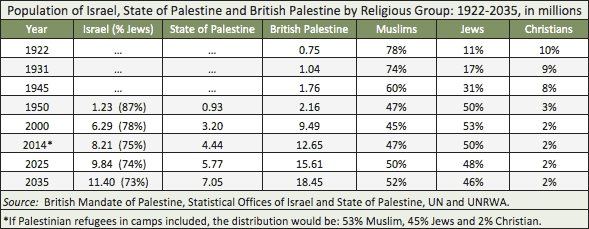
These two passages seem inconsistent with Clause 1(c) of the new law which reads: “The actualization of the right of national self-determination in the state of Israel is unique to the Jewish people.” There are two concerns. First, by saying that the right of self-determination is unique to the Jewish people, questions are raised about non-Jews in Israel. In 2017, there were 6,484,000 Jews in Israel/Palestine and 2,196,000 non-Jews. Jews constitute 74.6% of the population of Israel. But if one includes the population of the Occupied Territories of the West Bank, the Golan Heights, the Gaza Strip, and East Jerusalem, the demographic mix changes. If some political rights are reserved exclusively for Jews in Israel, then the country will ultimately be ruled by a minority if the Occupied Territories are annexed. The relegation of the Arabic language to non-official status symbolizes some of the fears of non-Jews in Israel.
The second concern is for non-Orthodox Jews. There are four movements in modern Judaism: Orthodox, Conservative, Reform and Reconstructionist. In Israel, most matters of faith are handled by the “Orthodox chief rabbinate over matters like marriage, conversion, and other aspects of personal and civil status”. Non-Orthodox Jews, both in Israel and abroad, are worried that the new law will relegate them to second-class status. This issue has been an ongoing debate in Israel for many years, and the new law may aggravate those tensions.
Another concern about the new law revolves around its endorsement of the settlement process in Point 7: “The state views Jewish settlement as a national value and will labor to encourage and promote its establishment and development.” The settlement process has divided the Israelis from the Palestinians in the Occupied Territories (which were occupied by Israel after the War in 1967). The Palestinians regard the Occupied Territories as their homeland and the settlement process makes the possibilities for a viable Palestinian state virtually impossible. The Israelis and Palestinians both endorsed the “Two-State Solution” in the Oslo Accords of 1993 and 1995, but that objective was never realized and Israeli settlements have accelerated in recent years. The world continues to regard the Occupied Territories in the light of the Fourth Geneva Convention Relative to the Protection of Civilians (1949) which forbids the transfer of populations or permanent changes in occupied territories, but Israel no longer refers to the regions as “occupied”. Given the decision of the US to recognize the entire city of Jerusalem as the capital of Israel, it seems that the US no longer considers the two-state solution as an objective.
It is too soon to assess the full impact of the new law, but it seems clear that many ambiguous issues remain unresolved. Nonetheless, the law has raised serious apprehensions among non-Jews in Israel and it is likely that it will be vigorously contested.
In an interview with Fox News correspondent, Tucker Carlson, President Trump raised serious questions about the US commitment to NATO. Mr. Carlson raised the specter of defending a tiny state, Montenegro, against a Russian attack and whether the US commitment to NATO would pull the US into a war with Russia over a state that Mr. Carlson seemed to believe was not worth the price. Mr. Trump’s response revealed that he understands little about the true nature of the NATO alliance or any comprehension of deterrence strategy. Mr Trump’s response was, according to ABC News: “The president replied that he’s asked the same question. Montenegro ‘may get aggressive and congratulations, you’re in World War III,’ Trump said. [If you would like to watch the entire interview, click here. Carlson’s commentary and questions in the interview are highly revealing]
The first point to make is that NATO is a defense alliance. No NATO state is obliged to defend another member state that initiates a war. When the US invaded Iraq in March 2003, no member of NATO joined the invasion under the rubric of the alliance because Iraq had not attacked the US. Contrariwise, the only time NATO has ever invoked Article V of the alliance charter which states that “an attack against one shall be considered an attack against all” was in 2001 when the US invaded Afghanistan after the attacks of 11 September 2001 against the US.
Second, Russia has been trying hard to undermine Montenegro ever since it joined NATO in 2017, including a plot to assassinate the country’s Prime Minister. Liberal states in NATO should be concerned with protecting other liberal states, particularly against aggressive actions by a non-liberal state such as Russia. Russia has violated international law by attacking Georgia and dismembering parts of that country in 2008, creating two new entities, Abkhazia and South Ossetia which have yet to be recognized as legitimate states by most of the international community.
Russia also invaded and annexed part of, Crimea, as part of Russia in 2014. It has also maintained a rebellion against the government of Ukraine in the eastern part of the country since that time, supporting a secessionist movement to dismember the country. Ukraine is not a member of NATO Interestingly, the Trump political campaign was able to remove a strong pro-Ukrainian position from the Republican Party’s platform in the 2016 campaign. That amendment included support for “providing lethal defensive weapons” to the Ukrainian military and read, in part, “Today, the post-Cold War ideal of a ‘Europe whole and free’ is being severely tested by Russia’s ongoing military aggression in Ukraine….The Ukrainian people deserve our admiration and support in their struggle.” The removal of the Ukrainian plank in the Republican platform was a clear aberration from historical Party positions vis-a-vis Russia.
Russia also indicated in 2014 that it sees a role in protecting Russian-speaking populations in the Baltic states of Estonia, Latvia and Lithuania which became members of NATO in 2004. There are, indeed, many Russian-speaking people in the Baltic states. According to The Guardian: “In 2015, the Foreign Policy Research Institute found that the percentage of ethnic Russians in Estonia and Latvia make up around 24% and 27% of the populations as a whole, whereas Lithuania can only boast of a population of 6%. Coincidentally, the percentage of ethnic Russians in Latvia is the same as that found in Crimea.” The Baltic states were once unwilling parts of the former Soviet Union (given to the USSR by the infamous Molotov-Ribbentrop Treaty between Nazi Germany and the USSR in 1939) and Russian military provocations against them in recent years have been numerous and highly unsettling.
In other words, Russian attacks against Montenegro seem to be part of a pattern. Russian President Putin once declared that “the collapse of the Soviet Union was a major geopolitical disaster of the century” and many analysts have interpreted that statement as evidence of his desire to restore the boundaries as well as the formidable power of the former USSR.
Third, one need not believe that Putin is a highly aggressive totalitarian leader bent on world conquest to support a defensive alliance such as NATO. I certainly do not believe that Putin is another Hitler. He is, rather, the opportunistic leader of a middle-range power (Russia’s nuclear weapons notwithstanding) with significant economic weaknesses. He also, unfortunately, lives in the balance of power world of the 19th century since his country is totally unsuited to prosper in the globalized world of the 21st century. His only strategy is to exploit perceived weaknesses to assert Russian power, but he can be counted on to assiduously exploit the weaknesses of others. A unified NATO is a relatively inexpensive way of checking Putin’s ambitions; weakening NATO only increases the number of opportunities for the expansion of Russian power. President Trump’s behavior during the recent NATO summit magnified the natural fissures that exist in any alliance comprised of 29 sovereign states and was therefore a serious strategic blunder.
Finally, weakening NATO only increases uncertainty in world politics. All member states of NATO are now going through the very difficult process of trying to figure out whether the US under the leadership of President Trump is a reliable alliance partner. Lacking the clear certainty about the reliability of the US means that NATO states are now forced to think about alternative ways to defend their interests in the absence of US support. Each of the 28 states will now take actions to fill that confidence gap and each of those actions will have knock-on effects on the calculations of the other member of NATO as well as on non-members of NATO. The security dilemma of world politics–the unfortunate situation in which defensive actions taken by a state often are interpreted as offensive actions by its neighbors–is thus amplified in ways that are often unpredictable and dangerous.
It will take us all more time to process the results of the meeting between US President Trump and Russian President Putin. It is important for us to remember that Mr. Trump initiated this meeting, initially wanting Mr. Putin to come to the White House but finally settling on the neutral site offered by Finland. We should also remember that many analysts raised serious concerns about the wisdom of the meeting, which gave great standing to Mr. Putin.
Under those circumstances, one would imagine that Mr. Trump had objectives he wished to attain. It turns out that we actually know very little about how US national security was protected in the summit. The 2-hour conversation between the two remains opaque aside from oblique references to Syria, North Korea, Iran, and arms control. In many respects, our lack of information about the discussion is perhaps the most terrifying aspect of the summit.
All attention, however, is riveted on the press conference held by the two in which the main area of concern was on the Russian attack on the American election in 2016. And President Trump humiliated himself and the country by his refusal to confront Mr. Putin when he was asked about the 2016 attack. Richard Sokolsky and Aaron David Miller of the Carnegie Endowment for International peace have written a short essay in which they encapsulate the impact of the press conference on Mr. Trump’s stance:
“Never before has a U.S. President so willfully catered to an American adversary and so effortlessly sacrificed American values and interests as the entire world watched. His performance starkly highlighted not only a lack of impulse control and appallingly poor judgment, but also a consistent and inexplicable willingness to submit to Russian interests. This was not a display of ‘America first,’ but rather a very disturbing performance by a man who put himself and Russia above American interests and American values…..
“There were no grand betrayals on substance at Helsinki. Trump didn’t endorse Russia’s annexation of Crimea, undermine NATO’s Article 5 or cancel Baltic military exercises. But with Putin beside him, and before all the world to see, Trump stood there, passive, weak, feckless and all too willing to do Putin’s bidding. Trump played the role of the fool or, as Lenin might have described him, a “’useful idiot.’”
President Trump tried to correct his statements at the Helsinki press conference today by suggesting that he had misspoke: “In a key sentence in my remarks I said the word “would” instead of ‘wouldn’t.’ … The sentence should’ve been, and I thought it would be maybe a little but unclear on the transcript … ‘I don’t see any reason why it wouldn’t be Russia.’ Sort of a double negative. You can put that in and I think that probably clarifies things by itself.” Even if one gives Mr. Trump the benefit of the doubt and accept that change, but then none of his other comments at the press conference are consistent with the change. His feeble effort at a correction is an insult to our intelligence.
Which leaves us with an interesting question: Does President Trump have the will or the capability to defend the national interest of the United States? I think not.