The Trump Administration is changing the Director of National Intelligence (DNI) from Dan Coats to John Ratcliffe. The DNI is supposed to coordinate the intelligence findings of the various intelligence agencies in the US government (there are 16 in total). Coats was in office for two years, which in itself is a major achievement, and there were several occasions in which he made findings that did not directly support the position of the Administration. But he was a very low-key Director and quite deliberately did not try to defend his office with a great deal of vigor. John Ratcliffe is a Congressperson from Texas who has defended the Trump Administration from charges of working with Russia during the 2016 national election. He does not have any background in intelligence or diplomacy, and seems to be an unusual choice for a position that requires deep expertise. It is likely that Ratcliffe’s appointment is clearly designed to neuter the ability of the intelligence agencies to monitor effectively foreign interference in the 2020 presidential elections. We will see if the Republican controlled Senate discharges its responsibility to make sure that high ranking officials are thoroughly qualified for positions that require high trust.
Archive for the ‘World Politics’ Category
29 July 2019 Leave a comment
28 July 2019 Leave a comment
The election of Jair Bolsonaro to the Brazilian Presidency signaled a major change in the protection of the Amazon rain forest, the largest rain forest in the world. Rain forests soak up large amounts of Carbon Dioxide and their loss would accelerate the process of climate change. According to The Guardian:
“In his first seven months in power, Bolsonaro, who was elected with strong support from agribusiness and mining interests, has moved rapidly to erode government agencies responsible for forest protection.
“He has weakened the environment agency and effectively put it under the supervision of the agricultural ministry, which is headed by the leader of the farming lobby. His foreign minister has dismissed climate science as part of a global Marxist plot. The president and other ministers have criticised the forest monitoring agency, Ibama, for imposing fines on illegal land grabbers and loggers. The government has also moved to weaken protections for nature reserves, indigenous territories and zones of sustainable production by forest peoples and invited businesspeople to register land counter-claims within those areas.
“This has emboldened those who want to invade the forest, clear it and claim it for commercial purposes, mostly in the speculative expectation it will rise in value, but also partly for cattle pastures, soya fields and mines.”
The relaxed attitude of the Brazilian government has also led to armed attacks against indigenous peoples by miners and others who wish to exploit the resources of the Amazon. The rate of deforestation is close to catastrophic, as explained in the Intercept:
“In the last half-century, about one-fifth of this forest, or some 300,000 square miles, has been cut and burned in Brazil, whose borders contain almost two-thirds of the Amazon basin. This is an area larger than Texas, the U.S. state that Brazil’s denuded lands most resemble, with their post-forest landscapes of silent sunbaked pasture, bean fields, and evangelical churches. This epochal deforestation — matched by harder to quantify but similar levels of forest degradation and fragmentation — has caused measurable disruptions to regional climates and rainfall. It has set loose so much stored carbon that it has negated the forest’s benefit as a carbon sink, the world’s largest after the oceans. Scientists warn that losing another fifth of Brazil’s rainforest will trigger the feedback loop known as dieback, in which the forest begins to dry out and burn in a cascading system collapse, beyond the reach of any subsequent human intervention or regret. This would release a doomsday bomb of stored carbon, disappear the cloud vapor that consumes the sun’s radiation before it can be absorbed as heat, and shrivel the rivers in the basin and in the sky.”
It is very difficult to imagine any international actions that could dissuade Bolsonaro from pursuing his industrial policies in Brazil. He believes that industrialization is the only way to expand the wealth of Brazilians. But the benefits will unquestionably be less than the costs, both to Brazil and the entire world.
Please forgive me, but the Editorial in today’s Baltimore Sun represents sea change in political discourse in the US. It will be remembered as a turning point.
” In case anyone missed it, the president of the United States had some choice words to describe Maryland’s 7th congressional district on Saturday morning. Here are the key phrases: “no human being would want to live there,” it is a “very dangerous & filthy place,” “Worst in the USA” and, our personal favorite: It is a “rat and rodent infested mess.” He wasn’t really speaking of the 7th as a whole. He failed to mention Ellicott City, for example, or Baldwin or Monkton or Prettyboy, all of which are contained in the sprawling yet oddly-shaped district that runs from western Howard County to southern Harford County. No, Donald Trump’s wrath was directed at Baltimore and specifically at Rep. Elijah Cummings, the 68-year-old son of a former South Carolina sharecropper who has represented the district in the U.S. House of Representatives since 1996.
“Rep, Elijah Cummings has been a brutal bully, shouting and screaming at the great men & women of Border Patrol about conditions at the Southern Border, when actually his Baltimore district is FAR WORSE and more dangerous. His district is considered the Worst in the USA……
“….As proven last week during a Congressional tour, the Border is clean, efficient & well run, just very crowded. Cumming District is a disgusting, rat and rodent infested mess. If he spent more time in Baltimore, maybe he could help clean up this very dangerous & filthy place. 7:14 AM – Jul 27, 2019
“It’s not hard to see what’s going on here. The congressman has been a thorn in this president’s side, and Mr. Trump sees attacking African American members of Congress as good politics, as it both warms the cockles of the white supremacists who love him and causes so many of the thoughtful people who don’t to scream. President Trump bad-mouthed Baltimore in order to make a point that the border camps are “clean, efficient & well run,” which, of course, they are not — unless you are fine with all the overcrowding, squalor, cages and deprivation to be found in what the Department of Homeland Security’s own inspector-general recently called “a ticking time bomb.”
” In pointing to the 7th, the president wasn’t hoping his supporters would recognize landmarks like Johns Hopkins Hospital, perhaps the nation’s leading medical center. He wasn’t conjuring images of the U.S. Social Security Administration, where they write the checks that so many retired and disabled Americans depend upon. It wasn’t about the beauty of the Inner Harbor or the proud history of Fort McHenry. And it surely wasn’t about the economic standing of a district where the median income is actually above the national average. No, he was returning to an old standby of attacking an African American lawmaker from a majority black district on the most emotional and bigoted of arguments. It was only surprising that there wasn’t room for a few classic phrases like “you people” or “welfare queens” or “crime-ridden ghettos” or a suggestion that the congressman “go back” to where he came from
” This is a president who will happily debase himself at the slightest provocation. And given Mr. Cummings’ criticisms of U.S. border policy, the various investigations he has launched as chairman of the House Oversight Committee, his willingness to call Mr. Trump a racist for his recent attacks on the freshmen congresswomen, and the fact that “Fox & Friends” had recently aired a segment critical of the city, slamming Baltimore must have been irresistible in a Pavlovian way. Fox News rang the bell, the president salivated and his thumbs moved across his cell phone into action.
“As heartening as it has been to witness public figures rise to Charm City’s defense on Saturday, from native daughter House Speaker Nancy Pelosi to Mayor Bernard C. “Jack” Young, we would above all remind Mr. Trump that the 7th District, Baltimore included, is part of the United States that he is supposedly governing. The White House has far more power to effect change in this city, for good or ill, than any single member of Congress including Mr. Cummings. If there are problems here, rodents included, they are as much his responsibility as anyone’s, perhaps more because he holds the most powerful office in the land.
“Finally, while we would not sink to name-calling in the Trumpian manner — or ruefully point out that he failed to spell the congressman’s name correctly (it’s Cummings, not Cumming) — we would tell the most dishonest man to ever occupy the Oval Office, the mocker of war heroes, the gleeful grabber of women’s private parts, the serial bankrupter of businesses, the useful idiot of Vladimir Putin and the guy who insisted there are “good people” among murderous neo-Nazis that he’s still not fooling most Americans into believing he’s even slightly competent in his current post. Or that he possesses a scintilla of integrity. Better to have some vermin living in your neighborhood than to be one.”
27 July 2019 Leave a comment
We have witnessed a number of large protests in some places as it appears as if people are becoming unwilling to accept political conditions as unalterable. In two places, Russia and Hong Kong, the central governments have cracked down on the protests. In Moscow, police have arrested hundreds of people protesting the dismissal of candidates for elections for capricious reasons. The BBC explains:
“Candidates were asked to collect 5,000 signatures to stand. This limit was made even harder to match because a signature “means volunteering one’s personal information for the government’s database of opposition supporters”, democracy activist Vladimir Kara-Murza wrote in the Washington Post.
“Many candidates managed to meet the threshold but the electoral commission ruled some signatures ineligible, saying they were unclear or the addresses provided were incomplete, and barred the candidates from taking part.”
In Hong Kong, the government banned protests, but thousands of Hong Kongers showed up to protest the vigilante action by gangs known as triads who were widely suspected of being government-sponsored. Reuters describes how prepared the protesters were:
“Activists held the march in Yuen Long, scene of the attack by club-wielding men, despite a police ban on safety grounds.
“Building barricades out of street furniture and umbrellas, protesters threw rocks and bottles. Many armed themselves with hiking sticks and improvised shields from wood, surfboards, cardboard and other materials.
“Police, widely criticized for failing to better protect the public from last weekend’s attack, responded on Sunday with tear gas, rubber bullets and sponge grenades, a crowd control weapon.
“Several hundred protesters remained as dark fell, fighting with police in the local train station, where blood could be seen spattered on the floor. Earlier, Reuters witnesses saw a hard core group of activists with small metal bats, metal and wooden poles and slingshots moving against the human tide.”
Protesters in Hong Kong Sing “Do You Hear the People Sing?” from Les Miserables
On the other hand, protesters in Puerto Rico scored a major victory after the Governor of Puerto Rico, Ricardo Rosselló, resigned after hundreds of degrading and misogynistic chats were published. What is most interesting is that in China and Russia the protesters are literally putting their careers on the line and are willing to make that sacrifice for the public good. There are other places in the world where large scale protests are warranted, but the public seems to be willing to tolerate wretched behavior.
There are wildfires burning in the Arctic–in Siberia, Greenland, and Alaska which are visible from space. Ecowatch describes the significance of the wildfires:
“Copernicus’ scientists have been tracking more than 100 wildfires raging above the Arctic Circle since the start of June, which was the hottest June on record. July is on pace to break records too as Europe bakes under another heat wave this week.
“The magnitude is unprecedented in the 16-year satellite record,” said Thomas Smith, an assistant professor in environmental geography at the London School of Economics, to USA Today. “The fires appear to be further north than usual, and some appear to have ignited peat soils.”
Peat fires burn deeper in the ground and can last for weeks or even months instead of a few hours or days like most forest fires, according to the UPI.
The researchers at Copernicus track how much greenhouse gas the wildfires emit into the atmosphere as well. So far, the Arctic’s fires have released approximately 100 megatons, 100 million metric tons, of CO2 between June 1 and July 21, which Parrington said on Twitter “is getting close to 2017 fossil fuel CO2 emissions of Belgium” for the entire year, as USA Today reported.
The smoke from the fires extends for hundreds of miles. The world cannot afford to listen to the climate deniers any longer.
26 July 2019 Leave a comment
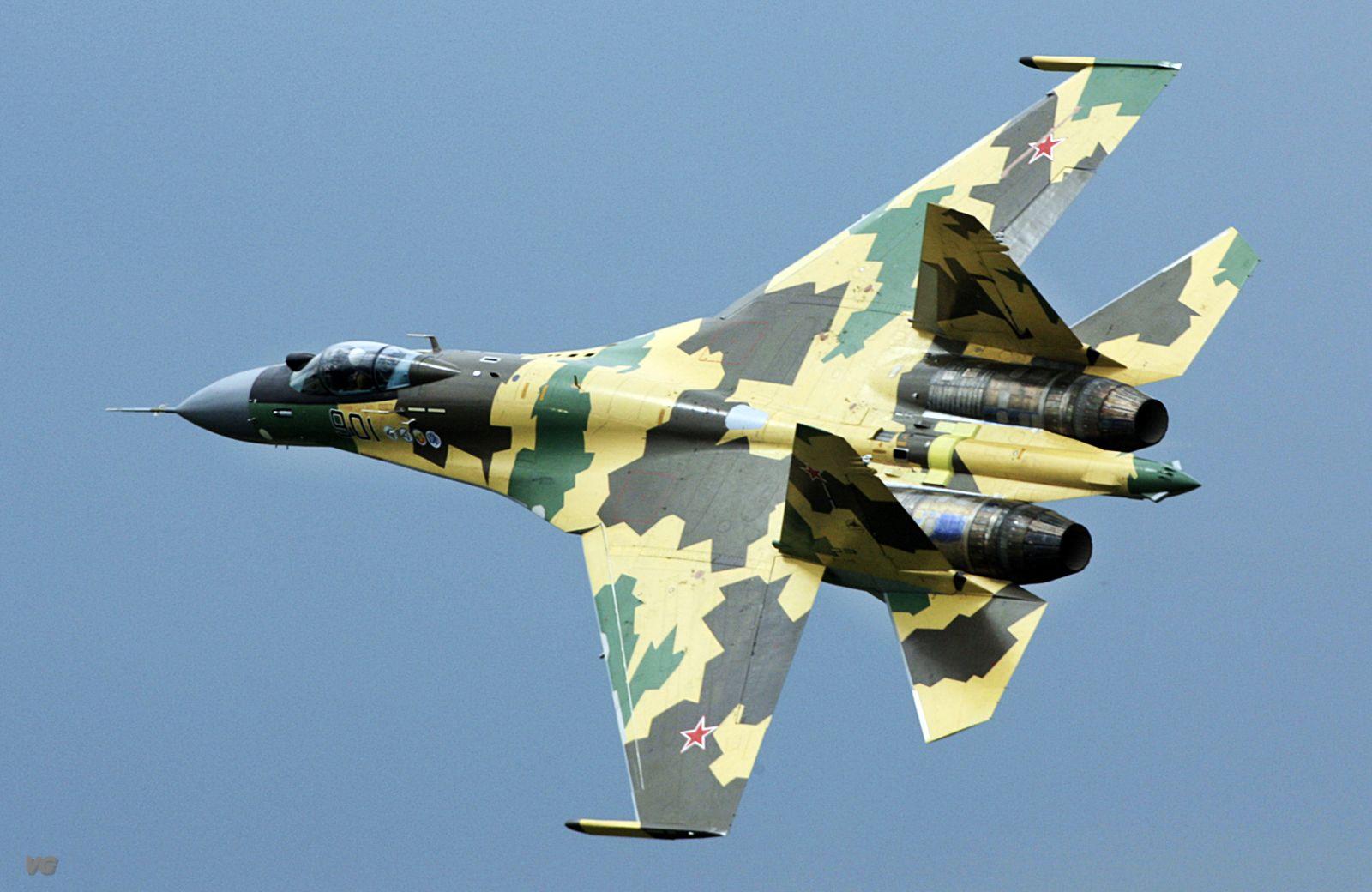
The Turkish decision to buy the Russian S-400 air defense system–one of the best in the world–has roiled NATO and the US. US President Trump decided to stop the sale of the US fighter plane, the F-35, because of the purchase. The US argued that the Russians would have access to the F-35s and would therefore be able to figure out ways to defeat the F-35’s offensive and defensive capabilities. Turkish President Erdogan is calling President Trump’s bluff and has stated that Turkey will purchase fighter planes elsewhere–most likely from Russia which produces a very capable fighter plane, the Su-35. If Turkey makes that decision, then it would be impossible for Turkey to remain within NATO. Strangely, President Trump made the following statement today about the situation: “We’re looking at the whole Turkey situation. It’s a tough situation … I don’t blame Turkey because there are a lot of circumstances.” The emerging relationship between Turkey and Russia is unusual, given the historical tensions between the two states. And that relationship will make resolving the civil war in Syria more difficult, particularly if Turkey decides to take strong action against the Kurds in Syria. It seems to me that both the US and Turkey have not really thought out the long-term implications of this dispute, but it seems clear that Russia is playing a very sophisticated long game.
The Su-35
A few days ago, Israel demolished 10 buildings in the occupied East Jeruslaem town of Sur Bahir, a move that was condemned by Canada, the European Union, and the Arab League. Under international law, it is illegal to force the transfer of civilian populations in occupied territory. Article 49 of the Fourth Geneva Convention (1949) reads, in part: ” Individual or mass forcible transfers, as well as deportations of protected persons from occupied territory to the territory of the Occupying Power or to that of any other country, occupied or not, are prohibited, regardless of their motive.” Virtually every country in the world except for Israel and the US considers East Jerusalem as occupied territory since it was taken over by the Israelis in the 1967 war. Today the US prevented the UN Security Council from considering a resolution condemning the Israeli demolition of the buildings. Mondoweiss describes the reaction of the Palestinian Authority to the Security Council’s decision not to consider the resolution:
“While the US was blocking any condemnations of the Israeli government’s actions in East Jerusalem, Palestinian Ambassador Riyad Mansour addressed the UNSC, imploring the council to ‘alleviate the human suffering, to salvage peace prospects and to contribute to making that peace a reality.’
“During his remarks, Mansour called attention to the case of Sur Bahir, calling the demolitions ‘deliberate and systematic in nature,’ which he said ‘constitute gross violations’ of international charters and agreements.
“’This is a blatant act of ethnic cleansing and forced transfer, tantamount to a war crime, and it must be fully condemned and prosecuted as such,’ Mansour said.”
The President of the Palestinian Authority, Mahmoud Abbas, declared that, because of these decisions, the Palestinians would cease to honor its agreements with Israel. Al Jazeera outlines the PA’s position:
“The 84-year-old’s declaration on Thursday came after an emergency meeting of the Palestine Liberation Organization in the wake of Israel’s demolition this week of several Palestinian buildings in Sur Baher village – a move Abbas described as an act of ‘ethnic cleansing’.
“‘We announce the leadership’s decision to stop implementing the agreements signed with the Israeli side,’ Abbas said at a speech in Ramallah, in the occupied West Bank.
“He added that a committee would be set up in order to implement the decision but did not offer additional information.
“‘We will not bow to dictates and imposing a fait accompli by force in Jerusalem and elsewhere,’ Abbas said. “
It is not clear what Abbas’s statement actually means, but the PA’s position casts significant doubts about the viability of the US “Deal of the Century” that was released last month by Jared Kushner.
25 July 2019 Leave a comment
The heat wave in Europe continues and records are being shattered. Paris recorded a temperature of 42.6C (108.7F) and Germany, the Netherlands, and Belgium also set records. Railroad tracks are shifting because of the heat and transportation networks have been disrupted. These are the highest temperatures ever recorded. Many European scientists are convinced that these temperatures are the result of climate change caused by human activity.
” A Met Office study found that a heatwave like one that broke records last year was 30 times more likely to occur than in 1750, because of the high amount of carbon dioxide in the atmosphere. Since the pre-industrial period the Earth’s surface temperature has risen by 1 degree Celsius.
“’There is a 40-50% chance that this will be the warmest July on record. This heatwave is exactly in line with climate change predictions,’ said Dr Karsten Haustein at the Environmental Change Institute at the University of Oxford.
“Peter Inness, senior research fellow at the University of Reading, said: ‘The fact that so many recent years have had very high summer temperatures both globally and across Europe is very much in line with what we expect from man-made global warming.’”
The Europeans have been strong supporters of efforts to reduce greenhouse gas emissions, but few major countries have joined their efforts. The US is a major laggard.
A Sign in the London Underground

24 July 2019 Leave a comment
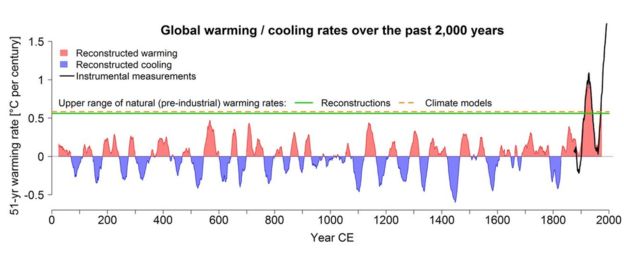
Europe is suffering through its second heat wave of the summer and all-time record high temperatures are being broken in a number of cities. There are also wildfires in Spain and Portugal as temperatures hover around 40 degrees C (104 F). European societies have not invested in air conditioning that the extent that the US has. But there is evidence that the high temperatures are related to climate change, and, if true, then that pattern will likely change. Robinson Meyer, writing in the Atlantic, assesses the recent study that indicates that the high temperatures being experienced globally are not part of a “natural” cycle:
” Absolutely nothing resembling modern-day global warming has happened on Earth for at least the past 2,000 years, a new study published today in Nature confirms. Since the birth of Jesus Christ, the climate has sometimes naturally changed—some parts of the world have briefly cooled, and some have briefly warmed—but it has never changed as it’s changing now. Never once until the Industrial Revolution did temperatures surge in the same direction everywhere at the same time. They’re doing so now, the study finds.”
The planet has cooled and warmed periodically over the last 2000 years and that pattern is used by many climate change deniers to suggest that the recent warming pattern is normal. But the recent warming is far out of line with historical patterns.
North Korea has launched two projectiles into the Sea of Japan (called the East Sea by the Koreas), repeating an exercise that occurred last May. At that time, US President Trump did not view the tests as significant and he seemed to adopt the same stance today, even though his National Security Adviser, John Bolton, was in South Korea. North Korea warned of repercussions if the US and South Korea went ahead with their plans for joint military exercises. These tests could indicate that North Korea believes that these exercises have violated the agreement between President Trump and Leader Kim in Singapore. The South China Morning Post suggests some reasons for the tests:
“‘I think today’s launches are part of a larger plan for North Korea’s advanced missile programme, rather than its protest against the upcoming military drill,’ said Hong Min, a senior researcher at the South’s state-run Korea Institute for National Unification.
“’The North has declared in the past it would modernise and improve its defence system…. The launches today are part of that development plan and I think the North had already planned the launches in advance’, he added.
“Adam Mount, of the Federation of American Scientists, said the latest launch was a clear indication that ‘North Korea’s nuclear and missile arsenals are now routinely being improved, displayed, and tested.’
“’The current bargain is: don’t test nuclear warheads or long range missiles and the United States won’t object or seriously try to stop it,’ Mount tweeted.”
President Trump’s willingness to not make a major issue about these tests is probably not the best course of action. Leader Kim is clearly testing the credibility of the US. If there is no meaningful response to these tests from the US, then Kim will feel obliged to raise the pressure more. If the US finally does decide to respond, the price for responding will be much higher.
23 July 2019 Leave a comment
The British Conservative Party has selected Boris Johnson to be the next Prime Minister. Johnson has pushed the British exit from the European Union (“Brexit”) very hard and has promised to bring about that action by 29 October 2019. The decision was one favored by US President Trump, and many have compared the two politicians. I think that the comparison is superficially valid–Business Insider has a long list of controversial comments–but I also suspect that Trump and Johnson will find it difficult to work together.
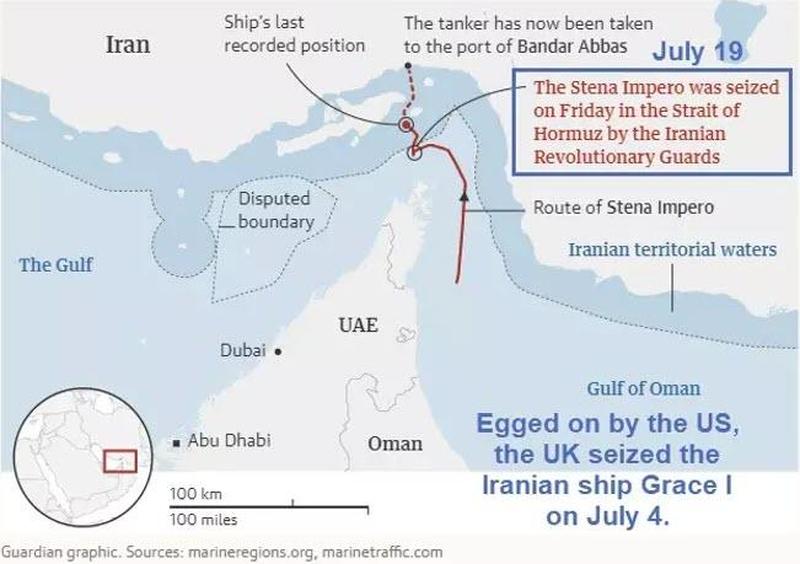
Johnson will be in the middle of the US-Iranian dispute since the Iranian seized the British oil tanker, the Stena Impero. That seizure has been highlighted by the US government as evidence of the aggressiveness of the Iranian government. But the media has not emphasized that the seizure of the British oil tanker was in retaliation for the earlier British seizure off the coast of Gibraltar of a Panamanian-flagged oil tanker called the Grace I which was delivering oil to Syria. That seizure was justified because the EU has imposed an embargo on trade with Syria.
But that embargo only applies to EU countries, not to ships flying a non-EU flag. And we now know that the US had been following the Grace I ever since it sailed out of an Iranian port and that it was the US that told the British–but not Spain which also controls the waters off Gibraltar–that the ship was violating the EU embargo. The selective disclosure of relevant information was intended to make sure that the British, and not the Spanish, were involved in the dispute. The US National Security Adviser, John Bolton, tweeted this after the seizure of the Grace I: “Excellent news: UK has detained the supertanker Grace I laden with Iranian oil bound for Syria in violation of EU sanctions.”
Simon Tisdale of the Guardian interprets this sequence of events as a deliberate ploy by the US to involve the British in the US-Iranian dispute:
“Bolton’s delighted reaction suggested the seizure was a surprise. But accumulating evidence suggests the opposite is true, and that Bolton’s national security team was directly involved in manufacturing the Gibraltar incident. The suspicion is that Conservative politicians, distracted by picking a new prime minister, jockeying for power, and preoccupied with Brexit, stumbled into an American trap.”
Tisdale goes further:
“In short, it seems, Britain was set up.
“The consequences of the Gibraltar affair are only now becoming clear. The seizure of Grace I led directly to Friday’s capture by Iran’s Revolutionary Guards of a British tanker, the Stena Impero, in the Strait of Hormuz. Although it has not made an explicit link, Iran had previously vowed to retaliate for Britain’s Gibraltar “piracy”. Now it has its revenge.
“As a result, Britain has been plunged into the middle of an international crisis it is ill-prepared to deal with. The timing could hardly be worse. An untested prime minister, presumably Boris Johnson, will enter Downing Street this week. Britain is on the brink of a disorderly exit from the EU, alienating its closest European partners. And its relationship with Trump’s America is uniquely strained.
“Much of this angst could have been avoided. Britain opposed Trump’s decision to quit the 2015 nuclear deal with Iran, the trigger for today’s crisis. It has watched with alarm as the Trump-Bolton policy of ‘maximum pressure’, involving punitive sanctions and an oil embargo, has radicalised the most moderate Iranians.
“Yet even as Britain backed EU attempts to rescue the nuclear deal, Theresa May and Jeremy Hunt, foreign secretary, tried to have it both ways – to keep Trump sweet. They publicly supported Washington’s complaints about Iran’s ‘destabilising’ regional activities and missile programme, and berated Iran when it bypassed agreed nuclear curbs.
If push comes to shove between the US and Iran, it will be interesting to see whether Johnson decides to support the US militarily or whether he decides to support the EU efforts to preserve the JCPOA. I suspect that the US will be the first place a new Prime Minister Johnson will visit.
There are some things said in world politics that I find mind-boggling. Yesterday, in a press conference before his meeting with Pakistani Prime Minister Imran Khan, US President Trump made this comment about the US strategy in Afghanistan where the US has been intervening militarily since 2001:
“I think Pakistan is going to help us out to extricate ourselves. We’re like policemen. We’re not fighting the war. If we wanted to fight a war in Afghanistan and win it, I could win that war in a week. I just don’t want to kill 10 million people. Does that make sense to you? I don’t want to kill 10 million people.
“I have plans on Afghanistan that, if I wanted to win that war, Afghanistan would be wiped off the face of the Earth. It would be gone. It would be over in — literally, in 10 days. And I don’t want to do — I don’t want to go that route.”
The idea that winning a war could include wiping the defended country off the “face of the Earth” is both bizarre and criminal. But there was another exchange in that press conference which was also stunning:
“PRESIDENT TRUMP: So I was with — I was with Prime Minister Modi two weeks ago, and we talked about this subject. And he actually said, “Would you like to be a mediator or arbitrator?” I said, “Where?” He said, “Kashmir.” Because this has been going on for many, many years. I was surprised at how long; it’s been going on a long —
“PRIME MINISTER KHAN: Seventy years.
“PRESIDENT TRUMP: And I think they’d like to see it resolved. And I think you’d like to see it resolved. And if I can help, I would love to be a mediator. It shouldn’t be — I mean, it’s impossible to believe two incredible countries that are very, very smart, with very smart leadership, can’t solve a problem like that. But if you want me to mediate or arbitrate, I would be willing to do that.”
The Pakistanis might be willing to accept US mediation over Kashmir, but India would (and did) reject the idea out of hand. The Council on Foreign Relations issued a brief analysis which pointed out that the idea was fanciful: ” Not surprisingly, the Indian government responded promptly with a blunt repudiation of this claim. The official spokesperson of India’s Ministry of External Affairs tweeted: ‘No such request has been made by PM @narendramodi to US President [sic]. It has been India’s consistent position that all outstanding issues with Pakistan are discussed only bilaterally. Any engagement with Pakistan would require an end to cross border terrorism…’”
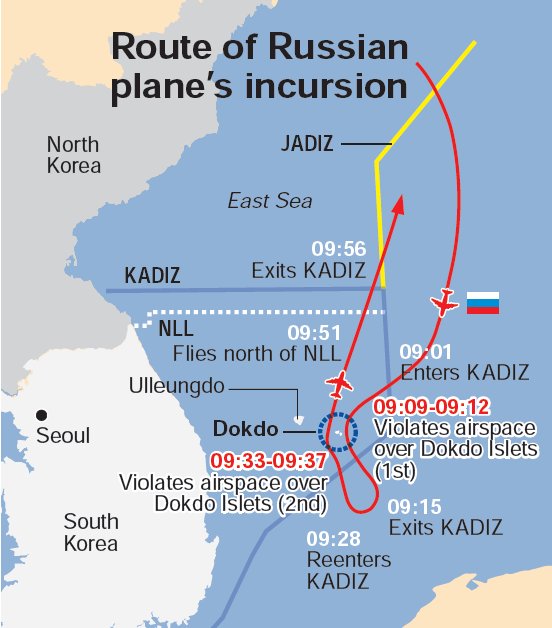
South Korea fighter planes fired on Russia planes that South Korea said violated its air defense identification zone (ADIZ). There were actually two incursions, one just by Russian planes and another with both Russian and Chinese planes. An air defense identification zone is not something that is defined in international law and it has no legal basis in international law. But it is a zone that some states use to identify airplanes that fly within 200 miles of national territory. The US and Canada have such zones as do the Chinese. The Russians, however, do not acknowledge these zones.
The exchange of fire was intense, a very unusual response, with the South Koreans firing 360 rounds toward the Russian planes. The fact that the South Koreans were willing to specify the number of rounds indicates that they were very serious about the incursion.
The flights were also controversial because they overflew disputed territory, islands claimed by both Korea and Japan. Korea calls them the Dokdo Islands and the Japanese call them the Takeshima Islands (they are also know as Liancourt Rocks, named by French whalers in 1849). The incident is thus a test of strength involving the South Koreans, the Russians, the Chinese, and the Japanese. The possibilities for misunderstanding and cross-purposes were thus quite large and dangerous.
22 July 2019 Leave a comment
On Saturday there was a large protest in Moscow of people demanding free elections. It was the culmination of a week of smaller protests that were tolerated by the authorities. The citizens were protesting a decision by the election commission that took candidates names off the election list for the Moscow City Council. USA Today quotes some of the participants in the protests:
“One of the barred candidates, Dmitry Gudkov, told the crowd: ‘Your couch is your grave.’
“’It’s really a protest against Putin,’ Abbas Gallyamov, a former Kremlin speechwriter turned political analyst, told Moscow Times. ‘These elections have clearly become a way of expressing a much deeper frustration and demand for political representation.’”
But the frustration also stems from the abysmal economic situation in Russia. Vladislav Inozemtsev writes in Project Syndicate:
“The Russian economy is at a standstill. From 2014 to 2018, GDP grew by just 1.85% – or 0.4%, on average, each year. (The Kremlin forced the Federal State Statistics Service to revise upward the figures for 2016 and 2017.) During the same period, real disposable incomes shrank by 10.7%, leaving 13% of all Russians living in poverty. In 2018 alone, 600,000 Russian companies shuttered their operations.
“To some extent, these developments are not surprising, given the sanctions imposed on Russia by Western countries after Russia’s annexation of Crimea in 2014. Those sanctions contributed to massive capital flight – in excess of $317 billion – in 2014-2018, as well as a drop in investment. In the first nine months of 2018, the volume of foreign direct investment in the Russian economy was 11 times lower than during the same period in 2017.”
President Putin may be heading into more substantial opposition than we know. It is difficult to determine how strong that opposition actually is.
The protests in Hong Kong took a nasty turn as counterprotesters, suspected agents of the Chinese government, started beating up those demanding changes by the Hong Kong government. An expert in triad societies at the City University of Hong Kong, Professor T Wing Lo said that
“…although legally it couldn’t be proven the men in white shirts were triads, ‘the fight last night was mobilised by a triad group, most probably Wo Sing Wo.
“Triad groups, which can’t cross into each other’s territories, are strong in the Yuen Long area of the New Territories, he said.
“He said of the 200-300 men in white shirts at Yuen Long massing outside the train station and beating people it was likely “half were triad and half were villagers paid by someone”.
“He said such village men were typically paid $HK500 ($90) a night and more if they were injured in incidents.
“‘Beijing officially claims some triad leaders are patriotic and help maintain social order in Hong Kong… [through] United Front the CCP try to co-opt a lot of people including triad leaders. The triad leaders get a lot of money from the CCP through middle men.'”
The Hong Kong police allegedly did not try to stop the violence and that failure is feeding into stronger discontent with the Hong Kong government. But according to the Washington Post: “President Trump said Monday he believes that Chinese President Xi Jinping has reacted responsibly toward the Hong Kong protests.”
20 July 2019 Leave a comment
The US State Department has launched a new initiative on religious freedom and persecution. It appears to be a part of a larger initiative on human rights which US Secretary of State Pompeo called the Commission on Unalienable Rights. It’s objective, according to Pompeo is to “provide the intellectual grist of what I hope will be one of the most profound re-examinations of inalienable rights in the world since the 1948 Universal Declaration.” The Commission is headed by Mary Ann Glendon, a Harvard Law School professor, who, at the 1995 U.N. World Conference on Women in Beijing, succeeded in preventing abortion to be listed as a human right.
But there appears to be a fundamental lack of knowledge about these issues in the Trump Administration. US President Trump hosted some victims of religious persecution at the White House and the conversations were astonishing. Zeeshan Aleem recounts some of the conversations for Vox:
” Mohib Ullah, a Rohingya man who had escaped violence in Myanmar, explained that he was staying in a refugee camp in neighboring Bangladesh and asked the president what his plans are to help his beleaguered people. Trump replied by asking, “And where is that, exactly? Where?”
“It was unclear if Trump was referring to the country that Ullah had fled or was staying in, but Ullah repeated that he was staying in Bangladesh, and Sam Brownback, the US ambassador-at-large for international religious freedom, attempted to intervene by explaining that Bangladesh is ‘next to Burma [an older term for Myanmar]’ and that ‘the Rohingya have been run out.’
“The president replied, ‘Thank you, appreciate it,’ and moved on without ever answering Ullah’s question….
“Trump also seemed almost entirely unacquainted with the oppression of Uighurs, China’s predominantly Muslim minority.
‘When Jewher Ilham, a Uighur woman, said that millions of her people have been locked up in ‘concentration camps’ and that she hadn’t seen her detained father since 2013, Trump again replied as if he was hearing about the crisis for the first time.
“’Where is that? Where is that in China?’ he asked….
“The president also had an awkward exchange with Nadia Murad, a Yazidi refugee from Iraq who escaped captivity by ISIS. Trump again did not appear to pay close attention to her testimony, asking Murad where her family members were right after she’d told the president they had been killed.”
It is difficult to see how anything substantive can come out of a Commission that lacks informed leadership.
19 July 2019 Leave a comment
Umair Irfan, Eliza Barclay, and Kavya Sukumar have written an article for Vox which highlights the changes in temperatures for various cities in the US by 2050. The graphics in the article are interactive and the site takes a reader’s location and gives data for the nearest large city. In my case, the estimates were for Springfield, MA. According to the data, the summer highs for Springfield will rise by 5.2 degrees F and the winter average will rise by 5.1 degrees F, from an average of 20.3 degrees F to 25.4 degrees F. I likely will not be around to verify the forecasts (I would be 101 years old in 2050).
Iran has seized a British oil tanker in the Strait of Hormuz. It had threatened to do so after Great Britain seized an Iranian oil tanker off Gibraltar which it accused of smuggling oil to Syria. Iran also released another British oil tanker which it claimed had requested assistance. The moves represent a significant escalation of tension and Britain is currently considering its options. But it is unlikely that Britain will take any action without strong support from the US. US President Trump answered a question about the seizures before he departed for his country club in New Jersey:
“Q Mr. President, Iran seized at least one oil tanker today with British oil. What is your reaction? Have they crossed the line? You said that would be a foolish thing to do.
“THE PRESIDENT: Well, as you know, we have a very close alliance with the UK, and we always have. We heard that. The United States has very few tankers going in because we’re using our own energy now. We’ve made a lot of progress over the last two and half years. So we don’t have very many tankers going in, but we have a lot of ships there that are war ships. And we’ll talk to the UK. And we have no written agreement, but we have an agreement. They’ve been a very great ally of ours.
“So, we heard about it. We heard it was one; we heard it was two. And we’ll be working with the UK. They’ll have a new Prime Minister soon, which is a good thing. And we’ll be working with the UK. But we have no written agreement, but I think we have an agreement which is longstanding.”
The statement is curious. First, because he indicated that the US has no direct interest in keeping the Strait of Hormuz open: “… we don’t have very many tankers going in, but we have a lot of ships there that are war ships.” That statement is a far cry from the doctrine articulated by US President Jimmy Carter in 1979 as described in the Washington Monthly:
“Carter asserted that any nation trying to control the Persian Gulf or restrict the free-flow of oil through the Straits of Hormuz was acting against America’s ‘vital interests.’ Carter articulated this message near the end of his presidency and at a time when revolutionary Iran held the United States hostage and the Soviets militarily occupied Afghanistan.
“The message to Iran and the USSR was clear: Make a move on the neighborhood, mess with shipping, slow the flow of oil and risk going to war with the United States.”
It may be the case that the Carter Doctrine should definitely be scrapped, but changing the defined national interests of the state on the fly is not conducive to predictable foreign policy. I suspect that the Israelis and Saudis are wondering what the President’s statement implies.
Second, the cavalier reference to Great Britain, one of the US’s strongest allies–“we have no written agreement”–is astonishing, and even more so because it was referenced to an anticipated change of government in Great Britain. Commitments are made to states, not governments. President Trump may be unpleasantly surprised if Boris Johnson becomes Prime Minister (Mr. Trump’s preference) and requests a strong military commitment from the US. But I suspect that the British are trying to figure out whether the US will stand by their interests.
We will get a better read on US intentions early next week. Iran’s actions may trigger financial responses in the oil markets if people think that conflict in the Strait is likely. If that occurs, then stock markets will respond accordingly and we will see how Mr. Trump assesses that response to his political future.
 World Politics News