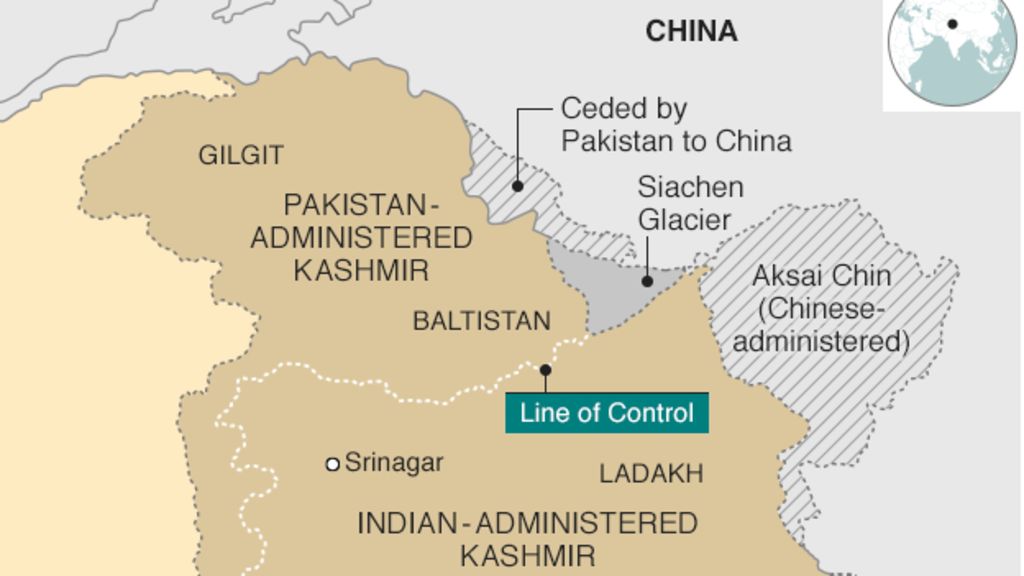
“‘Xi Jinping said that China is concerned about the situation in Kashmir, the rights and wrongs are clear,’ according to the Chinese Foreign Ministry. ‘China supports the Pakistani side in safeguarding its legitimate rights and interests and hopes that the parties will resolve the dispute through peaceful dialogue.'”
The recent shooting at a synagogue in Halle, Germany followed a pattern that has been in play in a number of similar incidents. The shooter live-streamed his activities even though he was not able to enter the synagogue because it was well-locked. The shooter published a “manifesto” which other killers had done as well:
“The Norweigian neo-Nazi who killed 77 people in 2011 wrote a 1,518-page document that has since been cited as an inspiration by other far-right terrorists. That document also contained advice on how to prepare for an attack and select targets. The Australian white nationalist who killed 51 people at two mosques in Christchurch, New Zealand, in March published an 87-page screed before his deadly attack titled “The Great Replacement,” which is the same name as a white nationalist conspiracy theory. The Californian who opened fire on a synagogue in Poway, killing one, also published a manifesto online — as did the man who killed 22 people at a Walmart in El Paso, Texas, in August.”
The virulently anti-semitic views of the shooter were documented in Speigeland unfortunately resonates with a striking rise in anti-semitism throughout the world. The world has yet to take effective action to address this scourge, even though it has plenty of historical evidence to know that it is an incredibly dangerous ideology.
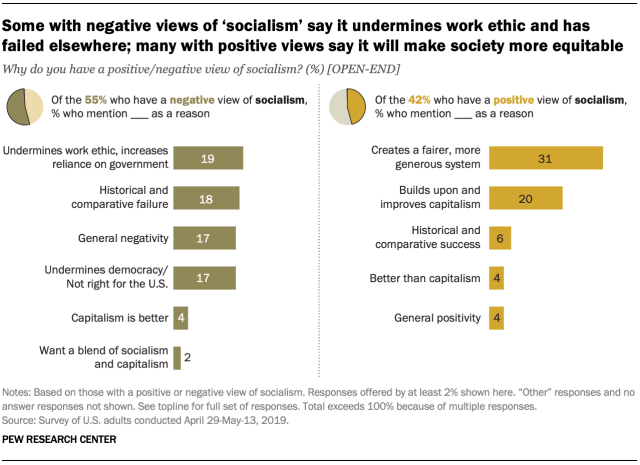
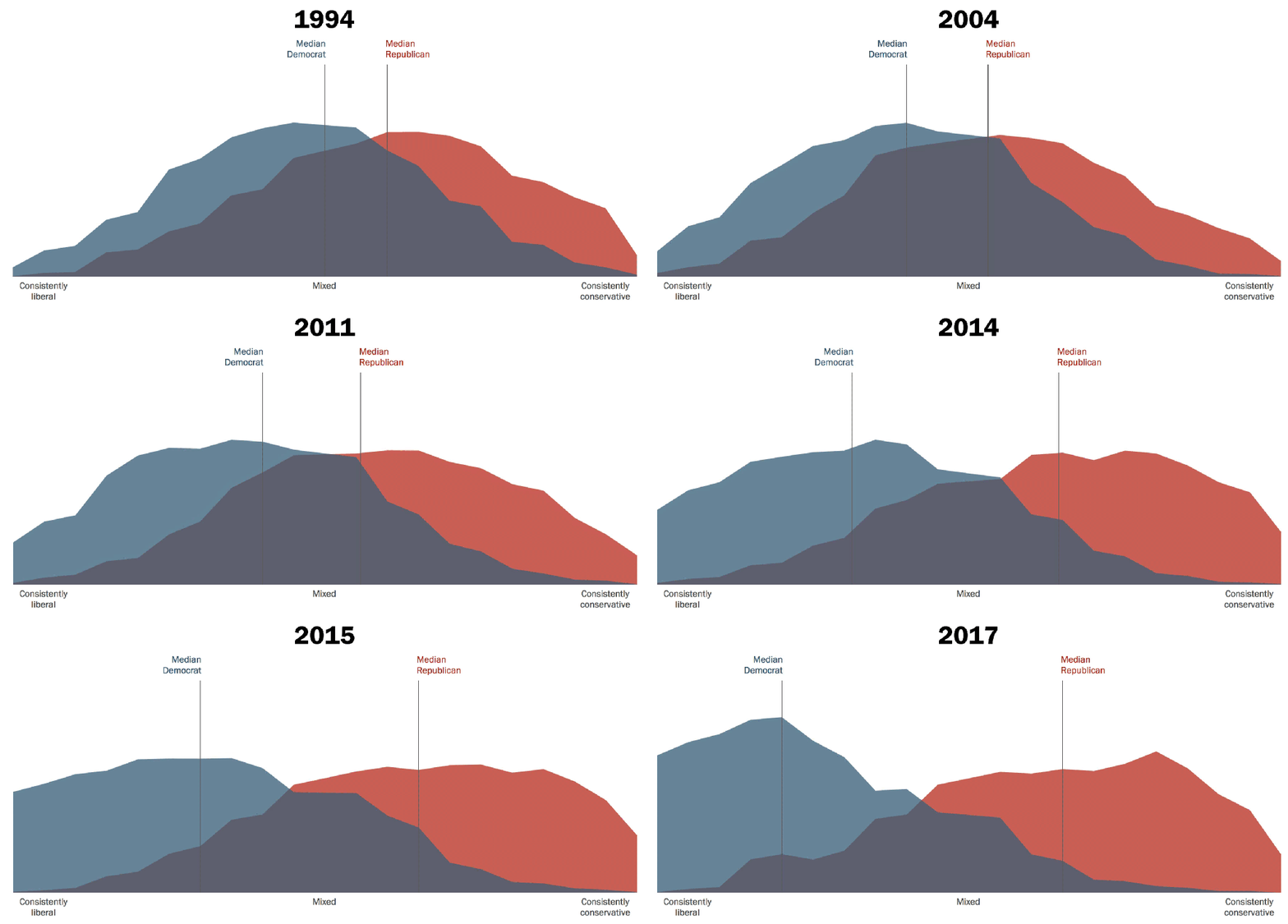
It appears as if US President Trump is going to make the charge that the Democrats favor “socialism” on his campaign for the presidency in 2020. It is not clear that the President has a clear idea of what he means by the term. The Pew Research Center did a poll of American citizens on their feelings about “socialism” and “capitalism”. Interestingly, the Center does not itself define the terms but chooses instead to place both words in quotation marks (air quotes). The results of the poll suggest that the charge of being socialist has lost much of its negative power and that many Americans believe that socialism has some redeeming features. A political campaign is probably the worst situation to have an intelligent discussion about the differences between capitalism and socialism, but it does appear that that discussion needs to take place.
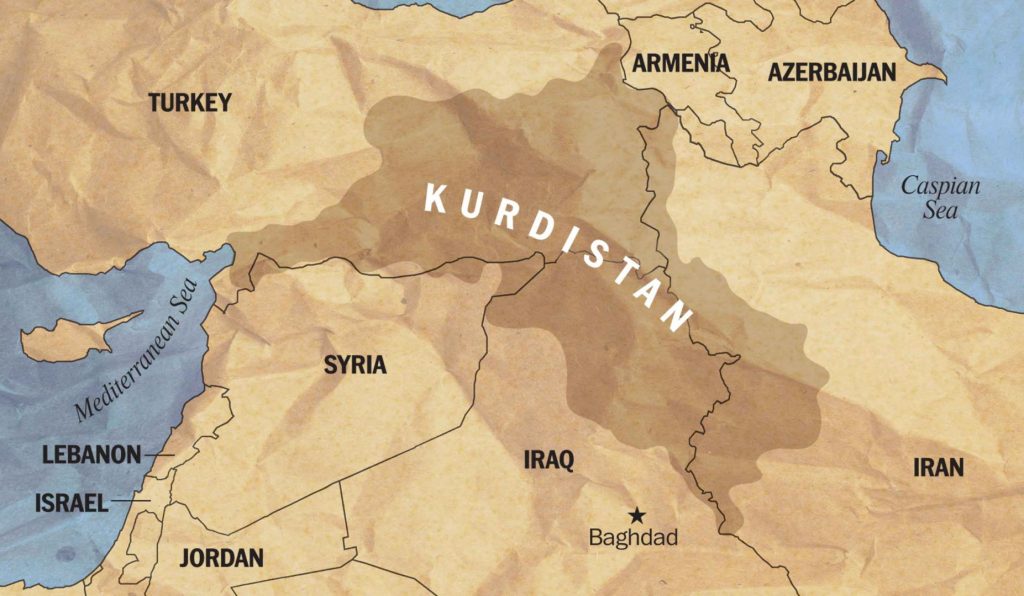
As anticipated, Turkey has launched a military offensive in northeast Syria as US troops have withdrawn from the region. The purpose of the invasion is to dislodge Kurdish forces from the area because Turkey regards the Kurds as a terrorist group intent on supporting an independent Kurdish state. Indeed, the Kurds in the region call the area Rojava (western Kurdistan) and some Kurds that live in Turkey, Syria, Iran, and Iraq have national aspirations as well. There are between 25 and 35 million Kurds making the Kurdish nation one of the world’s largest without a state. The Kurds lost about 10,000 troops fighting alongside the US against ISIS, but the US has little leverage vis-a-vis Turkey now–the US troops withdrawal created a power vacuum which the Turks were willing to exploit. Hemin Kobane is the Syrian Democratic Forces liaison with the international coalition against the Islamic State and he has written an op-ed for the Washington Post on the betrayal of Kurdish forces in Syria. It is a worthwhile read.
US President Trump announced that Turkish President Erdogan will visit the White House sometime next month. The visit is being scheduled in order to redress a diplomatic injury suffered by Erdogan, who wanted to meet with Trump at the UN last month but was told that there was not time in the schedule for a meeting. According to press reports, Erdogan was angry at the slight and communicated his anger to Trump in a telephone call. Apparently, at the spur of the moment, President Trump decided to pacify Erdogan by withdrawing troops. Many analysts, both Democratic and Republican, attacked Mr. Trump for his abandonment of the Kurds. President Trump justified his action, as described by The Washington Post:
“Trump predictably justified his actions not with a strategic vision for a troubled region, but campaign talking points. He told reporters on Monday afternoon that he was following through on what he ‘got elected on’ — in this instance, disentangling the United States from the Middle East’s intractable conflicts. He said it was the responsibility of other countries, including Turkey, to deal with what’s left behind. For good measure, he threatened Ankara with crippling economic sanctions if the Turks did anything ‘outside of what we think is humane.’
It is difficult to determine what Mr. Trump regards as humane given his reluctance to call out Saudi Arabian Crown Prince bin Salman for the horrific murder of Jamal Khashoggi. Or his embrace of North Korean leader Kim despite the well documented atrocities of the North Korean regime. We shall have to see how the Turkish military deals with the Kurds who most likely will seek to make an alliance with Syrian President Assad or Russian President Putin–a profound strategic defeat for the US. We should also keep in mind the rather sordid history of Trump associates such as the first National Security Adviser, Flynn, in their dealings with Turkish President Erdogan.
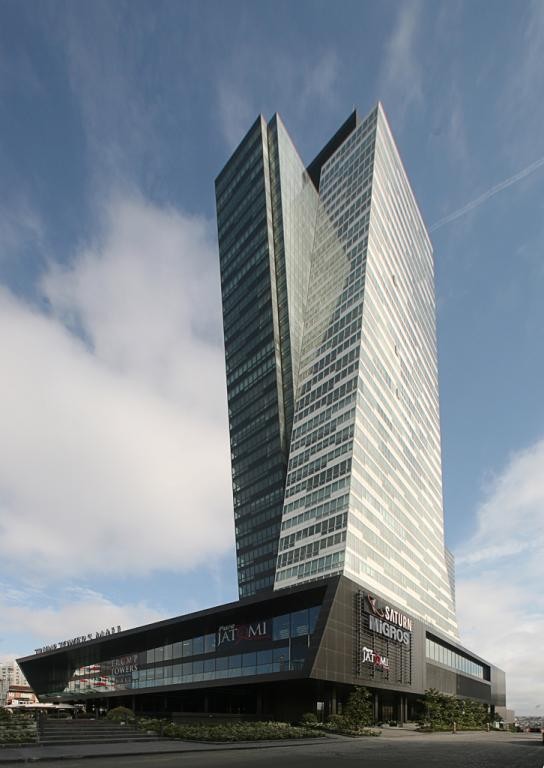
Trump Towers Istanbul
President Moreno of Ecuador has moved the government out of the capital city as protesters broke through a security cordon surrounding the Parliament building. The protests against the International Monetary Fund’s structural adjustment program which resulted in a 100% increase in fuel oil prices in the oil-rich country. The protests are led primarily by the indigenous peoples of Ecuador who have pressured the three governments in Ecuador to collapse over the past decades.
David Leonhardt has written an op-ed essay entitled “The Rich Really Do Pay Lower Taxes Than You“. The essay has a very revealing graphic which I cannot reproduce here, but I recommend the article. The evidence is quite compelling and it reveals the extraordinary political power of the rich to dictate tax laws that favor their interests. The conclusion is stark: ” For the first time on record, the 400 wealthiest Americans last year paid a lower total tax rate — spanning federal, state and local taxes — than any other income group, according to newly released data.” Leonhardt continues:
“But the second half of the 20th century was mostly a victory for the low-tax side. Companies found ways to take more deductions and dodge taxes. Politicians cut every tax that fell heavily on the wealthy: high-end income taxes, investment taxes, the estate tax and the corporate tax. The justification for doing so was usually that the economy as a whole would benefit.
“The justification turned out to be wrong. The wealthy, and only the wealthy, have done fantastically well over the last several decades. G.D.P. growth has been disappointing, and middle-class income growth even worse.
“The American economy just doesn’t function very well when tax rates on the rich are low and inequality is sky high. It was true in the lead-up to the Great Depression, and it’s been true recently. Which means that raising high-end taxes isn’t about punishing the rich (who, by the way, will still be rich). It’s about creating an economy that works better for the vast majority of Americans.”
This degree of inequality does not serve the long-term interests of the rich. It slows economic growth to stagnant levels and creates political and social tensions–such as suicide, xenophobia, and drug abuse–that are very difficult to manage and expensive to tolerate.
“In a scheduled phone call on Sunday afternoon between President Trump and President Erdogan, Trump said he would withdraw U.S. forces from northern Syria. The phone call was scheduled after Turkey announced it was planning to invade Syria, and hours after Erdogan reinforced his army units at the Syrian-Turkish border and issued his strongest threat to launch a military incursion, according to the National Security Council official to whom Newsweek spoke on condition of anonymity.
“The U.S. withdrawal plays into the hands of the Islamic State group, Damascus and Moscow, and the announcement left Trump’s own Defense Department ‘completely stunned,’ said Pentagon officials. Turkey, like the United States, wants regime change in Syria. Russia and Iran support the Assad regime.
“‘President Trump was definitely out-negotiated and only endorsed the troop withdraw to make it look like we are getting something—but we are not getting something,’ the National Security Council source told Newsweek. ‘The U.S. national security has entered a state of increased danger for decades to come because the president has no spine and that’s the bottom line.'”
” Betrayed by the United States and forced to fight a potentially bloody conflict with Turkey, the Kurdish-led forces could quickly abandon any further effort to control the Islamic State. They might well set free the tens of thousands of former militants and family members held in SDF-controlled camps. The 1,000 U.S. troops in Syria could be forced to withdraw entirely, which would be a major victory for Russia and open the way for Iran to entrench its forces along Israel’s northern border. U.S. allies around the world meanwhile will have reason to question whether they should cooperate with a government that so casually abandons military partners.
“As I have stated strongly before, and just to reiterate, if Turkey does anything that I, in my great and unmatched wisdom, consider to be off limits, I will totally destroy and obliterate the Economy of Turkey (I’ve done before!). They must, with Europe and others, watch over the captured ISIS fighters and families. The U.S. has done far more than anyone could have ever expected, including the capture of 100% of the ISIS Caliphate. It is time now for others in the region, some of great wealth, to protect their own territory. THE USA IS GREAT!”
Mr. Trump’s pomposity is unmatched in the annals of diplomacy.
“To set oneself above intellect is immediately to fall outside it.” ― Plotinus
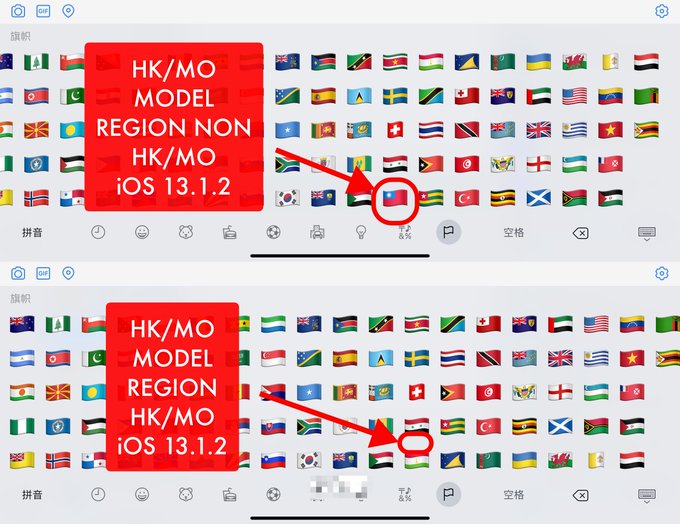
World politics is waged on many levels and we tend to focus on the most obvious issues. But if you are an iPhone user in China, you will no longer be able to access the emoji for the flag of Taiwan. The change occurred in the most recent Apple update to the iPhone (iOS 13.1.1). China does not recognize Taiwan as an independent country deserving of its own flag. Apparently, Apple agrees.
There have been five days of protests in Iraq, resulting in almost 100 deaths. The political situation in Iraq has never been really stable after the US overthrow of Saddam Hussein in 2003. But the focus on defeating ISIS in Iraq sidelined many of the issues that have caused the recent unrest. The defeat of the territorial-based caliphate has rendered the security situation somewhat more manageable (many ISIS-adherents are still around). The protesters are exercised by corruption in the government and the decided lack of progress in rebuilding the infrastructure of the state. Additionally, the Iraqi nation is still fractured along ethnic and sectarian lines: 60% of the population are Shia Muslims, 20% Sunni Muslims, and 20% Kurds. All these groups have different aspirations and grievances which have so far defied resolution. Patrick Cockburn is a reporter in Iraq and he describes the recent protests:
“It turned out that the government had managed to turn a small demonstration of 3,000 people in Tahrir Square, who had been protesting for three months against official corruption, a lack of jobs and poor services, into a major incident. The protesters had tried to cross the Jumhuriya Bridge which leads in the direction of the green zone, the site of the parliament, the prime minister’s office and other official buildings. The riot police, who have a bad reputation in Iraq, opened fire with rubber bullets, stun grenades, and, eventually, live rounds. Soon a video was flashing around social media of the protesters, mostly under 20, being attacked by the police and hosed with hot water.
“It was this incident which turned a small scale protest into mass demonstrations which may bring down the government of prime minister Adil Abdul-Mahdi. The riot police inadvertently detonated the explosive resentment felt by almost all Iraqis towards the kleptocratic state which has stolen as much as $450bn since the overthrow of Saddam Hussein in 2003.”
The unrest in Iraq raises difficult questions for the US, which relies upon Iraq to act somewhat as a counterweight to Iranian power in the Middle East. Iraq is sympathetic to Iran, but most of the citizenry is also nationalistic and does not regard Iran as a reliable ally (one needs to remember that Iraqis are Arabs and Iranians are Persians).
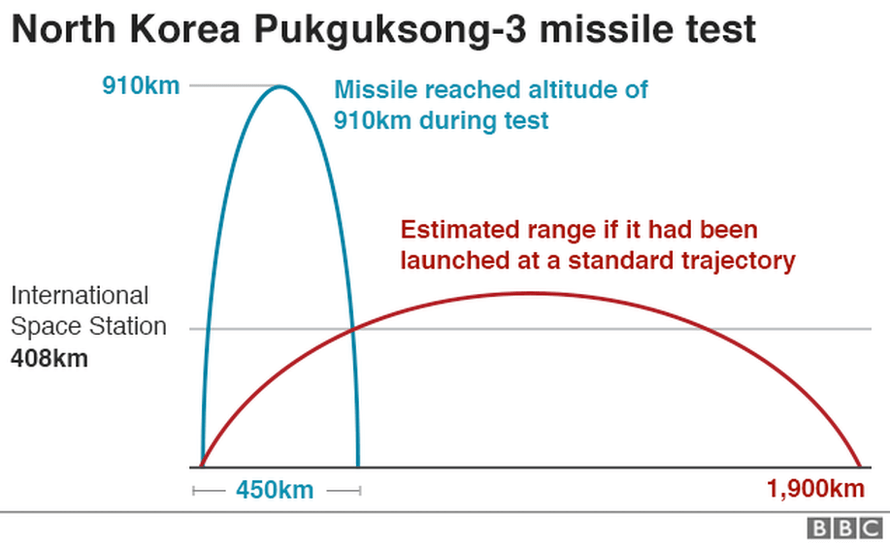
The US and North Korea began negotiations again in Sweden, but the talks broke off after a day. The negotiations were conducted by North Korea’s Kim Myong Gil and US Special Representative for North Korea Stephen Biegun as a prelude to a hoped-for meeting between US President Trump and North Korean leader Kim. The talks in Sweden were conducted against the back-drop of new ballistic missile tests by North Korea. It was the 11th test by North Korea this year and it was touted as a “new” missile by North Korea. Its range, as indicated by the graphic below, is considerable, raising concerns among North Korea’s neighbors in East Asia. US President Trump still maintains that these tests are not a US concern, but that position is hard to take seriously. South Korea and Japan certainly consider the tests troubling and, if the new missile was launched from a submarine, then it is in range of the US homeland as well. Kim Jong-un has made tremendous progress in developing a serious nuclear capability in the last two years.
The European Union has told British Prime Minister Boris Johnson that his Brexit plans regarding the relationship between the Republic of Ireland and Northern Ireland are not even “remotely acceptable”. The possibility of an acceptable agreement was highly unlikely and it would be virtually impossible for all members of the EU to agree to any modifications to the original agreement (the vote would have to be unanimous). The European Parliament made clear that Johnson’s plans are not acceptable:
“The parliament’s Brexit steering group said the plan for customs checks and controls on the island of Ireland would ‘breach a range of fundamental principles and red lines’.
“’The UK proposals on customs and on regulatory aspects explicitly provide for infrastructure, controls and checks but are unclear as to exactly where and how these would be carried out,’ the committee said. ‘Any form of controls and checks in and around the border would signify the end of frictionless trade and as such would harm the all-island economy as well as represent a serious risk to the peace process, and could imply a serious risk for our consumers and businesses.’
“The MEPs said the parliament would also veto any withdrawal agreement that did not provide a failsafe solution for avoiding a hard border on the island of Ireland.”
The Irish made it very clear that the plans were unacceptable as well, indicating that the lack of progress on the matter makes a “no-deal” Brexit almost inevitable. All the available evidence suggests that a “no-deal” Brexit would be economically disastrous for the British economy.
“While the sheer number of attacks on science is striking, what’s really shocking is how these actions put us all at risk. These attacks have ramifications not just for federal scientists, but for the health and safety of the public and our ability to trust what this administration is telling us.
“For scientists working in the federal government, being reprimanded or threatened with termination for simply doing your job can take a toll on morale. Day-to-day decisions that would otherwise seem uncontroversial may have serious repercussions for scientists working under Trump — and that means the rest of us aren’t getting the benefits of work being done on our behalf.”
The deliberate distortions make us all more vulnerable to economic and political power wielded by those who wish to make a profit despite the injuries to the public at large.
Samanth Subramanian has written an excellent essay for the Huffington Post entitled “What if the World Treated the U.S. Like a Rogue State“. The essay goes through the history of sanctions as an instrument of diplomacy, and raises the possibility of the world using sanctions to rein in the excesses of US foreign policy. The issue seems clear:
“The U.S. has never hesitated to make up the rules for itself, but after the end of World War II, it was largely cast as a hegemon maintaining a global order. Now, it is a hegemon that scorns that order. More and more, the world fears that Trump is only a symptom of a much deeper problem, said James Davis, an American political scientist at the University of St. Gallen in Switzerland. European politicians in particular, he said, worry that deep social trends in America—towards chauvinism, insularity and coercion—will keep blooming even after Trump leaves the White House. Other governments ‘aren’t going to be willing to deal with you on the same terms again,’ Davis added. ‘They won’t trust the system. They’ll worry that in a few years, there will be another explosion.
“So the question is worth asking: How much longer will it be before the rest of the world thinks about punishing the U.S. for its misdemeanors? And how would they even go about disciplining a country as mighty as the United States?”
Subramanian identifies the dollar as the most likely weakness that other states could use to influence US policy. Indeed, the US currently uses the dollar’s special status as a trusted reserve currency to force other states to follow US policy against countries such as Iran and Cuba. There are reasons to believe that many states would prefer to have alternative currencies to trust, but there are few viable alternatives at this point. If the US economy weakens, then that tactic would become more feasible. But sanctions targeted against the US dollar would probably not work now.
“Here’s the offer, according to two sources familiar with the negotiations: The United Nations would suspend sanctions on Pyongyang’s textile and coal exports for 36 months in exchange for the verifiable closure of the Yongbyon nuclear facility and another measure, most likely the end of North Korea’s uranium enrichment.
“It’s a risky but reasonable move, experts tell me. Reasonable because asking North Korea to completely dismantle its nuclear program before receiving sanctions relief — as the Trump administration has since the start of nuclear talks — was likely always going to be rejected by Pyongyang. What’s more, Yongbyon is the ‘heart’ of the country’s nuclear program and tearing down its many facilities would greatly blunt Kim Jong Un’s arsenal.
“It’s a risky proposal, though, because North Korea could continue to improve its weaponry over the three-year period. Experts in the US and South Korea also say it will take much more than three years to verifiably destroy all the nuclear facilities, documents, and other materials at Yongbyon — assuming international inspectors are granted the requisite access at all.”
The Federal Reserve Bank of San Francisco has published a paper entitled “Are Workers Losing to Robots?” There is little question that labor has lost a great deal of bargaining power over the last 4 decades. The Bank notes:
“A strong labor market and low unemployment traditionally help boost wages. But in the past two decades, the labor share—the portion of national income going to workers—has declined from about 63% in 2000 to 56% in 2018. This decline accelerated during the Great Recession, and the labor share has remained at historically low levels, even with strong employment growth in recent years.
“One possible cause of the decline in the labor share is that workers have lost bargaining power over the years. The late economist Alan Krueger highlighted several contributing factors, such as declines in union membership, increased outsourcing and offshoring, and noncompete clauses that hinder workers’ mobility across employers and regions (Krueger 2018).
“Another factor to consider is automation. Businesses have more options to automate hard-to-fill positions now than in the past. With rapid advances in robotics and artificial intelligence, robots can perform more jobs and tasks that required human skills only a few years ago. The steady decline in the relative prices of robots and automation equipment over the past few decades have made it increasingly profitable to automate. In this environment, workers may be reluctant to ask for significant pay raises out of fear that an employer will replace their jobs with robots.”
The graph below shows how much labor’s share of national income has declined over the years. The green line shows how much of that decline would be lessened without the effects of automation. Automation clearly has an effect, but the real cause of the decline is the process of globalization which sends jobs overseas.
Protests in Hong Kong escalated as a protester was shot in the chest with live ammunition by riot police. Today was the 70th anniversary of the founding of the People’s Republic of China and the event was celebrated in Beijing by a massive military parade. But the Hong Kong protesters wanted today to mark a sorrowful event and participated in various funeral rites. The Guardian describes the protests:
“Tuesday’s marchers had already defied a police ban to turn out in large numbers. Organisers wanted to mark the 70th anniversary of communist China as a day of mourning not celebration, and tens of thousands came out in response.
“’We want to show people this is not a happy anniversary,’ said Richard Hung, who works in the technology sector. ‘The CCP [Chinese Communist party] has killed or injured so many millions of people already. We have come out today, because if we don’t, we may not have another chance.’
“For the first few hours, the main march through the city centre was peaceful, with protesters dressed largely in black singing ‘glory to Hong Kong’, scattering paper money used for funeral offerings, and scrawling protest slogans on streets, bus stations and shops seen as pro-Beijing.
“Graffiti included anti-China messages mocking the day’s celebrations across the border, calls for freedom and democracy, and a warning with a prophetic ring that has become a protest staple: ‘if you burn, we burn with you’.
“Many families and young children were among the crowds at first. ‘You can see, we don’t have any protective gear,’ said Terrence, a logistics worker walking with his eight-year-old daughter. ‘We want freedom, and don’t want to belong to China.’”
The protests are an embarrassment to President Xi, but it seems as if the central government in Beijing does not know how to respond. The shooting of a protester will undoubtedly make a resolution much more difficult. US President Trump congratulated President Xi and made no mention of the protests in Hong Kong.

 World Politics News