Archive for the ‘World Politics’ Category

24 December 2012   Leave a comment

98 years ago an extraordinary event occurred: a Christmas truce called by British and German soldiers in World War I.  It was not a truce declared by the people in authority.  It was, rather, a spontaneous event, made by soldiers who had been killing each other the day before and who would continue to kill each other the day after.  But on Christmas, they all recognized that they were humans–not soldiers, and not even citizens.  But rather men who found themselves in unbearable circumstances doing things to each other that they would not voluntarily do.  And so, for a brief moment, they did what humans always truly want to do: enjoy each other’s company.

From: The Washington Blog, 18 December 2012 (http://www.washingtonsblog.com/)

What the Soldiers Did on Christmas 98 Years Ago

By leading anti-war activist David Swanson, author of Day Break and War Is A Lie, who runs the websites DavidSwanson.org and WarIsACrime.org (formerly AfterDowningStreet.org)

Frank Richards recalled:

“On Christmas morning we stuck up a board with ‘A Merry Christmas’ on it. The enemy had stuck up a similar one. Platoons would sometimes go out for twenty-four hours’ rest — it was a day at least out of the trench and relieved the monotony a bit — and my platoon had gone out in this way the night before, but a few of us stayed behind to see what would happen. Two of our men then threw their equipment off and jumped on the parapet with their hands above their heads. Two of the Germans done the same and commenced to walk up the river bank, our two men going to meet them. They met and shook hands and then we all got out of the trench.

“Buffalo Bill [the Company Commander] rushed into the trench and endeavoured to prevent it, but he was too late: the whole of the Company were now out, and so were the Germans. He had to accept the situation, so soon he and the other company officers climbed out too. We and the Germans met in the middle of no-man’s-land. Their officers was also now out. Our officers exchanged greetings with them. One of the German officers said that he wished he had a camera to take a snapshot, but they were not allowed to carry cameras. Neither were our officers.

“We mucked in all day with one another. They were Saxons and some of them could speak English. By the look of them their trenches were in as bad a state as our own. One of their men, speaking in English, mentioned that he had worked in Brighton for some years and that he was fed up to the neck with this damned war and would be glad when it was all over. We told him that he wasn’t the only one that was fed up with it. We did not allow them in our trench and they did not allow us in theirs.

“The German Company-Commander asked Buffalo Bill if he would accept a couple of barrels of beer and assured him that they would not make his men drunk. They had plenty of it in the brewery. He accepted the offer with thanks and a couple of their men rolled the barrels over and we took them into our trench. The German officer sent one of his men back to the trench, who appeared shortly after carrying a tray with bottles and glasses on it. Officers of both sides clinked glasses and drunk one another’s health. Buffalo Bill had presented them with a plum pudding just before. The officers came to an understanding that the unofficial truce would end at midnight. At dusk we went back to our respective trenches.”

Bruce Bairnsfather remembered:

“The dawn of the 24th brought a perfectly still, cold, frosty day. The spirit of Christmas began to permeate us all; we tried to plot ways and means of making the next day, Christmas, different in some way to others. Invitations from one dug-out to another for sundry meals were beginning to circulate. Christmas Eve was, in the way of weather, everything that Christmas Eve should be.

“I was billed to appear at a dug-out about a quarter of a mile to the left that evening to have rather a special thing in trench dinners—not quite so much bully and Maconochie about as usual. A bottle of red wine and a medley of tinned things from home deputized in their absence. The day had been entirely free from shelling, and somehow we all felt that the Boches, too, wanted to be quiet. There was a kind of an invisible, intangible feeling extending across the frozen swamp between the two lines, which said ‘This is Christmas Eve for both of us—something in common.’

“About 10 p.m. I made my exit from the convivial dug-out on the left of our line and walked back to my own lair. On arriving at my own bit of trench I found several of the men standing about, and all very cheerful. There was a good bit of singing and talking going on, jokes and jibes on our curious Christmas Eve, as contrasted with any former one, were thick in the air. One of my men turned to me and said:

“‘You can ‘ear ‘em quite plain, sir!’

“‘Hear what?’ I inquired.

“‘The Germans over there, sir; ‘ear ‘em singin’ and playin’ on a band or somethin’.’

“I listened;—away out across the field, among the dark shadows beyond, I could hear the murmur of voices, and an occasional burst of some unintelligible song would come floating out on the frosty air. The singing seemed to be loudest and most distinct a bit to our right. I popped into my dug-out and found the platoon commander.”

“‘Do you hear the Boches kicking up that racket over there?’ I said.

“‘Yes,’ he replied; ‘they’ve been at it some time!’

“‘Come on,’ said I, ‘let’s go along the trench to the hedge there on the right—that’s the nearest point to them, over there.’

“So we stumbled along our now hard, frosted ditch, and scrambling up on to the bank above, strode across the field to our next bit of trench on the right. Everyone was listening. An improvised Boche band was playing a precarious version of ‘Deutschland, Deutschland, uber Alles,’ at the conclusion of which, some of our mouth-organ experts retaliated with snatches of ragtime songs and imitations of the German tune. Suddenly we heard a confused shouting from the other side. We all stopped to listen. The shout came again. A voice in the darkness shouted in English, with a strong German accent, ‘Come over here!’ A ripple of mirth swept along our trench, followed by a rude outburst of mouth organs and laughter. Presently, in a lull, one of our sergeants repeated the request, ‘Come over here!’

“‘You come half-way—I come half-way,’ floated out of the darkness.

“‘Come on, then!’ shouted the sergeant. ‘I’m coming along the hedge!’

“‘Ah! but there are two of you,’ came back the voice from the other side.

“Well, anyway, after much suspicious shouting and jocular derision from both sides, our sergeant went along the hedge which ran at right-angles to the two lines of trenches. He was quickly out of sight; but, as we all listened in breathless silence, we soon heard a spasmodic conversation taking place out there in the darkness.

“Presently, the sergeant returned. He had with him a few German cigars and cigarettes which he had exchanged for a couple of Maconochie’s and a tin of Capstan, which he had taken with him. The séance was over, but it had given just the requisite touch to our Christmas Eve—something a little human and out of the ordinary routine.

“After months of vindictive sniping and shelling, this little episode came as an invigorating tonic, and a welcome relief to the daily monotony of antagonism. It did not lessen our ardour or determination; but just put a little human punctuation mark in our lives of cold and humid hate. Just on the right day, too—Christmas Eve! But, as a curious episode, this was nothing in comparison to our experience on the following day.

“On Christmas morning I awoke very early, and emerged from my dug-out into the trench. It was a perfect day. A beautiful, cloudless blue sky. The ground hard and white, fading off towards the wood in a thin low-lying mist. It was such a day as is invariably depicted by artists on Christmas cards—the ideal Christmas Day of fiction.

“‘Fancy all this hate, war, and discomfort on a day like this!’ I thought to myself. The whole spirit of Christmas seemed to be there, so much so that I remember thinking, ‘This indescribable something in the air, this Peace and Goodwill feeling, surely will have some effect on the situation here to-day!’ And I wasn’t far wrong; it did around us, anyway, and I have always been so glad to think of my luck in, firstly, being actually in the trenches on Christmas Day, and, secondly, being on the spot where quite a unique little episode took place.

“Everything looked merry and bright that morning—the discomforts seemed to be less, somehow; they seemed to have epitomized themselves in intense, frosty cold. It was just the sort of day for Peace to be declared. It would have made such a good finale. I should like to have suddenly heard an immense siren blowing. Everybody to stop and say, ‘What was that?’ Siren blowing again: appearance of a small figure running across the frozen mud waving something. He gets closer—a telegraph boy with a wire! He hands it to me. With trembling fingers I open it: ‘War off, return home.—George, R.I.’ Cheers! But no, it was a nice, fine day, that was all.

“Walking about the trench a little later, discussing the curious affair of the night before, we suddenly became aware of the fact that we were seeing a lot of evidences of Germans. Heads were bobbing about and showing over their parapet in a most reckless way, and, as we looked, this phenomenon became more and more pronounced.

“A complete Boche figure suddenly appeared on the parapet, and looked about itself. This complaint became infectious. It didn’t take ‘Our Bert’ long to be up on the skyline (it is one long grind to ever keep him off it). This was the signal for more Boche anatomy to be disclosed, and this was replied to by all our Alf’s and Bill’s, until, in less time than it takes to tell, half a dozen or so of each of the belligerents were outside their trenches and were advancing towards each other in no-man’s land.

“A strange sight, truly!

“I clambered up and over our parapet, and moved out across the field to look. Clad in a muddy suit of khaki and wearing a sheepskin coat and Balaclava helmet, I joined the throng about half-way across to the German trenches.

“It all felt most curious: here were these sausage-eating wretches, who had elected to start this infernal European fracas, and in so doing had brought us all into the same muddy pickle as themselves.

“This was my first real sight of them at close quarters. Here they were—the actual, practical soldiers of the German army. There was not an atom of hate on either side that day.”

Peace on Earth, to all of you.

Posted December 24, 2012 by vferraro1971 in World Politics

23 December 2012   Leave a comment

The Egyptian press is reporting that the new constitution was indeed approved by 64% of the electorate–if true, a stunning victory for President Morsi.  The opposition, however, is claiming that the election was fraudulent and is pressing for an investigation.  It is difficult to assess the legitimacy of the election from so far away.  The numbers suggest that the election was indeed valid since it is hard to imagine fraud on such a scale.  But everything rests on what the Egyptian people perceive to be true.

The rebels in Mali are enforcing a rigid interpretation of Sharia law and are destroying all the holy shrines in Timbuktu that they regard as inconsistent with their interpretation of Islam.  From a cultural and historical perspective, these losses are truly tragic since Timbuktu has been an extraordinary crossroads for numberless peoples over the years.  The African Union has attempted a feeble response to the rebellion, but there is virtually no hope that the rebels can be contained without outside support.  This change in Malian politics is directly attributable to the downfall of Gaddafi in Libya–an unanticipated consequence of his downfall.

The most recent studies of the temperature in Antarctica are especially troubling, indicating that temperatures have risen much faster there than any climate models have yet predicted.  The studies have found that “since 1958 average temperatures at the American Byrd research station in the middle of the vast reaches of western Antarctica have risen by 2.4 degrees Celsius (4.3 Fahrenheit)” and that these changes are “one of the fastest gains ever recorded on the planet and three times the global average.”  We don’t have very good data for Antarctica, so one must be cautious about interpreting these studies.   But one should be very concerned by the suggestiveness of the study.

Posted December 24, 2012 by vferraro1971 in World Politics

22 December 2012   Leave a comment

There have been protests all over the world in the last year, fueled primarily by economic uncertainty and discontent.  There have not been many, however, in Latin America where, until recently, economic growth has been robust.  The entire region has begun to slow down, and Argentina has been hit by a wave of protests that signal growing discontent with the administration of Cristina Kirchner.  The IMF and other international economic organizations have long been angry with Kirchner–if the domestic population becomes disaffected as well, then it is likely that Kirchner’s days are numbered.

We tend to think about the question of Israeli settlements in the Occupied Territories in terms of Israeli land vs. Palestinian land, and that framework is certainly the most important from a political perspective.  There is, however, another dimension which is rarely referenced: many Palestinians are Christians.  Many of these Christians oppose the Israeli settlements that tend to limit their access to the city of Jerusalem.   If there ever is a peace settlement that includes the status of Jerusalem, this issue will need to be resolved as well.

It appears as if the new Egyptian constitution was approved in the second round of voting.  The most recent report is that the approval rate over the two elections was 64%.  This result, if confirmed, gives President Morsi a big boost.

Posted December 23, 2012 by vferraro1971 in World Politics

21 December 2012   Leave a comment

The chief virtue of multiculturalism is that different cultural perspectives help us to understand our own culture better.  Things we take for granted or don’t notice are often picked up by people who don’t share the same cultural detritus. As Americans try to figure out the meaning of the long list of gun massacres that have occurred in the US, it is useful to see how other cultures interpret the American gun culture.  Der Spiegel offers one such opportunity.

It doesn’t appear as if the world ended today (but one can never be too certain about such things–after all, reality itself is a low probability event).  The Economist had a great graph today on various end of the world prophecies over the years.

It seems as if doomsday predictions have a poor track record.  Regardless, we can be certain that we will experience many more.

Posted December 22, 2012 by vferraro1971 in World Politics

20 December 2012   Leave a comment

The world is supposed to end tomorrow, so this post shouldn’t really have much effect.  But the predictions made in 1972 by the model developed in The Limits to Growth are turning out to be fairly accurate.  Those predictions essentially pinpoint the real apocalypse to occur sometime around the middle of this century.  Actually, the doomsday scenarios seem to be a little optimistic.

French President Francois Hollande acknowledged that the 132-year colonial rule of France over Algeria was “brutal and unfair.”   In a speech to the Algerian Parliament, Hollande did not apologize for colonial rule, but conceded hat France had forgotten its commitment to “universal values” in the Algerian war for independence.  The speech was given on the occasion of a new bilateral treaty of friendship between France and Algeria.

The NATO intervention in Libya is regarded by many in the US as a success:  the deaths of perhaps thousands of Libyan civilians were prevented, and Qaddafi was overthrown.  Those objectives were indeed laudable, but hardly sufficient.  The turmoil left by the power vacuum caused by Qaddafi’s death has led to great instability within Libya, and the attack on the American Consulate in Benghazi was only a small manifestation of the turmoil being experienced on a daily basis by Libyans.  The international community needs to understand that the Responsibility to Protect also demands effective follow-through.

Posted December 20, 2012 by vferraro1971 in World Politics

19 December 2012   2 comments

Park Geun-Hye is the new President of South Korea, and its first female president.   She is the daughter of a former military ruler of South Korea and the election was a closely-contested one.  But it was also an election that focused on domestic economic issues.  Her party, however, is a little more hawkish and there might be a stiffening of the policies toward North Korea.

The UN Security Council has been debating a resolution condemning Israel’s decision to built additional settlements in East Jerusalem, the E1 area.  It seems clear that 14 of the Council’s members support the resolution, but the US has threatened to veto it.  In a rare show of diplomatic pique, the Council members decided to make separate speeches supporting the resolution.  The speeches were directed toward the US in an attempt to demonstrate how isolated the US position had become.   The US, however, said it still intends to veto the resolution.

When it comes to guns, the US is clearly different from every other country in the world.  The gun culture in the US is based principally in the 2nd Amendment to the Constitution which states that “the right of the people to keep and bear Arms, shall not be infringed.”  Most Americans believe that the 2nd Amendment has to do with hunting and self-defense, and this belief is true of a majority of gun-owners as well.  But there are some Americans who believe that the 2nd Amendment’s primary purpose is to safeguard the right of violent revolution against the government, in a manner consistent with the writings of John Locke and the spirit of the American Revolution.  This smaller subset of the American population is the group most adamantly against any ban on the military-style assault weapons.

Posted December 19, 2012 by vferraro1971 in World Politics

18 December 2012   Leave a comment

The situation in Syria remains muddled even after the US recognition of the rebel forces.  Even though the US was careful to isolate one of the more radical groups within the opposition, al-Nusra, it is clear that many other radical elements remain within the coalition.  How the liberal states intend  to forge an alliance with such a disparate government is unclear, so their next steps remain murky.  All the while, many continue to die in the violence in that country.

Extremists have killed medical personnel who were attempting to vaccinate children against polio in Pakistan.  This sad event is a consequence of the subterfuge used by the US to find and kill Osama bin Laden.  The US relied on a Pakistani doctor who was using  a vaccination alibi to collect information about the whereabouts of bin Laden.  Now efforts to eradicate one of the worst childhood illnesses is being set back by the suspicions against all who claim to be vaccinating children.   The children who contract polio because of these suspicions can legitimately be considered victims in the war on terror.

South Korea will hold its Presidential election on the 19th and the contrast between the two primary candidates is quite striking.  The US has an important stake in the outcome of the election but it doesn’t appear as if foreign policy concerns are a high priority in the election.  There is, rather, a strong consensus in South Korea on the broad parameters of foreign policy.   Nonetheless, the election will affect American interests quite directly.

Posted December 19, 2012 by vferraro1971 in World Politics

17 December 2012   Leave a comment

Poland’s role in world history has often been pivotal, but one would hardly know that if one only read the traditional European histories.  As the critical state between “east” and “west”, Poland has often served as the watchtower for liberal values.  Foreign Policy has run a great, short article on Poland’s history.

On the same day as the school tragedy in Newtown, CT, China suffered a similar incident, although less horrific because the weapon used was a knife.  The difference between how the US addressed the matter and how the Chinese addressed theirs, is interesting, although one shouldn’t make too much of the comparison.

Supreme Leader Ayatollah Ali Khamenei of Iran now has a Facebook page.   Although Facebook was banned in Iran in 2009 as political unrest swept through Iran, it now seems as if the Ayatollah does no wish to be behind the Pope who just established a Twitter account.  The world is clearly going mad.

Posted December 18, 2012 by vferraro1971 in World Politics

16 December 2012   Leave a comment

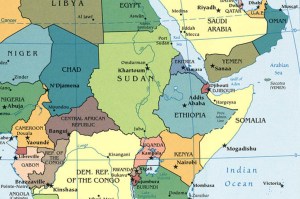
The New York Times has an article on the bloodshed in Central Africa that is truly moving.  The violence in that region is perhaps the worst the world has experienced since World War II, and we know precious little about it.  No solutions are offered in the article, but both the complexity of the crisis and the depth of the violence needs to be exposed so that we can all be spurred on to find a solution.

Shinzo Abe of the Liberal Democratic Party is likely to be Japan’s next Prime Minister as a result of the elections yesterday.  He ran on a hard-line platform against China, and will be buttressed by the emergence of the Restoration Party, a far-right party, as a strong party in Japan.  The results will test China’s patience, but also put considerable pressure on the US to balance its commitments in East Asia.

Posted December 18, 2012 by vferraro1971 in World Politics

15 December 2012   Leave a comment

Race is an issue in every society.  Some societies attempt to face those issues squarely; others ignore the matter completely.  as the world becomes more globalized, the latter choice is becomingly less of an effective option.  As an index of how far some societies have to go, one need only go to a drugstore and look at how some products are labeled.

The US will engage in some sort of a conversation about gun control over the next few weeks.  The debate is a good way to interpret the how Americans interpret the liberal tenet of freedom (and, on the issue of guns, the American interpretation is profoundly different from most other liberal societies).  The Atlantic has run a good article with some very good data on the types of restrictions on the freedom to own guns that Americans support and oppose.

India and Pakistan are moving toward warmer relations, after a long freeze after the terrorist attack on Mumbai in 2008.  Relations between the two states will never be truly easy, but a step back from the deeply hostile stance of the last few years is welcome.  Much of the change has to do with the changing geopolitical environment in South Asia, but the recognition of the interdependence of the two states is indispensable toward a more stable world order.

Posted December 15, 2012 by vferraro1971 in World Politics