Archive for the ‘World Politics’ Category
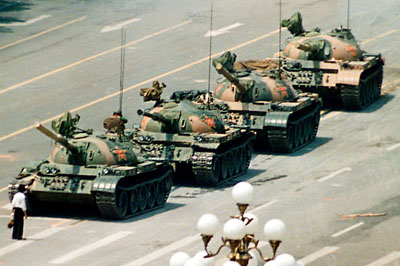
25 years ago, the Chinese government forcibly suppressed a protest in Tiananmen Square demanding greater political freedoms. It was an amazing time–the Berlin Wall was crumbling, Soviet control over eastern and central European states weakened, and it seemed that those voices for political freedom were being raised in China. The Chinese government does not allow anyone to commemorate the protest, but residents of Hong Kong have special privileges and they held a candlelight vigil in honor of the protesters who lost their lives. The Chinese central government has no intention of allowing similar freedoms elsewhere in China. The photograph below is one of the enduring symbols of the protest as a single man showed his defiance to a line of tanks.
US President Obama has announced a plan to cut carbon emissions from power plants in the US by 30% by the year 2030. This act is the first decisive action taken by the US to confront the problem of climate change, and it will be examined carefully by other countries, most importantly China. No other country is willing to make such a commitment until and unless the US took the lead since the US is one of the top emitters of greenhouse gases in the world (with only 3% of the global population). Now we will see if the world can finally make progress on this issue.
The European Parliament election was generally interpreted as a victory for right-wing parties. Little-noticed, however, was the emergence of some left-wing parties. Syriza was the top vote getter in Greece, and Podemos, a left-wing party formed out of the indignados movement in Spain just four months ago, took five percent of the Spanish vote. Moreover, recent protests in Spain and Germany were barely noticed in the media. The anger toward the austerity programs has hardly diminished.
There were violent clashes between protesters and police as many Turkish citizens tried to recognize the one-year anniversary of the protests at Taksim Square. The protests last year were initially protests against development projects scheduled for a park, but quickly turned into anti-government protests. The government had banned such protests, but many ignored the order. The police used water cannon and tear gas to disperse the crowd. It is very clear that Prime Minister Erdogan has lost the support of many in the middle class and many of the Turkish young people. It is not at all clear how this tension can be resolved.
US Secretary of Defense, Chuck Hagel, accused the Chinese of using “intimidation” and “coercion” in its attempts to assert national control over the South China Sea. The Chinese responded angrily to the charge, as it made clear that the US supports Japan, the Philippines, and Vietnam in their recent clashes with the Chinese in the region. Wang Guanzhong, deputy chief of the General Staff of the Chinese People’s Liberation Army (PLA), argued that the concept of alliances was out of date in the 21st century, a position that undermines the US position with respect to its allies in East and Southeast Asia. The argument, however, more accurately reflects the fact that no state in the region supports the Chinese territorial claims.
Former Egyptian General Abdel-Fattah El-Sisi has won the Presidential election with more than 90% of the vote. The outcome was not a surprise at all, but El-Sisi’s seeming mandate was significantly diluted by the fact that turnout for the election was less than 50% of potential voters. The apathy toward the election was in sharp contrast to the previous election when President Morsi was elected. The suggestion is that the public believed that the election was not a genuine election in any meaningful way.
The Global Summit to End Sexual Violence in Conflict will be held in London on 10-13 June 2014. It is the first global conference of its kind, and it is a conference that is long overdue. There are persistent reports of sexual violence against both women and men in every conflict of which I am aware, and the violence is always considered a “side effect” of the conflict. Nothing could be further from the truth: sexual violence is a regular and systematic instrument of war. The Guardian has a great editorial outlining the significance of the conference.
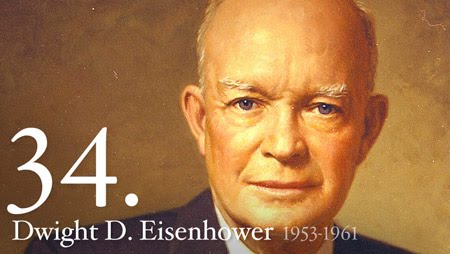
I admire Fareed Zakaria–he is a truly perceptive analyst even though there are times when I disagree with his point of view. He has written a thoughtful essay on President Obama’s speech at West Point that argues that Obama is on the right track with his foreign policy. Interestingly, Zakaria compares Obama with President Eisenhower, who led the US from 1953-1961, overseeing some serious crises in the Cold War.
The outbreak of the Ebola virus in West Africa continues to spread, and the World Health Organization has indicated that the outbreak is “serious” and not under control. The virus is transmissible only through direct contact, but its treatment is extremely difficult and most cases end up in death. The current outbreak started in Guinea (it more typically is found in central and east Africa), and has spread to Sierra Leone and Liberia. In an unrelated medical story, the US is facing the worst outbreak of Measles in 20 years, largely because many children are not being vaccinated against the disease.
Thousands of French students protested against the election results that gave the National Front the highest percentage of votes in the recent elections for the European Parliament. Many inside and outside of France fear that the Front’s victory signals a rebirth of fascism in Europe.
Marine Le Pen, Leader of the National Front

Despite a cease-fire that has been in place for many years, there has been a recent upsurge of violence between Turkish officials and Kurds associated with the Kurdistan Workers Party (PKK). The PKK had waged a struggle for independence from Turkey beginning in 1984, but it had seemed as if Prime Minister Erdogan had made progress toward a peaceful resolution. The current turmoil in Turkey, however, has apparently led to an erosion of Erdogan’s legitimacy.

In a speech at the US Military Academy at West Point, President Obama outlined his foreign policy for the future. This sentence best captures the spirit of his perspective:
“When issues of global concern do not pose a direct threat to the United States, when such issues are at stake — when crises arise that stir our conscience or push the world in a more dangerous direction but do not directly threaten us — then the threshold for military action must be higher.”
The speech merely codifies what many of us already believe: that President Obama explicitly wants the US to move back from the very ambitious foreign policy of his predecessor, President George W. Bush. Obama’s view is also largely consistent with the views of most Americans as I read the public opinion polls. Harvard Professor, Stephen Walt, one of the foremost realists in the profession today, has a very sharp critique of the speech.
Timothy Garton Ash is one of the most perceptive analysts of European affairs, and he writes for The Guardian. His post after the recent European Parliament elections is quite sobering–his sense is that Europe has lost its sense of direction and faces a long-term secular decline. I am not sure I would go as far as Ash does in his prognosis, but his analysis is definitely worth examining.
Social media has proven to be an overwhelming force. It is interesting, however, to see how different cultures rely on the different forms of social media.

It is impossible to calculate the true cost of war. There are far too many facets of armed conflict that defy adequate measurement. However, there are some commonly used metrics that we often use to compare the tragedies associated with war. Paul Waldman tallied up the various criteria that are used to place American armed conflict in context. Many of his charts are quite revealing.

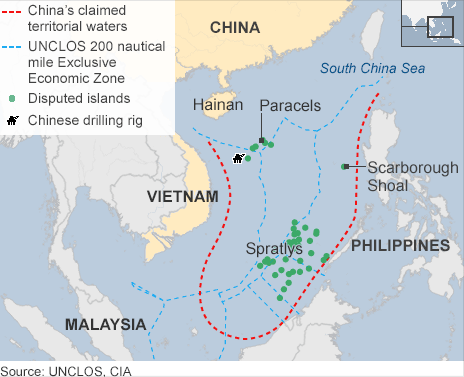
A Vietnamese fishing vessel sank off the coast of Vietnam after it was rammed by a Chinese vessel. Both sides blame each other for the sinking so it will be difficult to figure out exactly what happened–the stories from each side are quite different. The incident occurred close to the oil rig positioned by China in disputed waters, and the sinking marks a sharp escalation of the dispute between the two countries. As one can see from the BBC map, the oil rig is placed within the Vietnamese Exclusive Economic Zone as determined by the UN Conference on the Law of the Sea.
A team from The Organization for the Prohibition of Chemical Weapons that is monitoring the destruction of chemical weapons in Syria was attacked and its members kidnapped. The Syrian government blamed the rebels in the civil war, but there is no way right now to confirm the identity of the attackers. The attack is a serious breach of international law and the attackers most certainly knew of the seriousness of their actions. Unfortunately, the UN has no way to intervene to ensure the safety of its team. Most likely, there will be negotiations that will ultimately lead to the release of the team.
The European elections continue to reverberate throughout the European political systems. Without a doubt, the stunning success of the National Front in France is viewed as the most significant outcome. The centrist party, UMP, came in second, and the party in power, the Socialists, came in third. Marine Le Pen is the current leader of the National Front which has evolved since it was founded by her father. In its earlier years, the National Front was virulently anti-immigrant and anti-Semitic. Marine Le Pen has moved the Party away from those vulgar sentiments, but many suspect that the change is only rhetorical. No matter how far to the right the Party currently is, there is little question that the French polity has moved away from the center toward the right.

Pope Francis has made a trip to Israel and Palestine, and expressed great discontent over the impasse between the two sides. In his remarks, he called the stalemate, “unacceptable.” The Pope took the unusual step of entering Palestine through Jordan, and not through an Israeli access point. The move signaled his acceptance of the state of Palestine: Vatican City and Palestine both have the same status in the United Nations. It is certain that the Israelis were not happy with the Pope’s actions, but, given the centrality of the region to the world’s Christians, were unwilling to express those misgivings openly. In another move in the dispute, Turkey has issued arrest warrants for Israeli military officials who stopped a Turkish vessel from entering ports in the Gaza Strip in 2010 which resulted in the deaths of nine people.
Egypt is holding its elections which are due to be completed by Tuesday. At this time, most polls indicate that the former leader of the military, Abdel Fatah al-Sisi, will win the election. The sense is that al-Sisi will bring order back to Egypt after a tumultuous three years. Many observers, however, have doubts about a–Sisi’s commitment to fundamental political rights. But most regional powers seem to be very happy that al-Sisi will restore Egypt’s traditional foreign policy.
Petro Poroshenko has apparently won the Ukrainian election with about 56% of the vote, which, if valid, will mean that there is no need for a run-off election. Poroshenko is a very wealthy person but has pledged to end the civil war, but also to move closer to the West. What is unclear is how strong his commitment to ending corruption in Ukraine is. The uprising in January that led to the overthrow of the previous government was stimulated by a widespread belief in Ukraine that the rich oligarchs in the country were running the country to the detriment of the ordinary citizens. Poroshenko is susceptible to those suspicions.
The initial results of the voting for the European Parliament suggest that anti-Union parties scored big successes in Great Britain, France, Greece, and Denmark. Only in Greece was a left-wing party successful; in the three other countries, the parties are considered right-wing. The majority in the European Parliament will still be solidly pro-Union, but the election results indicate a sharp erosion of support for the status quo. The Union is paying the price for the five years of sluggish economic growth in Europe, and there are no indications that that economic growth will pick up any time soon.
Chinese and Japanese fighter planes came within meters of each other in the disputed airspace over the Diaoyu/Senkaku Islands. The incident is a stark reminder of how dangerous the situation has become. Both sides are digging in their heels, and playing a game of chicken with each other to test each other’s resolve.
The World Cup begins in a few weeks. It is the most popular sporting event in the world and it is being hosted by Brazil. The expense of hosting the tournament has been considerable and has caused incredible resentment within many sectors of Brazilian society. The protests against the tournament have been extensive, but there is an element of the protest movement that has many worried: an anarchist wing called the Black Bloc. Anarchists have been active in many protests throughout the world over the last 20 years, but the dissatisfaction with governance throughout the world has apparently increased their number.
The Thai military has seized control of the government, and is tightening its control over other parts of Thai society as well. The coup follows months of political unrest, but the move seems unlikely to ease the tensions within Thai society. Reports from the country suggest that the situation is more or less calm right now, but the US military has cancelled plan exercises with the Thai military to show its disapproval of the undemocratic move.
The elections for the European Parliament will end on Sunday. They have been going on for three days and the preliminary results suggest that anti-European Union parties will do quite well, though not enough to change the basic orientation of the Parliament. The prevailing attitudes in Europe are decidedly sour after nearly five years of slow economic growth. Ukraine will also hold its presidential election on Sunday and it is predicted that pro-Western candidates will fare well in the elections. We shall see how Russian President Putin reacts to that outcome.
In a stunning victory for ignorance, the US House of Representatives voted today to dig our collective heads in the sand. It passed an amendment to the National Defense Authorization bill that reads:
None of the funds authorized to be appropriated or otherwise made available by this Act may be used to implement the U.S. Global Change Research Program National Climate Assessment, the Intergovernmental Panel on Climate Change’s Fifth Assessment Report, the United Nation’s Agenda 21 sustainable development plan, or the May 2013 Technical Update of the Social Cost of Carbon for Regulatory Impact Analysis Under Executive Order 12866.
If we don’t study it, it will go away.


