Archive for the ‘World Politics’ Category
In an interview with MSNBC’s Chris Matthews, State Department representative, Marie Harf, made the following statement:
“We’re killing a lot of them, and we’re going to keep killing more of them. So are the Egyptians, so are the Jordanians – they’re in this fight with us…But we cannot win this war by killing them. We cannot kill our way out of this war. We need in the medium to longer term to go after the root causes that leads people to join these groups, whether it’s a lack of opportunity for jobs, …”
Harf is, of course, absolutely correct. But the reaction to her comments (I suspect fueled by a great deal of anti-female sentiment) in parts of the media was absolute ridicule. It is hard to imagine how progress can be made when intelligent ideas are not treated with the seriousness they deserve.
The cease-fire in Ukraine has essentially collapsed. Russian President Putin has told Kiev to let its soldiers to surrender to pro-Russian separatists in a statement that was a declaration of war more than a humanitarian offer. There really was no cease-fire at all in the city of Debaltseve and the rebels stated that they had captured “hundreds” of Ukrainian soldiers in the battle. The brevity of the cease-fire suggests that it was never a serious option for the separatists.
Economic theory suggests that globalization should over time reduce inequality in the world, but empirical evidence suggests that that consequence is not occurring. Harvard researchers have traced the growth of economic inequality in the world and suggest that inequality results primarily from the movement of skilled workers from poorer countries to richer countries. In essence, globalization clusters highly skilled workers, leaving pools of poorer paid, unskilled workers in noncompetitive positions.
Greece will be negotiating with the troika today, and the outcome of these discussions remains unknown. The fear within the troika is that any outcome that gives Greece significant relief will lead to “contagion.” Contagion refers to a movement in other struggling countries (Spain, Italy, Portugal, Ireland, and, to some extent, France) to follow Greece in demanding relaxation from austerity. Right now, the governments of Spain, Portugal, and Ireland are publicly supporting a hard line, but there is substantial evidence that the publics in these countries are actually sympathetic to the Greek position. Contagion also refers to the possibility of private bondholders of sovereign debt may become fearful of other countries refusing to pay back their bonds in full. Fear is a difficult condition to measure accurately, so the bargaining position of the troika is somewhat problematic.
The talks between the Greeks and the troika collapsed after 4 hours as Greece rejected a proposal to request a six-month extension of its current arrangement. The language after the collapse was acrimonious, and money is fleeing from Greece as depositors in Greek banks fear that the banks cannot survive.
Currently, Israeli Prime Minister Netanyahu is scheduled to give a speech to Congress on 3 March. It appears, however, that relations between US President Obama and Netanyahu are worse than we imagined. The US has decided to limit the amount of information it gives to Israel about the negotiations with Iran because it believes that Israel has been leaking selective information about the negotiations in an effort to derail them. If this Washington Post report is accurate and the Israeli position is that Iran cannot have any nuclear enrichment capability at all, then there is no way to avoid a confrontation between the US and Israel. Iran will never give up its right to enrich uranium, a right that is guaranteed by the Non-Proliferation Treaty.
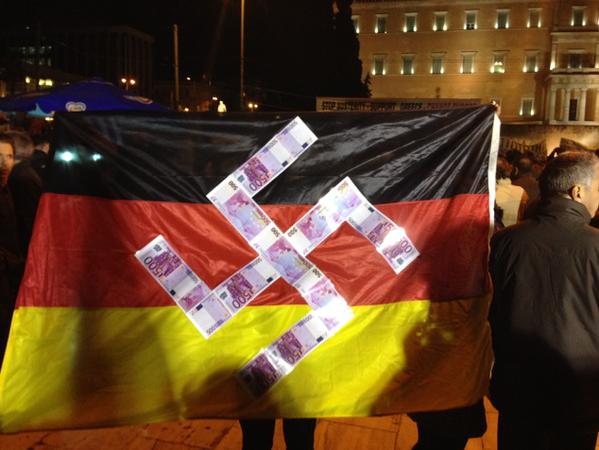
There were rallies in Athens as Greeks tried to bolster support to Prime Minister Tsipras before the renewal of negotiations with the troika. Indeed, the rhetoric from Tsipras seemed to harden over the weekend as the Greek government began to believe that it had the upper hand because of its weakness. There is a real tactical advantage in any negotiation when the threat of collapse by one party is highly plausible. The real issue now is how much the troika fears a Greek exit from the eurozone. The protesters in Athens made clear their sentiments toward the troika:
There were two violent incidents in Copenhagen, Denmark, that mimicked the recent shootings in Paris. The target of the first incident was the Danish cartoonist, Lars Vilks, who has been a center of controversy since he published cartoons ridiculing the Prophet Mohammed in 2007. For Vilks, the issue is solely an issue of the freedom of speech. The Guardian, however, links the event to a much broader number of issues, including the discrimination against both Judaism and Islam.
Anti-religious feelings were also apparent in Libya as 21 Egyptian Copts were beheaded by the Islamic State in Libya. The situation in Libya is incredibly chaotic and has been since the overthrow of Muammar Gaddaffi in 2011. Egypt has a strong interest in Libyan internal affairs, and President Sisi is highly concerned about the rise of Islamic militants in the neighboring state. The possibility that the conflict in Libya could expand regionally is quite significant, and would lead a number of states, including the US and European states, to become more heavily involved.
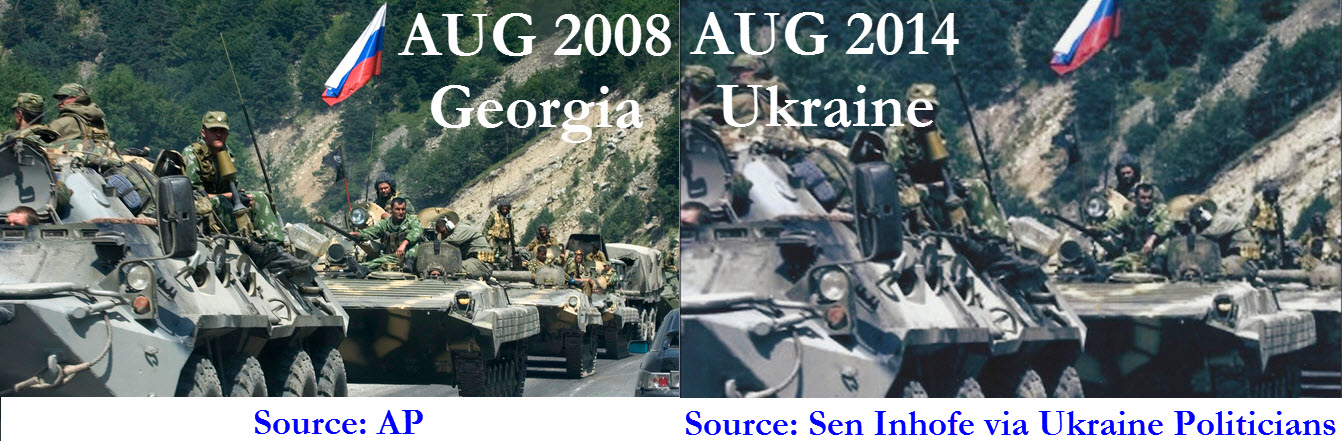
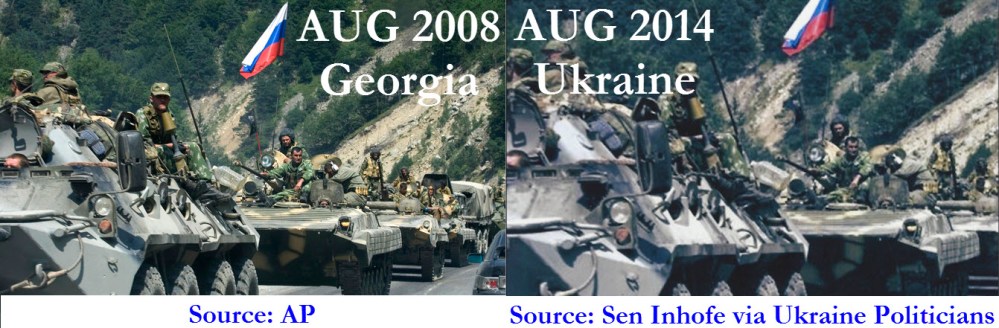
We’ve all had a lesson in propaganda, even though most of us were completely unaware of the attempt. The Washington Free Beacon published photos provided to it by Senator Inhofe (R-OK) proving that Russians soldiers were fighting in eastern Ukraine. Senator Inhofe has been joined by Senators Cruz (R-TX), Cornyn (R-TZ), Rubio (R-FL), and Cotton (R-AR) in pressing US President Obama to provide lethal aid to the Ukrainian government. Unfortunately, the photographs were all from the Russian invasion of Georgia in 2008. The Free Beacon has retracted its story, but who knows how many people were influenced by the original photos. One of the photographs and its original is reproduced below:
The US has weighed in on the dispute between Greece and the “Troika.” Greece wants the austerity programs loosened in order to stimulate greater economic growth, but the troika, motivated primarily by Germany, has refused to make any adjustments. There will be more meetings on Monday, and it is difficult to say which side will prevail. But the US position is that the unwillingness to reach a compromise is jeopardizing the health of the global economy.
Last Thursday South African President, Jacob Zuma, delivered his state of the nation address to the Parliament. Unfortunately, the speech was delivered to a half-empty gathering after a brawl broke out between members of Zuma’s African National Congress and members of the left-wing Economic Freedom Fighters. The EFF charges Zuma with corruption, charges that are highly plausible. The South African economy is not doing very well and many South Africans believe that the economic problems are due to poor governance.
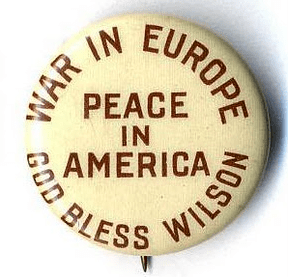
In 1916, US President Woodrow Wilson campaigned on the pledge: “He Kept Us Out of War.” When World War I ended in 1918, more than 100,000 American soldiers died in the fighting in Europe.
On 24 October 1964, US President Lyndon Johnson stated at the University of Akron:
“We are not about to send American boys 9 or 10,000 miles away from home to do what Asian boys ought to be doing for themselves.”
In 1973, when the US pulled out its troops from Vietnam, more than 58,000 US soldiers had died in Asia.
On 11 February 2015, US President Obama said:
“The resolution we’ve submitted today does not call for the deployment of U.S. ground combat forces to Iraq or Syria. It is not the authorization of another ground war, like Afghanistan or Iraq….As I’ve said before, I’m convinced that the United States should not get dragged back into another prolonged ground war in the Middle East. That’s not in our national security interest and it’s not necessary for us to defeat ISIL. Local forces on the ground who know their countries best are best positioned to take the ground fight to ISIL — and that’s what they’re doing.”
Eventually, we will find out what “enduring offensive combat operations” means.
An Argentine prosecutor has asked a federal judge to investigate the role of the Argentine President, Cristina Fernandez de Kirchner, for her possible role in the cover-up of a Jewish community center in Buenos Aires in 1994. The suspicions of some is that Kirchner cover-up the Iranian role in the blast in exchange for better deals on the price of oil. At this time, there is really no public evidence supporting the charge. But some believe that the previous prosecutor, Albert Nisman, was killed because he had uncovered such evidence.
Scientists have estimated that there were about 8 million metric tons of plastic in the world’s oceans in 2010, and are predicting that that number will rise to 9 million tons by the end of this year. The number is staggering and the effects on the health of the oceans and of all life in the oceans are devastating.
The negotiations in Minsk, Belarus for a cease-fire in Ukraine produced a glimmer of hope. The agreement between Russia and Ukraine, brokered by Germany and France, stipulates that a cease-fire should begin on Sunday, that heavy weapons be pulled back from the cease-fire line, and that greater autonomy be given to the eastern provinces populated by a majority of Russian-speaking people. Indeed, the cease-fire terms are consistent with what is truly necessary for an end to the violence. The critical question is how seriously both Moscow and Kiev believe that an agreement is in their interests. Time will tell.
Apparently, the meteorologists are predicting yet another snow storm this weekend for New England. It is truly the winter of our discontent. But do the snowstorms refute the claims that the earth is warming? Hardly. And the explanation for the link between warmer temperatures and snowstorms in New England is actually quite interesting.
Indian politics got quite interesting as the Common Man Party (Aam Aadmi Party) won convincingly in elections in Delhi, giving the Bharatiya Janata Party (BJP) a significant defeat. Arvind Kejriwal will be the new leader of Delhi, and there is little question that his personal charisma was an important factor in the rout. But the election also raises questions about the depth of the BJP’s victory just recently. The victory of the Hindu nationalist party was overwhelming a few months ago, but perhaps its policies have proven to be too radical for India.
US President Obama has submitted a draft Authorization to Use Military Force (AUMF) to the Congress. The AUMF is a strange legislative creature that acts as a substitute for the Declaration of War required by the US Constitution. It was developed because of the War Powers Act that Congress passed in 1973 in an attempt to reassert Congressional authority in matters of war that had been blurred by the way the Vietnam War had been conducted. The Act requires that:
…the President, upon sending troops into military action, must notify Congress within 48 hours that he has done so. The Resolution also forbids military personnel from remaining in a state of conflict for more than 60 days (including an additional 30 days for withdrawal). After that, the President must seek an additional authorization from Congress or a formal declaration of war.
The most recent AUMF was passed in 2002 to give President Bush the authority to use military force against al Qaida which had attacked the US on 11 September 2001. That AUMF is actually still in force, and will not be repealed by the mere passage of a new AUMF for President Obama in the actions against the Islamic State. The lack of a repeal is important because the AUMF of 2002 contains none of the restraints outlined in Obama’s AUMF. The US will therefore have two AUMFs–one open-ended and one restrictive–and it is not clear which one is fully operative.
The restraints in Obama’s AUMF are two. First, is does not authorize “enduring offensive ground combat operations.” The President indicated that this restraint means that there will not be extensive use of troops actively engaged in combat. Unfortunately, I suspect that no one can really define what the phrase means. So it may not be an effective check against a deep commitment of combat troops.
Second, the AUMF has a limit of three years. That limit is certainly better than Bush’s AUMF (which has no time limit), but three years is a very long time to be involved in military action. And military operations have a tendency to generate their own momentum. Note also that Obama’s term is up in two years, which means that he has also committed the next President (whoever that may be) to operations against the Islamic State.
Finally, the AUMF does not really address the central issue of the use of force against the Islamic State: whether the US intends to ally itself with Iran in supporting both the governments of Iraq and Syria. The latter issue is critical because that alliance means that the US will be supporting Syrian President Assad (and, indirectly, Russia, which supports Assad). In other words, the US still has to figure out who are its friends and who are its enemies. A strange position for a great power.
The situation in Greece remains unsettled. After five hours of talks, the Greeks and the troika decided to hold additional talks on Monday. There are massively conflicting reports concerning today’s talks. Some reports indicate that progress was made; others suggest that positions have simply hardened.
The US has kept an arms-length relationship to General Sisi, the President of Egypt. The US favored a new government in Egypt after it became disillusioned with the Presidency of Muhammed Morsi, but General Sisi has used a very heavy hand in governing Egypt since he came to power, and the US has tried to communicate its discomfort with the violations of human rights. Russian President Putin has moved into the space between Sisi and the US, and is exploiting the vacuum. Putin is a master of balance of power diplomacy.
After three days of debate, the Greek Parliament gave Prime Minister Alexis Tsipras a strong vote of confidence as he prepares to confront Greece’s creditors with plans to reduce Greece’s debt burden. The vote will undoubtedly encourage Tsipras to continue his policy of confrontation, and he pledged that “Greece cannot go back to the era of memoranda and submission.” The EU and Greece are playing a high-stakes game of chicken. It will be interesting to see if there is a voice out there that can forge a compromise.
The Democratic Republic of Congo has never had a peaceful transfer of power since it became independent in 1960, and it appears as if it is facing more political unrest as its current President, Joseph Kabila, appears ready to extend his rule beyond his legal mandate. Hundreds of his political opponents have been rounded up and Kabila gives every indication that he intends to remain in power. The Democratic Republic of Congo carries a horrific colonial legacy that continues to destabilize the country and is cursed by extraordinary resource wealth that makes it a target for ruthless people.

The Obama Administration released its National Security Strategy directive today (I will not ask any quiz questions on the document itself). The directive is mandated by Congress and is supposed to be released every five years to provide guidance on the future strategic threats facing the United States. One obvious change from the previous directive issued in 2010 is the very heavy emphasis on alliances and burden-sharing, reflecting the Obama Administration’s desire to pull back from the extended foreign commitments of previous administrations.
US President Obama and German Chancellor Merkel met in Washington today to coordinate policy with respect to Ukraine. France and Germany have indicated that they do not wish to arm Ukraine; Obama is under intense pressure from Congress to do precisely that. But Chancellor Merkel is meeting with Russian officials in Belarus on Wednesday to discuss a new cease-fire in Ukraine. It is highly likely that Merkel will use the threat of US weaponry to force a cease-fire and she and Obama probably coordinated the specific details of that strategy. It is wonderful to see how diplomacy works behind the scenes.
Diplomatic activity on the Ukrainian issue has reached a peak. Leaders of Russia, Ukraine, France and Germany are scheduled to meet in Belarus on Wednesday as terms for a cease-fire are pursued. At this moment, it appears as if the Western powers are split on the issue of providing more powerful weapons to Ukraine. Russian President Putin thus has the advantage in the negotiations as the Russian-speaking rebels seem to be well-supplied and on the move. The absence of the US at the proposed meeting suggests that US President Obama is prepared to let the Europeans take the lead on the issue, a position that will agitate certain members of Congress who argue for robust support for Ukraine.
Nigeria has decided to postpone its presidential election from 14 February to 28 March. The decision was made because there was no assurance that the violence engineered by Boko Haram could be contained so that the elections could be held. The opposition party led by Muhammadu Buhari supported the move to delay, even though many suspect that the delay was sought by current President Goodluck Jonathan because the polls currently put him in second place to Buhari.
HSBC, the world’s second largest bank, has admitted to practices that have allowed thousands of depositors to hide about $120 billion from tax authorities and to disguise money earned from illegal activities such as the sale of “blood diamonds” from Africa. The practices, which took place between 2005-07, were conducted by the bank in clear and knowing violation of the tax laws of many states. The scale of tax evasion and fraud was extraordinary.