Nearly 100 people were killed in a bomb blast in Ankara, Turkey. The bomb blasts targeted demonstrators who were urging peace with the Kurds in support of the People’s Democratic Party (HDP). It is not yet known what group was responsible for the bombings, but suspicion fell on the Islamic State given the recent aggressive actions by Turkey against the IS. However, the Turkish government has also stepped up its activities against Kurdish separatist groups. The situation remains murky.
Since 2013, the US has tried to support groups in Syria which were both opposed to Syrian President Assad and to the Islamic State. That effort is now apparently in ruins as Russia has carried out a sustained bombing campaign against the anti-Assad groups. This development is clearly a short-term defeat for the Obama foreign policy in the region. It does, however, suggest that now the Russians have to defend a longer-term interest in the region. We will have to see whether the Russians are more effective in putting down a radical insurgency than was the US in Iraq. We already know that both the US and the Russians were not successful in Afghanistan. It also remains to be seen how other powers in the Middle East such as Israel, Saudi Arabia, and the Gulf States react to what seems to be an emerging Russian-Iranian axis.
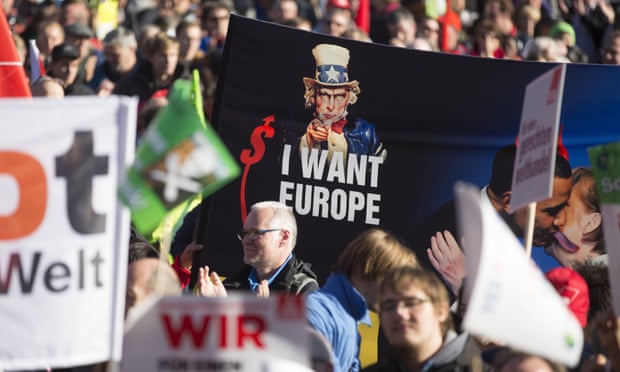
One of the largest demonstrations in recent German history was held today against the Trans-Atlantic Trade Agreement. Estimates vary between 150,000 and 250,000 people participated in the demonstration which signaled dissatisfaction with enlarging the scale of free trade with the US. Opponents of the agreement believe that it does little to protect the interests of consumers, workers, and the environment. Interestingly, there were remarkably few similar protests to the counterpart Trans-Pacific Partnership which was agreed upon by the main negotiators last week.
A new word has entered our vocabulary: deconflict. It apparently is a verb used by the Pentagon to discuss the process of making sure that Russian and American pilots do not accidentally bomb each other. Russia has unabashedly entered the Syrian civil war and the US is loathe to coordinate its military plans with the Russians since the Russians support Syrian President Assad and the US wants Assad to leave. But the risk of an accident or miscalculation in such a restricted battlefield is quite high and the consequences for both sides would be significant. Nonetheless, it is difficult to figure out how President Obama wishes to play Putin’s gambit.
Much of Southeast Asia is covered in a heavy smog caused by fires, primarily in Indonesia. The smog is an annual affair which has gotten worse every year as many acres of Indonesian forest are burned to make way for agriculture (largely palm plantations). The winds determine where the smog goes, but Malaysia is often the recipient. This year may be much worse because a strong el Niño is typically associated with drought conditions in Indonesia and Australia.
Over the last few weeks there has been a steady stream of violent acts in Israel, in the Occupied West Bank, and in the city of Jerusalem as Palestinians protest Israeli policies. The protests do not seem to be highly coordinated or centrally directed, but, instead, reflect a generalized discontent among many Palestinians. It is hard to predict how these protests might unfold–they could dissipate over time, or they could coalesce into a more sustained campaign. But the number of incidents suggest a very high level of frustration among the general population.
“Only 57 Fortune 500 companies disclose what they would expect to pay in U.S. taxes if these profits were not officially booked offshore. In total, these 57 companies would owe $184.4 billion in additional federal taxes. Based on these 57 corporations’ public disclosures, the average tax rate that they have collectively paid to foreign countries on these profits is a mere 6.0 percent, indicating that a large portion of this offshore money has been booked in tax havens. If we apply that average tax rate of 6.0 percent to the entirety of Fortune 500 companies, they would collectively owe $620 billion in additional federal taxes.”
Here is a table with a list of the top 30 companies with the most money hidden away:
For the first time, Russia has launched sea-launched cruise missiles against targets in Syria. The missiles were launched from vessels in the Caspian Sea, demonstrating the 900-mile range of the relatively new weapon. The attack signals yet another manifestation of Russian intent to preserve the administration of Syrian President Assad, and further complicates the US strategy against the Islamic State. The evidence suggests that 90% of the Russian strikes have not targeted Islamic State sites.
Negotiators have (more or less) completed their discussions on the Trans-Pacific Partnership (TPP), a group of 12 Pacific states who wish to increase trade among themselves by reducing barriers to trade such as tariffs. We do not yet know the specific details of the agreement so I will not characterize it except to say that its objective is to maximize free trade. The other fact we know about the agreement is that it does not include China and those 12 countries do a lot of trading with China. The conclusion seems to be obvious: the 12 are leveraging their combined power to offset the dramatic economic power of China in Asia.
I’m back from Belgium. The Conference was spectacular and it was wonderful seeing so many former students who are busy saving various parts of the world. My speech was well-received at the University of Leuven. I’m tired, but very happy.
The relations between the West and Russia are becoming highly problematic, even dangerous. The Russians have apparently invaded Turkish airspace (Turkey is a member of NATO) and has stepped up aerial bombardment in Syria, apparently against anti-Assad forces supported by the West and not the forces of the Islamic State. Along with Russian provocations in Ukraine and the Russian probing of allied defenses in the Baltics and eastern Europe, the Russian flexing of military power is presenting a considerable challenge to the West. As of now there is little to suggest that the Russians are interested in outright war. But the lack of a coordinated Western response leaves open the possibility for miscalculation or accident.
Borders are an intrinsic part of the nation-state system. The delimitation of territory is both a solution to and a cause of war. In one of the most contested areas of the world, the Indian-Pakistani border, the border is so well-illuminated that it can be seen from space, one of the very few borders that are so obvious. The lights make the border easier to patrol and prevent people from passing through undetected. But the lights are also symbolic of a deep divide.
The British Home Secretary, Theresa May, gave a speech in which she argued that immigration into Britain was harming the economy and displacing British workers. She argued for tightening immigration rules to limit offers for asylum. Ms May is clearly positioning herself for a stronger position within the Conservative party, but her comments reflect the growing opposition to immigration in many parts of Europe. The Guardian did an analysis of her claims and found that many of them were not accurately portrayed.
Russia has announced that it will share intelligence with Iraq concerning operations against the Islamic State in both Syria and Iraq. The move caught American officials off guard and represents a distinctive move by Russia to secure its interests in the Middle East in a much substantive way than in the past. The move also represents a growing alliance between Iran and Russia, an alliance that shunts American interests to the side. The US will have to counter this chess move, but it is unclear what alternatives are viable for American policy.
The financial markets have suffered recently as China began selling some of its $3 trillion foreign reserves in order to cover budget losses from its recent economic slowdown. Now Saudi Arabia has started to sell some of its foreign reserves to compensate for budget deficits associated with the decline in the price of petroleum. The worry is that the sale of these assets, many of which are US Treasury bonds, could have the effect of forcing interest rate changes that could cause other countries to suffer economic slowdowns as well. The consequences of globalization are that economic misery spreads very rapidly in this world.
I will be in Belgium until 6 October so I won’t be posting while I am away. Unless something really weird or significant happens. So let’s hope that I won’t be posting until the 6th. Keep smiling.
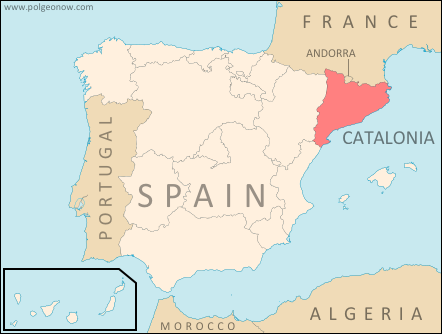
Separatist parties have won a clear majority of seats within the Catalonian Parliament. The vote sets up a confrontation with the Spanish central government in December when national elections are scheduled for Spain. The parties currently in power did not do well in the Catalan elections, suggesting that their support has diminished since the last election in 2012. The Spanish constitution does not allow for secession (unlike the bid in Scotland for independence from the United Kingdom–a vote the separatists lost but was perfectly legal) and a bid for independence would likely be met with fierce resistance.
China has committed itself to a tough carbon trading scheme that will limit the emission of greenhouse gases that contribute to climate change. The Chinese have now matched the commitment of the US made last November to cut emissions 26 to 28 percent below 2005 levels by 2025. The twin moves are made by the top two greenhouse gas emitters on the planet and one can hope that other states will now be willing to make similar moves. The Chinese and the Americans also decided to commit substantial sums to help poorer countries to make changes to their greenhouse gas production.
Austria’s far-right Freedom Party came in quite strong in a state election in the country. The Freedom Party has averaged about 30% of the vote and many attribute its strong showings to its powerful anti-immigrant stance. Heinz-Christian Strache is the leader of the Freedom Party and he has consistently stated that he wishes to preserve Austria’s “Christian” identity. The Freedom Party is also forming a bloc in the European Parliament with other anti-immigrant parties such as the French National Front and the Dutch Freedom Party.
Gender equality is most commonly viewed as a social and cultural issue, but it is also a supremely important economic issue. The McKinsey Institute is one of the premier consulting firms in the world and it has just issued a new report entitled “How advancing women’s equality can add $12 trillion to global growth“. The report analyzes the economic impact of helping women achieve their fullest economic potential and it estimates that doing so “could add as much as $12 trillion, or 11 percent, in annual 2025 GDP. In a ‘full potential’ scenario in which women play an identical role in labor markets to that of men, as much as $28 trillion, or 26 percent, could be added to global annual GDP by 2025.” That figure is higher than some other, earlier, estimates, but the McKinsey report analyzes many more variables than has been done in the past.
Sustainable Development Goals light show at UN Headquarters
Former US State Department official, Christopher Hill, has written an essay examining the causes of the refugee crisis. Most of the blame falls on Syrian President Assad and his extremist opponents, the Islamic State and al Qaeda. But Hill also points out the responsibility of the Western powers, specifically France and the US, for not having a viable response to the politics of the Arab Spring which led to the organized protests in 2011. Not only in Syria but also in Egypt, the protests were left with unpalatable choices and the Western powers did little to help support those who favored more democratic forces.
Voters in the Catalan region of Spain will vote on whether Catalonia should declare its independence from Spain. Secessionist movements are not allowed under the Spanish constitution, and the central Spanish government has vowed to suppress any move toward independence. The region accounts for almost 20% of the Spanish GDP and the Catalan grievances against the Spanish government include a sense of economic exploitation as well as the suppression of Catalan cultural identity. If the vote favors independence both Spain and the European Union will be in for a rough ride.
The European Union is struggling to develop a coherent policy for dealing with the influx of refugees into the 28-nation union. As is does so, it has to operate within the context of international laws and obligations that have grown up in the world system since te end of World War II. Refugees are accorded certain rights in international law, and The New York Times has an excellent article on some of those requirements. Nonetheless, the EU decision to force sovereign states to take actions of which they disapprove raises questions about the political autonomy of the members.
US President Obama and Russian President Putin will meet on Monday at the annual meeting of the United Nations in New York. The meeting is likely to be intense as both Ukraine and Syria are on the agenda, and both sides disagree quite strongly over the appropriate courses of action in both cases. There is an interesting debate over who asked for the meeting. The Russians insist that the meeting was mutually agreed upon; the White House insist that Putin asked for te meeting because of the effects of the sanctions on the Russian economy. It is unlikely that anything substantive will be decided upon at the meeting, but simply meeting is a good sign. There are, however, rumors that the Russians and the Americans have reached a “tacit” agreement on Syria, but the details are unknown.
US President Obama is meeting with Chinese President Xi and the Chinese are bringing to the table a new conception of “great power” politics. The idea is bold and directly questions US dominance in world affairs. The significance of the proposal is that it represents an exercise in imagination which seems to be quite lacking in American diplomacy right now. I doubt that the Chinese ideas will be greeted warmly by the US, but it is encouraging that such discussions are being held. The Americans seem either unwilling or unable to conceptualize a different world order even though the power configurations in world politics seem to be changing quite rapidly.
The European Union (EU) has voted to require its members to accept refugees in order to avoid crippling the countries that are willing to take in refugees. The EU very rarely “votes” on measures: it prefers to work by consensus whereby the votes are simple confirmations of prior agreement. But there were five countries that voted against the measure: Hungary, Romania, the Czech Republic and Slovakia voted against the measure and Finland abstained. The vote, however, did not contain any enforcement measures and I suspect that the EU will not penalize those states that refuse additional refugees. The vote should be interpreted as a statement of intent and solidarity and not as a legal requirement.
The refugee crisis in Europe is also an index of a crisis for the Islamic State as the flood of refugees diminishes both the available manpower and financial resources available to the group. The Islamic State has said that those who leave for Western countries commit a “sin” and the number of young people leaving Syria far outstrips the number of young males and females entering Syria to join the caliphate. Ultimately, the Islamic State will have to address this drain on its resources, but the drain is perhaps also testimony to the loss of the attractiveness of the group.
The Pope’s visit to the US completely overshadowed the arrival of another guest to the US: Chinese President Xi Jinping who arrived in Seattle to dine with tech giants such as Bill Gates. President Xi will arrive in Washington soon (the Secret Service is certainly going to earn its keep this week) for meetings with US President Obama. The meetings between the two should be tense as they intend to discuss matters such as the South China Sea and charges that China commits cyber-espionage against US firms. Nonetheless, it is a good sign that the two sides are talking.