Archive for the ‘World Politics’ Category
Taiwan’s President, Tsai Ing-wen, offered an apology to the island’s indigenous people who have suffered for centuries under Dutch, Spanish, Chinese and Japanese rule. The indigenous peoples, who comprise about 2% of Taiwan’s population, are organized into several tribes which were unfortunately defined by the Japanese during the period of Japanese imperial rule. Many of the indigenous peoples reject these artificial classifications. President Tsai shares ancestry with these people, and she has offered greater autonomy to them but it is hard to imagine what concessions would address the injustices these people have suffered.

Japan has issued a defense white paper that accuses China of “territorial aggression” in disputes over the East and South China Seas. The paper asserted that China was attempting “to turn these coercive changes to the status quo into a fait accompli.” The paper was issue after Chinese Defense Minister Chang Wanquan called for a “people’s war at sea.” The rhetoric between the two states is escalating rapidly after the decision of the International Arbitration Tribunal at the Hague that repudiated the Chinese maritime claims.
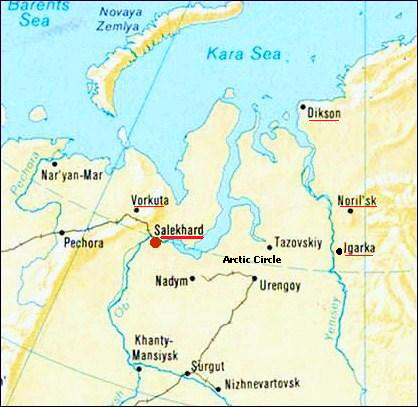
Climate change has been linked to an outbreak of anthrax in Russian Siberia. Temperatures in the Arctic Circle in that region of Russia have actually reached 95° F. Researchers believe that the anthrax spores, which can be frozen for many, many years, was released when the permafrost thawed. One child and more than 2,500 reindeer have died from the outbreak and more than 60 people have been hospitalized. The last time anthrax was active in the region was in 1941.
Climate change will have different effects in different parts of the world. Most of the developed world worries more about warmer winters, but in the Middle East the concern is warmer summers. The Economist summarizes the work of several research studies that have analyzed the effects of climate change on the region:
“Daytime highs, notes an academic study published in the Netherlands in April, could rise by 7ºC by the end of the century. Another UN study predicted Iraq’s sandstorms would increase from 120 to 300 per year. The region also has fewer coping mechanisms than before. Population increase has exhausted water supply, leaving two-thirds of the countries in the Arabian Peninsula and the “fertile crescent” without the minimum viable for human survival, according to UN figures. Sana’a, the capital of Yemen, is set to run out of water in 2019 or perhaps earlier. In Taiz, 160 (260km) miles to the south, the water table has already collapsed. Some people have air-conditioners, but power cuts—of up 16 hours a day in southern Iraq—make them useless.”
Needless to say, these types of changes will only increase the volatility of the politics of the region.
The European Union and Turkey are playing a dangerous game of chicken. Earlier this year, the two sides reached an agreement that Turkey would keep many of the refugees fleeing from turmoil in the Middle East from going to Greece (at which point the refugees can travel visa-free throughout the Schengen Agreement area) as long as the Union allowed visa-free travel for Turkish citizens by this October (and a payment of about 3 billion euros). The Union is balking at the agreement because of the human rights situation in Turkey which has deteriorated further. Turkey raised the possibility of trashing the agreement which led the German Vice Chancellor, Sigmar Gabriel, to state today that the Union would not be “blackmailed”. Who will blink first? Probably not Turkey.
For the first time, the US has coordinated military strikes on Daesh (the Islamic State) with the UN-backed coalition government in Libya. It is actually the third time the US has conducted air strikes in Libya, but the first two times were without the sanction of the Libyan government. These strikes indicate that the US is now committed to the new Libyan government–a significant increase in commitments and suggest that the US is now engaged in its 4th war in the Middle East and Southwest Asia (Afghanistan, Iraq, and Syria).
The US Department of Defense, the Joint Chiefs of Staff, have published the Joint Operating Environment, 2035 which is a projection of US strategic concerns through the year 2035. It is a very long document but should be of special interest to those who are interested in questions of strategy. The document is written in a very scholarly manner (it quotes von Clausewitz and Raymond Aron) and has a rather expansive view of important trends in world politics. Some of the more important sections deal with the role of ideology and geographic and demographic changes. One section addresses the future contexts for conflict and these contexts include:
- 1. Violent Ideological Competition. Irreconcilable ideas communicated and promoted by identity networks through violence.
- 2. Threatened U.S. Territory and Sovereignty. Encroachment, erosion, or disregard of U.S. sovereignty and the freedom of its citizens from coercion.
- 3. Antagonistic Geopolitical Balancing. Increasingly ambitious adversaries maximizing their own influence while actively limiting U.S. influence.
- 4. Disrupted Global Commons. Denial or compulsion in spaces and places available to all but owned by none.
- 5. A Contest for Cyberspace. A struggle to define and credibly protect sovereignty in cyberspace.
- 6. Shattered and Reordered Regions. States unable to cope with internal political fractures, environmental stressors, or deliberate external interference.
The level of generality in the document is quite high, but it provides a very good road map of what the Pentagon is thinking about.
The rise of right-wing extremism in Europe is an issue of concern to everyone. The blog, Understanding Society, has an excellent review of some important research studies on nationalism and anti-immigrant sentiment conducted by European researchers. The analysis is dispassionate and straightforward.

Yanis Varoufakis is the former finance minister of Greece who led a losing fight against the IMF, the European Commission, and the European Union to renegotiate the terms of Greece’s sovereign debt. He has written an interesting essay which makes the argument that both Trump and Clinton are key parts of the economic crisis in the world: Trump represents a proto-fascist alternative and Clinton represents the neoliberal alternative. Varoufakis makes the case for a third way–a progressive stance quite similar to that of Bernie Sanders–as a way of addressing the slowly degrading global economy.
There is little question that there has been a sea change in attitudes toward globalization, particularly on the issue of foreign trade. Most of the developed states had long maintained a positive stance toward foreign trade, but in recent years a growing part of their populations have turned against free trade. The middle class of most rich countries are now questioning whether free trade is in their interests. Whether this means that these states will turn to protectionist measures remains to be seen. The change was also experienced by John Maynard Keynes in 1933:
“I was brought up, like most Englishmen, to respect free trade not only as an economic doctrine which a rational and instructed person could not doubt, but almost as a part of the moral law. I regarded ordinary departures from it as being at the same time an imbecility and an outrage. I thought England’s unshakable free trade convictions, maintained for nearly a hundred years, to be both the explanation before man and the justification before Heaven of her economic supremacy. As lately as 1923 I was writing that free trade was based on fundamental ‘truths’ which, stated with their due qualifications, no one can dispute who is capable of understanding the meaning of the words.”
“For these strong reasons, therefore, I am inclined to the belief that, after the transition is accomplished, a greater measure of national self-sufficiency and economic isolation among countries than existed in 1914 may tend to serve the cause of peace, rather than otherwise. At any rate, the age of economic internationalism was not particularly successful in avoiding war; and if its friends retort, that the imperfection of its success never gave it a fair chance, it is reasonable to point out that a greater success is scarcely probable in the coming years.”
Lord Maynard Keynes

The US currently gives Israel about $3 billion a year, the most that any country in the world receives from the US. The US and Israel are apparently close to an agreement that would increase the amount to about $5 billion a year over a ten-year period. The amount is huge and the deal is somewhat paradoxical given that the Obama and Netanyahu Administrations have often been at odds. It is also inconsistent with the position of the US State Department condemning the continuing build-up of Israeli settlements in the Occupied West Bank. It is often very difficult to figure out what “real” policies actually are.
The Independent Evaluation Office of the International Monetary Fund (IMF) has issued a blistering report on how the IMF has handled the various crises associated with sovereign debt in Europe–in Greece, Ireland, Portugal, and Cyprus. The evaluation is breathtaking in its seriousness: that the IMF acted on the basis of documents that were not made available to the Independent Evaluation Office. In an article for the Telegraph, Ambrose Evans-Pritchard, points out that
“In Greece, the IMF violated its own cardinal rule by signing off on a bailout in 2010 even though it could offer no assurance that the package would bring the country’s debts under control or clear the way for recovery, and many suspected from the start that it was doomed.
“The organisation got around this by slipping through a radical change in IMF rescue policy, allowing an exemption (since abolished) if there was a risk of systemic contagion. ‘The board was not consulted or informed,’ it said. The directors discovered the bombshell ‘tucked into the text’ of the Greek package, but by then it was a fait accompli.”
The report validates criticisms that have been made by many outsiders over the years. Given the power of the IMF, it is unfortunate that action on the failures will never make the front pages of most media. In the meantime, three top executives associated with the failed Anglo-Irish Bank were sentenced to jail for conducting a fraud in 2008 that was part of the near-collapse of the global financial sector. Note that no American banker has yet to be jailed for similar activities in the banking sector.
Israel has announced plans to build new Jewish settlements in East Jerusalem, a move that drew swift condemnation from international observers. The Palestinian Authority considers East Jerusalem to be the capital of the future Palestinian state, but the build-up of Jewish settlements makes that outcome increasingly unlikely. After the collapse of American-led efforts to restart Israeli-Palestinian peace negotiations last year, the diplomatic effort toward that end shifted to what is known as the “Quartet“–the US, the European Union, Russia, and the United Nations–to try to broker a peace. In its report last February, the Quartet assessed the settlement issue in this way:
“The continuing policy of settlement construction and expansion in the West Bank and East Jerusalem, designation of land for exclusive Israeli use, and denial of Palestinian development, including the recent high rate of demolitions, is steadily eroding the viability of the two-state solution. This raises legitimate questions about Israel’s long-term intentions, which are compounded by the statements of some Israeli ministers that there should never be a Palestinian state. In fact, the transfer of greater powers and responsibilities to Palestinian civil authority in Area C contemplated by commitments in prior agreements has effectively been stopped, and in some ways reversed, and should be resumed to advance the two-state solution and prevent a one-state reality from taking hold.”
Unfortunately, the international pressure has yet to yield a change in Israeli policy.
Jabhat al-Nusra, one of the rebel groups fighting against Syrian President Assad has renounced its allegiance to al Qaeda and announced that it will confine its militant activities to Syria. The change is an attempt to remove the group from “terrorist” lists so that it will no longer be a legitimate target for the international forces fighting in Syria since it will no longer be aligned with international terrorist groups. The change is unlikely to persuade Russia to refrain from attacks since the distinction between “domestic” and “international” terrorism is not pertinent to Russia’s clear objective of supporting President Assad.
China and Russia have announced that they are going to holding joint naval exercises in the South China Sea in September. The announcement raises tensions in the area since Russia has strongly backed China’s maritime claims in the region. China and the US have been playing cat and mouse in the South China Sea, but the rules of interaction have been fairly civil and non-provocative. The same cannot be said for Russia air activities close to NATO’s eastern border and over Syria.
We are beginning to get solid economic data from Great Britain after the Brexit vote, and the preliminary information suggests that the British economy has taken a big hit with rising unemployment and a sharp drop in consumer confidence. The critical question right now is whether these preliminary results simply reflect the shock of the vote or a more structural change in the British economy. And the question after that is how the EU will navigate difficult economic times without the British.
The opening ceremony for the Summer Olympics is a week away. It was awarded to Brazil several years ago when the Brazilian economy was one of the top-performing economies in the world. Since that time, however, the economic and political situation in Brazil has deteriorated precipitously. Today protesters stole the Olympic torch as it was being passed to the city of Rio de Janeiro and extinguished the flame. The protesters believe that all the money being spent on the Olympics should have been spent on the people of Brazil.

Arms sales from eastern and central European countries are fueling the violence in Syria. Investigators have found that countries such as Saudi Arabia and Jordan are procuring arms certificates and then funneling the weapons to their allies in Syria. The scale of the weapons trade is quite significant, and such transfers violate a number of international agreements that seek to control the flow of weapons. The Syrian government gets its weapons from Russia without any restraint since they are government to government deals.
China is a very diverse country with a large number of ethnic minorities. Some of those minorities chafe under rule from the central government in Beijing and tensions in both the Uighur and Tibetan communities have nettled the government for many years. Such tensions are not unusual in the world, but the Chinese government has been remarkably unwilling to offer concessions to the groups in terms of political or cultural autonomy. That unwillingness reflects a long-standing attitude in Chinese politics.
Ethno-Linguistic Map of China

The Russian press is largely, but not completely, pro-Trump, and one commentator has gone as far as praising Trump’s “isolationism”. The Russian press is far from free, but it is not centrally controlled. Rather, the press picks up the signals from the government as to what line to take. But the distaste for Clinton is clear–a vestige from Russian displeasure at her role in shaping American policy in Libya and Syria. One commentator was quoted in Pravda:
“Hillary Clinton in the president’s chair… is insanity, a deadly danger to all of humanity which could threaten the very existence of our civilisation.”
Pretty strong rhetoric.
There is little question that globalization has rattled the American presidential election. What remains to be seen is how globalization will be affected by democratic politics. It is unlikely that globalization itself can be stopped–production supply chains are too heavily entrenched in virtually every economy. But Jared Bernstein suggests the ways that globalization will be reshaped by politics.
There is a growing dispute between the US and its financial partners, Europe and Japan. The dispute centers on how much capital banks should be required to hold in order to weather a financial storm caused by debt defaults. The US increased those requirements for American banks after the financial crisis in 2008. Europe and Japan did not and some of their banks have increased their debt loads significantly since then. Europe and Japan opposed the move because it would make their banks less profitable. A decision must be made by December by the Basel Committee on Banking Supervision.

Researchers associated with the Potsdam Institute for Climate Impact Research have just published a study on whether climate-related factors have significantly contributed to recent armed-conflict outbreaks. The question is crucially important but very difficult to assess. Although the relationship seems intuitive, just quantifying the variables is a monumental project. For those who are not afraid of rigorous statistical analysis, I recommend the study.
Over the last two years we have seen a serious uptick in confrontations between NATO and Russia and the US and China in the South China Sea. These confrontations have led some analysts to return to discussions of what we call “great power wars” which had receded after 1991. Russia in Global Affairs is a great source on Russian thinking about this matter and a new essay offers a troubling perspective. The authors suggest a new form of warfare, much like World War I caught the great powers by surprise because of the industrialization of war. The next great power war will look very different:
“While the great power wars of the past often involved large-scale conventional operations, this will not necessarily be the case in the 21st century. The goal of new wars will be to devastate not so much an enemy’s armed forces as the country’s economic and political system. As a result, an opponent’s military and government structures will be downgraded to the 20th century level. A future war among near peers is unlikely to start at the phalanx of formations arrayed at the front, but instead in space and cyberspace and the electromagnetic spectrum. The first salvo will be fired almost entirely with electrons, seeking to degrade command and control systems, important national infrastructure, and knock out or disable key enablers for the opponent’s military effort.
“These strikes will target economic and energy infrastructure, disabling nodes of communication, power distribution, and wreak havoc against civilian infrastructure. Their objective will be to prevent an opponent from being able to put up effective resistance, while rapidly raising the costs to its economy and political system. Second and third order effects could prove catastrophic, from nuclear power plants to satellite navigation on which many civilian and military systems depend.”
The unfortunate implication of this perspective is that civilian populations will be very seriously affected by future conflict.
The United States has the second largest Spanish speaking population in the world, ahead of Spain and second only to Mexico. Americans often forget that Spain colonized much of North America long before English-speaking colonists arrived on the continent. The Human Development Index ranks Spanish as the second most important language in the world, behind English and ahead of Mandarin–but Mandarin is the most spoken language in the world.

A serious struggle has emerged in the Indian state of Gujarat. Many Hindus regard cows as sacred animals and killing or mistreating them is a serious offense. In recent months, mobs of people have killed or attacked those suspected of mistreating cows. Usually, the victims are non-Hindus who do not hold cows as sacred. But Hindus rely upon the lowest caste of Hindus, the Dalits, to remove cows that have died naturally and to use or sell some of the animal bodies for their personal use. In a recent incident, however, mobs have attacked Dalits performing this task and the response of the Dalits has been to go on strike, leaving putrefying carcasses in the streets. The Hindi nationalist government is thus posed with a serious matter: to compromise Hindu principles regarding cows or to enforce a code of conduct on a caste whose religious sanction was removed by law in 1950. We will see how Narendra Modi decides to resolve this conflict.
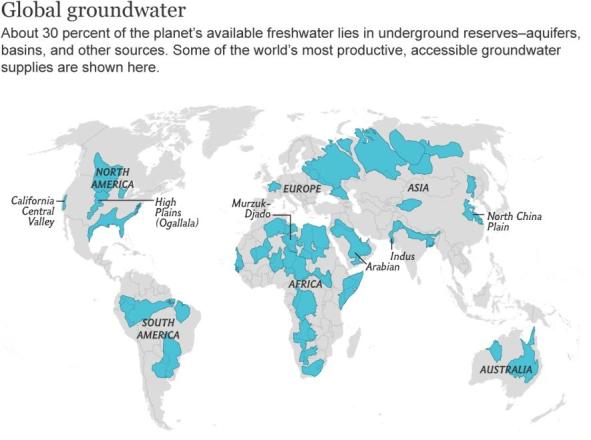
People and farmers are consuming underground fresh water at alarming rates, in some cases, such as around Beijing, to cause the surface level of the ground to fall. The World Bank is predicting that there will be an overall shortage of fresh water by 2030, shortages which will likely lead to conflicts. These aquifers only replenish themselves in geologic time so once they are dried up, they are no longer available for use.
David Harvey is one of the more astute analysts of the ideology that we call neoliberalism. He has given an interview to Jacobin, one of the most intelligent and insightful journals of the left.
“I’ve always treated neoliberalism as a political project carried out by the corporate capitalist class as they felt intensely threatened both politically and economically towards the end of the 1960s into the 1970s. They desperately wanted to launch a political project that would curb the power of labor.”
If you want to understand the ideology of neoliberalism, I highly recommend this essay.
If you are feeling depressed about the turn of events in both the US and the rest of the world, one way to cheer up would be to think about other years that may have been much worse. Slate magazine has an article with some candidates for the worst year ever. Some of them may make you positively ecstatic to be alive today.

