The Russian press is reporting that the US and Russia are close to an agreement on joint military action against Daesh (the Islamic State) in the Syrian city of Aleppo. The US has yet to comment on these reports and we have precious few details on what these joint actions might entail. There is little question that the people of the city desperately need humanitarian support which is impossible without military security. But the key demand of Russia has always been that President Assad must remain in office. It is possible that to secure this agreement, the US might be willing to change its position that Assad must go.
Terrorism is a hot-button political issue and the reasons why are obvious: people demand security from their government and terrorism shatters that promise. It is very easy for politicians to assert that they can stop terrorism, but it is difficult to see the path to the eradication of the tactic. The alternative is to think about terrorism as a treatable, but not curable, disease. Such an alternative interpretation of terrorism requires great political skill and an incredible commitment, but it also requires a different way of thinking about the tactic by the general public.
One of the recurring themes of many political campaigns over the last few years has been the demand for certainty. Fear of immigrants or of people of other ethnicity, race, or sexual orientation seems to be pervasive, and there appears to be a constituency in many polities that wishes the state to protect a specific national “identity” from these others. This demand for moral certainty is also often linked to a demand for economic certainty: protection against the economic activities of these “others”. The combination is toxic but also flawed as it rests upon assumptions about the way things “used to be” that is often imaginary.
Juan Cole is a reliably lefty critic of American foreign policy and a very knowledgeable analyst of Middle Eastern affairs. He has written a blog essay on why the US should not get involved in the Syrian civil war. In so doing, he is responding to those analysts who believe that the humanitarian crisis in Syria is so grotesque that the US should operate under the aegis of of the Responsibility to Protect. Cole gives seven reasons why such a move would be a serious mistake.
Tensions over refugees in Germany are boiling over. German President Joachim Gauck attended a hiking day celebration in the city of Sebnitz and he was greeted by strong protests. The video below is somewhat misleading because the protesters are not clearly identified. Some were protesting German’s lenient policy toward refugees while others were protesting because not enough is being done to help the refugees. The video is, however, testimony to the strong political feelings in the country that will likely resonate in the 2017 elections.
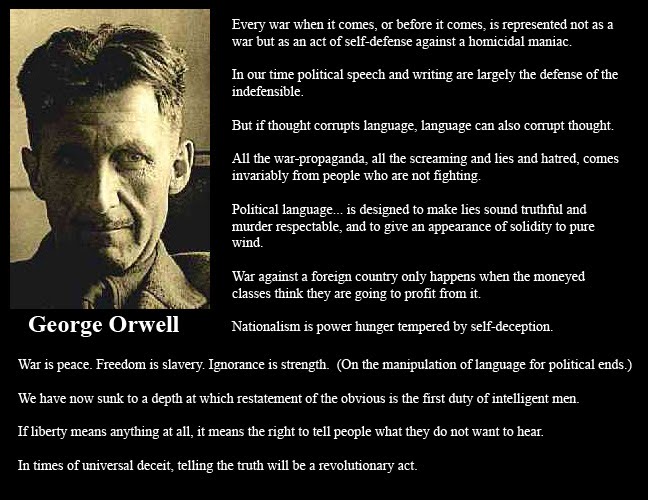
Corruption in politics does not simply revolve around money. Perhaps a more serious threat to democracy is the corruption of language associated with political rhetoric. There are substantive reasons to be concerned about the way language has been misused in a number of recent political campaigns. The current US presidential election is one egregious example of misleading rhetoric, but examples can be found in political campaigns in several other countries.
The U.S.-backed Syria Democratic Forces (SDF), a fighting force comprised of Arabs and Kurds, have taken control of the Syrian city of Manbij. Thousands of displaced citizens returned to the city after the SDF forced out the forces of Daesh (the Islamic State). The liberation of the city was a significant tactical step as it cuts off a central supply route for Daesh between Turkey and Syria.
Migrant workers compose one of the most important elements of globalization. They move to areas that are short of labor and send their wages back to their families in the form of remittances. In many countries remittances comprise one of the largest capital flows in the Gross Domestic Product. Unfortunately, migrant workers lack specified rights and they are often exploited by the host countries. One such situation is ongoing in Saudi Arabia. Saudi Arabia employs thousands of workers from Pakistan, the Philippines, and other countries. It is currently going through a very difficult budget squeeze because of the decline in the price of oil and many construction projects have been frozen. The workers are left in the lurch–they are not getting paid and have no way of returning home.
Iceland is experiencing one of the most interesting, and perhaps important, political developments in the world. Its Prime Minister, Sigmundur David Gunnlaugsson, was forced to resign because of revelations that his family was involved in disguising personal monies in offshore bank accounts. The revelation was particularly galling to Icelanders because of the outsized role of Icelandic banks in the financial crisis of 2008. Since the resignation, the Pirate Party has slowly been gaining strength and is now leading all the polls for the upcoming national election in October. The Pirate Party does not really have a policy platform, but it argues for direct democracy instead of representative democracy.
Zambia is holding a tightly contested presidential race today. The two leading candidates are the current president, Edgar Lungu, and Hakainde Hichilema. The key issue in the race is the wretched state of the Zambian economy which has suffered from low copper (it main export) prices and very high levels of government debt. The election has been marred by high levels of political campaign violence.
Nigeria has suffered two cases of wild polio. It has been two years since the last polio case had occurred in Nigeria and officials had been hoping for a third year of being polio free since three years is the threshold for declaring eradication of the debilitating disease. Nigeria has been immunizing its children, but the violent activities of Boko Haram has prevented health workers from visiting all areas of the country.
We should keep our eyes on Ukraine as unconfirmed reports of firefights in northern Crimea are beginning to circulate widely. We do not have good news sources in Crimea, so it is hard to figure out what is happening, but the reports include information about Russian troops and weapons movements, firefights between Russian forces and Ukrainian fighters, and activities in the Black Sea. Crimea appears to be preparing for war.
The US Department of State has issued its annual Religious Freedom Report. The report singles out blasphemy and apostasy laws, supported in some Islamic countries–Afghanistan, Saudi Arabia, Iran, Sudan, Pakistan and Mauritania–, for special attention. It asserts liberal principles that “[s]uch laws conflict with and undermine universally recognized human rights.” It is unlikely that the government of these countries are sympathetic to the criticism, but the report is targeted toward citizens within them who might feel threatened by those laws.
Leaders in Northern Ireland have met with British Prime Minister Theresa May to discuss the terms of British exit from the European Union. Northern Ireland citizens voted overwhelmingly to remain in the European Union and the economy of Northern Ireland is quite dependent upon EU support. These negotiations are going to be very difficult and one possible outcome is a Northern Ireland secession from Great Britain.
Today is the anniversary of Jerry Garcia‘s death. Jerry was the guitarist for the Grateful Dead and one of the most revered figures in psychedelic rock and someone who tried very hard to look like me. He was 53 years old and his death attracted so much attention that traffic on Bloomberg News, one of Wall Street’s most important sources of information, crashed the site for 20 minutes. Make America Grateful Again!!
R.I.P Jerry
Australia has an abysmal record of maltreatment of refugees. It has long intercepted boat people and sent them to different islands for processing. Through leaked documents, we finally have a glimpse into the abuse of refugees who were sent to the island of Nauru. Nauru is one of the most isolated areas of the earth and the country only has a population of about 10,000 people. Australia pays Nauru for the right to detain people on its territory, but it is clear that neither Australia nor Nauru have lived up to any semblance of regard for human rights.
The US began supporting the Government of National Accord (GNA) in Libya at the beginning of this month. Prior to that point, the US military was simply waging a war against the growing presence of Daesh (the Islamic State) in Libya. Ultimately, however, the US and its European allies are themselves responsible for the violence which has enveloped the country since the overthrow of Muammar Qaddaffi in 2011. But what began in 2011 as a short-term measure to protect innocent civilians has now morphed into a full-scale effort to support a shaky government in 2016. Libya is a classic case of not thinking through the long-term consequences of military actions.
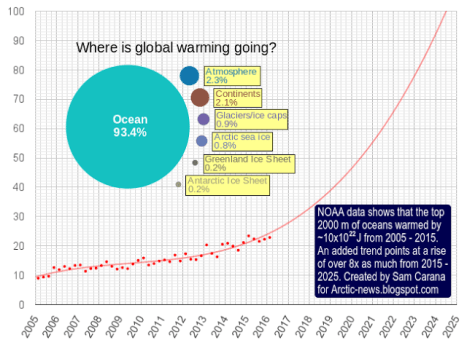
Arctic sea ice is getting very thin, very quickly. The cause of the thinning is the rise of sea temperatures due to global warming. The oceans are the primary sink for heat and some areas of the oceans (particularly off the North American coast) are heating up quite rapidly. The Gulf Stream is carrying this added heat into the Arctic Ocean and thinning the ice. Once the ice melts, then the waters above the Arctic Circle will begin to warm rapidly as well.
The Japanese monarchy is the oldest hereditary monarchy in world history, dating back more than 2,600 years. The current Emperor, Akihito, is the 125th Japanese Emperor. The position was made largely ceremonial after World War II, but the Emperor is still revered in Japan. Akihito is now 82 and has indicated that he wishes to step down, but hard-line nationalists in Japan oppose that move, insisting that he must die before the throne can be passed on. The Japanese Parliament must pass a law which would allow Akihito to step down. If he does, he would be succeeded by his eldest son, 56-year-old Crown Prince Naruhito
Symbol of the Chrysanthemum Throne
Voters in Thailand have approved a new constitution which was written by the Thai military which has been in power since 2014. The turnout for the referendum was low but the measure was approved by 61% of those voting. According to The Economist:
“The charter introduces new electoral rules designed to produce weak coalition governments, which will be chaperoned by ‘independent’ commissions (stacked with the junta’s allies) who are to monitor politicians’ policies and moral conduct. The army will fully select the senate; assuming its support, the generals will need to persuade only a quarter of legislators in the lower house to back their choice of prime minister, who need not be an MP. The hurdles to amending the constitution are prohibitive.”
The results are a stunning rebuke to the pro-democracy citizens in Thailand and will leave the military firmly in control for the foreseeable future.
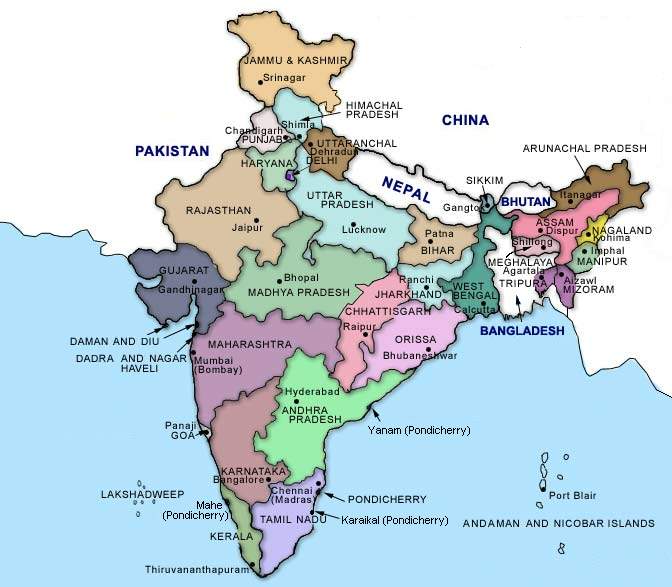
India has passed a constitutional amendment call a “Goods and Services Tax” which is one of the more important economic reforms implemented by the government of Prime Minister Modi. India has 29 states and 7 union territories, and all of them has the ability to impose taxes on each other. These taxes were an important source of revenue for each state and a method of competing with each other. But the multiplicity of taxes made investment and manufacturing decisions very difficult and offered tremendous opportunities for corruption. The new tax system is the beginning of a unified domestic market for India which will lower costs for many, but which will also make small business very vulnerable to larger firms (the Walmart effect in the US). We will see how this neoliberal experiment affects the average Indian.
We have lost countless numbers of cultural forms over the centuries. Some of these activities simply atrophied; some were ruthlessly wiped out by imperialism. Retrieving old cultural forms is a way of asserting identity, particularly those forms that were wiped out by an invader. Ukraine had an old tradition of the “flower wreath” which was discouraged under the rule of the Soviet Union. Recently, as Ukraine struggles against Russian intrusions, the flower wreath has resurfaced as a way of re-establishing Ukrainian identity.
I have been following the health of the banking sector for some time. My concern is that many international banks (such as Deutsche Bank) are perilously weak and I fear a repeat of the financial crisis of 2008. One of the intriguing aspects of the banking industry is that many governments buy the debt of banks of their own country. This observation seems trivial and easily explained by a sense of national loyalty. But if weak governments systematically buy the debt of weak banks, then a serious feedback loop exists. New research indicates that this condition in fact does exist and seems to be politically intractable.
The Pew Research Center is reporting that a record number of refugees sought asylum in Europe last year–1.3 million. About half of these refugees come from three countries: Syria, Afghanistan and Iraq. Germany, Hungary, and Sweden were the three most sought after places of refuge. The influx of refugees is causing serious political problems in Europe: a backlash against them is fueling the rise of nationalist and xenophobic parties which will unquestionably destabilize the political systems in Europe.
Soon after Iran released 4 American hostages last January, the Obama Administration sent $400 million to Iran as part of a legal compensation claim that had been festering since 1979. Many believe that the money was “ransom” for the release of the hostages, something the US vehemently denies. There is little question that the compensation claim has been a point of contention between the US and Iran for many years and that Iran was due the money. But the timing certainly looks more than coincidental. The critical question is whether this incident becomes fixed in the minds of others as a bargaining lever in future disputes over possible hostages. That question is impossible to answer.
Rodrigo Duterte became President of the Philippines last May. Duterte, who goes by the nickname “The Punisher”, vowed to smash the drug rings that have been operating in the country. Since his election, more than 600 people have been killed on suspicion of being drug dealers. The assassinations have all been conducted without the pretense of any due process and human rights activists are enraged by the conduct of the government.