Initial indications are that the Democrats in the US Senate have decided not to work with Senate Republicans on fast-tracking new sanctions on Iran, suggesting that Israeli Prime Minister Netanyahu’s speech to Congress did not yield any immediate support for the Israeli desire to end negotiations. Senate Republicans do not have enough votes to pass such a measure without some Democratic support. There are also some indications that Some in Congress were not pleased by the way Prime Minister Netanyahu presented some of his facts concerning the nature of the current negotiations.
The assassination of Boris Nemtsov conjured up ghosts of the assassination of one of Stalin’s colleagues in 1934, Sergei Kirov. Although Kirov was ostensibly a colleague of Josef Stalin, he was also someone who challenged Stalin by his popularity. There are some unusual similarities in the assassinations, but perhaps the most compelling parallels is the likelihood that Nemtsov’s death, like Kirov’s, will never be fully explained.
The rise of the Islamic State poses a serious problem for the Kingdom of Saudi Arabia. Since the IS has proclaimed its caliphate, it needs to secure control of the holy cities of Mecca, Medina, and Jerusalem to secure legitimacy. Both Mecca and Medina are under Saudi control, and the Sunni Muslims that control Saudi Arabia are largely under the sway of a Wahhabist interpretation of Islam, an interpretation that is closely related to the interpretation endorsed by the Islamic State. Over time, we shall have to see how many Saudi Arabians are attracted to the idea of joining the IS caliphate.
A prominent critic of Russian President Putin, Boris Nemtsov, was shot dead in the streets of Moscow. Nemtsov had been a leader of the democratic opposition to President Putin and was one of a handful of critics who dared to stay in Russia. The assailant was not captured and his identity is not known. President Putin condemned the killing and promised to apprehend the assassin.
In another assassination, Avijit Roy, a prominent secular blogger in Bangladesh was hacked to death by a crowd armed with machetes. Roy wrote on gay and lesbian issues and was a critic of religious fundamentalism. He had received death threats because of his anti-religious views. Bangladesh is ruled as a constitutional democracy, but Islam is considered the state religion of the country. There have been several previous attacks on secular bloggers.
The US and Cuba have been engaged in diplomatic discussions over the few months and it appears as if the two countries may finally break the impasse that has frozen relations for over 55 years. Apparently the last stumbling bloc is the designation of Cuba as a sponsor of terrorism by the US. There is actually very little evidence that Cuba has been involved in any foreign activities since the 1980s. The change is long overdue.
Climate scientists have been puzzling over the slowdown in the increase of global surface temperatures over the last fifteen years. Even though CO2 levels have steadily increased, global surface temperatures have not increased at the same rate. The hiatus has led many to question the validity of the predictions concerning climate change. New studies indicate that the hiatus can be explained by natural variability, largely the temperatures of the oceans. Many scientists suspect that global warming is in fact occurring primarily in ocean temperatures, a change that would not necessarily be captured in land surface temperatures.
Greek Finance Minister Giannis Varoufakis has given an interview to Spiegel. The interview is wide-ranging and Varoufakis explains in specific detail why he believes that Greece should have some of its debts erased. He is also very forceful on why he believes that austerity is the wrong policy for Greece right now. Varoufakis is becoming somewhat of a rock star in Europe right now, even though his efforts have not been notably successful.
The Islamic State has released a video showing extensive destruction of historical artifacts in the Mosul Museum. The Islamic State claimed that it was carrying out the religious mandate forbidding idol worship. Most of the artifacts reflected pre-Islamic art and the museum had been designated as a world historical site by the UN. The sculptures were destroyed by jackhammers and sledgehammers.
Egyptian leader, Gen. Abdel Fattah el-Sisi, has called for a joint Arab combat force to take on the Islamic State. The call comes amid signs of deterioration throughout the region. The call resonates strongly with other Arab states who fear the Islamic State, as well as the US who would prefer not to introduce large numbers of ground troops into Syria and Iraq. The problem is that it is unlikely that the Arab militaries could carry out such a difficult and dangerous operation without jeopardizing their domestic support.
Many of us have been wondering why this winter (and last) has been so miserably cold. Fortunately, some smart people have been intrigued by the question as well, and some of the tentative evidence suggests that climate change is responsible (which means that the change may not be ephemeral—aaaargh!!!!). Apparently a warming Arctic (which is not questioned at all by anyone, even climate change deniers) changes the flow of the jet stream, making it weaker and more “wavy.” This allows really cold air from the arctic to dip down and end up right on my toes. I think it is time to move Mount Holyoke College to Aruba.
Novaya Gazeta, an independent investigative newspaper in Russia has published a document that purports to show a Russian plan to annex Crimea that was drawn up before the Maidan protests forced the ouster of former President Yanukovich. Russian President Putin has often claimed that support for the Russian-speaking separatists in Crimea was granted only after what he termed a NATO-inspired coup d’etat threw out the Russian-leaning Yanukovich. The document,if authentic, challenges that narrative.
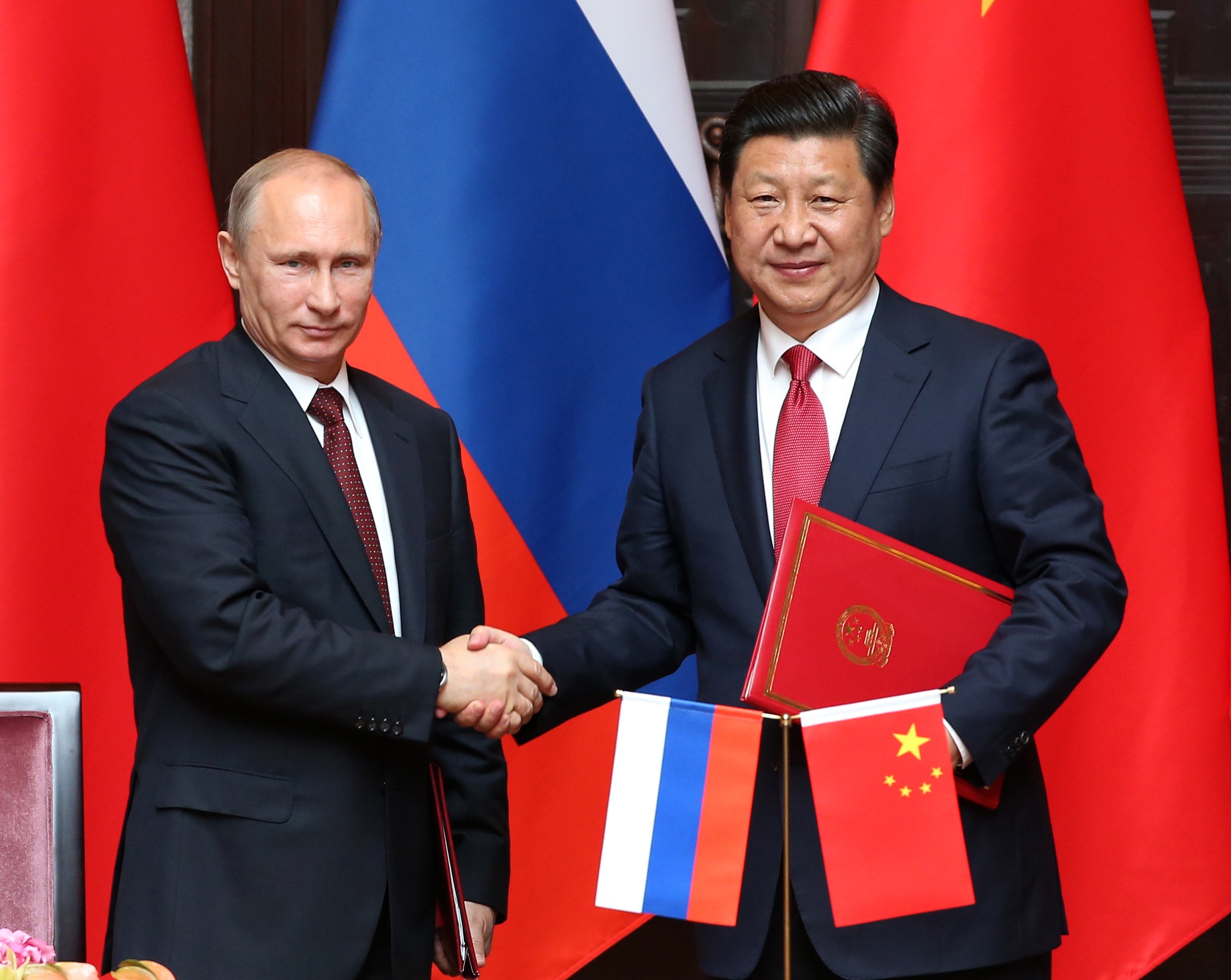
The dispute between Russia and the West has unquestionably weakened both sides: Russia, by the negative effects of the sanctions on its economy, and the West, by reducing its credibility to resist Russian moves. As Russia has moved closer to China to fill the financial gaps caused by the sanctions, it has become clear that China is benefiting tremendously from access to Russian resources and the growing dependence of Russia on the Chinese economy. In the long run, China and Russia are more likely to be competitors rather than allies in the balance of power. Ultimately, China will profit greatly from the Ukrainian dispute.
The troika (the IMF, the European Union, and the European Central Bank) have accepted Greece’s proposal for a four month extension of the bail0out program. The Greek government has claimed some victories in reversing the austerity program, but it is hard to see what those victories are. According to Reuters:
The Greek letter pledged not to reverse ongoing or completed privatisations, and to ensure that the fight against what the government calls the humanitarian crisis caused by austerity “has no negative fiscal effects”.
The Greeks apparently decided that the possible bankruptcy of most of its major banks was not a price it was willing to pay for reduced austerity. It remains to be seen how damaged the Greek government will be as its public assesses the outcome of the dispute.
The Managing Director of the International Monetary Fund, Christine Legarde, has criticized laws which restrict the participation of women in economic affairs. Such laws limit the opportunities for economic growth in many countries, and the IMF has studies which document the lost economic potential. Legarde’s comments are yet another example of how liberal politics dovetails with liberal economics.
The Guardian has published a cache of diplomatic cables that were leaked to Al Jazeera after verifying that the cables were authentic. The cables cover a number of different issues, but perhaps the most explosive was a cable to South Africa from the Israeli intelligence unit, the Mossad. The cable indicates that Iran was “not performing the activity necessary to produce weapons”. The significance of this cable was that it was written a few weeks after Israeli Prime Minister Netanyahu gave a speech to the UN General Assembly asserting that Iran was less than a year away from producing a nuclear bomb. It is unlikely that Netanyahu was unaware of the conclusions of his own intelligence unit.
Russia recently celebrated “Defense of the Fatherland” day. In the parade was this mock-up of a missile, inscribed with the message “To be personally delivered to Obama.” Those Russians–what a bunch of cards! It’s interesting that the hammer and sickle survives.
The Greeks did not finish their proposal to the troika so there’s no news to report. On the other hand, there is parody of the negotiations. Check “Settings” to get English subtitles if you don’t speak German.
Every year the world’s largest human migration occurs in China. It occurs around the time of the Chinese New Year as people go home to celebrate the holiday. The movement of people is simply amazing and the traveling creates all sorts of traffic jams in virtually every mode of transportation. The Chinese web giant, Baidu, has created a real-time heat map of the movement of people and you can see it here.
新年快乐
Graeme Wood has written an article for The Atlanticwhich has generated a lot of discussion. It is entitled “What ISIS Really Wants” and it traces the religious basis for the Islamic State’s ideology. It is an extraordinary essay and is worthy of consideration. To give an idea of Wood’s argument in the essay, consider this brief excerpt:
“In fact, much of what the group does looks nonsensical except in light of a sincere, carefully considered commitment to returning civilization to a seventh-century legal environment, and ultimately to bringing about the apocalypse.”
As you read the article, keep in mind the words of Sun Tzu:
“If you know the enemy and know yourself, you need not fear the result of a hundred battles. If you know yourself but not the enemy, for every victory gained you will also suffer a defeat. If you know neither the enemy nor yourself, you will succumb in every battle.”― Sun Tzu, The Art of War (likely around the 6th Century BCE)
India’s Prime Minister Narendra Modi visited the disputed territory of Arunachal Pradesh. His visited elicited a strong protest by China which also claims parts of the territory. India and China have an uneasy relationship, although both sides claim to be trying to repair relations. But two powerful countries abutting each other often find it very difficult to reach consensus on disputed territorial matters–such matters often become symbols easily hijacked by strong nationalist emotions.
Greece and the troika have apparently come to an agreement to extend Greece’s current debt repayment program for another 4 months. Both sides are claiming victory in the stand-off, but it is hard to tell which side had the advantage. Greece still has to submit a plan to conform to the repayment program on Monday, and those details will tell us how many concessions (if any) Greece was able to gain. The British-based blog, Open Europe, has a very succinct overview of where Greece and the troika stood firm and made concessions. The German Finance Minister, Schaeuble, made the following comment, however, which gives a rough idea of how the troika regards the outcome: “Greeks certainly will have a difficult time to explain the deal to their voters.”
Curiously, the agreement was reached even as the number of Germans living below the poverty line has reached the highest level ever recorded in the reunified Germany. However, even as Germany pushes very hard for austerity in Greece, the Washington Post suggests that “In certain cases, unemployment benefits may indeed be higher than salaries.” Moreover, the Organization for Economic Cooperation and Development did a study of hours worked in various countries in 2011. Compare the average hours worked in Greece and Germany. The key to understanding this paradox is that Germany can offer strong welfare benefits even while its workers work fewer hours because its workers are more productive than Greek workers. If this conclusion is true, then austerity is not the solution to Greece’s problems. The solution lies in making Greek workers more productive.
There are about 20,000 foreign fighters who have gone to live in the Islamic State, of which about 550 are women. It is difficult to determine the motives of these foreign fighters, but The Guardian has been able to interview some who have thought about going to the Islamic State. The results are suggestive but hardly conclusive in such a small sample.
M.J. Rosenberg is a former member of the American-Israel Political Action Committee (AIPAC), one of the strongest supporters of Israel in the US. He has written a very thoughtful (and very critical) essay on the possible outcomes of the planned speech by Israeli Prime Minister Netanyahu to the US Congress. Perhaps the most important criticism made by Rosenberg is this comment:
Netanyahu’s speech to Congress, coupled with his statement that he represents all Jews, threatens to upset the whole applecart that has been constructed since 1950. By doing so, he is undermining Israel’s support from the community that is the foundation of Israel’s strong political position in the United States….If American Jews feel that they are being forced to choose between the United States and Israel, there can be little doubt that they will choose the country they live in and to which they have always been devoted. Netanyahu is playing with fire when he even hints at such a choice.
Rosenberg should be taken seriously. We will have to see how the speech, if it is given, is received on 3 March.
Two new social science studies (one conducted by two of our colleagues from the University of Massachusetts) have probed the extent to which wealthy donors to political campaigns can influence voting in Congress. The studies are sobering. They indicate that the votes of Congresspeople correlate more strongly with the views of their donors more than the do with the views of their constituents. Moreover, the studies found that the views of large donors tend to be more extreme than the views of even partisans of the representatives.
It appears as if Germany has rejected Greece’s most recent proposal for a debt deal. The Greeks are clearly getting worn down and they have begun to make concessions that had been completely rejected by the new Syriza government even last week. But it is hard to appreciate the depth of Greek economic misery under the current austerity programs. All the available data suggest that Greece is going through an economic downturn that dwarfs even the misery of the Great Depression in the 1930s. But the Germans remain adamant.
The disintegration of the cease-fire in Ukraine leaves the US and Europe in a difficult situation. Neither wish to declare the cease-fire dead because saying so would require a response by them. So both are silent on the matter and assessing the situation. But the situation in Ukraine clearly indicates that the separatists rebels are clearly taking more territory. The map below indicate how the situation has changed between last September and 14 February. The rebels now control Debaltseve. Europe and the US have to figure out a meaningful response to the breaking of the cease-fire or they risk losing credibility, not only with respect to Russia but to other states which have commitments from both.
São Paolo is one of the great cities in the world. Its metropolitan region has about 20 million people and it is the largest city in Brazil. Brazil is also endowed with 1/8th of the world’s fresh water. Yet the city is running out of fresh water due to drought and mismanagement. In some parts of the city water is being rationed and is unavailable in certain parts of the day. The situation is expected only to worsen, and the scarcity of water will undoubtedly set off political turmoil that will be difficult to contain. It is hard to imagine how so many people will be able to take care of their daily responsibilities without reliable and available water.
The Guardian has an excellent article with the title”When Will Greece Run Out of Money?” It is a very good (but rough) estimate about who Greece owes money to and how long it can hold out without substantial assistance from the troika. The Guardian’s answer to its own question is:
According to figures released on Tuesday by the Bank of Greece, the finance ministry estimates that cash reserves will run out on 24 February. Using the reserves of government entities to cover short-term needs, however, the problem could be delayed until March.
Note, however, that the current agreement lasts until 28 February. So something has to give within the next 10 days.