At the end of October, US Secretary of Defense Ashton Carter gave a speech in which he outlined, in considerable detail, the logic of the emerging defense strategy of the US. Much of that strategy is well-known, but there was an intriguing paragraph in which Carter described a web of US military bases to confront turmoil in the Middle East:
“We’re therefore building the structure of a new, transregional strategy for countering terrorism over the long term. This will be based on infrastructure we’ve already established in Afghanistan, the Levant, East Africa, and Southern Europe.
“Because we cannot predict the future, these regional nodes – from Morón, Spain to Jalalabad, Afghanistan – will provide forward presence to respond to a range of crises, terrorist and other kinds. These will enable unilateral crisis response, counter-terror operations, or strikes on high-value targets. But they’re about more – they’ll also allow us to enable partners to respond to a range of challenges. To pre-position equipment for ourselves and our partners. And to provide important opportunities to innovate, to develop new command-and-control structure, new ways to manage the force, new capabilities, and new operational concepts.”
The vision is remarkably similar to the policy of containment that the US adopted to confront the Soviet Union at the onset of the Cold War. It suggests that the US is committed to a very long-term strategy.
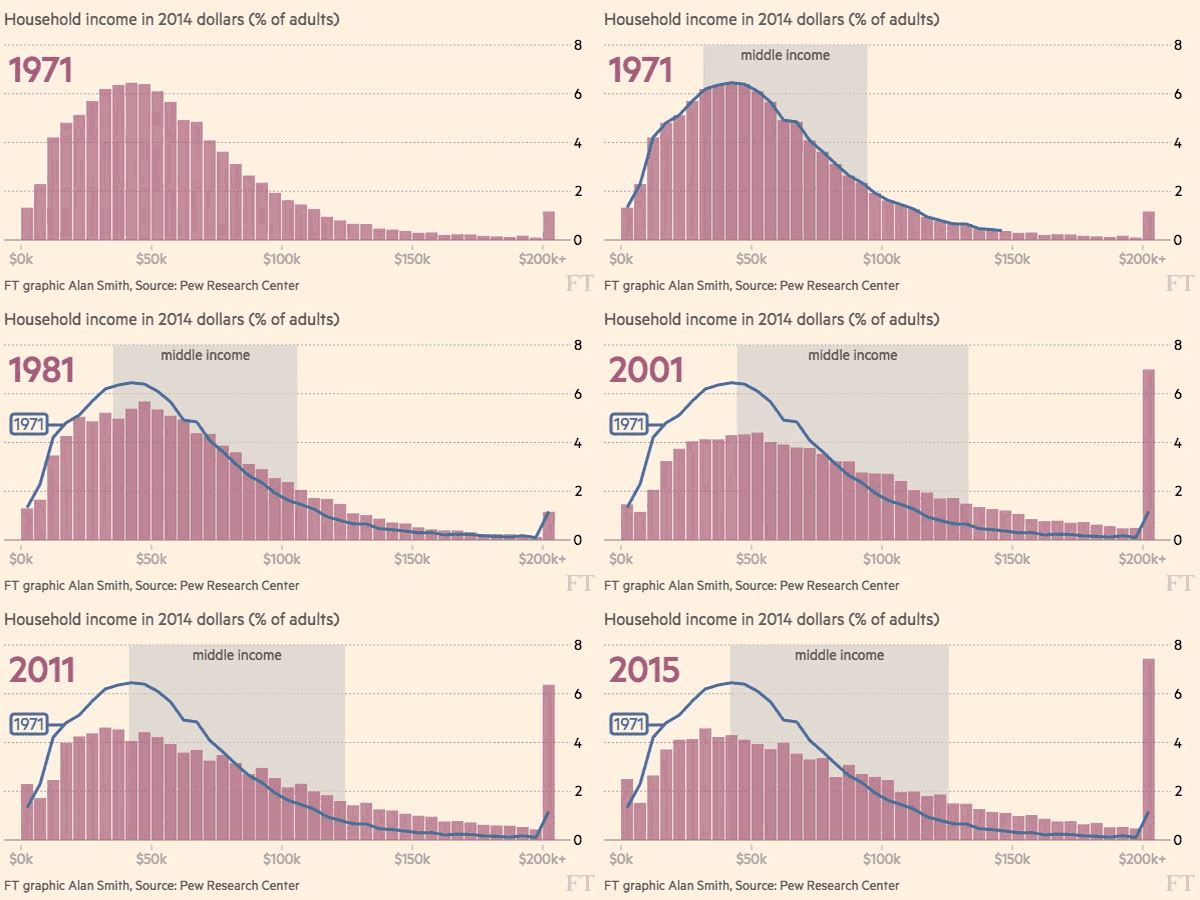
The Financial Times has a devastating article on the decline of the American middle class. It was once the envy of the world and now accounts for less than half of the American population. The decline is not an accident: it is the deliberate and considered outcome of policy decisions made in the US since the 1970s to deregulate the economy, to reduce taxes, and to protect capital at the expense of labor. Unless the pattern is changed, the US will not be able to restore its once vibrant middle class.
It’s time to rock and roll! Little Feat rules!


Leave a comment