Jeffrey Rothfeder has written an article for the Washington Post entitled “The great unraveling of globalization”. The article details some of the problems of businesses that decided to globalize their operations, as well as the relatively meager returns on globalized investments. The article does a great job of signalling problems, but does not really address the question of what happened to those businesses that did not decide to globalize. Sometimes one has to dance even if the music sucks.
Much attention has been given to the flood of refugees who are crossing the Mediterranean in hopes of a safer life, but the movement of peoples globally is huge. Thousands of Rohingya, Muslims from Myanmar, are feeling that country in hopes of ultimately getting to Australia. They end up either lost at sea or at the mercy of human smugglers in Thailand or Indonesia. One of the unfortunate legacies of the political opening in Myanmar is the open persecution of the Rohingya by Buddhists who regard the Rohingya as illegal immigrants from Bangladesh.

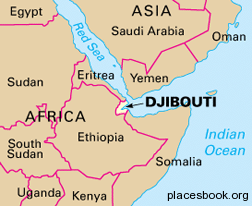
Djibouti is a very small country, but the US, France, Japan, and Germany have military bases there since it is so critically situated in the global petroleum traffic. Now China is building a base there. The move is not the first for China in Africa–it built a military base in Zimbabwe, close to strategic minerals in central Africa, in 2014. The moves signal the quiet rise of China in global affairs. Building and maintaining bases abroad is a profoundly important step and inevitably causes concerns in countries that have similar bases in the world.


Leave a Reply