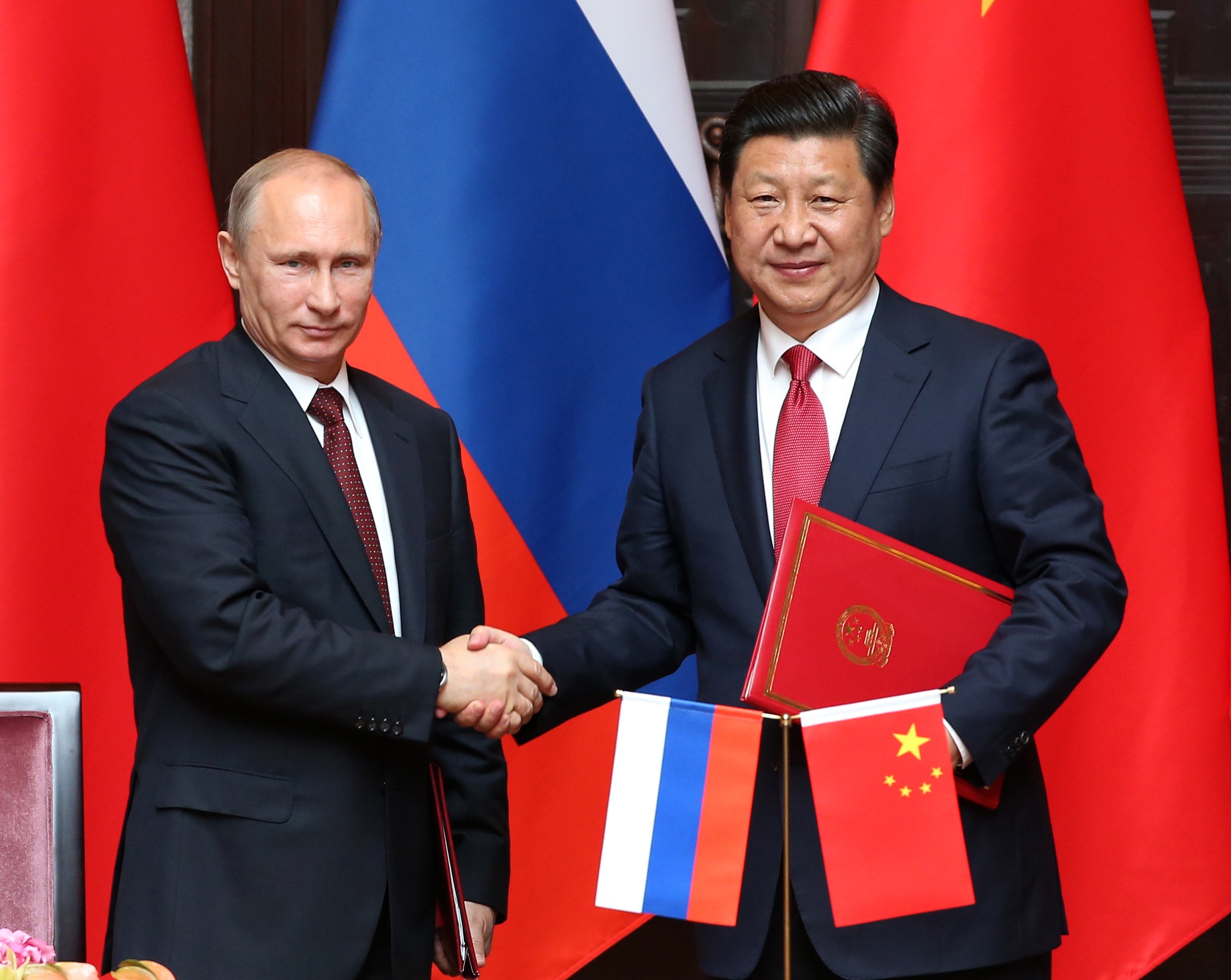
The dispute between Russia and the West has unquestionably weakened both sides: Russia, by the negative effects of the sanctions on its economy, and the West, by reducing its credibility to resist Russian moves. As Russia has moved closer to China to fill the financial gaps caused by the sanctions, it has become clear that China is benefiting tremendously from access to Russian resources and the growing dependence of Russia on the Chinese economy. In the long run, China and Russia are more likely to be competitors rather than allies in the balance of power. Ultimately, China will profit greatly from the Ukrainian dispute.
The troika (the IMF, the European Union, and the European Central Bank) have accepted Greece’s proposal for a four month extension of the bail0out program. The Greek government has claimed some victories in reversing the austerity program, but it is hard to see what those victories are. According to Reuters:
The Greek letter pledged not to reverse ongoing or completed privatisations, and to ensure that the fight against what the government calls the humanitarian crisis caused by austerity “has no negative fiscal effects”.
The Greeks apparently decided that the possible bankruptcy of most of its major banks was not a price it was willing to pay for reduced austerity. It remains to be seen how damaged the Greek government will be as its public assesses the outcome of the dispute.
The Managing Director of the International Monetary Fund, Christine Legarde, has criticized laws which restrict the participation of women in economic affairs. Such laws limit the opportunities for economic growth in many countries, and the IMF has studies which document the lost economic potential. Legarde’s comments are yet another example of how liberal politics dovetails with liberal economics.


Leave a comment