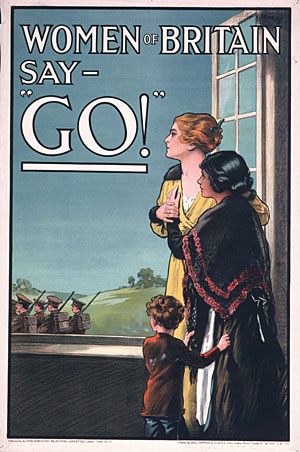
On 28 July 1914, the Austro-Hungarian Empire declared war on Serbia after Serbia refused to capitulate to all of the Austro-Hungarian demands following the assassination of the Archduke Ferdinand and his wife in Sarajevo. On this, the 100th year anniversary of the beginning of the war that signaled the beginning of the end of the modern period and European domination of the world, The Economist, re-published the article it published after the event indicating its opposition to the war. There was no automatic alliance between the UK, France and Russia on that date, and many in Great Britain were inclined to stay out the continental war. Nonetheless, British leadership on that date was lacking, and those voices were lost in the political firestorm that followed.
On a happier note, today is the 146th anniversary of the 14th Amendment to the US Constitution. The Amendment was necessary to protect the civil rights of the African-American population, and it represents a major milestone in human history–a right whose enforcement had to wait for the Civil Rights Act of 1965–, codifying the right of all individuals to participate in their political governance. Constant vigilance, however, is necessary to make sure that the commitment to these rights is not eroded.
The recent spread of the Ebola Virus in West Africa has terrified health officials, and several care-givers have been infected and died as a result. Governments in the region have responded with quarantines which have proven difficult to enforce, and there is a deep suspicion among the population of health workers which limits the possibility for effective treatment. ABC News has posted a good primer on the disease and outlines the steps that have been taken so far. Further spread of the disease would completely overwhelm the health infrastructure of the countries in West Africa.
One of the truly troubling aspects of the Gaza conflict is the re-emergence of virulent anti-semitism in many of the pro-Gazan protests. There is absolutely no connection between Judaism and the current policies of the government of Israel in the Occupied Territories: the conflicts between indigenous peoples and dominant cultures (think Russia/Chechnya, China/Uighur, English/Scotch/Irish/Welsh, Tutsi/Hutu, Sunni/Shia are just a few examples) are ubiquitous in world politics. Religion is nothing more than a rationalization for what is always a political conflict over control and power.
Income inequality is one of the most economically and politically destabilizing trends in the world today. It is, however, difficult to appreciate fully what income inequality actually means–very few of us have any meaningful contact with the ultra-rich. One way to appreciate the divide between the typical person and the very rich is to think about what buying a house means to an average person: it is by far the most expensive purchase most people will make in the entire lives. Yet, for the very, very rich, buying a house may be a trivial act. Check out the people who could buy every single house in certain cities in the US:


Leave a Reply