I have posted many articles on the very large number of protests that have occurred in the world since 2011, and have noted that many of these protests are middle-class. One of the great mysteries of this phenomenon is how short-lived these movements seem to be. Zeyneb Tufecki has written a very insightful op-ed for The New York Times which suggests that social media is not only responsible for the large number of protests, but also for their fleeting nature. The essay is highly intriguing and I will have to ponder its insights–it raises huge questions about the nature of political participation and the meaning of democracy.
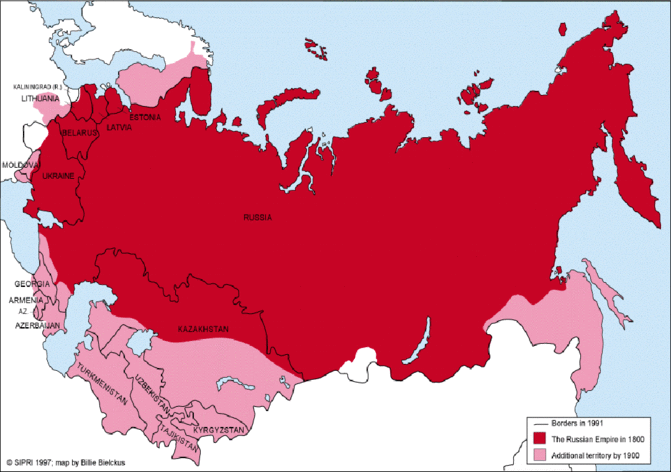
After the annexation of Crimea, the big question is whether Russia has any designs on other parts of Ukraine. The former Russian Empire (before the creation of the Soviet Union) actually controlled about 85% of Ukraine, as well as substantial parts of other nation-states that currently exist. There are huge hypothetical spaces that Russia could claim, a possibility that raises great concern in those areas.
There have been productive talks between Iran and the P5+1, and the negotiations have recessed until early April. Nonetheless, there are reports that Israel continues to allocate substantial moneys (nearly $3 billion) to prepare for an armed strike to attempt to destroy Iran’s nuclear program. The negotiations have been somewhat rattled by Russia’s statement that the West’s sanctions against the annexation of Crimea may cause it to change its position on Iran’s nuclear program. Given the recent Israeli strikes in Gaza and the Golan, it seems clear that the situation remains highly delicate and fragile.


Leave a comment