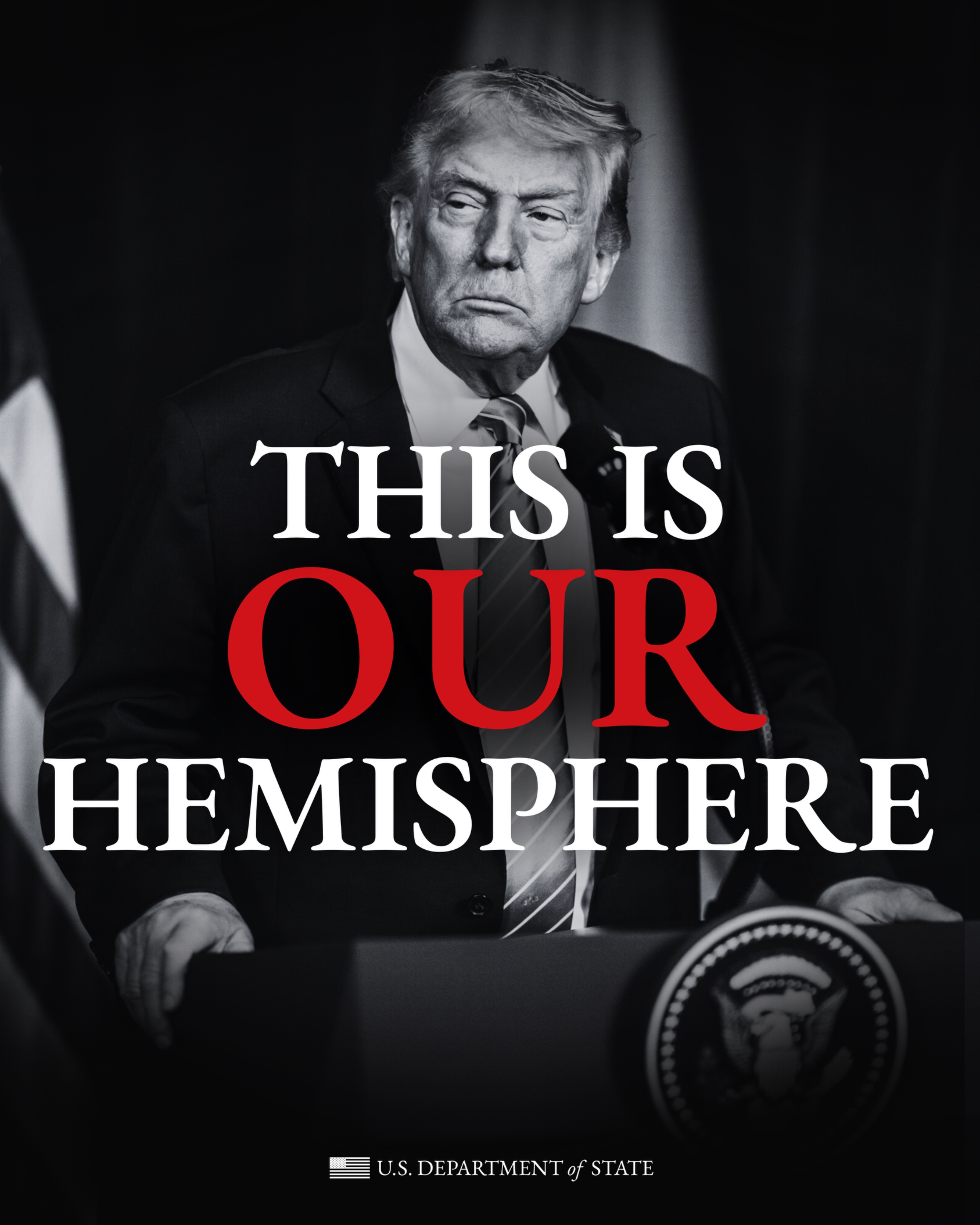
Imperialism never dies, but it changes its clothes every so often. After World War II ended, the colonial empires created by European states slowly disintegrated, a process that is still ongoing. But at the end of the war, there was a sense that the idea of self-determination should override the impulse to dominate. That end never materialized, but the more ostentatious trappings of imperialism became difficult to maintain and the right to dominate was articulated in the language of democracy and liberation.
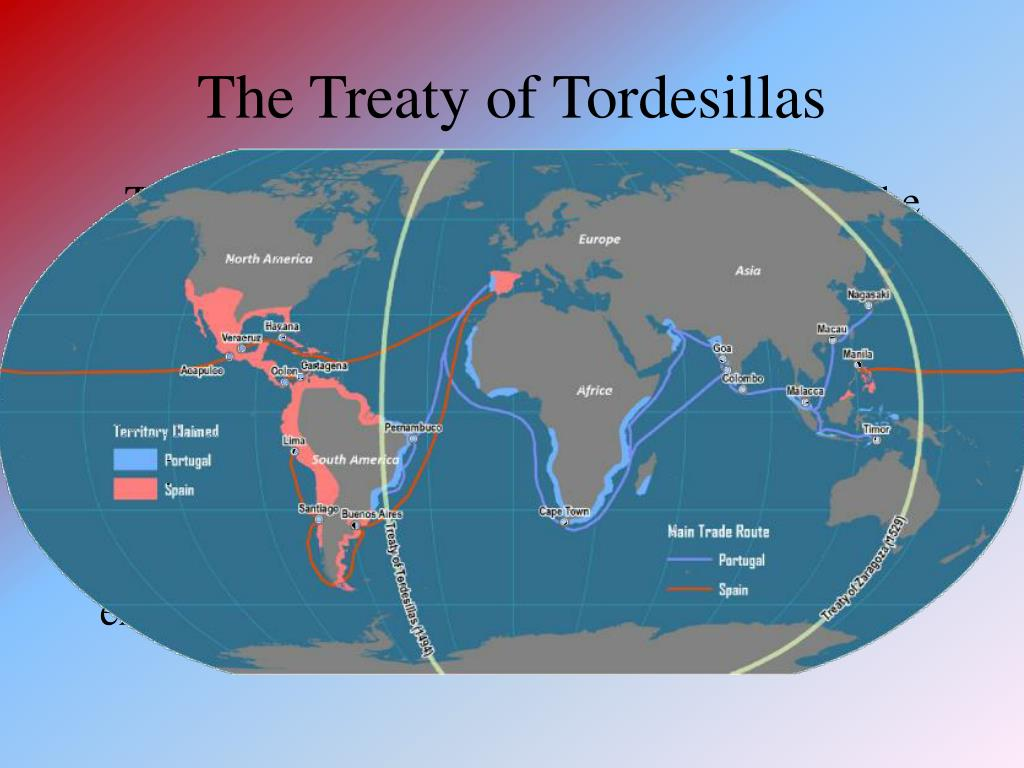
This particular perspective on mimics one of the founding acts of European imperialism, the Treaty of Tordesilla which divided up the entire world into two parts in 1494, one owned by Spain and the other by Portugal. It was a plan crafted by Pope Julius II, which was subsequently modified by the Treaty of Zaragoza, signed in 1529, to include the eastern hemisphere (by tracing out the antemeridian), which included the Spice Islands.
The settlement did not last long, as other European states (the Dutch, the French, the Belgians, and the British) did not want to miss out on the benefits (to them) of imperialism.
We will see how the Venezuelans feel about the US being in charge of domestic affairs once the dust settles. Undoubtedly, many of them are relieved that Maduro is no longer in power, and the Venezuelan economy is in a deep contraction. Right now, there is tremendous uncertainty about how the US will “run” the country. There is, however, not much the Venezuelans can do as long as US forces remain offshore. But there are countries that depend on Venezuelan oil (Cuba and China, in particular) which will probably contest US “ownership” of the oil fields. Moreover, the US will find that it is impossible to “run” a country at arms-length, and as US personnel begin to filter into Venezuela, they will unquestionably be targets of armed opposition.
Regime change is easy for a country as powerful as the US. What happens after the change, however, is extraordinarily difficult for an outside power. The US learned that lesson in Vietnam, Libya, and Iraq. It’s incredible how the US has forgotten those lessons wo quickly and emphatically.
There are a number of questions about this action which need to be answered. But I think that the Post did a great job of raising those questions. Many of those questions revolve around the status of the military action against these alleged drug running vessels: are these actions “acts of war”? President Trump defends these actions under his authority as Commander-in-Chief of the US military and that he is using forces against actors which threaten US national security. Most of those defenses are bogus and have been addressed in many other media sources.
But, for purposes of argument, let’s pretend that the US military action is justified by the principles of self-defense. Those arguments are used to justify the first use of force against these vessels.
But the second attack on the survivors clinging to wreckage is unquestionably a violation of the laws of war. The Geneva Convention is explicit:
GENEVA CONVENTION for the Amelioration of the Condition of Wounded, Sick and Shipwrecked Members of Armed Forces at Sea of 12 August 1949
CHAPTER II Wounded, Sick and Shipwrecked
Article 12
Members of the armed forces and other persons mentioned in the following Article, who are at sea and who are wounded, sick or shipwrecked, shall be respected and protected in all circumstances, it being understood that the term “shipwreck” means shipwreck from any cause and includes forced landings at sea by or from aircraft.
Such persons shall be treated humanely and cared for by the Parties to the conflict in whose power they may be, without any adverse distinction founded on sex, race, nationality, religion, political opinions, or any other similar criteria. Any attempts upon their lives, or violence to their persons, shall be strictly prohibited; in particular, they shall not be murdered or exterminated, subjected to torture or to biological experiments; they shall not wilfully be left without medical assistance and care, nor shall conditions exposing them to contagion or infection be created.
Only urgent medical reasons will authorize priority in the order of treatment to be administered.
Women shall be treated with all consideration due to their sex.
We should remember that the Laws of War are generally unenforceable since the international organizations tasked with the enforcement (the UN Security Council, the International Court of Justice, and the International Criminal Court) are powerless to enforce the laws against powerful states. But the Laws of War rest upon the self-interest of states to protect their own people against unlawful acts. The United States would never want its wounded soldiers to be ruthlessly murdered, so it must adhere to a code of conduct that respects the similar status of its enemy’s soldiers. This code of conduct is frequently violated, but far less than one would expect. This self-interest is most potent with respect to civilians, but again, we have lots of evidence to suggest that it is far less than perfect.
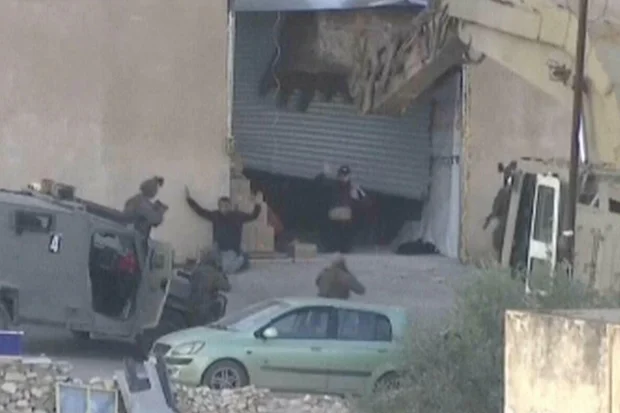
Killing two wounded individuals in open seas is a blatant violation of this norm and it invites reciprocal actions by other states. We have already witnesse massive loss of civilian lives in the conflicts in Congo, Myanmar, Ukraine, and the Gaza Strip, and these actions should be soundly condemned. The report of Israeli Defense Forces killing two individuals in the West Bank who had their hands raised in surrender is further evidence of the erosion of this critical aspect of the Laws of War.
Nov. 27, 2025 incident in which two Palestinian men were killed during an operation in Jenin, in the occupied West Bank
There is a second important issue raised by the second missile attack. According to the Post, the military unit that carried out the attack was one of the US’s most elite troops. Whoever received the order to kill the wounded survivors should have refused the order. That the order was carried out suggests a stunning lack of discipline by very well-trained troops. The protections for wounded soldiers and civilians must be enforced. If not, then no war is being fought; it is murder and barbarous.
In what will surely be regarded as the ultimate in chutzpah in diplomatic history, President Trump argued today that Russia is making a concession to Ukraine by not taking it over completely. According to The Hill:
“President Trump said Thursday that Russia would be making a concession toward peace if it agrees not to take over Ukraine, as the U.S. president has struggled to negotiate even a limited ceasefire deal between Moscow and Kyiv.
Speaking to reporters in the Oval Office during a meeting with Norway’s prime minister, Trump was asked what concessions Russia has ‘offered up thus far to get to the point where you’re closer to peace.’
“’Stopping the war, stopping from taking the whole country, pretty big concession,’ Trump responded.”
President Trump must surely be aware of the fact that Ukraine has been fighting desperately against the Russians in a war that most analysts (as well as Russian President Putin) thought would be over in three days. To add insult to injury, Trump also suggested that Ukraine should accept Russian control over Crimea. A Financial Times editorial assesses this gambit without mincing words:
“Donald Trump’s ultimatum to Kyiv to accept a peace deal that includes US recognition of Russian sovereignty over Crimea makes a mockery of Washington’s supposed negotiation to end Russia’s war against Ukraine. Trump’s election campaign boast that he could strike a peace deal in 24 hours beggared belief. So has the incompetence and cynicism of his administration as it scrambles to land a settlement at any price.
“Now Trump and his officials are threatening to walk away from the talks unless Ukraine swallows terms written without it. Trump’s comment on Wednesday that he thought he had a deal with Vladimir Putin but now needed to get one with Volodymyr Zelenskyy was telling. This has never been a proper three-way negotiation.
“Trump says Zelenskyy has no cards to play. In fact, Trump has taken cards away from Ukraine and handed them to Russia. Through amateurism or naivety, US officials gave away important leverage before talks even began. They ruled out Ukraine’s membership of Nato or the prospect of regaining any occupied territory. Trump’s neophyte special envoy Steve Witkoff has been seduced by the Kremlin’s flattery and swallowed its talking points about the causes of the war.”
Moreover, Trump is flatly contradicting the position his administration took on the issue of Crimea in 2018. That policy was articulated by Secretary of State Pompeo and is known as the Crimea Declaration which Trump approved.
“Press Statement Michael R. Pompeo Secretary of State Washington, DC July 25, 2018
“Russia, through its 2014 invasion of Ukraine and its attempted annexation of Crimea, sought to undermine a bedrock international principle shared by democratic states: that no country can change the borders of another by force. The states of the world, including Russia, agreed to this principle in the United Nations Charter, pledging to refrain from the threat or use of force against the territorial integrity or political independence of any state. This fundamental principle — which was reaffirmed in the Helsinki Final Act — constitutes one of the foundations upon which our shared security and safety rests.
“As we did in the Welles Declaration in 1940, the United States reaffirms as policy its refusal to recognize the Kremlin’s claims of sovereignty over territory seized by force in contravention of international law. In concert with allies, partners, and the international community, the United States rejects Russia’s attempted annexation of Crimea and pledges to maintain this policy until Ukraine’s territorial integrity is restored.
“The United States calls on Russia to respect the principles to which it has long claimed to adhere and to end its occupation of Crimea. As democratic states seek to build a free, just, and prosperous world, we must uphold our commitment to the international principle of sovereign equality and respect the territorial integrity of other states. Through its actions, Russia has acted in a manner unworthy of a great nation and has chosen to isolate itself from the international community.”
It is impossible to imagine a more confused, inconsistent, and worthless foreign policy than Trump’s 2nd term Ukraine policy. A leader who cannot even remember what he has done in the past and who shamelessly depreciates the sacrifices by the Ukrainian people in the face of ruthless aggression is unworthy of the role. There are few historical events that even come close to this level of treachery.
In one of the most shameful episodes in diplomatic history, the US announced it is prepared to vote against a resolution in the UN General Assembly condemning Russian aggression against Ukraine. For the last two years, the US has voted in favor of such a resolution, but this year is supporting a watered-down version simply calling for an end to the conflict. Ukraine is going ahead with the stronger resolution which will undoubtedly pass, but the US will be left with the small number of states who have decided that aggression is permissible despite the plain language of the UN Charter. Among the other states that opposed the Ukrainian resolution were Russia, North Korea, Belarus, and Sudan. Astonishing bedfellows in such a dramatically brief period of time.
This decision represents the clearest example of the US repudiation of the world order it helped to create after World War II. That world order was based on rules and norms that reflected the commitment of several states in 1945 to an alternative to the traditional practices of world politics: imperialism and the balance of power. It was never completely successful (and failed most dramatically in 2003 when the US invaded Iraq despite the UN Security Council’s decision not to authorize the use of force against Iraq). But one does not have to believe in the aspirations for a more stable world order to hold that clear aggression across national borders should be readily condemned. The US position on the Ukrainian resolution holds that clear aggression across national borders is acceptable behavior.
There is a second conclusion to the change in US policy toward Ukraine–it represents a significant political victory for Putin that should put to rest all the speculation as to whether Putin has something on Trump. That question is irrelevant. Trump could not be more supportive of Putin and his foreign policy objectives, so whether he is paid to do so or is coerced to do so does not change the outcome. When asked today at his meeting with President Macron of France by a reporter whether he thought Putin was a dictator (a word Trump regularly uses to describe Ukrainian President Zelensky), Trump declined to use the word. I remember the Presidential election of 1976 when President Ford asserted that the East European states under Soviet control were “free”: “There is no Soviet domination of Eastern Europe, and there never will be under a Ford administration.” The firestorm that followed effectively doomed Ford in the election. Today, however, few in the Republican Party were willing to condemn Trump for his sugarcoating of Putin.
In 1917, US President Wilson asked the US Congress to declare war against Germany. There were many incidents that provoked Wilson to seek the declaration. His Presidential Campaign of 1916 was adamantly opposed to US participation in the war that had raged in Europe since August 1914. But Wilson’s justification for this change was more deeply rooted in his belief that wars were initiated by leaders who felt little constraints on their ability to use war for spurious reasons:
“We have no quarrel with the German people. We have no feeling towards them but one of sympathy and friendship. It was not upon their impulse that their government acted in entering this war. It was not with their previous knowledge or approval. It was a war determined upon as wars used to be determined upon in the old, unhappy days when peoples were nowhere consulted by their rulers and wars were provoked and waged in the interest of dynasties or of little groups of ambitious men who were accustomed to use their fellow men as pawns and tools.”
It is not at all clear that Wilson’s diagnosis for the causes of war were accurate but they were based on a long-standing tradition in political thought stimulated by Immanual Kant’s pamphlet, Perpetual Peace, which was published in 1795. Kant’s argument was straightforward. Kant believed that the leaders of a country reaped all the benefits of war, such as the expansion of territory, without paying the real price of war. Ordinary people bear the real costs of war (through taxes, conscription, and destruction of property) and would therefore oppose going to war if they were given an effective voice in making decisions. To Wilson, expanding democracy was the most effective way to secure peace.
The meeting yesterday between leaders of the US and Russia in Saudi Arabia was exactly the type of scenario that both Kant and Wilson found compelling. There were no members of the Ukrainian government, nor were there any representatives of other European states. Moreover, the discussion centered on several issues which were decidedly peripheral to the conflict that has been ongoing for three years. According to the Associated Press:
“In an interview with The Associated Press, Secretary of State Marco Rubio said that the two sides agreed broadly to pursue three goals: to restore staffing at their respective embassies in Washington and Moscow, to create a high-level team to support Ukraine peace talks, and to explore closer relations and economic cooperation.”
Two of these three goals are broad issues that relate exclusively to the US-Russian relationship. Both the US and Russia are more interested in normalizing relations, and Ukraine in that context is nothing more than an impediment. But Ukraine and Europe do not view Ukraine in that context. Their context is that Russia ruthlessly invaded Ukraine with no real provocation and has waged a brutal war against the civilian population in Ukraine. At the press conference in Saudi Arabia, both Secretary of State Rubio and National Security Adviser Waltz gave lip service to the idea that there is a need to involve Ukraine and Europe in the negotiations but there was no indication whatsoever whether Trump was concerned about those issues.
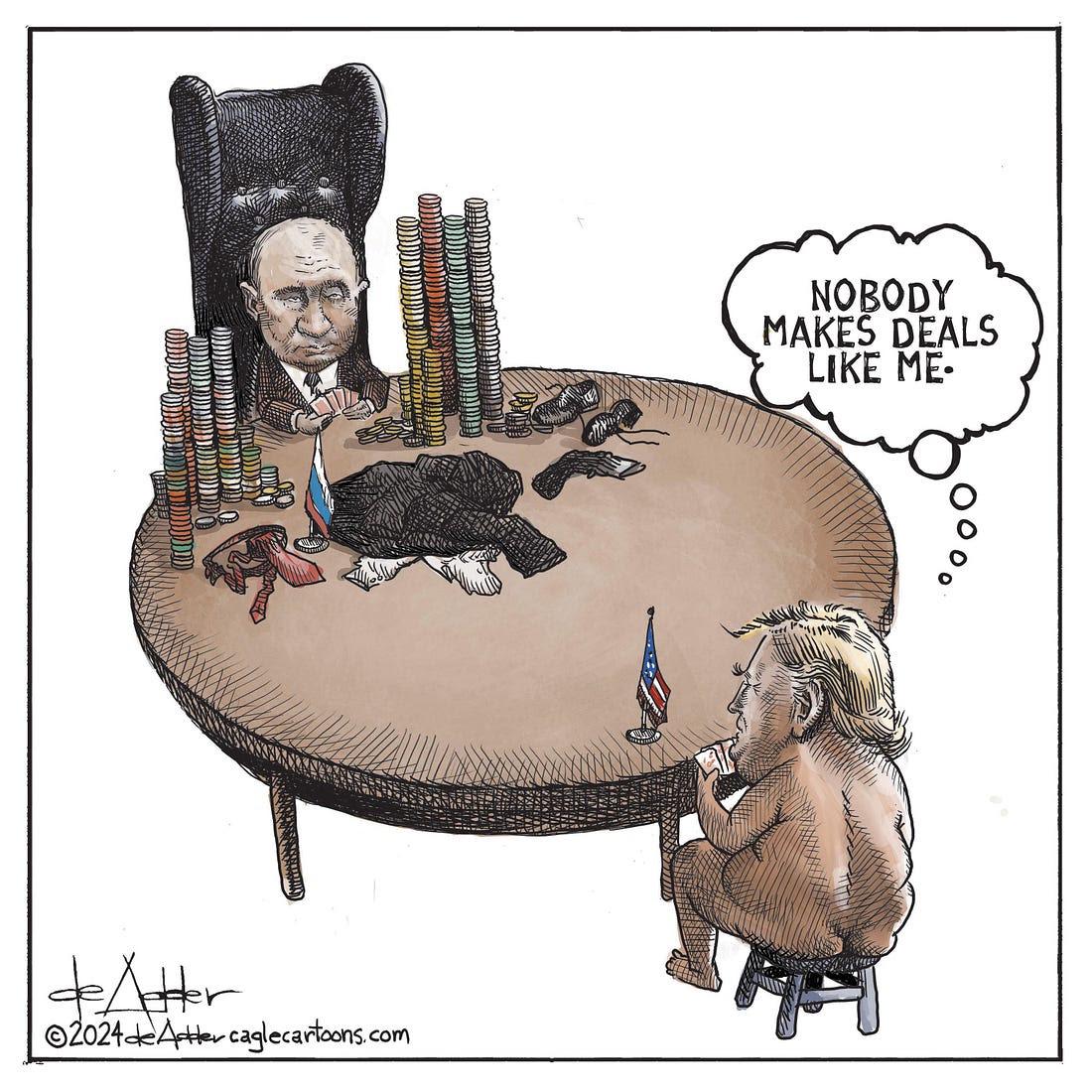
As I indicated in my previous post, Trump has yet to extract any concessions from Putin. Instead, he has already conceded on the two principal issues for Putin: control over wide swathes of Ukrainian territory and a promise that Ukraine would not be allowed to join NATO. These concessions are profound and are on the scale that is usually made by a side that has been routed in war. But Russia has fared dismally in proving its military prowess. The Economist reports:
“Any assessment of Russia’s negotiating position should start with the military situation. Its army has performed dismally. The pace of advance is excruciatingly slow: since last July it has struggled to take the town of Pokrovsk, where current losses are staggering. Most of its gains were in the first weeks of the war. In April 2022, following Russia’s retreat from the north of Ukraine, it controlled 19.6% of Ukrainian territory, and its casualties (dead and wounded) were perhaps 20,000. Today Russia occupies 19.2% and its casualties are 800,000, reckon British sources.”
Trump has declared Ukraine’s unconditional surrender without securing any guarantees that Ukraine’s future sovereignty will be protected, and that condition will only weaken US credibility in the future. Inevitably, those states–not only in Europe but also in Asia, Southeast Asia, Africa, and Latin America–who rely upon US power to keep stability will lose faith in the US and will either resort to self-reliance in defense (most likely, the possession of a nuclear weapon) or will find other protectors (China and Russia are eager to fill a US vacuum).
Trump’s abject surrender to Putin, however, is a greater tragedy. He has seriously damaged US relations with its European allies, and all other states now have legitimate doubts about the integrity of US promises. The world is significantly less safe because of his foolish infatuation with Putin.
Tomorrow is the 200th anniversary of the first performance of Beethoven’s 9th Symphony. I count myself as one of the multitude who regard this piece as one of the greatest in Western classical music. Despite the loss of much of his hearing, Beethoven was one of the conductors to this premiere. The Symphony was genuinely revolutionary, not only for the 4th movement which used the poem “Ode to Joy” written by Friedrich von Schiller, but also for its incredible power, unpredictability, and exuberance.
“….he was a deeply political man in the broadest sense of the word. He was concerned with moral behavior and the larger questions of right and wrong affecting all of society. Especially significant for him was freedom of thought and of personal expression, which he associated with the rights and responsibilities of the individual. He would have had no sympathy with the now widely held view of freedom as essentially economic, necessary for the workings of the markets.”
The symphony expresses the heady aspirations of the Enlightenment as it rested upon the vision of the bortherhood of humankind. We seem to be pretty far from realizing that aspiration today, but I remain convinced that that path is the only one remaining if humanity is to survive its recklessness and selfishness.
Friedrich von Schiller, “Ode to Joy” 1785
An die Freude
Freude, schöner Götterfunken, Tochter aus Elysium, Wir betreten feuertrunken, Himmlische, dein Heiligtum! Deine Zauber binden wieder Was die Mode streng geteilt;* Alle Menschen werden Brüder* Wo dein sanfter Flügel weilt.
Wem der große Wurf gelungen Eines Freundes Freund zu sein; Wer ein holdes Weib errungen Mische seinen Jubel ein! Ja, wer auch nur eine Seele Sein nennt auf dem Erdenrund! Und wer’s nie gekonnt, der stehle Weinend sich aus diesem Bund!
Freude trinken alle Wesen An den Brüsten der Natur; Alle Guten, alle Bösen Folgen ihrer Rosenspur. Küsse gab sie uns und Reben, Einen Freund, geprüft im Tod; Wollust ward dem Wurm gegeben und der Cherub steht vor Gott.
Froh, wie seine Sonnen fliegen Durch des Himmels prächt’gen Plan Laufet, Brüder, eure Bahn, Freudig, wie ein Held zum Siegen.
Seid umschlungen, Millionen! Diesen Kuß der ganzen Welt! Brüder, über’m Sternenzelt Muß ein lieber Vater wohnen. Ihr stürzt nieder, Millionen? Ahnest du den Schöpfer, Welt? Such’ ihn über’m Sternenzelt! Über Sternen muß er wohnen!
Ode to Joy
Joy, thou shining spark of God, Daughter of Elysium, With fiery rapture, goddess, We approach thy shrine! Your magic reunites those Whom stern custom has parted;* All men will become brothers* Under your protective wing.
Let the man who has had the fortune To be a helper to his friend, And the man who has won a noble woman, Join in our chorus of jubilation! Yes, even if he holds but one soul As his own in all the world! But let the man who knows nothing of this Steal away alone and in sorrow.
All the world’s creatures draw Draughts of joy from nature; Both the just and the unjust Follow in her gentle footsteps. She gave us kisses and wine And a friend loyal unto death; She gave the joy of life to the lowliest, And to the angels who dwell with God.
Joyous, as His suns speed Through the glorious order of Heaven, Hasten, brothers, on your way Exultant as a knight victorious.
Be embraced, all ye millions! With a kiss for all the world! Brothers, beyond the stars Surely dwells a loving Father. Do you kneel before Him, oh millions? Do you feel the Creator’s presence? Seek Him beyond the stars! He must dwell beyond the stars.[4]
“The West-Eastern Divan Orchestra conducted by Daniel Barenboim performs Beethoven’s Ninth Symphony at the Berlin Philharmonic. It’s supported by singers Angela Denoke, Waltraud Meier, Burkhard Fritz and René Pape. The West-Eastern Divan Orchestra is a very special ensemble: It is made up of young Israeli and Arab musicians and is campaigning for a peaceful solution to the Middle East conflict.
“The West-Eastern Divan Orchestra, which was founded in 1999, gives concerts all over the world. Proceeds from the concert in Berlin went to the Barenboim-Said Academy, which supports musical education programs. The 9th Symphony in D minor op. 125 is the last finished symphony by the composer Ludwig van Beethoven. The work was premiered in Vienna on May 7, 1824 in the presence of Beethoven, who was already completely deaf and was a complete success. The fourth movement is also known as “Ode to Joy” and is one of the most popular songs in the world. Since 1985, the main theme of the last movement has been the official European anthem.
 World Politics News