NATO has offered words of support to Turkey in its current standoff with Russia over Idlib, Syria. But the idea of a “no-fly” zone suggested by some members of the US Congress was not part of the words of solidarity. NATO is obliged to come to the defense of its members, but only if their national territory is attacked. Since the Russian air strike that killed Turkish soldiers occurred on Syrian territory, NATO does not have to act under Article 5 of its charter:
“The Parties agree that an armed attack against one or more of them in Europe or North America shall be considered an attack against them all and consequently they agree that, if such an armed attack occurs, each of them, in exercise of the right of individual or collective self-defence recognised by Article 51 of the Charter of the United Nations, will assist the Party or Parties so attacked by taking forthwith, individually and in concert with the other Parties, such action as it deems necessary, including the use of armed force, to restore and maintain the security of the North Atlantic area.”
NATO is extremely reluctant to be drawn into the dispute between Turkey and Russia for both strategic and political reasons. Russia likely does not approve of Syrian President Assad’s decision to retake all the territory in Idlib, but it has nonetheless stood by its ally. According to The Economist: “Russia denied responsibility, but suggested that Turkey may have invited the attack by placing its troops alongside Syrian rebels and not informing Russia of their location. Just hours after the strike Russia sent two warships armed with cruise missiles to the eastern Mediterranean. The warships sailed through the Bosphorus, which bisects Istanbul, Turkey’s biggest city.” The Russian stance complicates NATO’s decision-making with respect to defending Turkey. Time magazine points out:
“The allies are extremely reluctant to be drawn into a conflict of Turkey’s making, and particularly because President Recep Tayyip Erdogan has used up a lot of good will by testing his fellow NATO members’ patience for quite a while.
“The Syria offensive comes on top of tensions over Turkey’s purchase of Russian-made S400 missiles, which threaten NATO security and the F-35 stealth jet. Erdogan also purged thousands of Turkish military officers following the failed coup in Turkey in 2016 and some have sought, and been granted, asylum in Europe.
“But despite high political-military tensions, Turkey is too important to eject from the 29-member alliance.
“Turkey is of great strategic importance to NATO. The large, mainly Muslim country straddles the Bosporus Strait, making it a vital bridge between Europe, the Middle East and Central Asia. It’s also the only waterway in and out of the Black Sea, where Russia’s naval fleet is based.
“NATO allies also rely on the Incirlik air base in southeastern Turkey as a staging point for access to the Middle East. The alliance runs aerial surveillance operations from Incirlik and the United States has nuclear weapons stationed there.”
Turkish President Erdogan may well be rethinking his relationship with NATO, but he has certainly squandered that source of support in the immediate crisis. How President Erdogan will respond to the Russian challenge will determine a lot:
“The irony of Erdogan spending so much time and effort to distance himself from NATO and the EU and now clamoring for their help will not be lost on the Russians. Still the Kremlin’s risky strategy could backfire if Erdogan decides to press on with a ground offensive against Assad’s army and deploys Turkey’s air force. In the “who blinks first” game, it is not clear who will carry the day.
“This conflict may still end to Putin’s satisfaction — if he acts quickly enough on the ground in Syria to preempt any Turkish action. Massive bombardment of Idlib would achieve it; civilian casualties were never of concern to Putin and his generals. Or perhaps some kind of shaky compromise was cobbled together after he spoke with Erdogan on the phone Friday. But in the long term Putin may have created new problems for himself.
“Erdogan will never forget his humiliation by Russia. It weakened him domestically and in the eyes of NATO allies. He may well start repairing relations with the alliance. He will not be making peace with the Assad regime, which means that Putin’s dream of leaving Syria behind may not come true.”
Erdogan will pressure Europe to support him through the threat of allowing thousands of refugees to migrant into Europe, a possibility that threatens greater political instability on the continent. But there is little that Europe can or is willing to do to rile Russia. And it is unlikely that President Trump wishes to cross Russian President Putin. So the most likely outcome is continued tension in Syria and the suffering of the civilian population. The world has decided not to come to their aid.
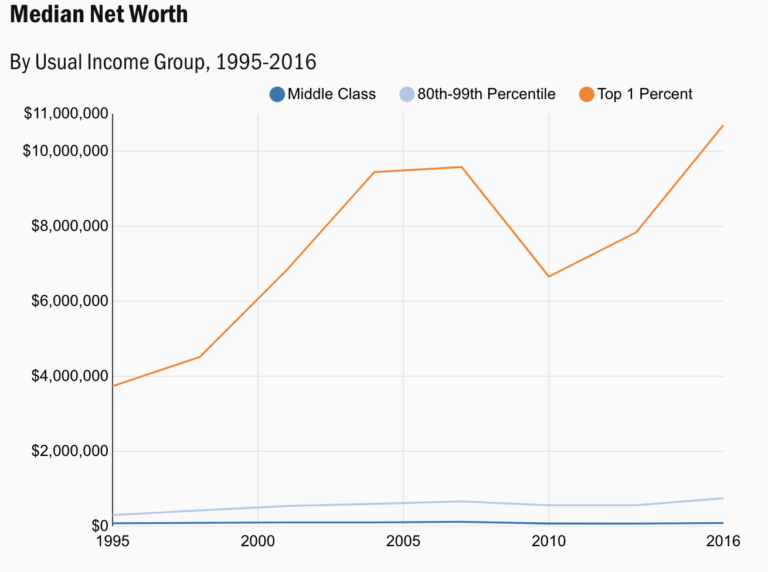
Barry Ritholtz maintains a blog named “The Big Picture” and the blog reflects his iconoclastic view of the market economy–he is a strong supporter of the market, yet regularly raises questions about how well the market addresses real economic problems faced by the majority of citizens. His most recent post reinforces the information in yesterday’s blog post. Ritholtz looks at the accumulation of wealth since the Great Financial Recession (GFC) of 2008-09 and the distribution of wealth has become increasingly concentrated: “Today, the Top 1% is wealthier than all of the Middle Class. This is a relatively new, post GFC phenomena. It is driven primarily by the rise of asset prices: Stocks, Bonds, Real Estate and Business holdings.This is why the top 20% has recovered to pre-crisis income but the rest economic strata has not.” Ritholtz argues that this concentration of wealth is primarily responsible for the political attractiveness of both Donald Trump and Bernie Sanders.
“The opportunity for economic mobility has shrunk.
“Call this what you will: A plutocracy, an oligopoly, a technocracy, a corporatocracy, a whatever — the massive Post-War middle class expansion that created so much wealth for ordinary families has morphed, starting around 1980, into something else entirely. Today, it has changed into low-tax economy that rewards capital and asset holders, and throws off much less towards the working class than it did last century.
“Hence, the rise of Donald and Bernie. They both exhibit a more similar appeal to their base then you might imagine.”
The analysis begs the political question of which candidate offers an effective response to this maldistribution of wealth. For Ritholtz, the concentration of wealth is something that the market itself could solve: “We have a robust economy yet still have lots of people not participating. We have an unemployment rate at 60-year lows, yet enormous sections of the labor pool are under-employed. Low inflation in the things we want, but higher inflation in the things people need. We simultaneously have great wealth and economic insecurity. That enormous wealth has flowed to mostly to Capital and asset holders, and not to workers or Labor.”
Russian airstrikes near Idlib, Syria, have reportedly killed 29 Turkish soldiers. The strike represents a dramatic escalation of the tension between Turkey and Russia, one which will be difficult for Turkish President Erdogan to ignore. The BBC reports:
“This is a new and dangerous escalation in an increasingly direct conflict between Turkish and Syrian government forces in Idlib. Both sides have suffered losses over the past few weeks. But the latest Turkish casualties come at a precarious moment.
“President Erdogan has threatened to mount a major military operation against President Assad’s forces if they don’t pull back from frontline positions near Turkish troops in Idlib within the next two days.
“For now there’s no sign of that happening. Turkey has already been stepping up its military support for the rebel fighters it backs as they mount a counter offensive to try to win back key towns they’ve recently lost.
“Behind this conflict looms the potential of an even bigger confrontation. Turkey and Russia have backed different sides in Syria, but have come together to broker battlefield deals in the past few years.
“That pragmatic rapprochement is now in doubt. Russian airpower has provided vital support for Syrian forces – if it is now being directed at Turkish military positions, that creates a huge new element of risk.”
There are urgent diplomatic efforts to avoid further escalation, but Turkey and Russia have been unable to reach any solutions since an abortive cease-fire was declared by both sides in 2018. The fighting around Idlib has displaced almost a million civilians and the humanitarian crisis is extreme. The world, however, seems to be indifferent to the suffering of so many.
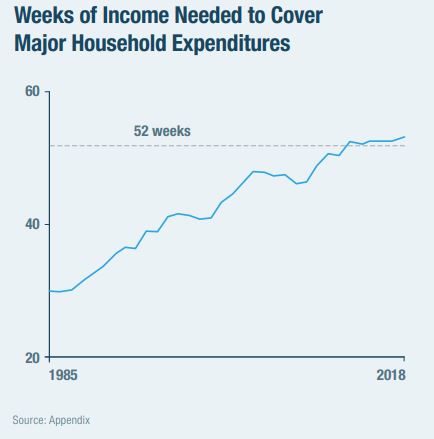
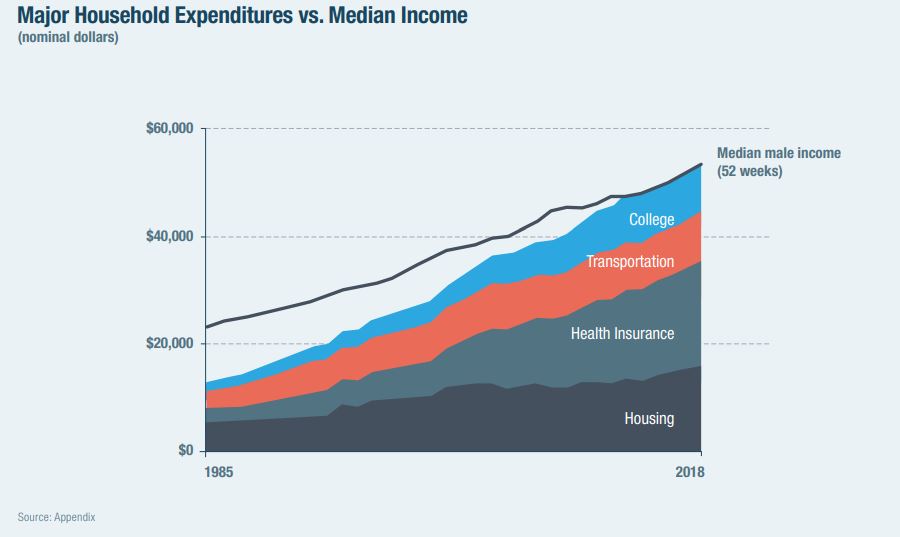
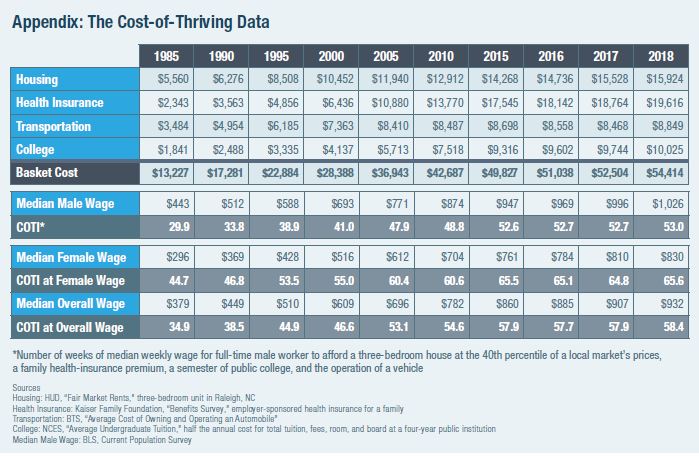
The Manhattan Institute has published a fascinating report entitled “The Cost-of-Thriving Index: Reevaluating the Prosperity of the American Family”. The report is an attempt to determine how cost of living metrics actually capture the well-being of US families. We all well aware of the effects of inflation on income, but we lack the ability to translate that numeric index into something which actually tells us how well off the family living on that income may be. The report points out the inadequacy of simple numeric indices:
“It sounds like an absurd riddle, or perhaps a kindergarten-level math problem: the median male full-time worker earned $314 per week in 1979, while his counterpart at the median in 2018 earned $1,026;[3] who was better off?…
“The most commonly used index, the Consumer Price Index (CPI), published by the Bureau of Labor Statistics (BLS), estimates that inflation has reduced a dollar’s value by 71% from 1979 to 2018. Put another way, one 2018 dollar is worth 29 1979 cents. A different index preferred by the Federal Reserve and many economists, the Personal Consumption Expenditures Price Index (PCE), published by the Bureau of Economic Analysis (BEA), estimates that a dollar’s value has declined by 66%; so one 2018 dollar is worth 34 1979 cents.
“Using CPI, our 2018 worker’s $1,026 in 2018 earnings is worth $297 in 1979 dollars—or 6% less than the $314 in 1979 dollars earned by the 1979 worker. Using PCE, the 2018 earnings is worth $353 in 1979 dollars—a 13% gain.
“….the question is how well the typical male worker can provide for a family.
“This report shows that his ability to do so has degraded dramatically. A generation ago, he could be confident in his ability to provide for his family not only the basics of food, clothing, and shelter but also the middle-class essentials of a comfortable house, a car, health care, and education. Now he cannot. Public programs may provide those things for him, a second earner may work as well, his family may do without, although his television may be larger than ever. The implications of each is surely worth pondering. But the fact that he can no longer provide middle-class security to a family is an unavoidable economic reality of the modern era.”
Al Jazeera has published a very comprehensive analysis of the many Middle East Peace Plans that have been proposed since the creation of the state of Israel in 1948. It then compares those plans with US President Trump’s most recent peace plan. The newspaper has put an extraordinary amount of information on the site and it is a remarkably useful summary of the different proposals. There is little question that Al Jazeera is sympathetic to the Palestinian position, but the presentation is fairly free of ideology. For students of the Middle East this site is a useful place to begin one’s research.
US President Trump visited India in a whirlwind trip, capped off by a very large rally of over 100,000 people. While the meetings between Trump and Indian Prime Minister Modi were going on, there were also large protests against the new Citizenship Amendment Act (CAA) which grants Indian citizenship to people being persecuted for religious reasons in three neighboring countries–except for persecuted Muslims. These protests have been going on for some time, but they were quite violent while Mr. Trump was visiting, with ten killed and 150 injured. According to Reuters:
“The CAA has sparked accusations that Modi and his Hindu nationalist Bharatiya Janata Party are undermining India’s secular traditions. The BJP denies any bias against India’s more than 180 million minority Muslims but objectors have staging protests and camping out in parts of New Delhi for two months.
Mr. Trump and Mr. Modi discussed a large arms deal worth about $3 billion that included Apache and Romeo MH-60 helicopters. There was no agreement, however, on a proposed trade deal. Trade has been a sore spot between the two states since 2018 when the US slapped tariffs on some Indian exports. Mr. Trump is popular in India with approval ratings around 50%. Both Mr. Trump and Mr. Modi identify themselves as nationalists. Unfortunately, Mr. Trump did not use the occasion to criticize the discriminatory aspects of the CAA:
‘Trump, asked several times about Modi’s support for the new law, praised the Indian leader.
“’He wants people to have religious freedom,’ Trump insisted. ‘They have really worked hard on religious freedom.’
‘Trump appeared to back Modi’s concern that the majority-Hindu country is being overrun by Muslims.
“’He told me, I guess they have 200 plus, 200 million Muslims in India, and a fairly short while ago, they had 14 million,’ Trump said.
“India had about 35 million Muslims in 1951, according to the first census after independence, or about 9.8% of the population. The 201 million Muslims today are 14.2% of the population.
“Later, Trump was asked again about the citizenship law. ‘I don’t want to discuss that, and hopefully they’re going to make the right decision for the people,’ he said.”
The lack of criticism is not surprising given Mr. Trump’s antipathy toward Muslims.
A near-term scenario of climate change, in which the world warms 1-2°C/1.8-3.6°F over pre-industrial levels by mid-century, would pose ‘High’ to ‘Very High’ security threats. A medium-to-long term scenario in which the world warms as high as 2-4+°C/3.6-7.2°F would pose a ‘Very High’ to ‘Catastrophic’ threat to global and national security. The world has already warmed to slightly below 1°C compared to pre-industrial temperatures.
At all levels of warming (1-4+°C/1.8-7.2+°F), climate change will pose significant and evolving threats to global security environments, infrastructure, and institutions.
While at lower warming thresholds, the most fragile parts of the world are the most at risk, all regions of the world will face serious implications. High warming scenarios could bring about catastrophic security impacts across the globe.
These threats could come about rapidly, destabilizing the regions and relationships on which U.S. and international security depend.
Climate change will present significant threats to U.S. military missions across all of its geographic areas of responsibility (AORs), as well as to regional security institutions and infrastructure that are critical for maintaining global security.
The report is broken down by the regions in the world that have central commands:
• U.S. African Command (AFRICOM): Africa • U.S. Central Command (CENTCOM): Middle East and Central Asia • U.S. European Command (EUCOM): Europe and Russia • U.S. Indo-Pacific Command (INDOPACOM): Indo-Asia-Pacific • U.S. Northern Command (NORTHCOM): North American and the Polar Regions • U.S. Southern Command (SOUTHCOM): South and Central America and Caribbean
The breakdown reflects the strategic threats to the US posed by climate change, not the most useful framework for analyzing climate change. But it identifies the major changes that climate change will force: food, water, and resources stress; extreme weather; sea level rise; migration; health; and state fragility and conflict. The conclusions of the report are straigtforward but unlikely to be implemented under the current Administration:
“Mitigating these risks requires quickly reducing and phasing out global greenhouse gas emissions. As there are numerous policy options for doing so, we refrain from recommending a single course of action. Instead, we call for the world to achieve net-zero global emissions in a manner that is ambitious, safe, equitable, and well-governed.
The world must also rapidly build resilience to the impacts of climate change that we are already experiencing, by “climate-proofing” infrastructure, institutions, and systems on which human security depends. With future oriented investments in adaptation, disaster response, and peacebuilding efforts, we will be better able to recover from tragedies that strike and to contain effects from spiraling downward into deeper instability.
It is possible to prevent the worst of the scenarios laid out in this report, but this will not happen without clearsighted, dedicated leadership. In the United States, we call for renewed efforts to prioritize, communicate, and respond to climate security threats, and to integrate these considerations across all security considerations.
It is difficult for me to think that even this tight link between climate change and national security will have any effect on the policies of the current administration in the US.
I have had a difficult time trying to assess how dangerous the coronavirus (now identified as COVID-19) is to global stability. The Washington Post ran a very helpful article on the virus that I think I actually understood. Much of the uncertainty stems from my own ignorance of biology but I have also been flummoxed by the inconsistent reporting by China–it appears to be constantly redefining how to identify who has been infected. On the one hand, it seems to be highly contagious (particularly if one has the misfortune to be on a cruise ship). Outbreaks have occurred in South Korea and Italy (and, seemingly, Iran, but the information is spotty from there). Fergus Walsh, the medical correspondent for the BBC writes:
“The combined situation in South Korea, Iran and Italy points to the early stages of pandemic. This means a global outbreak, with the coronavirus spreading in the community in multiple parts of the world.
“In each of these countries we are seeing spread of the virus with no connection to China. The lockdown efforts in Italy mirror those that have happened in China.
“The situation in Iran is especially worrying because the health authorities have reportedly said the virus has spread to multiple cities, and it appears the first case in Lebanon is linked to a traveller from Iran.
“If we have a pandemic, it will still be important to limit the speed of spread of the virus. If countries could hold it somewhat at bay until the end of winter, there is a hope that warmer temperatures will reduce the time the virus can survive in the air, as we see with seasonal flu. But this may not be certain.”
There are serious effects associated with the containment measures designed to stop the spread of the virus. Many businesses in China have closed due to those measures, and the closures are beginning to affect the supply of manufactured inputs to many products. According to Reuters: “The International Monetary Fund’s chief said China’s 2020 growth would likely be lower at 5.6%, down 0.4 percentage points from its January outlook, with 0.1 percentage points shaved from global growth”. Even in those countries which have yet to see many cases, the economic effects have been substantial. In France, for example:
“’We have less tourists, of course, in France, about 30%, 40% less than expected,’ Bruno Le Maire told CNBC on Sunday at the G-20 meeting in Riyadh, Saudi Arabia.
“Tourism accounts for nearly 8% of France’s gross domestic product. It welcomes around 2.7 million Chinese tourists each year, which Le Maire said ‘won’t be the same, of course, in 2020.’ France has reported 12 confirmed cases of the virus and one death, according to a WHO report dated Feb. 22.“
But it also does not seem to be as lethal as other viruses such as SARS: “Between November 2002 and July 2003, an outbreak of SARS in southern China caused an eventual 8,098 cases, resulting in 774 deaths reported in 17 countries (9.6% fatality rate)”. There have been 2,236 deaths reported so far, but it is hard to be sure that that count is accurate. The death rate is the most important issue and it may be the case that the COVID-19 virus does not merit the containment measures introduced so far. The data from China is somewhat encouraging:
“A recent study of nearly 140 patients at the Zhongnan Hospital of Wuhan University identified a typical pattern of symptoms associated with the virus, which causes a disease known as COVID-19. Around 99% of the patients developed a high temperature, while more than half experienced fatigue and a dry cough. About a third also experienced muscle pain and difficulty breathing.
“Research from the Chinese Center for Disease Control suggests that around 80% of coronavirus cases are mild. Around 15% of patients have gotten severe cases, and 5% have become critically ill.”
But it is hard to be sure and there is little question that taking the virus seriously is the only viable option.
“An analysis of millions of tweets from around the period when Donald Trump announced the US would withdraw from the Paris climate agreement found that bots tended to applaud the president for his actions and spread misinformation about the science.
“The study of Twitter bots and climate was undertaken by Brown University and has yet to be published. Bots are a type of software that can be directed to autonomously tweet, retweet, like or direct message on Twitter, under the guise of a human-fronted account.
“’These findings suggest a substantial impact of mechanized bots in amplifying denialist messages about climate change, including support for Trump’s withdrawal from the Paris agreement,’ states the draft study, seen by the Guardian.”
Slow wage growth persists: Consistent positive wage growth has occurred in only 10 of the last 40 years.
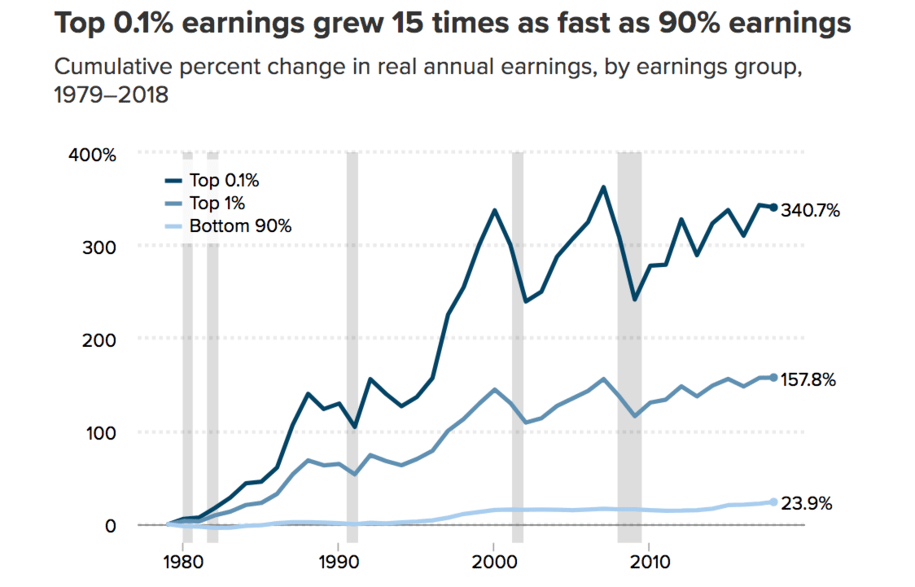
Inequality continues: The highest earners (95th percentile) continue to pull away from middle- and low-wage workers.
Policy matters: Wage growth at the bottom was strongest in states with minimum wage increases in 2019.
Black–white wage gaps persist: In 2019, black wages exceeded their 2000 and 2007 levels across the wage distribution for the first time in this recovery. Even so, black–white wage gaps are significantly wider now than in 2000.
The US economy has been good to those who hold stocks. But for those who rely upon a wage, the situation is stagnant. Except for those who live in states that legislated an increase in the minimum wage.
The US, Afghanistan, and the Taliban have announced a “seven-day reduction in violence” that may lead to a more robust agreement among the parties to a civil war that has been going on since 2001. The US and the Taliban have been conducting negotiations in Qatar for the last two years, and there have been similar glimmers of hope in that period that have not been realized. But the US seems committed to signing a cease-fire with the Taliban on 29 February:
“If deemed a success, the weeklong reduction in violence, or RIV, which will be monitored by U.S. forces, will lead next to the Feb. 29 signing in Qatar between U.S. Special Envoy Zalmay Khalilzad and representatives of the Afghan government and the Taliban. That deal is aimed at a phased American military withdrawal — including cease-fires and talks between the Taliban and other Afghans on the future of the country.”
We do not know the specifics of the agreement and it may be the case that we will never know the concessions that all sides are promising to make in order to achieve the cease-fire. The Washington Post provides only the rough outlines of a possible agreement:
“What we know from news reports and sources close to the negotiations is that the United States has committed to reducing the U.S. troop level to 8,600, from the current level of about 13,000, in the first 135 days of the agreement. During that time, the Taliban is to renounce al-Qaeda and other terrorist groups and open negotiations with an Afghan committee, including government officials as well as other leaders. If the United States concludes those pledges have been met, the withdrawal will continue; the administration reportedly committed to a full pullout over time.”
There is little to show for the 18 years that the US has been fighting in Afghanistan. The US has poured $2 trillion into the country, but most of that money has been concentrated on the elites in the capital city of Kabul. The Taliban control much of the countryside and there is nothing in the proposed agreement that will alter that reality. The It is difficult to shake the notion that the US is simply looking for a face-saving way to exit the country. The war is one that should never have been fought and it is probably for the best that the US will leave the theater. But the US departure will only highlight the pointlessness of the action, and the costs to the Afghan people of the ill-advised intervention can never be erased.
East Africa is being battered by an infestation of locusts. So far, the countries affected are South Sudan, Uganda, Tanzania, Ethiopia, Kenya, Somalia, Eritrea and Djibouti. CNBC notes: “Desert locusts can travel up to 150km (95 miles) a day, and a one-square-kilometer swarm can devour as much food as 35,000 people in a single day, according to the UN”. The UN is worried that as many as 25 million people could be food short because of the destruction of crops. These countries are already experiencing food insecurity because of violent conflicts in the region. The locust swarms have also spread into Yemen and Saudi Arabia, and Jordan is concerned that the swarms may reach that far north. There are also concerns that the swarms may reach South Asia: “By June, the locust population is set to grow 500 times spreading to West Asia”. Switzerland, China, and the US are rendering assistance to the affected countries, and the UN is trying to raise money to support the countries. But it is a plague that is very difficult to combat.
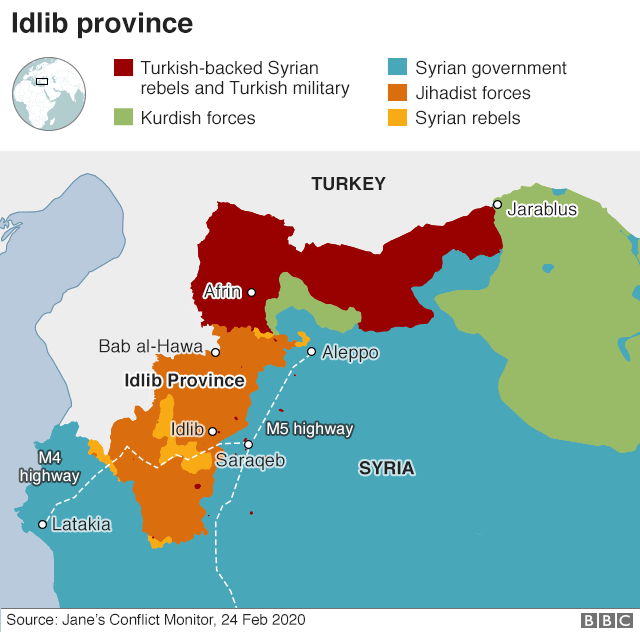
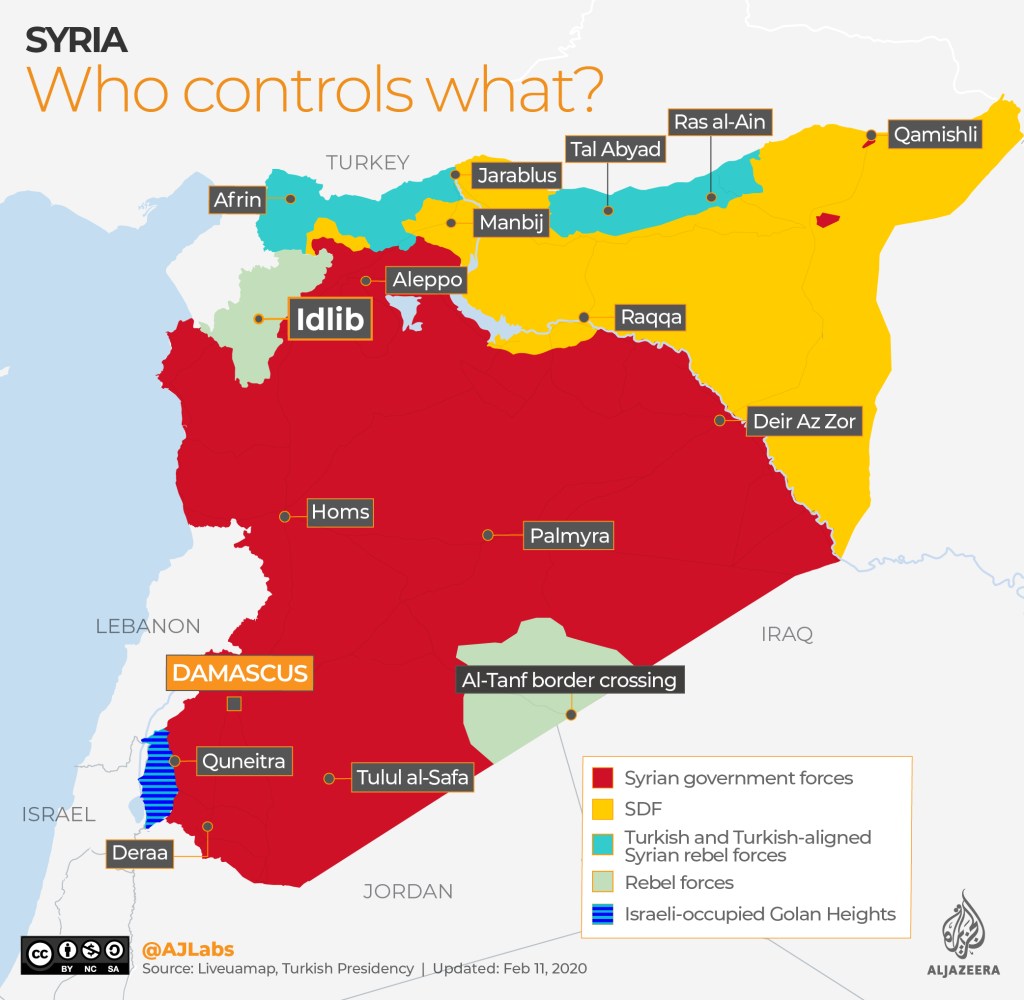
The is a desperate humanitarian crisis in the Idlib Province of Syria. It is one of the few areas in Syria still held by opposition forces to the Assad regime in Syria. Since the withdrawal of US forces from Syria, the Syrian government, backed by Russian airpower, has pummeled the province with little attention to civilians and other protected agents such as hospitalsand schools. About 900,000 people, 500,000 of them children, have been displaced by the violence and the numbers of people living in tents with no heat in the bitter cold have overwhelmed the humanitarian relief organizations. From a strategic point of view, the opposition forces have little hope of resisting the Syrian attacks, but there is no place for the people to go. Turkey closed its border to refugees in 2015 and the Syrian/Russian attacks seemed designed to cut off any supplies to the civilian population from Turkey. The New York Times reports:
“Russian and Syrian forces, advancing rapidly from the south and east of Idlib, have reached the town of Al Atarib, barely 15 miles from the Turkish border.
“The attack seems to be a bid to cut supply lines from Turkey to areas held by the opposition forces or even an effort to encircle and besiege the city of Idlib itself, where some 700,000 people live, aid organizations said.
“The Turkish army has deployed hundreds of troops and armor in the north of the province to protect the approaches to the Turkish border. President Recep Tayyip Erdogan of Turkey has demanded that Syrian government troops withdraw to previously agreed positions by the end of February or be forced to do so by Turkish forces.”
Turkey and Russia have been conducting talks to resolve some of these issues, but their efforts have failed. There was an attempt to create a “de-escalation” area in Idlib which was signed by Russia and Turkey in Sochi, Russia in 2018. But both sides support factions in the Syrian civil war which have no interest in reconciliation or in easing the violence against civilians. Over the last few weeks, the rhetoric coming out of Turkey has become increasingly strident, raising fears that Turkey may decide that its only choice would be to confront the Syrian forces. Those forces are backed by significant Russian air power which might lead to rapid escalation if the Turks choose to intervene militarily.
NATO has made it clear that it does not wish to become involved and President Trump lacks any clear policy in Syria other than the ad hoc defense of Syrian oil fields. The United Nations has tried to keep the catastrophe visible, perhaps hoping that other states would take action rather than be accused of doing nothing in the face of such a large humanitarian crisis.
 World Politics News