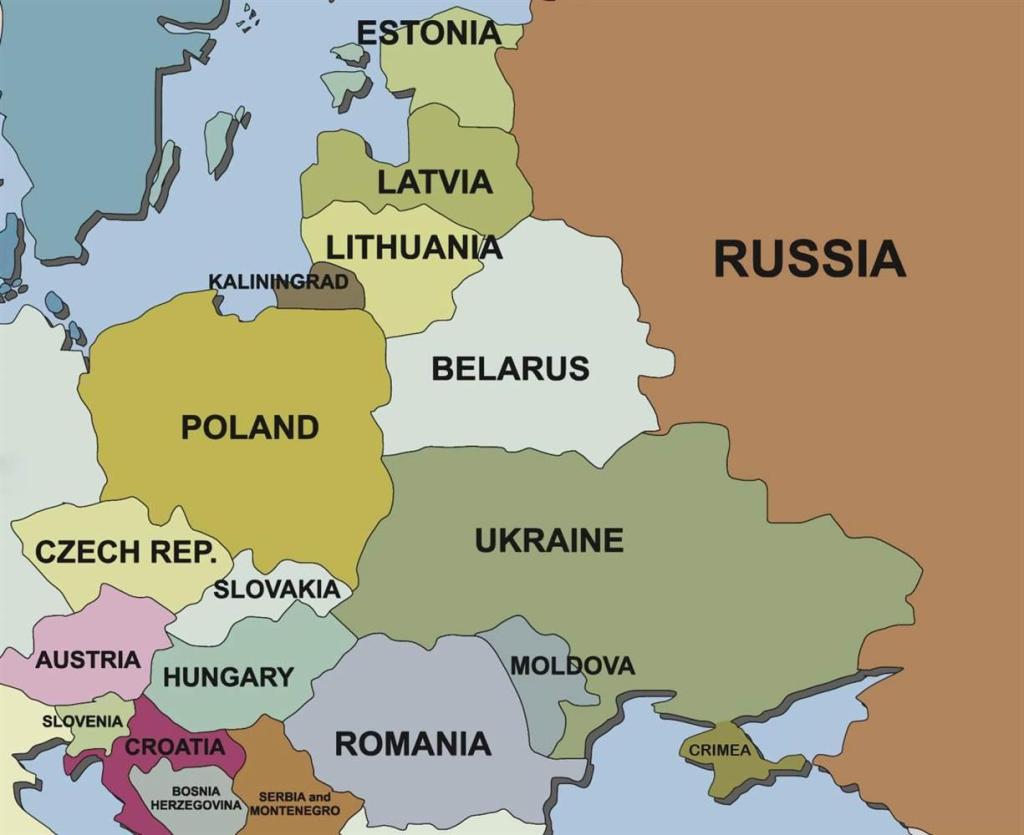
President Alexander Lukashenko has ruled Belarus for the last 26 years and he claims to have won the most recent election last week with 80% of the votes cast. Tens of thousands of people in the country disagree and they have taken to the streets to protest what they regard as a fraudulent election. Lukashenko’s opponent, Svetlana Tikhanovskaya, fled to Lithuania to avoid arrest and is organizing an opposition movement to demand a recount of the votes. For many years, Lukashenko has tried to maintain a degree of independence from Russia, but the protests have led him to ask for help from Russian President Putin. The Hill observes:
“Lukashenko’s plea to Putin marks a dramatic turnabout. Putin has been pressing Belarus for several years to integrate militarily and politically with Russia under an umbrella entity called the Union State. Lukashenko has resisted Putin’s demands, including the demand for a Russian military base in Belarus. Until very recently, in fact, Lukashenko was suggesting that Putin himself was behind the unrest following the election, and he sought to distance himself from Moscow. But either the situation has gotten bad enough that he fears losing control or else Putin has threatened to intervene against his wishes, or both. In any case, it seems likelier than ever that Putin will get the integration and basing he has sought.”
Belarus has struggled economically in the last few years and the COVID-19 pandemic has made matters worse. The economic weakness has made the country more dependent upon Russia. The EU has not made financial commitments to the country and the US has been completely absent from any economic assistance. The Belarus economic system retains many vestiges of the old communist system which ruled the Soviet Union until 1991. It has yet to make the transition to more market-oriented economic policies.
As expected, the US lost the vote on its resolution to the UN Security Council demanding the reinstatement of sanctions against Iran. The size of the defeat was decisive, as only the Dominican Republic voted to support the resolution in the 15-member Council. Russia and China voted against the resolution and all the rest of the members abstained, including US allies France, Germany, and Great Britain. The decision to abstain reflected a strong desire to preserve the Joint Comprehensive Plan of Action (JCPOA) on the part of many members. If the resolution had passed, Iran most likely would have left the nuclear deal. Iran celebrated the defeat of the resolution:
“Washington’s European allies all abstained, and Iran mocked the Trump administration for only winning the support of one other country, the Dominican Republic.
“’In the 75 years of United Nations history, America has never been so isolated,’said [Iranian] foreign ministry spokesman Abbas Mousavi.
“’Despite all the trips, pressure and the hawking, the United States could only mobilise a small country (to vote) with them,’ he tweeted.”
The outcome was predictable, which raises the question of why the US pursued the objective despite the certainty of defeat. The US has announced that it will seek the “snapback” sanctions outlined in the JCPOA which were mandated if Iran violated the agreement. Those sanctions are supposed to become operative on 18 October. The US pulled out of the JCPOA last year and most states do not believe that the US has the legal standing to demand those sanctions: why should a state not bound by an agreement force others to adhere to that agreement?
“Because of Iran’s remarkable advances in domestic defense and control systems, it is unlikely that lifting the arms embargo would make a significant difference in how the country maintains its conventional military capability. Most of Iran’s military hardware is locally produced, meaning there is little pressure or demand for major systems.
“Moreover, even if the Iranians do rush to purchase conventional weapons from Chinese or Russian suppliers, it would have little overall effect given Iran’s recent history; Iran has not initiated a war with its neighbors in the last 150 years. But it has repeatedly fallen victim to military occupation, referred to by CIA strategists as Iran’s ‘modern tradition of defeat.’ So any new arms procurement would likely be for defensive or deterrent purposes and would be perceived by Iranians as an insurance policy against any potential attack on Iran by its adversaries.
“Plus, Iran’s defense budget is a fraction of its regional rivals’. According to the Stockholm International Peace Research Institute, Iran’s defense budget in 2019 was an estimated $12.6 billion. Compare that to the United States defense budget of $732 billion, the Saudi defense budget of $61.9 billion, and the Israeli defense budget of $20.4 billion. Iran’s leaders are well aware that if they begin a buildup of conventional military capacity, the result would be that world powers, including the United States and European countries, would flood the Middle East with more advanced weaponry. Ironically, such a situation could end up restraining Iran, given that other countries are better able to engage in arms competition if the need arises.”
The fear is that if the US suffers another defeat on the sanctions matter, then it will take unilateral action to eliminate what it regards as Iran’s threat to “international peace and security”–the mandate of the UN Security Council. Such an action would certainly have the active support of Israel. And it may be regarded by some in the Trump Administration as an act that would mobilize support for Mr. Trump in the November election as there is often a “rally around the flag” mentality after military action. That attitude is very dangerous and borders on the delusional.
A research paper published today suggests that Greenland’s glaciers may have reached a point of no return due to global warming. One of the researchers made the following statement:
“‘Glacier retreat has knocked the dynamics of the whole ice sheet into a constant state of loss,’ said Ian Howat, a co-author on the paper, professor of earth sciences and distinguished university scholar at Ohio State. ‘Even if the climate were to stay the same or even get a little colder, the ice sheet would still be losing mass.’
Shrinking glaciers in Greenland are a problem for the entire planet. The ice that melts or breaks off from Greenland’s ice sheets ends up in the Atlantic Ocean—and, eventually, all of the world’s oceans. Ice from Greenland is a leading contributor to sea level rise—last year, enough ice melted or broke off from the Greenland ice sheet to cause the oceans to rise by 2.2 millimeters in just two months.”
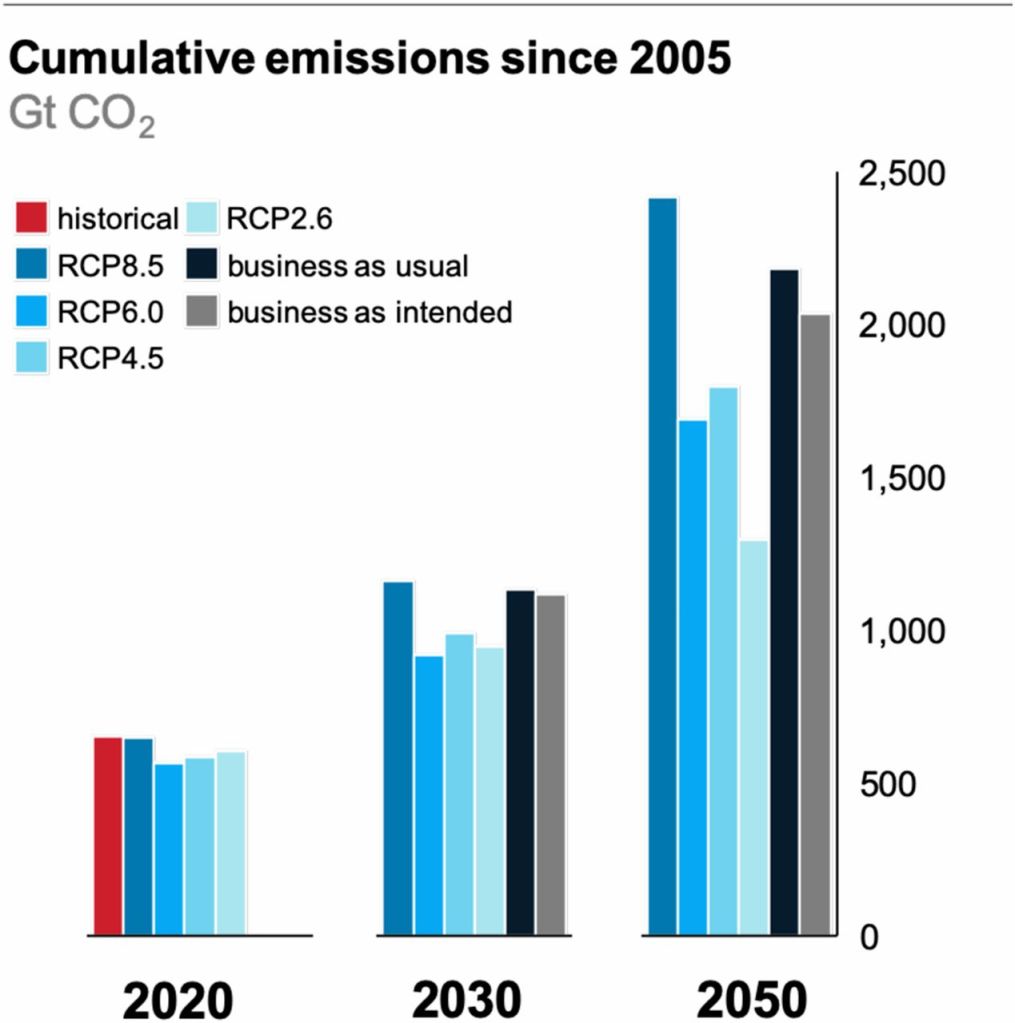
Data going back to 2000 indicate that Greenland’s glaciers have been losing about 500 gigatons of ice every year. The finding is consistent with another new study that unfortunately suggests that among the various scenarios climatologists have modeled, some of the more pessimistic scenarios are becoming more likely. The different scenarios are called Representative Concentration Pathways (RCPs) [I wish that scientists would come up with less opaque phrases]. The scenarios are based upon how much Carbon Dioxide is actually emitted and how the climate responds to those levels. The rankings are from best-case to worst:
“The best-case scenario (RCP 2.6) is the basis for the Paris climate agreement and would lead to warming of about 3.2 degrees Fahrenheit (1.8 Celsius) by 2100. In that scenario, about 10 percent of the world’s coral reefs could survive, and 20 percent of Alpine glaciers would remain.
“The worst-case pathway (RCP 8.5) would result in warming of more than 8 degrees Fahrenheit (4.3 Celsius) by 2100, probably killing nearly all the world’s reefs and definitely pushing vast areas of polar ice sheets to melt, raising sea level by as much as 3 feet by 2100.”
So far, the actual level of CO2 emissions is closely tracking the RCP 8.5 scenario, at least up to 2050. That scenario assumes that the world does not come close to limiting C02 emissions but actually increases those emissions from keeping the emissions close to the projected increase if the world just keeps emitting at current levels. The forecast is grim.
A week after a horrific explosion in Beirut’s harbor, the entire Lebanese government has resigned. There have been large protests in the capital city after it was determined that 2,750 tons of ammonium nitrate, a highly explosive material, had been stored in the harbor for over six years. The resignations represent a long history of failure in Lebanese governance. The country is extraordinarily diverse:
“Lebanon is extremely diverse religiously, culturally and politically. This diversity has complicated the development of a stable political arrangement, and impeded the development of a single national identity. As for diversity, there are six different Muslim sects (in numeric order: Shi’a, Sunni, Druze, Isma’ili, Alawite or Nusayri), and twelve different Christian sects (in numeric order: Maronite Catholic, Greek Orthodox, Melkite Catholic, Armenian Orthodox, Syrian Catholic, Armenian Catholic, Syrian Orthodox, Roman Catholic, Chaldean, Assyrian, Copt, Protestant.) These sects are largely geographically defined. This mosaic of peoples and politics has led the Lebanese to historically seek a balance of power through a political arrangement known as confessionalism.”
That system was entrenched in 1943 as the Lebanese threw off French control and the rules of the confessional system were explicit: “The president is always a Maronite Christian, the prime minister a Sunni Muslim and the speaker a Shia Muslim. Seats in parliament and government jobs are split between Christians and Muslims.” Unfortunately, the confessional system became increasingly sclerotic as there was little actual competition in the realm of political ideas–it was more a system that allowed entrenched elites to enrich themselves at the expense of the people.
That atrophy was obvious in 1973 as Lebanon descended into a protracted civil war that lasted to 1989. There were many underlying issues that led to the civil war:
“The Ta’if Accord that ended the war in 1989 failed to resolve or even address the core conflicts of the war, including the sectarian division of power in Lebanon, the Palestinian refugee issue, the presence of Syrian forces on Lebanese soil and Syrian tutelage, and Hizbollah’s status as the only armed militia. The killing of former Prime Minister Rafiq al-Hariri in 2005, the 2006 war between Hizbollah and Israel, and continued political instability in the country have only added to the sense among many Lebanese that political violence is endemic to their body politic. In daily discourse in Lebanon, and even in academic writings about the war, the widespread experience of being caught in recurrent cycles of mass violence can translate into descriptions of violence as “irrational”, or simply beyond belief.”
None of these fissures were resolved by the Ta’if Accord and the country essentially decided to continue on without changing the terms of the confessional system. Indeed, Lebanon has not held anything like a national census for fear of upsetting the terms of the 1943 agreement. More recently, Lebanon has been taking in very large numbers of Syrian refugees which has strained government resources, leading to significant breakdown of government services such as garbage pickups.
“Attention is now being focused on the dysfunctional parliament, where process is cosmetic at best, but better described as redundant. A clean sweep of the country’s MPs and a new electoral law that governs how the next round are chosen is being touted as a chance to do things differently. For that to happen, 43 MPs would need to quit. Eight have done so, so far, and more will follow.
“A critical mass of resignations would pave the way for new blood, who may be emboldened to take on an old guard, which shows no signs of going anywhere – even now. Losing control is inconceivable to the men who run Lebanon, as the IMF has found out during three months of talks to try and find a way to hand over up to $5 billion in aid, by conditioning it on structural reforms.
“Every attempt has been rebuffed. In the meantime, Lebanon had been savaged by rising prices, increasing poverty, a plunging currency, and capital controls. And now an apocalyptic blast. If this isn’t the time to overhaul a failed state, it’s hard to see when could be.”
In an op-ed for the Middle East Eye, Rima Majed expresses the views of many Lebanese about the future of the country:
“After blowing us up and burning down our city, officials announced a state of emergency and Beirut was put under military rule. A day later, protesters in central Beirut were met with heavy repression, tear gas and rubber bullets targeting protesters’ eyes – yet again.
“This story has no end yet. The streets will explode again, but this time it will be either a full-blown war or a full-blown revolution. If a massive explosion of this scale does not lead to radical change in Lebanon, nothing else will. If we let this pass without accountability and serious political transition, we will have signed our death warrant.
“As talk emerges of early elections, it is crucial that we demand the banning of all parties and politicians who have been in any position of power since the 1990 Taif accords from participating in political life after 4 August. The very basis of the neoliberal sectarian power-sharing system must end, before we can start talking about a democratic transition through elections in Lebanon.
“Let our rage guide the coming days. Beirut and all its residents deserve so much better.”
Lebanon is a country that was once the financial center of the Arab Middle East and it is hard to believe how corruption has hollowed out this major cultural and economic power. The future will shed a great deal of light on whether it is possible to transform a deeply entrenched political system dedicated to protecting the interests of the elites.
In my lifetime, the US has suffered a number of major setbacks in its foreign and domestic affairs: The US defeat in Vietnam, the attacks on US territory on 11 September 2001, and the financial debacle of the Great Recession in 2008-09. In almost everyone of these setbacks, there were few who believed that the US’s position as a dominant power in world affairs was over. Most people were aware of the resiliency of American institutions and the underlying dynamism of its culture and economy. The US inability to get control of the COVID-19 pandemic, however, appears to be different. The Associated Press ran a story that seems to indicate that the prestige of the US may have suffered a setback from which it may never recover:
“Dr. David Ho, director of the Aaron Diamond AIDS Research Center at Columbia University Irving Medical Center, who is leading a team seeking treatments for COVID-19, decried such behavior, as well as the country’s handling of the virus.
“’There’s no national strategy, no national leadership, and there’s no urging for the public to act in unison and carry out the measures together,’ he said. ‘That’s what it takes, and we have completely abandoned that as a nation.’
“When he gets on Zoom calls with counterparts from around the globe, ‘everyone cannot believe what they’re seeing in the U.S. and they cannot believe the words coming out of the leadership,’ he said.
“Amid the scorn from other countries, Trump national security adviser Robert O’Brien, newly recovered from a bout with the virus, gave an upbeat picture Sunday on CBS’ “Face the Nation.”
“’We’re going to fight like heck. We’re working hard on vaccines. We’re working hard on testing machines that are portable and fast. … We’re working on therapeutics,’ he said. ‘I’m so impressed with our scientists and our doctors and our first responders and the folks who are attacking this disease, and God bless them all.’
“Many Europeans point proudly to their national health care systems that not only test but treat COVID-19 for free, unlike the American system, where the virus crisis has only exacerbated income and racial inequalities in obtaining health care.
“’The coronavirus has brutally stripped bare the vulnerability of a country that has been sliding for years,’ wrote Italian author Massimo Gaggi in his new book “Crack America” (Broken America), about U.S. problems that long predated COVID-19.”
“We are appalled and saddened to see rising infection rates in 48 U.S. states, Americans throwing tantrums when asked to wear a mask in a store, and American leaders acting with reckless disregard for American lives. We fear we may be witnessing a nation that so many of us admired and even venerated taking the final tumble off the pedestal of international leadership.
“After World War II, the United States invested in rebuilding Europe and Japan, creating new markets for its goods, ushering in an economic boom and building brand America. Today, it’s astonishing that America’s corporations and wealthy citizens are silent while America’s brand becomes a laughing stock. In exchange for tax breaks, wealthy Americans have kept quiet while the U.S. President ridiculed, denigrated and bullied America’s traditional friends and allies, started a trade war with China that American farmers and consumers paid for, and undermined the United Nations at a time of great need around the world and halted funding to the World Health Organization.
“Despite the pleas of hundreds of former and current heads of state, Nobel laureates and other international leaders to make the COVID-19 vaccines patent free and available to all (as was done with the Salk polio vaccine), the Republican leadership in the Senate has fought any bill that would rein in American drug companies’ ability to set exorbitant prices for COVID-19 vaccine. Although these vaccines are being developed with billions in taxpayer money, pharmaceutical companies are already bragging about windfall profits they stand to make by setting prices that would put the vaccine out of reach for the rest of us.
“The rest of the world sees this as the antithesis of leadership. We see an America willing to let us die to enrich already obscenely wealthy U.S. corporations. We see wealthy, entitled Americans abandoning America’s ideals, and behaving like the corrupt aristocracy and royalty the American Revolution and many subsequent revolutions were fought to upend.”
Whether any nation can step in an take up the role of global leader is an open question. But it may be the case that states have already decided that the US can no longer be trusted.
U.S. Special Representative for Iran Brian Hook has resigned his position from the US State Department and will be replaced by Special Representative for Venezuela Elliott Abrams. Hook’s departure follows the resignation of Acting inspector general Stephen Akard from the State Department. The move comes at a particularly crucial time, as explained by CNBC:
“Next week, the United Nations Security Council will vote on whether global powers should extend an international arms embargo on Iran. The arms embargo on Iran is currently set to end on Oct. 18 under Tehran’s 2015 nuclear deal with world powers.
“The 2015 nuclear agreement lifted sanctions on Iran that crippled its economy and cut its oil exports roughly in half. In exchange for sanctions relief, Iran accepted limits on its nuclear program and allowed international inspectors into its facilities. Tehran has said it will not negotiate with Washington while sanctions are in place.”
Abrams is a noted foreign policy hawk and his appointment suggests that the US policy toward Iran will take an even harder line. Abrams was convicted of “unlawfully withheld information from congressional committees in 1986 when he testified about the secret Contra supply network and his role in soliciting a $10 million contribution for anti-Sandinista rebels in Nicaragua. He was subsequently pardoned by President George Herbert Walker Bush. Abrams also served in the George W. Bush administration and was an advocate of the Iraq War.”
The US will introduce a resolution to the UN Security Council extending its current arms embargo on Iran to all states. US Secretary of State Pompeo said this in a press conference yesterday:
“…the United States will put forward a resolution in the Security Council to extend the arms embargo on Iran.
“The Security Council’s mission is to maintain ‘international peace and security.’
“The Council would make an absolute mockery of that mission if it allowed the number-one state sponsor of terrorism to buy and sell weapons freely.
“The United States has conducted now a years-long diplomacy on this matter. We have a bipartisan consensus in Congress. We have a 13-year consensus on the Council. And the proposal we put forward is eminently reasonable.
“One way or another – one way or another, we will do the right thing. We will ensure that the arms embargo is extended.”
That resolution will likely be vetoed by both Russia and China. That veto will then trigger another step in the US strategy, as outlined by Middle East Eye:
“The UN imposed a ban on the export of most major conventional weapons to Iran in 2010. But when the Iran nuclear deal – known formally as the Joint Comprehensive Plan of Action (JCPOA) – went into effect in October 2015, a potential date for some aspects of the embargo to expire was set for 18 October 2020.
“Since the US withdrew from the accord, Iran has steadily reduced its compliance with restrictions on its production of enriched uranium and has substantially boosted its stockpiles.
“If the US is unsuccessful in extending the embargo, the Trump administration has threatened to trigger a return of all UN sanctions on Iran under a process agreed in the 2015 deal.
“Such a move would kill the deal, touted as a way to suspend Tehran’s alleged drive to develop nuclear weapons. Washington argues it can trigger the sanctions because a Security Council resolution still identifies it as a participant.”
The strategy is straight out of a Kafka novel. The agreement to impose sanctions if Iran violated the Joint Comprehensive Plan of Action (JCPOA–more commonly known as the Iran nuclear deal) was part of the deal between Iran and the US, France, Great Britain, Russia, China and Germany. But the US withdrew from the agreement in May 2018, raising questions about the legitimacy of the agreement. Iran upheld strictly to the terms of the agreement for a full year after the US withdrawal, but matters have become quite complicated since then:
“Iran accused the United States of reneging on its commitments, and Europe of submitting to U.S. unilateralism. In a bid to keep the nuclear agreement alive, France, Germany, and the United Kingdom launched a barter system, known as INSTEX, to facilitate transactions with Iran outside of the U.S. banking system, but it is only meant for food and medicine, which are already exempt from U.S. sanctions.
“Following the U.S. withdrawal, several countries, U.S. allies among them, continued to import Iranian oil under waivers granted by the Trump administration, and Iran continued to abide by its commitments. But a year later, the United States ended the waivers. ‘This decision is intended to bring Iran’s oil exports to zero, denying the regime its principal source of revenue,’ the White House said.
“This was the tipping point for Iran, which said it would no longer be bound to its commitments as long as the other parties to the JCPOA were in breach of theirs. In July 2019, Iran exceeded the agreed-upon limits to its stockpile of low-enriched uranium, and then began enriching uranium to the higher concentration used in medical isotopes, still far short of the 90 percent purity required for weapons. Zarif said that these incremental breaches of the JCPOA were reversible but would continue absent European compliance. The European signatories reiterated their commitment to the JCPOA, and Mogherini said that INSTEX will be opened to additional countries, and that its shareholders were considering using it to trade oil. In September, Iran further weakened its commitments by starting to develop new centrifuges to speed up uranium enrichment, and in November, it resumed heavy water production at its Arak facility.”
We are left with the bizarre circumstance that the US is insisting upon the terms of an agreement it no longer honors. The gambit will undoubtedly fail and the US will lose both prestige and credibility in this fool’s errand.
Indian Prime Minister Narendra Modi has laid the cornerstone for a Hindu shrine in the northern Indian town of Ayodhya. Hindus believe that Ayodhya is the birthplace of the deity Rama. Muslims, however, believe that the first Mughal ruler of India, Babur, built a mosque there in 1528. Others believe that the Mughal emperor Aurangzeb razed a Hindu temple there and built the mosque in 1668. The mosque was destroyed in December 1992 by Hindu nationalists and about 2,000 people were killed in the subsequent riots.
Since that time, the status of the site has been heavily contested by Hindus and Muslims. Muslims are the largest minority in the country and account for about 13% of the Indian population. The Indian constitution is staunchly secularist, but the rise of the Hindu nationalist party, the Bharatiya Janata Party (BJP) and its subsequent dominance in Indian politics, has amplified the strains in Indian society. National Public Radio describes the tensions:
“‘The word ‘Ayodhya’ brings back haunting memories. When the Babri Masjid was demolished, it was when for your next-door neighbors, for your schoolmates, you became a Muslim overnight,’ says author and activist Rana Ayyub, who was 9 years old in 1992 and had to go into hiding amid Hindu-Muslim riots in her native Bombay, now Mumbai. ‘It ripped apart the facade of India being a secular nation, a democratic republic.’
“A legal battle over the land under the Babri mosque’s ruins spanned more than a century. Last year, India’s Supreme Court handed over the disputed 2.77-acre patch of land to the Hindu litigants in a unanimous verdict. The court also ordered 5 acres of land to be allocated to Muslims, at a separate location in Ayodhya.”
Many Hindus all over the world celebrated the laying of the cornerstone. But some Indians are concerned that the building of the shrine will aggravate social tensions and damage the integrity of the Indian constitution. Those fears resonate with similar fears concerning the stripping of the autonomy of Kashmir last year by India. Kashmir is populated with a majority Muslim population and the region has been a constant source of tension with Pakistan since the independence of the two states in 1947. Over the last year, India has steadily increased its control over the region despite the opposition of the Muslim population.
The US has worked to secure an oil contract with a US oil company for Syrian oil. The US occupied the oil fields last year even as it pulled most US troops out of Syria in accordance with the wishes of Turkish President Erdogan. According to Time magazine:
“As the Trump administration pulls American troops away from Syria’s northern border, the President has repeatedly insisted that the region’s oil has been ‘secured,’ even going so far as to suggest the United States is now responsible for the fate of the oil.
“’We’ve secured the oil and, therefore, a small number of U.S. troops will remain in the area where they have the oil,’ Trump said during an Oct. 23 press conference. ‘And we’re going to be protecting it, and we’ll be deciding what we’re going to do with it in the future.’”
In hearings before the Senate Foreign Relations Committee, US Secretary of State Pompeo stated that the US has been working on this proposal for some time and its purpose is to provide funding for Syrian Kurds who have been experiencing a serious humanitarian crisis because of attacks by the Syrian government which is supported by Russia. Politico outlines the US efforts:
“The State Department is leading the effort under James Jeffrey, United States Special Representative for Syria Engagement and the Special Envoy for the Global Coalition to Defeat ISIL, and his deputy, Joel Rayburn, the former Trump administration official said.
“However, they have sought to keep the deal quiet for fear that Russia, which backs Assad’s regime and deploys military and paramilitary forces across the region, might retaliate, both the State Department official and Syrian source said.
“A State Department spokesperson declined to comment on the contract but noted that the U.S. government considers requests ‘on a case-by-case basis to authorize U.S. persons’ involvement in activities that would normally be prohibited.’”
The US oil company was only created in 2019 and is comprised by government and military officials with strong contacts with the current US government:
“The company, Delta Crescent Energy LLC, was incorporated in Delaware in February 2019, according to its business license. Its partners include former U.S. ambassador to Denmark James Cain; James Reese, a former officer in the Army’s elite Delta Force; and John P. Dorrier Jr., a former executive at GulfSands Petroleum, a U.K.-based oil company with offices and drilling experience in Syria.
“It has been in talks with the Kurds for more than a year but only received a license from the Treasury Department’s Office of Foreign Assets Control for the work in April, according to a State Department official and a Syrian source familiar with the discussions. The arrangement is to refine and use some of the oil locally but also export some through northern Iraq and Turkey, they said.
“The Treasury Department has multiple sanctions against Syria’s oil market. In a March 2019 the Trump administration issued the orders targeting companies that deliver or finance petroleum shipments of Syrian oil on behalf of the country’s government. The effort is designed to punish the Assad regime for atrocities committed amid the country’s civil war.
“However, the Pentagon and State Department have long been working to enable the Syrian Kurds to harness the crude oil in the region, a former Trump administration official told POLITICO. The idea is that revenue from the oil could help the Kurds deal with the dire humanitarian situation in the war-torn country, including overflowing refugee camps from years of civil war, the person said.”
“Damascus ‘condemns in the strongest terms the agreement signed between al-Qasd militia (SDF) and an American oil company to steal Syria’s oil under the sponsorship and support of the American administration’, the Syrian statement said. ‘This agreement is null and void and has no legal basis.’
“Syria produced around 380,000 barrels of oil per day before civil war erupted following a crackdown on protests in 2011, with Iran and Russia backing President Bashar al-Assad’s government and the United States supporting the opposition.”
It’s hot. I truly believe that I am going to lose my mind as the President of the United States quotes as a medical authority a doctor who believes that medicines are made from alien DNA and that demons practice astral sex. We are nearing 155,000 COVID deaths. A hurricane is bearing down on the US east coast. Congress let unemployment benefits lapse after the US GDP decline by 33% in the second quarter. And President Trump just took his 283rd golfing trip in less than 4 years.
So no news. Just good music.
As we contemplate the possibility of domestic and foreign meddling in the November elections, it is useful to consider the words of Goethe as he describes the last night of Egmont, waiting in a dungeon for his execution by a Spanish ruler. His crime? Working toward the independence of Dutch Provinces from Spanish rule. It is hard to imagine how revolutionary the idea of freedom was in an era of an uncontrollable king, buttressed by a Catholic Church intent on preserving its power in the face of the Protestant Reformation. But in 1787 Goethe captures the exhilaration of the moment as people begin to consider seriously lives without oppressive tyranny:
“Behind his couch the wall appears to open and discovers a brilliant apparition. Freedom, in a celestial garb, surrounded by a glory, reposes on a cloud. Her features are those of Clara and she inclines towards the sleeping hero. Her countenance betokens compassion, she seems to lament his fate. Quickly she recovers herself and with an encouraging gesture exhibits the symbols of freedom, the bundle of arrows, with the staff and cap. She encourages him to be of good cheer, and while she signifies to him that his death will secure the freedom of the provinces, she hails him as a conqueror, and extends to him a laurel crown. As the wreath approaches his head, Egmont moves like one asleep, and reclines with his face towards her. She holds the wreath suspended over his head,—martial music is heard in the distance, at the first sound the vision disappears. The music grows louder and louder. Egmont awakes. The prison is dimly illuminated by the dawn.—His first impulse is to lift his hand to his head, he stands up, and gazes round, his hand still upraised.)
“The crown is vanished! Beautiful vision, the light of day has frighted thee! Yes, their revealed themselves to my sight uniting in one radiant form the two sweetest joys of my heart. Divine Liberty borrowed the mien of my beloved one; the lovely maiden arrayed herself in the celestial garb of my friend. In a solemn moment they appeared united, with aspect more earnest than tender. With bloodstained feet the vision approached, the waving folds of her robe also were tinged with blood. It was my blood, and the blood of many brave hearts. No! It shall not be shed in vain! Forward! Brave people! The goddess of liberty leads you on! And as the sea breaks through and destroys the barriers that would oppose its fury, so do ye overwhelm the bulwark of tyranny, and with your impetuous flood sweep it away from the land which it usurps.”
John Lewis, the Congressperson from Georgia’s Fifth Congressional District who recently died, had a distinguished career and was a tireless and courageous advocate for protecting the civil rights of African-Americans. He wrote a final note just before he died, and I, like most other Americans, was deeply moved by his words:
“While my time here has now come to an end, I want you to know that in the last days and hours of my life you inspired me. You filled me with hope about the next chapter of the great American story when you used your power to make a difference in our society. Millions of people motivated simply by human compassion laid down the burdens of division. Around the country and the world you set aside race, class, age, language and nationality to demand respect for human dignity.
“That is why I had to visit Black Lives Matter Plaza in Washington, though I was admitted to the hospital the following day. I just had to see and feel it for myself that, after many years of silent witness, the truth is still marching on.
“Emmett Till was my George Floyd. He was my Rayshard Brooks, Sandra Bland and Breonna Taylor. He was 14 when he was killed, and I was only 15 years old at the time. I will never ever forget the moment when it became so clear that he could easily have been me. In those days, fear constrained us like an imaginary prison, and troubling thoughts of potential brutality committed for no understandable reason were the bars.
“Though I was surrounded by two loving parents, plenty of brothers, sisters and cousins, their love could not protect me from the unholy oppression waiting just outside that family circle. Unchecked, unrestrained violence and government-sanctioned terror had the power to turn a simple stroll to the store for some Skittles or an innocent morning jog down a lonesome country road into a nightmare. If we are to survive as one unified nation, we must discover what so readily takes root in our hearts that could rob Mother Emanuel Church in South Carolina of her brightest and best, shoot unwitting concertgoers in Las Vegas and choke to death the hopes and dreams of a gifted violinist like Elijah McClain.
“Like so many young people today, I was searching for a way out, or some might say a way in, and then I heard the voice of Dr. Martin Luther King Jr. on an old radio. He was talking about the philosophy and discipline of nonviolence. He said we are all complicit when we tolerate injustice. He said it is not enough to say it will get better by and by. He said each of us has a moral obligation to stand up, speak up and speak out. When you see something that is not right, you must say something. You must do something. Democracy is not a state. It is an act, and each generation must do its part to help build what we called the Beloved Community, a nation and world society at peace with itself.
“Ordinary people with extraordinary vision can redeem the soul of America by getting in what I call good trouble, necessary trouble. Voting and participating in the democratic process are key. The vote is the most powerful nonviolent change agent you have in a democratic society. You must use it because it is not guaranteed. You can lose it.
“You must also study and learn the lessons of history because humanity has been involved in this soul-wrenching, existential struggle for a very long time. People on every continent have stood in your shoes, though decades and centuries before you. The truth does not change, and that is why the answers worked out long ago can help you find solutions to the challenges of our time. Continue to build union between movements stretching across the globe because we must put away our willingness to profit from the exploitation of others.”
“Though I may not be here with you, I urge you to answer the highest calling of your heart and stand up for what you truly believe. In my life I have done all I can to demonstrate that the way of peace, the way of love and nonviolence is the more excellent way. Now it is your turn to let freedom ring.
“When historians pick up their pens to write the story of the 21st century, let them say that it was your generation who laid down the heavy burdens of hate at last and that peace finally triumphed over violence, aggression and war. So I say to you, walk with the wind, brothers and sisters, and let the spirit of peace and the power of everlasting love be your guide.”
These words need no elaboration. But some may not know the story of Emmet Till which Lewis references–I was six years old at the time. The US Library of Congress relates the facts behind the murder of Till in 1955:
“The murder of 14-year-old Emmett Till in 1955 brought nationwide attention to the racial violence and injustice prevalent in Mississippi. While visiting his relatives in Mississippi, Till went to the Bryant store with his cousins, and may have whistled at Carolyn Bryant. Her husband, Roy Bryant, and brother-in-law, J.W. Milam, kidnapped and brutally murdered Till, dumping his body in the Tallahatchie River. The newspaper coverage and murder trial galvanized a generation of young African Americans to join the Civil Rights Movement out of fear that such an incident could happen to friends, family, or even themselves. Many interviewees in the Civil Rights History Project remember how this case deeply affected their lives.”
The murder of African-Americans at that time was not unusual. But Till’s mother made the decision to hold an open casket at his funeral, and the magazine, Jet, published the gruesome photos of a boy who was first tortured before he was murdered. The outrage was amplified by the acquittal of Bryant and Milam by an all-white jury. Many Americans were forced to realize the incredible injustices faced by African-Americans–the story broke through all the separations between whites and blacks enforced by segregation and Jim Crow laws. The murder of George Floyd in Minneapolis this year was a simple re-run of all the indignities suffered by African-Americans over the last 400 years. It is a story well known to them and perhaps more white Americans will have finally gotten the message.


 World Politics News