Archive for the ‘World Politics’ Category
Researchers from Stanford University have published a letter in the science journal Nature which estimates the economic benefits of adhering to the Paris Climate Accords in comparison to the costs of reducing carbon-based energy sources. It is not an easy read, but the conclusions are significant. According to ThinkProgress, the study asserts that “inaction could cause a stunning 30 percent loss in future global economic output — whereas the world’s scientists and governments have concluded that even the most aggressive climate action costs under 0.1 percent of GDP.” But even the Paris Accords, to which the US has signaled it will not adhere, low-ball the economic consequences of inaction so the rewards of action might be even higher. Think Progress concludes that the “‘Stanford study projects “15%–25% reductions in per capita output by 2100’” if we allow 2.5–3°C total warming, and a 30 percent drop in economic output if we allow 4°C total warming.”
The US White House has issued a news release on US-China trade in which these actions will be taken:
- The United States will impose a 25 percent tariff on $50 billion of goods imported from China containing industrially significant technology, including those related to the “Made in China 2025” program. The final list of covered imports will be announced by June 15, 2018.
- USTR (the US Trade Representative) will continue WTO (World Trade Organization) dispute settlement against China originally initiated in March to address China’s discriminatory technology licensing requirements.
- The United States will implement specific investment restrictions and enhanced export controls for Chinese persons and entities related to the acquisition of industrially significant technology. The list of restrictions and controls will be announced by June 30, 2018.
I am not at all certain how this press release should be interpreted. Ten days ago, the US Secretary of the Treasury said that the proposed actions against China were “on hold”. The press release, however, gives dates certain for the implementation of the new tariffs against Chinese products. China was certainly caught off guard and reacted angrily to the news. At some point, I suspect a decision will be actually made. Roncevert Ganan Almond, of the think-tank called The Wicks Group, has an excellent article in The Diplomat on the infighting in the Trump Administration which has made making trade policy virtually impossible.
The Venezuelan economy is in total collapse. Many Venezuelans have fled the country and those who lack the means to leave are experiencing starvation and lack of medical supplies. It is hard to believe that such a potentially rich country could be ripped apart by such a corrupt political system as that imposed by President Maduro. The current annualized rate of inflation in the country is 14,000% per year–a rate that makes ordinary life impossible. And yet there still remains complete unwillingness on the part of the international community to help the people of Venezuela.

Poland is offering $2 billion to host a permanent US military base on its territory. Poland entered the North Atlantic Treaty Organization (NATO) in 1999 and is covered by Article 5 of the Treaty which is an automatic commitment to collective defense if any member is attacked by another state. Article 5 reads:
“The Parties agree that an armed attack against one or more of them in Europe or North America shall be considered an attack against them all and consequently they agree that, if such an armed attack occurs, each of them, in exercise of the right of individual or collective self-defence recognised by Article 51 of the Charter of the United Nations, will assist the Party or Parties so attacked by taking forthwith, individually and in concert with the other Parties, such action as it deems necessary, including the use of armed force, to restore and maintain the security of the North Atlantic area.
Apparently, Poland wishes a more visible commitment and its proposal states that
” Aggressive Russian actions, as seen in Georgia in 2008 and most recently in Ukraine in 2014 to the present, is destructive for international stability and international legal principles. As shown in Ukraine, Russia is capable of effectively deploying hybrid warfare through its annexation of Crimea, cyberattacks on Ukrainian infrastructure, and fueling separatists in eastern Ukraine. Russia is seeking to strengthen its political and economic relations with key European countries at the expense of U.S. national interests. An increased U.S. permanent presence in Poland will give America the strategic flexibility it needs to confront and deter these threats. It will help secure American interests it shares with its European partners in the region and preserve western values of freedom and democracy.” (pp. 3-4)
The proposal identifies the Suwalki Gap as a particular concern. It is a slice of territory that separates Russian forces based in Belarus from the Russian enclave of Kaliningrad which is not contiguous with the Russian state. Kaliningrad was known as Konigsberg prior to World War II and the territory was given to Russia from Germany as reparations for the war. Needless to say, the Russians are quite upset by the Polish proposal which it regards as provocative. According to Reuters:
“Asked about the move, Kremlin spokesman Dmitry Peskov said it was every country’s sovereign right to take such decisions, but that it would harm the overall atmosphere on the continent.
“’When we see the gradual expansion of NATO military structures towards our borders…, this of course in no way creates security and stability on the continent,’ Peskov told reporters on a conference call on Monday.
“’On the contrary, these expansionist actions of course lead to counter-action from the Russian side in order to balance the parity which is violated every time in this way,’ Peskov said.”
The NATO summit is scheduled for next month and we will see what its response to the Polish proposal might be,

The Shanghai Cooperation Organization (SCO) is holding its annual summit next month in China, and Chinese President Xi will host Iranian President Hassan Rouhani at the meeting. The SCO was created in 2001 as a counterweight to Western Organizations such as NATO and after a rocky start has begun to become a more credible intergovernmental organization. It has a number of different affiliations with several states:
• the SCO comprises eight member states, namely the Republic of India, the Republic of Kazakhstan, the People’s Republic of China, the Kyrgyz Republic, the Islamic Republic of Pakistan, the Russian Federation, the Republic of Tajikistan, and the Republic of Uzbekistan;
• the SCO counts four observer states, namely the Islamic Republic of Afghanistan, the Republic of Belarus, the Islamic Republic of Iran and the Republic of Mongolia;
• the SCO has six dialogue partners, namely the Republic of Azerbaijan, the Republic of Armenia, the Kingdom of Cambodia, the Federal Democratic Republic of Nepal, the Republic of Turkey, and the Democratic Socialist Republic of Sri Lanka.
It is clear that both China and Russia are endeavoring to maintain the Iranian nuclear agreement even without US participation and the SCO meeting will be a real test of whether they can counterbalance the US opposition to Iran. The US decision to withdraw from the nuclear agreement has opened up a tremendous opportunity for Russia and China to reorient Iran toward South and East Asia. The geopolitical significance of Asia continues to grow at a rapid pace as Europe and the US continues to shrink.

Italian President Sergio Mattarella vetoed the choice of Paolo Savona for an important Economic Ministry position and the Prime Minister-designate Giuseppe Conte promptly ended his attempt to form a coalition government of the 5 Star Movement, a populist party, and the League, a right wing party. The decision turned the process of forming a government into complete turmoil and it is unclear how a government can now be formed. It is likely that a short-term technocratic government can be created, but the parties involved will not support that alternative for very long. Conte wanted a strong voice to remain in the euro currency in order to calm the financial markets and Savona was an ardent opponent of the euro. Given the collapse of the talks, it is probable that financial markets will punish Italy tomorrow by demanding very high yields on Italian bonds, a move that the Italian economy could not support with higher taxes or lower government spending, both of which are opposed by the two parties forming the coalition. The European Union will be greatly strained by the turmoil in Italy, which also holds out the possibility of spreading to Spain.
The US has sent two naval vessels into the South China Sea to challenge the Chinese military activities in the region. According to The Guardian:
“The US officials, speaking on condition of anonymity, said the Higgins guided-missile destroyer and the Antietam, a guided-missile cruiser, came within 12 nautical miles of the Paracel Islands, among a string of islets, reefs and shoals over which China has territorial disputes with its neighbors. The US vessels carried out maneuvering operations near Tree, Lincoln, Triton and Woody islands, one of the officials said.”
The US claims to be conducting “freedom of navigation” voyages under international law which does not recognize artificially created islands such as Woody Island as sovereign territory. The Chinese claim that the South China Sea has historically always been part of Chinese territory. According to Xinhua:
“Foreign Ministry spokesperson Lu Kang said in a statement released on Sunday night that the U.S. warships trespassed into China’s territorial waters off the Xisha Islands on Sunday without permission of the Chinese government, and the Chinese navy identified the U.S. warships, warned and expelled them.
“The Xisha Islands are China’s inherent territory, Lu said, noting that in accordance with the Law of the People’s Republic of China on the Territorial Sea and the Contiguous Zone, the Chinese government promulgated the baseline of the territorial sea off the Xisha Islands in 1996.”
The Xisha Islands are also known as the the Paracel Islands in Western countries and Hoàng Sa in Vietnamese.
The Chinese Military Base on Woody Island in the South China Sea

Spiegel Online has published an interview with Joschka Fischer, the former German Foreign Minister. The interview is titled “The U.S. President Is Destroying the American World Order” and Fischer does not mince any words.
DER SPIEGEL: German Chancellor Angela Merkel said that we can no longer truly rely on the U.S.
Fischer: It’s even worse than that. The American president is deliberately destroying the American world order. I was used to NATO being attacked by the left wing of the Green Party, but not by the American president! From an economic policy point of view, Trump is challenging Germany’s business model, which has been geared toward exports from the very beginning. Many are saying that we shouldn’t put up with that. I find this reaction understandable, but also kind of cute. What can we do? Given the current balance of power, sometimes all you can do is gnash your teeth.
DER SPIEGEL: You recently wrote a book in German with the dark title “The Descent of the West.” Is the West finished?
Fischer: There is every indication that this will happen. The West was the trans-Atlantic area, and its founding fathers were Britain and the United States. The West cannot survive without them, and certainly not with a weak, divided Europe. This is why Europeans must become stronger, much stronger.
The interview is truly grim and if Germany gives up on the liberal world order, there will not be any real check on the rise of an authoritarian world order.
The New National Football League Rule on the National Anthem: Shades of 1934

It appears as if financial markets are not encouraged by the Italian coalition government being proposed. The difference between the yields on Italian bonds and those of German bonds suggests that investors fear that the Italians are likely to mismanage their economy and will hasten a move for Italy to leave the euro. Reuters explains the danger: “Italy’s 2.3 trillion euro ($2.7 trillion) debt – the world’s third-largest and equivalent to more than 1.3 times the domestic output – makes the country vulnerable.” If global economic growth slows down, there is a good chance that some Italian banks will collapse and the European Central Bank is prohibited from bailing them out.
The planned summit in Singapore between US President Trump and North Korean leader Kim has been called off by the North Koreans. The move is not at all surprising, given the wide divide between the two parties on the meaning and pace of “denuclearization”. However, Mr. Trump’s letter to Mr. Kim was astonishing. At the end of the first paragraph, Mr Trump says: “You talk about your nuclear capabilities, but ours are so massive and powerful that I pray to God they will never have to be used.” The implicit threat of nuclear war in a message that purportedly holds out the hope that “Some day I look forward to meeting you” is preposterous. The offensiveness of the letter is secondary to its complete incoherence. The South Koreans were completely caught off guard by the Trump announcement. South Korea presidential spokesperson Kim Eui-kyeom said “We are attempting to make sense of what, precisely, President Trump means.” The cancellation of the summit follows an increasingly hostile exchange of rhetoric between US Vice-President Pence and North Korea. According to CNBC:
“The latest escalation between Washington and Pyongyang came this week, when Vice President Mike Pence warned that the North Korean regime may end up like former Libyan leader Moammar Gadhafi. His government was toppled years after he agreed to give up his budding nuclear weapons program.
“Choe Son Hui, a North Korean official, responded by calling Pence’s remarks ‘ignorant and stupid.'”
There will likely be a big rush to obtain the “Challenge Coins” minted by the White House commemorating the historic summit meeting. They will serve as useful reminders of misguided diplomacy. It is absurd that so many people took this initiative seriously: there was no attempt to make any of the necessary preparations for such a difficult negotiations. And the history of similar discussions in the past clearly indicates that the US and North Korea have deep misunderstandings of each other’s intentions. We have taken this class before. In fact, we’ve already graduated Phi Beta Kappa from the School of Dissembling Diplomacy.
President Trump’s Letter to Leader Kim

Challenge Coin for the Scheduled, and now Cancelled, Summit

The negotiations between the US, Canada, and Mexico on the revision of the North Atlantic Free Trade Association (NAFTA) are seriously bogged down. In an attempt to force concessions from Canada and Mexico, US President Trump has threatened to raise automobile tariffs on imported cars by 25%. If those tariffs were to be implemented, the effects on both countries would be quite serious. But the tariffs would also affect other countries adversely, most of which are some of the US’s most important allies. The tariffs would also raise car prices for American consumers quite significantly–a fact that suggests that Mr. Trump’s threat is meaningless as such an increase would have profoundly negative effects on Republican chances in the November elections.

New research suggests that the nutritional value of rice–the main staple of 2 billion people on the planet–may decline due to global warming. Researchers in Japan and China have grown rice in atmospheres containing carbon dioxide concentrations of 568 to 590 parts per million (current concentrations are around 410 parts per million). They found that
“….at the high concentrations, the crop’s content of the vitamins B1, B2, B5 and B9 all declined, including by as much as 30 per cent for B9 (folate). The research also confirmed previously discovered declines in protein, iron and zinc.”
The research should be viewed along with other studies that suggest that wheat production could decline significantly in higher concentrations of CO2 as well. Many believe that more CO2 would increase crop yields because plants absorb it to grow. But plant metabolism may not be able to process the higher concentrations of carbon dioxide in ways that maintain current nutritional levels.
There are dueling ultimatums between the US and Iran. US Secretary of State Mike Pompeo issued his list of demands for an agreement between the US and Iran and Iran’s Supreme Leader Ali Khamenei has issued his own set of demands, not to the US, but rather to Europe, as a condition for continued Iranian adherence to the nuclear agreement even without US participation. Those demands include:
- European powers should protect Iranian oil sales from the US sanctions and continue buying Iranian crude
- European banks should safeguard trade with Iran
- The UK, France and Germany should pledge not to seek negotiations on Iran’s ballistic missile programme and regional activities, both demanded by Washington
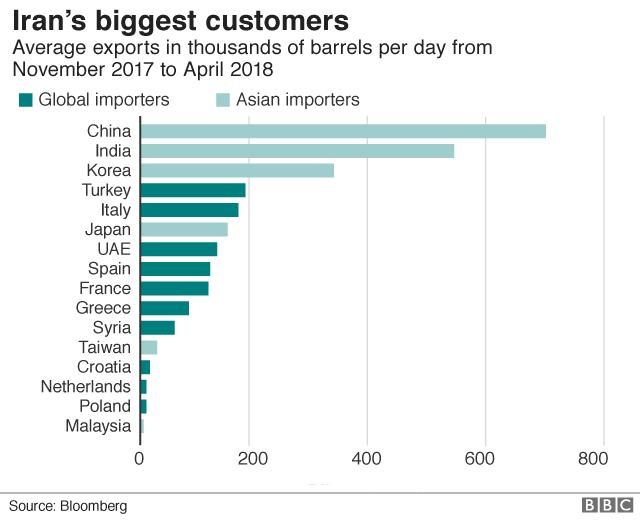
The demands put the US and Europe on a collision course. The Europeans do not wish to alienate the US, but they also know that Russia and China will continue their participation in the agreement even without the US. So the dilemma is whether Europe should placate the US knowing that their cooperation with the US will change nothing or whether Europe should risk the wrath of the Trump Administration and continue to support the agreement. As the chart below indicates, Europe does not have significant interests in buying Iranian oil, but Europe is definitely interested in Iran buying European products.
The US has decided to “disinvite” China from joint naval exercises in the Pacific. The exercise, the biennial “Rim of the Pacific” exercise involves 26 states and China has marginally participated in earlier exercises. The move comes as the US wants to express its dissatisfaction with the military buildup in the South China Sea by the Chinese. According to Politico:
“’As an initial response to China’s continued militarization of the South China Sea we have disinvited the PLA Navy from the 2018 Rim of the Pacific,’ Pentagon spokesman Lt. Col. Christopher Logan of the Marine Corps said in a statement.
“The United States, he added, has ‘strong evidence’ China has deployed anti-aircraft and anti-ship missiles and electronic jamming systems on artificial islands in the Spratly Islands chain that Vietnam and Taiwan also claim as their territory. ‘China’s landing of bomber aircraft at Woody Island has also raised tensions.'”
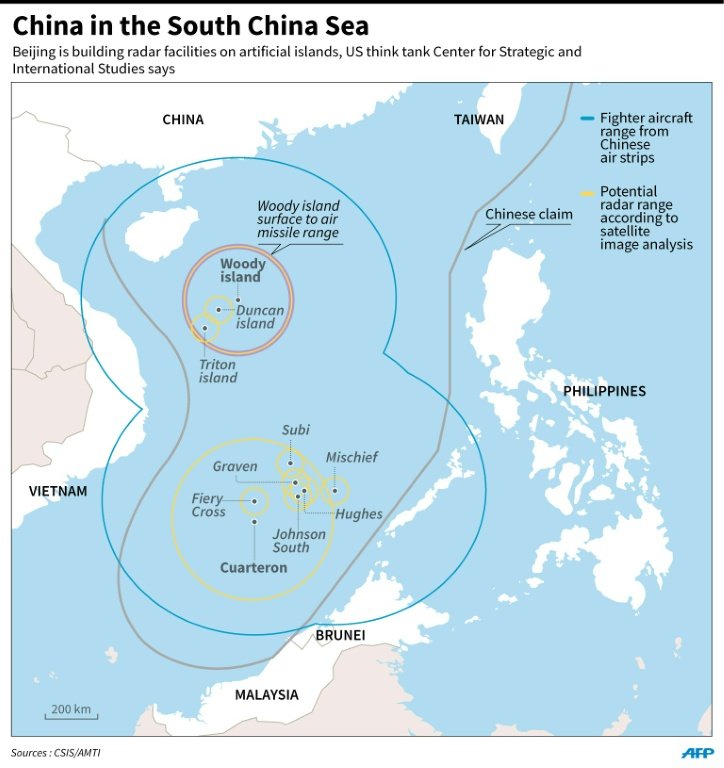
The Chinese expressed anger and disappointment, but I suspect that they do not care very much.
One of the founding members of the European Union, Italy, has selected Giuseppe Conte to lead a new government composed of a slim majority of the Euro skeptic Five Star Movement and the anti EU League party. Conte is relatively unknown and undistinguished and the odd coalition promises virtually nothing in terms of an effective government. Both parties have a strong anti-German bias which augurs ill for the future of the Union. We should all keep a close eye on the health of Italian banks–they are not especially strong and could pose a serious risk to the European Central Bank which is forbidden bu EU rules to bail out national banks directly. The coalition government is likely to spend freely and tax lightly, a bad combination for an economy that is essentially sclerotic.
Giuseppe Conte

Researchers at the Weizmann Institute of Science in Israel have done an interesting and bold analysis of the human impact on the natural environment over time. The study is important because it places the human impact of climate change in context: many climate change deniers believe that it is unlikely that human activity could change the global environment because the environment is determined by many other–and in their minds, more substantial–effects. The researchers–Yinon M. Bar-On, Rob Phillips, and Ron Milo–have found that humans have had a profound effect on the planet. The research–which is rooted in a number of assumptions that deserve close inspection–found that
“The world’s 7.6 billion people represent only 0.01% of all living things, according to researchers at the Weizmann Institute of Science in Israel. However, our impact on nature is disproportionately huge. After Ron Milo and colleagues in Israel estimated all of the different components of biomass, they eventually calculated that humans have caused the loss of 83% of all wild mammals and half of all plants….The researchers estimate that of all birds on the planet, 70% are farmed poultry, with just 30% being wild. For mammals, the picture is even grimmer: 60% of all mammals on Earth are livestock, mostly cattle and pigs, 36% are the humans themselves, and a mere 4% are wild mammals.
“Five-sixths of wild land animals have been lost since the industrial revolution began, over than a century and a half ago. Meanwhile, in the oceans, three centuries of whaling and aggressive fishing have reduced marine mammals to a fifth of what they were.”
The research suggests that “about half the Earth’s animals are thought to have been lost in the last 50 years.”
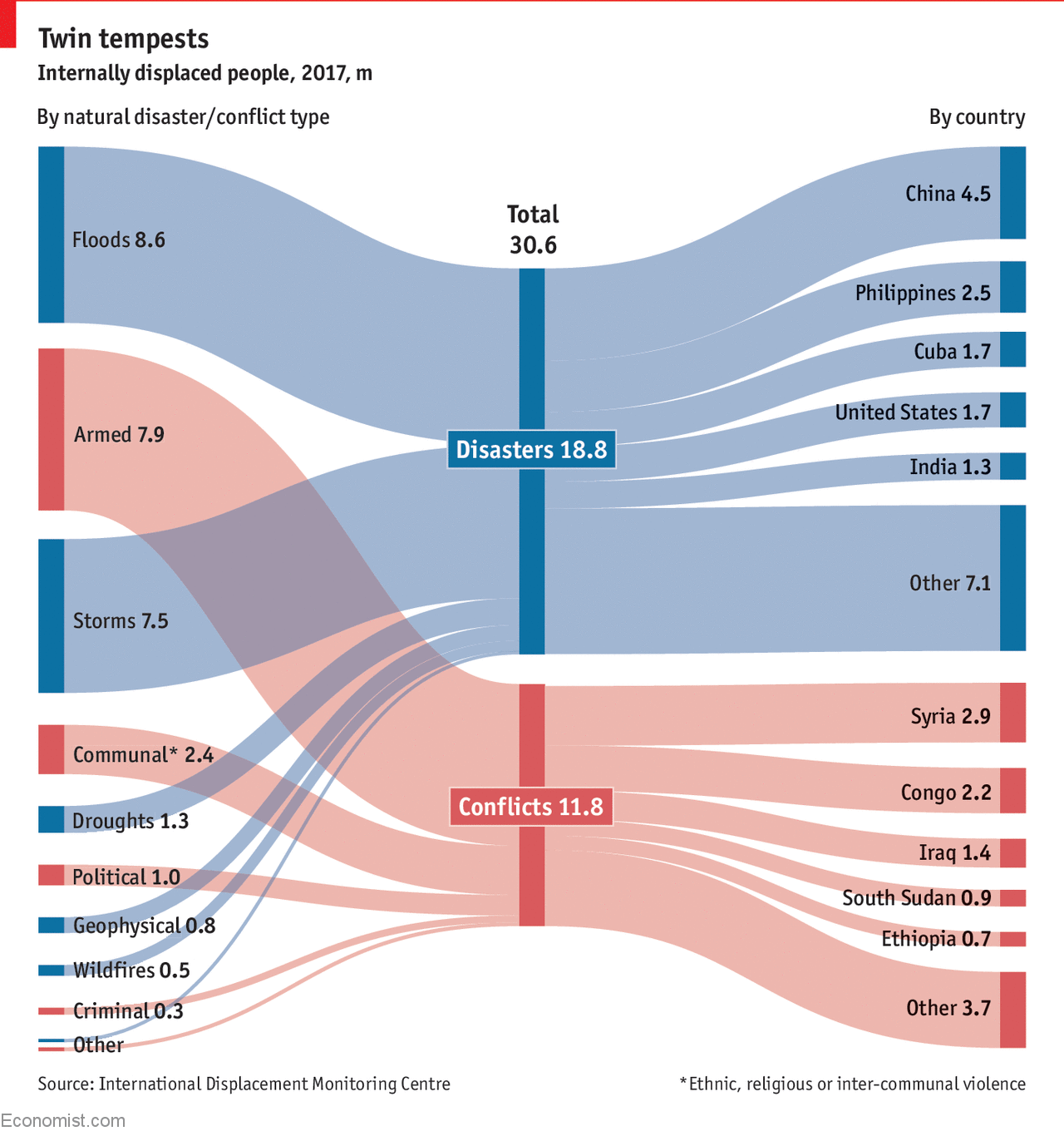
Weather and violent conflicts account for most of the world’s refugees. About 12 million people last year were displaced by weather events and 18 million because of violent conflicts. That means that about 80,000 people lost their homes every day in 2017. Syria and the Democratic Republic of Congo are the top two countries responsible for refugees, but there are only incomplete counts for Yemen because of the violence in that country. The Internal Displacement Monitoring Centre (IDMC) is an Non-Governmental Organization (NGO) that attempts to monitor the flow of refugees in the world and their website contains a wealth of information about people that are generally forgotten by most in the world.
US Secretary of State, Mike Pompeo, has given a speech in which he outlines a number of steps to which the Iranian government must agree in order to revive US participation in a nuclear agreement. Those demands were as follows:
- Declare to the International Atomic Energy Agency (IAEA) a full account of the prior military dimensions of its nuclear programme and permanently and verifiably abandon such work in perpetuity.
- Stop enrichment and never pursue plutonium reprocessing, including closing its heavy water reactor.
- Provide the IAEA with unqualified access to all sites throughout the entire country.
- End its proliferation of ballistic missiles and halt further launching or development of nuclear-capable missile systems.
- Release all US citizens as well as citizens of US partners and allies.
- End support to Middle East “terrorist” groups, including Hezbollah, Hamas and Islamic Jihad.
- Respect the sovereignty of the Iraqi government and permit the disarming, demobilisation and reintegration of Shia militias.
- End its military support for the Houthi rebels and work towards a peaceful, political settlement in Yemen.
- Withdraw all forces under Iran’s command throughout the entirety of Syria.
- End support for the Taliban and other “terrorists” in Afghanistan and the region and cease harbouring senior al-Qaeda leaders.
- End the Islamic Revolutionary Guard corps-linked Quds Force’s support for “terrorists” and “militant” partners around the world.
- End its threatening behaviour against its neighbours, many of whom are US allies, including its threats to destroy Israel and its firing of missiles at Saudi Arabia and the United Arab Emirates, and threats to international shipping and destructive cyberattacks.
This list is symptomatic of profound delirium. It appears as if the list of demands are calculated to ensure Iranian non-cooperation since they essentially demand that Iran agree to submit its foreign policy to American interests. The step suggests that the only recourse for the US is to use violence to achieve its ends with respect to Iran.
For those who like to make analogies with history, here is the list of similarly unreasonable demands made by the Austrian-Hungarian Empire to Serbia after the assassination of the Archduke Ferdinand in July of 1914:
“In order to attain this end, the Imperial and Royal Government finds itself compelled to demand that the Serbian Government give official assurance that it will condemn the propaganda directed against Austria-Hungary, that is to say, the whole body of the efforts whose ultimate object it is to separate from the Monarchy territories that belong to it; and that it will obligate itself to suppress with all the means at its command this criminal and terroristic propaganda. In order to give these assurances a character of solemnity, the Royal Serbian Government will publish on the first page of its official organ of July 26/13, the following declaration:
“The Royal Serbian Government condemns the propaganda directed against Austria-Hungary, that is to say, the whole body of the efforts whose ultimate object it is to separate from the Austro- Hungarian Monarchy territories that belong to it, and it most sincerely regrets the dreadful consequences of these criminal transactions.
“The Royal Serbian Government regrets that Serbian officers and officials should have taken part in the above-mentioned propaganda and thus have endangered the friendly and neighborly relations, to the cultivation of which the Royal Government had most solemnly pledged itself by its declarations of March 31, 1909.
“The Royal Government, which disapproves and repels every idea and every attempt to interfere in the destinies of the population of whatever portion of Austria-Hungary, regards it as its duty most expressly to call attention of the officers, officials, and the whole population of the kingdom to the fact that for the future it will proceed with the utmost rigor against any persons who shall become guilty of any such activities, activities to prevent and to suppress which, the Government will bend every effort.”
“This declaration shall be brought to the attention of the Royal army simultaneously by an order of the day from His Majesty the King, and by publication in the official organ of the army.
“The Royal Serbian Government will furthermore pledge itself:
1. to suppress every publication which shall incite to hatred and contempt of the Monarchy, and the general tendency of which shall be directed against the territorial integrity of the latter;
2. to proceed at once to the dissolution of the Narodna Odbrana to confiscate all of its means of propaganda, and in the same manner to proceed against the other unions and associations in Serbia which occupy themselves with propaganda against Austria-Hungary; the Royal Government will take such measures as are necessary to make sure that the dissolved associations may not continue their activities under other names or in other forms;
3. to eliminate without delay from public instruction in Serbia, everything, whether connected with the teaching corps or with the methods of teaching, that serves or may serve to nourish the propaganda against Austria-Hungary;
4. to remove from the military and administrative service in general all officers and officials who have been guilty of carrying on the propaganda against Austria-Hungary, whose names the Imperial and Royal Government reserves the right to make known to the Royal Government when communicating the material evidence now in its possession;
5. to agree to the cooperation in Serbia of the organs of the Imperial and Royal Government in the suppression of the subversive movement directed against the integrity of the Monarchy;
6. to institute a judicial inquiry against every participant in the conspiracy of the twenty-eighth of June who may be found in Serbian territory; the organs of the Imperial and Royal Government delegated for this purpose will take part in the proceedings held for this purpose;
7. to undertake with all haste the arrest of Major Voislav Tankosic and of one Milan Ciganovitch, a Serbian official, who have been compromised by the results of the inquiry;
8. by efficient measures to prevent the participation of Serbian authorities in the smuggling of weapons and explosives across the frontier; to dismiss from the service and to punish severely those members of the Frontier Service at Schabats and Losnitza who assisted the authors of the crime of Sarajevo to cross the frontier;
9. to make explanations to the Imperial and Royal Government concerning the unjustifiable utterances of high Serbian functionaries in Serbia and abroad, who, without regard for their official position, have not hesitated to express themselves in a manner hostile toward Austria-Hungary since the assassination of the twenty-eighth of June;
10. to inform the Imperial and Royal Government without delay of the execution of the measures comprised in the foregoing points.”
We all know the outcome of this ultimatum.
Peter Harrell has written an essay for Foreign Affairs on the difficulties the US will have re-imposing sanctions on Iran. Unfortunately, Foreign Affairs has a harsh paywall so I will quote extensively from it because Harrell has information about which I was unaware. One of the more interesting bits of evidence was that the Europeans have figured a possible way to avoid financial sanctions that might come about if the US tried to penalize companies and governments that continue to trade and invest with Iran: “A determined Europe could take steps to undermine the impact of U.S. unilateral sanctions, such as routing Iran-related financial transactions through the European Central Bank.” That course of action would undoubtedly roil the global financial infrastructure and I have doubts about whether the European Central Bank would be willing to defy the US Treasury Department. But Harrell argues that there are strong incentives to maintain current economic relations:
“Since sanctions were suspended in early 2016, however, Iran’s oil exports have rebounded, reaching approximately two million barrels per day in 2017. China and India are the largest importers, with South Korea, Japan, and several European states also buying significant quantities of Iranian crude. China appears particularly unlikely to reduce its purchases of Iranian crude, given heightened tensions between Beijing and Washington over bilateral trade and investment issues.
“Trump will also face significant diplomatic hurdles in Europe, where trade with Iran has surged since the JCPOA went into force. From 2015 to 2017, European imports from Iran rose by nearly 800 percent (primarily driven by renewed European imports of Iranian oil), while European exports to Iran rose by more than four billion euros ($5 billion) annually over the same period. Major European companies have also resumed investing in Iran: France’s Total, for example, has announced plans to invest $1 billion in one of Iran’s largest offshore gas fields. Although European governments broadly supported sanctions on Iran between 2010 and 2016, governments today would resist pressure to curb oil imports and trade with Iran given anger at Trump for withdrawing from the JCPOA and ongoing U.S.-EU tensions over trade policy.”
Europe would probably have strong support from China and Russia which have already indicated that they will not support the re-imposition of sanctions.
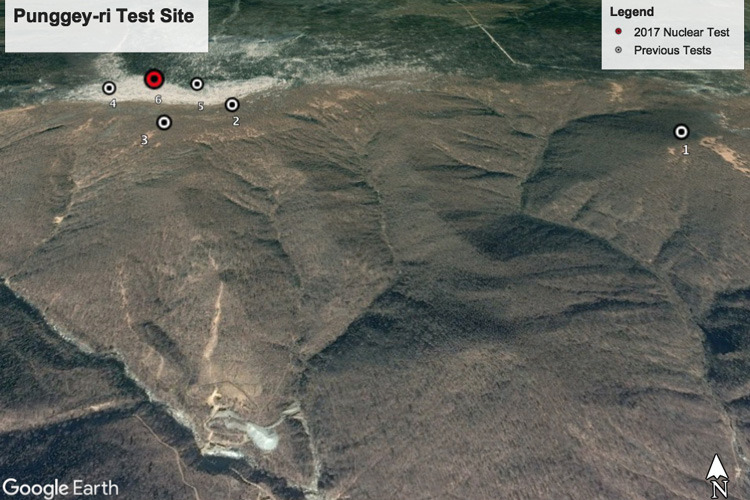
Satellite radar imaging, called SAR (synthetic aperture radar) has been conducted on Mt. Mantap at the Punggye-ri nuclear test site for North Korea. According to the British newspaper, The Express: “Thermal imagery, radar snapshots and seismic readings from before and after the nuclear test, reveal the mountain’s surface was pushed upwards by 11 feet and crumbled down by 20 inches.” North Korea had announced that it had paused testing at the site in advance of the summit meeting between North Korean leader Kim and US President Trump. But it may be the case that the testing site is no longer viable.
The upcoming week in Israel, the West Bank, and Iran merits close attention. 13 May is “Jerusalem Day” in Israel as Israelis celebrate their control over the city. The holiday is an occasion where parades are conducted by Israeli nationalists to demonstrate their deep commitment to the city and those parades have invariably enraged the Palestinian residents of the city. That holiday will be followed by the opening of the US Embassy in Jerusalem which has also rouse the ire of Palestinians. According to Neri Zilber in The Atlantic: “A large dedication ceremony is planned, with dozens of U.S. lawmakers, Treasury Secretary Steve Mnuchin, Trump’s son-in-law and adviser Jared Kushner, and Ivanka Trump, the president’s daughter and adviser, set to attend. The chosen date was no coincidence: It falls on the 70th anniversary of Israel’s declaration of independence, with Washington now recognizing Jerusalem as Israel’s capital.” The Palestinians view 15 May as Nabka (“catastrophe”) Day which for them represents their displacement from land they consider their own upon the creation of the state of Israel 70 years ago. That day also is the final day of the protests in the Gaza Strip which have been organized by Hamas to call the world’s attention to the dire situation of Palestinians in the Gaza. Over 40 Palestinians have been killed by Israeli gunfire since the protests began on 30 March. Finally at sundown on 15 May the holy month of Ramadan begins for the world’s Muslims. Ramadan has often been the occasion of protests against Israeli control of the Occupied Territories. On top of all of these events, the prospect of continued fighting between Israel and Iran over the situation in Syria and the Golan Heights remains highly likely.
German Chancellor Angela Merkel gave a speech in which the divisions between Europe and the United States became glaringly obvious. Merkel is quoted as saying: “It is no longer such that the United States simply protects us, but Europe must take its destiny in its own hands. That’s the task of the future.” The speech came after the US pulled out of the Iranian nuclear deal and as Merkel and French President Macron began efforts to preserve the agreement even without the participation of the US. Much depends on whether the US imposes sanctions on European companies if they continue to trade with Iran. The extra-territorial reach of US law would be intolerable, but most companies do more business outside of Iran than within it and would therefore have little choice but to drop their Iranian contacts. The divide between the US and Europe is reflected in the growing trade disputes between the Union and the US in addition to the US withdrawal from the Paris climate accords. The US withdrawal from the Trans-Pacific Partnership (TPP) and its threats to withdraw from the North American Free Trade Agreement (NAFTA) also raise serious questions about whether the US can be considered a reliable partner in any agreement.
We need to wait know how the US intends to implement sanctions against Iran now that it has withdrawn from the JCPOA. There is, however, a clear worst case in which the US imposes sanctions on any government or company that conducts business with Iran, including barring those entities from participating in the global financial transaction network know as the Society for Worldwide Interbank Financial Telecommunication (SWIFT). According to the SWIFT website:
“SWIFT is a global member-owned cooperative and the world’s leading provider of secure financial messaging services.
“We provide our community with a platform for messaging, standards for communicating and we offer products and services to facilitate access and integration; identification, analysis and regulatory compliance.
“Our messaging platform, products and services connect more than 11,000 banking and securities organisations, market infrastructures and corporate customers in more than 200 countries and territories. Whilst SWIFT does not hold funds or manage accounts on behalf of customers, we enable our global community of users to communicate securely, exchanging standardised financial messages in a reliable way, thereby facilitating global and local financial flows, and supporting trade and commerce all around the world.”
In 2012 the US Congress persuaded SWIFT to exclude Iranian banks from participating in the SWIFT network. According to Wikipedia:
“In January 2012, the advocacy group United Against Nuclear Iran (UANI) implemented a campaign calling on SWIFT to end all relations with Iran’s banking system, including the Central Bank of Iran. UANI asserted that Iran’s membership in SWIFT violated U.S. and EU financial sanctions against Iran as well as SWIFT’s own corporate rules.
“Consequently, in February 2012, the U.S. Senate Banking Committee unanimously approved sanctions against SWIFT aimed at pressuring the Belgian financial telecommunications network to terminate its ties with blacklisted Iranian banks. Expelling Iranian banks from SWIFT would potentially deny Iran access to billions of dollars in revenue and spending using SWIFT but not from using IVTS. Mark Wallace, president of UANI, praised the Senate Banking Committee.
“Initially SWIFT denied it was acting illegally, but now says “it is working with U.S. and European governments to address their concerns that its financial services are being used by Iran to avoid sanctions and conduct illicit business.” Targeted banks would be—amongst others—Saderat Bank of Iran, Bank Mellat, Post Bank of Iran and Sepah Bank. On 17 March 2012, following agreement two days earlier between all 27 member states of the Council of the European Union and the Council’s subsequent ruling, SWIFT disconnected all Iranian banks from its international network that had been identified as institutions in breach of current EU sanctions and warned that even more Iranian financial institutions could be disconnected from the network.
“In February 2016, most Iranian banks reconnected to the network following lift of sanctions on Joint Comprehensive Plan of Action“
United Against Nuclear Iran is a private advocacy group and thus we know little about how it is funded. But Eli Clifton wrote an article for The Nation on the group in which he stated:
“Nearly one-third of anti-Iran pressure group United Against Nuclear Iran’s 2013 budget came from the country’s foremost Republican megadonor, a man who invested a reported $98 million to defeat Barack Obama in the 2012 election, casino magnate Sheldon Adelson. Adelson routed his $500,000 donation to UANI through his family foundation, according to tax documents.”
Adelson was a very strong supporter of the decision to move the US Embassy in Israel from Tel Aviv to Jerusalem.
If the US implements similar types of sanctions on Iran, then the implications for oil prices could be significant. When the earlier sanctions were imposed in 2011 and 2012, oil production in Iran plummeted. The impact of the Iranian decline, however, was mitigated at that time by increased US production because of fracking but also because economic demand for oil was suppressed because global economic growth was so sluggish. This time, however, supplies of oil are much tighter. Economic growth is more robust and oil production in Venezuela, Libya, and Nigeria is well below normal because of political turmoil.

Oil prices currently are at their highest level in three years. The Bank of America predicted today that oil prices could soon reach $100 per barrel from its current level of $71 per barrel. One of the chief beneficiaries of such a high price for oil will be Russia and Vladimir Putin.
There are reports that Israeli and Iranian forces have exchanged fire in Syria, around the Golan Heights. ZeroHedge has written up a timeline of the most recent events:
1. Trump withdraws from Iran Nuclear Deal
2.Israel Instantly activates bomb Shelters in Golan Heights
3.Israel reports unusual Iranian activity in Syria border areas
4. Sources/Reports begin discussing imminent threat of Iranian led attacks on Israel from Syria
5. Israel strikes Al-Kisweh industrial area around Damascus with two rockets
6. Syrian State Media claims two further rockets were downed
7. Reports that Eight Iranians among 15 foreign pro-government fighters were killed in the attack which took place yesterday
8. Israel continues a steady build up of troops/tanks on Syrian border this morning
9. Heavy Israeli air activity over the Golan Heights today
10. Israeli rocket flies over Qunaitra going towards Damascus, Syrian air defense fired at it
11. Reports claim that the rocket was downed South East of Damascus, Israeli Jets still heavily present in the skies
12. Numerous artillery and mortar strikes from Israel targeted areas around Al-Baath City in Qunaitra province
13. Israeli Tanks firing at Syrian positions also, no reports of casualties so far
14. Sirens reportedly heard on Israeli side of border
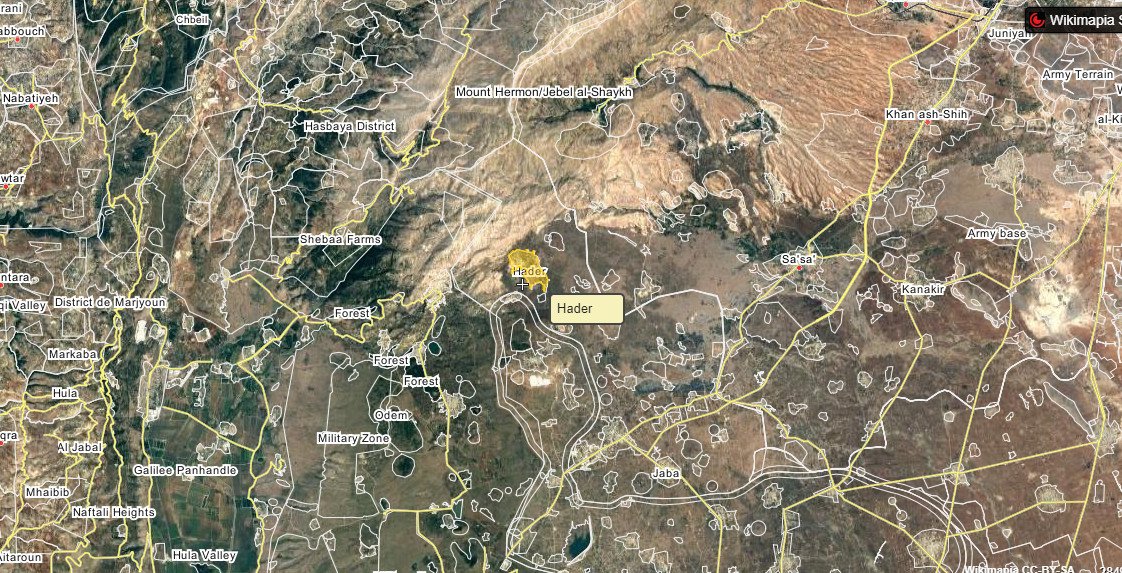
15. Numerous Israeli strikes now reported in Hadar in Qunaitra
16. Syrian air defense firing at Israeli rockets targeting Hadar in Qunaitra.
17. Al- Mayadeen reporting numerous Syrian army strikes (Mortars, Artillery) on Israeli positions near border with Syria. Most of the Syrian missiles fired at #Israel were reportedly intercepted by the Iron Dome
18. Pro Gov Al-Mayadeen stating that 4 Israeli locations have been targeted
19. Reports of more Israeli strikes on Hadar in Qunaitra
The Washington Post provides additional information about the strikes which follow a series of strikes several weeks ago by Israeli forces which reportedly killed Iranian militia . Israeli Prime Minister Netanyahu has met with Russian President Putin presumably to discuss the Israeli attacks against Iranian forces. Iran and Russia both support the Syrian government of President Assad, but Russian and Iranian interests are not completely consistent in the region. Netanyahu is likely assuring Putin that Israeli attacks will not compromise the pro-Assad alliance even though the attacks will undoubtedly weaken Iran in Syria. At the same time, Iranian-backed Houthi Rebels in Yemen fired missiles toward the Suadi Arabian capital city, Riyadh.
Map of Parts of the Golan Heights
Former Malaysian Prime Minister Mahathir Mohamad has won a shocking victory over incumbent Prime Minister Najib Razak in national elections. Mahathir’s party won 115 seats in the Parliament, three more that the majority necessary to form a government. It appears as if charges of corruption against Razak persuaded Malaysians to change the government. Mahathir had been Prime Minister for 22 years and he is now the oldest leader in the world at the age of 92. Razak, has been in office since 2009 and his party, Barisan Nasional (National Front), has held power since the country gained independence from Britain in 1957.
In Italy, the 5-Star Movement, an anti-establishment party pioneered by an Italian comedian, has joined forces with the far-right party, the League (once known as the Northern League) have reportedly reached agreement to form a coalition government. The agreement comes after 9 weeks of political wrangling after an inconclusive national election. There is still more political maneuvering before the agreement comes into force, and it is unclear what the new government hopes to accomplish. But the stalemate was becoming dangerous for Italy’s financial standing and there was no evidence that any other alternative was possible. We shall see how stable the new government is.
 World Politics News