A new study published in Sciencesuggests that the warming of the Atlantic Ocean caused by climate change will likely lead to an increase in major hurricanes in the future. The Abstract of the study states:
“…..we show that the increase in 2017 major hurricanes was not primarily caused by La Niña conditions in the Pacific Ocean, but mainly by pronounced warm sea surface conditions in the tropical North Atlantic. It is further shown that, in the future, a similar pattern of North Atlantic surface warming, superimposed upon long-term increasing sea surface temperature from increases in greenhouse gas concentrations and decreases in aerosols, will likely lead to even higher numbers of major hurricanes. The key factor controlling Atlantic major hurricane activity appears to be how much the tropical Atlantic warms relative to the rest of the global ocean.
The Washington Post places the projection in this context: “Considering the toll of the 2017 hurricane season, which unleashed 10 hurricanes in 10 weeks, and three of the five costliest hurricanes on record in Harvey, Irma and Maria, it is difficult to fathom the implications of similar circumstances repeating with even greater frequency.” It remains to be seen whether this projection will come about, but it is something to worry about and it is probably better ti try to avoid it then to hope that it does not transpire.
The US has asked the UN Security Council to maintain the sanctions on North Korea in order to force it to initiate the process of denuclearization, but China and Russia have pushed back. US Secretary of State Mike Pompeo tried to walk a fine line in the discussions, simultaneously backing President Trump’s claim that real progress had been made at the summit meeting with Chairman Kim Jong-un while pushing for harsh sanctions. China and Russia have taken the position that since progress has been made that the sanctions should be eased. According to The Guardian:
“However, Wang Yi, the foreign minister of China, whose cooperation is essential to enforcing sanctions, said that ‘given the positive developments’ China believed the UN ‘needs to consider invoking in due course this provision to encourage [North Korea] and other relevant parties to move denuclearisation further ahead’.
“His Russian counterpart, Sergey Lavrov, backed the call for loosening the sanctions, arguing: ‘Any negotiation is a two-way street. Steps by the DPRK toward gradual disarmament should be followed by the easing of sanctions.’”
It seems like the US will lose this round. It also seems clear that both Russia and China have already eased the sanctions on their own.
One of the fundamental assumptions of imperialism, regardless of the time period, is that there are “civilized” and “uncivilized” societies and the the civilized societies have an obligation to bring the uncivilized into the blessings of modernity. Often powerful societies use the label of “primitive” to justify their interventions. The more we learn, however, of these so-called “primitive” societies is that they were incredibly complex and sophisticated. Recent research in Mexico and Central America indicate that the Mayan society was an advanced civilization for its time. The use of a technology called lidar has revealed some stunning archaeological finds:
“From the data, the team estimates there may have been about 7 to 11 million people living in the central Maya Lowlands during what was known as the Late Classic Period, which lasted from about 650 A.D. to about 800 A.D.”
The Organization for International Investment has issued its report for the second quarter of 2018 and the results are troubling. According to the report:
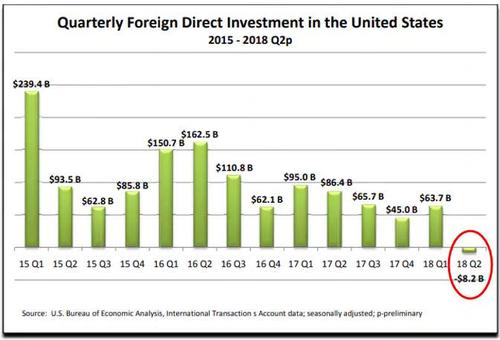
” Second-quarter 2018 foreign direct investment flows in the United States were in negative territory, resulting in a divestment of $8.2 billion, following a relatively strong first quarter. The second quarter was marked by unusually high selloff and purchase activity, which suggests that some $100 billion invested in the United States has transferred ownership abroad. In that quarter, U.S. affiliates paid off $32 billion in loans to related parties. Clearly, much of this unprecedented FDIUS activity is due to changes in ownership. Yet, it can partially be viewed as a response to import tariffs and other trade actions from the Trump Administration as international companies hit the pause button on potential investments.”
The results are a sharp divergence from the recent past. Again, according to the report:
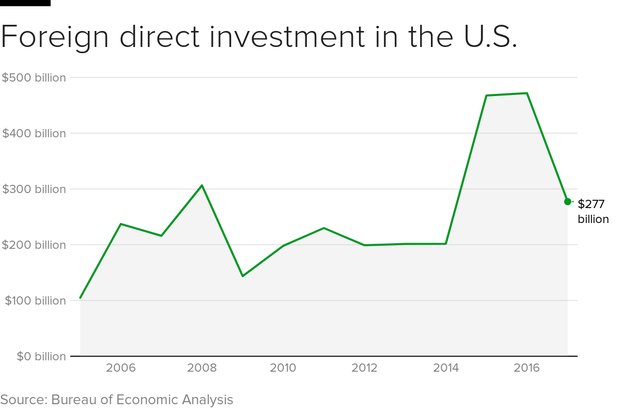
” Foreign direct investment in the United States in 2017 was the fourth-strongest for the past decade, but was down 40 percent from 2016. This followed record-breaking years in 2015 and 2016; FDIUS for each year reached nearly half a trillion dollars. These investments benefit the American economy as international firms build new factories across the United States, buoy their well established U.S. operations, fund American research and development activities, and employ more than 6.8 million Americans in well-paying jobs.
The change is troubling because historically the US has been viewed as a safe and profitable place to invest. It is a mistake to take a single quarter as indicative of a trend, but the lack of confidence in the US, particularly after the tax changes earlier this year which were designed specifically to stimulate investment, is symbolic of the jitters the world is experiencing with a US that is inconsistent with its historical norms. Adam Posen wrote in the journal Foreign Affairs:
“U.S. President Donald Trump’s hostility to globalization is ruining the United States’ attractiveness as a place to do business. Sometimes, after all, it takes just one bad landlord to destroy a whole neighborhood’s desirability. This year, net inward investment into the United States by multinational corporations—both foreign and American—has fallen almost to zero, an early indicator of the damage being done by the Trump administration’s trade conflicts and its arbitrary bullying of companies and governments. This shift of corporate investment away from the United States will decrease long-term U.S. income growth, reduce the number of well-paid jobs available, and reinforce the ongoing shift of global commerce away from United States. That shift will subject the entire world economy to greater instability….
…..the United States will discover, just as developing countries already have—and as the United Kingdom is now realizing, as auto manufacturers announce plans to withdraw production from the country if Brexit goes through—that when a country loses access to global markets, global automakers stop investing in its economy. If U.S.-made cars are competitive only behind tariff barriers, and cost far more than they should because of those tariffs, there is no point in planning to make more of them in the United States to meet rising global demand.
“Just a few years ago, Chinese investors and U.S. markets were really hitting it off. Direct Chinese investment into the United States rose to a whopping $46 billion in 2016.
Then the romance ended just as quickly. From 2016 to 2017, the flood of money shrunk by around 50 percent. And while 2018 isn’t over yet, the breakup has continued: From the first half of 2017 to the first half of this year, Chinese investment fell over 90 percent. It now sits around $2 billion. David Firestein, the founder of the China Public Policy Center at the University of Texas, called the drop “probably unprecedented” in an interview with The Week.
In fact, if you include divestitures, so far this year, more Chinese money has actually flowed out of America than in — by about $7.8 billion.
US President Trump’s second speech to the United Nations General Assembly offered an opportunity for the world to hear more of his views about the US role in world affairs. There was no grand scheme presented of a vision forward; rather it was a robust defense of US sovereignty and his view that international commitments are dangerous to US interests. He accused China of interfering in the upcoming 2018 elections but made no reference to Russian actions in either 2016 or 2018. He gave extended critiques of Iranian behavior in the world, but did not outline the possibility of working out a deal to replace the nuclear deal of 2015. He also praised North Korean leader Kim as a “man of courage”–the same person he lambasted as “little Rocket Man” in last year’s speech. Robin Wright offered this summary of the speech in the New Yorker:
” Last year, Trump’s U.N. speech was greeted with a combination of curiosity, intrigue, and diplomatic patience to hear him out, despite trepidation over his campaign rhetoric. This year, there were signs of a growing disconnect between the leader of the world’s most powerful country and many of his peers on the international stage.
President Trump was followed by French President Macron, who delivered a not very subtle rebuke to the America First message of Trump.
Martin Wolf is one of my favorite analysts, but I rarely refer to his articles in the Financial Times since it has a very rigid paywall. His article today was on the state of liberal democracy in the world and I decided to use one of my “share” allotments to the FT in the blog (I hope it works). There are a number of graphics in the article which I cannot reproduce that convey some very interesting information about the relationship between economic decline and the growth of populist politics. His conclusion is one with which I share total agreement:
“Yet we cannot just ignore the pressures. It is impossible for democracies to ignore widespread public anger and anxiety. Elites must promote a little less liberalism, show a little more respect for the ties binding citizens to one another and pay more tax. The alternative of letting a large part of the population feel disinherited is too dangerous. Is such a rebalancing conceivable? That is the big question.”
Redistributive measures are necessary to save liberal democracy and it will require sustained political action to implement those measures.
SWIFT is an international messaging system that serves as a clearinghouse for financial transactions. It is a way of validating the legitimacy of all financial transactions that are conducted between and among almost 11,000 banks globally. But is also serves as a source of information for governments who wish to monitor international transactions, particularly transactions that might be conducted by countries that are sanctioned by national and international agencies. For example, SWIFT allows the US to check on any companies or countries that might be buying Iranian oil which the US sanctioned after it left the Iranian nuclear deal. Many countries believe that the US action is illegitimate because the US did not offer any evidence that Iran had violated the terms of the nuclear agreement, and they wish to continue buying Iranian oil. But the US threatened to sanction any company that bought Iranian oil.
In response to this intrusion on the sovereignty of states who do not wish the US to determine their decisions to buy any product from any country, the Europeans have developed an alternative messaging system to bypass SWIFT. The act is a direct repudiation of the US attempt to force other nations to sanction Iran and it is likely that the other members of the Iranian nuclear agreement–China and Russia–will also use the alternative system. The move to sidestep the US is a sharp departure from the attitude toward Iran expressed by President Trump in his speech to the UN General Assembly today:
“Every solution to the humanitarian crisis in Syria must also include a strategy to address the brutal regime that has fueled and financed it: the corrupt dictatorship in Iran.
“Iran’s leaders sow chaos, death, and destruction. They do not respect their neighbors or borders, or the sovereign rights of nations. Instead, Iran’s leaders plunder the nation’s resources to enrich themselves and to spread mayhem across the Middle East and far beyond.
“The Iranian people are rightly outraged that their leaders have embezzled billions of dollars from Iran’s treasury, seized valuable portions of the economy, and looted the people’s religious endowments, all to line their own pockets and send their proxies to wage war. Not good.
“Iran’s neighbors have paid a heavy toll for the region’s [regime’s] agenda of aggression and expansion. That is why so many countries in the Middle East strongly supported my decision to withdraw the United States from the horrible 2015 Iran Nuclear Deal and re-impose nuclear sanctions.
“The Iran deal was a windfall for Iran’s leaders. In the years since the deal was reached, Iran’s military budget grew nearly 40 percent. The dictatorship used the funds to build nuclear-capable missiles, increase internal repression, finance terrorism, and fund havoc and slaughter in Syria and Yemen.
“The United States has launched a campaign of economic pressure to deny the regime the funds it needs to advance its bloody agenda. Last month, we began re-imposing hard-hitting nuclear sanctions that had been lifted under the Iran deal. Additional sanctions will resume November 5th, and more will follow. And we’re working with countries that import Iranian crude oil to cut their purchases substantially.
“We cannot allow the world’s leading sponsor of terrorism to possess the planet’s most dangerous weapons. We cannot allow a regime that chants “Death to America,” and that threatens Israel with annihilation, to possess the means to deliver a nuclear warhead to any city on Earth. Just can’t do it. We ask all nations to isolate Iran’s regime as long as its aggression continues. And we ask all nations to support Iran’s people as they struggle to reclaim their religious and righteous destiny.
It is clear that most of the states in the world do not agree with this assessment of Iran’s intentions. The US may be trying to reduce its commitments to the rest of the world, but it is also true that the world appears to be willing to set its own course without regard to the US point of view.
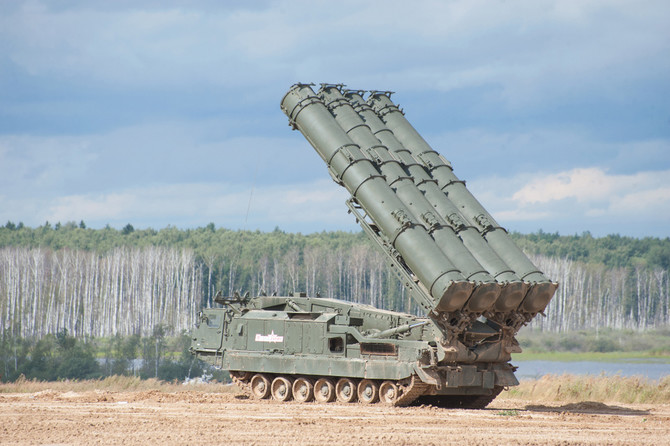
Russia has announced that it would send its most sophisticated anti-aircraft system, the S-300 ground-to-air system to Syria. The announcement follows the downing of a Russian aircraft by a Syrian missile. The Russians claim that an Israeli aircraft used the Russian aircraft as a screen in order to carry out a mission, and that the Israeli tactic now required more sophisticated defensive systems. The Washington Post has a Russian animation which describes the Israeli tactic. The upgrading will pose serious challenges to both Israeli and US aircraft in Syria. It also calls into question the degree to which the Russians are willing to cooperate with Israel to limit Iranian intervention in Syria.
S-300 System
Climate change will undoubtedly create what are being called climate refugees: people who live in coastal cities that will be forced to move because of rising sea levels. According to The Guardian:
By the end of this century, sea level rise alone could displace 13 million people, according to one study, including 6 million in Florida. States including Louisiana, California, New York and New Jersey will also have to grapple with hordes of residents seeking dry ground….. Within just a few decades, hundreds of thousands of homes on US coasts will be chronically flooded. By the end of the century, 6ft of sea level rise would redraw the coastline with familiar parts – such as southern Florida, chunks of North Carolina and Virginia, much of Boston, all but a sliver of New Orleans – missing. Warming temperatures will fuel monstrous hurricanes – like the devastating triumvirate of Irma, Maria and Harvey in 2017, followed by Florence this year – that will scatter survivors in jarring, uncertain ways.
We think a lot about the people who will be forced to leave, but we also need to think about the people who will also be forced to accommodate the refugees. The migrations will cause tremendous pressure on housing and land values, medical systems, and educational opportunities. The pressures will likely cause serious strains on the idea of citizenship and the common good.
@realDonaldTrump We protect the countries of the Middle East, they would not be safe for very long without us, and yet they continue to push for higher and higher oil prices! We will remember. The OPEC monopoly must get prices down now! 4:13 AM – 20 Sep 2018
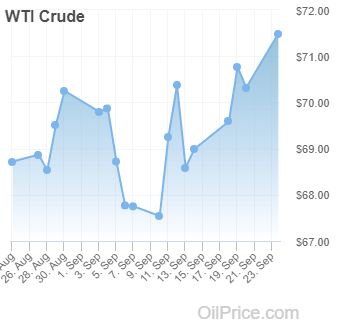
Oil prices have certainly gone up recently, but the cause of the increase is due to the sanctions the US has placed on countries that purchase Iranian oil. According to the business media outlet, CNBC: “The price rally mainly stemmed from a decline in oil exports from OPEC member Iran due to fresh U.S. sanctions.” Additionally, the erstwhile US ally, Saudi Arabia, indicated that it has no plans to increase production in order to push prices lower. According to Saudi Energy Minister Khalid al-Falih, “Saudi Arabia had spare capacity to increase oil output but no such move was needed at the moment.”
Price West Texas Intermediate Crude
For historical reasons, it is hard to ignore the rise of right-wing parties in Germany. At this, under the leadership of Chancellor Angela Merkel, Germany is probably the state with the strongest commitment to democratic principles in the world. Nonetheless, the rise of a new party, Alternative for Germany (AfD), has posed a serious challenge to liberal principles. Spiegel has published a fairly detailed article on the issues that have propelled AfD to a serious contender for influence in German politics, riding a wave of enthusiasm for blood and soil nationalism with a clear animosity to those groups who do not fit into the naively romantic definition of what it means to be German.
The US has imposed additional sanctions on China for its purchase of Russian Sukhoi Su-35 fighter jets and a S-400 surface-to-air missile system. The purchase violated the sanctions against Russia for its invasion of Ukraine. The Chinese, however, view the action as an unwarranted interference in Chinese affairs: the Global Times, a media outlet which reliably conveys the official Chinese position characterized the Russian sale as “a common practice between sovereign countries, and the US’s move embodies hegemony”. China did not specify how it would retaliate, but it is certain to sour the now-cancelled trade talks between the US and China. And the move will also move Russia and China closer, building upon the joint military exercise (Vostok 2018) the two countries conducted.
“Vostok 2018 wrapped up on September 14, but it started a whole new wrinkle in international affairs. Russia and China have agreed to continue to conduct joint military exercises, as the interests of Russia and China (once far apart) begin to align in response to US military power and a bellicose President Donald Trump.
There was an extraordinary attack on a military parade in Iran in the city of Ahvaz. One could hardly imagine a more brazen challenge than a terrorist attack on a military column in the heart of the attacked country. Iran blamed neighboring Arab states without naming them, but it likely blames Saudi Arabia and Kuwait for arming and training the terrorists who carried out the attack. Moreover, Iran probably believes that both the US and Israel were involved in the attack. Tensions in the Middle East continue to ratchet up.
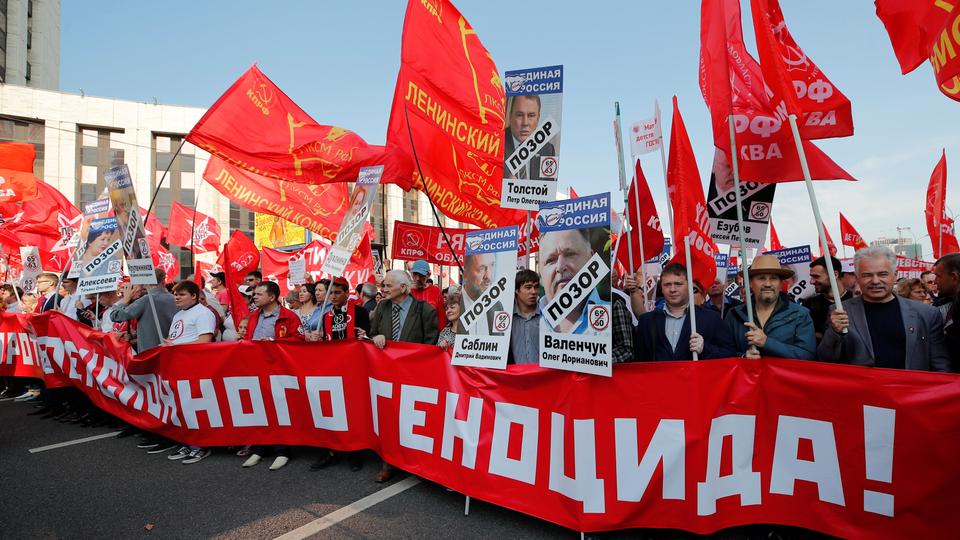
There have been widespread and unusual protests in Russia against Russian President Putin’s plans to raise pension ages from 60 to 65 for men and from 55 to 60 for women. Euronews quotes political activist Nikolai Levshitz on the significance of the proposed increases: “They increased the retirement age to 65 years, the average life expectancy is 66 and a half years, so we have 40 percent of men who won’t survive until retirement. So all the money they paid to the state, will simply go into the pockets of officials, Putin’s pockets, to his friends or to someone else”.
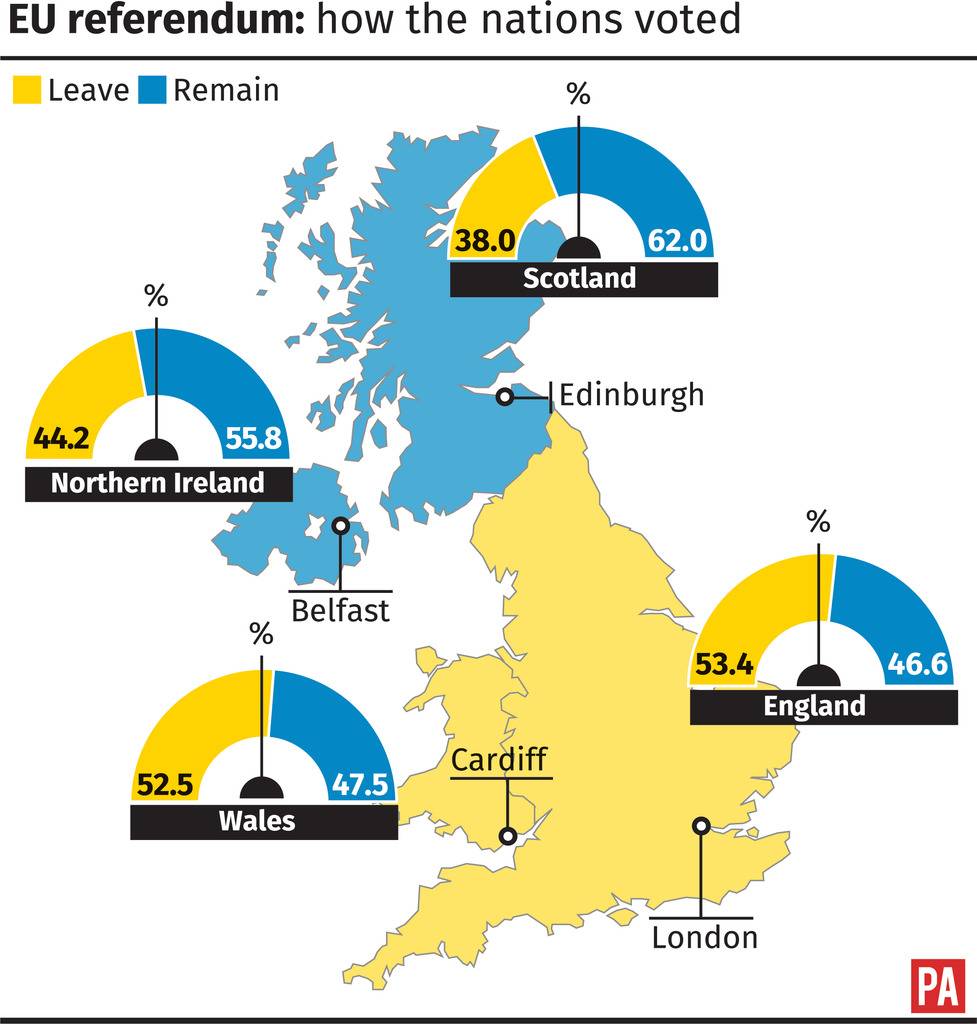
For over a year, the British have been trying to figure out a way to leave the European Union–the “Brexit” demanded by a referendum in the United Kingdom in June 2016–while retaining some access to the continent-wide economic union. There are a number of outstanding issues, but the one that has loomed largest is the relationship between Northern Ireland, which is part of Great Britain, and the Republic of Ireland which is independent of Great Britain. The tension between those who support Northern Ireland who identify as Protestants who believe they need British support and the Republic of Ireland who identify as Catholics and believe in the unity of Ireland as a whole is longstanding and has a history of violence and recrimination. That tension began to ease with the Good Friday Agreement which slowly set the terms for the integration of Northern Ireland with the Republic of Ireland.
If Great Britain left the European Union and its relationship to Northern Ireland did not change, then trade between Northern Ireland and the Republic Ireland (which would remain as a member of the EU) would change from trade within the European Union to trade between an EU member and a non-EU member. Thus, it is possible that a Brexit would require Northern Ireland to establish a “hard” border with the Republic of Ireland, complete with immigration and customs controls. Such a border would reverse all the progress in uniting all of Ireland that has been made since the Good Friday Agreement. So far, Great Britain has been unable to persuade the EU that this outcome can be avoided without violating the spirit of the EU commitments.
The war in Yemen is one of the ugliest wars in the world today. It has been conducted with scant regard for the lives of civilians, from indiscriminate bombing to the restrictions on access to humanitarian assistance. Over 17,000 civilians have been killed since the war began in 2015. What began as a civil war has morphed into a proxy war between Sunni countries such as Saudi Arabia and the Shia country of Iran. The US has strongly supported Saudi Arabia, supplying it with weapons, intelligence, and mid-air refueling for its fighter jets. The US Congress has never approved US participation in the war, but it has demanded that the State Department certify that all steps are being taken to avoid civilian casualties by its allies receiving assistance. US Secretary of State Pompeo made that certification to the Congress despite overwhelming evidence that Saudi Arabia has not taken rigorous steps to protect civilians. There was little public outcry over the move.
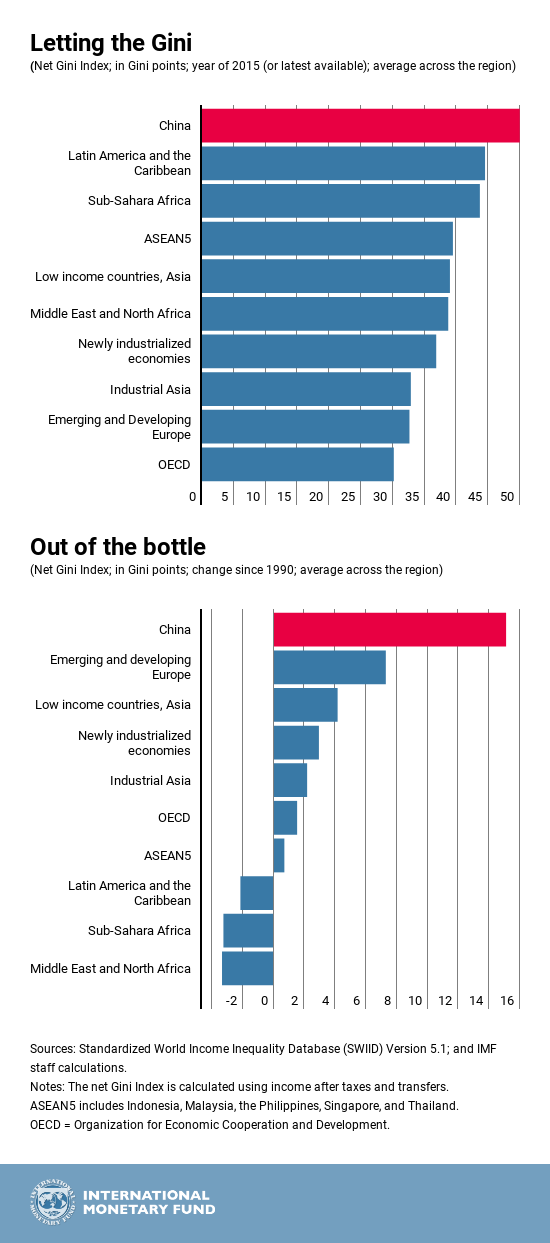
Chinese success in reducing absolute poverty is stunning: between 1981 and 2004, the number of people living in poverty shrank by 600 million. The reduction came as a result of remarkable policy reforms in the country which moved it away from an economy that was almost completely controlled by the central government toward one that allowed private ownership of property and reliance on market forces to determine wages and prices. But even while absolute poverty was being reduced, relative poverty was increased. We measure income inequality by a measure called the Gini coefficient where a value of zero means that everyone receives the same income and a value of 1 means that only one person has all the income in a society. By looking at the Gini coefficient, income inequality in China has gotten worse even as the economy has grown substantially.
If one needs data about the US economy, the Federal Reserve Bank publishes a statistical quarterly, Financial Accounts of the United States, which contains more information that one can reasonably process. In the report released today, the Federal Reserve noted that:
The net worth of households and nonprofits rose to $106.9 trillion during the second quarter of 2018. The value of directly and indirectly held corporate equities increased $0.8 trillion and the value of real estate increased $0.6 trillion.
In 2008, the net worth of all Americans was $58,908 trillion. The increase in 10 years is absolutely amazing–almost doubling.
Unfortunately, although this increase in wealth is impressive, it is not widely shared by all Americans. Indeed, most of the wealth seems to be accumulating in the hands of just a few individuals. The graph below was produced by Deutsche Bank and its timeline ends in 103, but there is no reason to believe that the trendline from the 1980s has changed at all and it is highly likely that the lines are now crossed in the same manner as they were prior to the Great Depression of the 1930s.
The Congressional Budget Office produced this graph which shows that the increase for the bottom 50% of the US population since the 1980s has been negligible.
The US economy is clearly growing but the growth is increasingly concentrated in the hands of a very few individuals.
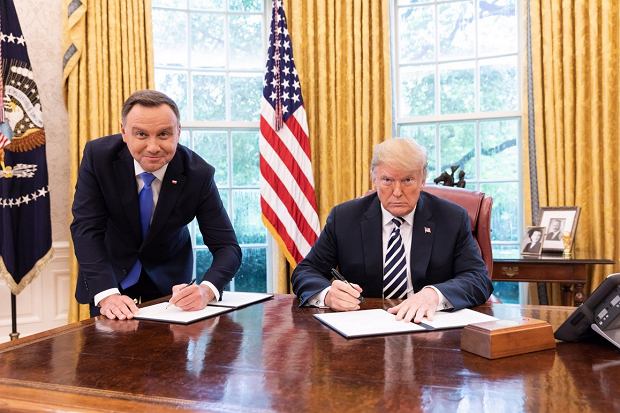
The Polish President Andrzej Duda met with US President Trump yesterday and the meeting was cordial since Poland and the US agree on a number of issues. Indeed, Poland has been asking the US to set up a US military base in Poland in order to bolster the US commitment to NATO in eastern Europe for a number of years, and President Duda suggested that, if the base was indeed set up, it should be named Fort Trump. However, the meeting ended on a very sour note for the Poles as the agreements between the US and Poland were signed. The US published a photograph of President Trump seated in the Oval Office signing the agreement while President Duda was standing, hunched over the desk, signing it at the same time. The Polish press excoriated the diplomatic snub.
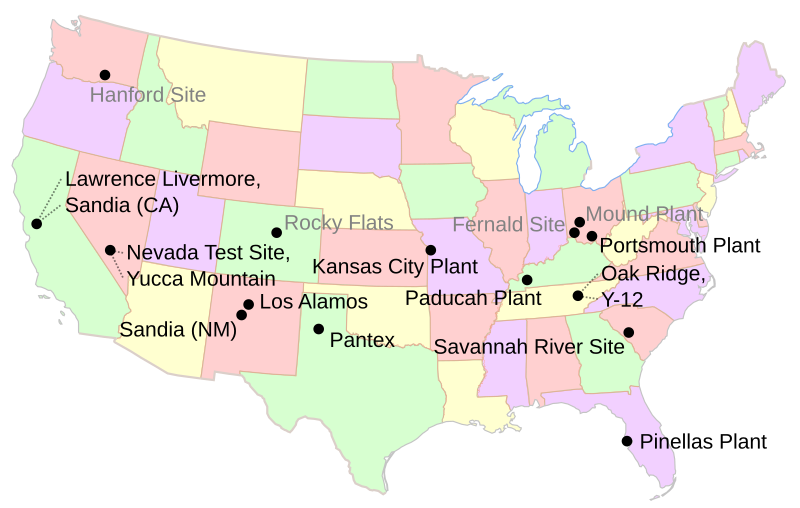
It is likely that most readers of this blog have never heard of the Defense Nuclear Facilities Safety Board. This agency is tasked with the responsibility of making sure that the nuclear sites necessary for peaceful nuclear power as well as nuclear weapons are operating safely. Its activities are generally below the radar, but assuring that these sites are not a hazard to the public or the workers who operate the site is absolutely critical. Thus, it comes as a surprise that the Trump Administration is seeking to limit the capabilities and the regulatory power of the agency, particularly since the Administration is seeking to expand the number of nuclear weapons in the US arsenal.
According to Scientific American:
The administration’s new rules eliminate the board’s authority to oversee workplace protections for roughly 39,000 nuclear workers and also block its unfettered access to nearly three-quarters of the nuclear weapons-related sites that it can now inspect.
In a separate move, the board’s new acting Republican chairman has proposed to put more inspectors in the field but to cut its overall staff by nearly a third, including letting some of its supporting technical experts in Washington go. The board already has one of the smallest oversight staffs of any federal agency.
The twin assaults on the operations and authority of the safety board come just as the Energy Department, acting at President Trump’s direction, is embarking on the most aggressive era of nuclear weapons production since the Cold War. Trump has called for one new nuclear bomb to be produced immediately, and for the production of another new bomb to be studied.
Safety in nuclear reactors ought to be the last place where one should try to economize.
US Nuclear Sites
In three weeks Brazil will hold a national election which is both hotly contested and consistent with elections all over the world. There is a right-wing and a left-wing candidate, but apparently little support for the center. The right-wing candidate is Jair Bolsonaro who survived an assassination attempt on 6 September. The left-wing candidate is Fernando Haddad who is essentially running as a surrogate for Luiz Inacio Lula da Silva who is widely popular, but ineligible to run for office because of a corruption conviction for actions which occurred when he was President from 2003-2011. Reuters quotes Monica de Bolle, director of Latin American studies program at Johns Hopkins School of Advanced International Studies about Bolsonaro’s stance:
That is mainly because Bolsonaro, who has repeatedly praised Brazil’s military regime, and his running mate, Hamilton Mourão, a retired Army general, have openly talked “about constraining civil liberties and rewriting the Constitution in a authoritarian way,” de Bolle said.
Mourão has said the armed forces should carry out a coup if the country’s judiciary cannot end political corruption.
“They are not shying away from saying these things openly and they are not being criticized for saying them,” she added.
The election will be a real test of Brazil’s democracy and another test of the strength of democratic sentiment in the world as a whole.
South Korean President Moon Jae-in is meeting with North Korean leader, Kim Jong-un for the third time in a desperate attempt to salvage the possibility of reaching a rapprochement on the issue of denuclearization. The discussions on the terms of the process of denuclearization–North Korea will not begin the process unless the US and South Korea sign a peace treaty with the North. But the US refuses to sign a peace treaty until the process of denuclearization is almost complete. South Korean President Moon is in the middle and the question is which way will he lean. If he continues to support the US position, it is unlikely that there will be any progress in the talks. If, however, he leans toward North Korea, then the US will believe that the process of denuclearization is unattainable.
The US has historically allowed about 80,000 refugees to enter the country every year. But that number declined in 2017 and 2018, and the Trump Administration is proposing an upper limit of 30,000 for 2019. The change in policy comes as the number of refugees in the world has reached about 25 million. It is a dramatic change in policy:
” The figure is a significant setback for the United States: By sharply reducing admissions, the country is not only diverging from long-standing policy on refugees, but also relinquishing its leadership role in resettlement. Just within the past few years, the country well outpaced others in admitting thousands of refugees. The Obama administration set the refugee cap for fiscal year 2015 at 70,000; by 2016, the number was 85,000. And those numbers didn’t just represent lofty estimations: The Obama administration came close to achieving both caps, admitting 69,000 people in 2015 and nearly 85,000 in 2016.
In addition, there are significant changes in who the US admits as a refugee. According to Axios: “The number of Muslim refugees admitted into the U.S. dropped from more than 9,000 in the 2017 fiscal year to fewer than 2,000 with less than a month left in FY 2018 — an 80% drop.”




 World Politics News