There is a serious debate in the US Democratic Party about the comments of Representative Ilhan Omar (D-Minn) on her statement that US supporters of Israel had “allegiance to a foreign country”. Given the striking rise of antisemitic acts in recent years, it is very important to take this issue very seriously. Peter Beinart has written a very thoughtful essay for The Guardian about how to distinguish criticism of the policies of the Israeli state from antisemitic sentiments. Beinart makes a distinction between anti-Zionism and antisemitism, a distinction that makes sense only if one accepts the right of the current state of Israel to exist but that it should not expand its borders any further. Such a distinction can be defended on pragmatic grounds: that both Jews and Palestinians have a right to self-determination. That proposition is both contestable and defensible since each nation claims some of the territory that would ultimately form the basis of each state.
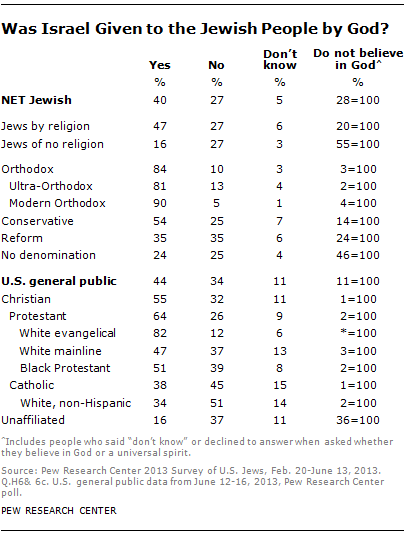
Representative Omar is undoubtedly correct in asserting that there is a strong lobby in the US supporting the state of Israel. This topic was explored in great deal in a book entitled The Israel Lobby by John J. Mearsheimer of the University of Chicago and Stephen M. Walt of Harvard’s John F. Kennedy School of Government (for a link to their article in the London Review of Books in 2006, click here). But lobbying (unfortunately) is a well-accepted feature of the US democracy, and to suggest that a strong lobby is indicative of “divided” loyalties is simply wrong. And some of the strongest supporters of the state of Israel are not Jewish at all: “According to a poll conducted by the Pew Research Center, 82 percent of white evangelicals think God gave Israel to the Jewish people. Less than half as many Jewish Americans or Catholic Americans agree.” And, as Beinart points out, there are Jews who oppose the state of Israel: “
“Consider the Satmar, the largest Hasidic sect in the world. In 2017, 20,000 Satmar men – a larger crowd than attended that year’s American Israel Public Affairs Committee policy conference – filled the Barclays Center in Brooklyn for a rally aimed at showing, in the words of one organiser: “We feel very strongly that there should not be and could not be a State of Israel before the Messiah comes.”
“Last year, Satmar Rebbe Aaron Teitelbaum told thousands of followers: ‘We’ll continue to fight God’s war against Zionism and all its aspects.’ Say what you want about Rebbe Teitelbaum and the Satmar, but they’re not antisemites.”
When discussing Israeli policy it is critically important to speak only of the policies of the Israeli state and not mention Jewish people at all. I sincerely doubt that any religion has a single monolithic position on any matter at all.
Professors Pedro M. Cruz and John Wihbey from Northeastern University have created this beautiful visualization of immigration into the US from 1830-2015. They used the metaphor of tree rings to show the growth of the US population. We should keep in mind the ways the US population has grown and how it changed when we have discussions about immigration and remember that there are only four sources for the population: the indigenous Native American peoples; slaves; immigrants; and refugees.
Just a few hours after the end of a White House trade meeting,Bloomberg has published a revealing sourced story on how the US-Chinese trade talks will end soon. Apparently, President Trump has decided to drop his demands for changes in Chinese industrial policy (such as forced joint ownership of ventures which compromise intellectual property) in return for promises by China to import more US products. Bloomberg reports:
“President Donald Trump is pushing for U.S. negotiators to close a trade deal with China soon, concerned that he needs a big win on the international stage — and the stock market bump that would come with it — in advance of his re-election campaign.
“As trade talks with China advance, Trump has noticed the market gains that followed each sign of progress and expressed concern that the lack an agreement could drag down stocks, according to people familiar with the matter. He watched U.S. and Asian equities rise on his decision to delay an increase in tariffs on Chinese goods scheduled for March 1, one of the people said.
“The world’s two largest economies are moving closer to a final agreement that could end their almost year-long trade war, an outcome that would also provide a boost to his efforts to seek reelection in 2020. A new trade accord that would provide Trump with a much-needed win after the collapse of his summit with North Korean leader Kim Jong Un.
“Trump, who met with his trade team Monday, has expressed interest in hosting Chinese President Xi Jinping for a signing ceremony on a deal as soon as this month. His enthusiasm for a pact could shape crucial decisions such as balancing Chinese pressure to lift tariffs immediately against trade hawks’ arguments to initially maintain duties as leverage to assure good behavior by Beijing.”
The timing of the report–just two hours after the White House meeting ended–suggests that the report is based on leaks by participants in the White House meeting. The report also comes after the US recorded the highest balance of trade deficit ever recorded:
“Overall imports grew 7.5 percent, to a record $3.1 trillion, while overall exports grew 6.3 percent, hitting a record$2.5 trillion, a Commerce Department highlights sheet showed. The resulting overall trade deficit of $621 billion was the highest since 2008. Both the goods trade deficit and the services trade surplus individually set records.”
The trade balance with China increased from $419.2 billion in 2018 from $375.5 billion in 2017. We need to examine whatever deal is reached soon to see if the US has dropped some of its most important demands. We will soon see if Wall Street can be played.
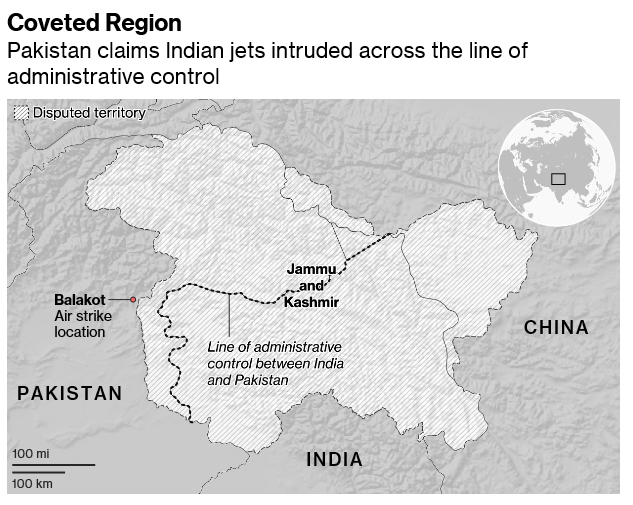
After a Pakistani terrorist group, Jaish-e-Mohammed (JeM), attacked and killed about 40 Indian paramilitary troops, India carried out a counterstrike against a JeM site in Balakot, Pakistan using 12 Mirage 2000 jets carrying 1,000 kg (2,200 lbs) bombs. India claimed that the attack killed about 300 terrorists. But Reuters reporters went to the site and reported that there was little damage.
“In two visits to the Balakot area in Pakistan by Reuters reporters last Tuesday and Thursday, and extensive interviews with people in the surrounding area, there was no evidence found of a destroyed camp or of anyone being killed. [here]
“Villagers said there had been a series of huge explosions but the bombs appeared to have landed among trees.
“On the wooded slopes above Jaba, they pointed to four craters and some splintered pine trees, but noted little other impact from the blasts that jolted them awake about 3 a.m. on Feb. 26.
“’It shook everything,’ said Abdur Rasheed, a van driver who works in the area.
“He said there weren’t any human casualties: ‘No one died. Only some pine trees died, they were cut down. A crow also died.’”
The full Reuters report is quite exhaustive. The satellite images of the site also suggest little damage to the JeM site. If these reports are accurate, they represent a profound embarrassment to the Modi government.
I had a great discussion last week with Ahm Bakrin and Miranda Donohue of the Amherst Wire on Venezuela, North Korea and the Pakistan-India conflict. You can listen to the discussion at https://amherstwire.com/27650/showcase/whats-goin-on-podcast-episode-6/. It is my first podcast–a very interesting format. I think I prefer to write what I think, but the process of talking out my thoughts was intriguing.
There was a fascinating exchange in today’s press briefing by the US State Department on how we should refer to Juan Guaido, the President of the Venezuelan National Assembly who the US supports as the legitimate President of the Venezuelan Republic. It is somewhat ironic that the State Department continues to demand precision even though some other parts of the US government seems to use language very loosely. Robert Palladino is the State Department’s Deputy Spokesperson and he is briefing the press.
MR PALLADINO: Thank you.
And finally, the United States applauds the people of Venezuela for their actions to create a peaceful, democratic transition, and congratulates Interim President Juan Guaido on his successful diplomatic efforts in the region and safe return to Venezuela. However, we have noticed in news coverage that some outlets are incorrectly referring to Juan Guaido as the opposition leader or the self-proclaimed president. Neither is correct.
A few basic facts: The National Assembly remains the only legitimate and democratically elected institution in Venezuela. Juan Guaido was elected president of the National Assembly on January 5th, 2019, and on January 10th, Maduro usurped the presidency.
Therefore, the president of the National Assembly and relying on Venezuela’s constitution – as president of the National Assembly, and relying on Venezuela’s constitution, Juan Guaido became interim president of Venezuela on January 23rd. Millions of Americans and more than 50 countries recognize Juan Guaido as interim president of Venezuela. He has appointed and credentialed ambassadors to international organizations and the United States and numerous other democratic nations and other democratic nations.
So to refer to Juan Guaido as anything but interim president falls into the narrative of a dictator who has usurped the position of the presidency and led Venezuela into the humanitarian, political, and economic crisis that exists today. The international community must unite behind Interim President Juan Guaido and the Venezuelan National Assembly and support the peaceful restoration of democracy in Venezuela.
That’s it for the top.
QUESTION: Let me get this straight. You’re complaining because news outlets are calling him by a title that you don’t think that he should have?
MR PALLADINO: Not a complaint. Pointing out. Just trying to correct.
QUESTION: Well, it sounds like a complaint to me, and that seems pretty weak-sauce. I don’t understand what your problem is. I mean —
MR PALLADINO: He’s the interim president, and we don’t want to —
QUESTION: Well, you consider him to be the interim president, and as you say, 50 other countries outside of – recognize him as the interim president. But there are more than 190 members of the United Nations. So your 50 countries is not even close to half of that. Is that correct?
MR PALLADINO: We are supporting the constitution of Venezuela and the people of Venezuela. With the – we’re supporting the Venezuelan people here. And so the United States – it’s time to act in support of democracy and —
QUESTION: And you think that news coverage calling him the legitimate leader, the president, is going to encourage more countries to recognize him?
MR PALLADINO: We don’t feed into rhetoric of the current dictator.
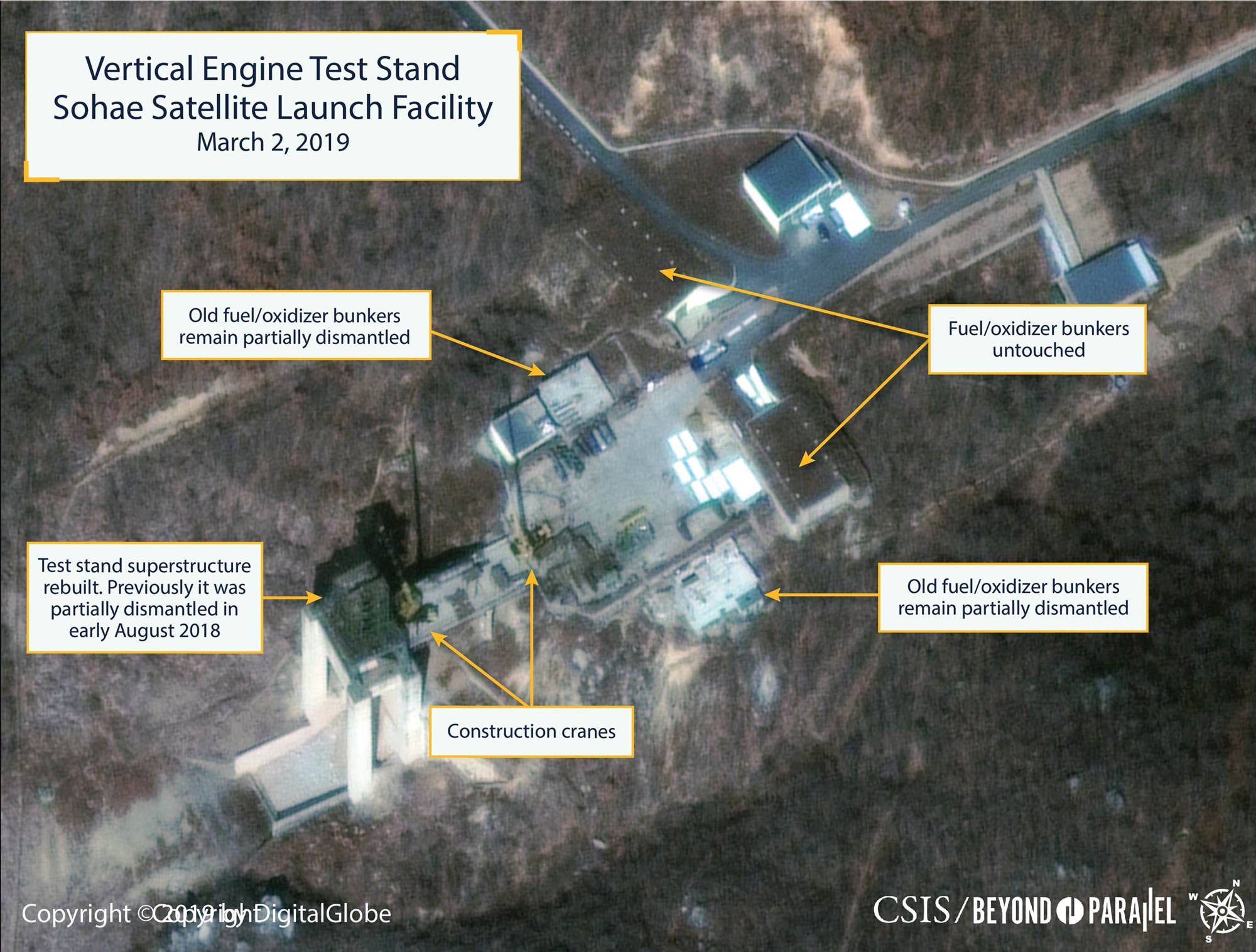
Satellite imagery indicates that North Korea is rapidly building up its satellite launching site. The facility uses technology that could also be used to launch intercontinental ballistic missiles (ICBMs). The renewed activity comes as information has indicated that North Korea may have as many as 20 additional missile launching sites. This information comes on the heels of the failed summit in Hanoi and may indicate that North Korea does not think that negotiations are going to serve its national interest. The big question is whether North Korea will restart its testing program which will represent a serious challenge to President Trump.
Alex Ward has written an article that summarizes some of the consequences of the failed summit meeting between President Trump and North Korean leader Kim. Despite the lack of progress, the US and South Korea have decided to continue to suspend their joint military exercises. The press release announcing the decision is a masterful example of bureaucratic doublespeak:
“During a phone call on March 2, Minister of National Defense Jeong Kyeong-doo and the Acting Secretary of Defense Patrick Shanahan assessed the outcomes of the Summit between President Trump and Chairman Kim and discussed the further coordination of measures to establish complete denuclearization and lasting peace on the Korean Peninsula, as well as steps to maintain the readiness of combined forces…
“The Secretary and Minister reviewed and approved the Alliance decisions recommended by the Commander of U.S. Forces Korea and the Republic of Korea Joint Chiefs of Staff on the combined exercise and training program. Following close coordination, both sides decided to conclude the KEY RESOLVE and FOAL EAGLE series of exercises.”
I had to read the press release several times to determine the logical thread from “approved” to “recommended” to “close coordination” to “conclude”. But the press release was framed so that the fact that the US was continuing to meet one of North Korea’s key demands was obscured as much as possible.
Another interesting aspect of the summit was that North Korea did not stop its cyber activities against US banks, utilities, and other institutions while Kim was meeting Trump. The New York Times has an article outlining the scale of the North Korea attacks. The article describes the North Korean strategy:
“Mr. Cha, of the Center for Strategic and International Studies, said cyberattacks remained the ‘third leg’ of North Korea’s overall military strategy. ‘They’re never going to compete with the United States and South Korea soldier to soldier, tank for tank,’ he said. ‘So they have moved to an asymmetric strategy of nuclear weapons, ballistic missiles and the third leg is cyber, that we really didn’t become aware of until Sony.’”
It is not at all clear how the failure of the summit will unfold. But there was an awful lot of intrigue in the background that suggests a very unstable resolution.
For those interested in the making of foreign policy, I highly recommend Nahal Toosi’s essay in Politico entitled “Inside the Chaotic Early Days of Trump’s Foreign Policy“. There was little secret that Mr. Trump had no experience in foreign policy, but Toosi outlines how decisively politics intruded into the decision making process. And most of those political operatives were also inexperienced in foreign policy. The verdict after two years is damning:
“Traditional NSC staffers believe deeply in what they call the “policy process,” a time-tested way of conducting the foreign and national security policy of the world’s most powerful country. It involves a proper set of meetings, a chance for every agency to weigh in, and a rigorous legal review before the president makes a major decision. The early Trump days had virtually none of that, and the subject matter experts who make up much of the NSC career staff were largely ignored, even shunned. It was a bewildering, even terrifying turn for a group of deeply serious men and women whose work can affect billions of lives.
“Now, two years into Trump’s tenure, current and former U.S. officials say they are worried about the long-term damage his administration is still doing to the way such critical decisions are made — with dangerous consequences that are not always easy to perceive. They worry Trump’s presidency has poisoned the relationship between career government staffers and political appointees, threatening the ability of a future president to make decisions based on nonpartisan expertise. Some were relieved after Trump’s first national security adviser, Mike Flynn, was fired; he’s still due for sentencing after getting caught up in the federal investigation into the Trump campaign’s ties to Russia. And they were heartened that Trump’s second national security adviser, H.R. McMaster, reinstituted traditional processes during his year at the helm, even if Trump disliked them. But because Trump’s current national security adviser, John Bolton, has largely scuttled those procedures, the fears have resurfaced over the past year.
The essay is quite long, but it is very detailed and not obnoxiously partisan (there is no such thing as an unbiased political essay).
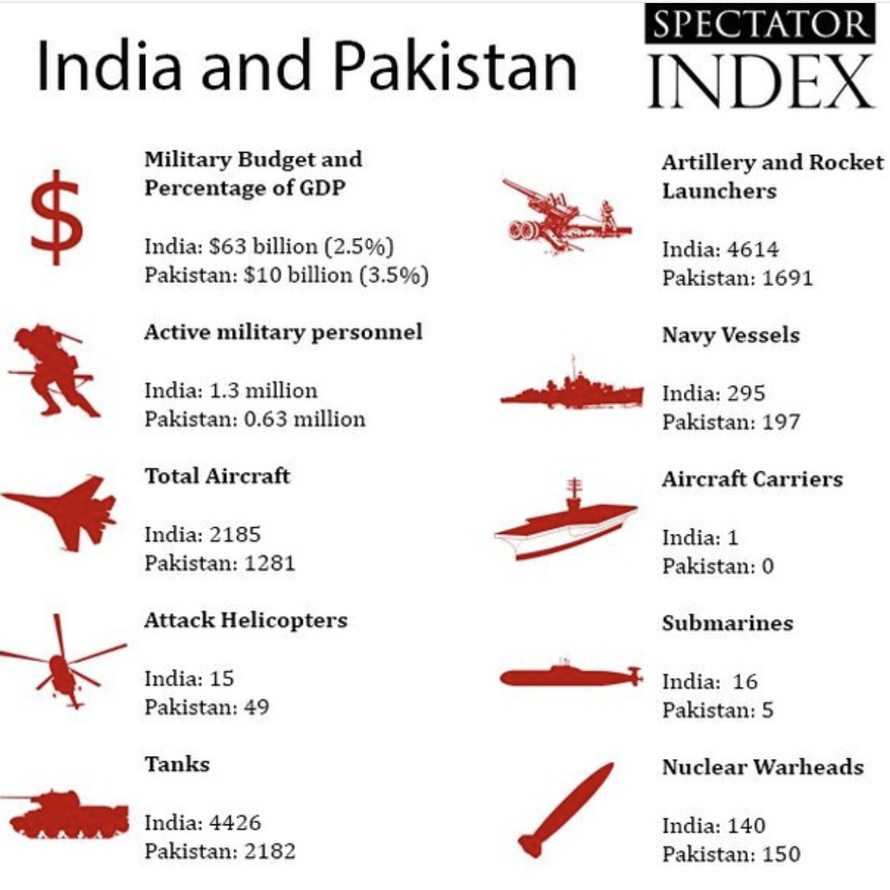
The hope for diminished tensions between India and Pakistan over Kashmir after the release of the captured Indian pilot faded quickly as heavy artillery and machine gun fire was exchanged immediately after the release. Three civilians were killed behind the Indian Line of Control (LOC) and two civilians behind the Pakistani LOC. To get an idea of how high the passions are running in the region, one should read the op-ed in the Indian newspaper, The Tribune, entitled “Tap potential of air power to the hilt“. And to get an idea of the Pakistani fears of Indian Prime Minister Modi, one should read the article in Dawn entitled “Wag the Dog” (an American movie I highly recommend) in which the need to win an election dictates the imperative toward war. The New York Times has a good backgrounder on this incredibly complex dispute.
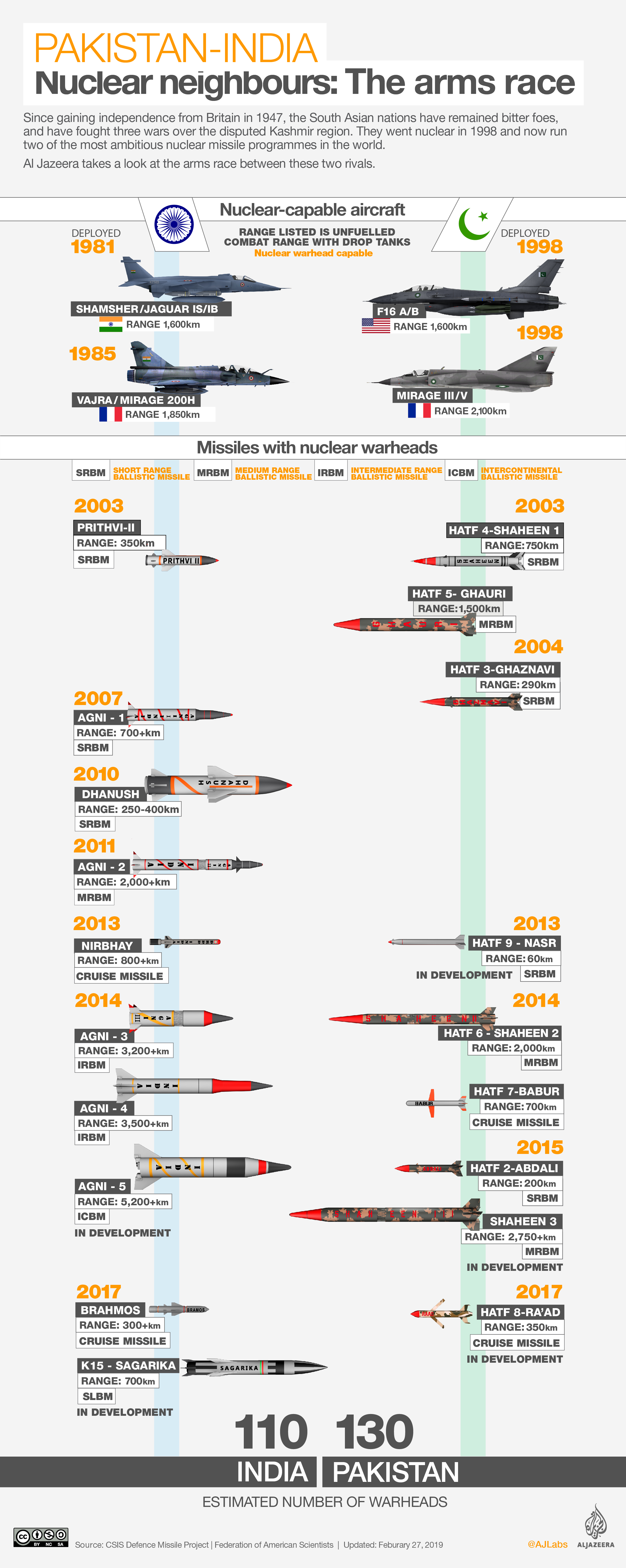
Nuclear Arsenals of India and Pakistan
Colombia is reporting that 567 Venezuelan soldiers, mostly from the lower and middle ranks, have defected to Colombia rather than support the government of Nicolas Maduro. The loyalties of the Venezuelan military will likely be the decisive factor in how events in Venezuela unfold. The International Institute for Strategic Studies (IISS) has a very good article on the situation in the Venezuelan military:
“This offer may be attractive to the lower and middle ranks of the armed forces, who are feeling the impact of Venezuela’s economic and social crisis. Due to hyperinflation of the Bolivar – the IMF forecast it to reach 1,000,000% in 2018 – their salaries have been rendered worthless. But the top echelons of the armed forces continue to reap the rewards of their close association with Maduro’s regime, through access to both state resources and oil revenues, ensuring their desire to maintain the status quo and their loyalty to the government.
For a military coup to take place, there would need to be a highly coordinated approach. However, the military’s lower and middle ranks are ill-equipped, suffer difficulties in communication and are constantly monitored by the intelligence services.Meanwhile, any middle-ranking officers who might lead the coup are scattered in different units around the country.
Furthermore, the government has systematically infiltrated the military, with local intelligence agents, as well as members of the Cuban intelligence services, embedded within its ranks to guard against anti-regime activity. As recently reported by Human Rights Watch, several Venezuelan soldiers accused of betrayal have been detained and tortured by members of the General Directorate of Military Counterintelligence or by the Bolivarian National Intelligence Service, making it clear that the price of disloyalty is very high.
The US continues to impose new sanctions on the Maduro government but but also appears that both Russia and China are increasing support for the embattled regime. For its part, the international community still seems to be paralyzed.
“A study of catch data published in 2006 in the journal Science grimly predicted that if fishing rates continue apace, all the world’s fisheries will have collapsed by the year 2048.
But now we also find that many fish species cannot tolerate warmer ocean temperatures, or the acidification associated with global warming. The results of the new research found that “According to the authors of the new study published in the journal Science, ecosystems in the northeast Atlantic Ocean and the sea of Japan have seen fish populations decline by as much as 35% due to warming waters by over the last eight decades.” Globally, fish accounts for 17% of the protein consumed by the human population.
A United Nations Security Council resolution sponsored by the United States called for states to recognize Juan Guaido as the legitimate leader of Venezuela and for the Venezuelan government to allow the importation of humanitarian aid. The resolution received 9 affirmative votes but was vetoed by China and Russia who were both concerned that the resolution was an invitation to a military intervention by the US. The Russians then introduced a resolution that condemned threats of outside intervention but it only received 4 affirmative votes and was vetoed by the US, Great Britain, and France. In defense of its resolution, Russia used the example of Libya as a case in which humanitarian intervention sanctioned by the UN Security Council was ultimately used to overthrow the government of Muammar Gaddaffi. The inability of the UN to address effectively the humanitarian crisis in Venezuela unfortunately opens up the possibility of unilateral action by the US, a course of action that would be disastrous.
Guaido met with Brazilian President Bolsonaro to shore up support for his regime, but it is unclear how he will be able to return to Venezuela where he almost certainly be arrested. The Lima Group, consisting of the governments of Argentina, Brazil, Canada, Chile, Colombia, Costa Rica, Guatemala, Honduras, Mexico, Panama, Paraguay, and Peru, has repudiated the use of military force as an option in addressing the crisis in Venezuela but it is not at all clear that the group has much diplomatic leverage over the United States.
For those who wish to become a head of state at some point, the collapse of the summit in Hanoi between US President Trump and North Korean leader Kim should be an important lesson: never put your prestige on the line unless you are certain it will not be damaged. The abrupt cancellation of the summit (stiffing the Vietnamese who likely had prepared a magnificent lunch for the leaders) was a frank recognition that the two sides had not prepared adequately. Typically, the final statement of a summit is prepared before the summit even occurs, and the heavy lifting is done by aides who work out all the stumbling blocks before their bosses show up. There might be a few minor details left to the leaders, but there should be nothing that would derail a final agreement.
There have been other US summits with foreign leaders that failed (Eisenhower and Khrushchev, 1960; Reagan and Gorbachev, 1986; and Clinton, Barak, and Arafat, 2000), so the damage is not irreversible. But the Hanoi summit seems to be in a class by itself since all the media reports indicate that Trump’s aides had tried to persuade Mr. Trump from going to the summit. Mr. Trump’s belief in personal relationships as well as his confidence in his deal-making abilities are hardly sufficient in the world of international politics. Mr. Trump aggravated the failure in Hanoi by his ham-fisted defense of Mr. Kim in the cruel death of the American citizen, Otto Warmbier. Mr. Trump indicated that he believed Mr. Kim when Kim said that he did not know about Warmbier’s dire state. Mr. Trump has given Russian President Putin, Saudi Crown Prince Salman, and now Kim Jong-un a free pass on threats to US interests.
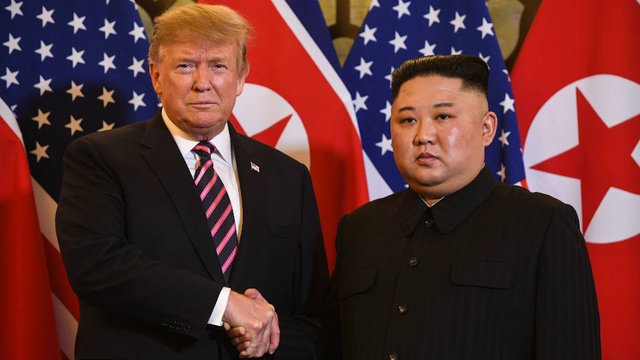
Trump and Kim in Hanoi
Pakistani Prime Minister Imran Khan took an important step in reducing the tension with India by announcing that Pakistan will release the captured Indian pilot on Friday. The move must have been difficult for the Pakistani military but it was the correct decision. China ran an editorial in support of its ally, Pakistan, in Global Times:
“Restraint is not easy when a country has suffered such a horrible attack. However, terrorist organizations are common enemies of both India and Pakistan. Pakistani people also have been victims of terrorism for the last few decades. India needs to deal with the problem by working with Pakistan and rallying support of the international community to fight terrorism.”
Now the question is whether India can show similar restraint, and the matter is pressing since Prime Minister Modi is confronting a national election in May and there is a strong anti-Pakistan sentiment in India right now. The Economist (not a fan of Modi) highlights the situation:
“Mr Modi has made a career of playing with fire. He first rose to prominence as chief minister of Gujarat when the state was racked by anti-Muslim pogroms in 2002. Although there is no evidence he orchestrated the violence, he has shown no compunction about capitalising on the popularity it won him in Hindu-nationalist circles. With a difficult election ahead, he may think he can pull off the same trick again by playing the tough guy with Pakistan, but without actually getting into a fight. However, the price of miscalculation does not bear thinking about. Western governments are pushing for a diplomatic settlement at the UN. If Mr Modi really is a patriot, he will now step back.
Susan Rice was President Obama’s second term National Security Adviser and she has written an op-ed for the New York Times about the summit meeting between North Korean leader Kim and US President Trump. The summit comes at a very awkward time for President Trump: there are indications that the US Congress might disallow President Trump’s national emergency declaration and Trump’s former lawyer is scheduled to testify about possible criminal behavior in the Trump Administration. These vulnerabilities might make President Trump think about scoring a diplomatic victory in Hanoi (unfortunately, no matter what happens, Mr. Trump will claim victory–after the first summit in Singapore Mr Trump prematurely claimed that there was no longer an nuclear threat from North Korea). Rice argues that Mr. Trump may make “further concessions to the North Korean dictator, like a peace declaration, partial sanctions relief, or continued limitations on United States military exercises or troop presence without receiving tangible, irreversible concessions in return….[h]istory suggests that Mr. Trump will be content with another colorful photo opportunity and more diplomatic shadow boxing that perpetuates the illusion of success, while running down the clock on a nearly intractable challenge.”
It is always dangerous for a politician experiencing weakness at home to look to international diplomacy as a way of shoring up a political base. In this particular case, Mr. Trump may make decisions that will not serve the US national interest.
58 former national security officials, who have served in both Republican and Democratic Administrations, issued a statement protesting President Trump’s national emergency declaration about the southern border. The statement was judicious and read, in part:
” On February 15, 2019, the President declared a “national emergency” for the purpose of diverting appropriated funds from previously designated uses to build a wall along the southern border. We are aware of no emergency that remotely justifies such a step. The President’s actions are at odds with the overwhelming evidence in the public record, including the administration’s own data and estimates. We have lived and worked through national emergencies, and we support the President’s power to mobilize the Executive Branch to respond quickly in genuine national emergencies. But under no plausible assessment of the evidence is there a national emergency today that entitles the President to tap into funds appropriated for other purposes to build a wall at the southern border. To our knowledge, the President’s assertion of a national emergency here is unprecedented, in that he seeks to address a situation: (1) that has been enduring, rather than one that has arisen suddenly; (2) that in fact has improved over time rather than deteriorated; (3) by reprogramming billions of dollars in funds in the face of clear congressional intent to the contrary; and (4) with assertions that are rebutted not just by the public record, but by his agencies’ own official data, documents, and statements.
In addition, 26 former Republican lawmakers issued their own statement indicating deep reservations about the constitutionality of the declaration.
“We offer two arguments against allowing a president—any president, regardless of party—to circumvent congressional authority. One is the constitutional placing of all lawmaking power in the hands of the people’s representatives. Article 1 of the Constitution, which vests the legislative branch with specific powers, states in section 9: “No money shall be drawn from the Treasury, but in Consequence of Appropriations made by Law.” The power of the purse rests with Congress because it is comprised of 535 representatives of the taxpayer and is the most direct connection between those being governed and those governing. If you allow a president to ignore Congress, it will be not your authority but that of your constituents that is deprived of the protections of true representative government.
“The second argument goes directly to the question each of you must face: how much are you willing to undermine both the Constitution and the Congress in order to advance a policy outcome that by all other legitimate means is not achievable? The current issue—a wall on our southern border—has gone through the process put in place by the Constitution. It has been proposed by the President, it has been debated by Congress, and the representatives of the people allocated funding at a level deemed appropriate by Congress. We understand that there are many Members of Congress who disagree with the final funding compromise reached by a bipartisan group of legislators. To you, we ask this question: what will you do when a president of another party uses the precedent you are establishing to impose policies to which you are unalterably opposed? There is no way around this difficulty: what powers are ceded to a president whose policies you support may also be used by presidents whose policies you abhor.”
It is not clear whether the US Congress will heed these warnings. A resolution disapproving the declaration will likely pass the House of Representatives but may not pass the Senate. Even if there are enough Republican Senators to pass the resolution, President Trump will likely veto the resolution. The declaration is incredibly dangerous and unnecessary and it should be defeated.
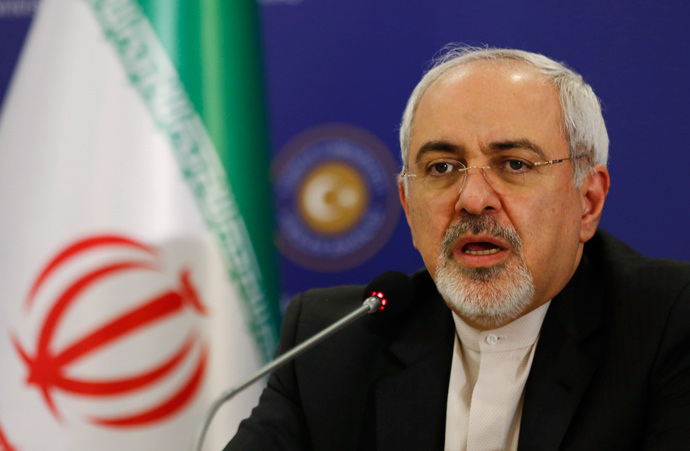
Iran’s Foreign Minister Mohammad Javad Zarif has unexpectedly announced his resignation. Zarif was a central figure in working out the details of the Iranian nuclear agreement which, despite the US pullout, still remains in force. The resignation was likely in response to pressures from hardliners in Iran who oppose the agreement and it may signal growing power of that group in Iranian politics. If true, then we should pay careful attention to Iranian actions in Syria. The hardliners are also determined to maintain a more forceful position vis-a-vis Israel. The resignation must be accepted by President Rouhani to become effective, so it may be the case that Zarif simply wants Rouhani to repudiate the hardliners.
Foreign Minister Mohammad Javad Zarif
Nigerian President Muhammadu Buhari has taken an early lead in the election polls. The election, which was held yesterday after a week’s delay, was accompanied by a degree of violent protests by those who believe that the results are being manipulated. The election is very important as Nigeria is the most populated country in Africa and has the largest economy. It is also, however, a country plagued by corruption and riven by ethnic and religious conflicts. We do not expect the final results of the election to be announced until later this week.
 World Politics News