Archive for the ‘World Politics’ Category

5 August 2013   Leave a comment

The insurgent group, Boko Haram (which means “Western education is a sin”), has been waging a guerrilla war in the northern part of Nigeria.  The group claims to represent the interests of the primarily Muslim population of the north against the primarily Christian population in the south.   The Nigerian army has been trying to wrest control away from the rebels, but the violence has been widespread and extreme.  It is very difficult to determine to what extent the group has support of the civilian population.

Max Fisher of the Washington Post looks at a map of where the American embassies and consulates are closed in the Middle East and North Africa.  By simply looking at the map, he gleans some interesting questions about how the US defines and interprets the threat.  It is less of a broad-brush than has been defined by many.   The threat apparently is more specific than the government has intimated.  It remains to be seen how real the threat actually is.  Many writers in the foreign press believe that the alert is not genuine but a political ploy by the US government to deflect attention from the furor associated with the trial of Bradley Manning and the controversy over the leaks from Edward Snowden.

Max Fisher also has a very nuanced view of the recent speech by President Rouhani of Iran that has raised so much controversy.  Some have interpreted his speech as similar to many speeches by former President Ahmadinejad.  The actual translation seems to be quite different.  There are some, however, who believe that Rouhani’s words only serve to disguise Iran’s true intent, which is to delay further sanctions while Iran continues to build its nuclear capability.

Posted August 6, 2013 by vferraro1971 in World Politics

4 August 2013   Leave a comment

The Israeli-Palestinian negotiations have just begun, but Israel has decided to extend subsidies to settlements in the West Bank even though those very settlements are presumably one of the subjects of the negotiations.  Since 1967 about 500,000 Israelis have moved into about 100 settlements in the Occupied Territories.   The Fourth Geneva Convention stipulates that:

Article 49 (1) states

“Individual or mass forcible transfers, as well as deportations of protected persons from occupied territory to the territory of the Occupying Power or to that of any other country, occupied or not, are prohibited, regardless of their motive.”

Article 49 (6) states

“The Occupying Power shall not deport or transfer parts of its own civilian population into the territory it occupies.”

Additionally, the UN Security Council and the International Court of Justice have both ruled that the Geneva Convention applies to the Occupied Territories.  It is hard to believe that the Israeli government is serious about the negotiations if it is also willing to simultaneously aggravate an already difficult situation.

President Obama recently gave a speech in which he argued that reducing economic inequality should be a priority.  It is not clear, however, what concrete steps he was prepared to take in that direction, assuming that the Congress would even allow him to do so.  There are good reasons to doubt the commitment of many of the world’s leaders to such a policy.  Inequality will be reduced only when governments are forced to take effective steps.  In the US, about 36 percent of young people aged 18-31 are living with their parents–the highest level in four decades.

4 August  is the anniversary of Britain’s entry into World War I.  In 1914, very few realized how important and devastating that war would be.  It is often the case that we are unaware of a looming tragedy, and it is always appropriate to be aware of things going awry.

Posted August 4, 2013 by vferraro1971 in World Politics

3 August 2013   Leave a comment

Robert Mugabe has apparently won his seventh term as President of Zimbabwe.  His opponent, Morgan Tsvangirai, claimed that there was significant fraud in the election, but the observers from the African Union asserted that the election was essentially fair.  Mugabe is a hero of the liberation of Zimbabwe (once called Rhodesia when it was a British colony), but his leadership in Zimbabwe has been miserably ineffective and corrupt.

As the Israeli-Palestinian negotiations proceed, there are many groups in the US that are well-organized to support different positions on both sides.  One of the best organized groups supporting the Israelis are Christian Zionists.  About 25% of Christians in the US identify themselves as Christian Zionist–Christians who believe that the establishment of the state of Israel is a precondition for the second coming of Christ.   Christian Zionism actually predates Jewish Zionism, and is deeply embedded in American politics.

The Telegraph published some extraordinary pictures of Shanghai: one in 1987 and the other in 2013.  The change in China is dramatic and the photographs capture the sweep of the changes brilliantly.

Posted August 4, 2013 by vferraro1971 in World Politics

2 August 2013   Leave a comment

An article in the latest issue of Science identifies a strong link between a rise in temperature and violence.  For those of us who have suffered through hot and humid days, it is easy to believe that tempers get more frayed on hot days.  But this study looks at violence in a wide number of societies and find that the link is quite strong across cultures.  This recent video put out by NASA looks at the change in temperatures for North America under two different levels of CO2 in the year 2100.  If these projections true out to be accurate, then we can also expect violence to increase as well.

The US State Department will close US Consulates in 17 countries on Sunday and issued a worldwide travel alert.   The alert suggests that terrorist threats emanating from the Arabian peninsula are the source of the concern, but the alert is not specific at all about any details.  The alert is in effect until the end of August.

The New York Times has published a very sobering graphic on inequality in the world.   The graphic is based on data compiled by the OECD.

Posted August 3, 2013 by vferraro1971 in World Politics

1 July 2013   Leave a comment

Unfortunately, despite all the promising overtures from the new Iranian regime, the US House of Representatives decided to pass a bill that forces even tougher new sanctions against Iran.   The intent of the bill, which passed by a vote of 400-20, intends to stop all Iranian oil exports to any country in the world by threatening to blacklist any banks that finance Iranian oil exports.  Not only does the bill threaten to undermine US relations with countries that depend on Iranian oil, its assumption that US law can intrude on the conduct of any country in the world is breathtaking.  Regardless of whether one believes that such measures are indeed necessary, the timing of the bill is dreadful.  Iran has extended several subtle olive branches to the US and it would have worthwhile to first test the sincerity of those measures before such draconian measures were imposed.  We’ll see if the US Senate passes the bill as well, and whether President Obama signs it if it does.

Parts of China are experiencing the worst heat wave in 140 years.  Temperatures in southwest China around Shanghai have broken 100 degrees Fahrenheit and the heat wave is projected to continue until at least mid-August.

Pro-Morsi protests in Egypt are continuing despite the interim government’s demand that the protests cease.  It is clear that Morsi’s supporters intend to challenge the interim government and the potential for further bloodshed is quite high if the military decides to enforce the protest ban.  The confrontation will further complicate efforts to bring about some sort of reconciliation in Egypt.

Posted August 2, 2013 by vferraro1971 in World Politics

31 July 2013   2 comments

If you want a read on whether the newest round of Israeli-Palestinian talks will be successful, you should read this exchange between the White House Press corps and Jen Psaki, the State Department representative, on what is “different” in this round of talks.  The most persistent reporter is Matt Lee of the Associated Press.  He does a fabulous job of doing exactly what a reporter for a free press should do: press hard when the government gives vague and meaningless answers.  I apologize for the length of the excerpt, but there is no other way to demonstrate how difficult it was for Lee to get a substantive answer (and, in the end, the exchange ends with no good answer, but, one hopes, the State Department has to be excruciatingly embarrassed by the vapidness of its responses).  In the end, there is no good reason to believe that these negotiations will be any different from any earlier ones.

You can read the full transcript here.

QUESTION: Lovely. Now, beyond logistics, when he announced or appointed Ambassador Indyk to this post, the Secretary said that the Ambassador knows what has worked and what hasn’t worked in the past.

MS. PSAKI: Mm-hmm.

QUESTION: I’m wondering if you could elaborate a little bit. What has worked in the past?

MS. PSAKI: Well, Matt, I don’t – I’m not going to elaborate on that for you. I’m not a historian here.

QUESTION: Well, what did he mean, that the Ambassador knows what has worked and what hasn’t worked?

MS. PSAKI: I think we —

QUESTION: Because I think any – if you look at what has worked and what hasn’t worked in the past, everything hasn’t worked.

MS. PSAKI: So are you asking me why this is different?

QUESTION: I’m asking you, one, why it’s different, but I’m also asking you, what does he mean when he says that Ambassador Indyk knows what has worked?

MS. PSAKI: Well, he knows that Ambassador Indyk has been involved and engaged in this process in the past. He has respect from both parties. That was a key priority for the Secretary in making this appointment – somebody who could run the process on a day-to-day basis. The Secretary knows he can’t do this on his own. So certainly – I’m certain there are many lessons that have been learned from the past, but I don’t want to speak for how he will use those moving forward.

QUESTION: Okay. But you can’t specify then what has worked, what Ambassador Indyk knows has worked in the past?

MS. PSAKI: I think there’s lots of things, Matt, that —

QUESTION: Can you point to a single – just, I’m just curious; I’m really not trying to be a jerk about this. I just want to know what example can you point to as being something that has worked in the past?

MS. PSAKI: I’m not going to read out for you their discussions of what lessons they’ve learned from the past and how they’ll apply them moving forward.

QUESTION: All right. The lessons learned from past failures, is that what you mean?

MS. PSAKI: Well, Matt, if it had worked in the past we wouldn’t be pursuing this process right now.

QUESTION: All right. And then just my last one on this is: Does the Secretary still believe, as he said up on the Hill a couple months ago, that time is running out for a peace agreement.

MS. PSAKI: He certainly does. He believes that time is not our ally, which is why we’re working so hard on this issue now. As time passes, the situation on the ground becomes more complicated, mistrust deepens and hardens and the conflict becomes even harder to resolve. It allows for vacuums to be filled by bad actors who want to undermine our efforts. That’s one of the reasons why they have all agreed to focus on having talks not just for the sake of talks, but this is the beginning of direct, final status negotiations on a nine month – at least a nine-month timetable. They’ve agreed to work together through the course of that time, and the Secretary absolutely feels that time is of the essence.

QUESTION: What, in your view, was the last thing that pushed —

QUESTION: I’m sorry. The nine-month —

MS. PSAKI: Sir, let’s let Jo – just let Jo. And we’ll go to you – we’ll go to you right next, Said.

QUESTION: Sorry, the nine-month timetable, when does that start from? That’s starts —

MS. PSAKI: Starts now.

QUESTION: — from today?

MS. PSAKI: Mm-hmm.

QUESTION: And in —

MS. PSAKI: But it’s not a deadline.

QUESTION: Okay.

MS. PSAKI: This is an agreement that they will work together for at least that time period on this effort.

QUESTION: What will determine when they’re no longer working together? Do you have to have a peace deal, or does it have – I mean, is nine months a timeline for which, by the end of which, you want to have a peace deal?

MS. PSAKI: Well, they have – it is not a deadline.

QUESTION: Right.

MS. PSAKI: It is an agreement by – to engage in direct, final status negotiations for at least nine months. So we’re going to make every effort to reach an agreement within that timeframe, but again, if we’re making progress and we’re continuing to make progress, this is not a deadline, it’s not a stop-end, it’s just an agreement to continue to work through that time period.

QUESTION: So it could be extended at the end of nine months if you feel you’re still making progress?

MS. PSAKI: It’s not a cutoff deadline, exactly.

QUESTION: So a child conceived today, if all goes well – (laughter) – should be born with a Palestinian state.

MS. PSAKI: Well, Matt —

QUESTION: Is that right?

MS. PSAKI: — good luck with that. We hope you can report back to us on the status. (Laughter.)

QUESTION: Let me ask you —

QUESTION: When he goes to – when they meet tomorrow, how can you – how do you foresee them moving forward, inch by inch, on this? Is it – is the discussion first on a framework? How do you envision this going?

MS. PSAKI: Well, the Secretary will have more to say on where things go from here tomorrow. But these meetings will serve as an opportunity to develop a procedural work plan for how the parties can proceed with negotiations in the coming months. And again, I expect they’ll have more to say tomorrow. But as they said – as the Secretary said just a week and a half ago, they’re eager to talk about the key issues at stake here, and I can’t predict for you if that’s hour one, if that’s hour seven, but obviously time is of the essence and this is the natural first step of the process.

QUESTION: Can we expect them to stay in Washington for the entire nine months, or do we see them going back and forth?

MS. PSAKI: No. I expect – and especially in naming Martin – Ambassador Martin Indyk as the Special Envoy, he’s going to be responsible for facilitating negotiations, of course. And in that role he’ll be spending a lot of time in the region. But again, I don’t want to predict what will be here and there, but certainly a lot will take place there.

QUESTION: And can I just get clarification on – sorry – on Ambassador Indyk?

MS. PSAKI: I’m not forgetting you, Said. Yes.

QUESTION: Exactly that. You said he’ll facilitate. So in other words, does he direct, set a schedule, or does he kind of set – stand back, sit back, watch how they do it, guide them, et cetera? Who’s kind of directing?

MS. PSAKI: Well, certainly we will play an active role, as has already been evidenced, in facilitating the dialogue and discussions. But ultimately it’s the responsibility of the parties to make the hard choices necessary. So he will be running kind of the day-to-day, playing – representing the U.S. on a day-to-day. But again, it’s up to both parties, and we won’t get too far ahead of where we are, which is the first day.

QUESTION: Jill asked the right question, but just to follow up a little bit.

MS. PSAKI: Mm-hmm.

QUESTION: They are going to be working face-to-face, alone, so to speak, without any sort of American supervision or interference?

MS. PSAKI: Well, certainly we expect – the question here is what is the most productive role the U.S. can play? Obviously, the Secretary named Ambassador Indyk to this role so he could be there on a day-to-day basis. But again, I expect they’ll have more to say tomorrow after they conclude the first two days of procedural planning for this effort.

QUESTION: Well, he will be – correct me if I’m wrong – he will be sort of on call when they run into obstacles?

MS. PSAKI: I think he will be very engaged in day-to-day discussions with both parties. But again, I don’t want to get too ahead of what his day-to-day will entail.

QUESTION: Okay. And just a quick follow-up on what is different this time around. I mean, you, as a member of the team that has been involved in this process, what do you – in your judgment, what was the last thing that pushed the last hurdle sort of out of the way to restart the talks, to have both agree to the talks?

MS. PSAKI: Well, the Secretary has spoken about this a bit himself in terms of what is different this time, or what he views as different. There’s no question, we know that the challenges we face – and he’s long said this – have required some tough choices. We’ve seen some evidence of that. But both parties also recognize – and this is his view – that there’s a new urgency in moving towards peace. And he felt that he had heard, through his meetings, deep concern both in the region and many other parts of the world in seeing a resolution to the Israeli-Palestinian conflict.

So there’s a feeling that the status quo is not sustainable, that there’s an urgency given events on the ground, given both sides’ seriousness, and that’s why we’re where we are today.

QUESTION: Okay. And lastly, this time around, the fact that it is low-key in the sense that Abbas and Netanyahu and – like, the last time there was Mubarak, who’s gone now, Abdullah of Jordan and so on, and the President, does that tell us, or should it tell us, that expectations are low this time around —

MS. PSAKI: Well —

QUESTION: — and not as high as they were the last time around?

MS. PSAKI: Well, our goal is certainly to reach a final status agreement. That has not changed. But I think what you’re talking about in terms of how it’s quiet is what we’ve talked about a little – a bit in here, and the Secretary has talked about, about giving the negotiations and the discussions the room to make progress. He feels that’s a priority, and that’s why we have been making every effort to give them the room to do just that.

QUESTION: So each time in the past that new talks have been announced, people from this podium and the White House and secretaries of state, presidents, have spoken about a new urgency —

MS. PSAKI: Mm-hmm.

QUESTION: — and spoken about how the status quo is not sustainable. What exactly is it that’s different this time?

MS. PSAKI: Well, Matt, I think we see both parties agreeing that time is of the essence and they want to move things forward.

QUESTION: Yeah, but —

MS. PSAKI: We’ll see —

QUESTION: But that’s exactly what has been said previous – in previous iterations of this.

MS. PSAKI: Well, I think we have to give time for the process to continue and to work its way through. But I think the Secretary and others involved feel that this is moving in a positive direction.

QUESTION: This is the Administration’s third try at getting talks going. Was there any thought at all given to putting someone in the – at the helm whose past history is not that of failure?

MS. PSAKI: Well, Matt, the reason that he has the relationships —

QUESTION: I don’t – right.

MS. PSAKI: — and I believe the confidence of both sides is because he has been through this before, and again, has – is eager to apply lessons learned from the past. And having somebody with that experience and the confidence of the President and the Secretary is vital in such an important role.

QUESTION: I’m not taking issue with the fact that he has experience. He clearly does, and I don’t think you can argue that experience is not of value here. But I just want to know, was there any thought given to getting some new blood into this process?

MS. PSAKI: Well, again, he will be working with a team of people. You heard the Secretary announce that Frank Lowenstein will be involved in – heavily involved in this. We’re also working, of course, with Phil Gordon over at the White House, who’ll be in a lot of these discussions. So he is the person who the Secretary and the President felt was right to lead this effort given his experience, and he’ll be working with a broad team of senior officials.

QUESTION: And what is the role of Phil Gordon? Can you explain what role he will have?

MS. PSAKI: Well, he, as you know, was once here and now is over at the White House.

QUESTION: Right. The White House, right.

MS. PSAKI: And he oversees – this is part of his portfolio. So he’ll be participating in the discussions over the next two days. Beyond that, I don’t have a prediction from there.

QUESTION: So he will give it his fulltime effort, so to speak?

MS. PSAKI: I’m not suggesting that. I’m suggesting that we’re working closely with him and we’re very in lockstep with the White House on these efforts.

QUESTION: Excuse me if I didn’t follow quite closely there. I just want to go back to the logistics of these meetings —

MS. PSAKI: Sure.

QUESTION: — over the next nine months. Do you expect them to be on a weekly basis, on a monthly basis?

MS. PSAKI: I don’t have a prediction at – of that for you right now. Obviously, sending Ambassador Indyk to spend some significant time in the region is an indication that we feel there will be a portion there. But I don’t think the Secretary is getting ahead, before discussing over the next two days, what’s going to work and the procedural work plan for the coming months.

QUESTION: I’m sorry, did you say when Ambassador Indyk will head out to the region?

MS. PSAKI: I did not. I don’t have an update on that for you quite yet. It just started.

QUESTION: And how long is he expected to spend out there?

MS. PSAKI: He could come back and forth. I don’t have kind of a prediction of how long he’ll be on the ground each time.

QUESTION: So the talks will meander between Washington and Israel and —

MS. PSAKI: Well —

QUESTION: — or maybe even Jordan or (inaudible)?

MS. PSAKI: Again, I don’t want to – I just don’t want to mislead anyone about kind of what the plan is. Obviously, there will be a significant amount of time that Ambassador Indyk will spend on the ground. They’re talking and working through now what the procedural work plan is, so I just don’t want to get too ahead of their own discussions and planning.

QUESTION: And could I just ask again, logistically for tonight —

MS. PSAKI: Sure.

QUESTION: — other than the main people you already mentioned, who else will be at the Iftar dinner?

MS. PSAKI: I will – I’m happy to venture to get you a list of attendees for that. I just don’t have it in front of me.

QUESTION: But the idea is to have an intimate dinner or are you planning to have a more broader participation with —

MS. PSAKI: No, it’s more of an intimate dinner. But again, we’ll see – we’ll get you the list of participants. I’ll check on that.

QUESTION: And that’s going to be at the State Department?

MS. PSAKI: It is, exactly.

QUESTION: Sorry, can I just make sure I understood the answer to my last question —

MS. PSAKI: Sure.

QUESTION: — about new blood? So the answer was no, there wasn’t any consideration of bringing people in, new people who haven’t been involved —

MS. PSAKI: Matt, I’m not going to get into the sausage making. But obviously, the decision was made by the Secretary, by the President, by the national security team that he was the right person for this job. He has the right experience for this job and he has the respect and confidence of both sides. Obviously, there’ll be a number of officials working on this process moving forward.

QUESTION: A few weeks ago, it was the term “silent diplomacy” was coined or used in – on this podium. It is still applicable, this approach and term?

MS. PSAKI: Absolutely. I think one of the Secretary’s priorities and the priorities of the team is to give the process the room and the privacy to make – allow progress to be made. So that is certainly a priority of the team working on this.

QUESTION: And the other question related: Are the other two partners in this process agreed about this silent diplomacy, or not?

MS. PSAKI: There was an agreement that we weren’t going to discuss all the details, we were going to allow many of those conversations to happen privately. Obviously, there are announcements or decisions that need to be made by both parties, and some of them have been – become public over the last couple of days, as we have seen. But this is a commitment the Secretary made and he feels it’s important to abide by.

QUESTION: So quite apart from Ambassador Indyk, the other two parties to this, the negotiating teams, Tzipi Livni and Molho, Ms. Livni was involved in the Annapolis peace process which resulted in no agreement, Mr. Molho was involved in both of the previous George Mitchell attempts which were not good, and on the Palestinian side Mr. Erekat and Mr. Shaath have been involved in unsuccessful negotiations with the Israelis since Madrid. Can you explain to me how exactly you see this time that this cast of characters, all of whom have been at this for decades and not achieved anything, is going to make – is going to be any different?

MS. PSAKI: Well, Matt, it sounds like we’re lucky to have decades of experience ready to come back to the table and make an effort to push forward.

Posted July 31, 2013 by vferraro1971 in World Politics

30 July 2013   Leave a comment

Al Jazeera conducted a poll among young people in Libya, Egypt, Yemen, and Tunisia and found that the vast majority of youth felt disenfranchised from the political process in their countries.  That the alienation would be so deep after the dramatic effects of the “Arab Spring” suggests that those effects seem to have been short lived.  One dimension of the poll is intriguing:  the youth of Tunisia, Yemen, and Libya identify themselves more as Muslims than as citizens of their state.  Only in Egypt did the respondents identify themselves as Egyptians before they identified themselves as Muslims.

The Council on Foreign Relations has published a fascinating study of US military spending.  The US is by far the largest military spender in the world, but its military spending as a percentage of its GDP has slowly declined over the years.

U.S. National Defense Spending

President Obama’s recent budget proposal would reduce military spending to about 2.4% of the US GDP, the lowest level since World War II.

Bradley Manning, who plead guilty to the violation of espionage laws, was found not guilty of the more serious charge of aiding the enemy.   Manning released more than 700,000 documents to the website, Wikileaks, that revealed a great deal about the conduct of the US military in Iraq.  The military court found that Manning did not deliberately leak the material in order to aid al Qaeda.  Some regard Manning as a whistleblower who simply revealed misconduct and not national security secrets.  There is little question, however, that he did violate the terms of secrecy that governed the documents he released.

Posted July 30, 2013 by vferraro1971 in World Politics

29 July 2013   Leave a comment

According to the Associated Press, new statistics reveal that 80% of the American population lives in a condition of “economic insecurity” which is defined as joblessness, poverty or near-poverty, or reliance on government assistance for at least part of their working lives.  The statistics are staggering and reveal the consequences of the process of globalization, technological change, and growing income inequality.  The study suggests that this pattern will only worsen in the future in the absence of strong counter-measures.  My suspicion is that similar statistics could be found in most countries of the world right now.

Military technology often develops by paying attention to the past.  In the specific case of protecting a military target from a missile attack, the US is now marrying drone technology with the old-fashioned blimp.  The blimps will patrol vital targets, like Washington, DC, and keep an eye out for incoming missiles.  They will also be remotely controlled which allows the blimps to stay afloat for extended periods of time.  The last time blimps were actively used in warfare was in World War II.

Iranian President-elect, Hassan Rouhani, has announced that he intends to pick Mohammad Javad Zarif as his foreign minister.  If true, the appointment would signal a strong intention to negotiate seriously with the US and the UN Security Council.  Zarif received his Ph.D. from the University of Denver and is associated with individuals and groups in Iran that have long favored a more pragmatic approach to the nuclear negotiations.   We will see if the US and its allies respond favorably to this subtle overture.

Posted July 30, 2013 by vferraro1971 in World Politics

26 July 2013   Leave a comment

The People’s Liberation Army of China has released a new video game, “Glorious Mission Online,” patterned after the Call of Duty series.  The objective of the game is to reclaim the disputed islands called the Diayou by the Chinese and the Senkaku by the Japanese.   The islands have been the subject of a variety of military maneuvers by both sides, and are the source of increasing tensions between the two countries.  The Japanese also released a model boat bearing the words, “Operation Senkaku.”  Propaganda begins at a very young age.

There are dueling protests in Egypt as tensions continue to ratchet up.  Al-Ahram published a map of the protests in Egypt today:

Although former President Morsi has not been seen in public since the military coup, Egyptian prosecutors have made formal charges of murder, espionage, and conspiracy.  A trial will certainly inflame the situation further.

A lake has formed at the North Pole.  The phenomenon is highly unusual, but perhaps not unprecedented.  There is, however, a strange pattern of storms that are forming at the North Pole which may be related to the process of climate change.   There was a similar storm last year that led to the highest degree of ice melt ever recorded.

Posted July 26, 2013 by vferraro1971 in World Politics

25 July 2013   Leave a comment

Mohammed Brahmi, the leader of the secular left-wing in Tunisia, was assassinated today.  He led the opposition to the ruling Ennahda party which took power after the revolution in January 2011–the revolution that marked the beginning of the “Arab Spring.”  There were protests in the streets after the killing, and several unions declared strikes in sympathy.  The Ennahda party immediately condemned the murder, but it is not clear who was responsible.   This is the second assassination of an opposition figure in Tunisia in the last six months.

The US Senate has decided that the recommendations of Senators about the reform of the tax code should be sealed for 50 years.  The assumption of the rule is that many lobbies which have given campaign contributions to the Senators should not know whether their interests have been betrayed by a specific Senator.  In some weird world the assumption makes sense; however, it is difficult to reconcile this procedure with a democratic system.  It is a rule that also prevents ordinary citizens from knowing how their representatives define their interests.  It will be interesting to see the final version of the tax code produced under these circumstances.

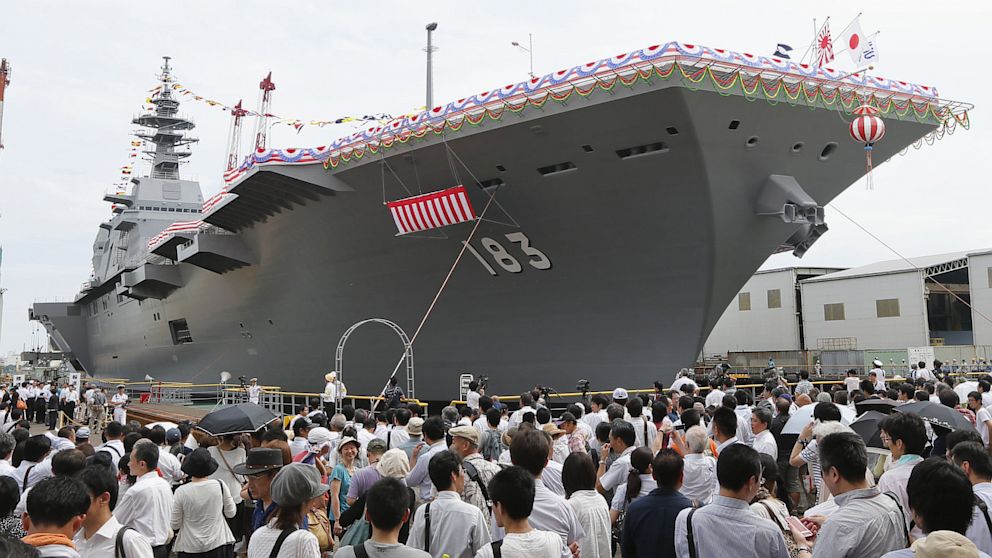
Japan is considering the possibility of developing an offensive military capability, a capability currently denied by the state’s constitution.   Such a change would be nothing short of seismic in East Asia as virtually every other state would have to regard the development as a threatening one.  Prime Minister Abe, however, is feeling politically quite strong, and the economic effects of a military buildup might stimulate the Japanese economy to a considerable degree.

Posted July 26, 2013 by vferraro1971 in World Politics