Archive for the ‘World Politics’ Category
Spend an evening with
Gillian Sorensen, Senior Advisor at the UN Foundation and UNA-GB members
Stoddard’s Fine Food and Ale
48 Temple Place, Boston, MA
Wednesday, February 19, 6:00 – 7:30 p.m
*Ticket price covers light appetizers. Cash bar available
Gillian Sorenson is a senior advisor at the United Nations Foundation, a national advocate on matters related to the UN and the US-UN relationship.
From 1997-2003, she served as Assistant Secretary-General for External Relations under Secretary General Kofi Annan, where she was responsible for outreach to non-governmental organizations and was the contact person for the secretary-general with parliamentarians, the academic world, religious leaders, and other groups committed to peace, justice, development and human rights.
Prior to that, she served as Special Advisor for Public Policy under Secretary-General Boutros Boutros-Ghali. With her unique ‘insider’ perspecitve she explores the issues that populate headlines today and is a persuasive advocate for the UN.
Mark your calendars! Please join us for a discussion with Evyenia Sidereas, the U.S. State Department Diplomat in Residence for New England on January 29 at 4:15pm in Dwight 101.
She will be on campus to discuss State Department internships and career opportunities. Students are welcome to reviewhttp://careers.state.gov/ for information about the Department’s student programs and career paths at any time, and may reach out to Ms. Sidereas with specific questions at DIRNewEngland@state.gov if you cannot attend the session.
Ms. Sidereas has served overseas in Thailand, Kosovo, Egypt, and Iraq. Most recently, she was the acting Director for Maghreb Affairs at the State Department’s headquarters in Washington, DC. Please join us on January 29!
The Five College Program in Peace & World Security Studies Presents:
SYRIA: Prospects for Peace and Implications for U.S. Foreign Policy
A Presentation byProf. Omar Dahi
Assoc. Professor of Economics, Hampshire College
With Additional Comments by Prof. Michael Klare
Five College Professor of Peace & World Security Studies
Tuesday, Feb. 4, 7:30 PM
Hampshire College
Franklin Patterson Hall: East Lecture Hall
Sometimes maps can convey all one needs to know about a particular conflict. Such is the case with Ukraine which is divided between Ukrainian speaking people in the western part of the state and Russian speaking people in the eastern part of the state. As the map below suggests, the protests in Ukraine correlate almost perfectly with this linguistic division. How one reconciles such a division given the issue involved–a customs union with Russia or closer ties with the European Union–is difficult to imagine. But the first step in Ukraine would be to address the issue of government corruption first.


There is growing instability in the global economy. Turkey, Mexico, Venezuela, Ukraine, Thailand, and South Africa have all experienced sharp declines in their currencies as doubts have arisen among investors about sovereign debt payments. The sharp declines are due to a confluence of domestic instability in some of these states as well as a concern over the health of the global economy as a whole. The concerns are difficult to gauge. They do not, at this time, reflect a deep lack of confidence. But doubts sometimes build upon themselves, leading to panic. We will have to keep an eye on this trend.
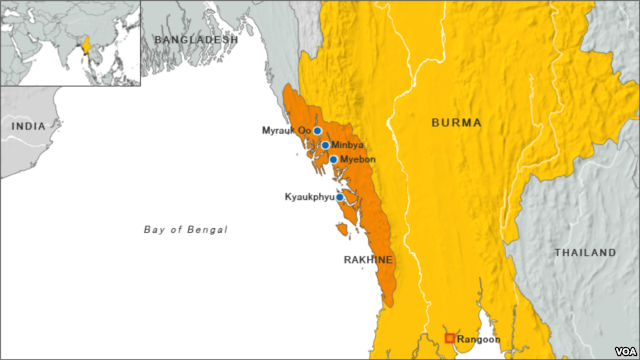
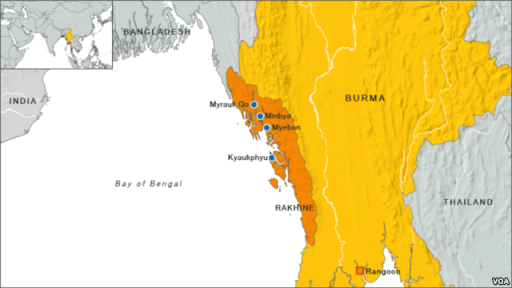
There are many nations in the world that lack a state to protect them. These nations are usually minorities in states with majority populations that control the state (but not exclusively–there are some majority peoples who are ruled by a minority). One of the world’s largest nations is the Royingha, Muslims who live in Myanmar which has a majority Buddhist population. The Buddhists resent the presence of the Muslims who migrated to Burma from Bangladesh and live primarily in the Rakhine Province of Myanmar. Since the military government in Myanmar has loosened its domestic controls, the Buddhists have taken the new freedom as an opporunity to assert what they believe is appropriate control over the region. In recent years, the violence between Buddhists and Muslims has grown steadily worse.
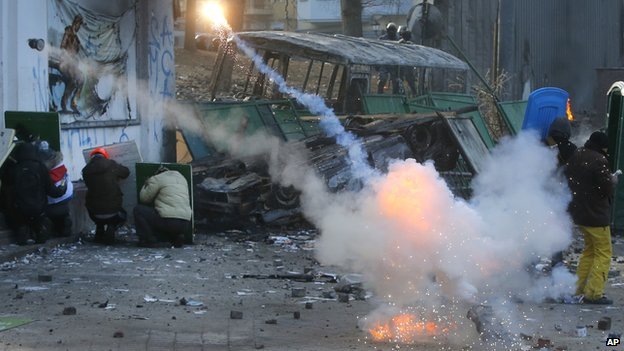
A truce has been declared in the ongoing violence between the Ukrainian government and protesters. The truce comes after intense fighting yesterday, but it only holds in the capital city of Kiev and there are reports that the protests have erupted in other cities as well. Both sides seem to be well aware of the stakes involved, but it is not clear what possible points of reconciliation exist or even what is being discussed during the truce. Initial reports suggest that there were no positive results from the truce.
One of the more unsettling changes over the last two years has been the movement of Japan toward a more aggressive military posture. The change can be justified by the new military power of China as well as the nuclear policy of North Korea. But in many respects, Japan had tried not to be a “normal” country. In article 9 of its constitution, the state declared that “the Japanese people forever renounce war as a sovereign right of the nation and the threat or use of force as a means to settle international disputes”. It is difficult to say how the Japanese people feel about this change in military posture–they definitely feel as if their position is more precarious, but their commitment to a more peaceful policy is also quite deep.
The International Labor Organization has issued its annual report on global employment trends, and its conclusions are grim. From the report:
Young people continue to be particularly affected by the weak and uneven recovery. It is estimated that some 74.5 million young people – aged 15–24 – were unemployed in 2013; that is almost 1 million more than in the year before. The global youth unemployment rate has reached 13.1 per cent, which is almost three times as high as the adult unemployment rate.Indeed, the youth-to-adult unemployment ratio has reached a historical peak. It is particularly high in the Middle East and North Africa, as well as in parts of Latin America and the Caribbean and Southern Europe.
The report projects that by 2018 the total number of unemployed youth will reach about 215 million. The political consequences of such high and long-term unemployment will undermine the social and political stability of many countries in the world.
Turkey is going through a very difficult time as corruption charges have reached the highest levels of Prime Minister Erdogan’s government. In response, the Turkish economy has faltered, and the Turkish currency is falling rapidly, leading many to worry that Turkey might be forced to default on its sovereign debt. Today, the Prime Minster implemented a purge of the official investigating the charges. According to Reuters:
Ninety-six judges and prosecutors were reassigned overnight, the biggest purge of the judiciary since a graft scandal erupted on December 17 with the arrest of businessmen close to Prime Minister Tayyip Erdogan and three ministers’ sons.
The move is likely to fail and lead to strong protests against the government. We will see if Erdogan can weather the storm.
Ukrainian police stormed the barricades of the protesters in Kiev and killed 5 protesters. The Ukrainian Prime Minister labelled the protesters as “terrorists” suggesting that the government has no intention of attempting to defuse the crisis that has been going on for about two months. The obdurate stance will no doubt inflame the tensions to an even higher level and there is no hint of a compromise.
As the diplomatic scuffles continue over the negotiations on Syria in Geneva, new evidence has surfaced indicating that the Assad regime systematically tortured and killed over 11,000 people in the three-year civil war. The evidence tremendously complicates any possible solution to the violence which may involve any possibility of conciliation with the Assad regime. The Western powers will find it impossible to treat Assad with any leniency; those who support Assad (Russia and Iran) will dig in their heels knowing that without him their influence in Syria will emphatically end. The world needs to answer the question: Is it more important that justice be served on a brutal tyrant than to find a way to end the horrific ongoing violence in Syria? The answer is not an easy one.
Globalization has had a dramatic effect on the global labor market. As is the case with all major economic transformations, there are both winners and losers–those who can adapt to the changes well will benefit and those who cannot adapt will lose. We are, however, living in the incipient stage of the latest wave of globalization and many have not had the chance yet to adapt, and questions are being raised about whether the technological changes associated with globalization really afford many opportunities for labor. The Economist has run an exceptionally perceptive essay on this particular problem–I recommend it highly.
The International Consortium of Investigative Journalists is a privately run non-governmental organization that has been dedicated to uncovering how much money in the world is being kept secret in offshore accounts in tax havens such as the British Virgin Islands. The organization has focused primarily on secret money held by western elites, but it has recently released a report on how much money is being held offshore by Chinese elites. The amount of money is truly staggering–the ICIJ estimates that almost $4 trillion has been spirited out of China and kept immune from Chinese government taxation and control. The amount of money is not only quite large, but it is also money that has been accumulated in a very short period of time. I suspect that this news will not be reported in the Chinese media.
Here’s an update on the ICIJ story: Chinese censors are scrubbing the internet to remove any references to the ICIJ report.
The interim agreement between Iran and the P5+1 has officially begun. The International Atomic Energy Agency has confirmed that the Iranians have stopped enriching uranium to 20% and have diluted their current stockpiles of highly enriched uranium. In return, the UN sanctions on Iran will be slightly relaxed, giving Iran an opportunity to begin selling certain items on the world market. The Israelis and others fear that the agreement does not prevent Iran from developing nuclear weapons. The fear is legitimate, but it must be weighed against the possibility that the Iranians genuinely wish to see an end to all the sanctions.
Oxfam, a highly regarded non-governmental organization, released a report today on the increased economic inequality in the world in the last 40 years. The report is devastating: “The wealth of the 1 percent richest people in the world amounts to $110 trillion. That’s 65 times the total wealth of the bottom half.” Even more dramatically, “The 85 richest people own about 0.7% of the world’s wealth, which is the same as the bottom half of the population.”
Oxfam makes a point of linking that economic situation to a genuine threat to liberal society. It is hard to imagine a stable polity with such serious discrepancies in access to power.
The government of Ukraine has responded forcefully to the protests against its decision to forge closer ties with Russia at the expense of ties with the European Union. The protesters are defying new laws designed to end the protests, so it appears as if neither side is willing to back off. The photos from the BBC on the protests in Kiev are quite dramatic.
I’m back from vacation. Two weeks in the Virgin Islands is a truly relaxing experience. I lost touch with current affairs (which was precisely the point). It seems, however, that the world decided to continue to unfold despite my studied indifference.
Reuters is reporting that China is building a second aircraft carrier, and has plans to build two more. China sent its first carrier, the Liaoning, through the Taiwan Straits last November and conducted a wide range of combat-related tests on that mission. The plans indicate that China fully intends to become a first-class naval power. It should be remembered, however, that the US recently launched its newest aircraft carrier, the USS Gerald Ford, and has announced plans to build two more of these state of the art carriers. The naval arms race is a classic example of what theorists call the “Security Dilemma” where one nation’s search for security is another nation’s threat of insecurity.
Israeli Prime Minister Benjamin Netanyahu has reportedly told US Secretary of State John Kerry that Israel wishes to annex a fourth Israeli settlement in the West Bank. The previous Israeli position had been to annex three settlements, all of which are close to the original borders of 1967. The new settlements is deep in the West Bank and would bring the total amount of land the Israelis wish to annex to about 13% of the total West Bank territory. Previously, the Palestinians have said that they would not consider any proposal that would consider a land swap of more than 2% of the total West Bank. At this time, we have no idea how Kerry responded to the idea.
Ukrainian protesters defied new laws against protests in one of the largest anti-government rallies in weeks. The laws have been denounced by many liberal democracies as some of the most extreme in the world. But some of the protesters, wearing saucepans and colanders on their heads to protest the laws prohibiting the wearing of helmets, appear to be more than willing to continue to defy the government.
Andrea Mammone is a lecturer at Royal Holloway at the University of London and she has written an op-ed piece for the New York Times which investigates the rise of right-wing parties in Europe and the growth of anti-European Union sentiment on the continent. It is a perceptive essay and its conclusions are worrisome. Not only does it explain the anti-“other” hatred which is growing in Europe (against gays, Jews, Arabs, Muslims, and Roma), but it also suggests that support for the European experiment is weakening among the populations.
The Council on Foreign Relations has published a background piece on Hezbollah, the organization supported by Iran and Syria that operates within Lebanon. The backgrounder provides good information on how Hezbollah operates and what its objectives are. Given the recent upsurge of violence in Lebanon, it is useful to know more about this organization.
The IMF has issued a paper which warns that indebtedness in many of the advanced industrialized countries has reached a 200-year high and that write-downs of the debt are necessary. There are a variety of ways to write-down debt–all of them painful. But each technique for reducing debt falls on different groups. A simple write-off (“we won’t pay the full amount we promised”) hurts the holders of bonds. A write-off that involves increasing revenues to reduce the debt hurts taxpayers, and the tax burden is disproportionately weighted against the poor. A write-off that involves reducing government spending also affects the poor more than the rich. And a write-off that inflates the currency (reducing the “real”, not “inflated” currency, necessary to repay the debt) hurts savers and bond-holders, who are mostly rich. We’ll see what the mix of policies are employed to reduce the debt burden.
This will be the last posting for a few days. I’m off for a vacation and will be posting only sporadically. I’ll be back to daily postings on the 18th of January.