Archive for the ‘World Politics’ Category
New information suggests that the oil company now known as ExxonMobil knew about the risks of carbon dioxide emissions toward the problem of climate change as early as 1981. Nonetheless, it continued for many years to fund groups, so-called climate change deniers, that argued that there was no scientific evidence about the link. Although the company now acknowledges the human role in climate change, by some estimates, it spent about $30 million supporting groups denying that climate change was a real problem.
The Pew Research Center has conducted research that the global middle class–a product of the process of globalization–is smaller than we have long assumed. According to the study:
“Only 13% of the world’s population fall into the category of ‘middle income,’ living on between $10.01 and $20 a day—an annual income of between $14,600 and $29,000 for a family of four, which is barely above the official US poverty line.”
The vast majority of these people live in either Europe or North America, and about 71% of the global population still live below this level.
The humanitarian crisis in Greece is difficult to comprehend and completely under-reported in the maze of economic gibberish. The health system is no longer available to about 25% of the Greek population and hospitals have cut their budgets as much as 50%. Europe is beginning to plan for a massive humanitarian effort in Greece if the economic crisis is resolved. In addition to the social crisis, Greece has already received more refugees from abroad (primarily from Syria and Africa) than it did in all of 2014.
There were some curious cyber incidents today: the computers for United Airlines, the New York Stock Exchange, and the Wall Street Journal all experienced problems. These problems were explained as internal problems, but there is a clear sense that something else was afoot. Last night, Anonymous tweeted: “Wonder if tomorrow is going to be a bad day for Wall Street….We can only hope” I doubt that we will ever really know what happened, but in trying to figure it out I came across a site that tracks cyber attacks across the world. It is called Norse and it tracks live attacks in real time. Fascinating stuff.
David Azoulay, Israel’s minister for religious services, has doubted the authenticity of Reform Jews as actual Jews. Azoulay is a member of the Shas Party in Israel, an ultra-orthodox party, which became part of Prime Minister Netanyahu’s government after the last election. Many American Jews are Reform Jews, and the message was not well received. The Prime Minister was quick to point out that Azoulay’s statements “do not reflect the position of the government.” But as a Cabinet Minister, Azoulay does have a significant voice.
In 1995 8,000 Muslim men and boys from the Bosnian town of Srebenica were massacred. The UN Security Council today introduced a resolution condemning the massacre as genocide, but despite receiving 10 votes (there were four abstentions, including China), the measure did not pass because of a Russian veto. Russian U.N. Ambassador Vitaly Churkin characterized the resolution as “not constructive, confrontational and politically motivated.” Russia is a long-time ally of Serbia, whose forces were accused of committing the massacre.

The European economic malaise is murkier than it ever has been. Ambrose Evans-Pritchard is one of the most connected economic journalists in Europe and he has an explosive piece in The Telegraph. In the article, Evans-Pritchard contends that Greek Prime Minister Tsipras actually expected that the Greek people would vote “Yes” in the referendum and had no back-up plan when the results came in to reject the bailout offer. Tsipras was blown away by the demands of Greece’s creditors and made the decision to hold the referendum as a graceful way to capitulate to those demands. The demands, according to Evans-Pritchard, were extraordinary:
“Instead they were confronted with a text from the creditors that upped the ante, demanding a rise in VAT on tourist hotels from 7pc (de facto) to 23pc at a single stroke.
“Creditors insisted on further pension cuts of 1pc of GDP by next year and a phase out of welfare assistance (EKAS) for poorer pensioners, even though pensions have already been cut by 44pc.
“They insisted on fiscal tightening equal to 2pc of GDP in an economy reeling from six years of depression and devastating hysteresis. They offered no debt relief. The Europeans intervened behind the scenes to suppress a report by the International Monetary Fund validating Greece’s claim that its debt is ‘unsustainable'”.
The situation now is that Tsipras cannot really back down, and Germany also believes that it cannot offer debt relief without encouraging other countries in trouble to follow the Greek path. It seems inevitable that Greece will have to leave the eurozone at some point. The Greek economy will collapse, but slowly recover. The biggest loser will be the European project: it cannot be a union of equals given the demonstration of German power and will.

Negotiations in Vienna between the P5+1 and Iran have been going on even though the 30 June deadline expired. The parties have extended the deadline to the end of this week and it seems clear from the rhetoric that a deal seems possible, but the most difficult issues remain to be resolved. According to Reuters, those issues include:
“…Iranian demands for a U.N. arms embargo and ballistic missiles sanctions to be lifted, the timing of U.S. and EU sanctions relief, and future Iranian nuclear research and development.”
The agreement will still have to be submitted to the US Congress, and there are reasons to believe that there will be strong opposition to it.
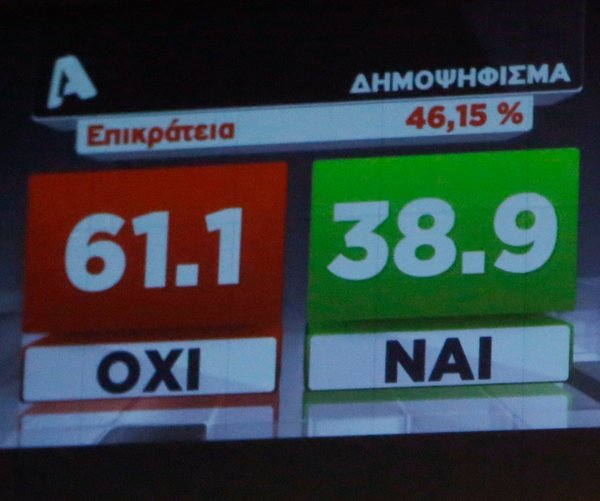
The results of the Greek referendum were clear: 61 percent of the Greek people voted to not accept the terms of the troika’s bailout. The global response to the vote has been largely negative, most analysts suggesting that the Greeks are unwilling to make the sacrifices necessary to sustain what they regard as an indulgent life-style. Most of those analysts support the German contention that the Greeks must cut more government spending. That characterization does not square with the actual behavior of the Greek government. Greece has cut government spending from roughly 13 billion euros to 10 billion euros–a cut of 23 percent.
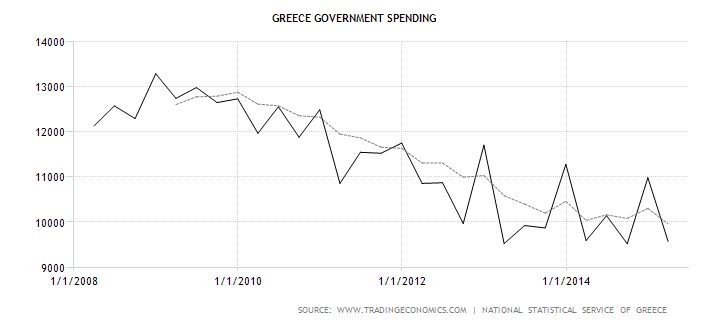
I am not sure what the German population would do in the face of a 23% reduction in government spending, but I am not aware of any people that would regard such cuts as indulgent. For those of you who read German, Zeit has an interview with Thomas Piketty, the French economist who published the highly influential book, Capital in the 21st Century, in which Piketty notes that:
When I hear the Germans say that they maintain a very moral stance about debt and strongly believe that debts must be repaid, then I think: what a huge joke! Germany is the country that has never repaid its debts. It has no standing to lecture other nations.
… Germany is really the single best example of a country that, throughout its history, has never repaid its external debt. Neither after the First nor the Second World War.However, it has frequently made other nations pay up, such as after the Franco-Prussian War of 1870, when it demanded massive reparations from France and indeed received them. The French state suffered for decades under this debt. The history of public debt is full of irony. It rarely follows our ideas of order and justice.
In 1953, “…the Federal Republic of Germany’s creditors — 20 countries including Greece — indeed agreed at a London conference to write off 55 percent of the country’s 32.3 billion Deutsche marks of foreign debt.” I suspect that Piketty will not be getting any lecture invitations in Germany any time soon.
Most interestingly, a split is emerging in the troika. The IMF has indicated that it believes that Greece needs debt relief and that reliance solely on the policy of austerity has not worked. The IMF report, “Debt Sustainability Analysis”, was released three days before the referendum over the very strong objections of the European members of the IMF. The US, however, and the vast majority of other members of the IMF were in favor of its publication. The US has been arguing for some time for debt relief for Greece.
Tunisia continues to serve as a bell weather for the Arab world. Many Tunisian youth are apparently attracted to radicalism because of the disillusionment that set in after all the twists and turns in Arab politics since 2011. The fundamental catalyst seems to be a sense among Tunisian young people that there really is no advantage in playing by the rules of the current system. The issue is not necessarily poverty, although that is a serious matter. The issue seems to be that even getting an advanced degree is no guarantee of getting a good job, and that political connections are more important.
RT is reporting that up to 120 US military personnel are operating in Somalia trying to maintain active drone strikes against al-Shabab radicals. Al-Shabab has been responsible for many terror attacks, including some particularly gruesome attacks against civilians in Kenya. Interestingly, these US forces are working with the African Union’s Mission in Somalia (AMISOM), but the US itself admits only a small number of Special Operations forces in the country.
The United Nations Human Rights Council has called for an end to child, early, and forced marriages. About 15 million girls are married every year in circumstances that deny them a voice in the arrangement, and the UN wants to label such practices as a violation of fundamental human rights. These practices are embedded in cultural mores that are difficult to change, but the UN makes the argument that denying girls control over the lives limits the development prospects of a society and reinforces patterns of poverty.
I am going to take a vacation from the blog until Monday. By then we will know the results of the Greek election and who knows what else will happen. But I am going to disengage for a few days.

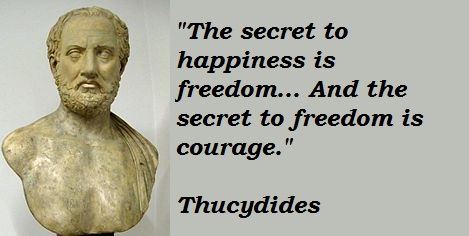
Robert Zaretsky has written a great op-ed essay for the New York Times entitled “What Would Thucydides Say About the Crisis in Greece?” which uses the Melian dialogue as a foil to discuss the current crisis in Greece. It is an instructive essay on how to use history to enlighten. My only complaint is that the photograph accompanying the essay identifies Thucydides as a “philosopher.” There is no doubt that all people who explore the realm of ideas are philosophers. But Thucydides was first and foremost a general who then became a historian.
Greece is technically in default, but the IMF has decided to assert simply that the Greek debt is “in arrears.” The distinction is political and psychological–default is considered to be a term to avoid in order to prevent panic. But at some point the term will not be avoided if Greece does not begin to pay down its debt. Sovereign default is not typical, but it has happened in the past; indeed, Germany has defaulted 4 times in modern history. There is no template for sovereign default: some countries have had a miserable time while others have navigated the storm fairly well. The Washington Post has a good article on historical sovereign defaults.

The deadline for the completion of an agreement between the P5+1 and Iran has been extended until 7 July. The principal negotiators are in Vienna and all sides appear to be committed to finalizing the interim agreement. The International Atomic Energy Agency has confirmed that Iran has met the interim deadline for conversion of about 4 tons of enriched uranium into an oxide form that is less useful in the construction of a nuclear bomb. That verification is a very important step toward the final agreement.
Aside from all the jitters surrounding the Greek default, the other economic story worth following is the Chinese stock market. It went up by 50% in the first 5 months of the year, and has declined by 25% in the last month. The Chinese government has been trying to stabilize the market, but much of the meteoric rise of the market was due to margin purchases by ordinary citizens who have not yet developed the skills of stock picking. According to the China Household Finance Survey conducted by the Southwestern University of Finance and Economics in China:
“Reports say the China Household Finance Survey, which is conducted by Southwestern University of Finance and Economics, found nearly 6 percent of new investors were illiterate, a quarter finished only elementary school and more than third left the education system at junior high school level.”
Buying on margin is a very risky process since a buyer only puts down a small percentage of the value of the stock, but the full price can be demanded at any time (and usually is when the price begins to fall). When the sellers begin to demand full price from those who bought on margin, the end result is usually a precipitous decline. We will have to see if the Chinese government can calm the markets.

Despite vehement Russian denials, evidence uncovered by a Ukrainian defense force indicates that the Russian military presence in eastern Ukraine is quite substantial. Dnipro-1, a volunteer defense force in Ukraine, flew a drone over a Russian military encampment and posted the video on You Tube. The military presence is substantial and is designed to prevent the Ukrainian government from feeling too comfortable in forging closer relations with the European Union and the US. Although the film is quite persuasive, there is little that the West can do to force the Russians to leave.
ATMs in Greece:

Who is Katie Hopkins?
Paul Krugman has written an op-ed piece which essentially argues that Greece should leave the euro and that the troika demands for more austerity is simply a ridiculous policy. Krugman is exactly correct, but few other analysts have been willing to make the argument in public. Repudiating a debt is regarded as complete heresy in most mainstream circles. The truth of the matter is that Greece has already made heroic concessions and none of those concessions have increased the economic prospects for the country in the least. So instead of suffering for many more years under austerity, the Greeks should accept the pain of leaving the euro which will be quite intense but would last for only about two years if previous debt repudiations are any guide. Enough of this idiocy. The Greeks deserve more than being slaves to the troika. The IMF can continue to insist that the Greeks raise taxes, but as long as its Director, Christine Lagarde, gets a tax-free salary, its advice is hypocritical. Below is a photograph of an elderly woman who has just been told that she would not be able to withdraw her pension from the closed bank.

The world stock markets were rattled by the prospect of a Greek default today: most markets suffered large losses. According to USA Today:
“The Dow Jones industrial average fell 350 points, or 2.0%, to 17,597 for its biggest slide since June 2013. Indexes in Europe were hit even harder with Germany’s DAX index down 3.6% and France’s CAC 40 down 3.7%. In Asia, Tokyo’s Nikkei 225 fell 2.9% and China’s Shanghai composite lost another 3.3% to officially enter bear market territory — meaning a drop of 20% or more.”
But Greece is a small country and it’s not clear that such nervousness is warranted. Robert Samuelson is an op-ed writer for the Washington Post and he goes through the underlying realities of a Greek default and concludes that the stresses will be manageable. Samuelson’s analysis is accurate and persuasive, but he does not really address the psychological dimensions of a Greek default. The Greek debt situation, unfortunately, is not unique: it may be quite large, but there are several other countries in the world with similar debts. If creditors believe that the Greek default is a harbinger of other problems, then instability may spread even though it may not be warranted. For example, today Puerto Rico announced that it will not be able to pay off its $72 billion debt and the Obama Administration indicated that it was not going to bailout the American Commonwealth.
Tunisia is in many respects a bellweather state in the Middle East. It was the protests in Tunisia in January 2011 that started the sequence of events that we call the “Arab Spring.” The recent terror attack against tourists at a Tunisian beach was a devastating assault on the political consciousness of the Tunisian people. The success of the attack has caused some Tunisians to ask the critical question of whether the price of greater freedom is a susceptibility to terrorism. The question is a good one, but it is up to the people of Tunisia to answer it.
The Greek government has announced that Greek banks and the Athens stock market will be closed on Monday, 29 June. The move is designed to prevent a run on the banks and a collapse of the stock market since most people believe that any reconciliation before 30 June between the Greek government and the troika is impossible. Amid the uncertainty of what this all means, there is incredible nervousness in global markets. The Shanghai stock market has experienced record drops over the last few weeks, the euro dropped 1.7% over the weekend, and, as I am writing this post (8:22 pm on the 28th) the Dow Jones futures are down 245 points. I suspect the US stock market will recover by tomorrow morning since it is probably the only real safe haven in such uncharted waters. Tomorrow should be an interesting day.
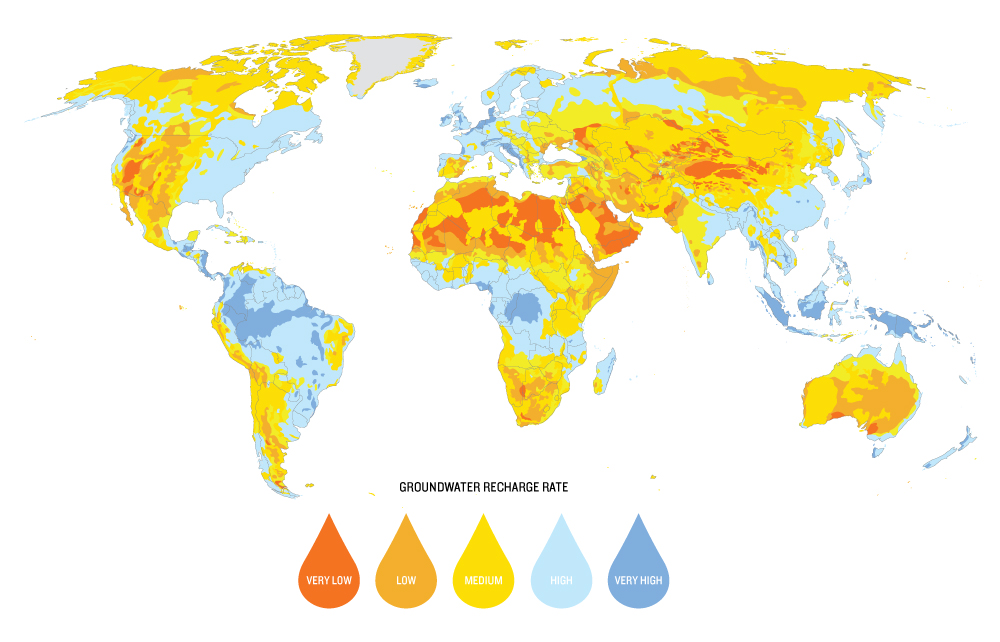
Recent research has found that eight to 11 of 37 major world aquifers are being drained faster than they are being replenished. This underground fresh water resource is essential to the food production that nearly 2 billion people in the world rely upon. The danger is that once these aquifers are exhausted, they are not quickly renewed. We have only recently developed the tools to measure underground aquifers, and there is only a patchwork of laws that regulate the use of this collective good.
The troika has countered Greek Prime Minister Tspiras’s gambit to put the terms of the bailout deal to a referendum by refusing to give Greece an extension beyond 30 June. By doing so, the troika avoided a possible embarrassing situation if democracy had repudiated the economic terms demanded by the troika. Without a deal, Greece will not be able to make its debt payment on Tuesday. No one knows exactly what that situation would mean, but the most likely scenario is that Greece would default on its loans and would therefore leave the eurozone and perhaps the European Union. The world is clearly moving into uncharted territory.
Tuesday is also a big day for nuclear proliferation. It is the deadline for an agreement on the Iranian nuclear program and the parties have assembled in Vienna to work out the final details. Since both sides clearly want a deal, the deadline is not as significant as the deadline for the Greek debt. A short delay in an agreement will not signal failure. But there are still some significant details to be ironed out, such as whether the International Atomic Energy agency will have access to military facilities (usually considered off-limits in the Non-Proliferation Treaty) and the timing of how the sanctions will be lifted. There are harsh opponents of the deal and they are working hard to derail the negotiations. But all the governments involved in the negotiations have invested a great deal in a successful outcome.
Kurdish fighters have been quite successful against the forces of the Islamic State, but they have been hamstrung because Turkey refuses to allow them to be militarily resupplied by the US. Turkey fears that a more powerful Kurdish force would lead to increased demands for a Kurdish state. Kurds live in Iraq, Syria, Turkey, and Iran. Turkey fears that Kurdish successes in Syria would lead to a Kurdish state carved out of Syrian territory, and development that might lead Turkish Kurds to make similar demands. The unwillingness of Turkey to support the Kurds against the Islamic State leaves only Iran as a possible ally in the attempt to degrade and destroy the Islamic State.


