Archive for the ‘World Politics’ Category
Americans are focused on the floods in Texas and Louisiana which have been devastating to the people there. But there have also been severe floods in India, Bangladesh, and Nepal and over 1,200 people have died in those floods. Flooding in South Asia is not uncommon as the monsoon season usually lasts from June to September, but this year the floods have been especially severe. The floods have destroyed thousands of hectares of agricultural land and clean water is very scarce. The city of Mumbai, home to 20 million people, has been profoundly affected by the floods.
Flooding in Mumbai, India

Widening income and wealth inequality has been a feature of globalization as it has unfolded since the 1990s. The inequality is not simply a feature of market processes–it also reflects political decisions that favor capital at the expense of labor. One of the key instruments in addressing inequality is the tax mechanism–higher taxes on higher incomes can have a redistributive effect, as the taxation rates for the 1950s and 1960s in the US prove. Doing that period, incomes and wealth were more equitably distributed in the US. Progressive taxation, however, has been eroded since the 1980s and the US is currently engaged in another round of tax changes which threaten to worsen income and wealth inequality even further.
A key argument for those who wish to lower taxes, specifically corporate taxes, is that lower taxes will lead to greater corporate investment and therefore more jobs. The argument makes intuitive sense, but it is not empirically justified. The Institute for Policy Studies has done research on the investment behavior of companies that only pay 20% or less of their corporate profits in taxes. The findings undermine the argument that lower taxes lead to lower jobs. The findings are stunning:
“To investigate this claim, this report is the first to analyze the job creation records of the 92 publicly held U.S. corporations that reported a U.S. profit every year from 2008 through 2015 and paid less than 20 percent of these earnings in federal income tax. Did these reduced tax rates actually lead to greater employment within the 92 firms? The data we have compiled give a definitive — and sobering — answer.
Key findings:
Tax breaks did not spur job creation
- America’s 92 most consistently profitable tax-dodging firms registered median jobgrowth of negative 1 percent between 2008 and 2016. The job growth rate over those same years among U.S. private sector firms as a whole: 6 percent.
- More than half of the 92 tax-avoiders, 48 firms in all, eliminated jobs between 2008 and 2016, downsizing by a combined total of 483,000 positions.
Tax-dodging corporations paid their CEOs more than other big firms
- Average CEO pay among the 92 firms rose 18 percent, to $13.4 million in real terms, between 2008 and 2016, compared to a 13 percent increase among S&P 500 CEOs. U.S. private sector worker pay increased by only 4 percent during this period.
- CEOs at the 48 job-slashing companies within our 92-firm sample pocketed even larger paychecks. In 2016 they made $14.9 million on average, 14 percent more than the $13.1 million for typical S&P 500 CEOs.
Job-cutting firms spent tax savings on buybacks, which inflated CEO pay
- Many of the firms in our sample funneled tax savings into stock buybacks, a financial maneuver that inflates the value of executive stock-based pay. On average, the top 10 job-cutters in our sample each spent $45 billion over the last nine years repurchasing their own stock, six times as much as the S&P 500 corporate average.”
We should keep this data in mind as the US Congress begins its debate on tax reform.

The Yale University Program on Climate Change Communication conducted a poll of Americans in May 2017 on their beliefs and attitudes on climate change. The entire report can be accessed here. The summary of the report contains some of the conclusions which are somewhat jarring. According to the summary, “Most Americans think global warming is a relatively distant threat” but they also believe that it is a serious “distant” threat:
“Few Americans are optimistic that humans will reduce global warming. Nearly half (48%) say humans could reduce global warming, but it’s unclear at this point whether we will do what is necessary, and nearly one in four (24%) say we won’t because people are unwilling to change their behavior. Only 7% say humans can and will successfully reduce global warming.”
Apparently the possible demise of the species is not enough to persuade many to change their ways.

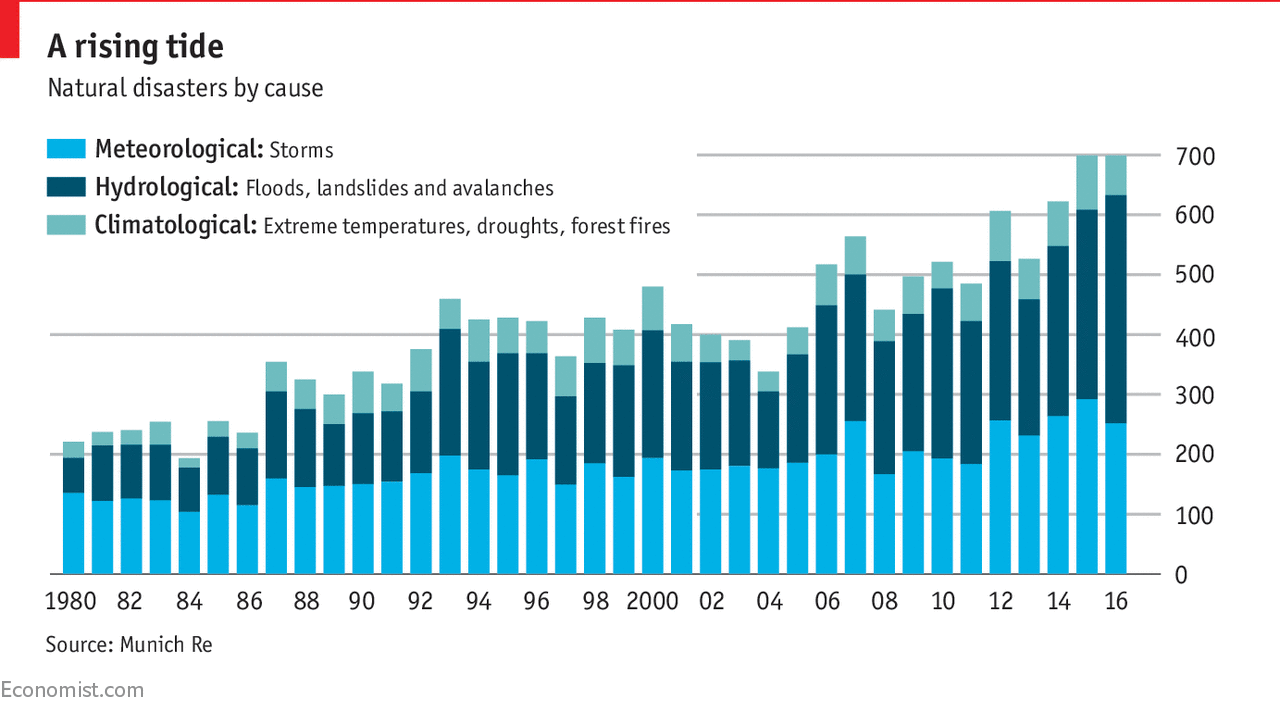
The number of global natural disasters–defined as “earthquakes, storms, floods and heatwaves that either cause at least ten deaths, affect more than 100 people or prompt the declaration of a national emergency”–has quadrupled since 1970. Fortunately, however, the number of deaths associated with natural disasters, has been declining due to better predictions, safety measures, and improved building codes.
Israeli Prime Minister Benjamin Netanyahu attended a ceremony celebrating the 50th anniversary of Israel’s occupation of the West Bank at which he declared: “We are here to stay, forever.” The statement is not new for the Prime Minister, but it is also an emphatic rejection of the official position of the European Union, the US, and the United Nations Security Council that the territories occupied in 1967 should be part of what is known as the “two-state” solution. The end of a promise of a Palestinian state would be a dramatic change in a policy that has been consistently upheld by most countries since 1967 and to which Israel agreed in the 1993 Oslo accords. There are now close to 500,000 Israeli settlers in the the West Bank.

India and China have agreed to pull back their forces from the disputed Doklam area. For the last two months the two countries have faced off as China started to build a road in disputed territory. The disengagement of forces does not come with any agreement on the status of the territory–it is merely an attempt to cool off tensions. The two states have decided not to claim a “victory” in the disengagement–a wise move.

North Korea has fired another ballistic missile which flew over the Japanese island of Hokkaido. The Japanese did not shoot down the missile and officials do no yet know what type of missile was fired. The trajectory, however, was a clear challenge to the United Nations Security Council as well as to US President Trump. North Korea typically refrains from sending missiles over the territory of US allies, South Korea and Japan. But US and Japanese forces just completed military exercises on the island of Hokkaido, so the North Korean message seems aimed at both.
/cdn.vox-cdn.com/uploads/chorus_asset/file/9132359/Hokkaido_Map.jpg)
We will be studying the question of whether global warming is somehow connected to the extraordinary intensity of Hurricane Harvey and the devastation in Texas. It is impossible to connect any specific weather event to climate, but global warming has likely contributed to the strong storm surge because of rising sea levels. Additionally, warmer temperatures contain higher levels of moisture which may be related to the heavy rainfall.
Hurricane Harvey

Long-standing violence against the Rohingya Muslims in Rakhine Province in Myanmar has led to massive evacuations. Many in Myanmar, which has primarily a Buddhist populations, regard the Rohingya as illegal immigrants from Bangladesh, but the hostility stems from a deep anti-Muslim feeling as well. The tension between the Buddhist and Muslim communities in Myanmar has led to the organization of loosely-formed militias on each side, and the violence between them has gradually increased to open conflict. The flow of refugees is straining resources in neighboring Bangladesh.

Vietnam and China have a very tense relationship. They share memories of several wars that go back centuries and Vietnam suffers from a common malady that many small nations have when they have a large, dynamic neighbor. Despite the memory of a long and brutal war with the US, the Vietnamese chose to get closer to the US in hopes that American military power could act as an effective counterweight to Chinese power. But the US has given clear signals that it may no longer wish to act as a balancer in the region, and the Vietnamese are wondering whether they need to seek an accommodation with China–a difficult and complex policy given the interests of both states in the oil and natural gas reserves in the disputed South China Sea.
China controls the headwaters of some of the most important rivers in the world, many of which start in the Tibetan plateau. There are ten major rivers, including the Indus, the Ganges, Mekong, Yangtze, Irrawaddy, and the Tsangpo-Brahmaputra, and about 2 billion people depend on these rivers. The Chinese have built almost 10,000 dams on these rivers including many mega-dams which control the flow of water and sediment throughout South, East, and Southeast Asia. The countries that are downriver and depend on these rivers are apprehensive about the degree to which China controls them, as well as the extent to which accidents, such as earthquakes, could have a dramatic effects over which they have little control. Control of water is an important dimension of power in world politics.

Yesterday’s post on the three North Korean missile tests was incorrect. Initial reports indicated that all three tests failed, but new evidence suggests that only one of the launches failed. The other two actually indicated a new capability on the par of the North Koreans: the ability to fire a missile from a multiple rocket launcher. The two successful launches flew about 150 miles, far enough to threaten US and South Korean forces on the peninsula. The North Koreans have thousands of multiple tube rocket launchers which are easier to hide than typical missile launch pads. Additionally, rocket launchers are much less expensive to manufacture and deploy.
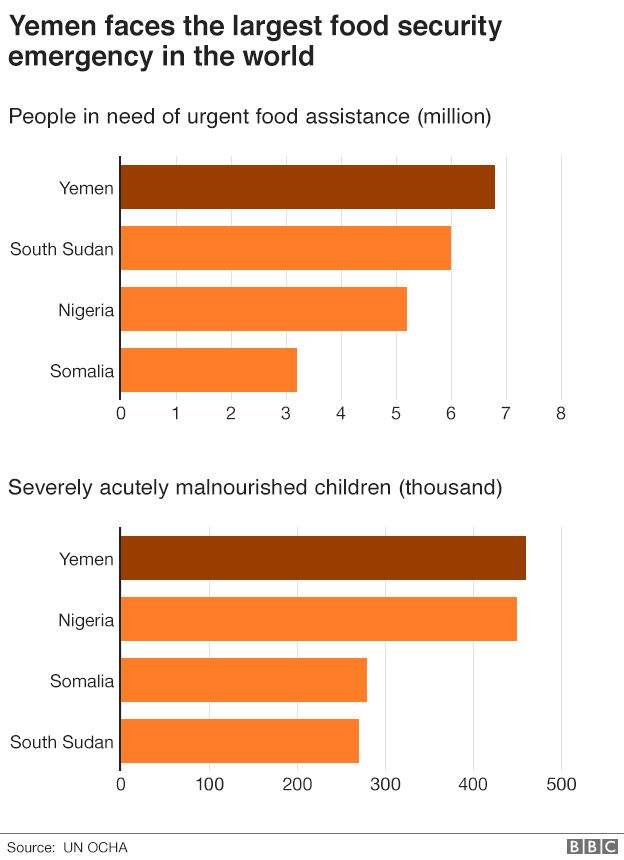
The war in Yemen has almost completely destroyed Yemeni society. The war, initiated by Saudi Arabia in 2014 and supported by the US, is a proxy war between Saudi Arabia and Iran, but the Yemeni people have paid a horrific price. Yemen is suffering from a cholera breakout that has been made possible by the destruction of the medical and sanitary infrastructure of the country, and the suffering from the disease has been made worse by a famine.
A Russian tanker, the Christophe de Margerie, trip from Norway to South Korea through the Arctic has completed a without the aid of an icebreaker. This trip is a first and it was completed in only 19 days, 30% shorter than the traditional route through the Suez Canal. The ship has advanced technology to facilitate the passage, but the trip also signals the effects of climate change. The Arctic Ocean will likely seen a dramatic increase in activity by many states as the sea ice continues to recede for much of the year.
Christophe de Margerie
Qatar has announced that it will restore its diplomatic relations with Iran. The decision is a sharp rebuff to Saudi Arabia and its Gulf allies which had demanded that Qatar sever all relations with Iran. The decision is a victory for Iran, but it also reflects Qatar’s dependence on its shared natural gas reservoir with Iran. Qatar actually had little choice in the matter since its economy relies almost completely on the revenues generated from the natural gas.
North Korea has launched three missiles in violation of the UN Security Council sanctions. They appear to have been short-range missiles, and the launches do not appear to have been successful. Nonetheless, it remains to be seen if the launches will induce US President Trump to take some action in response. Stay tuned.
The number of US active-duty military personnel stationed abroad has dropped below 200,000 for the first time in 60 years. In 1967, the US had over 1.2 million soldiers stationed abroad–half of them in Vietnam. About 15% of US soldiers are stationed abroad and the top five countries in which they are based are Japan (38,818), Germany (34,602), South Korea (24,189), Italy (12,088) and Afghanistan (9,023). Only Afghanistan is experiencing active conflict. The pullback reflects the decision by President Obama to pull back from commitments abroad. It remains to be seen if President Trump will reverse this trend.

Russia has sent nuclear-capable bombers over the Korean peninsula as US and South Korean forces are conducting military exercises in the region. Russia has been outspoken in its opposition to the use of force on the peninsula but it is difficult to interpret the message the Russians are trying to send. The bombers entered the South Korean air identification zone which is considered rude but does not violate international law. It is unlikely that Russia would come to the defense of North Korea if it were attacked. But Russia continues to demonstrate its military power in both Europe and Asia. I doubt that many are unaware of Russian military strength in both regions.
Russian TU-95 bomber

US Secretary of Defense Mattis has indicated that he will recommend to President Trump that the US should supply Ukraine with lethal defensive weapons. Such a policy would change current US policy which is to restrict aid to non-lethal supplies such as medicine and transport. Giving Ukraine lethal defensive weapons, such as anti-tank weaponry, would allow Kyiv to fight the Russian-backed rebels in eastern Ukraine more effectively. It would also raise the stakes for Russia in Ukraine and increase the level of violence in the country. The move would also deepen the US commitment to Ukraine and Russia would take the move as a significant challenge. President Trump has resisted such a move in the past, so it remains to be seen whether he will act in such a provocative way toward Russia.
The United Nations Committee on the Elimination of Racial Discrimination has issued an “Early Warning and Urgent Action” resolution on the outbreak of violence in Charlottesville, VA, USA on 11-12 August 2017. The last time the Committee issued such a resolution was in late 2016 on the outbreak of racial violence in Burundi. It is not the first time the US has been called out over racial violence, but, like all the earlier times, the US will likely ignore the call for action by the international organization.
The US Treasury has added ten new organizations and individuals from China and Russia to the sanctions list for their activities with North Korea. These new sanctions are unilateral–they are not part of the sanctions that were unanimously approved by the United Nations Security Council. Both countries have protested the additional sanctions, arguing that they are being subjected to US law outside of the framework of an international organization. An editorial in the Global Times states the Chinese position:
“The US resorts to domestic laws to sanction Chinese companies and people, which severely violates international law and cannot be accepted by China. So far the US sanctions have exerted little impact on China, but it breaks the rules and offends China.”
It remains to be seen how the sanctions will affect the Chinese role in defusing the crisis over North Korea’s nuclear program.
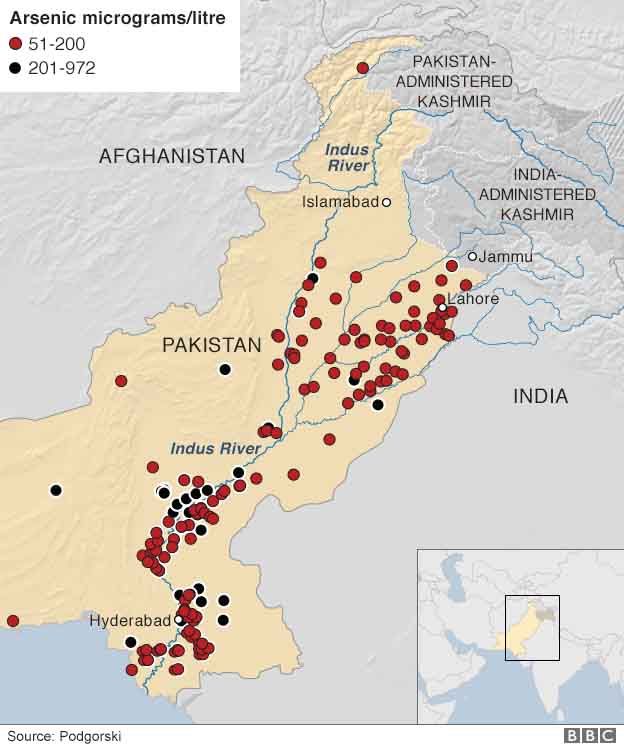
New research indicates that up to 60 million Pakistanis are susceptible to very high levels of Arsenic in their water. The study tested groundwater samples from numerous sites in Pakistan all along the Indus Valley. The arsenic is a feature of the geology of the region and it leaches into the groundwater affecting the quality of drinking and irrigation water. Ingesting arsenic at high levels has many short- and long-term health effects which are very difficult to counteract.
I have had some time to go over President Trump’s Afghanistan speech. The new policy is dramatically different from what he promised as a candidate, a change he freely acknowledged in the speech. In the speech he identified three “core” interests in Afghanistan:
“First, our nation must seek an honorable and enduring outcome worthy of the tremendous sacrifices……
“Second, the consequences of a rapid exit are both predictable and unacceptable……
“Third and finally, I concluded that the security threats we face in Afghanistan and the broader region are immense…..”
In truth, I suspect that both Presidents Bush and Obama would have stated American interests in Afghanistan in essentially the same words. On 7 October 2001, President Bush said:
“By destroying camps and disrupting communications, we will make it more difficult for the terror network to train new recruits and coordinate their evil plans.
“Initially, the terrorists may burrow deeper into caves and other entrenched hiding places. Our military action is also designed to clear the way for sustained, comprehensive and relentless operations to drive them out and bring them to justice.
“This military action is a part of our campaign against terrorism, another front in a war that has already been joined through diplomacy, intelligence, the freezing of financial assets and the arrests of known terrorists by law enforcement agents in 38 countries.
“Given the nature and reach of our enemies, we will win this conflict by the patient accumulation of successes, by meeting a series of challenges with determination and will and purpose.
“To all the men and women in our military, every sailor, every soldier, every airman, every Coast Guardsman, every Marine, I say this: Your mission is defined. The objectives are clear. Your goal is just. You have my full confidence, and you will have every tool you need to carry out your duty.”
On 1 December 2009, President Obama said:
“So, no, I do not make this decision lightly. I make this decision because I am convinced that our security is at stake in Afghanistan and Pakistan. This is the epicenter of violent extremism practiced by al Qaeda. It is from here that we were attacked on 9/11, and it is from here that new attacks are being plotted as I speak. This is no idle danger; no hypothetical threat. In the last few months alone, we have apprehended extremists within our borders who were sent here from the border region of Afghanistan and Pakistan to commit new acts of terror. And this danger will only grow if the region slides backwards, and al Qaeda can operate with impunity. We must keep the pressure on al Qaeda, and to do that, we must increase the stability and capacity of our partners in the region.
There is not too much distance between the three Presidents. There is one important new element of the Trump strategy which is a decision-making process based on conditions on the ground and not timetables:
“Conditions on the ground — not arbitrary timetables — will guide our strategy from now on. America’s enemies must never know our plans or believe they can wait us out. I will not say when we are going to attack, but attack we will.
It is true that President Obama did impose a timetable on his troops commitments and that timetable reflected his intent to limit the US commitment. President Trump’s emphasis on conditions is precisely what the US military has been asking for in Afghanistan, but that criterion is not defined. As I pointed out yesterday, some conditions would require an extended commitment; others would require a minimal commitment. In his speech, President Trump was careful to say that the new policy was not a “blank check”. President Obama made the same promise: “The days of providing a blank check are over. ”
President Trump also indicated that Pakistan had not been a reliable partner in Afghanistan and that he would try to force Pakistan to be cooperative: “We can no longer be silent about Pakistan’s safe havens for terrorist organizations, the Taliban, and other groups that pose a threat to the region and beyond. Pakistan has much to gain from partnering with our effort in Afghanistan. It has much to lose by continuing to harbor criminals and terrorists.” President Obama made the same observation: “Third, we will act with the full recognition that our success in Afghanistan is inextricably linked to our partnership with Pakistan….We’re in Afghanistan to prevent a cancer from once again spreading through that country. But this same cancer has also taken root in the border region of Pakistan. That’s why we need a strategy that works on both sides of the border.”
President Trump also indicated that he wanted India to become more involved in the economic development of Afghanistan: “Another critical part of the South Asia strategy for America is to further develop its strategic partnership with India — the world’s largest democracy and a key security and economic partner of the United States. We appreciate India’s important contributions to stability in Afghanistan, but India makes billions of dollars in trade with the United States, and we want them to help us more with Afghanistan, especially in the area of economic assistance and development.” The objective is noble, but it overlooks the competition between India and Pakistan in Afghanistan–the two countries have very different objectives.
Finally, President Trump indicated that he had lifted the restrictions on the American military in the field (“Finally, my administration will ensure that you, the brave defenders of the American people, will have the necessary tools and rules of engagement to make this strategy work, and work effectively and work quickly”). Again, this has been a long-standing request from the military and a complaint against political interference in the conduct of war that dates back to the Vietnam War and President Johnson’s insistence on approving bombing targets in North Vietnam. These restrictions exist because there is a clear political dimension to military actions, and protecting civilians is a top priority for those who wish to gain the support of a local population. Perhaps there is no longer a divide between civilian and military authorities on the importance of this consideration, but it it not observed, as some have argued in the case of the use of drones, then “winning” a war is hopeless.
The speech does not give me much hope for a resolution in Afghanistan. The New York Times is reporting that Mr. Trump is thinking about sending 4,000 more soldiers to supplement the 8,400 that are already there. But that number does not include the close to 24,000 private contractors in the country. We should not forget that there were close to 100,000 American soldiers in Afghanistan in 2011 and they were unable to accomplish the objectives outlined by President Trump. It also appears that US Secretary of State Tillerson also shares doubts about the possibility of President Trump reaching his objectives. The day after President Trump’s speech, Mr. Tillerson gave this message to the Taliban: “You will not win a battlefield victory. We may not win one, but neither will you.”
US President Trump has announced a new policy in Afghanistan. I just listened to the speech he delivered in Arlington, VA and have not had a chance to read the speech or go over it in detail. I will probably have more the say about the speech in subsequent posts. My initial reaction is a degree of confusion. President Trump announced that the US would move from a time-based decision-making process to a conditions-based one. In military terms, that shift is a very important one, but the conditions are not specified so we do not know what the costs might be. If the conditions include a fully-functioning central government in Afghanistan, then the costs might be very high. It they include the elimination of all 22 groups identified by President Trump as security threats to the US, then the costs might be very high as well. If the condition simply means an agreement between the Taliban and the central government in Afghanistan to divide up control of the country, then the costs might be very low. As this point, I really know very little about what the US objectives might be.
The US has been in Afghanistan since October 2001 when it overthrew the government of Afghanistan to hunt down Osama bin Laden. The war is the longest in American history and has cost the lives of 2,350 US soldiers and over $1 trillion. The new policy does not square with his statements about US policy in Afghanistan while he was a candidate. Zack Beauchamp has compiled a partial list of the statements and tweets Mr. Trump made before his election and he appeared at that time to be adamantly opposed to any continued military role for the US.
One of the most important determinants of political legitimacy is the faith that citizens have that their political and economic systems function in a way that assure a better future for the next generation. If that faith holds true, then parents are willing to suffer a great deal in the present so that their children will be better off. The Pew Research Center has conducted a poll in many countries asking the question, “When children today in our country grow up, they will be better off or worse off than their parents?” The results are quite diverse although a general pattern does emerge: the currently rich countries are pessimistic and those countries which we call emerging economies are more optimistic.


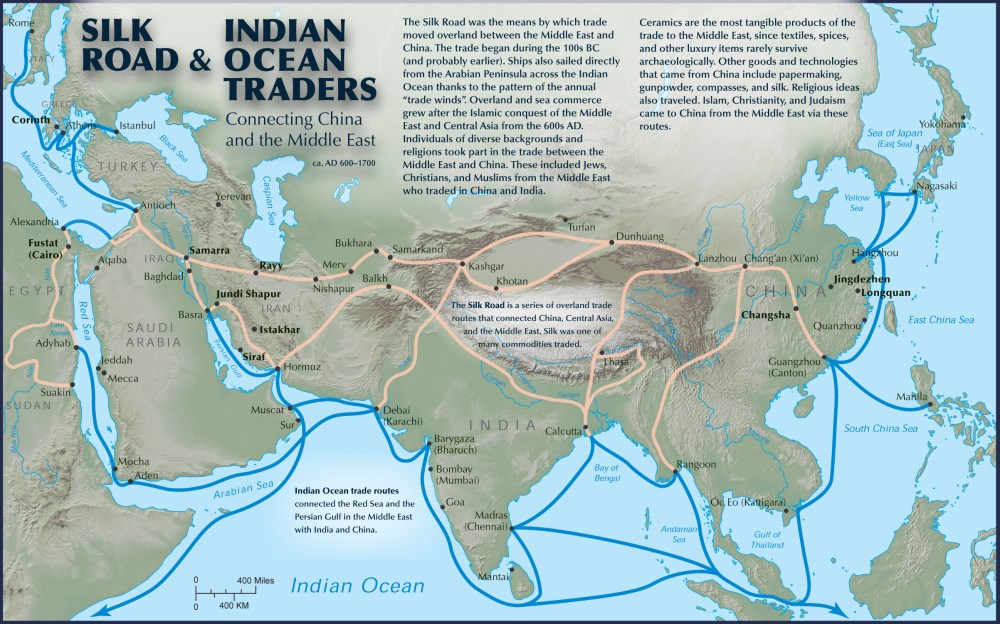
Globalization gave us the apple. Researchers have done a genetic analysis of the modern apple and traced its origins back to the Tian Shan (Heavenly) Mountains in modern-day Kazakhstan. According to the report in Nature Communcation:
“Cultivated apple (Malus domestica Borkh.), one of the most widely produced and economically important fruit crops in temperate regions, has been domesticated from M. sieversii in the Tian Shan Mountains for 4000–10,000 years, and dispersed from Central Asia to West Europe along the Silk Road, allowing hybridization and introgression of wild crabapples from Siberia (M. baccata (L.) Borkh.), Caucasus (M. orientalis Uglitz.), and Europe (M. sylvestris Mill.)”
Apparently there is also a variety of apple from the Xinjiang region of China which has not been involved at all in the cross-breeding of the modern apple.

 World Politics News